Do’s and Don’ts Of Yogic Practices
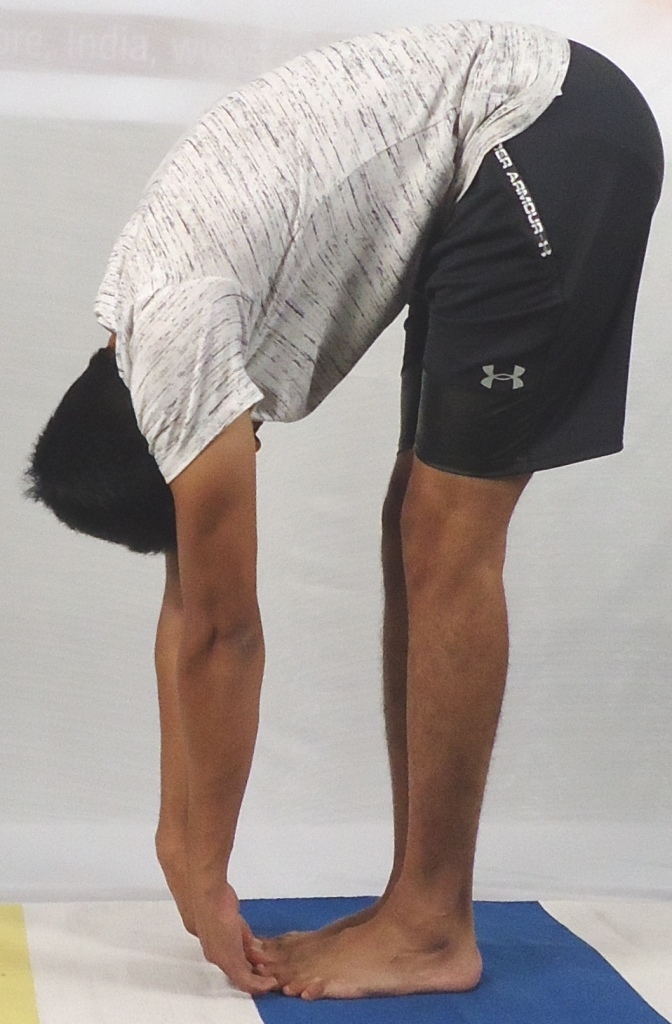
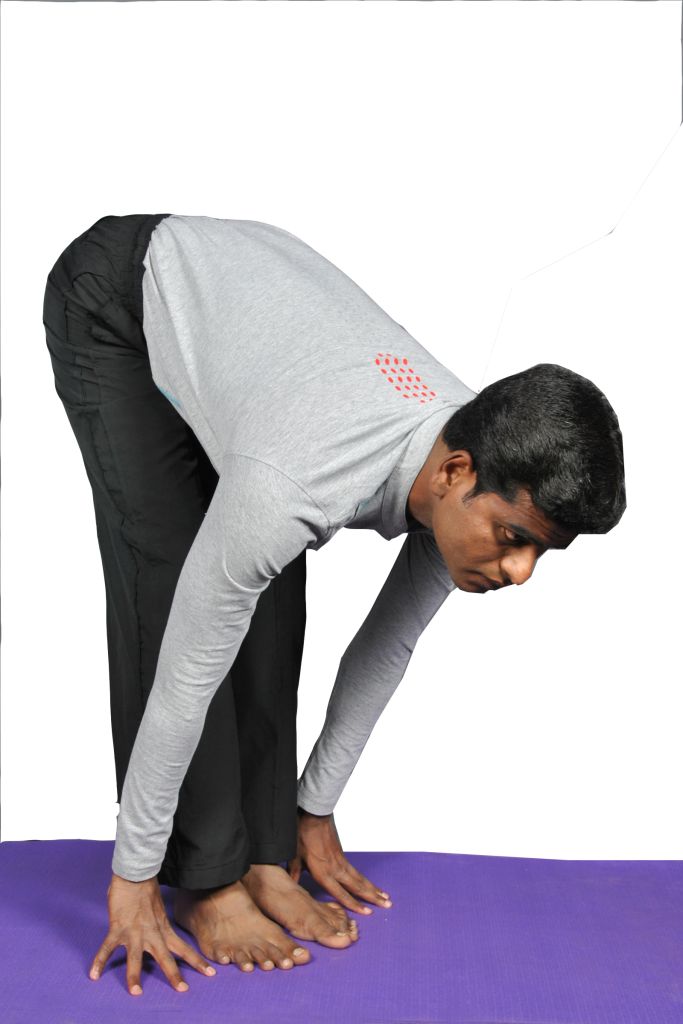
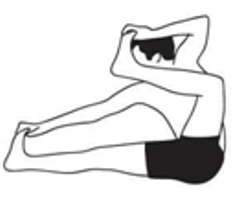
Sun: Do not practice asanas after being out in the hot sun for several hours. Time: The best time to practice yoga is either early in morning or late in evening. Without the practice of the principles of Yama and Niyama, which lay deep firm foundations for building characters, there cannot be an integrated personality. Cleanliness and Food: Before starting to practice asanas, the bladder should be implied and the bowels evacuated. Bath: Asanas come easier after taking bath. Food: Asanas should preferably to done on empty stomach. Place: They should be done in a clean airy place, free from insects and noise. Closing of eyes: In beginning, keep the eyes open. Then you will know what you are doing and where you go wrong. The brain: The body alone should be active; the brain should be passive, waterfall and alert. Breathing: The breathing should be done through nostrils only and not through mouth. Do not restrain breath while in process of asana. Savasana: Always lie down for 10 – 15 min after completing asanas. Asanas and Pranayama: Pranayama may be done either very early in morning before the asanas or in evening after completing them. Persons with BP should not start with sirsana and sarvangasana. Those suffering, displacement of retina should not attempt topsy – turny poses. Mirror: If you are doing asanas in front of a mirror, keep it perpendicular to floor. Read carefully hints and cautions for practice of asanas. Avoid disturbances such as phone calls or kids around. Avoid standing on your head during menstrual period. Pregnancy: All asanas can be practiced during first 3 months of pregnancy. Menstruation: Avoid asanas during menstrual period. After delivery: No asanas should be done during 1st month after delivery. Remove hard contact lenses. Fold up the hairs. Do asanas only on Yoga mat. Fold blankets neatly when preparing to use. Practice yoga in loose – fitting clothing and bare feet. Yogasanas should be practiced with an empty stomach. There should be specific time for yoga. Early morning 4 to 6 and evening 5 to 6 timings are preferable. Dress should be minimum. Wristwatch, bangles, chains, rings etc., should be remove. If yogasana is practiced in the evening the savasana should be practiced first. Concentration should be maintained throughout. Yogasana should not be practiced fast. It should be practiced slowly, continuously & rhythmatically. Yogic practices should be performed is an orderly way. First suryanamaskar, then Asana, Pranayama & finally meditation. During all the yogic practices breathing is very important. Breathing should be co-ordinated with the asanas. After the yoga, relaxation is a must with normal breathing. The place to perform asanas should be well ventilated & should be away from any animal or insect disturbances. Yoga should not be practiced under fan. For asanas sattvic diet is essential. 39.All the asanas should be practiced on mat exception is suryanamaskar. Asanas should be practiced in a peaceful place away from music or T.V. It should be practiced regularly at the same time. 42.A clean bath is necessary after the practice of yoga. The final poster of yoga ‘relaxation’ should not be strained. The muscle should be relaxed in the final poster. Any muscle catch during yoga should be solved by gentle massage. Yoga should be maintained according to ones flexibility & not by comparison with others. During yoga practices, backward bending should be accompanied by inhalation & forward bending should be accompanied by exhalation. Apart from practicing reading scriptures is also important. Repeat the same asanas for many vises Generally yoga should be precise, nor too tense taking or short. Good observation necessary. Limited speech essential.

Backward Bending Asanas
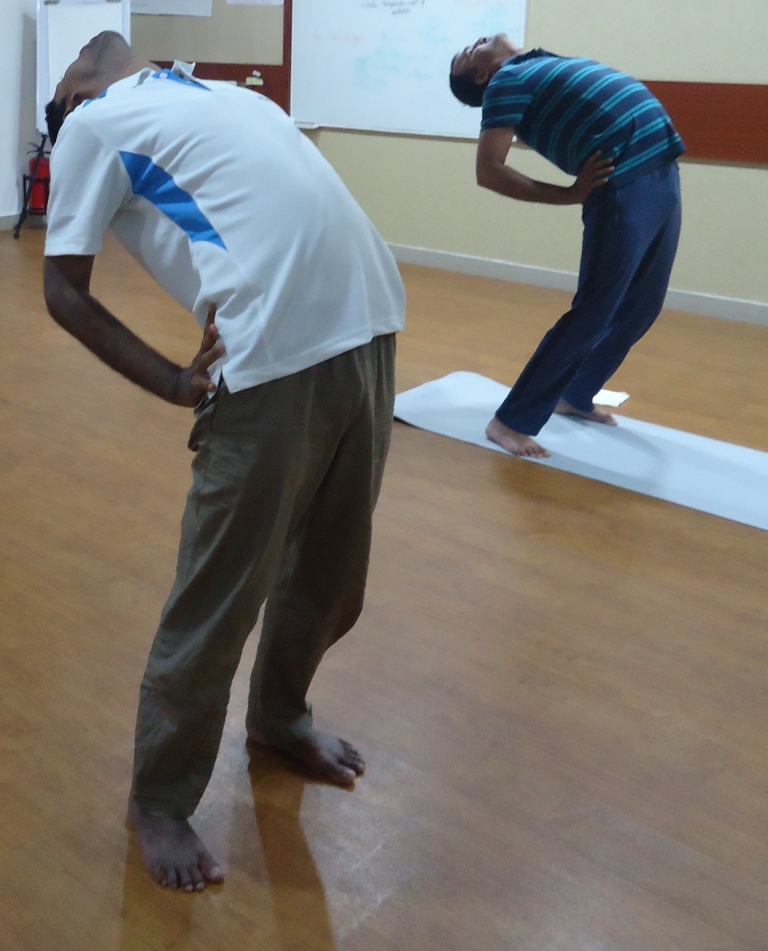
Karuna Yog Vidya Peetham, TTC program in Bangalore will make you proficient in various “Backward bending Asanas”. Our experts in this field will help you to learn these techniques. Backward bending Asanas are postures, which equip the body out to confront the world. They are stimulating and extroverting. Because theyexpand the chest and encourage inhalation, they are associated with the attitude of embracing life. There are additionally dynamic postures, which are performed against gravity. Therefore, to carry out such postures, one requires a great deal of strength and energy. On a physical level, the backward bending Asanas extends the abdominal muscles, and tone and strengthen the muscles controlling the spine. The spinal nerves, which emerge from between the adjoining vertebrae, are decompressed. This has certain positive repercussions throughout the body considering the fact that these nerves offer energy to all the other nerves, organs and muscles in the body. The spinal segment is a ‘stacked pile’ of vertebrae and discs. Groups of muscles amplify all along it, masking and assisting it from all aspects. Maintenance of the spine in a straight and aligned position, in spite of all movement, relies absolutely upon the balanced, supportive contraction and tone of the muscles. The muscles themselves are controlled unconsciously through posture. Subconscious tensions and ‘hang-ups’ are frequently reflected pondered inside the tonic activity of the back muscles, ensuing in too hard or excessively remiss zones instead of homogeneous consistency. Research has demonstrated that 90% of spinal pain has its foundation in muscular unevenness. If these imbalances are prolonged, then the ‘stack pile’ of the vertebral column is misaligned, the ligaments are strained and symptoms of spondylitis, slipped disc, sciatica and osteoarthritis start to manifest. The exercise of a balanced regime of backward and forward bending Asanas can revise postural deformities and neuro-muscular imbalances of the vertebral column. Likewise, with all Asanas, it is essential to carry out these practices with appropriate control and synchronization of the breath so that the entire group of muscles is consistently contracted. Polluted blood has an inclination to consolidate in the back region where circulation tends to be sluggish due to continuous maintenance of an upright position. These Asanas help to circulate, purify and enrich the blood in this region. Backward bending Asanas create a negative pressure in the abdomen and pelvis, helping neuro-circulatory toning of all the related organs. They in addition, massage the abdomen and pelvic organs by means of stretching the muscles in this area, especially the rectus abdomini. Not all the Asanas taught in the 200-hour Hatha Yoga TTC course is meant for everyone. People suffering from excessive lower back curve (lumbar lordosis) should avoid practicing the Asanas in this section. However, they could try some of these – Saral bhujangasana, Ardhashalabasana and Gomukhasana. Generally, during pregnancy, Asanas which involves the stomach heavily are not recommended. Of the Asanas in this section, Kandharasana practiced gently will give the benefits of backward bends. In general, each practice should be carefully studied before starting to try them out. Karuna Yoga Maha Vidya Peetham, teacher training will take care of all your concerns regarding the matter.

Mudras(Yoga Gesture)
Karuna Yoga Maha Vidya Peetham, Yoga TTC program in Bangalore India, will make you proficient in various “Mudras”. Our experts in this field will help you learn these techniques. The Sanskrit word mudra means ‘gesture’ or ‘attitude’. Mudras can be described as psychic, emotional, devotional and aesthetic gestures or attitudes. Yogis have encountered mudras as attitudes of energy flow, intended to link individual Pranic force with universal or cosmic force. The Kularnava Tantra traces the word mudra to the root mud, meaning ‘delight’ or ‘pleasure’, and dravay, which means ‘to draw forth’. Mudra is also defined as a ‘seal’, ‘short-cut’ or ‘circuit by means of pass’ After being a part of the Karuna Yoga Maha Vidya Peetham, Yoga TTC program, you will realize that mudras are a combination of subtle physical movements, which adjust mood, attitude and belief. In addition, it deepens consciousness and focus. A mudra may also involve the complete body in a collection of asana, pranayama, bandha and visualization techniques, or it is able to be a simple hand function. The Hatha Yoga Pradipika and other yogic writings view mudra to be a Yoganga, an independent department of yoga, requiring an extremely diffused awareness. Mudras are presented after some capability has been achieved in Asana, Pranayama and Bandha, and net blockages have been eliminated. Mudras have been depicted in different writings from ancient times to the present day so as to safeguard them for the future generations. However, such references have been by no means specified or genuinely itemized or as these systems were not designed to be gained from a book. Practical training from a guru was constantly thought to be a vital imperative before endeavoring them. Mudras are higher practices which prompt to awakening of the pranas, chakras and kundalini, and which can give major siddhis, psychic powers, on the advanced practitioner. A scientific look at mudras In scientific terms, mudras offer a means to provide a means to get admission to and influence the unconscious reflexes and primal, instinctive addiction styles that originate in the primitive areas of the brain across the brain stem. They establish a subtle, non-intellectual reference to those areas. The 200-hour Hatha Yoga course at Karuna Yoga Maha Vidya Peetham, teacher training center in, India focuses on the essence of the centuries-old tradition of mudras. Furthermore, each mudra sets up a unique link and has a correspondingly special impact on the body, mind and Prana. The purpose is to create constant, repetitive postures and gestures that may snap the practitioner out of instinctive habit styles and set up a more refined consciousness.

Dhanurasana – Bow Posture
Dhanurasana – Bow Posture (dhanu – bow) Practice: Lie on prone posture called Makrasana (crocodile) relaxation posture. Now bend the knees, stretch the arms back and catch hold the right ankle with the right arm and left ankle with the left arm. Inhale, pull the legs up by pulling backward, knees off the floor and simultaneously lift head, chest, off from the floor by pulling forward. The arms straight like bow-string. Rest whole body weight on your abdomen. At beginning keep toes touching each other, knees apart. Reaching final posture bring knee and toes together. Remain in this posture for 10 to 20 seconds, breathing strongly and evenly. Exhale, release legs, return back to Makrasana (crocodile) posture. Benefits: This asana brings back elasticity to the spine and tones the abdominal organs. Good for diabetes and obesity group. Brings tremendous stamina by holding for long duration. Makes neck and arms stronger.

Matsyasana – Fish Posture
Matsyasana – Fish Posture Practice: Lie supine on the floor with the hands extended along the body and the feet together. Raise the legs upto 90 degree, by keeping the knees straight. Press the palms against floor, raise the trunk by bending the legs towards the head and touch the toes on the ground. Interlock fingers rest back of head straight. Both legs straight and firm. Stay for 10 to 20 seconds, keep breathing evenly and deeply. By palms support lower the trunk and slowly come back to supine posture. Benefits: Deeply stimulates abdominal organs. Gives good exercise to the thyroid glands. Gives a good stretch to the spinal column, thus it builds a strong and supple supine. (matsya – fish) Practice: Come to supine posture, by bringing legs together, arms beside thi Now adopt padmasana with support of both hands. Place palms above shoulder press against floor, lift head neck, chest, spine and make arch on your back. Grasp big toe with thumb, index, middle finger, press elbows down, close to body, and give minimum pressure to head region. Stay in this posture for 10 to 30 seconds, breathe normally. Release toes and palms supporting above head, and release head, neck, trunk on ground, unfold both legs release padmasana. Come back to Savasana and relax. Lie on your back on the floor, in savasana(corpse pose) Benefits: A traditional text Gheranda Samhita (2:21)says that Matsyasana is the destroyer of all diseases Strengthen your entire back, neck region. Helps in balancing the function of the thyroid gland. Effective for diabetes, asthmatics and back problems.

Halasana – Plough Posture
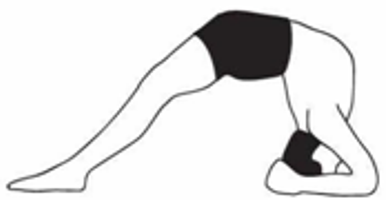
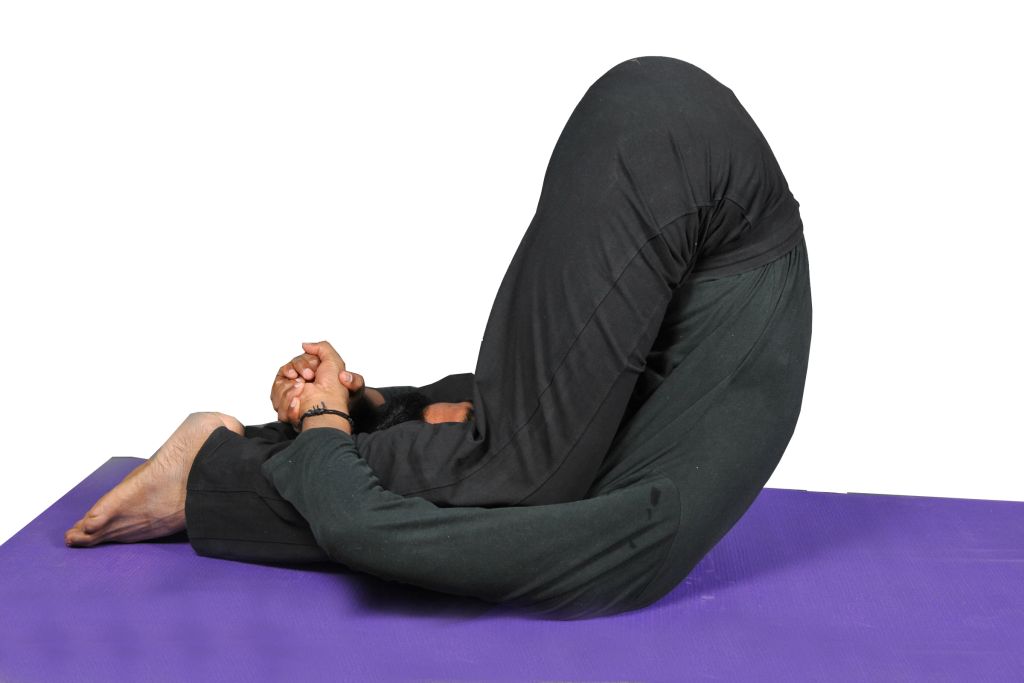
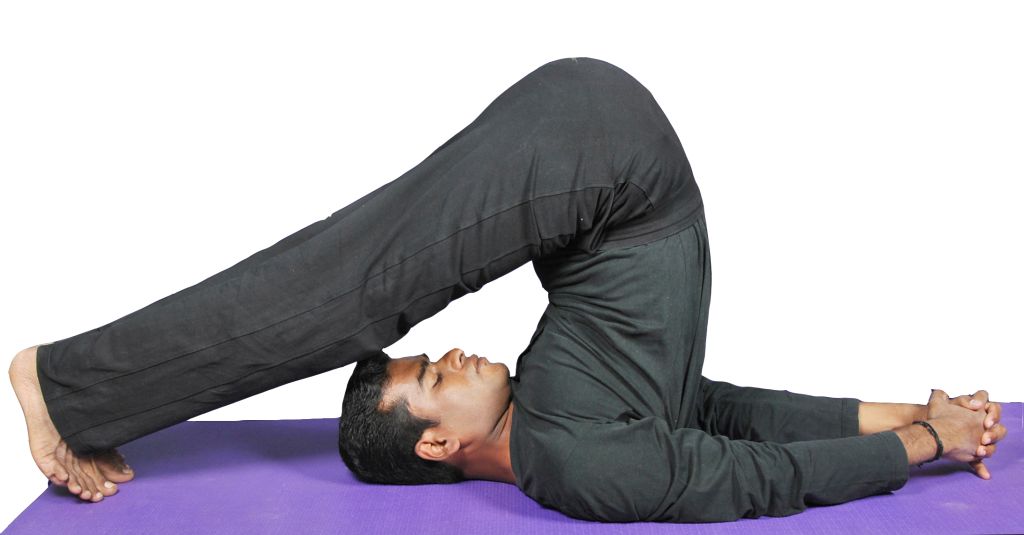
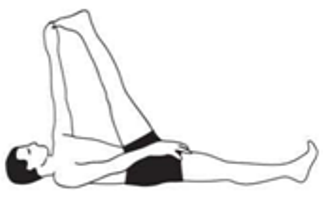
Halasana – Plough Posture (hala – plough) Practice: Lie supine on the floor with the hands extended along the body and the feet together. Raise the legs upto 90 degree, by keeping the knees straight. Press the palms against floor, raise the trunk by bending the legs towards the head and touch the toes on the ground. Interlock fingers rest back of head straight. Both legs straight and firm. Stay for 10 to 20 seconds, keep breathing evenly and deeply. By palms support lower the trunk and slowly come back to supine posture. Benefits: Deeply stimulates abdominal organs. Gives good exercise to the thyroid glands. Gives a good stretch to the spinal column, thus it builds a strong and supple supine.

Cakarasana – Wheel Posture
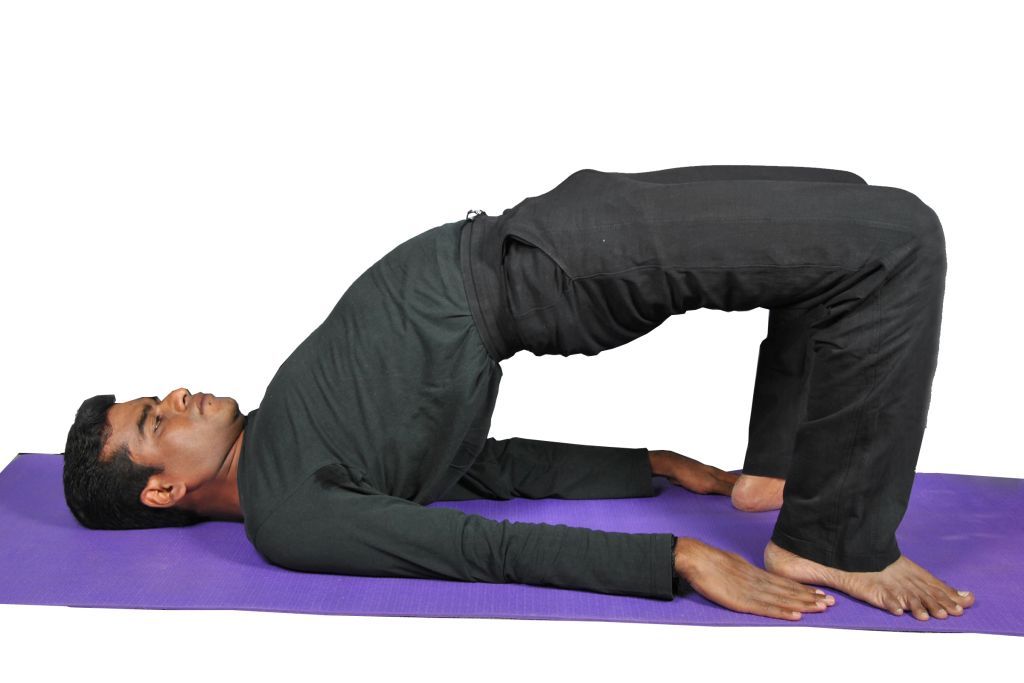
Cakarasana – Wheel Posture (cakra – wheel) Practice: Come to (Savasana) corpse posture; bring legs together foot pointing upward, arms beside thighs. Place the palms under the shoulder towards feet, elbows facing upward; bend both the knees, place heels close to butt. Inhale lift spine up, rest head on the floor. Again inhale raise head, spine, make an arch on whole body, weight bearing on palms and soles. Make elbow straight beside ears, knee straight , tighten thigh , hip , buttock muscles, open chest , shoulders, lifting towards up. Remain in this final posture for 10 to 20 second, with normal breathing at your nostrils slowly and deeply. Exhale, bend elbows, knees, and rest head on floor, then gradually spine, legs on floor, come to savasana and relax. Benefits: Stimulates and strengthen whole body from toes to head. Gives strong vigour and vitality. Effective in reducing weight faster, which slim whole body in perfect shape. Strengthen arms legs, thighs, hips and pelvic muscles. Those want strong limbs; this is a boon for them.

Sarvangasana ( Shoulder Standing Pose)
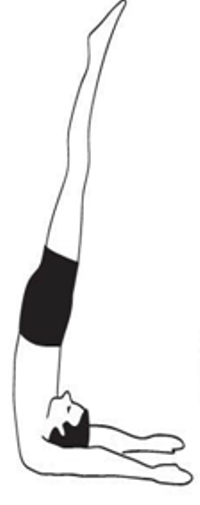
Sarvangasana – Shoulder Standing Posture (sarva- all, whole, entire, anga – limb or part of body) Practice: Lie flat on the back with feet together, arms by the sides and palms flat on the ground. Using the arms as levers raise the legs and back to a vertical position. Bend the elbows and use the arms as props to steady the back by pressing it with the palms. The trunk and legs should extend straight up, forming a right angle with the neck, the chest pressing against the chin. Soften the throat and tongue. Firm the shoulder blades against the back, and move the sternum toward the chin. Your forehead should be relatively parallel to the floor, your chin perpendicular. Gaze softly at your toes or tip of your nose. Stay for 10 to 30 seconds, with normal breathing. Exhale, drop legs down, spine down with support of arms, and relax at Savasana for 10 to 30 seconds. Benefits: Stimulates the thyroid gland and thereby improves the balance of the circulatory, digestive, reproductive, nervous and glandular systems. It corrects improper body growth and clears psychological disturbances by bringing a rich supply of blood to the brain. It relieves asthma and bronchitis. It releases the normal gravitational pressure from the anal muscles, relieving hemorrhoids (piles). It tones the legs, abdomen, the female reproductive organs, spine and neck. It inhibits hydrocele and eliminates waistline fat. Leucorrhea and diabetes can be controlled. Mastery of this asana gives conscious control over body temperature.

Mayurasana (Peacock Pose)
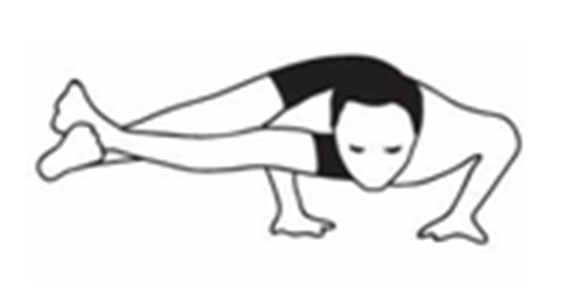
Mayurasana (Peacock Pose) Dharam avashtabhya karadvayena Tatkurparasthapitanabhiparsvah/ Uchchasano dandavad utthitah san Mayuram etat pravadanti pitham//(Chapter -1, Verse 30). Lie down on the stomach, placing both hands on the ground under the body and place the elbows at the sides of the navel. Raise the body high, keeping it like a stick. This is called peacock pose by the expert Yogis. (Chapter -1, Verse 30). Harati sakalaroghanasu ghulmodaradin Abhibhavati cha doshanasanam srimayuram/ Bahu kadasanabhuktam bhasma kuryadasesham Janayati // jatharaghnim jarayetkalakutam/(Chapter -1, Verse 31). Mayurasana quickly alleviates all diseases like enlargement of the glands, dropsy and other stomach disorders. It rectifies imbalance of the humors (vata, pitta, kapha). It reduces to ashes all food taken indiscriminately, kindles the gastric fire and enables destruction of deadly poison). (Chapter -1, Verse 31).

Paschimottanasana (Back Stretching Pose)
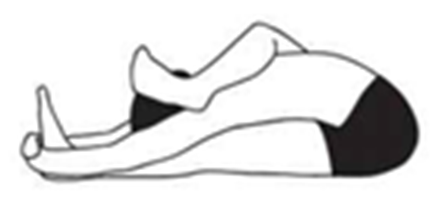
Paschimottanasana (Back Stretching Pose) Prasarya padau bhuvi dandarupau Dorbhyam padaghradvitayam ghrhitva/ Januparinyastalalatadeso Vasedidam paschimatanamahuh.// (Chapter -1, Verse 28). Stretching the legs in front on the ground, like a stick; bending forward, holding the toes with both hands and placing the forehead on the knees, is known as Paschimottanasana. (Chapter -1, Verse 28). Paschimottanasana Iti paschimatanamasanaghryam Pavanam paschimavahinam karoti/ Udayam jatharanalasya kuryad Udare karsyamaroghatam cha pumsam//(Chapter -1, Verse 29). Paschimottanasana is the best among asanas. By this asana the pranic currents rise through sushumna, the digestive fire stimulates, the abdomen becomes flat, and the practitioner becomes free from all kind of diseases. (Chapter -1, Verse 29).

Transcendental knowledge By samyama-Patanjali Yoga Sutra
By samyama transcendental knowledge 3.55. Tarakam sarvavisayam sarvatha visayamakramam cheti vivekajam jnanam| Tarakam-transcendental Sarvavisayam-all subjects sarvatha visayam-object of every place akramam-beyond the order of successon cha-and iti-that is all vivekajam jnanam- knowledge born of viveka Transcendental knowledge includes the knowledge of all objects beyond all orders of succession and is born of discrimintaion.

Causes of downfall in YOGA path-Patanjali Yoga Sutra – Vibhuti Pada
Causes of downfall in spiritual path 3.52. Sthanyupanimantrane sangasmayakaranam punanistaprasangat| Sthani-gods Upanimantrane-on being respectfully Sanga-attachment Smaya-pride Akaranam-by not Punah-once again Anista-undesirable Prasangat-by revival On being invited by the gods there should be no attachment and pride, because of the possibility of revival of the undesirable.

Gain universal state of mind-Patanjali Yoga Sutra – Vibhuti Pada
Gain universal state of mind 3.44. Bahirakalpita vrttirmahavideha tatah prakasavaranaksayah| Bahih-external Akalpita-unimaginable Vrttih-state of mind Mahavideha-existence wihout body Tatah-therefrom Prakasa-light Avarana-covering Ksayah-distraction In the state of, existence without body, the vrittis are inconceivable and outside the scope of the body, whereby the covering of light is destroyed.

Psychic powers obstacles path of Yoga-Patanjali Yoga Sutra
Patanjali Yoga Sutra – Vibhuti Pada – Psychic powers are obstacles in path of Yoga 3.38. Te samadhvupasarga vyutthane siddhayah| Te-they Samadhau-in samadhi Upasarga-obstacles Vyuttane-in the state of the consciousness of the world Siddhayah-psychics powers These psychic powers or siddhis are hindrances in path of samadhi, but in the state of consciousness of the world they are psychic powers.

What is Meditation?-Patanjali Yoga Sutra – Vibhuti Pada
Patanjali Yoga Sutra – Vibhuti Pada What is Meditation? 3.2. Tatra pratyayaikatanata dhyanam| Tatra-there(in the desha) Pratyaya-basis or content of consciousness Ekatanata-continuity Dhyanam-meditation Uninterrupted stream of the content of consciouness is Meditation

What is Concentration? – Patanjali Yoga Sutra – Vibhuti Pada
Patanjali Yoga Sutra – Vibhuti Pada What is Concentration? 3.1 Desabandhaschittasya dharana | Desa-place Bandha-binding Chittasya-of the mind Dharana-concentration

Knowledge of past & future By samyama – Patanjali Yoga Sutra
Patanjali Yoga Sutra – Vibhuti Pada By samyama knowledge of past & future 3.16. Parinamatrayasamymadatitanagatajnanam| Parinama-transformation Traya-three Samymat-by samyama Atita-past Anagatah-future Jnanam-knowledge By practicing samyama on the three transformations, knowledge of past and future thing arise.

Perfection of the physical body-Patanjali Yoga Sutra – Vibhuti Pada
Perfection of the physical body 3.47. Rupalavanyabalavajrasamhananatvani kayasampat| Rupa-form, beauty Lavanya-grace Bala-stength Vajrasamhananatvani- hardness Kaya-physical Sampat-wealth The perfection of the physical body includes beauty, grace, energy, and hardness.

Kurma nadi-Patanjali Yoga Sutra – Vibhuti Pada
3.32. Kurmanadyam sthairyam| Kurmanadyam-by performing samyama on the kurma nadi Sthairyam-staediness Stableness is gained by applying samyama on the kurma nadi.

Mastery over prakriti-Mastery over prakriti
3.49. Tato manojavitvam vikaranabhavah pradhanajayascha| Tatah-therefrom Tatah-therefrom Manojavitvam-speed of mind Vikaranabhavah-freedom from sense organs Pradhanajayah-conquest of prakriti Cha-and Therefrom follows speed like that of mind, independent from any medium of instrumentality and mastery of the limitations of prakriti.

Gain power of intuitive perception By samyama -Patanjali Yoga Sutra
By samyama gain power of intuitive perception 3.37. Tatah pratibhasravanavedanadarsasvadavartta jayante, Tatah-therefrom Pratibha-the faculty of superior consciousness Sravana-the faculty of hearing Vedana-touch consciousness Darsa-visulization Asvada-faculty of taste Vartta-the olfactory faculty Jayante-are produced By applying samyama gain power of intuitive perception, therefrom are produced transcendental audition, sensation, perception, taste and olfactory knowledge.

Attainment of kaivalya-Patanjali Yoga Sutra – Vibhuti Pada
Attainment of kaivalya 3.56. Sattvapurusayoh suddhisamye kaivalyamiti| Sattva-chitta Purusayoh-of the purusha Suddhi-purification Samye-on becoming equal Kaivalyam-isolation Iti-end Kaivalyam-isolation Iti-end Kaivalya is attained by equalizing and cleansing the illumination of purusha and chitta.

Samadhi or superconsciousness?-Patanjali Yoga Sutra – Vibhuti Pada
What is Samadhi or superconsciousness? 3.3.Tadevarthamatranirbhasaà svarupasunyamiva samadhih| Tadeva-the same Artha-the object of dhayana Matra-only Nirbhasam-appearing Svarüpa-one own form Sunyam-empty Iva-as if Samadhih-trance Samadhi is called, when there is only the object appearing without the consciousness of ones own self.

Sirsasana
Sirsasana – Head Standing Posture (sirsa – head) Practice: Come to knelling posture called Vajrasana. Lean forward by knee apart for one fore arm distance. Interlock fingers; place it at one forearm distance, straight to knees. Place head pressing against the inside of the interlocked fingers. Now move spine straight perpendicular to floor, legs parallel to ground, by toes touching ground. Press toes down against floor; come up by shifting your lower part of body over elbows and head. Adjust posture by elbows, give minimum weight to head region. Keep whole body in a straight line, keep knees straight, suck abdomen in. Gaze at two feet front of floor at eye level. Stay for 10 to 20 seconds, breathing at nose normally. Exhale and return the back to the Vajrasana, relax at (Balasana) child posture. Benefits: This is called king of asana, by doing this asana alone get all benefits of other asanas. Improves balance, skill, memory and concentration. Optimize all organs, system and limbs of body. By regular practice hair grows blacker and controls falling hair.

Jalandhara Bandha
Jalandhara Bandha (throat lock) Atha jalandharabandhah Kanthamakunchya hrdaye sthapayechchibukam drdham/ Bandho jalandharakhyoayam jaramrtyuvinasakah// Contracting the throat by bringing the chin to the chest sternum bone is the bandha called Jalandhara Bandha. It eradicates old age and death. (Chapter -3, Verse 70). Badhnati hi sirajalamadhoghami nabhojalam/ Tato jalandharo bandhah kanthaduhkhaughanasanah// That is jalandhara bandha which holds the flow of nectar in the throat. It eliminates all throat ailments. (Chapter -3, Verse 71). Jalandhare krte bandhe kanthasamkochalakshane/ Na piyusham patatyaghnau na cha vayuh prakupyati// Having performed Jalandhara Bandha by contracting the throat, the nectar does not fall into the gastric fire and the prana is not disturbed. (Chapter -3, Verse 72). Kanthasamkochanenaiva dve nadyau stambhayed drdham/ Madhyachakramidam jneyam shodasadharabandhanam// By firmly contracting the throat, the two nadis, ida and pingala are paralyzed and the sixteen adharas of the manipura chakra are locked. (Chapter -3, Verse 73).

Bhadrasana
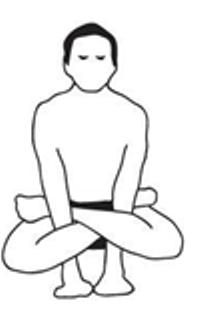
Bhadrasana (gracious pose) Ghulphau cha vrshanasyadhah Sivantyah parsvayoh kshipet / Savyaghulpham tatha savye Dakshaghulpham tu dakshine // Parsvapadau cha panibhyam Drdham baddhva sunischalam / Bhadrasanam bhavedetatsarvavyadhivinasanam //(Chapter -1, Verse- 53). Place the ankles below the genitals on the sides by the perineum, left ankle on the left (side) right ankle on the right (side).(Chapter -1, Verse- 53). Ghorakshasanamityahuridam vai siddhayoghinah/ Evamasanabandheshu yogindro vighatasramah // Abhyasennadikasuddhim mudradipavanakriyam/(Chapter -1, Verse-54). Then hold the feet, which are on their sides, firmly with the hands and remain motionless. This is bhadrasana which destroys all diseases. The yogis who are perfected (siddhas) call it gorakshasana. (Chapter -1, Verse-54).

Food Prohibited for Hatha Yogic Practitioners
Hatha Yoga Pradipika – Food Prohibited for Hatha Yogic Practices Katvamla-tikshna-lavanoshna-haritasaka / Sauvira-taila-tila-sarshapa-madya-matsyan // Ajadi-mamsa-dadhi-takra-kulattha-kola / Pinyaka-hingghu-lasunady-amapathyam-ahuh//(Chapter -1, Verse- 59). The foods which prohibited for the Hatha Yogic practitioners are: those which are bitter, sour, pungent, salty, heating, green vegetables, sour gruel, oil, sesame and mustard, alcohol, fish, flesh foods, curds, buttermilk, horse gram, fruit of jujube, oil cakes, asafetida and garlic. (Chapter -1, Verse- 59). Bhojanam ahitam vidyāt punarasyoshnīkrtam rūksham/ Atilavanamam layuktam kadaśanaśākotkam varjyam// (Chapter -1, Verse -60). Unnourishing food should not be consumed, that which is reheated after becoming cold, which is dry (devoid of natural oil), which is excessively salty or acidic, stale or has too many mixed vegetables. (Chapter -1, Verse -60).

Vajrasana
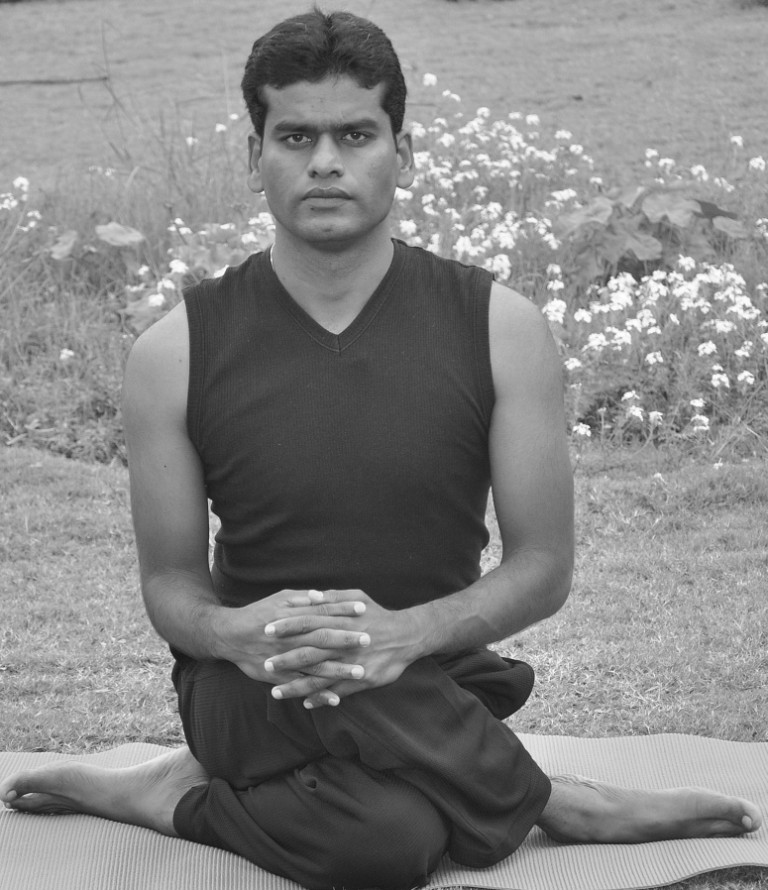
Vajrasana – Thunderbolt Posture (Vajra – thunder bolt or diamond) Practice: Come to (Dandasana) staff posture, by palms beside hip. Slide towards left, bend at right leg knee, and rest it under right hip. Same, bend left leg knee, place it under left hip. Keep spine, neck, head straight. Heel contacting with hip, toes pointing outward, inner calf muscles touching quadriceps muscle, knees together. At fingers adopt Jnana Mudra by touching tip of index, thumb finger slightly and rest it on respective thigh. Stay for 10 to 40 seconds, breathing completely by utilizing abdomen and chest area. Return back, sliding towards right side, with palm support unfold both legs and relax. Benefits: This is the only one asana, immediately after food we can perform to aid digestion by stimulating Vajra Nadi. Give suppleness to ankles, reduce thigh, hip extra fat. Make spine straight and strong naturally. It induces meditative state, so good for meditation.

Utkatasana
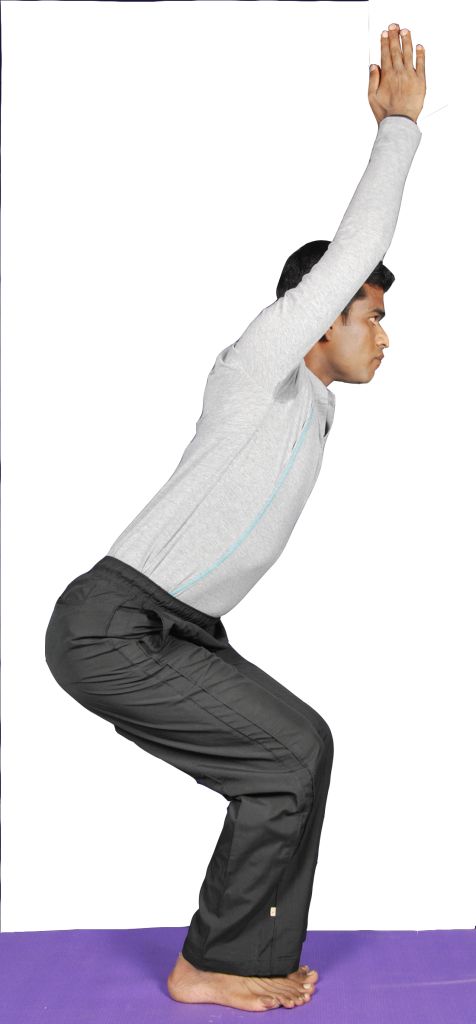
Utkatasana – Mighty Posture (utkata = mighty or powerful) Practice: Come to Tadasana, by keeping legs together and palms beside your thighs. As you inhale raise your arms till your biceps touch ears, palms together finger pointing towards sky, lock your elbow and keep straight, tuck your elbows, open your chest and expand , rib cage lifted up, abdomen in , keep your entire spine extended and lengthen up. Exhale and bend your knees , squatting down until your thighs are parallel to the floor, do not fall forward, move backward let your weight distribute over at lower back , hip joints and thigh muscles. Breathing normally at your nose, slow, even, and long breathing. Stay in this posture for 10 to 30 seconds or till you fill comfortable, do not exert or overstrain your body, always listen to your body. Along exhalation bring arms beside your thighs, and inhale straightens your knees. Again come back to Tadasana and relax. Benefits: Strengthens shoulders and open the chest. Strengthens and tones the ankles, thighs, calves, and spine Activate and optimize the efficiency of abdominal organs, diaphragm, and heart. Reduces flat feet.

Halasana
Halasana – Plough Posture (hala – plough) Practice: Lie supine on the floor with the hands extended along the body and the feet together. Raise the legs upto 90 degree, by keeping the knees straight. Press the palms against floor, raise the trunk by bending the legs towards the head and touch the toes on the ground. Interlock fingers rest back of head straight. Both legs straight and firm. Stay for 10 to 20 seconds, keep breathing evenly and deeply. By palms support lower the trunk and slowly come back to supine posture. Benefits: Deeply stimulates abdominal organs. Gives good exercise to the thyroid glands. Gives a good stretch to the spinal column, thus it builds a strong and supple supine.

Janu Sirsasana
Janu Sirsasana – Head to Knee Posture (janu – knee, sirsa – head) Practice: Come to Dandasana (staff posture), bend right leg knee with help of arm place it heels at root of reproductive organs or close to perineum, calf muscles touching back thigh muscles, knees pressing downward, right foot pointing forward. Inhale, raise both your arms from ground beside thighs, extend your back and bend from lower back catch hold left foot by both palms. Foot facing towards sky, knee straight, left leg in straight line not tilting either side, forehead at your shin muscles. Stay in this posture for 10 to 40 seconds or till you feel comfortable, by breathing longer and even through your nose. Release your arms, lift head, come up from lower back, and exhale arms down. Repeat same at opposite side for complimentary. Benefits: It activates pancreas and makes insulin to function efficiently, it strengthen pelvic region, hip joints and inner deep quadriceps thigh muscles, release fatigue and tiredness of leg muscles. Melts and remove kidney or gall bladder stone. Improves digestive mechanisms and strengthen liver, pancreas, prostrate gland. Stimulate ida and pingala nadi which is preparatory for activate shushmna nadi. Removes lower back stiffness and strengthen lower back, hip joints, and butt, remove back pain gradually by stable practice.

Samadhi or superconsciousness?-Patanjali Yoga Sutra – Vibhuti Pada
Patanjali Yoga Sutra – Vibhuti Pada What is Samadhi or superconsciousness? 3.3.Tadevarthamatranirbhasaà svarupasunyamiva samadhih| Tadeva-the same Artha-the object of dhayana Matra-only Nirbhasam-appearing Svarüpa-one own form Sunyam-empty Iva-as if Samadhih-trance Samadhi is called, when there is only the object appearing without the consciousness of ones own self.

Attainment of kaivalya-Patanjali Yoga Sutra – Vibhuti Pada
Attainment of kaivalya 3.56. Sattvapurusayoh suddhisamye kaivalyamiti| Sattva-chitta Purusayoh-of the purusha Suddhi-purification Samye-on becoming equal Kaivalyam-isolation Iti-end Kaivalya is attained by equalizing and cleansing the illumination of purusha and chitta.

Gain power of intuitive perception By samyama -Patanjali Yoga Sutra
By samyama gain power of intuitive perception 3.37. Tatah pratibhasravanavedanadarsasvadavartta jayante, Tatah-therefrom Pratibha-the faculty of superior consciousness Sravana-the faculty of hearing Vedana-touch consciousness Darsa-visulization Asvada-faculty of taste Vartta-the olfactory faculty Jayante-are produced By applying samyama gain power of intuitive perception, therefrom are produced transcendental audition, sensation, perception, taste and olfactory knowledge.

Kurma nadi-Patanjali Yoga Sutra – Vibhuti Pada
3.32. Kurmanadyam sthairyam| Kurmanadyam-by performing samyama on the kurma nadi Sthairyam-staediness Stableness is gained by applying samyama on the kurma nadi.

Perfection of the physical body-Patanjali Yoga Sutra – Vibhuti Pada
Perfection of the physical body 3.47. Rupalavanyabalavajrasamhananatvani kayasampat| Rupa-form, beauty Lavanya-grace Bala-stength Vajrasamhananatvani- hardness Kaya-physical Sampat-wealth The perfection of the physical body includes beauty, grace, energy, and hardness.

Knowledge of past & future By samyama – Patanjali Yoga Sutra
Patanjali Yoga Sutra – Vibhuti Pada By samyama knowledge of past & future 3.16. Parinamatrayasamymadatitanagatajnanam| Parinama-transformation Traya-three Samymat-by samyama Atita-past Anagatah-future Jnanam-knowledge By practicing samyama on the three transformations, knowledge of past and future thing arise.

What is Concentration? – Patanjali Yoga Sutra – Vibhuti Pada
Patanjali Yoga Sutra – Vibhuti Pada What is Concentration? 3.1 Desabandhaschittasya dharana | Desa-place Bandha-binding Chittasya-of the mind Dharana-concentration Cocentration is bringing the mind to one place with effort.

What is Meditation?-Patanjali Yoga Sutra – Vibhuti Pada
Patanjali Yoga Sutra – Vibhuti Pada What is Meditation? 3.2. Tatra pratyayaikatanata dhyanam| Tatra-there(in the desha) Pratyaya-basis or content of consciousness Ekatanata-continuity Dhyanam-meditation Uninterrupted stream of the content of consciouness is Meditation.

Psychic powers obstacles path of Yoga-Patanjali Yoga Sutra
Patanjali Yoga Sutra – Vibhuti Pada – Psychic powers are obstacles in path of Yoga 3.38. Te samadhvupasarga vyutthane siddhayah| Te-they Samadhau-in samadhi Upasarga-obstacles Vyuttane-in the state of the consciousness of the world Siddhayah-psychics powers These psychic powers or siddhis are hindrances in path of samadhi, but in the state of consciousness of the world they are psychic powers.