Best Yoga Teacher Training in Bangalore, India | Yoga Alliance USA | Accredited

karuna yoga vidya peetham logo

Blog

-
Blog

Ardhakati Chakrasana(Half Waist Wheel Pose)

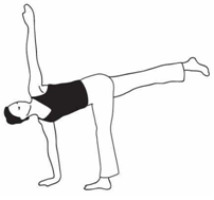
The half wheel pose or Ardhakati Chakrasana begins at Tadasana or the mountain pose. Stand straight, with the heels and toes of both feet pressed together. Keep your arms by your side, weight distributed evenly across your feet from your heels to your toes. Inhaling in, raise your right hand vertically over the head while your left hand is at your side. Stretch the right hand out as far as you can. Next, slowly bend to the left side from your waist. Make sure to maintain a normal and comfortable rate of breathing. Maintain this posture for a few breaths, for about 30 seconds. Then slowly, straighten back up and lower your right hand down slowly by your side. Repeat this on the other side. You can eventually increase the length of time you hold the pose. Benefits: Reduces fat in waist region, stimulates sides of the body. Give lateral bending to the spine, improves function of liver.

Read More »

Isometric and Isotonic (pose) Yoga Asana

Isometric – no movement, muscles stay the same length. Example, staying in plank position, not moving. Isotonic: i.e. eccentric and concentric Eccentric muscle moves to lengthen, resisting gravity i.e. forward fold into Uttanasana. Concentric, muscle moves to shorten, moving against gravity. Example, moving from chaturanga dandasana to plank position.  

Read More »

Pancha Kosha (Five Level of Human Existence)

In the Taittriya upanishad, the five layers of the body are expounded upon. Going beyond these, one can reach the atman. These five layers are the pancha kosas. These are: Annamaya kosha or physical body. Pranamaya kosha or the energy body. This consists of a further five levels or the pancha bhootas, i.e earth, fire, wind, water and space. Manamaya kosha or the mental sheath. Here there is perception, memory and ego. Here also lie emotions which can cause one to be swayed from what is right. Vigyanamaya kosha, which is the wisdom layer. This contains knowledge and the conscience. A person who doesn’t have Buddhi or the discriminating faculty, which is found in this sheath, is no better than an animal. Anandmaya kosha or the bliss sheath. Ananda is what everything in the universe has been created from. By doing various tapas, man can journey toward and attain oneness with the ultimate.

Read More »

 Yoga as a Science of 4 States of Human Consciousness

  The Mandukya Upanishad deals with the four states of consciousness. Waking, 2. dreaming, 3. Deep sleep and 4. Turiya or samadhi state. It also states that everything in the universe is OM and that the past, present and future are contained in OM. The three components or syllables comprise the three states of Brahman. After meditation on OM one is taken to the silence which is Atman or Brahman.

Read More »

Aerobic and Anaerobic Yoga Pose

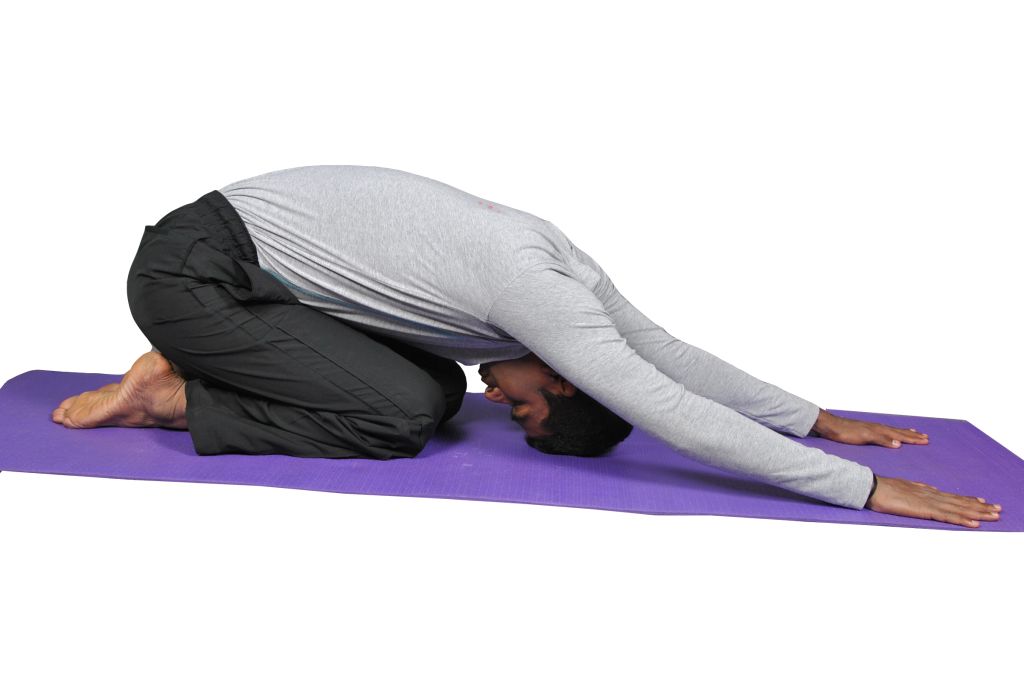
Aerobic activity This takes place with oxygen where carbohydrate and oxygen are used as fuel for the first two minutes after which fat is burned. These are lower intensity activities. More fat for energy is used and leads to a better ability to burn fat. Blood vessels increase and become bigger to accommodate the oxygen being used. It changes the composition of muscle fibres which contract slower and at a lower intensity. Aerobic activity increase these type one muscles which increases endurance and performance. Aerobic activity increases mitochondria which improved the aerobic capacity of muscles. Anaerobic activity This happens without oxygen, fuel comes from muscle storage and is short, highly intense and burns fat directly. Example is weightlifting. More fast twitch muscle fibres are produced for strength. It increases lactic acid tolerance for endurance. It increases glycolysis, ATP, CP and creatine. It increases growth hormone and testosterone.
Read More »

Muscle Fiber Types: Fast Twitch Muscle Fiber and Slow Twitch Muscle Fiber

  Slow Twitch Muscles that are associated with aerobic work are called slow twitch. These are the muscles working when we do the simpler yoga poses. Small force is produced over a sustained period. It is suited for endurance activities such as running marathons. Fast Twitch These fibres are associated with anaerobic activity. They are used when we perform high intensity activity which is sustained for shorter periods such as sprinting. The lactic acid build up from these activities means they cannot be sustained for a long time.  1) Fast oxidative glycolytic fibres These are more resistant to fatigue that fast glycolytic fibres. 2) Fast glycolytic fibres These fibres generate the largest amount of force and have the greatest anaerobic capacity.

Read More »

Purvottanasana(Upward Plank Pose)

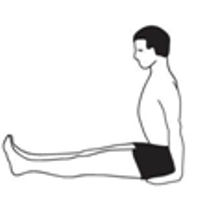
Start sitting up with your feet stretched out in front of you. Place the palms on the ground about one forearms length behind the hips. Inhale, raise the hips and lift the body upwards, relax the neck. Point the toes away from the body trying to get the feet flat on the ground, keep the arms and the legs straight. Keep the buttocks and pelvic floor muscles engaged.

Read More »

Phalakasana (Plank Pose)

Lie flat on the floor, face downwards. Bend the elbows, palms by the side of the chest. Keep the feet together. Raise the whole body a high off the floor, balancing on the hands and toes, body stiff and parallel to the floor, knees taut. Elbows should be straight as possible now.

Read More »

Chaturanga Dandasana(Four Limbed Staff Pose)

Lie flat on the floor, face downwards. Bend the elbows, palms by the side of the chest. Keep the feet a foot apart. Raise the whole body a few inches above the floor, balancing on the hands and toes, body stiff and parallel to the floor, knees taut.

Read More »

Urdhva Mukha Svanasana(Upward Facing Dog Pose)

  Lie prone on the floor. Stretch your legs back, with the tops of your feet on the floor. Bend your elbows and spread your palms on the floor beside your waist so that your forearms are perpendicular to the floor. Inhale and press your inner hands firmly into the floor and slightly back. Then straighten your arms and simultaneously lift your torso up and your legs a few inches off the floor. Keep the thighs firm and slightly turned inward, the arms firm and turned out so the elbow creases face forward. Press tailbone to pubis and pubis lifted towards navel.

Read More »

Dhanurasana(Bow Pose)

Lie flat on the stomach, face downwards. Exhale and bend the knees. Stretch the arms back and hold the left ankle with the left hand and the right ankle with the right hand. Take two breaths. Now exhale and pull the legs up by raising the knees above the floor and simultaneously lift the chest off the floor. Lift the head up and pull it as far back as possible. Weight is on the abdomen.

Read More »

Bhujangasana(Cobra Pose)

Lie on the floor, face downwards. Extend the legs, keeping the feet together, keep the knees tight and toes pointing. Test the palms by the side of the pelvic region. Inhale and press the palms by the side of the pelvic region. Inhale press the palms firmly on the floor and pull the trunk up. Inhale, lift the body up from the trunk until the pubis is in contact with the floor.

Read More »

Sarpasana(Snake Pose)

Lie flat on the stomach, legs straight, feet together. Interlock fingers behind the back and place them on top of the gluteus. Place the chin on the floor. Use the lower back muscles to raise the chest as far as possible off the floor.

Read More »

Shalabhasana(Locust Pose)

Lie flat on stomach, thighs together, knees together, hands under the thighs, palms downwards and hands clenched. Place chin on the floor slightly stretched forwards. Raise both legs as high as possible, chin, chest on the floor.

Read More »

Ardha Shalabhasana(Half Locust Pose)

Lie flat on stomach, hands under the thighs, palms downwards and hands clenched. Place chin on the floor slightly stretched forwards. Raise the right leg as high as possible and the other leg straight on the floor.

Read More »

Natarajasana(Lord of the Dance Pose)

Feet together, bend the right knee behind the back and grasp the ankle with the right hand. Keep both knees together to maintain balance. Slowly raise and stretch the right leg backwards as high as possible. Reach up and forward with the left hand in jnana mudra.

Read More »

Virabhadrasana – III (Warrior – III Pose)

Tadasana to feet 4-5 feet apart. From Warrior 1 on the right, bend the trunk forward and rest the chest on the right thigh. Arms straight, palms together, exhale raise the left leg from the floor and straighten the right leg.

Read More »

Virabhadrasana – II (Warrior – II Pose)

Stand in Tadasana, step or lightly jump your feet 31/2 to 4 feet apart. Raise your arms parallel to the floor and reach them actively out to the sides, shoulder blades wide, palms down. Turn your right foot slightly to the right and your left foot out to the left 90 degrees. Align the left heel with the right heel. Firm your thighs and turn your left thigh outward so that the center of the left knee cap is in line with the center of the left ankle.

Read More »

Virabhadrasana – I (Warrior – I Pose)

Stand in Tadasana, step or lightly jump your feet 31/2 to 4 feet apart. Raise your arms perpendicular to the floor (and parallel to each other), and reach actively through the little-finger sides of the hands toward the ceiling. Turn your left foot in 45 to 60 degrees to the right and your right foot out 90 degrees to the right. Align the right heel with the left heel. Exhale and rotate your torso to the right, squaring the front of your pelvis as much as possible with the front edge of your mat. With your left heel firmly anchored to the floor, exhale and bend your right knee over the right ankle so the shin is perpendicular to the floor.

Read More »

Parsvottanasana(Intense Side Stretch Pose)

From tadasana, hands on hips, step left foot back 3-3.5 feet apart, keeping your feet still. Turn left foot 80 degrees (or less). Lengthen spine and on an exhale fold torso forward from hips, bring it over right leg, forehead to the right knee.

Read More »

 Parivrtta Parsvakonasana(Revolved Side Angle Pose)

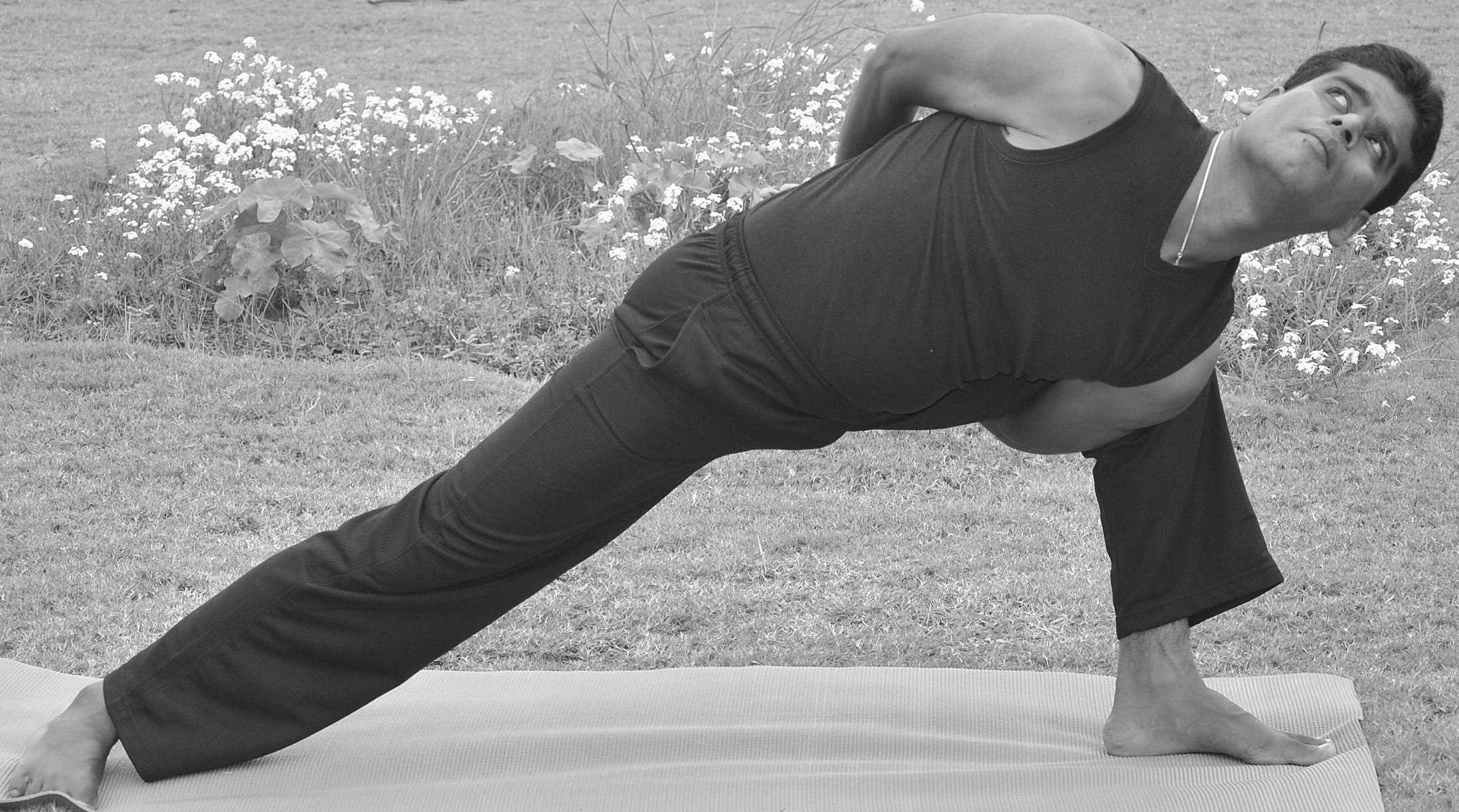
From tadasana, step 4-4.5 feet apart, arms straight and raised in line with shoulders, fingers together, palms downwards. Exhale and turn the right leg 90 degrees and the left foot slightly to the right, keep the left leg stretched out and tightened at the knee. Bend the right leg at the knee until the thigh and calf are at a right angle and the thigh is parallel to the floor. Exhale and rotate the trunk and the left leg so as to bring the left arm over the right knew. Rest the left armpit on the outer side of the right knee and place the left palm by the outer side of the right foot. Left palm on the floor by the outer side of the right foot. Twist the spine to the right, turn the trunk and bring the right arm over the right ear, eyes to the right arm. Left knee tight.

Read More »

Utthita Parsvakonasana(Extended Side Angle Pose)

From tadasana, step 4-4.5 feet apart, arms straight and raised in line with shoulders, fingers together, palms downwards. Exhale and turn the right leg 90 degrees and the left foot slightly to the right, keep the left leg stretched out and tightened at the knee. Bend the right leg at the knee until the thigh and calf are at a right angle and the thigh is parallel to the floor. Place the right palm on the floor by the side of the right foot, the right armpit, covering and touching the outer side of the right knee. Stretch the left arm over the left ear, head up. Tighten the lions, stretch the hamstrings. The chest, hips and legs should be in a line. Move the chest up and back.

Read More »

Parivrtta Trikonasana(Revolved Triangle Pose)

From tadasana, step 3-4 feet apart, arms straight and raised in line with shoulders, fingers together, palms downwards. Right foot outwards 90 degrees and left foot at 45 degrees. Both legs straight and rotate from trunk, left leg in the opposite direction so the left palm is on the floor near the right foot.

Read More »

Utthita Trikonasana(Extended Triangle Pose)

From tadasana, step 3-4 feet apart, arms straight and raised in line with shoulders, fingers together, palms downwards. Right foot outwards 90 degrees and left foot at 45 degrees. Both legs straight and slide towards right side, placing right hand on the mat. Spine and tail bone straight and extended, turning spine towards left side, gazing at tip of middle finger.

Read More »

Utkatasana(Chair Pose)

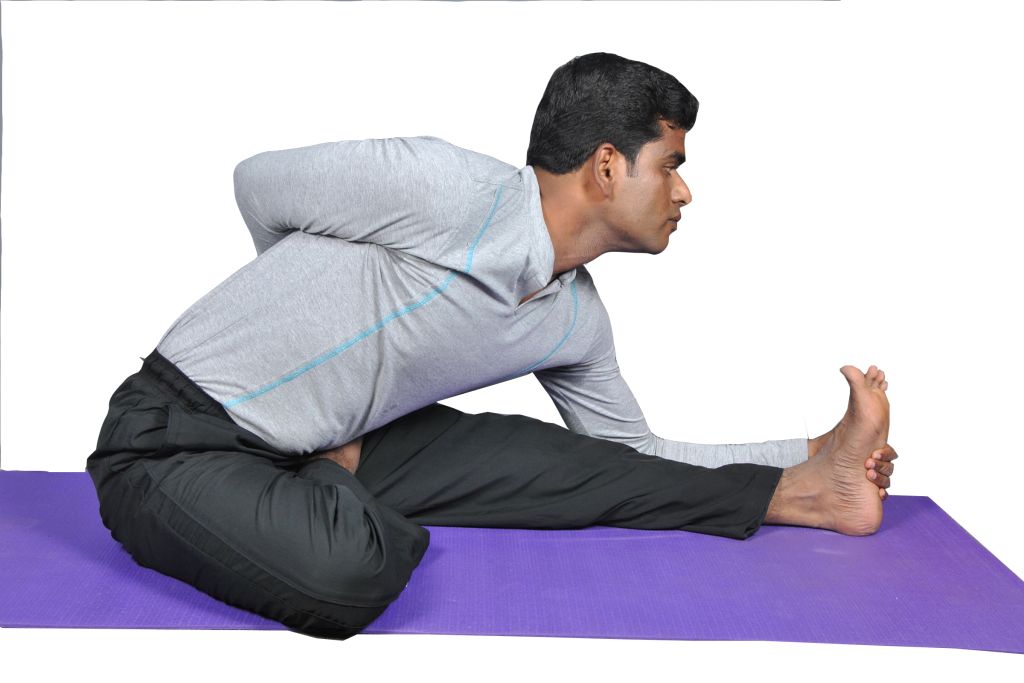
From Tadasana inhale to raise arms til biceps touch ear and palms are together, finger pointing towards the sky. Lock elbows, keep straight, tuck elbows, open chest and expand rib cage lifted up, abdomen in, entire spine extended and lengthened up. Exhale, bend knees, squatting down, and tights parallel to the floor, distribute weight across lower back, hip joints and thigh muscles.
Read More »

Garudasana(Eagle Pose)

From Tadasana bend the knee, bring the other knee over and rest the back of this thigh over the thigh of the inside leg. Move the outer foot behind the calf so the outer foot shin touches the inner calf. Balance on the inner leg. Bend the elbow and raise the arms to the chest level. Rest the right elbow on the front of the left upper arm near the elbow, then move the right hand back to the right and the left hand back to the left and join the palms.

Read More »

Pada Hastasana(Hand to Foot Pose)

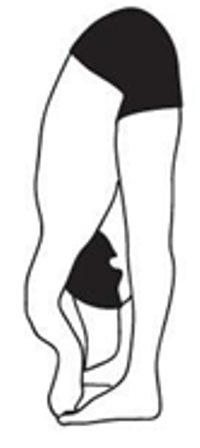
From Tadasana, inhale and raise arms above head, exhale bend forward from the hips, spine straight and knees straight. Lengthen neck towards feet, keep the chest open and rest palms besides feet, with feet firm. Hip to ankle should be in a straight line. Lengthen from lower back and stretch from upper back, abdomen sucked in.

Read More »
[gravityform id="2" title=false]
Call Back Form