Heart, Arteries & Veins Forms the Circulatory System
The Heart, Arteries & Veins Forms the Circulatory System: The heart pumps blood into arteries. The arteries divide and subdivide and finally end in capillaries. The capillaries later unite to form veins. The veins return blood to the heart. The arteries carry pure blood away from the heart, Veins carry De-oxygenated blood to the heart and the capillaries are minute channels receives blood from smaller arteries (arterioles) and deliver into smaller veins (venules). Blood circulation: depending on the course of blood. Circulation can be classified into: Systemic circulation. Pulmonary circulation Coronary circulation Portal circulation. Systemic circulation: it’s the blood circulation that carries oxygenated blood away from the heart, to the body, and returns deoxygenated blood back to the heart except for lungs. This circulation starts Oxygenated blood enters the left atrium from the pulmonary veins. The blood is then pumped through the mitral valve into the left ventricle. From the left ventricle, blood is pumped through the aortic valve and into the aorta, the body’s largest artery. The aorta arches and branches into major arteries and then it breaks up into smaller arteries and finally ends in capillaries. The capillaries unite to form venules which join up ultimately to form 2 large venous trunks namely superior vena cava and inferior vena cava. These 2 venous trunks open in the right atrium of the heart. Gas and nutrient exchange with the tissues occurs within the capillaries that run through the tissues. Metabolic waste and carbon dioxide diffuse out of the cell into the blood, while oxygen and glucose in the blood diffuse out of the blood and into the cell. The arterial component of systemic circulation the highest blood pressures in the body. The venous component of systemic circulation has considerably lower blood pressure in comparison, due to their distance from the heart, but contain semi-lunar valves to compensate. Systemic circulation as a whole is a higher pressure system than pulmonary circulation. Pulmonary circulation: it involves the purification of blood in lungs. It’s the circulation of the blood from the heart to the lungs for oxygenation, then back to the heart again. The Oxygen-depleted blood from the body leaves the systemic circulation when it enters the right atrium, The blood is then pumped through the tricuspid valve into the right ventricle. From the right ventricle, blood is pumped through the pulmonary valve and into the pulmonary artery. The pulmonary artery splits into the right and left pulmonary arteries and travel to each lung. The oxygenated blood then leaves the lungs through pulmonary veins, which returns it to the left atrium, completing the pulmonary circulation. Coronary Circulation: Coronary circulation involves blood supply to the heart itself, it is the circulation of blood in the blood vessels of the heart muscle. The vessels that deliver oxygen-rich blood to the myocardium are known as coronary arteries. The right and left coronary arteries arise from ascending aorta. The vessels that remove the deoxygenated blood from the heart muscle are known as cardiac veins which collect and opens into the right atrium. Portal circulation: It’s the circulation of blood through the liver. In this circulation, the portal vein carries blood that has circulated in stomach, intestine, and pancreas to liver. The portal vein divides into capillaries. These capillaries join with the capillaries of the hepatic artery. The venous blood of liver is collected by hepatic vein which joins with inferior vena cava.

Measurement of blood pressure
Measurement of blood pressure: Blood pressure is usually measured by an instrument called sphygmomanometer; it consists of a mercury manometer. Cuff and hand pump. The cuff is tied around the cubical fossa of the individual then the hand pump is pressed so that air is inflated in the cuff. When the cuff is fully inflated, air pressure is more than blood pressure. So blood flow in the brachial artery is completely obstructed. Now the hand pump is slowly released until the time the appearance of the first sound is heard (by means of a stethoscope put in the cubital fossa*. The manometer reading is now noted this regarding the systolic pressure. Later the hand pump is slowly released until the time that the sound becomes louder and louder. Later it stops the manometric reading is noted when the sound disappears. This reading is the diastolic blood pressure.

Unmani Avastha State
Unmani Avastha Tare jyotishi samyojya kimchidunnamayed bhruvau/ Purvayogam mano yunjannunmanikarakah kshanat// Fix the gaze on the tip of the nose and raise the eyebrows a little, within the mind contemplating, inwardly thinking of Brahma, but apparently looking outside. This will create the Unmani avastha state.

Sound-Shakti – Dissolves in Consciousness
Sound is shakti and dissolves in consciousness Yatkinchin nadarupena sruyate saktireva sa / Yas tattvanto nirakarah sa eva paramesvarah// Whatever is heard of the nature of the mystical nada or sound is verily Shakti. That in which all the panchatattwa elements find dissolution, that is the formless being, the supreme God. (Chapter -4, Verse 102).

Shambhavi Mudra (eyebrow center gazing)
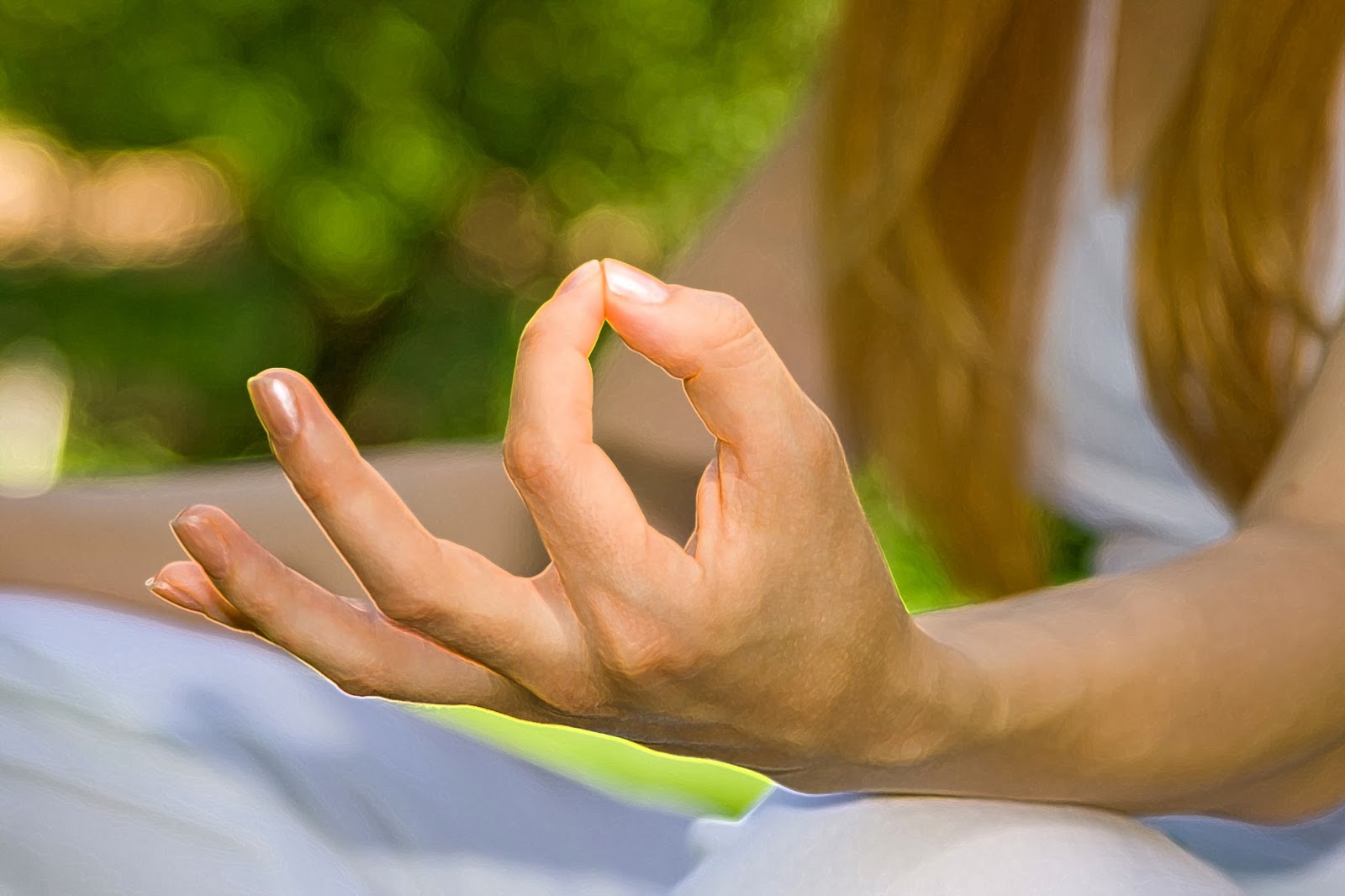
Shambhavi Mudra (eyebrow center gazing) Shambhavi mudra (eyebrow center gazing) internalizes pranic flow and mind – If the Hatha Yogi remains with the chitta and prana absorbed in the internal object and gaze motionless, though seeing, he is not seeing, this is called shambhavi mudra, realm of Shiva consciousness). Antarlakshyam bahirdrshtir nimeshonmeshavarjita / Esha sa sambhavi mudra vedasastreshu ghopita// With internalised one-pointed awareness and external gaze unblinking, that truly is shambhavi mudra, preserved in the Vedas. (Chapter -4, Verse 36). Antarlakshyavilinachittapavano Yogi Yada vartate / Drshtya nischalataraya bahir adhah pasyannapasyannapi / Mudreyam khalu sambhavi bhavati sa labdha prasadad ghuroh/ Śunyasunyavilakshanam sphurati tattattvam Padam sambhavam// If the Hatha Yogi remains with the chitta and prana absorbed in the internal object and gaze motionless, though seeing, he is not seeing, this is called shambhavi mudra. When it is bestowed by the guru’s blessing, the state of shoonyashoonya obtained. That is the real state of Shiva consciousness. (Chapter -4, Verse 37)

Prana and Mind
Prana and mind are controlled through each other Pavano badhyate yena manastenaiva badhyate / Manascha badhyate yena pavanastena badhyate// Through controlling the prana, thought is contolled and through control of thought, prana or air is controlled. (Chapter -4, Verse 21).

Parichaya Avastha (stage of increase)
Parichaya Avastha (stage of increase) Stage of increase – Sound of the drum, perfection or siddhi. Imbalance of the three humors or doshas, pain, old age, disease, hunger, sleep are destroyed. Trtiyayam tu vijneyo vihayo mardaladhvanih / Mahasunyam tada yati sarvasiddhisamasrayam// In the third stage is the experience of the sound of the drum. Then there is the great emptiness and one enters the place of total perfection or siddhi. (Chapter -4, Verse 74). Chittanandam tada jitva sahajanandasambhavah / Doshaduhkhajaravyadhikshudhanidravivarjitah// Then the bliss of chitta being obtained, spontaneous ecstasy arises. Imbalance of the three humours or doshas, pain, old age, disease, hunger, sleep are destroyed. (Chapter -4, Verse 75).

Main bones of the human skeleton
The main bones of the human skeleton are: The Skull – Cranium, Mandible, and Maxilla Shoulder girdle – clavicle and scapula Arm – humerus, radius, and ulna Hand – Carpals, Metacarpals, and Phalanges Chest – Sternum, and Ribs Spine – Cervical area (top 7 vertebrae), Thoracic (next 12), Lumbar (bottom 5 vertebrae), Sacrum (5 fused or stuck together bones) and Coccyx (the tiny bit at the bottom of the spine). Pelvic girdle – Ilium, Pubis, and Ischium. Leg – Femur, Tibia, and Fibula Ankle – Talus and calcaneus Foot – Tarsals, Metatarsals, and Phalanges.

Nishpatti Avastha (state of consummation)
Nishpatti Avastha (state of consummation) Nishpatti avastha or state of consummation – Rudra granthi is pierced, the fire of prana flows to the place of Ishwara. Then in the state of nishpatti or consummation is the tinkling sound of the flute resonating like a vina Rudraghranthim yada bhittva sarvapithaghatoanilah/ Nishpattau vainavah sabdah kvanadvinakvano bhavet// If the Rudra granthi is pierced, the fire of prana flows to the place of Ishwara. Then in the state of nishpatti or consummation is the tinkling sound of the flute resonating like a vina.(Chapter -4, Verse 76).

Nada anusandhana – exploration of sound “OM”
Nada anusandhana – exploration of sound “OM” Nada anusandhana – exploration of sound”OM” – Closing the ears, nose and mouth, a clear, clear sound is heard in the purified sushumna nadi. Muktasane sthito yogi mudram sandhaya sambhavim/ Śrnuyad dakshine karne nadam antastham ekadhih// The Hatha Yogi, sitting in Muktasana, concentrated in shambhavi mudra, should hear closely to the nada heard within the right ear. (Chapter -4, Verse 67). Sravanaputanayanayughala Ghranamukhanam nirodhanam karyam /Suddhasushumnasaranau Sphutamamalah sruyate nadah// Closing the ears, nose and mouth, a clear sound is heard in the cleansed sushumna nadi. (Chapter -4, Verse 68).

Mind dissolves in Samadhi
Mind dissolves in Samadhi Mind dissolves in Samadhi – As camphor burnt in fire, and salt mix in the sea, in samadhi mind dissolves into ‘Thatness’ Karpuramanale yadvatsaindhavam salile yatha/ Tatha sandhiyamanam cha manastattve viliyate// As camphor burnt in fire, and salt mix in the sea, in samadhi mind dissolves into ‘Thatness’. (Chapter -4, Verse 59). Knower, known and knowing united Jneyam sarvam pratitam cha jnanam cha mana uchyate/ Jnanam jneyam samam nashtam nanyah pantha dvitiyakah// All that can be known, all that is known and the knowledge, is called mind. When the knower and that which is known are lost together, there is no second way. (Chapter -4, Verse 60).

Mind – Senses, Prana – Mind, Nada – Prana
Mind – Senses, Prana – Mind, Nada – Prana Indriyanam mano natho manonathastu marutah/ Marutasya layo nathah sa layo nadamasritah// Mind is the controller of the senses, prana is the controller of the mind. Dissolution is the lord of the prana and that dissolution, laya is the foundation of nada. (Chapter -4, Verse 29).

Manonmani (consciousness without mind) State
Manonmani (consciousness without mind) State Manonmani (consciousness without mind) – Manonmani is obtained when prana flows in sushumna nadi Sushumnavahini prane siddhyatyeva manonmani/ Anyatha tvitarabhyasah prayasayaiva yoghinam// When the prana travels in the sushumna nadi this state of manonmani (consciousness without mind) is obtained. Therefore, other forced practices are just laborious to the Hatha Yogi. (Chapter -4, Verse 20).

Kundalini at Brahmarandhra Nadi
Kundalini is to be blocked at Brahmarandhra Nadi The ultimate union and samadhi happens at sahasrara chakra. This location is at the crown of the head. The very upper portion of head is called brahmarandhra. The energy and consciousness must remain there, if they gone beyond, there is no return back to the physical body. Jnatva sushumnasadbhedam krtva vayum cha madhyagham / Sthitva sadaiva susthane brahmarandhre nirodhayet// Staying in the most conducive place, having found out how to penetrate sushumna and move the prana through the middle passage, it should be blocked in the brahmarandhra, the center of higher consciousness state.(Chapter -4, Verse 16).

Karma annihilated when prana flows Sushumna Nadi
Karmas get annihilated when prana flows in Sushumna Nadi All Karmas(actions) get annihilated when prana flows in sushumna nadi, mind remain in complete shoonya(void). Sushumnavahini prane sunye visati manase/ Tada sarvani karmani nirmulayati yogavit// When prana is moving through sushumna nadi, mind is in pure shoonya(void). Then all the karmas of the one knowing yoga are annihilated. (Chapter -4, Verse 12).

Hatha Yogi – Ghata Avastha (vessel stage)
Ghata Avastha (vessel stage) Ghata avastha (vessel stage) – Vishnu granthi is pierced the greatest bliss is revealed. Then from that emptiness the sound of the kettledrum appears. Dvitiyayam ghatikrtya vayurbhavati madhyaghah / Drdhasano bhaved yogi jnani devasamas tada// In the second stage, when ghata is reached, the Shakti moves into the middle nadi. Being remain in his asana the wise Hatha Yogi is comparable to a divine being. (Chapter -4, Verse 72). Vishnughranthes tato bhedat paramanandasuchakah / Atisunye vimardas cha bherisabdas tada bhavet// When the Vishnu granthi is pierced the greatest bliss is revealed. Then from that emptiness the sound of the kettledrum appears. (Chapter -4, Verse 73).

Prana and Mind end in Samadhi state
Ending of Prana and Mind in Samadhi state Ending of Prana and Mind in Samadhi state – Activities of prana is annihilated, then mind is reabsorbed in samadhi. Yada samkshiyate prano manasam cha praliyate/ Tada samarasatvam cha samadhir abhidhiyate// When the activities of Prana are totally annihilated, then mind is reabsorbed in samadhi state achieved. (Chapter -4, Verse 6). Individual soul merge with universal soul, all desires eliminated When Jivatma unites with Paramatma, desires are eliminated Tatsamam cha dvayoraikyam jivatmaparamatmanoh / Pranashtasarvasangkalpah samadhih so abhidhiyate// When the twofold characteristics of the individual soul and cosmic soul become one, all desires are eliminated and that state is called samadhi. (Chapter -4, Verse 7).

Factors affecting blood pressure
Factors affecting blood pressure: Blood volume. Cardiac output Peripheral resistance. The elasticity of blood vessels. The diameter of the lumen of blood vessels. The viscosity of blood. Blood volume: it’s the total amount of blood in circulation. A sufficient amount of blood in blood vessels is necessary to maintain normal blood pressure loss of blood as in hemorrhage produces a fall in blood pressure. Cardiac output is the quantity of blood pumped by the heart in one minute. It’s the product of stroke volume and the heart rate. An increase in stroke volume increases systolic blood pressure. An increase in cardiac output increases both systolic and diastolic blood pressure. Peripheral resistance: is the resistance offered by blood vessels for the flow of blood. Resistance is offered mainly by small blood vessels, especially arterioles. Elasticity of the arterial walls distends the aorta when the ventricle contracts. The elastic recoils when the ventricle relaxes. This recoiled pushes the blood onwards. The decrease in elasticity as in atheroma produces a rise in blood pressure. 50 The diameter of the lumen of blood vessels: can be altered, narrowing of the lumen increases the resistance to blood flow and this increases blood resistance to blood flow and this increases blood pressure. Enlargement of the lumen has the opposite effect. The viscosity of blood: it’s the blood stickiness. The viscosity of blood spends on plasma, plasma proteins and number of the red blood cells. An increase in viscosity increases blood pressure.

Concentration on nada erase ‘bad karma’
Concentration on nada burns ‘bad karma’ Concentration on nada burns ‘bad karma’ – Bad karma’(sin) is destroyed by constant concentration on nada. The finite mind and prana dissolve into the spotless niranjana. Sada nadanusandhanat kshiyante papasamchayah/ Niranjane viliyete niśchitam chittamarutau// Sin is eliminated by constant concentration on nada or sound. The finite mind and prana dissolve into the spotless niranjana state. (Chapter -4, Verse 105).

Chitta: Vasana and Prana
Chitta has two qualities: vasana and prana Hetudvayam tu chittasya vasana cha samiranah / Tayorvinashta ekasmintau dvavapi vinasyatah// Chitta has two qualities, vasana and prana. When one of the two is eliminated or deactivated the other also will become inertia. (Chapter -4, Verse 22).

Hatha Yogi-Arambha Avastha (beginning stage)
Arambha Avastha (beginning stage) Arambha avastha (beginning stage) – When the Hatha Yogi experiences arambha in the void of the heart, his body becomes lustrous and brilliant with a divine smell and disease less. Brahmaghranther bhaved bhedad anandah sunyasambhavah/ Vichitrah kvanako dehe anahatah sruyate dhvanih// The Brahma granthi being pierced, the feeling of bliss arises from the nothingness; wondrous, tinkling sounds and the spontaneous sound anahata are heard within the body. (Chapter -4, Verse 70). Divyadehas cha tejasvi divyaghandhas tvaroghavan/ Sampurnahrdayah sunya arambhe yogavan bhavet// When the Hatha Yogi feels arambha in the void of the heart, his body becomes lustrous and brilliant with a divine smell and diseaseless. (Chapter -4, Verse 71).

Disorders of Heart
Disorders of Heart Cardiac failure: It’s a condition in which the myocardium of ventricle is unable to maintain sufficient circulation of blood to meet the needs of the body. Depending on onset it may be classified into: 1- Acute failure: when it’s sudden. 2- Chronic failure: when it’s gradual. Stenosis of valves: it’s the narrowing of the valves of the heart. In this condition, the edges of the cusps of the valves become rough. So they stick together and narrow the valvular opening. The incompetence of valves: it’s a functional defect caused by the failure of the valve to close completely. This allows blood to flow back into the ventricle when it relaxes. Angina pectoris: it’s a pain occurring due to myocardial ischemia. It occurs due to narrowing of coronary arteries. Due to this, physical effort causes severe ischemic pain. Myocardial infarction: it’s the death of an area of cardiac tissue due to lack of coronary blood supply to the segment of the myocardium. It occurs due to occlusion of the coronary artery. Cardiac arrhythmia: it’s a disorder in cardiac rate and rhythm. It occurs due to defective impulses formation and defective impulse conduction in the heart.

Vipareeta Karani Mudra (reversing attitude)
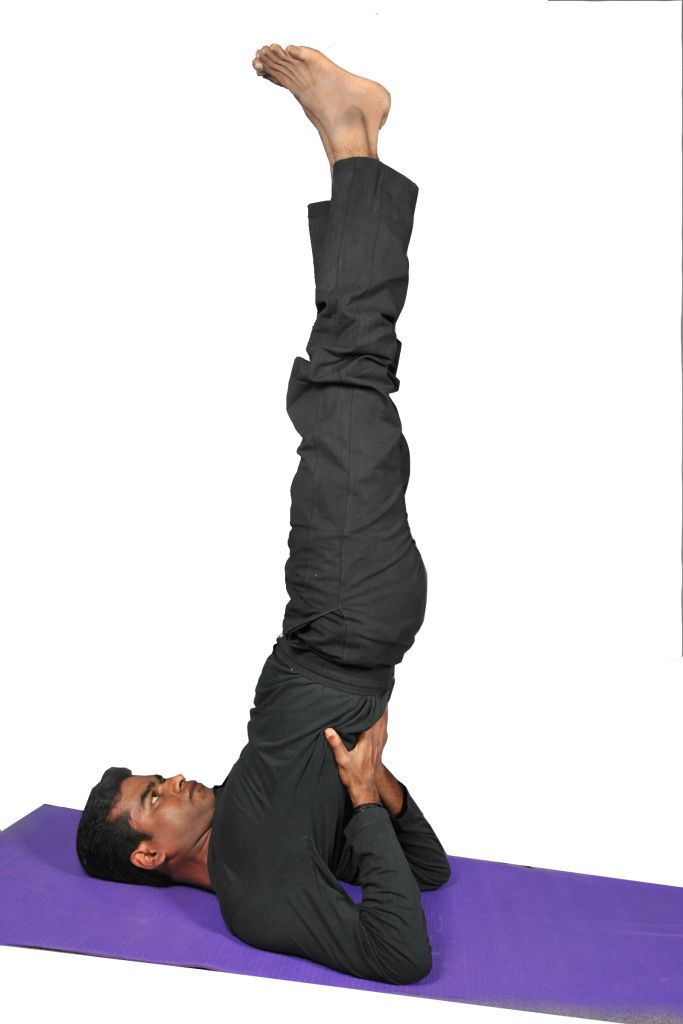
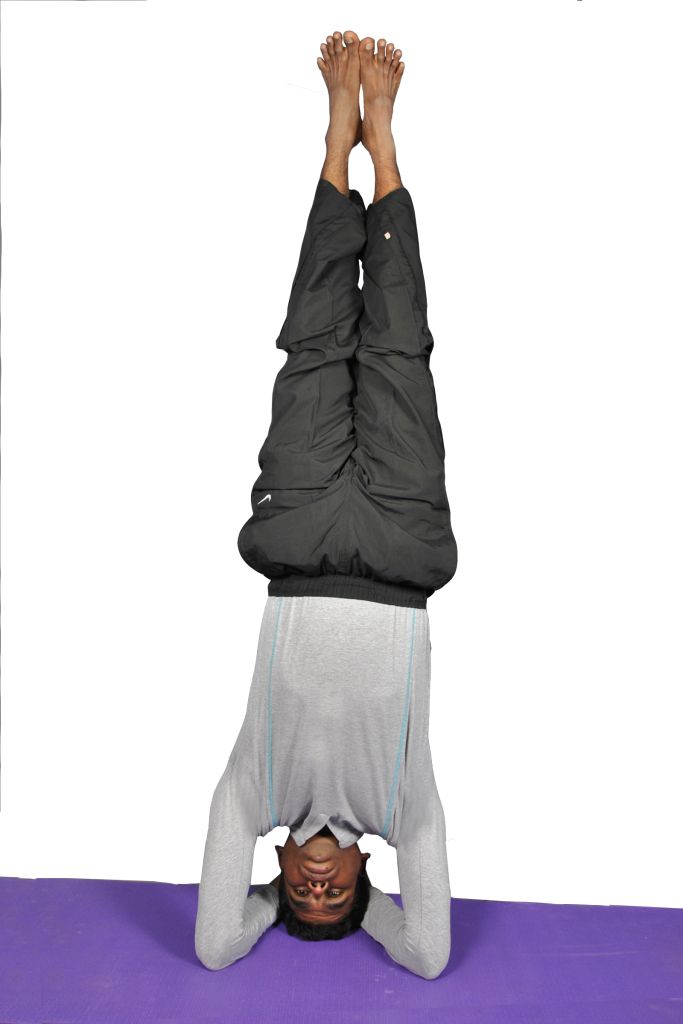
Vipareeta Karani Mudra (reversing attitude) Urdhvanabheradhastalorurdhvam bhanuradhah sasi / Karani viparitakha ghuruvakyena labhyate// With the navel region above and the palate below, the sun is above and the moon is below. This is called Viparita Karani, the reversing process. When given by the Guru’s instructions it is fruitful practice. (Chapter -3, Verse 79). Valitam palitam chaiva shanmasordhvam na drsyate / Yamamatram tu yo nityamabhyasetsa tu kalajit// The practice should be done daily, gradually increasing the duration. After six months of practice, grey hairs and wrinkles become vanished. One who practices it for yama three hours masters or conquers death.(Chapter -3, Verse 82).

Uddiyana Bandha (Abdominal Retraction Lock)
Uddiyana Bandha (Abdominal Retraction Lock) Atha uddiyanabandhah Baddho yena sushumnayam pranastuddiyate yatah/ Tasmad uddiyanakhyoa yam yoghibhih samudahrtah/ Uddiyana bandha is so-called by the yogis because through its practice the prana (is concentrated at one point and) rises through sushumna. (Chapter -3, Verse 55). Uddinam kurute yasmadavisrantam mahakhaghah/ Uddiyanam tadeva syattatra bandho abhidhiyate// The bandha explained is called the rising or flying bandha, because through its practice, the great bird Shakti flies upward with ease and comfortably. (Chapter -3, Verse 56). Udare paschimam tanam nabherurdhvam cha karayet / Uddiyano hyasau bandho mrtyumatangghakesari// Sucking the abdomen back in and making the navel rise is called Uddiyana Bandha. It is the lion which conquers the elephant death. (Chapter -3, Verse 57).

Moola Bandha(perineum/cervix retraction lock)
Moola Bandha(perineum/cervix retraction lock) Atha mulabandhah Parshnibhaghena sampidya yonim akunchayed ghudam/ Apanam urdhvam akrshya mulabandho abhidhiyate// Pressing the perineum/vagina with the heel and contracting the rectum so that the apana vayu moves upward it’s called moola bandha. (Chapter -3, Verse 61). Adhogatim apanam va urdhvagam kurute balat/ Akunchanena tam prahur mulabandham hi yoginah// By contracting the perineum the downward moving apana vayu is forced to go upward. Hatha Yogis called it as Moola Bandha. (Chapter -3, Verse 62). Gudam parshnya tu sampidya vayumakunchayed balat/ Varam varam yatha chordhvam samayati samiranah// Press the heel strongly against the rectum and contract forcefully and repeatedly, so that the prana energy rises. (Chapter -3, Verse 63). Pranapanau nadabindu mulabandhena chaikatam/ Gatva yogasya samsiddhim yachchato natra samsayah// There is no doubt that by practicing moola bandha, prana/apana and nada/bindu are joined, and total perfection gained.64

Maha Vedha Mudra (Great Piercing Attitude)
Maha Vedha Mudra (Great Piercing Attitude) Atha mahavedhah Mahabandhasthito yogi krtva purakam ekadhih/ Vayunam ghatimavrtya nibhrtam kanthamudraya// The Hatha Yogi, in the position of Maha Bandha, should breath in, make the mind steady and hold the movement of prana by doing the throat lock. (Chapter -3, Verse 26). Samahastayugho bhumau sphichau sanadayechchanaih/ Putadvayam atikramya vayuh sphurati madhyaghah// Placing the palms of the hands on the ground, he should slowly beat the bumps gently on the ground. The prana then leaves the two nadis ida and pingala and enters into the middle channel sushumna nadi. (Chapter -3, Verse 27). Mahavedhoa yam abhyasan mahasiddhipradayakah/ Valipalitavepaghnah sevyate sadhakottamaih// This is maha vedha, and by practicing its benefited great perfections. Wrinkles, grey hair and the trembling of old age are avoidable, thus the best of practitioners devote themselves to it. (Chapter -3, Verse 29). Khecharya mudritam yena vivaram lambikordhvatah/ Na tasya ksharate binduh kaminyasleshitasya cha// Even when there is movement of the bindu and it enters the genitals, it is catched by closing the perineum and is taken upward direction. (Chapter -3, Verse 43). Sushiram jnanajanakam panchasrotah samanvitam/ Tishthate khechari mudra tasminsunye niranjane// Five nadis unite in this cavity and it is the root source of knowledge. Khechari should be established in that void, untainted by ignorance. (Chapter -3, Verse 53).

Maha Mudra (The Great Attitude)
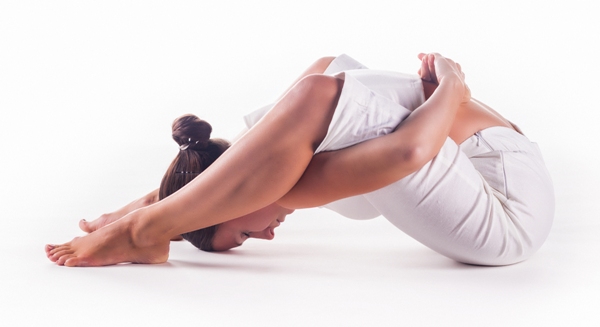
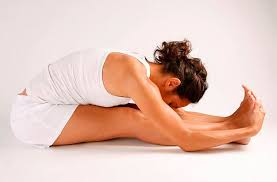
Maha Mudra (The Great Attitude) Padamulena vamena yonim sampidya dakshinam/ Prasaritam padam krtva karabhyam dharayeddrdham//(Chapter -3, Verse 10). Press the left heel into the perineum or vagina, straighten the right leg, and with the hands, strongly take hold of the outstretched foot. (Chapter -3, Verse 10). Kanthe bandham samaropya dharayed vayum urdhvatah / Yatha dandahatah sarpo dandakarah prajayate//(Chapter -3, Verse 11). By locking the throat and holding the breath, the prana rises straight, just like a snake beaten with a stick becomes straight. (Chapter -3, Verse 11). Rjvibhuta tatha saktih kundali sahasa bhavet/ Tada sa maranavastha jayate dviputasraya//(Chapter -3, Verse 12). So the kundalini sakti becomes very straight at once. Then the ida and pingala nadi become lifeless as the sakti enters into the sushumna nadi. (Chapter -3, Verse 12). Tatah sanaih sanaireva rechayennaiva veghatah/ Mahamudram cha tenaiva vadanti vibudhottamāh//(Chapter -3, Verse 13). Then breathe out slowly and gradually, not quickly. Indeed this is explained as maha mudra by the great siddhas. (Chapter -3, Verse 13).

Maha Bandha (Great Lock)
Maha Bandha (Great Lock) Parshnim vamasya padasya yonisthane niyojayet/ Vamorupari samsthapya dakshinam charanam tatha// Press the heel of the left foot in the perineum or vagina and place the right foot on the left thigh. (Chapter -3, Verse 19). Purayitva tato vayum hrdaye chubukam drdham/ Nishpidya yonimakunchya manomadhye niyojayet// Thus breathing in, bring the chin to the chest strenum bone, Jalandhara Bandha, constrict the perineal or cervical region as moola bandha and focus on the eyebrow center known as shambhavi mudra). (Chapter -3, Verse 20). Dharayitva yathasakti rechayedanilam sanaih / Savyangghe tu samabhyasya dakshangghe punarabhyaset// Having holding the breath as long as feeling comfortable, then breathe out slowly. Once completing the practice on the left side, practice again on the right side too.(Chapter -3, Verse 21). Matamatra tu keshamchitkanthabandham vivarjayet/ Rajadantasthajihvaya bandhah sasto bhavediti// Some of them think that the throat lock Jalandhara Bandha is unnecessary and it is sufficient to keep the tongue against the front teeth. (Chapter -3, Verse 22). Kalapasamahabandhavimochanavichakshanah/ Trivenisangghamam dhatte kedaram prapayenmanah// Maha bandha release one from the bonds of death, makes the three nadis join together in Ajna chakra and enables the mind to attain the sacred state of Shiva, Kedara. (Chapter -3, Verse 24).

Jalandhara Bandha (throat lock)
Jalandhara Bandha (throat lock) Atha jalandharabandhah Kanthamakunchya hrdaye sthapayechchibukam drdham/ Bandho jalandharakhyoayam jaramrtyuvinasakah// Contracting the throat by bringing the chin to the chest sternum bone is the bandha called Jalandhara Bandha. It eradicates old age and death. (Chapter -3, Verse 70). Badhnati hi sirajalamadhoghami nabhojalam/ Tato jalandharo bandhah kanthaduhkhaughanasanah// That is jalandhara bandha which holds the flow of nectar in the throat. It eliminates all throat ailments. (Chapter -3, Verse 71). Jalandhare krte bandhe kanthasamkochalakshane/ Na piyusham patatyaghnau na cha vayuh prakupyati// Having performed Jalandhara Bandha by contracting the throat, the nectar does not fall into the gastric fire and the prana is not disturbed. (Chapter -3, Verse 72). Kanthasamkochanenaiva dve nadyau stambhayed drdham/ Madhyachakramidam jneyam shodasadharabandhanam// By firmly contracting the throat, the two nadis, ida and pingala are paralyzed and the sixteen adharas of the manipura chakra are locked. (Chapter -3, Verse 73).

What is life and death; the functions of five Vayus
What is life and death? What is life and death; the functions of five Vayus Yavad vayuh sthito dehe tavaj jivanam uchyate / Maranam tasya nishkrantistato vayum nirodhayet//(Chapter -2, Verse 3). As long as the vayu (air and prana) remains in the body, that is called life. Death is when it leaves the body. Therefore, retain vayu. (Chapter -2, Verse 3).

Times and duration of Pranayama practice
Times and duration of Pranayama practice Times and duration of practice – Early morning, midday, evening and midnight, holding is step by step held up to eighty counts in one sitting. Pratarmadhyandine sayamardharatre cha kumbhakan/ Sanairasitiparyantam chaturvaram samabhyaset//(Chapter -2, Verse 11). Holding should be practiced perfectly four times a day: early morning, midday, evening and midnight, so that holding is step by step held up to eighty counts in one sitting. (Chapter -2, Verse 11).

Signs and symptoms of right Pranayama practice
Signs and symptoms of right Pranayama practice Kaniyasi bhavedsveda kampo bhavati madhyame / Uttame sthanamapnoti tato vayum nibandhayet//(Chapter -2, Verse 12). At first stage there is sweating, in the middle stage trembling, in the last stage complete steadiness, and therefore the breath should be withheld. (Chapter -2, Verse 12).

Sattvic quality of mind and the three Gunas for pranayama Practice
Sattvic quality of mind and the three Gunas for pranayama Practice Pranayamam tatah kuryannityam sattvikaya dhiya / Yatha sushumnanadistha malah suddhim prayanti cha//(Chapter -2, Verse 6). Therefore pranayama should, be practice daily with a sattvic quality of mind so that the impurities are removed out of sushumna nadi and cleanliness occurs. (Chapter -2, Verse 6).

Pranayama three types, rechaka, pooraka, and kumbhaka
Pranayama three types, rechaka, pooraka, and kumbhaka. Pranayamas tridha prokto rechapurakakumbhakaih / Sahitah kevalascheti kumbhako dvividho matah// (Chapter -2, Verse 71). Pranayama is said to be of three types: exhalation (rechaka), inhalation (pooraka), and retention (kumbhaka). Kumbhaka is again of two types: connected sahita and unconnected kevala. (Chapter -2, Verse 71). Yavat kevalasiddhih syat sahitam tavad abhyaset/ Rechakam purakam muktva sukham yadvayudharanam//(Chapter -2, Verse 72). Till attain perfection in kevala kumbhaka, sahita kumbhaka has to be practiced. When you are freed of inhalation/exhalation then the breath/prana is ceased spontaneously. (Chapter -2, Verse 72). Pranayamoa yam ityuktah sa vai kevalakumbhakah/ Kumbhake kevale siddhe rechapurakavarjite//(Chapter -2, Verse 73). Perfection of isolated holding is freedom from inhalation and exhalation process. This pranayama spoken of is verily kevala kumbhaka. (Chapter -2, Verse 73). Na tasya durlabham kimchittrishu lokeshu vidyate/ Saktah kevalakumbhena yatheshtam vayudharanat//(Chapter -2, Verse 74). Nothing in the three worlds of existence is unobtainable by him who has mastery over kevala kumbhaka and can hold the breath as desired time. (Chapter -2, Verse 74).

Nadis and Chakras for retention of Prana
Cleansing of the Nadis and Chakras for retention of Prana Suddhameti yada sarvam nadichakram malakulam / Tadaiva jayate yogi pranasamghrahane kshamah//(Chapter -2, Verse 5). When all the nadis and chakras which are full of impurities are cleansed, then the hatha yogi is able to retain prana. (Chapter -2, Verse 5).

Mind and Prana
Interconnection of Mind and Prana Interconnection of Mind and Prana and their controlling through Pranayama Chale vate chalam chittam nischale nischalam bhavet / Yogi sthanutvamapnoti tato vayum nirodhayet//(Chapter -2, Verse 2). When Prana moves, chitta the mental force too moves. When prana is still, Chitta also still without any movement. By this steadiness of prana the Hatha Yogi reaches stableness and should thus control the Vayu air. (Chapter -2, Verse 2).

Diet and Pranayama – Milk and Ghee is recommended
Diet and Pranayama – Milk and Ghee is recommended. At the beginning period of pranayama practice, food, consisting of milk and ghee is recommended very much. Upon being established in the practice such conditions are not necessary at all. (Chapter -2, Verse 14).

Veerasana (Hero’s Pose)
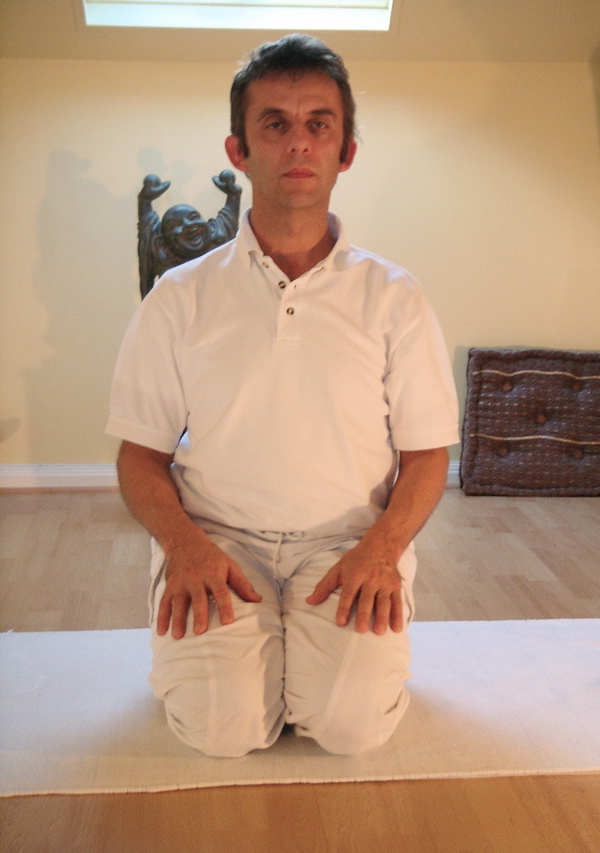
Veerasana (Hero’s Pose) Ekam padam tathaikasmin vinyased uruni sthiram / Itarasmims tatha chorum virasanam itiritam//(Chapter -1, Verse 21). Placing one foot by the opposite thigh and the other foot under the same thigh, its called as veerasana. (Chapter -1, Verse 21).

Swastikasana (auspicious pose)
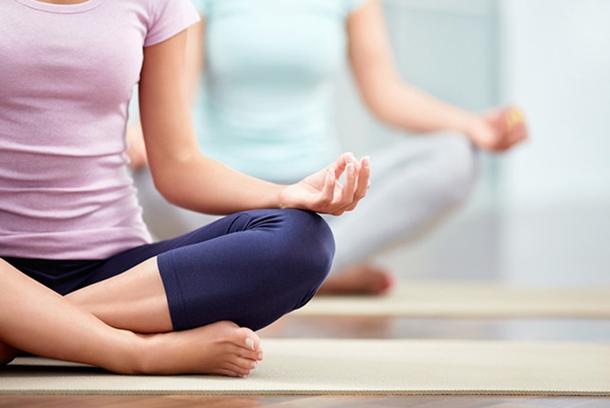
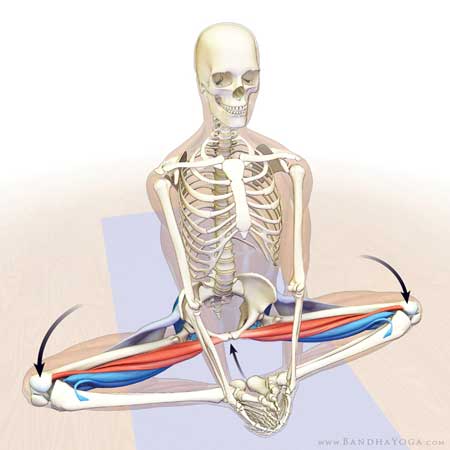
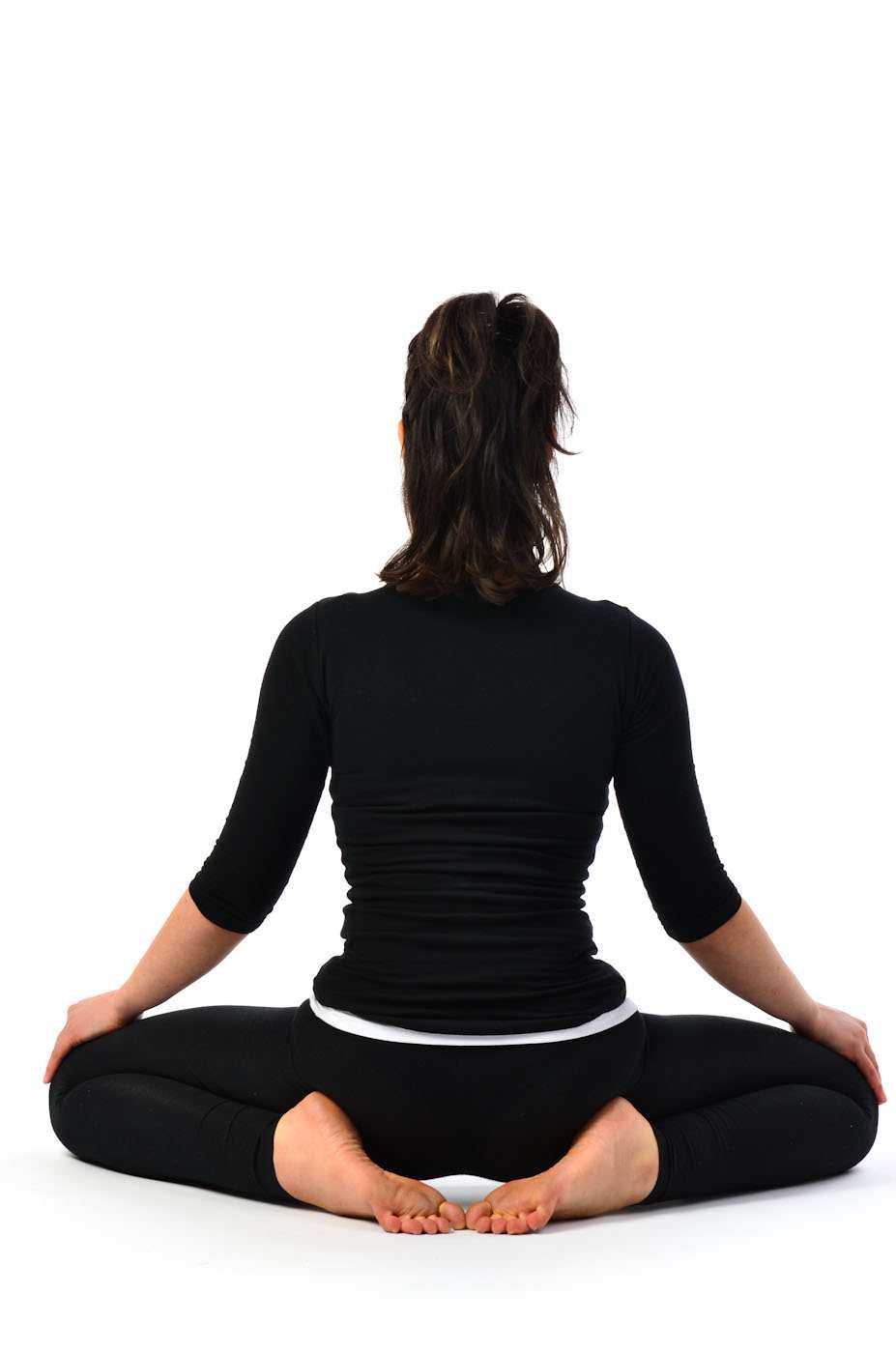
Swastikasana (auspicious pose) Janurvor antare samyak krtva padatale ubhe / Rjukayah samasinah svastikam tat prachakshate//(Chapter -1, Verse 19). Placing both soles of the feet on the inner side of the thighs, sitting equipoised with a straight body. This is called swastikasana). (Chapter -1, Verse 19).

Simhasana (lion’s pose)
Simhasana (lion’s pose) Ghulphau cha vrshanasyadhah Sivantyah parsvayoh kshipet/ Dakshine savyaghulpham tu Dakshaghulpham tu savyake//(Chapter -1, Verse-50). Place the ankles below the scrotum, right ankle on the left side, left ankle on the right side of the perineum. (Chapter -1,Verse-50). Hastau tu janvoh samsthapya Svangghulih samprasarya cha / Vyattavaktro niriksheta nasaghram susamahitah// (Chapter -1, Verse-51). Place the palms on the knees, fingers spread apart, keep the mouth open and gaze at the nose tip with a concentrated mind.(Chapter -1, Verse-51). Simhasanam bhavedetatpujitam yoghipungghavaih / Bandhatritayasandhanam kurute chasanottamam//(Chapter -1, Verse-52). This is simhasana, held in great esteem by the highest yogis. This most excellent asana facilitates the three bandhas. (Chapter -1, Verse-52).