
Yoga question and answer
1. Define ‘teaching’ according to Yoga perspective of view.
To share the step by step knowledge of the holistic yoga practice by making students understand with valid examples, for them to practice and understand the technique of union of body and mind.
2. Write the meaning for term guru and master and teacher and instructor.
The mentor who explains the students the method of yoga practice with commitment.(S)He stands out as an example of high disciplined master for their students to walk behind their trail.
3. What kind of space needed for hatha yoga practice?
A breathable space with a peaceful atmosphere with plants and yogic symbols in a clean ventilated room .
4. What type of “light or brightness’ need for Vinyasa yoga?
Moderate lighting is sufficient for vinyasa yoga since it is dynamic.
Dim light is only used for relaxed practices.
5. How and what types of music should be used in difference intensity of hatha yoga Class.
For moderate and dynamic yoga we must avoid music as its a source of distraction. But for gentle yoga we can play smooth beats like meditation music.
6. What type of yoga mat is good for asana practice?
A 6mm-10 mm thickness and with 183cm* 61cm dimensions made with natural rubber is the best yoga mat for practice.
7. Write what kind of attire ideal for Vinyasa yoga.
Loose clothing are ideal for dynamic practices to avoid blood clotting.
8. Write what kind of attire ideal for hatha yoga.
For moderate hata yoga practice we can prefer tight or loose fit up to ones interest.
9. Write reasons why we should be in ‘bare feet’ in yoga class.
Its definitely uncomfortable to practice with shoes on and is considered unclean and disrespectful to practice with slippers on. Moreover with bare foot the practice has better grip.
10. What time student should arrive and depart from yoga class.
Students must come to class before the teacher and leave after the class has completely ended. To leave in between they must leave the class silently after informing the teacher without disturbing other students.
11. Where will you allocate in class room, if students with injuries, pregnancy, physical
limitations, and with balancing problem.
For students with special body conditions we can accommodate a space for them beside the wall and make sure they are visible to the teachers eyes in case of emergency.
12. How to place “master’s mat” in class room.
The masters mat is at the front of the class with one horizontal and vertical mat on the floor to demonstrate in various directions.
13. Why we chant ‘om’ beginning of class. Write the meaning of ‘om’.
Om is said to be the celestial sound that resonates through living forms. We chat om before the class to enhance ourselves with the cosmic resonance.
14. How should be the voice and tone for hatha yoga class?
The voice and tone for a moderate hatha yoga class should be in a soft pace.
15. How should be the voice and tone for Vinyasa yoga class?
The tone for a dynamic class must be steadfast with short breaks in between and a bit commanding.
16. How to enquire new students. List out the six questions which you going to ask.
Ask for their Personal Information
● What motivated them to sign up for yoga classes
● Are you suffering from a medical condition?
● Have you had surgeries in the past?
● Are you capable of performing exercises?
● Which yoga exercises feel the most comfortable for you?
● Which movements make you feel good or bad?
17. Write levels of yoga classes.
Beginners – for those who are very new to yoga need help in understanding basic workout and instructions.
Intermediate- Those who are done with the basics and can try doing little more difficult poses.
Advanced- those who are well trained and are capable of doing any poses but want to do group practice.
18. Who is not deserved for advanced level yoga class?
Students with unstable mind and with body ailments must not practice advanced poses.
19. Write about ‘in – the – flow demonstration.
In the flow demonstration requires a steady body and mind to remember the asana sequence and demonstrate it without any jittery body movements.
20. How the ‘knees’ should be in tadasana.
The knee caps must be engaged and pulled up.
21. How the ‘hips’ should be in tadasana.
The hips must be squared facing the front and steady.
22. How to touch students while teaching asana.
After asking their permission we can touch them and adjust their pose with firmness and not too rough.
23. How to develop ‘practice teaching visual observation’ skills.
Learning the anatomy of the body can help us think which part of the body we must observe for each asana.
24. Write about social marketing.
We can market our yoga classes using social media and websites, or through word of mouth and pamphlets.
25. Define kinesthetic learning style.
Kinesthetic learning style involves visualization of the bones and muscles stretching, twisting and contracting in the body on doing a pose.
26. Write about safe biomechanics.
Safety is in essence using good form when exercising, which, if you think about it, is applying correct biomechanical principles: if you are applying good force, your form and movement will also be good, which greatly reduces the risk of injury.
1) Why yoga student should know about “anatomy and physiology”
An understanding of anatomy is key for the safety and development of your students. Integrating this knowledge can encourage injury prevention and facilitate the healing process.
2) Function of diaphragm in respiration.
Upon inhalation, the diaphragm contracts and flattens and the chest cavity enlarges. This contraction creates a vacuum, which pulls air into the lungs. Upon exhalation, the diaphragm relaxes and returns to its domelike shape, and air is forced out of the lungs.
3) What is the breathing pattern we should adopt for forward bending asana?
We must exhale before forward bending asanas.
4) What is the breathing pattern we should adopt for backward bending asana?
Usually we are told to inhale but ideally we must exhale on bending back.
5) What is the breathing pattern we should adopt for twisting asana? Exhaling before twisting contracts the lungs giving us more space to twist.
6) Explain about slow twitch muscle fiber (type -1), with respective hatha yoga style.
Slow-twitch muscle fibers have high concentrations of mitochondria and myoglobin. Although they are smaller than the fast-twitch fibers, they are surrounded by more capillaries (1,2). This combination supports aerobic metabolism and fatigue resistance, particularly important for prolonged submaximal (aerobic) exercise activities. Like doing Ashtanga yoga.
7) Explain about Fast twitch muscle fiber (type -2), with hatha yoga practices.
Typically, these have lower concentrations of mitochondria, myoglobin, and capillaries compared to our slow-twitch fibers, which means they are quicker to fatigue (1,2). These larger-sized fibers are also produce a greater and quicker force, an important consideration for power activities (1,2). Like practice of power yoga
8) Explain Aerobic hatha yoga
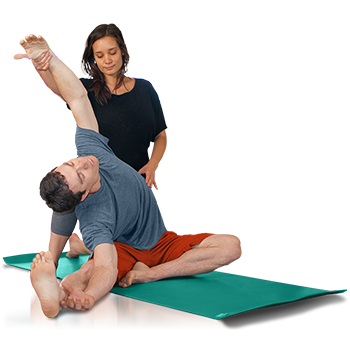
Slow and moderate practice with enough breathing gap for the muscles like practicing ashtanga yoga, helps burn fat and improve flexibility.
9) Explain anaerobic hatha yoga.
Practices like power yoga have no gap in between the practice for the muscles to breathe
increasing strength and endurance to muscles to counter fatigue.
10) Define Isometric Contraction
An isometric contraction is a muscle contraction without motion. Isometric contractions are used to stabilize a joint.
11) Define Isotonic Contraction
By definition, isotonic exercise occurs when the tension or torque generated by the muscle is constant throughout the movement.
12) Define Concentric Contraction
A concentric contraction is a type of muscle activation that causes tension on your muscle as it shortens.
13) Define Eccentric Contraction
Eccentric contraction occurs when the total length of the muscle increases as tension is produced.
14)Define Tendon
a flexible but inelastic cord of strong fibrous collagen tissue attaching a muscle to a bone.
15) Define Ligament
a short band of tough, flexible fibrous connective tissue which connects two bones or cartilages or holds together a joint.
16) Define Fascia
Fascia is a thin casing of connective tissue that surrounds and holds every organ, blood vessel, bone, nerve fiber and muscle in place.
17) Define Bursae
a fluid-filled sac or saclike cavity, especially one countering friction at a joint.
18) Define Symmetrical compression
Equal compression applied on symmetric muscles on either side of the body axis. Like Full Backbend
19) Define Asymmetrical compression
Unequal muscle compression on symmetric muscles. Like one side bending.
20) Define counter pose in asana practice.
A counterpose is an asana that integrates the action of the preceding asana.
21) Explain about the primary curve.
The thoracic and sacral (pelvic) curves are termed primary curvatures, because they alone are present during fetal life.
22) What is cardiac output? How it is calculated.
Cardiac output is the volume of blood the heart pumps per minute. Cardiac output is calculated by multiplying the stroke volume by the heart rate. … If a patient’s stroke volume is 75 mL with each contraction and his heart rate is 60 beats/minute, his cardiac output is 4,500 mL/minute (or 4.5 L/minute).
23) Define hypertension and hypotension.
Hypotension is the opposite of hypertension, which is high blood pressure. It is best understood as a physiological state rather than a disease. Severely low blood pressure can deprive the brain and other vital organs of oxygen and nutrients, leading to a life-threatening condition called shock.
24) Mention the factors affecting blood pressure.
Five factors influence blood pressure:
●Cardiac output.
●Peripheral vascular resistance.
●Volume of circulating blood.
●Viscosity of blood.
●Elasticity of vessels walls.
25) What is Sympathetic nervous system, correlate with hatha yoga practices and its benefits?
The sympathetic nervous system directs the body’s rapid involuntary response to dangerous or stressful situations. A flash flood of hormones boosts the body’s alertness and heart rate, sending extra blood to the muscles. The Practice of yoga asanas and pranayama help balance the nerve impulse and resist it without causing emotional pain.
26) What is Parasympathetic nervous system, correlate with asana practice and its benefits?
The parasympathetic nervous system predominates in quiet “rest and digest” conditions while the sympathetic nervous system drives the “fight or flight” response in stressful situations. The main purpose of the PNS is to conserve energy to be used later and to regulate bodily functions like digestion and urination. The practice of yoga can help balance the secretion of hormones and other body functions caused by parasympathetic system.
27) Explain term Abduction, in compare with asana movement.
Abduction is to retreat back to the position medially.
28) Explain term Adduction, in compare with asana movement.
Abduction is to position the part of the body laterally.
29) Explain term Supination, in compare with asana movement.
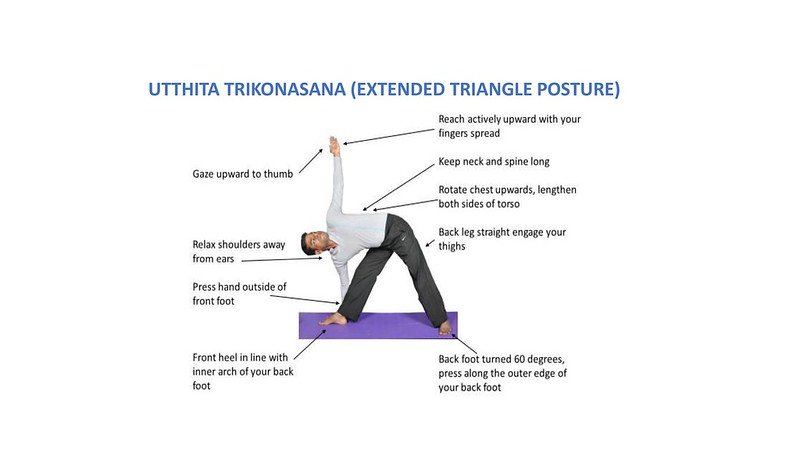
Rotation of the forearm and hand so that the palm faces forward or upward. Ex: extended triangle pose with one arm up and palms facing the front.
30) Explain term Pronation, in compare with asana movement.
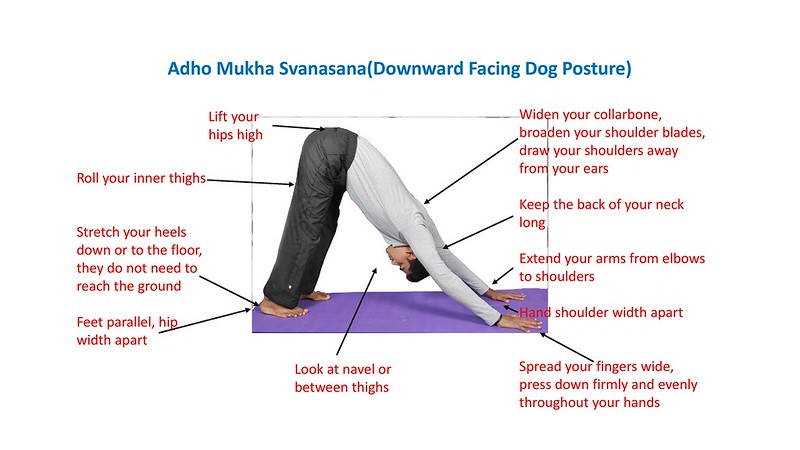
Rotation of the hand and forearm so that the palm faces backwards or downwards. Like down dog pose where the palms are pressed down the mat.
31) Explain term Lateral flexion, in compare with asana movement.
Movement of a body part to the side is called lateral flexion. For example, when you move your head toward one of your shoulders or bend your body sideways, you’re performing a lateral flexion.
32) Explain term Medial rotation (internal rotation), in compare with asana movement.
This movement is sometimes referred to as internal rotation because the motion is inward toward the body’s central vertical axis. An example of medial rotation is turning the legs at the hip so that the toes point toward one another.
33) Write about Endorphin theory
They found that the body has special receptors that bind to opioids to block pain signals. The scientists then realized that some chemicals in the body acted similarly to natural opioid medications, binding to these same receptors. These chemicals were endorphins.
34) Write about the gate theory of pain
The gate control theory of pain describes how non-painful sensations can override and reduce painful sensations. A painful, nociceptive stimulus stimulates primary afferent fibers and travels to the brain via transmission cells. Increasing activity of the transmission cells results in increased perceived pain.
35) Write about Active Static Stretching, an explain about with related hatha yoga style practice.
Active stretching is also referred to as static-active stretching . An active stretch is one where you assume a position and then hold it there with no assistance other than using the strength of your agonist muscles. Like in Forward bending we stretch our back thigh muscles.
36) Write about Isometric Stretching, an explain about with related hatha yoga style practice
Isometric exercises are contractions of a particular muscle or group of muscles. During isometric exercises, the muscle doesn’t noticeably change length and the affected joint doesn’t move. Isometric exercises help maintain strength. They can also build strength, but not effectively. Like performing extended leg supine poses.
37) Define Reciprocal Inhibition
Reciprocal inhibition describes the relaxation of muscles on one side of a joint to accommodate contraction on the other side.
38) Define Golgi Tendon Organ (GTO)
GTOs are nerve receptors that monitor muscle tension and if they detect excessive load or stretch, they will cause your muscle to relax so you do not tear a tendon or muscle. When applied during treatment, with firm pressure for 30 seconds, your muscles relax to reduce tone and spasm.
1. Misconception between Yoga and Hatha Yoga.
Hatha yoga incorporate asana, pranayama, kriyas, bandhas and mudras. Yoga as a whole emphasises more on meditation and mind control through various practices..
2. Types of yoga according to Bhagavad-Gita.
The three types of ‘yoga’ advocated by Bhagavad Gita are – Karma Yoga, Bhakti Yoga and Jnana Yoga.
3. Definition of yoga.
Yoga is a group of physical, mental, and spiritual practices or disciplines that originated in ancient India, aimed at controlling and stilling the mind.
4. What is the meaning for term “yoga”.
Yoga means to unite the body and mind.
5. Who is the founder of yoga?
Patanjali muni is said to be the founder of yoga.
6. What misconceptions exist between yoga and hatha yoga.
Yoga is about practicing towards the path of samadhi while hatha yoga is more about doing asanas.
7. Who is the author for yoga darshan?
Maharishi Patanjali
8. Which are called pre classical yoga?
Both the Vedas and Upanishads are said to form the basis of religious concepts for Hinduism, Buddhism and Jainism. The pre-classical period culminated in the creation of the 700-verse Bhagavad Gita, which is credited as the oldest known yoga scripture and is the most famous of Hindu texts.
9. Which period is called classical yoga? Classical period(184 BC to 148 BC)
During the classical period, Patanjali compiled 195 sutras (aphorisms) of yoga into a more concise form. Patanjali’s view on yoga is known as Raja Yoga.
10. Yoga belongs to which religion.
Hinduism (although yogic practices are also common to Buddhism and Jainism).
11. Meaning of hatha yoga.
Hatha yoga refers to a set of physical exercises (known as asanas or postures), and sequences of asanas, designed to align your skin, muscles, and bones.
12. Aim of hatha yoga.
Hatha yoga is a path toward creating balance and uniting opposites. In our physical bodies we develop a balance of strength and flexibility.
13. Difference between yoga and hatha yoga.
14. Relationship between hatha yoga and raja yoga.
Hatha yoga and Raja yoga. Hatha yoga focuses on the well-being of the physical body and includes all the asanas. Raja yoga helps to get inner peace, meditation or dhyan, relief from stress which is the biggest problems in today’s life. When clubbed together, Hatha yoga and Raja yoga give an overall benefit.
15. What are all practice included in hatha yoga.
Asana, pranayama, kriya, bandhas and mudras.
16. Concept of Modern hatha yoga style practice. With example.
Modern hatha yoga focuses on physical exercise and body sculpting.
Yoga styles examples: vinyasa, hatha, ashtanga , power and yin yoga.
17. Concept of traditional hatha yoga style practice. With example.
Traditional Hatha yoga focuses on the phylosophical aspects towards mind control by asanas and meditation techniques.
18. Mention four Hatha yoga texts with author.
1) Hatha yoga pradipika — Yogi Swathmarama 2)Gheranda Samhitha — Gheranda Mahamuni 3)Shiva Samhita — Lord Shiva 4)Hatharathnavali — Shrinivasa Yogi
19. Write 12 Styles of modern hatha yoga.
-Hatha yoga
-Vinyasa yoga
-Iyengar yoga
-Bikram yoga
-Yin yoga
-Power yoga
-Ashtanga yoga
-Restorative yoga
-Jivamukti yoga
-Shivananda yoga
-Vivekananda yoga
-Kundalini yoga
20. What is the purpose of hatha yoga?
To bring mental, physical, and vital energy balance in oneself through mastery of the body is the main purpose of hatha yoga.
21. Define chakra.
Chakras are each of seven centres of spiritual power in the human body.
22. List out the 8 cakras with number of petals. Muladhara- 4
Svadhishthana- 6
Manipura- 10
Anahatha- 12
Vishudhi- 16
Ajna – 2 Bindu-1
Sahasrara- 1000
23. What are all four Purusharthas? Why dharma is important in it.
1. dharma (righteousness), 2. artha (material wealth), 3. kama (desire) and 4. moksha (salvation).
Dharma can be described as right conduct, righteousness, moral law, and duty. Anyone who makes dharma central to one’s life strives to do the right thing, according to one’s duty and abilities, at all times.
24. Write four stages of life. Which ashram is important in it? Brahmacharya
Grihastha Vanaprastha
Sannyasa (renunciate)
Grihastha stage was considered as the most important of all stages in sociological context, as human beings in this stage not only pursued a virtuous life, they produced food and wealth that sustained people in other stages of life, as well as the offsprings that continued mankind.
25. What is meant by agami karma
Agami karma is described as future karma: effects that are the fruit of our current actions, decisions and virtuous works. In a spiritual practice of yoga, karma is often represented with a bow and arrow analogy.
26. List out 5 yamas
The Yoga Sutra describes five different yamas, including ashimsa (non-violence), asteya (non-stealing), satya (truthfulness), aparigraha (non-possessiveness), and brahmacharya (celibacy or fidelity).
27. Write seven steps of jnana yoga according to adi sankara.
1.Shubhechha (good desire). …
2.Vicharana (Philosophical inquiry). …
3.Tanumanasi (Subtlety of mind). …
4.Sattvapatti (Attainment of Light). …
5.Asamsakti (Inner Detachment). …
6.Padartha Bhavana (Spiritual Vision). …
7.Turiya (Supreme Freedom).
28. Meaning of the word “Upanishad”
The Sanskrit term Upaniṣad (from upa “by” and ni-ṣad “sit down”) translates to “sitting down near”, referring to the student sitting down near the teacher while receiving spiritual knowledge. (Gurumukh) Other dictionary meanings include “esoteric doctrine” and “secret doctrine”.
29.What is Preyas?
Preyas is a Sanskrit word which can be translated as “dearer”, “more agreeable” or “more desired”. Preyas can also mean “immediately palatable,” and as such it is known in yogic and Hindu philosophy as a way of life which is based on seeking instant gratification.
30. What is the difference between, awareness and consciousness?
Consciousness and Awareness, both words seem to carry the same meaning, but they differ semantically as there is a difference between them. Awareness is having knowledge of something. On the other hand, consciousness is the state of being aware of something and this can be regarded as more spiritual kind of definition.
31. Write four state of consciousness.
Mandukya Upanishad is the source of the Hindu revelations about the Four States of Consciousness and defines these states as waking, dreaming, deep sleep, and turya (the fourth state, which is the state of enlightenment).
32. Write five kosha.
●Annamaya. (Materialist or physical aspects)
●Pranamaya.(Vital energy)
●Manomaya.(Mind)
●Vijnanamaya.(Scientific consciousness)
●Anandamaya.(Bliss)
33. What practices will you prescribe for Annamaya Kosha? Asana practices is prescribed for mastery over annamaya kosha.
34. Write nine obstacles as mentioned by sage patanjali.
1.Vyadhi: Physical illness
2.Styana: Lack of interest or enthusiasm
3.Samshaya: Doubt or indecision
4.Pramada: Carelessness or negligence
5.Alasya: Physical laziness
6.Avirati: Desire for sense objects
7.Bhrantidarshana: Living under illusion or wrong understanding
8.Alabdhabhumikatva: Missing the point or inability to hold on to what is achieved
9.Anavasthitatva: Inability to maintain the achieved progress
35. List out the Astanga yoga.
The eight limbs of yoga are yama (abstinences), niyama (observances), asana (yoga postures), pranayama (breath control), pratyahara (withdrawal of the senses), dharana (concentration), dhyana (meditation) and samadhi (absorption).”
36. Explain about in your own words ‘chitta’.
Citta is the object of meditation in the third part of Satipatthana, also called Four Foundations of Mindfulness.
37. Write types of chitta vrittis. Pramana (correct knowledge) Viparyaya (misconception)
Vikalpa (conceptualization) Nidra (sleep)
Smriti (memory)
38. Why we should block chitta.
To avoid the mind from controlling our will.
39. What is meant by chitta?
‘Citta’ primarily represents one’s mindset, or state of mind. It is the term used to refer to the quality of mental processes as a whole.
40. Define Pramana
Pramana literally means “proof” and “means of knowledge”. In Indian philosophies, pramana are the means which can lead to knowledge.
41. How many sutras are their in each pada, in Patanjali yoga sutra.
Samadhi Pada (51 sutras). Sadhana Pada (55 sutras). Vibhuti Pada ( 56 Sutras.) Kaivalya Pada.(34 sutras)
42. What is meant by abhyasa .
“Abhyasa or practice is the effort to fix one’s own self in a given attitude.” Prolonged periods of practice within a given attitude to align ourselves with our soul’s freedom, this is practice.
43. Symptoms of mental distraction, according to Patanjali.
The obstacles, or mental distractions, are sickness, laziness, doubt, lack of attention and enthusiasm, lack of energy, sensuality, false perception, and failure to attain or maintain concentration.
30. The symptoms of a distracted mind are grief, anxiety, trembling, and irregular breathing.
44. Asana according to Patanjali.
The Yoga Sutras of Patanjali define “asana” as “[a position that] is steady and comfortable”.
45. Define Aparigraha
Non-possession is a philosophy that holds that no one or anything possesses anything.
46. Difference between dharana and dhayana.
Dharana is the active focusing and concentration on one point. Dhyana is a state of mind where one’s focus is maintained or absorbed in the point of focus.
47. Difference between dhayana and Samadhi.
Dhyāna is Meditation. Samādhi is trance where the Mind is devoid of its own nature and the object only shines forth.
48. Mention three main characters in Katha Upanishad.
The Upanishad is the legendary story of a little boy, Nachiketa – the son of Sage Vajasravasa, who meets Yama (the deity of death).
49. Mention Lord Yamas three boons to Nachiketa.
Nachiketa’s first boon was that his father should not be angry with him, which was immediately granted.
The second boon was to know the truth behind the sacrificial fire. The third boon was to know what happens after death.

Best Yoga Teacher Training Institutes in Bangalore (2026–27): Online vs. Offline vs. Hybrid Courses—Which One Is Best for You?The habit students discover …
Hybrid Yoga Teacher Training: The New Path to Certification The habit people discover has transformed efficiently over ancient times for a few …
Do You Need expected Flexible to Join a Yoga Teacher Training? One of the ultimate frequently asked questions newcomers request before touching …
Best Yoga Teacher Training Institutes in Bangalore (2026–27): Compare Lead Trainers, Faculty & Choose the Right School When selecting a Yoga Teacher …


















Tags
- Yoga Teacher Training
- Yoga Questions and Answers
- Yoga TTC
- Hatha Yoga
- Vinyasa Yoga
- Yoga Anatomy
- Yoga Physiology
- Yoga Teaching Methodology
- Yoga Instructor
- Yoga Certification
- Yoga Alliance
- Yoga Education
- Yoga Exam
- Yoga Teaching Skills
- Pranayama
- Biomechanics
- Yoga Students
- Yoga Practice
- Yoga Teacher Course
- Karuna Yoga Vidya Peetham
Important Links
- Apply Now Online Registration
- Review By Student
- Accreditation – Yoga Alliance USA
- Gallery
- FAQ
- KARUNA YOGA VIDYA PEETHAM
- Yoga PDF Book Free Download
- Asana Gallery
- Rules and Regulations
- Dr. S. Karuna Murthy
- Eligibility Criteria – TTC
- Admission Rules and Regulations – TTC
- Anti-Harassment/Sexual Misconduct Policy
- Refund & Cancellation Policy
- Week-Days 200 Hr Yoga Teacher Training Certificate Course
- Weekend 200 Hr – Yoga Teacher Training Certificate Course
- 200 Hour – Yoga Therapy Teacher Training Certificate Course
- 50 Hrs – Advanced Meditation Teacher Training Certificate Course
- 50 Hrs – Advanced Mudra Teacher Training Certificate Course
- 50 Hrs – Somatic Yoga Teacher Training Certificate Course
- Yoga PDF Book Free Download
 Karuna Yoga Vidya Peetham – Yoga Teacher Training – J. P. Nagar
NO.1271, FIRST FLOOR, 20th Main, or, Central Mall, Ragigudda Metro Station, Marenahalli, 2nd Phase, J. P. Nagar, Bengaluru
-
 I recently completed my Breathwork and Pranayama Teacher Training Course with Karuna Yoga, and it was a truly enriching experience. The program was thoughtfully structured, with concepts explained in a simple, clear, and effective manner. … More The trainer ensured that I thoroughly understood the techniques through both detailed instruction and hands-on practice during the sessions.
What stood out most was the genuine commitment to learning and personal growth, creating a supportive and nurturing environment throughout the course. I would highly recommend Karuna Yoga to anyone seeking a credible, authentic, and professional institute for Breathwork and Pranayama training. Their dedication and expertise are truly exceptional. 😊🙏 -
I came to Bangalore to follow a 10 day private teacher training with Karuna, and it was a truly enriching experience.
I already hold a 200 h TTC in Hatha Yoga, as well as other diplomas. However, through my own experience, I feel that … More a 200 h yoga training is not enough to fully grasp the bigger picture of what yoga truly is. What I deeply appreciated with Karuna is that he also offers trainings focused on specific subjects, allowing for a much deeper and more embodied understanding.
For this private yoga training, I chose to explore mudras, mantras, and somatics. Being able to dive deeply into these themes helped me clarify and understand other aspects of yoga more clearly, not only intellectually, but also through direct experience, guided by Karuna.
The one to one format is a real gift. It creates space to ask questions, to slow down, and to spend more time on areas that personally need deeper integration. Karuna also shares related knowledge and encourages dialogue with what you are learning, making the whole process very alive and meaningful.
I truly appreciate how Karuna offers many different subjects and learning formats, and how he adapts his teaching to each person. His approach is attentive, sensitive, and respectful of individual paths.
Another beautiful aspect is that during the weekend, group students join the classes. Karuna skillfully manages to continue our individual learning while also allowing a collective learning experience. This opens the learning in a different and enriching way.
I had a wonderful time, and I will very likely continue other trainings with Karuna, either online (which is also an option 😉) or in Bangalore.
Namaste 🙏 -
I, Pinkiey K, recently completed the Pranayama Teacher Training Program, and it was a truly enriching experience. The course was well-structured and covered both the depth and practical application of pranayama in a very meaningful way. … More The teachings were presented with clarity, patience, and authenticity, making even complex concepts easier to understand and integrate into practice.
What I appreciated most was the balance between traditional wisdom and practical guidance for teaching and personal growth. The program not only deepened my understanding of breathwork and its effects on the mind and body, but also strengthened my confidence in applying these practices responsibly.
I am grateful for the knowledge, discipline, and insights gained through this training, and I know these learnings will continue to support my personal journey and professional work over time. 🙏
Special gratitude to Trainer Dr. Murthy for sharing his knowledge and guidance throughout the program.
Highly recommended. -
I recently completed the 200 Hours Yoga Teacher Training Course with Karuna yoga Vidhya peetham .
I’m happy I chose Karuna yoga Vidhya peetham under the guidance of Dr Karuna murthy sir .
The program was well-structured and offered in-depth … More knowledge of yoga asanas, pranayama, meditation, anatomy, philosophy, and teaching methodology.
Dr.Karuna murthy sir were highly knowledgeable, supportive, and encouraging throughout the journey. The training helped me develop better alignment, discipline, confidence in teaching, and a deeper understanding of yoga both practically and theoretically. It was a highly enriching and transformative learning experience, and I am grateful for the guidance and support provided throughout the course. -
Teacher Training Course offered at Karuna Yoga Vidyapeetham is unparalleled to any other course I’ve taken.
In my 13 years practice, Dr Karuna has so effectively shared his knowledge that the message will forever stay with me.
Will highly … More recommend learning from this institution- they offer various levels and forms of yoga teacher trainings.
Simply one of the best Yoga Schools in India -
I completed my 200-hour TTC at Karuna Yoga Vidya Peetham in Bengaluru, and it was a truly enriching experience. Karuna sir is very knowledgeable, patient, and supportive, and gives personal attention to each student. The course is well-structured, … More covering not just asanas but also yoga philosophy, anatomy, and meditation in a balanced way. I felt more confident in my practice and gained a deeper understanding of yoga overall. It’s a great place for anyone looking for authentic and meaningful yoga training.
-
This Advanced Mudra Therapy TTC is one of the most authentic and comprehensive yoga programs you could get.
What truly stands out is the integrity of the teaching. Sir is a sincere follower of yoga and its principles – nothing is faked … More or diluted for appearance. The teaching comes from real practice, which creates deep trust. There is a perfect balance of discipline and flexibility, allowing learning to be structured yet natural.
The range and depth of mudras covered is exceptional. Every possible mudra is taught systematically, and haven’t seen any other school approach Mudra Therapy with this level of completeness. The therapeutic application is clearly explained, with continuous guidance and hand-holding throughout the course, making the learning practical and confident. -
Completed my GID Teacher Training Certificate Course with Karuna yoga Vidya Peetham.
I’m so happy I chose my yoga teacher training with Karuna yoga Vidya Peetham under the guidance from the best knowledgeable teacher Dr.Karuna Murthy sir … More 🙏🙏
There are a lot of learning and unlearning involves in it. All the topics of Yoga Philosophy, Sat karma, Anatomy were taught very nicely.
Being a regular yoga practitioner I joined Karuna yoga and learnt more New asanas, Therapies and posture corrections.
I am glad that I choose Karuna yoga to be part of my journey🧘♂️ -
I recently completed an Advanced Pranayama course online with Dr. Murthy, and it more than met my expectations. The course materials were extensive and thoughtfully organized, covering a wide range of important topics and providing a strong … More foundation in traditional pranayama practices. Dr. Murthy is very knowledgeable and is a patient teacher. Overall, the training supported both my understanding and my ongoing practice, and it has given me tools I will continue to work with over time. 🙏
-
I recently completed my 200-hour Yoga Teacher Training Course (TTC) with Karuna Yoga Vidya Peetham, and it was a truly transformative experience. Under the expert guidance of Dr. Murthy sir, I gained deeper insights into Hatha Yoga practices … More and teaching ethics where this also covered essential topics like Yoga Philosophy, Yogic Physiology Anatomy, and Shathkarma practices. Dr. Murthy sir also focused on helping us learn new asanas, value of asanas- mudras, method of yoga teaching as well as posture balance and corrections. I highly recommend Karuna Yoga Vidya Peetham to anyone seeking a comprehensive yoga teacher training program.
-
Just completed a Somatic Yoga course online with Dr. Murthy, who was very informative, kind, and a good teacher. Dr. Murthy has extensive knowledge in the yogic sciences. He also provided in depth notes that were very helpful. I gained … More much insight through my course of study in Somatic Yoga.
-
I am very satisfied with the Online Yoga Nidra and Meditation Teacher Training. The course was very professional, with plenty of study materials, knowledge, and a well-balanced pace.
I truly appreciated the variety of practices combined … More with a broad theoretical foundation, including history and other essential aspects. The training was both practical and inspiring, and I am already applying what I have learned in my own work. -
I completed 200 hrs Yoga Teacher Training (TTC) Course at Karuna Yoga Vidya Peetham, under the guidance of Dr. S Karuna Murthi.The programme is very well designed. The yoga practice,teaching methodology ,offering traditional yogic principles … More and modern teaching techniques.
Dr.Karuna Murthi's expertise,supportive and personalized guidance made the experience better and boosted the confidence and made to achieve most of advanced level asanas.
For anyone seeking a world-class yoga education, Karuna Yoga Vidya Peetham is an excellent choice. Highly recommended. -
I just completed my yoga teacher training at Karuna Yoga Vidya Peetha, and I can honestly say it was one of the most enriching experiences of my life. From day one, the learning environment was warm and supportive, making it easy to grow, … More both physically and mentally. The course itself was well-structured, covering everything from asanas and alignment to pranayama, meditation, and the philosophy behind yoga. The classes were offered both online and offline, which made learning flexible and accessible.
What I appreciated most was how yoga was taught as a way of life, emphasizing the connection between body, mind, and spirit beyond just physical practice. Murthy Sir was incredibly knowledgeable and patient, always encouraging us to push our limits while respecting our own pace. His feedback made such a difference in my learning process, and the small class size allowed for plenty of individual attention.
If you’re looking for a yoga institute that truly cares about your growth, I’d highly recommend Karuna Yoga Vidya Peetha. It’s more than just a training program but a transformative experience that stays with you long after you leave. -
Hi, I am Valarmathi Ganesan.
I’ve joined the online Mantra Chanting Teacher Training Course, and it’s truly worth every rupee—structured, insightful, and transformative.
Dr. Kanura Moorthy is an exceptional mentor. His calm, patient approach … More and depth of knowledge elevate the entire learning experience. He addresses every doubt with clarity and precision, ensuring true understanding.
Under his guidance, mastery feels attainable.
Highly recommended for those seeking authentic and powerful mantra therapy training. The course quality is outstanding. -
I learned cyclic meditation, pranayama and some of the asanas as part of my PhD study. Sir's class was very good. He has given me so many references which help me to design my study as I was unaware more about meditation. He gives … More me online classes individually and in detail. I recommend karuna Yoga Vidya Peetham for others who wish to learn yoga and meditation.
-
🌟 Exceptional Yoga Teacher Training at Karuna Yoga Vidyapeetham, Bangalore 🌟
I completed Yoga Teacher Training Course at Karuna Yoga Vidyapeetham, led by the esteemed Dr. S Karuna Murthi and his dedicated faculty team. The program was … More meticulously designed, offering a harmonious blend of traditional yogic principles and modern teaching methodologies.
Dr.Karuna Murthi's expertise and personalized guidance made the experience truly enriching, fostering both professional growth and personal transformation. The serene environment and supportive atmosphere further enhanced the learning journey.
For anyone seeking a world-class yoga education, Karuna Yoga Vidyapeetham is an excellent choice. Highly recommended! 🧘♂️✨ -
Karuna Murthy is a good teacher. He teaches with patience and ensures that the students develop a good understanding of the subject.
-
Recently completed my 300 hr ttc yoga teacher training program, overall course designed unique, trained me versatile.
Thanks to
Karuna yoga team -
completed my 200-hour training in December 2022 from Karuna Yoga. One of my nicest and most
beautiful experiences ever I had in my life. I had such a wonderful time that I decided to prolong my stay
for a 300-hour advanced course. The instructors … More are highly supportive and professional. Since the
beginning, they have led me in the right direction. In addition, everyone in staff and in management is
really gracious and humble. I was given family-like treatment by them. If you're looking for a good place to
practise yoga, I absolutely suggest Karuna Yoga Vidya Peetham. -
Complted my 200 TTC Course with Karuna yoga Vidya Peetham.I’m so happy I chose my yoga teacher training with Karuna yoga Vidya Peetham under the guidance from the best knowledgeable teacher Dr.Karuna Murthy sir
There are a lot of learning … More and unlearning involves in it. All the topics of Yoga Philosophy, Sat karma, Anatomy were taught very nicely. As a new yoga learner I joined Karuna yoga and learnt more New asanas, Therapies and posture corrections. I am glad that I choose Karuna yoga to be part of my journey 😄 -
I recently had the pleasure of completing RYT 200 hrs TTC course at the Vidyaniketan Department of Yoga, and I must say it was an enriching experience. The instructors at Vidyaniketan are highly knowledgeable and experienced. Happy to have … More been a part of the team!
-
Yoga helps improve balance, strength, and flexibility. It reduces stress and feel happier and more well-being. Also improves mental and emotional health..
-
Accomplished 200 hours YOGA TTC with karuna yoga at Vidyanikethan, Ernakulam.
Profound knowledge of the faculties helped me to delve dive into the ocean of yoga philosophy
It was really a marvellous experience -
Very thorough, precise and knowledgeable Dr. Karuna Murthy Sir. Thank you very much for the opportunity allowing me to study at school. I recommend it to everyone who wants to get deeper knowledge.
-
Karuna Yoga Vidya Peetham, Yoga teacher training in Bangalore, is incredible! I did 500 hours course discovered a lot about yoga and about myself. I'd also like to
thank my wonderful teachers. Special thanks to my Guru Dr. Karuna sir … More for his extreme patience and deep knowledge.
Thank you 🙏 -
I recently completed Yoga Teachers Training Course with Karuna yoga vidya petham from Vidyaniketan College, Ernakulam. And It gave me so much of new insights in terms of personal health and overall wellbeing. I'm sure that I became … More more healthy, calm, and quality human by going through this yoga program. The faculties are really good and experienced.
If you are someone looking for a good career in Yoga, you can choose this institution without any hesitation.


