
Shambhavi Mudra (eyebrow center gazing)
Shambhavi Mudra (eyebrow center gazing) Shambhavi mudra (eyebrow center gazing) internalizes pranic flow and mind – If the Hatha Yogi remains with the chitta and
Karuna Yoga Vidya Peetham Bangalore

Shambhavi Mudra (eyebrow center gazing) Shambhavi mudra (eyebrow center gazing) internalizes pranic flow and mind – If the Hatha Yogi remains with the chitta and
Prana and mind are controlled through each other Pavano badhyate yena manastenaiva badhyate / Manascha badhyate yena pavanastena badhyate// Through controlling the prana, thought is
Parichaya Avastha (stage of increase) Stage of increase – Sound of the drum, perfection or siddhi. Imbalance of the three humors or doshas, pain, old
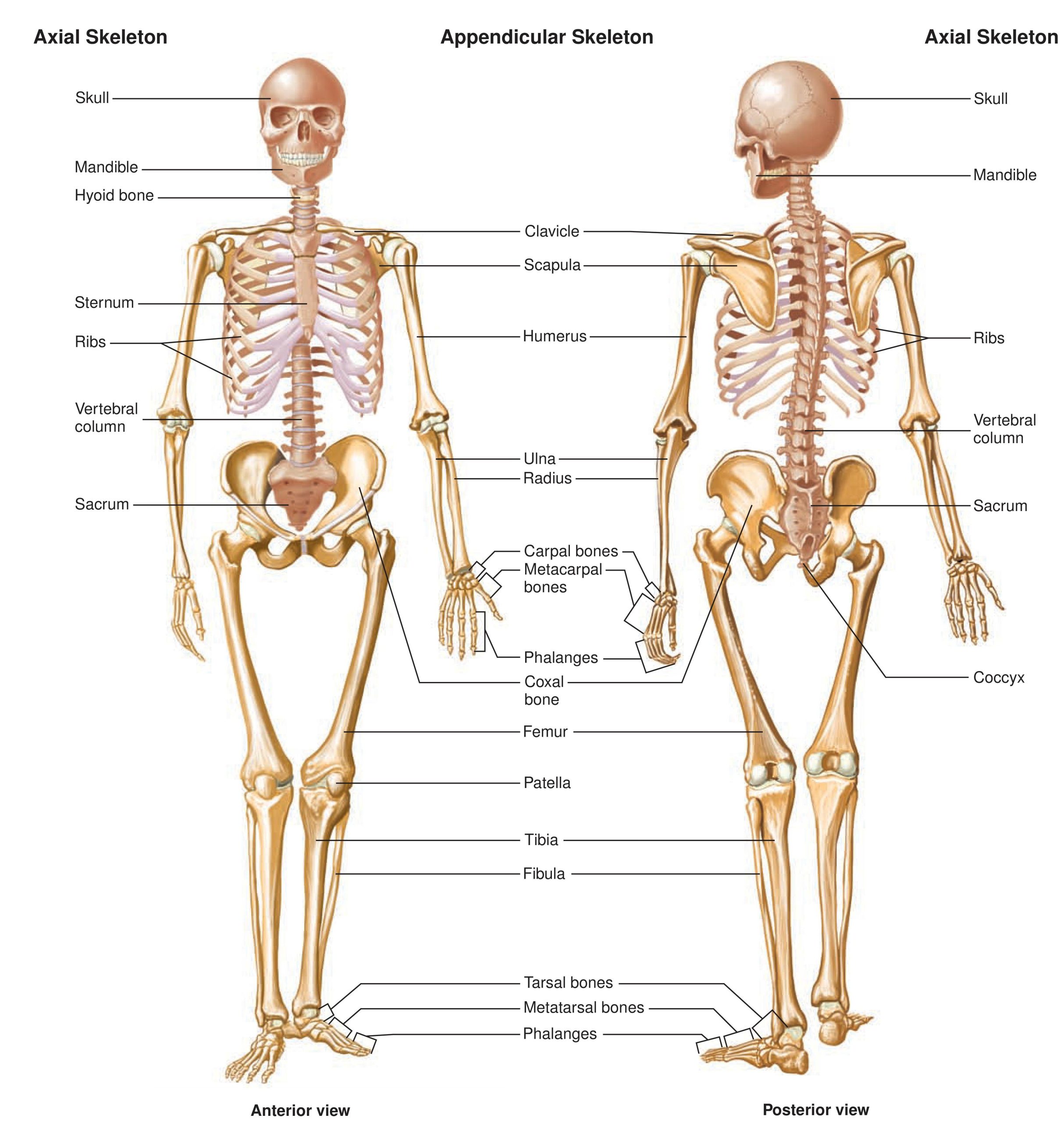
The main bones of the human skeleton are: The Skull – Cranium, Mandible, and Maxilla Shoulder girdle – clavicle and scapula Arm – humerus, radius,
Nishpatti Avastha (state of consummation) Nishpatti avastha or state of consummation – Rudra granthi is pierced, the fire of prana flows to the place of
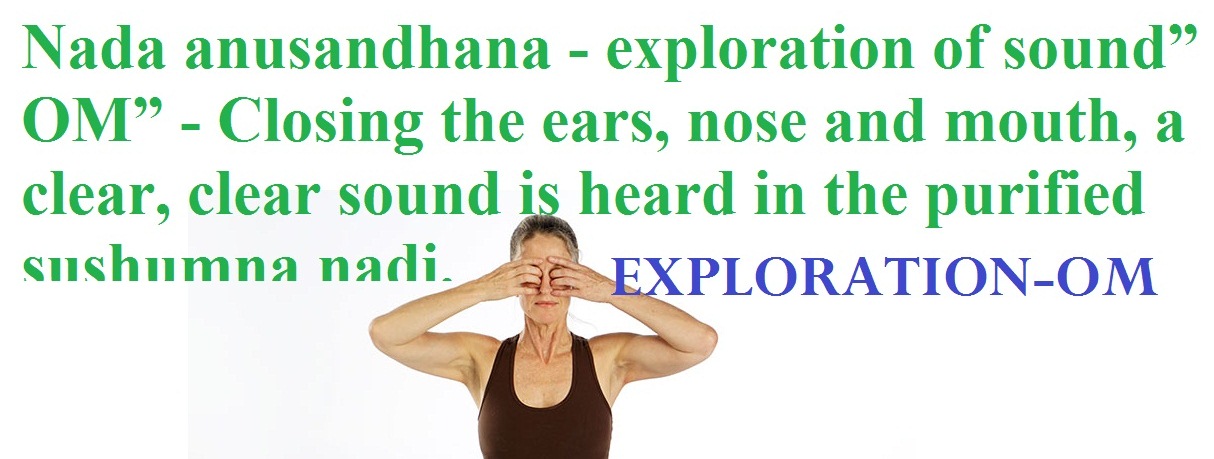
Nada anusandhana – exploration of sound “OM” Nada anusandhana – exploration of sound”OM” – Closing the ears, nose and mouth, a clear, clear sound is
Mind dissolves in Samadhi Mind dissolves in Samadhi – As camphor burnt in fire, and salt mix in the sea, in samadhi mind dissolves into
Mind – Senses, Prana – Mind, Nada – Prana Indriyanam mano natho manonathastu marutah/ Marutasya layo nathah sa layo nadamasritah// Mind is the controller of

Manonmani (consciousness without mind) State Manonmani (consciousness without mind) – Manonmani is obtained when prana flows in sushumna nadi Sushumnavahini prane siddhyatyeva manonmani/ Anyatha tvitarabhyasah
Kundalini is to be blocked at Brahmarandhra Nadi The ultimate union and samadhi happens at sahasrara chakra. This location is at the crown of the

Karmas get annihilated when prana flows in Sushumna Nadi All Karmas(actions) get annihilated when prana flows in sushumna nadi, mind remain in complete shoonya(void).
Ghata Avastha (vessel stage) Ghata avastha (vessel stage) – Vishnu granthi is pierced the greatest bliss is revealed. Then from that emptiness the sound of
Ending of Prana and Mind in Samadhi state Ending of Prana and Mind in Samadhi state – Activities of prana is annihilated, then mind is
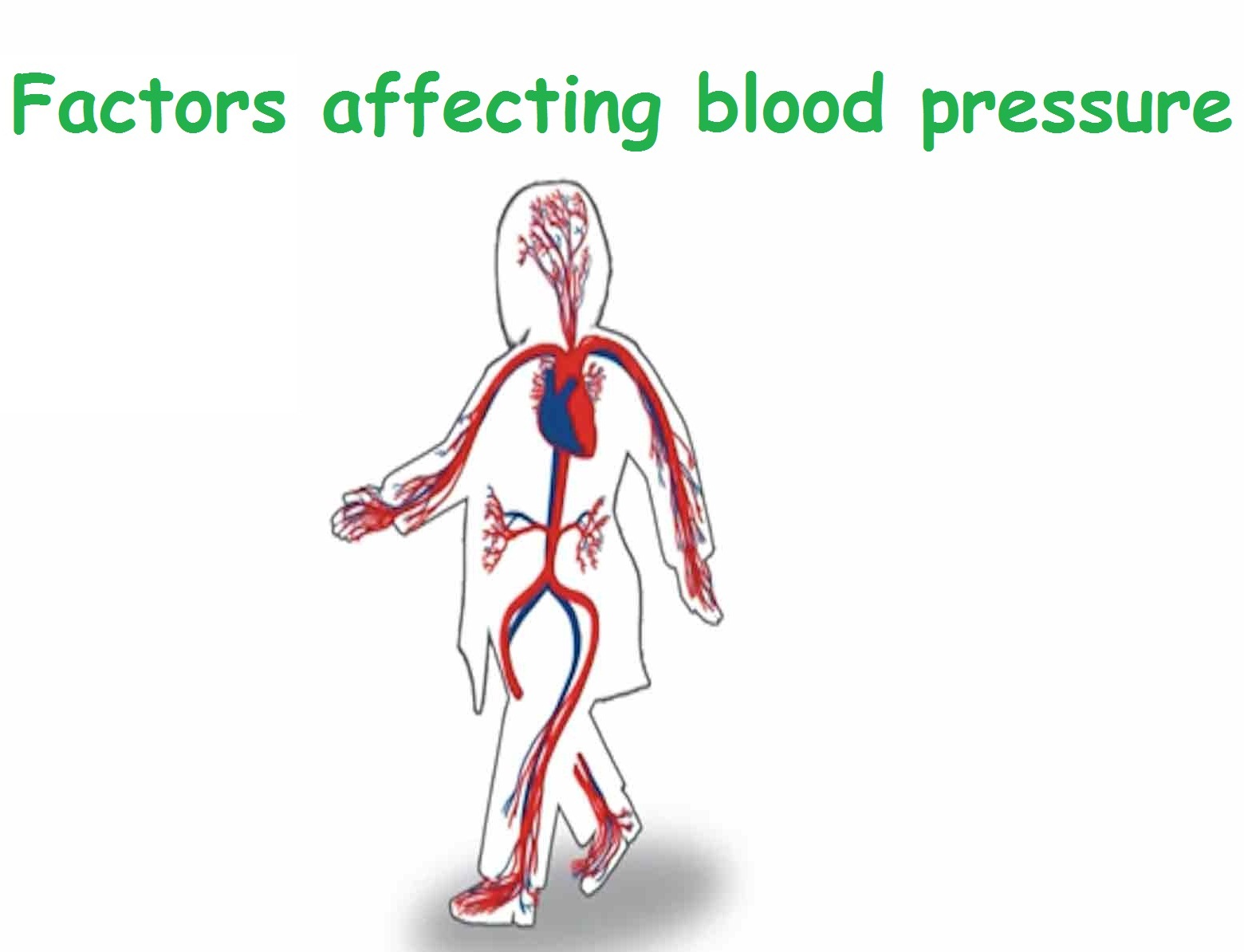
Factors affecting blood pressure: Blood volume. Cardiac output Peripheral resistance. The elasticity of blood vessels. The diameter of the lumen of blood vessels. The viscosity
Concentration on nada burns ‘bad karma’ Concentration on nada burns ‘bad karma’ – Bad karma’(sin) is destroyed by constant concentration on nada. The finite mind
Chitta has two qualities: vasana and prana Hetudvayam tu chittasya vasana cha samiranah / Tayorvinashta ekasmintau dvavapi vinasyatah// Chitta has two qualities, vasana and prana.
Arambha Avastha (beginning stage) Arambha avastha (beginning stage) – When the Hatha Yogi experiences arambha in the void of the heart, his body becomes lustrous
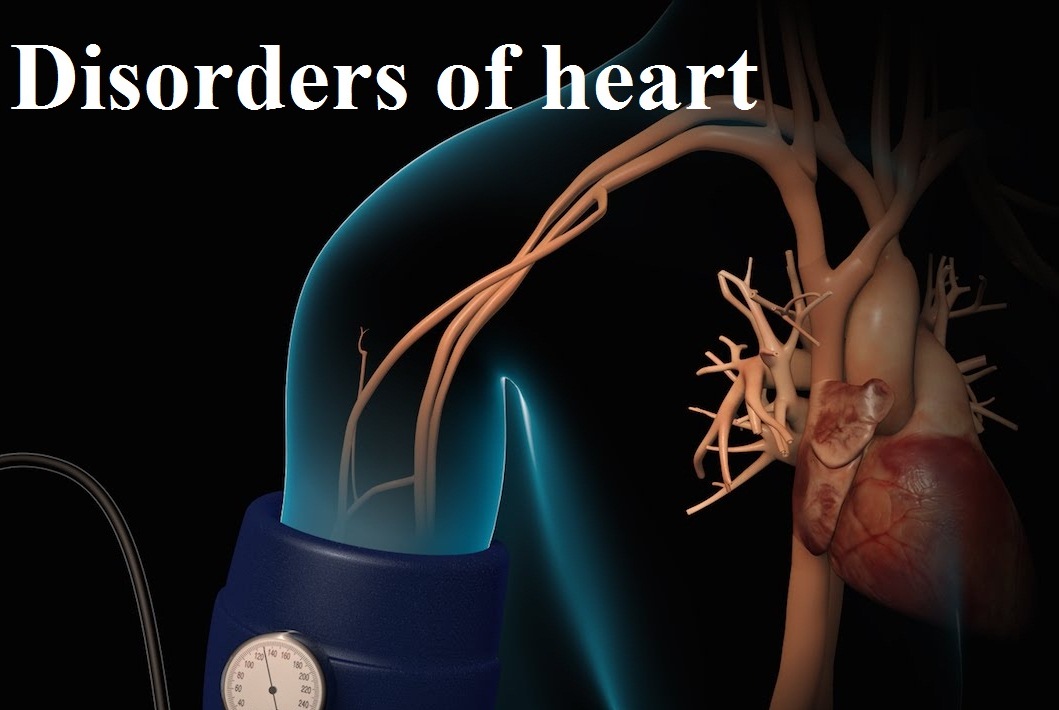
Disorders of Heart Cardiac failure: It’s a condition in which the myocardium of ventricle is unable to maintain sufficient circulation of blood to meet the
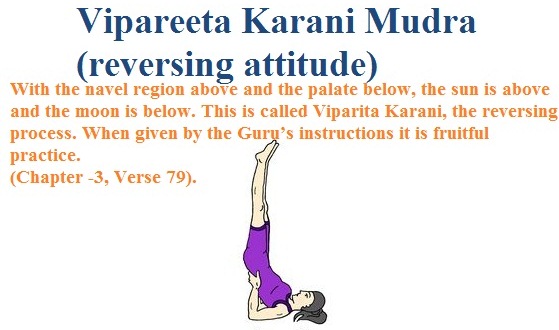
Vipareeta Karani Mudra (reversing attitude) Urdhvanabheradhastalorurdhvam bhanuradhah sasi / Karani viparitakha ghuruvakyena labhyate// With the navel region above and the palate below, the sun is
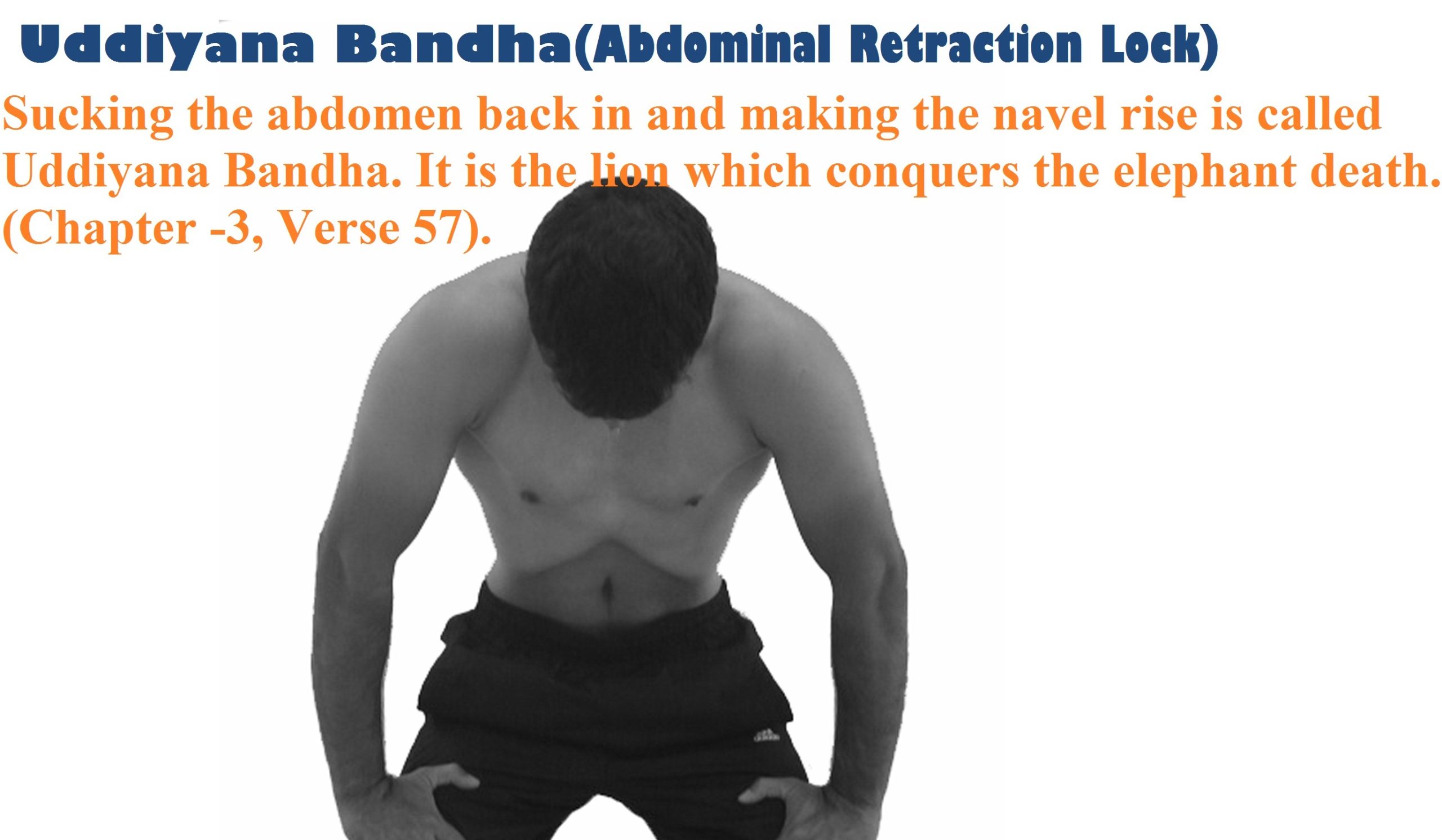
Uddiyana Bandha (Abdominal Retraction Lock) Atha uddiyanabandhah Baddho yena sushumnayam pranastuddiyate yatah/ Tasmad uddiyanakhyoa yam yoghibhih samudahrtah/ Uddiyana bandha is so-called by the yogis because
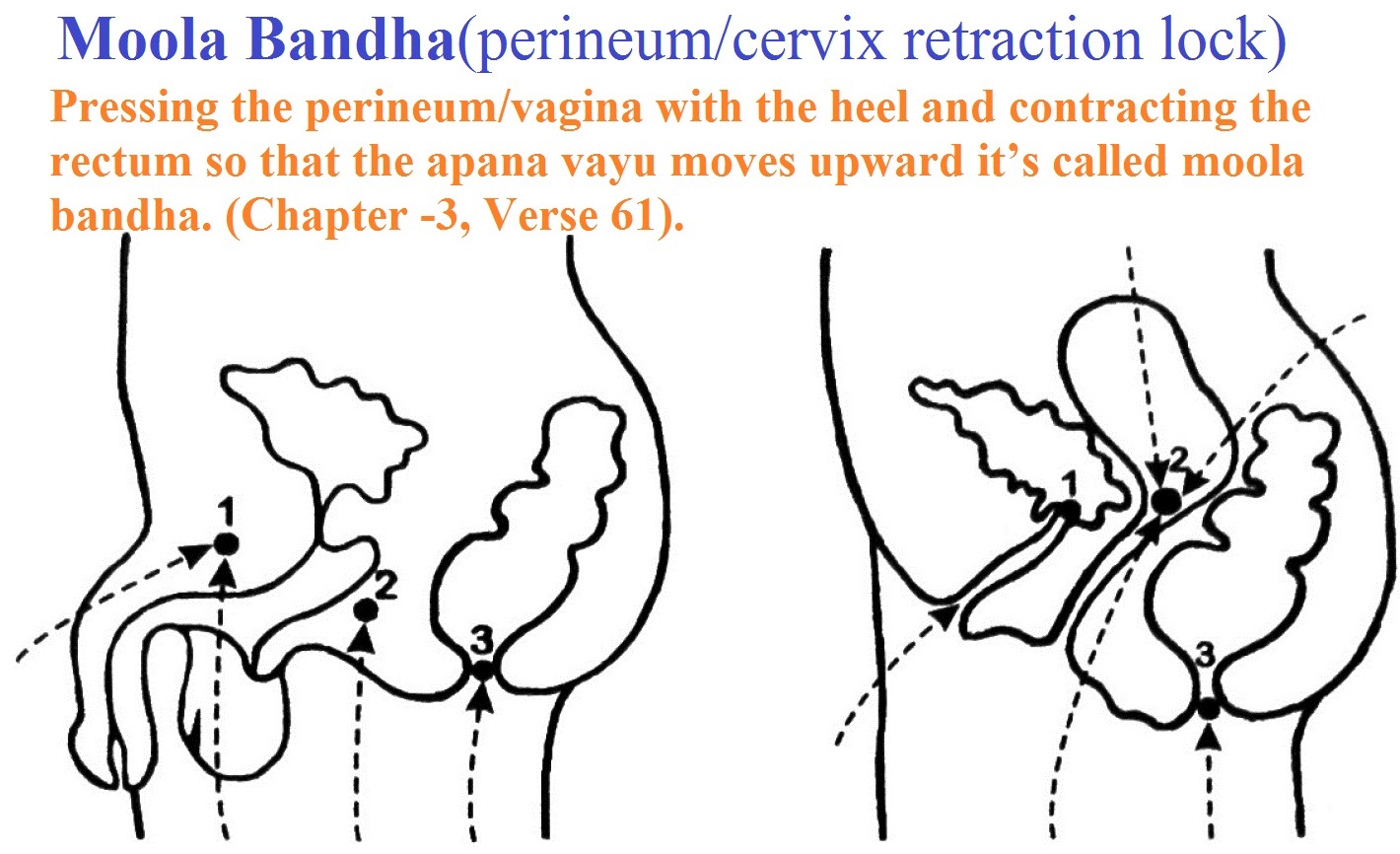
Moola Bandha(perineum/cervix retraction lock) Atha mulabandhah Parshnibhaghena sampidya yonim akunchayed ghudam/ Apanam urdhvam akrshya mulabandho abhidhiyate// Pressing the perineum/vagina with the heel and contracting the
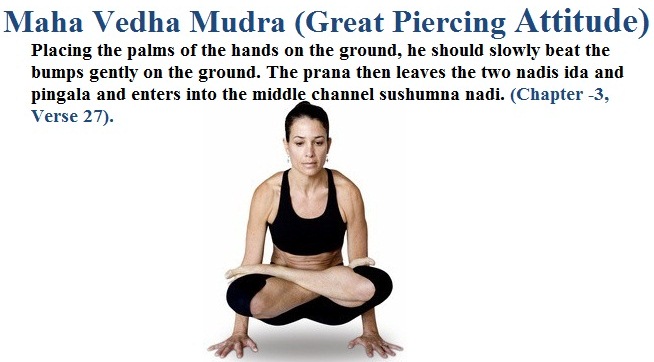
Maha Vedha Mudra (Great Piercing Attitude) Atha mahavedhah Mahabandhasthito yogi krtva purakam ekadhih/ Vayunam ghatimavrtya nibhrtam kanthamudraya// The Hatha Yogi, in the position of Maha
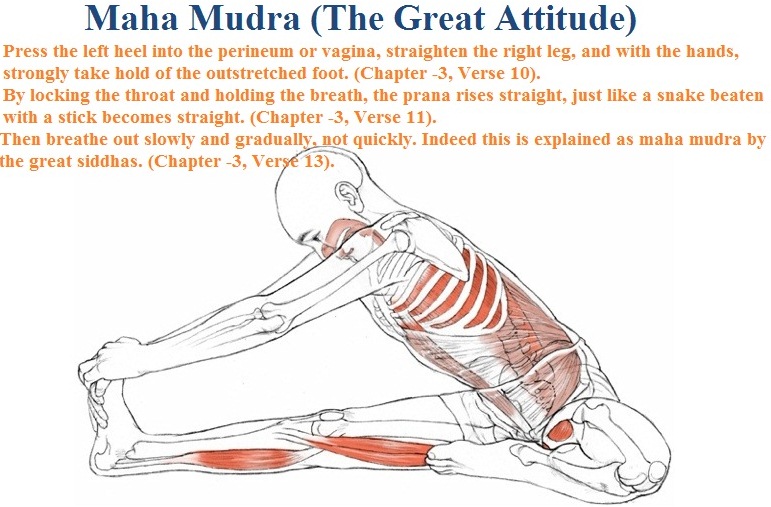
Maha Mudra (The Great Attitude) Padamulena vamena yonim sampidya dakshinam/ Prasaritam padam krtva karabhyam dharayeddrdham//(Chapter -3, Verse 10). Press the left heel into the perineum
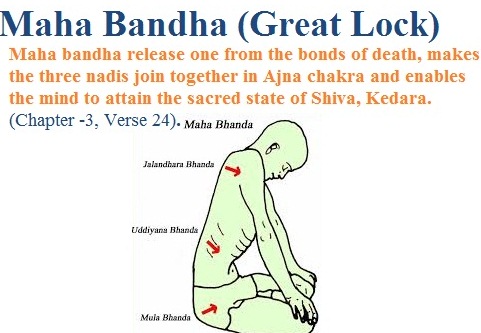
Maha Bandha (Great Lock) Parshnim vamasya padasya yonisthane niyojayet/ Vamorupari samsthapya dakshinam charanam tatha// Press the heel of the left foot in the perineum or
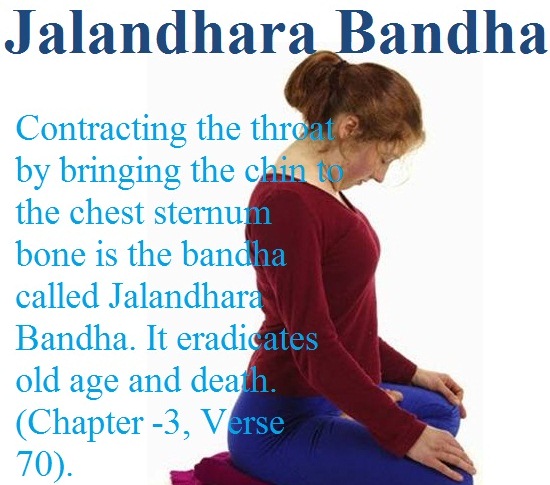
Jalandhara Bandha (throat lock) Atha jalandharabandhah Kanthamakunchya hrdaye sthapayechchibukam drdham/ Bandho jalandharakhyoayam jaramrtyuvinasakah// Contracting the throat by bringing the chin to the chest sternum bone
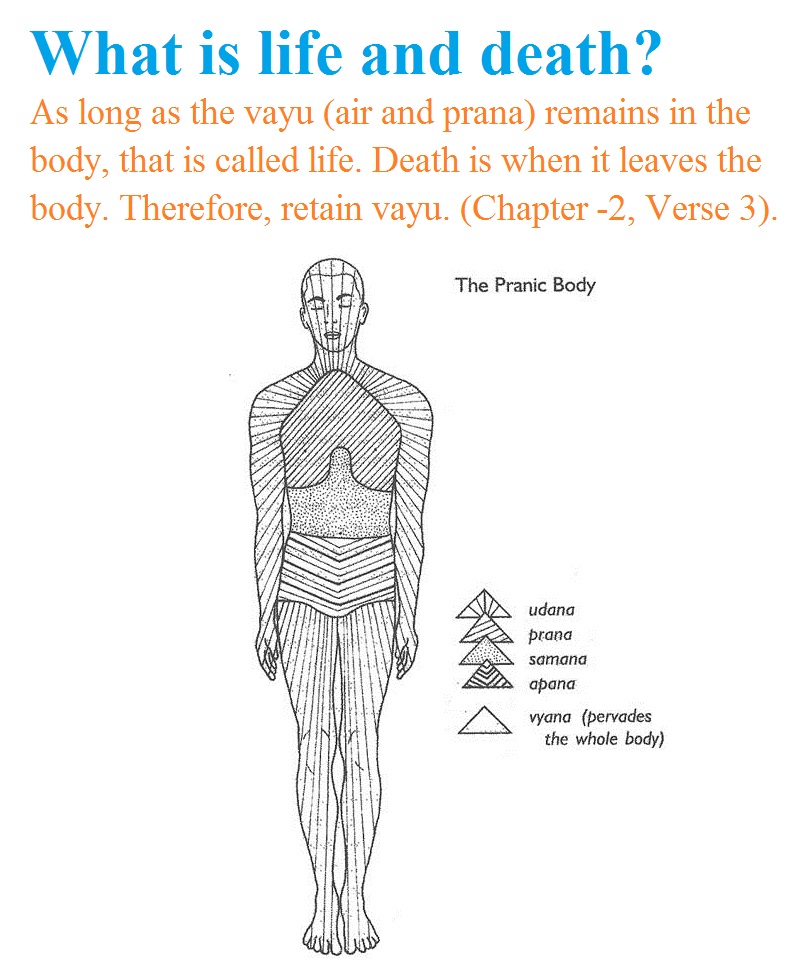
What is life and death? What is life and death; the functions of five Vayus Yavad vayuh sthito dehe tavaj jivanam uchyate / Maranam

Times and duration of Pranayama practice Times and duration of practice – Early morning, midday, evening and midnight, holding is step by step held up
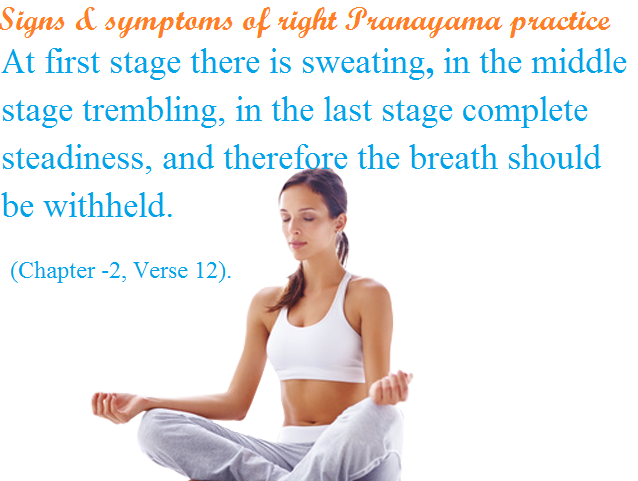
Signs and symptoms of right Pranayama practice Kaniyasi bhavedsveda kampo bhavati madhyame / Uttame sthanamapnoti tato vayum nibandhayet//(Chapter -2, Verse 12). At first stage there
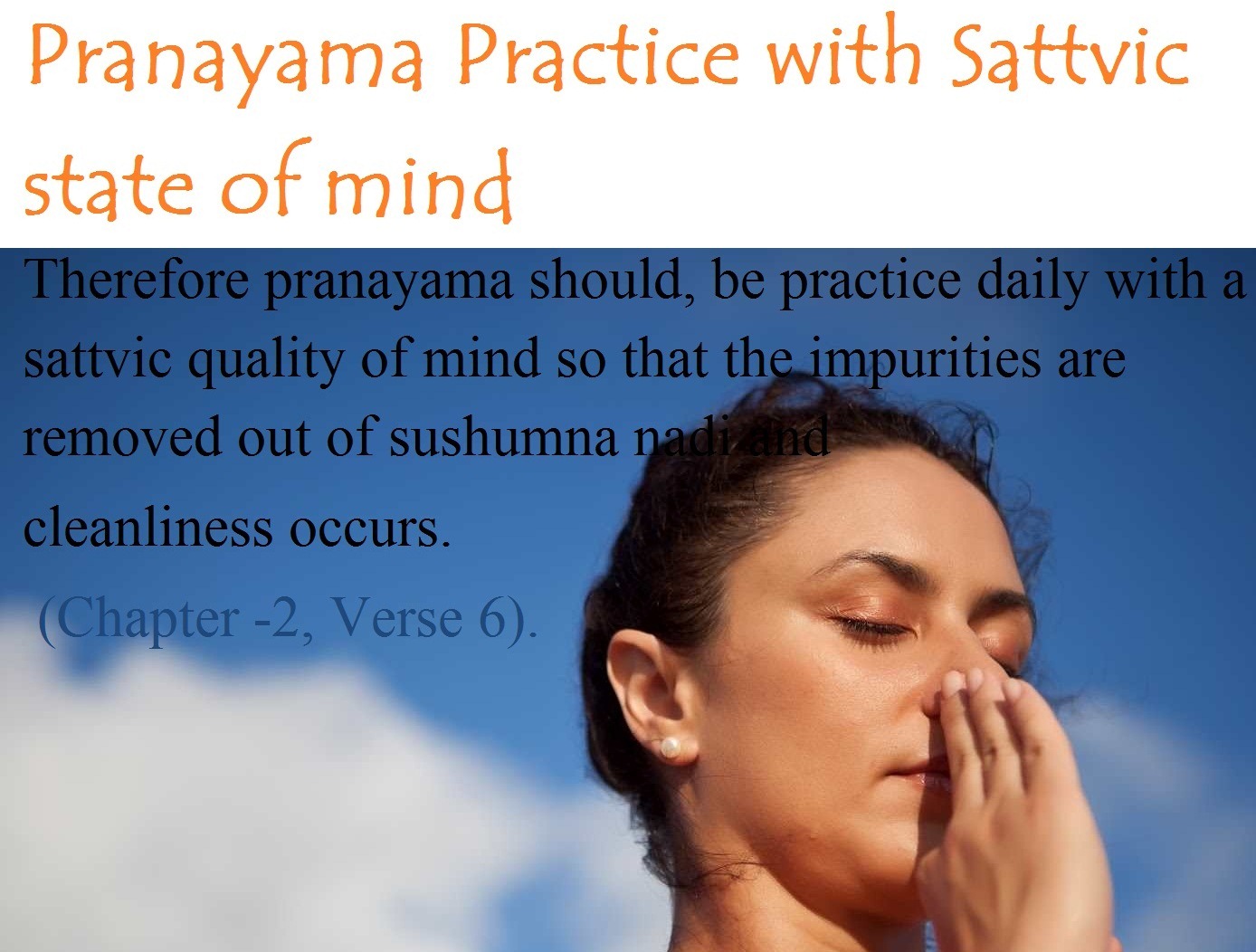
Sattvic quality of mind and the three Gunas for pranayama Practice Pranayamam tatah kuryannityam sattvikaya dhiya / Yatha sushumnanadistha malah suddhim prayanti cha//(Chapter -2,
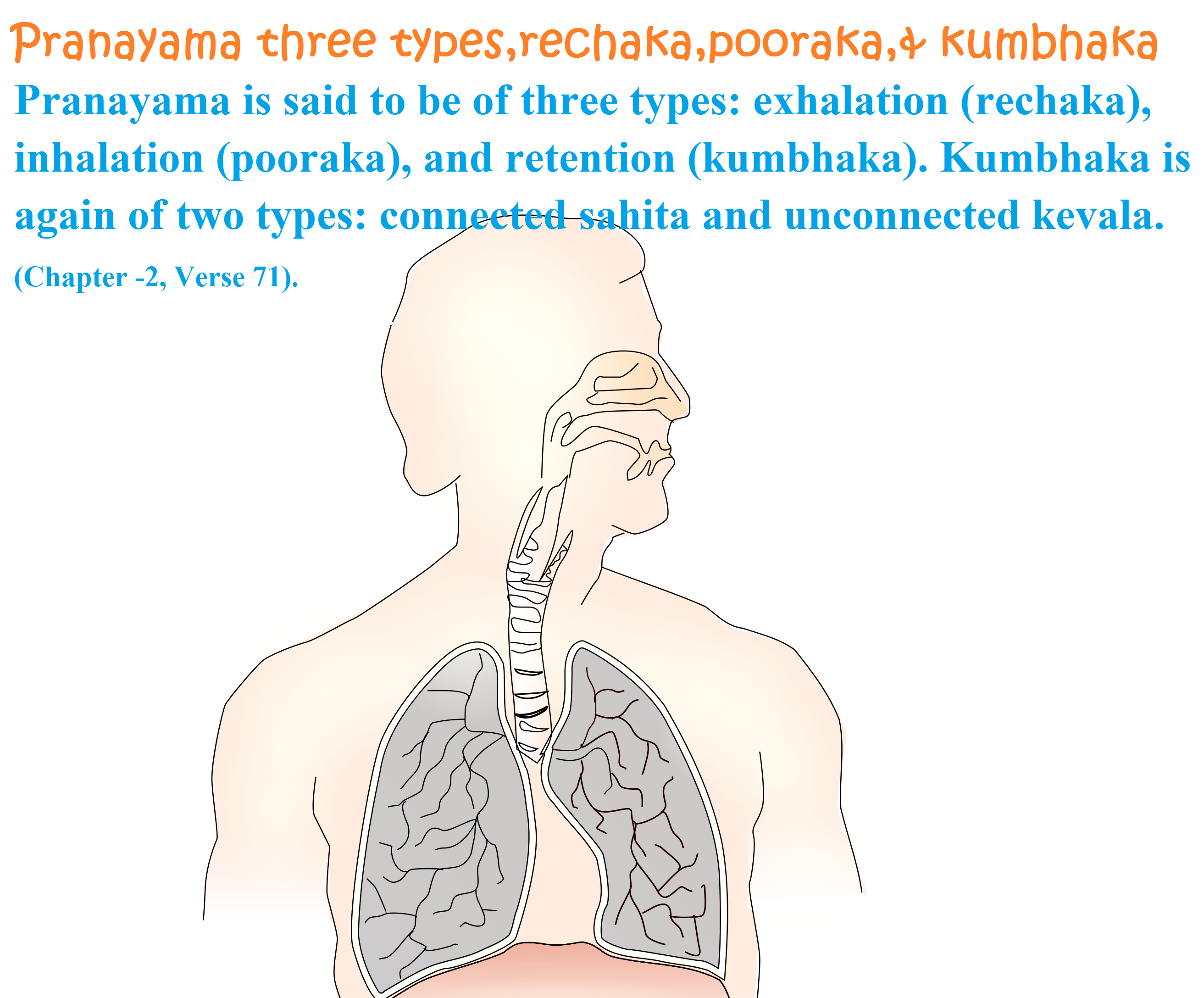
Pranayama three types, rechaka, pooraka, and kumbhaka. Pranayamas tridha prokto rechapurakakumbhakaih / Sahitah kevalascheti kumbhako dvividho matah// (Chapter -2, Verse 71). Pranayama is said to
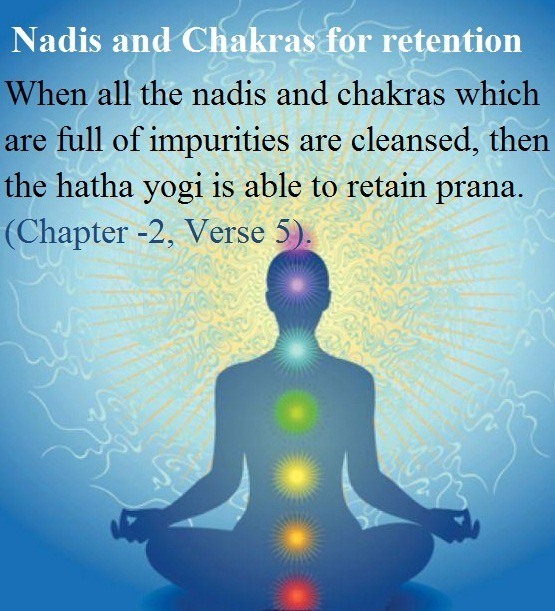
Cleansing of the Nadis and Chakras for retention of Prana Suddhameti yada sarvam nadichakram malakulam / Tadaiva jayate yogi pranasamghrahane kshamah//(Chapter -2, Verse 5).
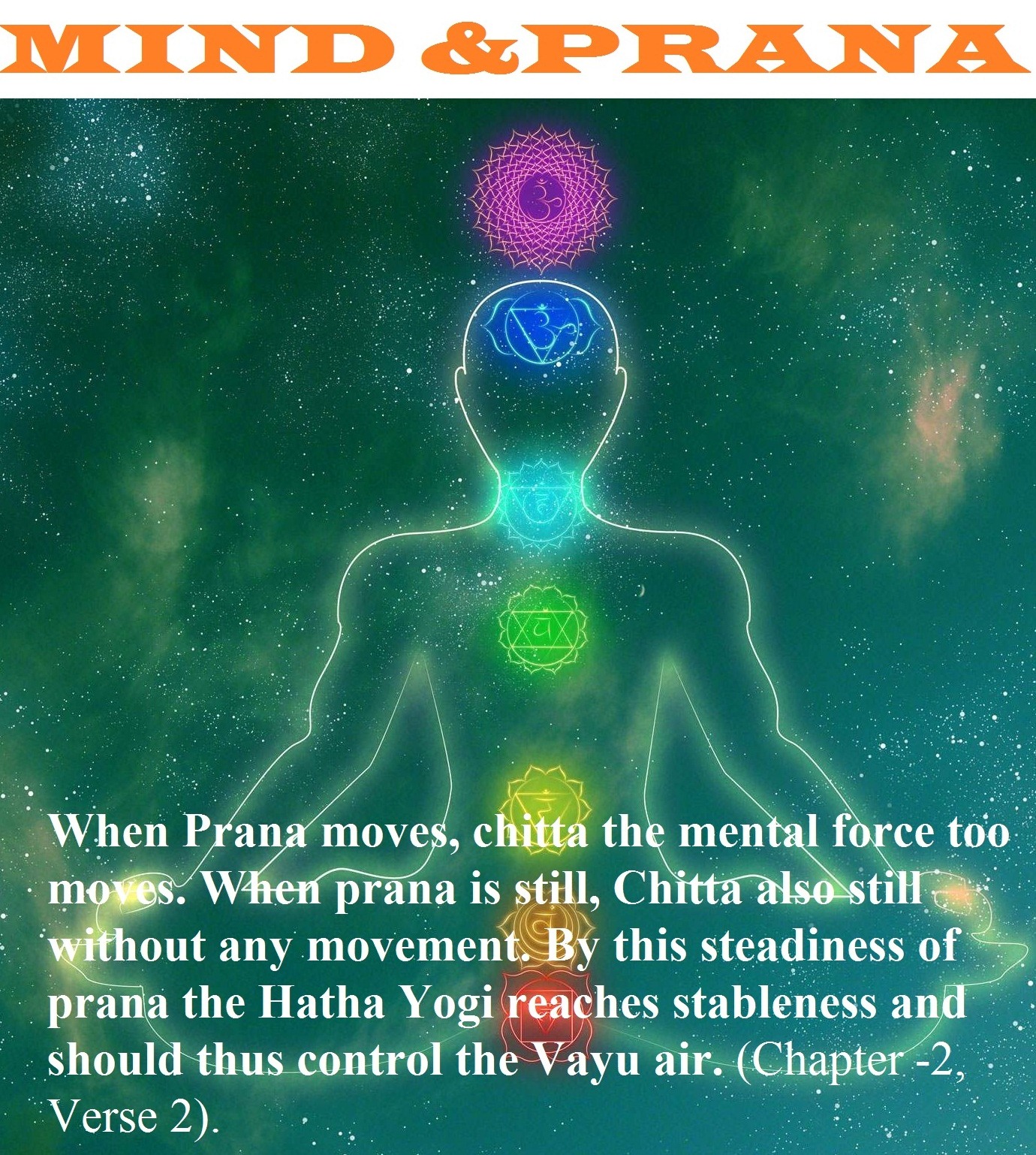
Interconnection of Mind and Prana Interconnection of Mind and Prana and their controlling through Pranayama Chale vate chalam chittam nischale nischalam bhavet / Yogi
Diet and Pranayama – Milk and Ghee is recommended. At the beginning period of pranayama practice, food, consisting of milk and ghee is recommended very
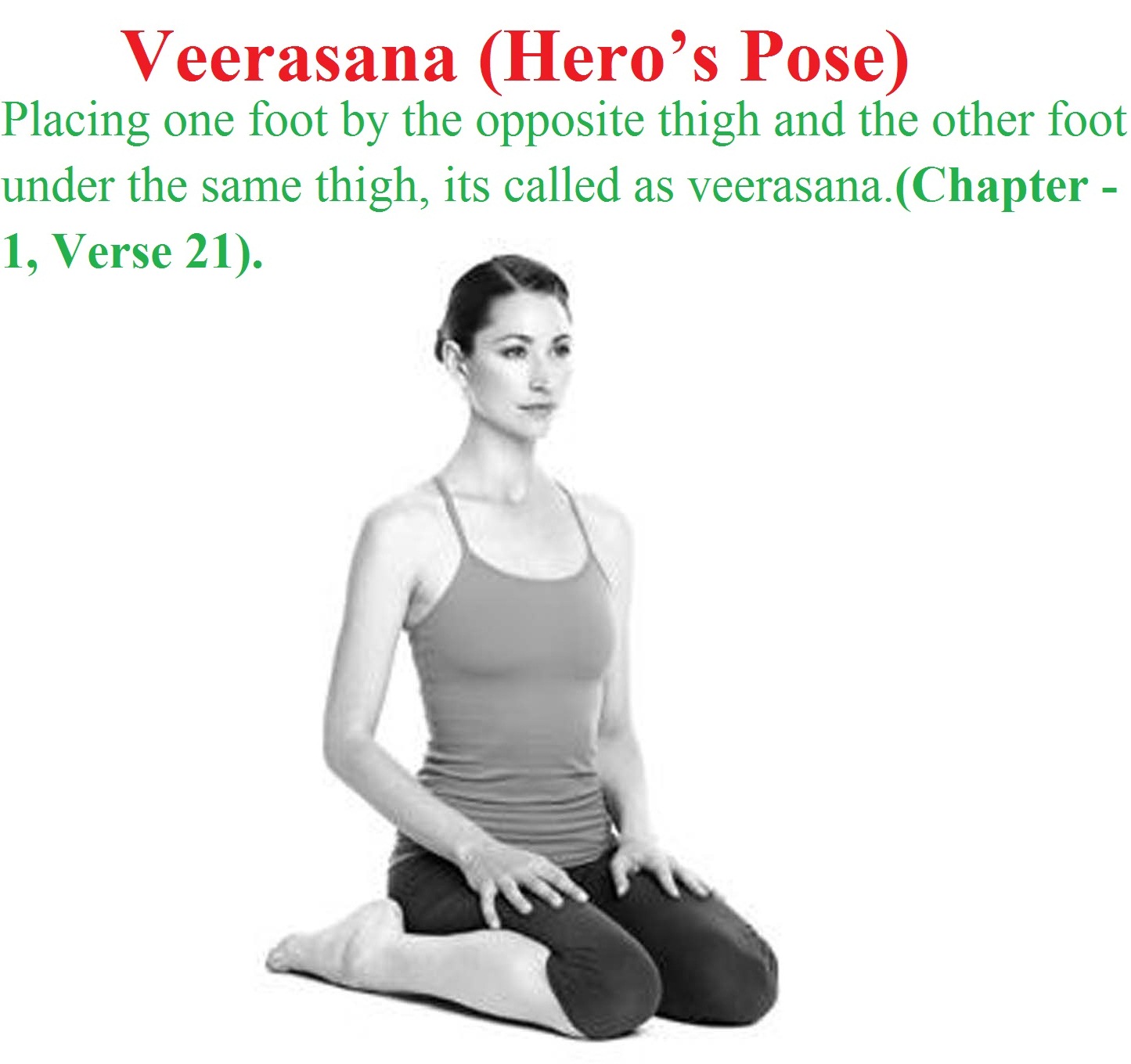
Veerasana (Hero’s Pose) Ekam padam tathaikasmin vinyased uruni sthiram / Itarasmims tatha chorum virasanam itiritam//(Chapter -1, Verse 21). Placing one foot by the opposite thigh
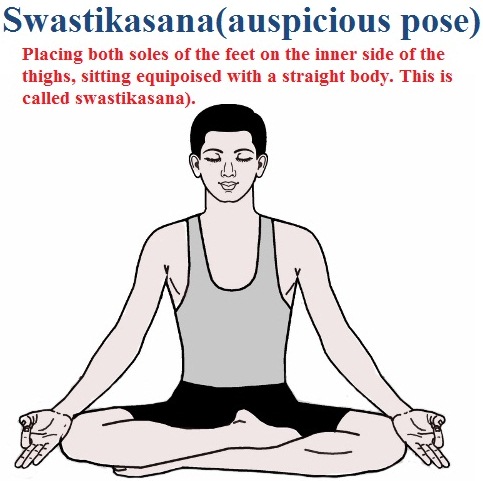
Swastikasana (auspicious pose) Janurvor antare samyak krtva padatale ubhe / Rjukayah samasinah svastikam tat prachakshate//(Chapter -1, Verse 19). Placing both soles of the feet on
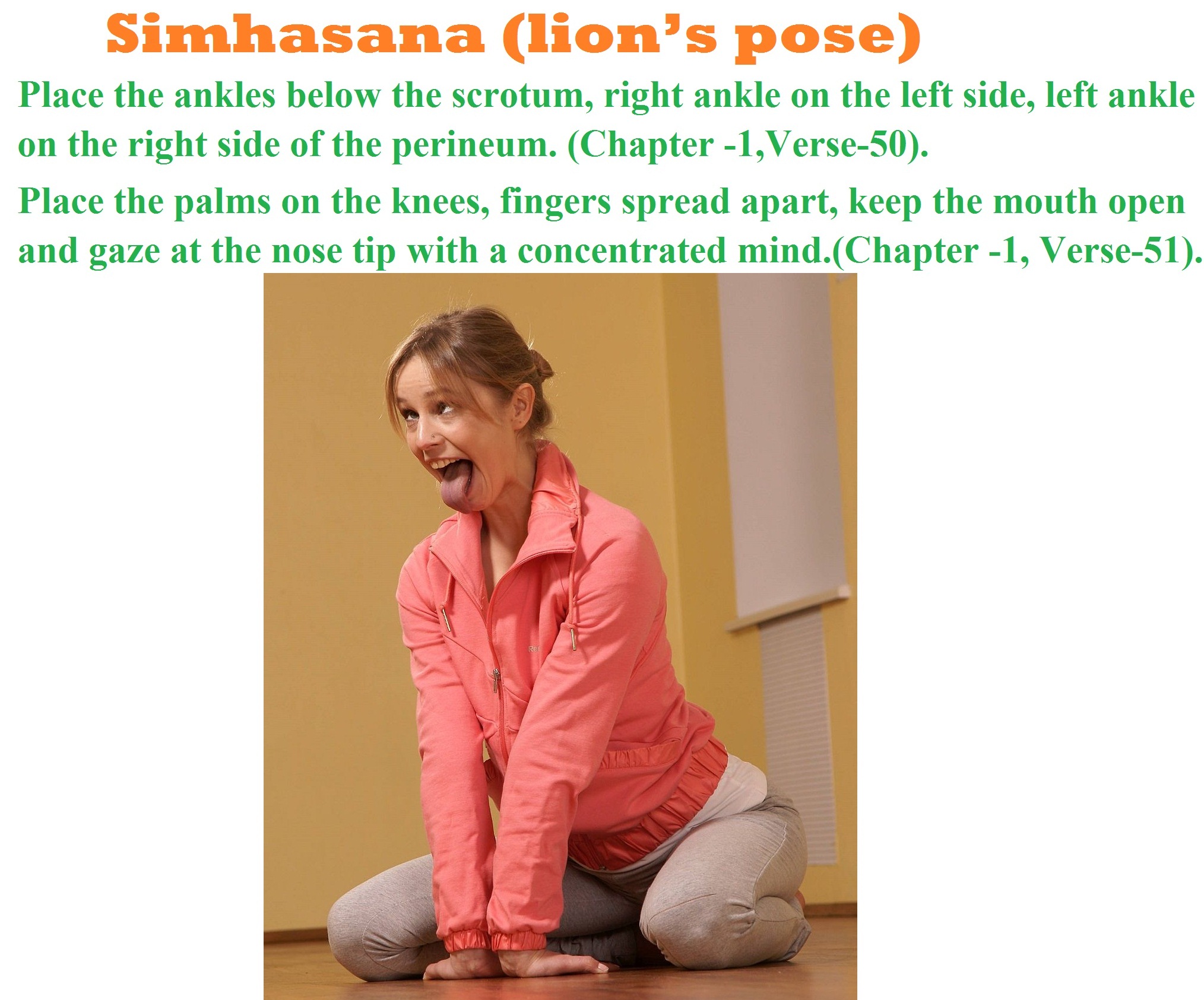
Simhasana (lion’s pose) Ghulphau cha vrshanasyadhah Sivantyah parsvayoh kshipet/ Dakshine savyaghulpham tu Dakshaghulpham tu savyake//(Chapter -1, Verse-50). Place the ankles below the scrotum, right ankle
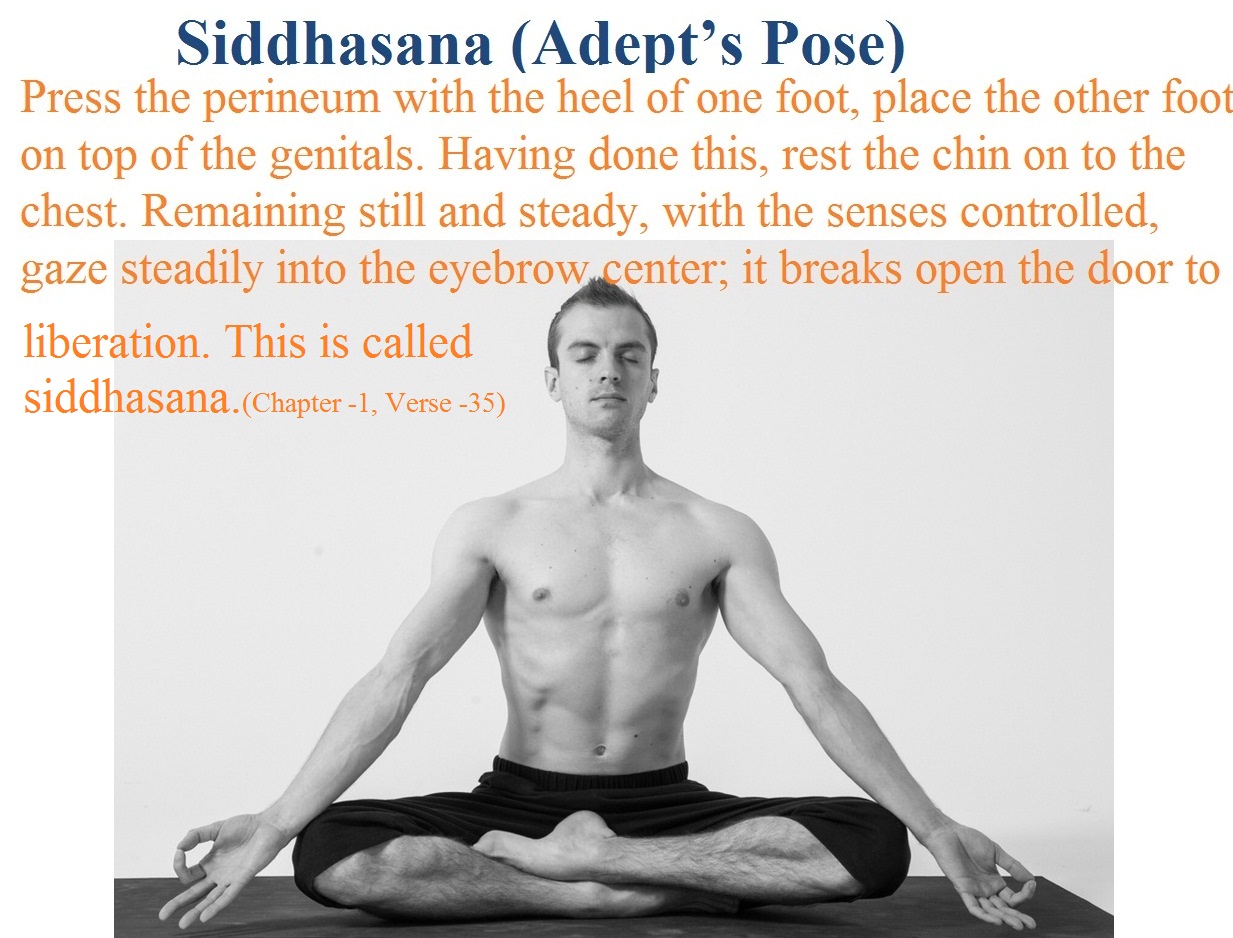
Siddhasana (Adept’s Pose) Yonisthanakam angghrimulaghatitam Krtva drdham vinyaset / Mendhre padam athaikameva hrdaye Krtva hanum susthiram // Sthanuh samyamitendriyoa chaladrsa pasyed bhruvor antaram/ Hyetan mokshakapatabhedajanakam
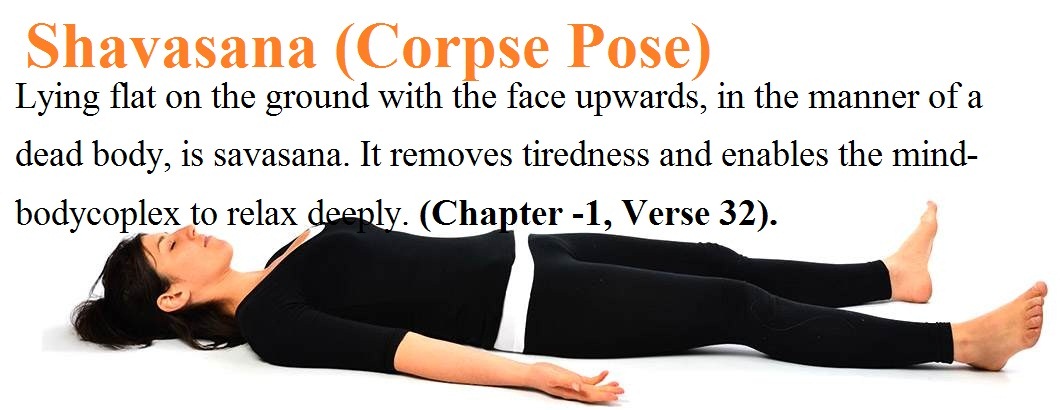
Shavasana (Corpse Pose) Uttanam sabavad bhumau sayanam tat savasanam/ Savasanam srantiharam chittavisrantikarakam//(Chapter -1, Verse 32). Lying flat on the ground with the face upwards, in
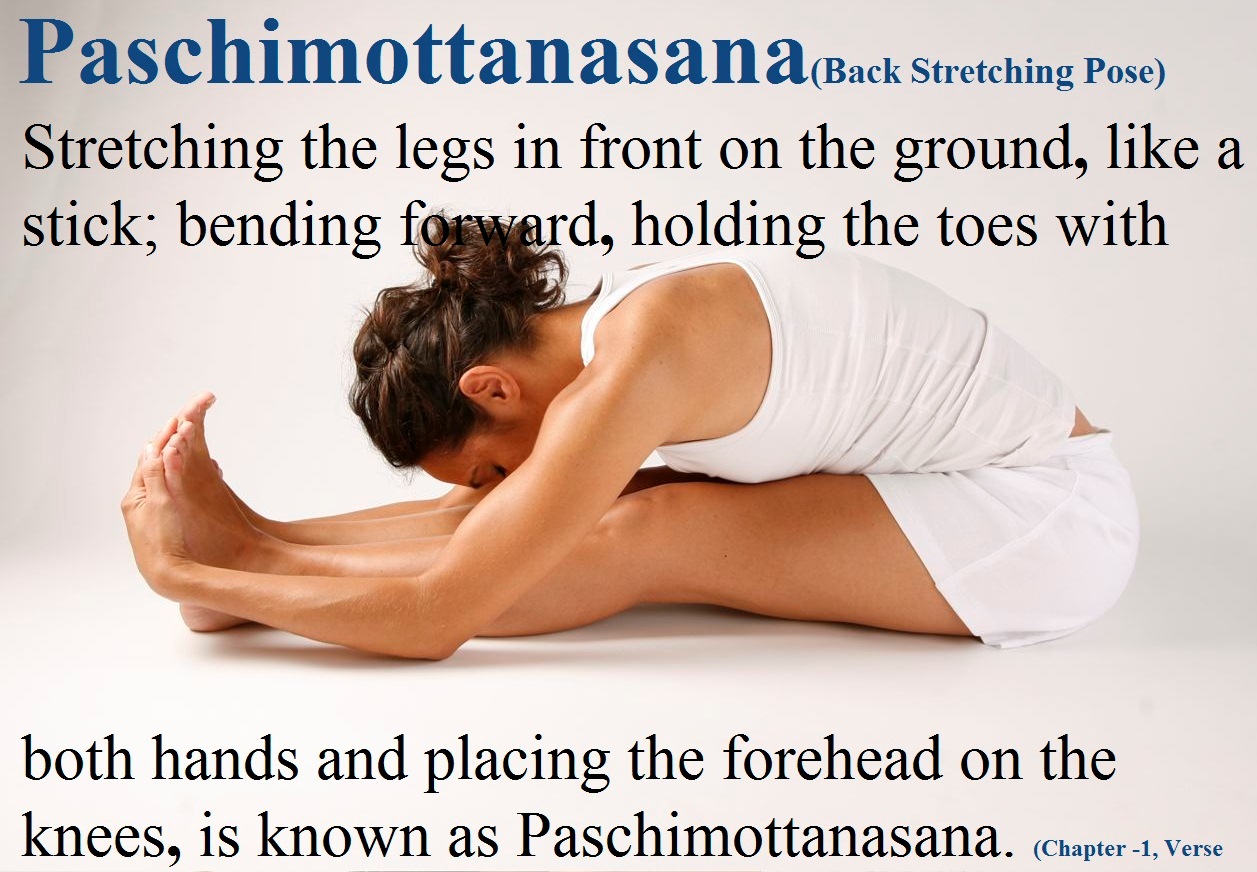
Paschimottanasana (Back Stretching Pose) Prasarya padau bhuvi dandarupau Dorbhyam padaghradvitayam ghrhitva/ Januparinyastalalatadeso Vasedidam paschimatanamahuh.// (Chapter -1, Verse 28). Stretching the legs in front on the
Padmasana (lotus pose) Vamorupari dakshinam cha charanam Samsthapya vamam tatha / Dakshorupari paschimena vidhina Dhrtva karabhyam drdham // Angghushthau hrdaye nidhaya Chibukam nasaghramalokayet / Etadvyadhivinasakari
Social Chat is free, download and try it now here!