
Niralamba Sarvangasana(Unsupported Shoulder Stand Pose)
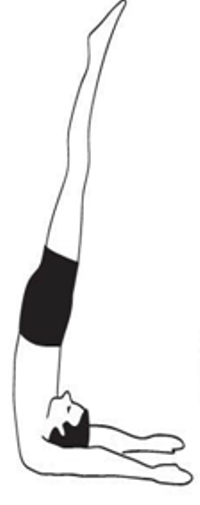
This is an unsupported sarvangasana. Lie on your back on the floor with your legs stretched out and your palms facing down on the ground by the sides of the legs. Breathe easily and then on an exhale bend the knees and take the legs to the stomach until the thighs are pressing into the stomach. Breathe and raise the hips off the floor on an exhale. Support the hips by bending your elbows so they are flat on the ground with your hands on the back of your hips. Raise the trunk off the ground until it is perpendicular to the ground. Your chest should be pressing into your chin. Exhale and stretch the legs straight up so they are pointing to the ceiling. Keep stretching the body upwards until only your head, shoulders and backs of the upper arms and elbows are resting on the ground and supporting your weight. Then release the arms and stretch them out on the ground so they extend over the head while still resting on the floor. Then finally stretch them towards the legs as if you are reaching for your toes, keeping them tightly by the side of the body. Stay here breathing easily for thirty seconds. Then slowly come out of the pose. Precaution: People with high blood pressure, heart conditions, inflammation of the ear, weak eye capillaries, severe near-sightedness, problems in the pituitary or thyroid glands, arteriosclerosis, cerebral or other thrombosis, severe asthma, tuberculosis, cold or sinusitis, excessively impure blood, slipped disc, weak spine or vertigo should not practice this asana. Benefits: Entire body is toned by an increase in the flow of blood. Speedier recovery from general weakness. Mother of asanas Low blood pressure. Strengthens the neck muscles and brings a rich supply of blood to the brain thyroid and parathyroid glands. urinary disorders and uterine displacement, menstrual trouble, piles and hernia. It also helps to relieve epilepsy, low vitality and anemia. Activates the abdominal organs and relieves people suffering from stomach and intestinal ulcers, severe pains in the abdomen and colitis.
Anantasana(Side Reclining Leg Lift or Vishnu Pose)
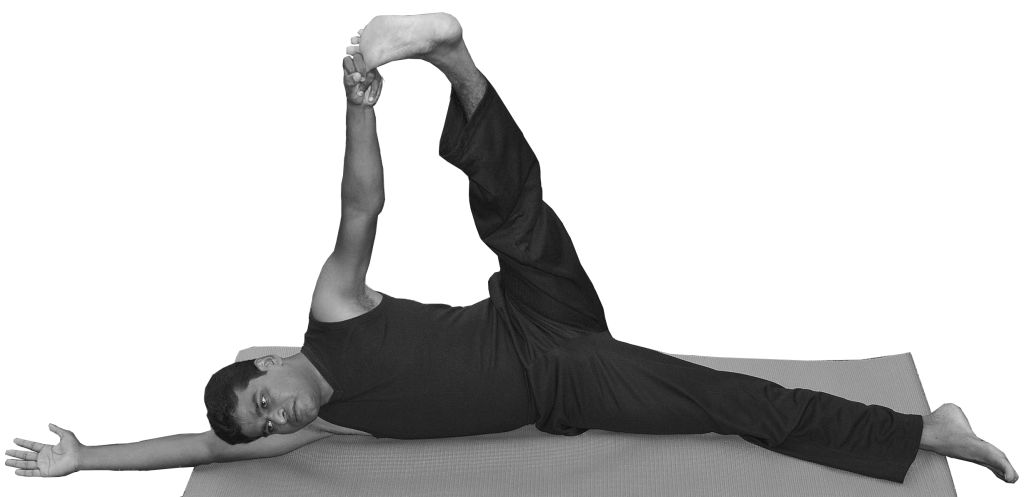
This pose is named after Lord Vishnu resting on the couch. Start by lying flat on the mat and then turn onto your left side. Raise the head and rest it on the left hand, the left elbow on the ground. Then raise the right knee, bend it and catch the right big toe between the right thumb and index and middle fingers of the right hand. Straighten the right leg and right arm while exhaling and hold the pose for about thirty seconds while breathing easily. Then slowly come out of the pose and relax. Precaution: Benefits: Strengthening Pelvic region. Hamstring and quadriceps muscles are toned. Good for backaches and prevents the development of hernia.
Supta Konasana(Reclining Angle Pose)
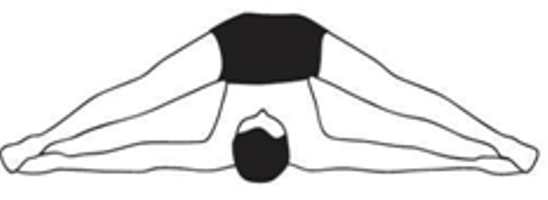
This is the reclining angle pose. Sit on the floor with your legs stretched out in front of you. Roll back on the floor until you are fully reclined. Now raise the legs up and take the feet over your head until they touch the ground. Reach out with your hands and hold onto the big toes of the corresponding feet. Part the legs as far apart as you can while the arms are resting on the floor. Stay here for about thirty seconds breathing easily. Then come out of the pose and relax. Precaution: People with high blood pressure, heart conditions. Benefits: Tones the legs and helps to contract the abdominal organs.
Setu Bandha Sarvangasana(Bridge Pose)
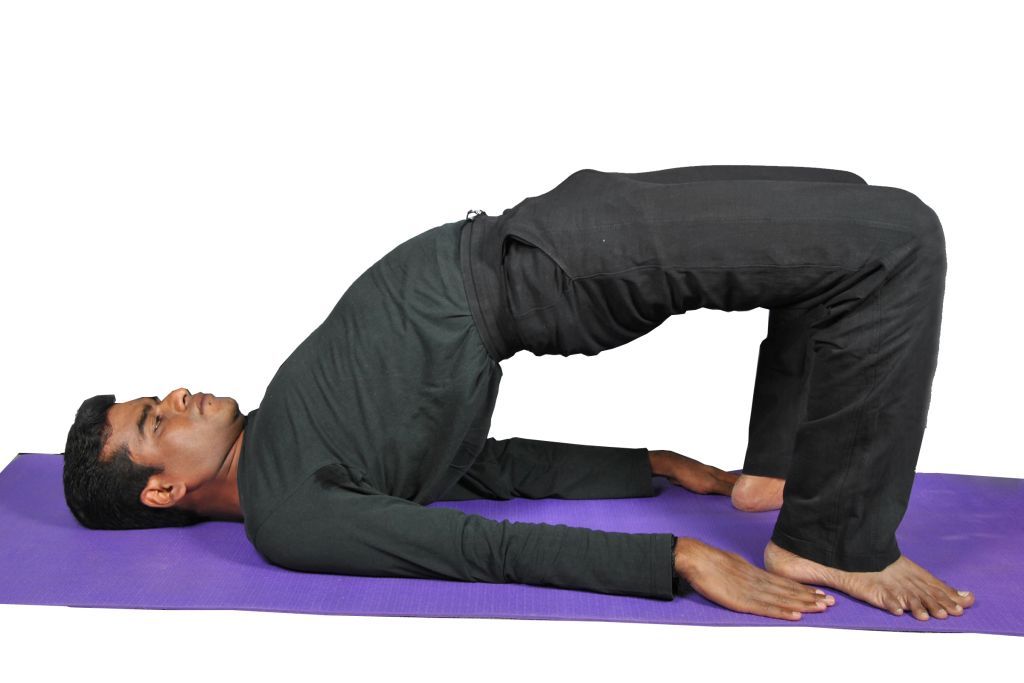
This is the bridge pose. You must start by lying on the ground. Bend the knees and place them with the feet on the floor and the knees pointing to the ceiling. Raise the back off the floor with the shoulders and head still on the ground. Support your back by placing your palms on it. Try and straighten your legs so they are stretched out with your legs together. Stay here breathing easily for thirty seconds and then lower back down. Precaution: Neck and Pregnancy. Benefits: Opens and expands the Strengthens the mid and upper Stretches the entire Increases circulation to the thyroid Energizes the Relieves low-back tightness.
Kukkutasana(Cockerel or Rooster Pose)
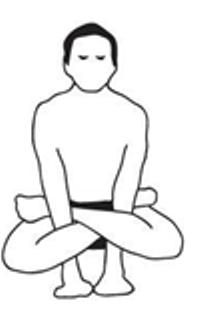
This is the cockerel pose. Sit in padmasana. Put your hands through the space between the thighs and calves. Push the hands down until the elbows and then press through the hands so that your whole body lifts off the ground and you exhale. Stay here breathing easily for as long as you can. Then lower down slowly and come out of the pose. Precaution: Heart conditions, high blood pressure, prolapse, hernia or back pain. Benefits: strengthens the wrists and abdominal walls, arm and shoulder muscles, and opens the chest. Improves a sense of balance and stability.
Hanumanasana (Monkey Pose)
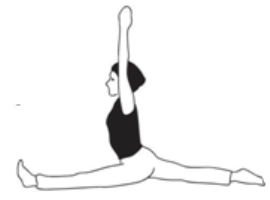
This pose is named after the Hindu monkey God. Start in a kneeling position and place the palms on the floor on either side of the body. Lift the knees and bring the right knee forward and the left knee back. Stretch both the legs. Then try to press the hips and legs into the ground. Try and do a full split with the back thigh of the front leg and the front thigh of the back leg touching the ground. Bring your hands into Anjali mudra and try and stay here breathing easily for thirty seconds. Then slowly come out of the pose. Precaution: Knee pain, Hamstring or groin injury Benefits: Stretches the hamstrings and hip flexors. Stabilizes and balances the deep hip muscles. Helps relieve sciatica pain. Strengthens the spinal and abdominal muscles.
Trianga Mukhaikapada Paschimottanasana (One Leg Folded Forward Bend)
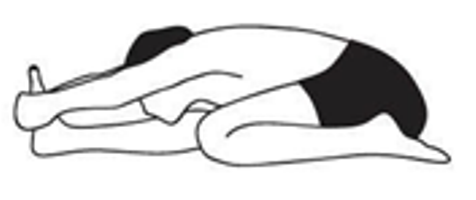
This is the one leg folded forward bend. Sit on the floor with your legs stretched out in front of you. Bend the right knee and move it so that it is resting by the side of the right hip. The toes are pointing backwards and the inner right calf will touch the outer right thigh. Put the weight on the bent knee and tilt the body in this position. Now reach your hands upwards and then bend the trunk forward from the hips. Try and place the forehead, then mouth then chin on the left knee. Simultaneously, reach for the left foot with both hands. Stay here for about thirty seconds breathing easily. Then slowly relax out of the pose and repeat it on the other side. Precaution: who having back problem concern should avoid this pose. Benefits: good for persons suffering from dropped arches and flat feet. Cures sprains in the ankle and the knee, tones the abdominal removes sluggishness.
Gorakshasana(Cowherd Pose)
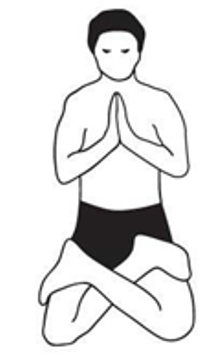
This is the cowherd pose. Come into a padmasana pose and then stretch your arms out so they’re on the floor. Balancing on your hands, raise your hips off the floor. Rise up from the trunk so it is straight and vertical and try balancing on the knees. Try and take your hands off the ground and bring them into Anjali mudra. Try and hold this position as long as you can while breathing easily. Slowly relax and come out of the pose. Precaution: Skip Who Having Knee Problem. Benefits: Improve sense of balance. The tail bone gets elasticity.
Merudandasana (Spinal Column Pose or Balancing Bear Pose)
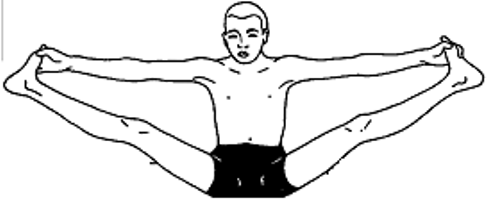
This is the spinal column pose. Sit on the floor with your legs stretched out in front of you. Bend both knees so the feet are flat on the ground. Then separate them so you can hold on to the respective big toes using the thumb and first two fingers of your hands. Slowly lean back as you balance on the buttocks. Straighten the legs and arms and raise the legs upwards. Now, keep the spine straight and separate the legs as far from each other as possible. Stay here while gazing at a fixed point and breathing easily. Hold this pose for about thirty seconds and then come out of the pose. Precaution: Should not be practiced by people with high blood pressure, heart ailments, slipped disc, sacral infections or sciatica. Benefits: Tones the abdominal organs, especially the liver, and strengthens the abdominal muscles. Stimulate intestinal peristalsis, alleviating constipation. Strengthens the muscles of the back and helps to realign the spine. Remove tiredness from the legs, giving a feeling of lightness and balance.
Ubhaya Padangusthasana (Both Big Toe Pose or Double Toe Hold or Balancing Stick Pose)
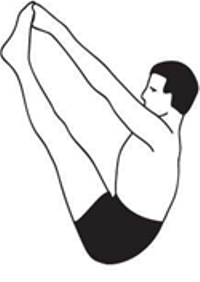
This is another seated pose, similar to the boat pose. Sit on the floor with your legs stretched out in front of you. Your hands should be resting on the floor, palms face down, next to the hips. Balancing on your buttocks, raise the legs straight off the ground so they are about 45 degrees off the floor. Then take your hands and grasp the respective big toes with the first two fingers and the thumb. Pull your torso closer to the legs so you are closing the space between them with your knees still straight. Now stay here breathing easily for about thirty seconds and then return to the seated pose with your legs and hands resting on the floor. Precaution: Benefits: develops balance and poise. Makes the thighs and calves shapely. Prevents hernia and relieves severe backaches.