Yoga Question Bank PDF
Revision Examination: Paper- 1 (yoga philosophy, lifestyle & ethics) Misconception between Yoga and Hatha Yoga. Types of yoga according to Bhagavad-Gita. Definition of yoga. What is the meaning for term “yoga”. Who is the founder of yoga? What are all misconception exist between yoga and hatha yoga. Who is the author for yoga darshan? Which are called preclassical yoga? Which period is called classical yoga? Yoga belongs to which religion. Meaning of hatha yoga. Aim of hatha yoga. Difference between yoga and hatha yoga. Relationship between hatha yoga and raja yoga. What are all practice included in hatha yoga. Concept of Modern hatha yoga style practice. With example. Concept of traditional hatha yoga style practice. With example. Mention four Hatha yoga texts with author. Write 12 Styles of modern hatha yoga. What is the purpose of hatha yoga? Define chakra. List out the 8 cakras with number of petals. What are all four Purusharthas? Why dharma is important in it. Write four stages of life. Which ashram is important in it? What is meant by agami karma List out 5 yamas Write seven steps of jnana yoga according to adi sankara. Meaning of the word “Upanishad” Mention three main characters in Katha Upanishad. Mention Lord Yamas three boons to Nachiketa. What is Preyas? What is the difference between, awareness and consciousness? Write four state of consciousness. Write five kosha. What practices will you prescribe for Annamaya Kosha? Write nine obstacles as mentioned by sage patanjali. List out the Astanga yoga. Explain about in your own words ‘chitta’. Write types of chitta vrittis. Why we should block chitta. What is meant by chitta? Define Pramana How many sutras are their in each pada, in Patanjali yoga sutra. What is meant by abhyasa . Symptoms of mental distraction, according to Patanjali. Asana according to Patanjali. Define Aparigraha Difference between dharana and dhayana. Difference between dhayana and Samadhi. ******* DOWNLOAD PDF FILE EXAM 1 FEB 2020 EXAM 1 FEB 2020
Purvottanasana(Upward Plank Pose or Intense East Stretch Pose)
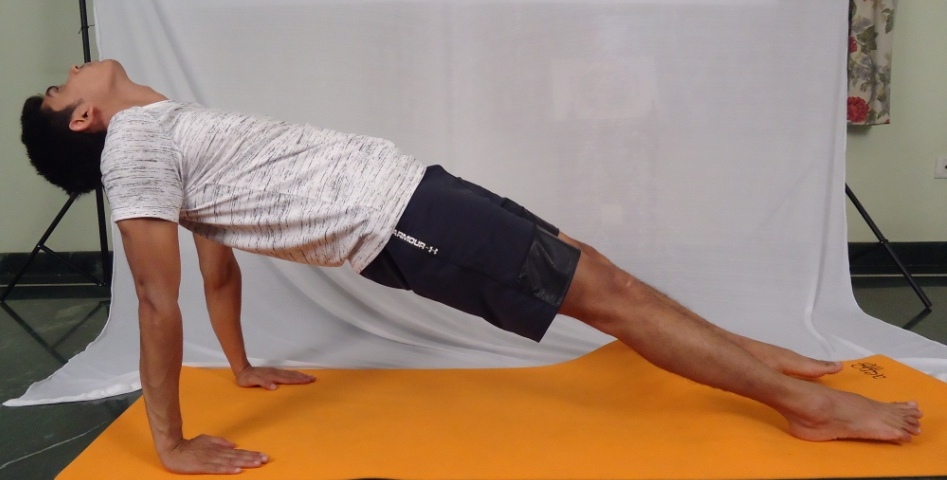
Purvottanasana(Upward Plank Pose or Intense East Stretch Pose) This is the intense eastward stretch. Start by lying flat on your back on the floor, your legs stretched out in front of you. Your arms are by your side, palms on the floor by the hips, your fingers pointing in the direction of the feet. Exhale and lift off the ground so that you are balancing on the palms of your hands and the soles of your feet. Your arms are perpendicular to the floor. Stretch your neck and hold your head back. Breathe easily for one minute to thirty seconds. Then lower back down and relax. Precaution: Neck weakness Shoulder or wrist concerns High blood pressure, heart disease, cervical spondylosis, hernia, stomach ulcers or weak wrists. Benefits: This asana has similar benefits to chakrasana. It is generally strengthening for shoulders, thighs and wrists, and also tones the lumbar region of the spine and the Achilles tendons.
Chaturanga Dandasana(Four Limbed Staff Pose)
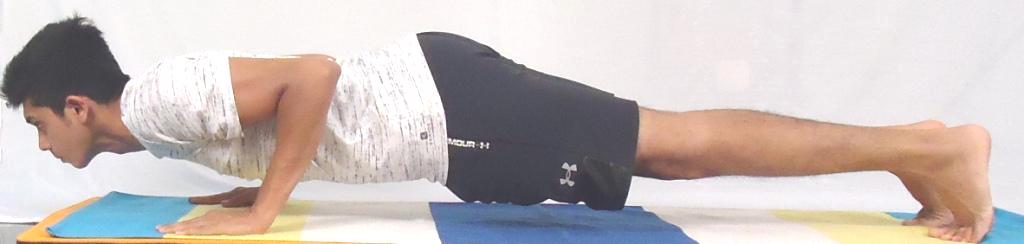
Chaturanga Dandasana(Four Limbed Staff Pose) This is the four limbed plank pose. Start in a prone position, on your stomach. Your palms are on the floor by your chest. Your feet are about a foot apart. Then exhale and slowly raise your body until it is balanced on your palms. Stay here, breathing easily for thirty seconds. Precaution: Wrist concerns Lower-back weakness Pregnancy Benefits: Strengthens the shoulders, arms, and wrists. Strengthens the abdominal muscles and massages the organs.
Phalakasana(plank pose)
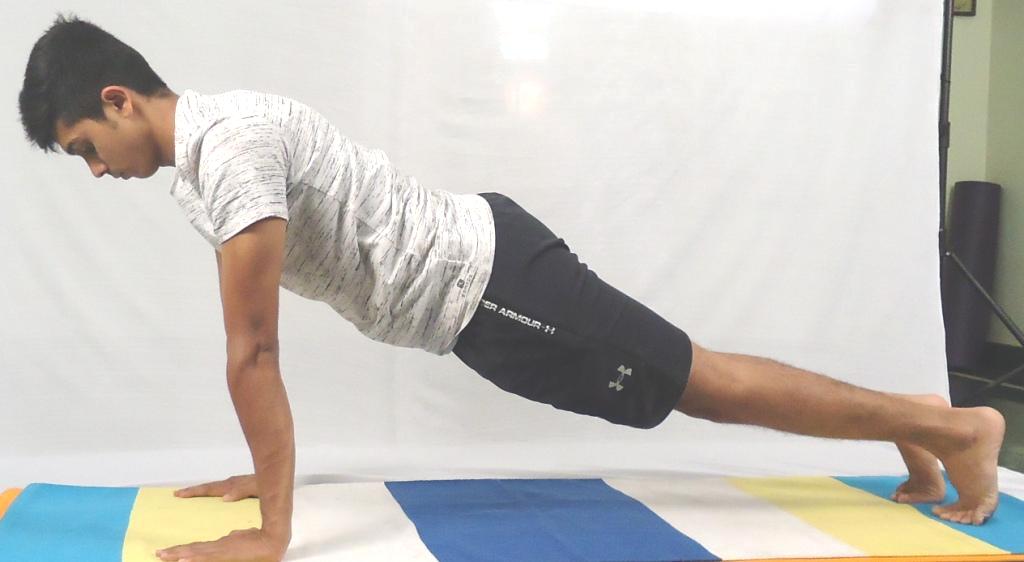
Phalakasana(plank pose) This is the plank pose. Start in the cat position, with your hands and knees on the floor and your knees hip distance apart. Then straighten out your legs so that you are rising up off the ground with your toes. At the same time, support your upper body on your palms. Your body should be in a straight line like a plank from head to toe. Breathe normally through this and stay in this pose for thirty seconds. Now relax back down into cat pose. Precaution: Wrist concerns Lower back weakness Pregnancy People suffering from high blood pressure, heart conditions or hernia should not practice Benefits: Builds stability in the shoulders and core muscle. This asana improves nervous balance and develops a sense of inner equilibrium and harmony. It strengthens the muscles of the thighs, arms, shoulders and spine.
Dhanurasana(bow pose)
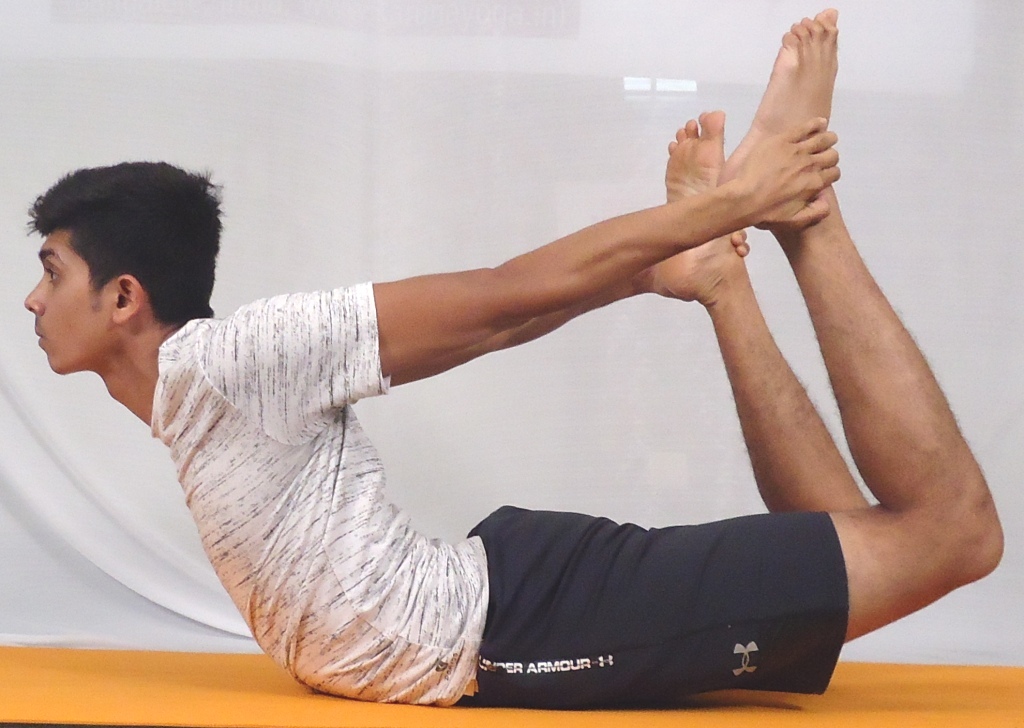
Dhanurasana(bow pose) This is the bow pose. Start by lying in a prone position on your stomach. As you exhale bend your knees and bring them up. At the same time extend your arms backwards and grasp your ankles with your hands. Breathe easily here, then exhale and life the knees off the ground as you lift the chest off the floor, as well. Your body should look taut like a stretched bow, which is why the pose is called bow pose. Stay here for about thirty seconds breathing easily. Then exhale and release back down. Precaution: Pregnancy Acute low-back injury, high blood pressure, or heart concerns Shoulder concerns weak heart, high blood pressure, hernia, colitis, peptic or duodenal ulcers Benefits: Brings back elasticity to the spine and tones the abdominal organs. Slipped discs. The liver, abdominal organs and muscles are massaged. The pancreas and adrenal glands are toned, balancing their secretions. The kidneys are massaged and excess weight is reduced around the abdominal area. This leads to improved functioning of the digestive, excretory and reproductive organs and helps to remove gastrointestinal disorders, dyspepsia, chronic constipation and sluggishness of the liver. The spinal column is realigned and the ligaments, muscles and nerves are activated, removing stiffness. It helps to correct hunching of the upper back.
Bhujangasana(cobra pose)
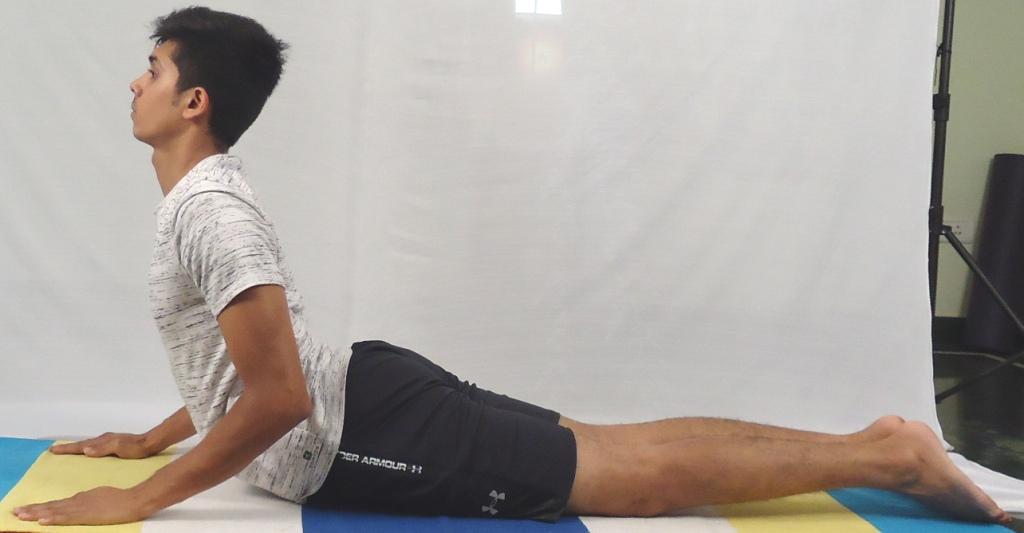
Bhujangasana(cobra pose) This is the low cobra pose. Lie flat on your stomach. Your legs are stretched behind you. Place your palms by your chest and inhale as you raise your head and upper body up until the navel by arching your spine backwards. Roll your shoulders back and down. Breathe easily as you hold the pose for thirty seconds. Then lower back down and relax. Precaution: Pregnancy Wrist pain Peptic ulcer, hernia Benefits: Panacea for an injured spine and in cases of slight displacement of spinal discs the practice of this pose replaces the discs in their original position. tones the ovaries and uterus, and helps in menstrual and some other gynaecological disorders. It stimulates the appetite, alleviates constipation and is beneficial for all the abdominal organs, especially the liver and kidneys.
Sarpasana(snake pose)
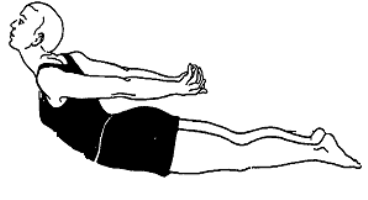
Sarpasana(snake pose) This is the snake pose. It is a precursor to the low cobra pose. Lie flat on your stomach. Your legs are stretched behind you and your forehead is on the mat. Your palms are on the floor by the chest. Now inhale and lift the torso off the floor, lifting the head first. Keep your legs pressed together and engaged. Gaze in front while breathing easily for thirty seconds. You can also clasp your hands behind your back and pull them backwards. Then exhale and lower back down and relax. Precaution: Who suffering from peptic ulcer, hernia, intestinal tuberculosis or hyperthyroidism, heart conditions and high blood pressure should not practice. Benefits: Correct the posture, particularly rounded shoulders. Profound strengthening effect on the back muscles.
Shalabhasana(locust pose)
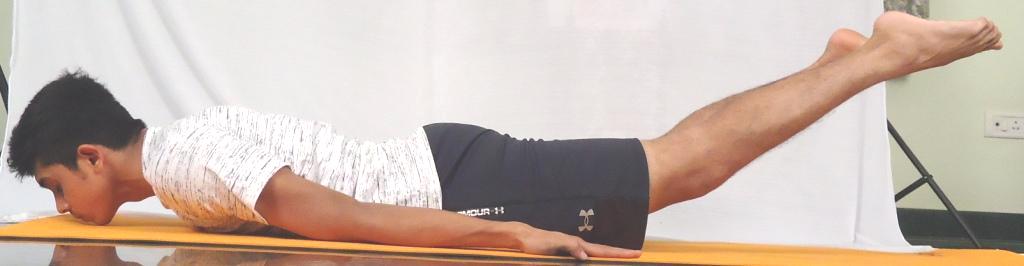
Shalabhasana(locust pose) This is the locust pose. Lie flat on your stomach. Place your palms under your inner thighs. Engage your lower body and then inhale and raise both your legs off the floor with the support of your palms. Stay here breathing easily for thirty seconds. Then lower back down while you exhale and relax. Precaution: Weak heart, coronary thrombosis or high blood pressure. Peptic ulcer, hernia, intestinal tuberculosis. Benefits: Strengthens the lower back and pelvic organs, and provides relief from backache, mild sciatica and slipped disc. Liver, stomach, bowels and other abdominal organs, and stimulates the appetite.
Ardha Shalabhasana(Half Locust Pose)
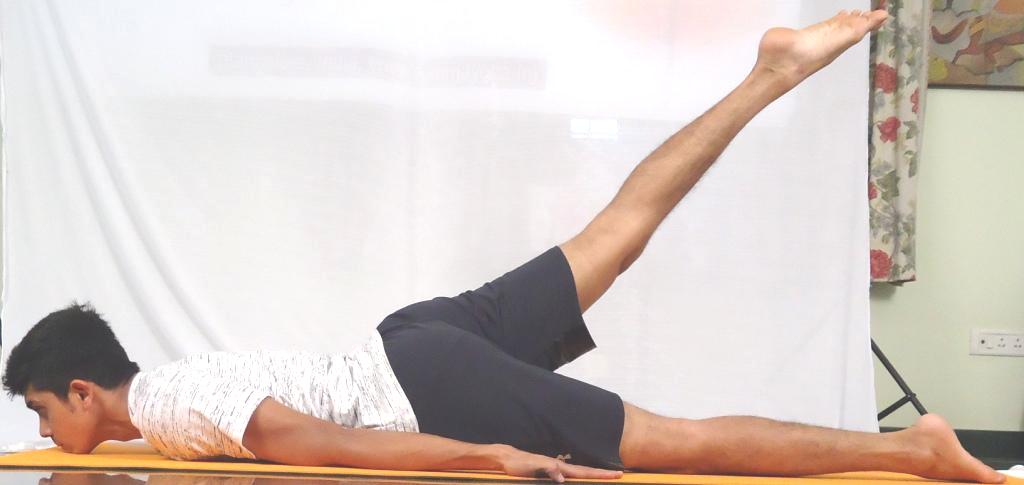
Ardha Shalabhasana(Half Locust Pose) This is the half locust pose. Lie flat on your stomach. Place your palms under your inner thighs. Engage your lower body and then inhale and raise your right leg off the floor with the support of your palms. Stay here breathing easily for thirty seconds. Then lower back down while you exhale and relax. Repeat the pose on the other side. Precaution: Weak heart, coronary thrombosis or high blood pressure. Peptic ulcer, hernia, intestinal tuberculosis. Benefits: Back and pelvic organs. It can release tension in the pelvic area.
Makarasana(Crocodile Pose)
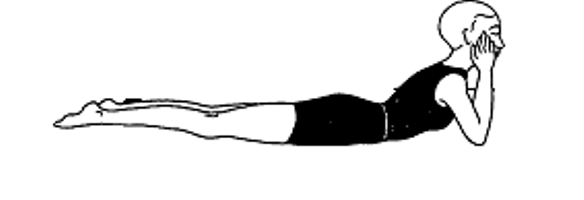
Makarasana(Crocodile Pose) This is the crocodile pose. Lie flat on your stomach. Your legs are stretched behind you. Place your palms on the floor under your chin. Inhale as you raise your head and upper body up until the navel by arching your spine backwards. Now bring your palms up while your elbows rest on the floor. Rest your chin on your palms. Breathe easily here for thirty seconds. Then slowly release the pose and relax. Precaution: Exaggerated lumbar curve should not practice this asana if any pain is experienced. Benefits: Slipped disc, sciatica, and lower back pain. Vertebral column to resume its normal shape and releases compression of the spinal nerves.