
Hanumanasana (Monkey Pose)
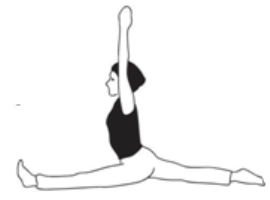
This pose is named after the Hindu monkey God. Start in a kneeling position and place the palms on the floor on either side of the body. Lift the knees and bring the right knee forward and the left knee back. Stretch both the legs. Then try to press the hips and legs into the ground. Try and do a full split with the back thigh of the front leg and the front thigh of the back leg touching the ground. Bring your hands into Anjali mudra and try and stay here breathing easily for thirty seconds. Then slowly come out of the pose. Precaution: Knee pain, Hamstring or groin injury Benefits: Stretches the hamstrings and hip flexors. Stabilizes and balances the deep hip muscles. Helps relieve sciatica pain. Strengthens the spinal and abdominal muscles.
Trianga Mukhaikapada Paschimottanasana (One Leg Folded Forward Bend)
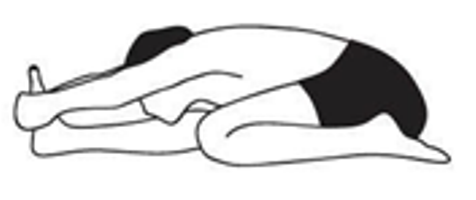
This is the one leg folded forward bend. Sit on the floor with your legs stretched out in front of you. Bend the right knee and move it so that it is resting by the side of the right hip. The toes are pointing backwards and the inner right calf will touch the outer right thigh. Put the weight on the bent knee and tilt the body in this position. Now reach your hands upwards and then bend the trunk forward from the hips. Try and place the forehead, then mouth then chin on the left knee. Simultaneously, reach for the left foot with both hands. Stay here for about thirty seconds breathing easily. Then slowly relax out of the pose and repeat it on the other side. Precaution: who having back problem concern should avoid this pose. Benefits: good for persons suffering from dropped arches and flat feet. Cures sprains in the ankle and the knee, tones the abdominal removes sluggishness.
Gorakshasana(Cowherd Pose)
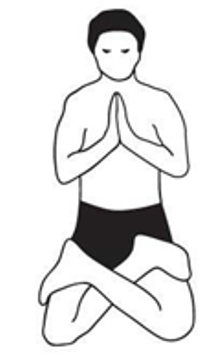
This is the cowherd pose. Come into a padmasana pose and then stretch your arms out so they’re on the floor. Balancing on your hands, raise your hips off the floor. Rise up from the trunk so it is straight and vertical and try balancing on the knees. Try and take your hands off the ground and bring them into Anjali mudra. Try and hold this position as long as you can while breathing easily. Slowly relax and come out of the pose. Precaution: Skip Who Having Knee Problem. Benefits: Improve sense of balance. The tail bone gets elasticity.
Merudandasana (Spinal Column Pose or Balancing Bear Pose)
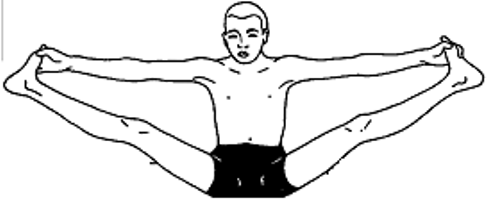
This is the spinal column pose. Sit on the floor with your legs stretched out in front of you. Bend both knees so the feet are flat on the ground. Then separate them so you can hold on to the respective big toes using the thumb and first two fingers of your hands. Slowly lean back as you balance on the buttocks. Straighten the legs and arms and raise the legs upwards. Now, keep the spine straight and separate the legs as far from each other as possible. Stay here while gazing at a fixed point and breathing easily. Hold this pose for about thirty seconds and then come out of the pose. Precaution: Should not be practiced by people with high blood pressure, heart ailments, slipped disc, sacral infections or sciatica. Benefits: Tones the abdominal organs, especially the liver, and strengthens the abdominal muscles. Stimulate intestinal peristalsis, alleviating constipation. Strengthens the muscles of the back and helps to realign the spine. Remove tiredness from the legs, giving a feeling of lightness and balance.
Ubhaya Padangusthasana (Both Big Toe Pose or Double Toe Hold or Balancing Stick Pose)
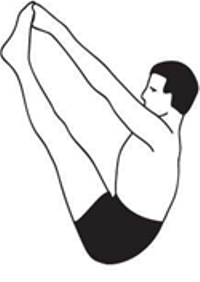
This is another seated pose, similar to the boat pose. Sit on the floor with your legs stretched out in front of you. Your hands should be resting on the floor, palms face down, next to the hips. Balancing on your buttocks, raise the legs straight off the ground so they are about 45 degrees off the floor. Then take your hands and grasp the respective big toes with the first two fingers and the thumb. Pull your torso closer to the legs so you are closing the space between them with your knees still straight. Now stay here breathing easily for about thirty seconds and then return to the seated pose with your legs and hands resting on the floor. Precaution: Benefits: develops balance and poise. Makes the thighs and calves shapely. Prevents hernia and relieves severe backaches.
Paripurna Navasana(Full Boat Pose)
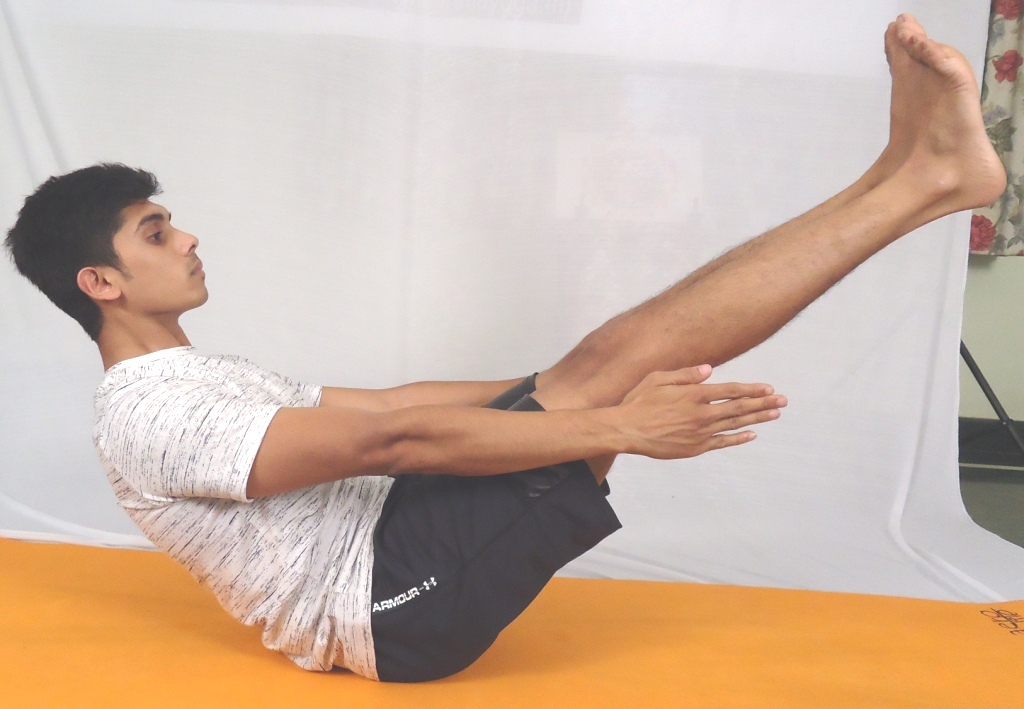
This is the full boat pose. Sit on the floor with your legs stretched out in front of you. Your hands should be resting on the floor, palms face down, next to the hips. Then balancing on the buttocks, raise the hands until they are parallel to the ground. Raise the legs straight off the ground so they are about 45 degrees off the floor. Make sure the knees are straight. Now stay here breathing easily for about thirty seconds and then return to the seated pose with your legs and hands resting on the floor. Precaution: Who having Pregnancy or any injury should skip this practice. Benefits: Strengthens the thighs, hips, abdominal muscles, and back; targets the core musculature. Stimulates digestion. Builds balance and concentration. Effective on the intestines.
Bharadvajasana (Bharadvaja’s Twist or Torso Stretch Pose)
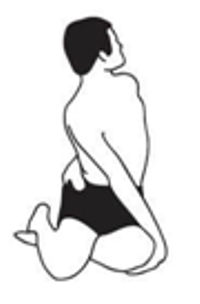
This is a seated twist names after mythological character Drona’s father. Sit on the ground with your legs stretched out in front of you. Bend both legs and move them back towards the right side of the body. They will be facing away from the body and resting near the right hip. Your buttocks will be on the floor. Now turn forty-five degrees to the left from the trunk. Take your right hand and place it on the outer side of the left thigh, near the left knee and then you can wedge the right hand under the left knee with the palm to the floor. Exhale and take the left hand behind the back, trying to clasp the right upper arm with the left hand. Turn your neck to look over the right shoulder. Stay here breathing easily for thirty seconds. Then come out of the pose and relax. Then you can repeat it on the next side. Precaution: Acute knee concerns and Acute spinal concerns, should avoid this practice. Benefits: Stretches and strengthens the low spine. Stretches the neck, shoulders, hips, knees, and ankles. Massages the internal organs. Improves digestion. The knees and shoulders become flexible
Ardha Baddha Padma Paschimottanasana (Half Bound Lotus Forward Fold)
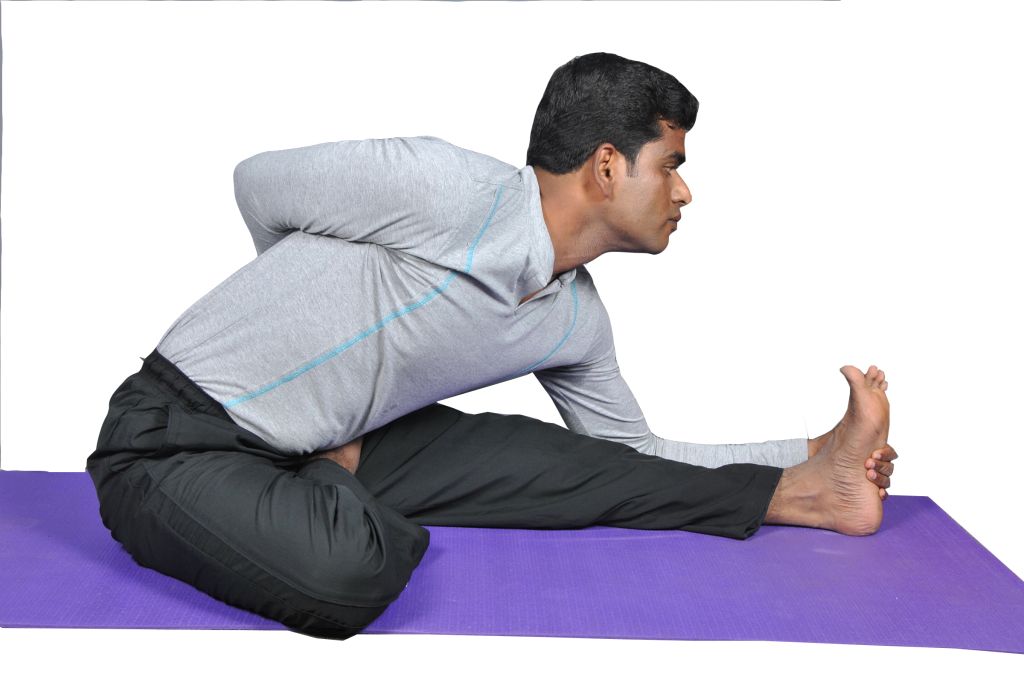
This is the half bounded lotus west intense stretch. It is a forward bend. Sit on the ground with your legs stretched out in front of you. Bend the left knee and bring it into half lotus pose so the left foot is close to the navel, resting on top of the right thigh. The left knee rests on the floor. Now reach your right hand upwards and your left hand behind the waist. Then bend the trunk forward from the hips. Try and place the forehead, then mouth then chin on the right knee. Simultaneously, reach for the right foot with your right hand. Stay here breathing easily and after about thirty seconds slowly come out of the pose. Precaution: Acute knee or back pain. Benefits: Knees become flexible. Blood is made to flow round the navel and the genital organs. Recommended for persons with rounded and drooping shoulders.
Ardha Padma Paschimottanasana (Half Lotus Forward Fold Pose)
This is the half lotus west intense stretch. It is another forward bend. Sit on the ground with the legs stretched out in front of you. Bend the left knee and place it on the opposite thigh near the navel. The left knee rests on the floor. Now reach your hands upwards and then bend the trunk forward from the hips. Try and place the forehead, then mouth then chin on the right knee. Simultaneously, reach for the right foot with both hands. Then slowly come out of the pose. Precaution: Who having knee pain should not practice this pose. Benefits: Blood circulation is made to flow round the navel and the genital organs. The pose is good for persons with rounded and drooping shoulders.
Parvatasana(Seated Mountain Pose)
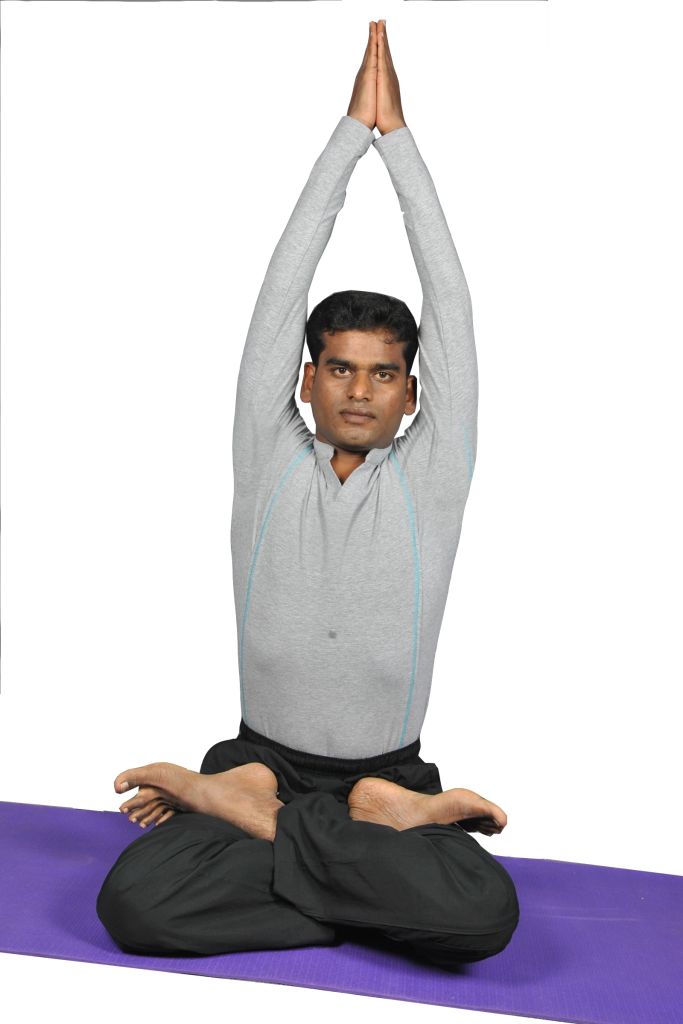
This is the seated mountain pose. Sit comfortably in padmasana. Make sure your back is erect and relaxed and your neck is long and not stiff. Raise your hands above your head and interlock your fingers and turn your palms towards the sky. Press upwards through your hands so that you are stretching through your upper body, shoulder blades and floating ribs. Breathe evenly here as you hold the pose for about thirty seconds. Then slowly come out of the pose by unlinking your hands and bringing them back down. Precaution: Who having knee pain should not practice this pose. Benefits: remove stiffness in the shoulders. Helps movement and to develop the chest. Abdominal organs are drawn in and the chest opens fully.