
Moderate diet for Hatha Yogic Practices
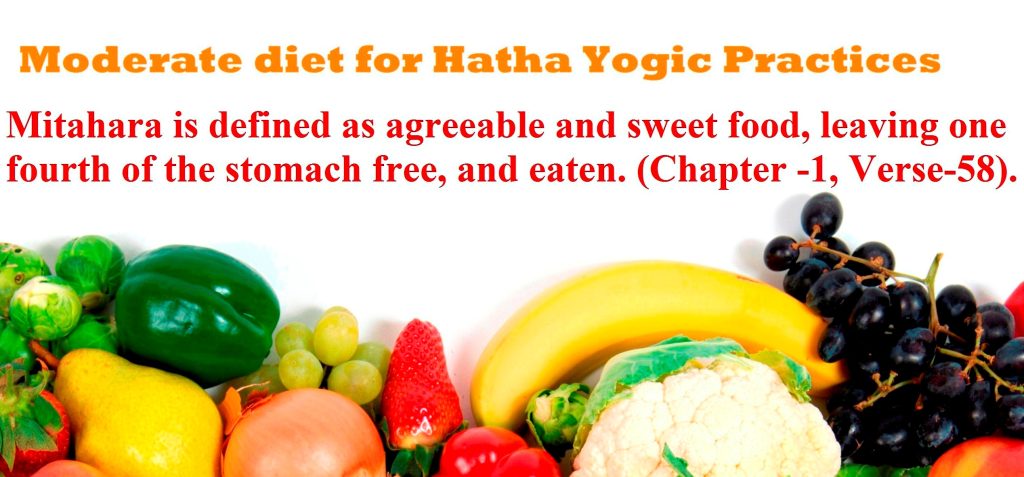
Hatha Yoga Pradipika -Moderate diet for Hatha Yogic Practices Susnighdhamadhuraharaschaturthamsavivarjitah / Bhujyate sivasamprityai mitaharah sa uchyate//(Chapter -1, Verse -58). Mitahara is defined as agreeable and sweet food, leaving one fourth of the stomach free, and eaten. (Chapter -1, Verse-58).
BONE DEVELOPMENT
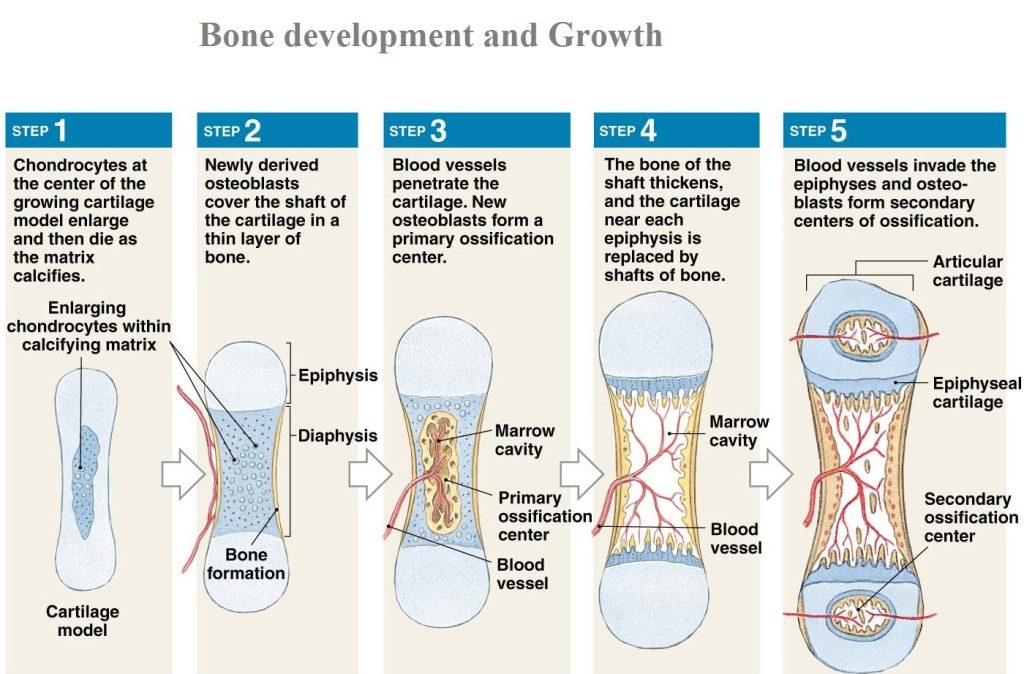
BONE DEVELOPMENT: There are two processes that form our bones before we are born: intramembranous ossification and endochondral ossification. Bones of the skeleton are developed in 2 ways they are as follows: Intramembranous ossification: Intramembranous ossification is primarily responsible for forming the bones in our skull, and bones are formed from a specific type of connective tissue, called mesenchymal connective tissue. The replacement of sheet-like connective tissue membranes with bony tissue. Bones formed in this manner are called intramembranous bones. They include certain flat bones of the skull and some of the irregular bones. The future bones are first formed as connective tissue membranes. Osteoblasts migrate to the membranes and deposit bony matrix around themselves. When the osteoblasts are surrounded by matrix they are called osteocytes. Endochondral ossification is the process by which the embryonic cartilaginous model of most bones contributes to the longitudinal growth and is gradually replaced by bone. Endochondral ossification involves the replacement of hyaline cartilage with bony tissue. Bone Growth: Bone growth happens at the ends of the bones at the growth plate. As the bones grow, cells in the growth plate first produce more cartilage to extend the bone and then osteoblasts come in and convert the cartilage to bone in the same way that they do when bones are first formed before birth. Bones can continue to grow until about the age 16 to 20 when the growth plate turns completely to the bone and no new cartilage can be added at the ends of the bones.
Abnormal Breathing and Breathing Disorders:
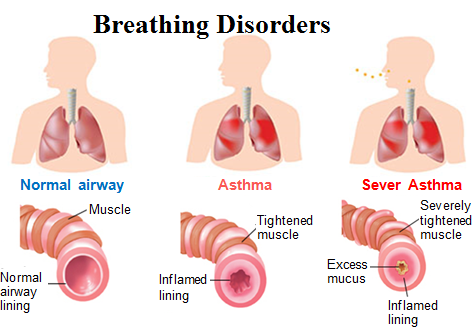
Abnormal Breathing and Breathing Disorders Apnea:Absence of breathing. Orthopnea:Only able to breathe comfortably in upright, unable to breath laying down Dyspnea: Subjective sensation related by patient as to breathing difficulty Paroxysmal nocturnal dyspnea – attacks of severe shortness of breath that wake a person from sleep, such that they have to sit up to catch their breath – common in patients with congestive heart failure. Hyperventilation: Hyperventilation occurs when the rate and quantity of alveolar ventilation of carbon dioxide exceed the body’s production of carbon dioxide. Hypoventilation: Hypoventilation occurs when ventilation is inadequate to perform needed gas exchange. Hypoventilation is considered a precursor to hypoxia and its lethality is attributed to hypoxia with carbon dioxide toxicity. Cheyne-Stokes respirations (CSR): Gradual increase in volume and frequency, followed by a gradual decrease in volume and frequency, with apnea periods of 10 – 30 seconds between cycle. Described as a crescendo – decrescendo pattern. Characterized by cyclic waxing and waning ventilation with apnea gradually giving way to hyperpneic breathing.
Autonomic Nervous System
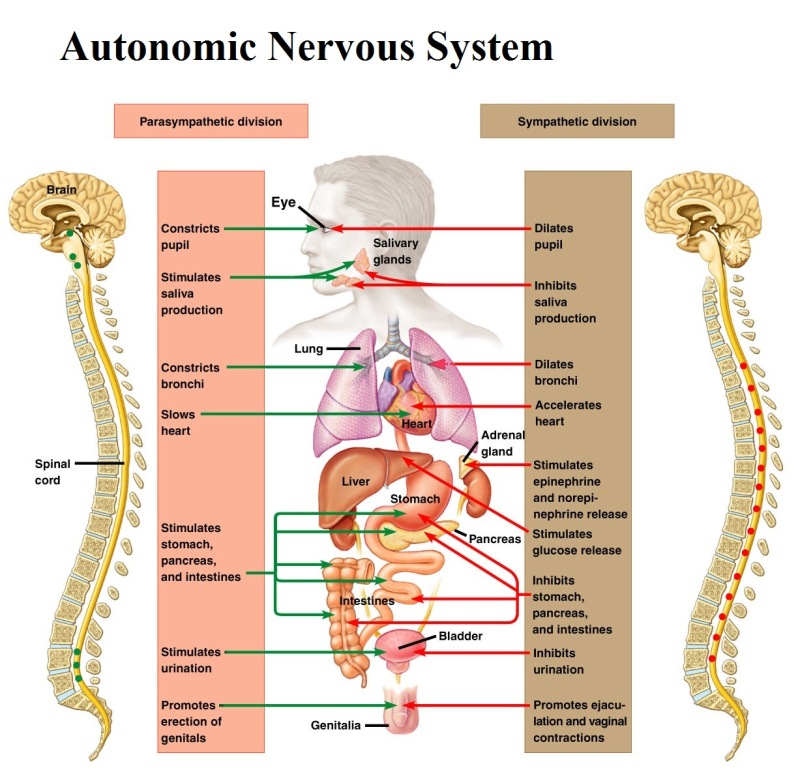
Autonomic Nervous System The autonomic system is the part of the peripheral nervous system responsible for regulating involuntary body functions, such as blood flow, heartbeat, digestion, and breathing. In other words, it is the autonomic system that controls aspects of the body that are usually not under voluntary control. This system allows these functions to take place without needing to consciously think about them happening. Autonomic Nervous System is further divided into two branches: The sympathetic system regulates the flight-or-fight responses. This system prepares the body to expend energy and deal with potential threats in the environment. When the action is needed, the sympathetic system will trigger a response by speeding up the heart rate, increasing breathing rate, increasing blood flow to muscles, activating sweat secretion, and dilating the pupils. This allows the body to respond quickly in situations that require immediate action. In some cases, we might stay and fight the threat, while in other cases we may instead flee from the danger. The parasympathetic system helps maintain normal body functions and conserve physical resources. Once a threat has passed, this system will slow the heart rate, slow breathing, reduce blood flow, to muscles and constrict the pupils. This allows us to return our bodies to a normal resting state.
Muscle Physiology
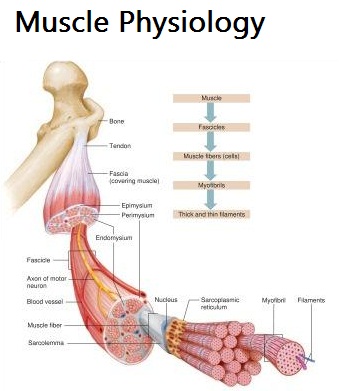
Muscle Physiology Muscle cells are specialized to contract. The cells are similar in structure to the other cells in the body but are elongated and, for this reason, are called muscle fibers. They consist mostly of water (about 75%), proteins and inorganic salts. There are around 700 different muscles in the human body and more than 250 million muscle fibers. The body contains three distinct types of muscle (skeletal, cardiac and smooth), which will be outlined in this article. The following three articles in the series will address the structure and function of skeletal muscle, the largest muscle mass in the body. Muscles are excitable or irritable. This means that they are capable of receiving and responding to a stimulus. The stimulus is usually a chemical – a neurotransmitter released by a nerve cell, a hormone or a local change in acidity (pH). In response, muscles generate an electrical impulse that causes the muscle cells to contract: – Muscles can contract or shorten when they are stimulated. No other type of body tissue can do this. – Muscles are extensible – that is, they can stretch or extend beyond their resting length. – Muscle fibers are elastic and can return to their resting length after being stretched.
Vajrasana – Thunderbolt Posture
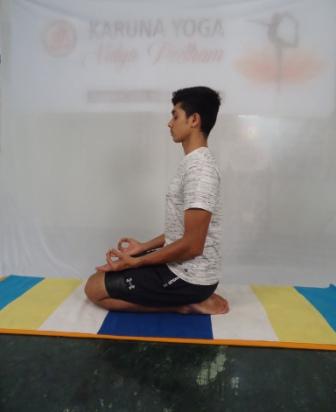
Vajrasana – Thunderbolt Posture (Vajra – thunder bolt or diamond) Practice: Come to (Dandasana) staff posture, by palms beside hip. Slide towards left, bend at right leg knee, and rest it under right hip. Same, bend left leg knee, place it under left hip. Keep spine, neck, head straight. Heel contacting with hip, toes pointing outward, inner calf muscles touching quadriceps muscle, knees together. At fingers adopt Jnana Mudra by touching tip of index, thumb finger slightly and rest it on respective thigh. Stay for 10 to 40 seconds, breathing completely by utilizing abdomen and chest area. Return back, sliding towards right side, with palm support unfold both legs and relax. Benefits: This is the only one asana, immediately after food we can perform to aid digestion by stimulating Vajra Nadi. Give suppleness to ankles, reduce thigh, hip extra fat. Make spine straight and strong naturally. It induces meditative state, so good for meditation.
Utkatasana – Mighty Posture
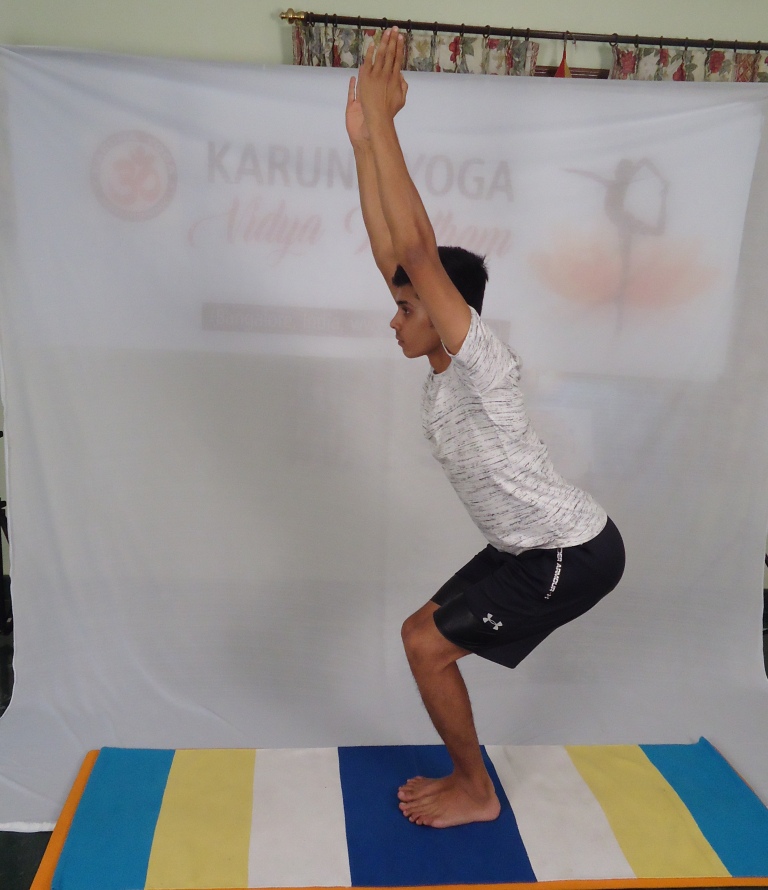
Utkatasana – Mighty Posture (utkata = mighty or powerful) Practice: Come to Tadasana, by keeping legs together and palms beside your thighs. As you inhale raise your arms till your biceps touch ears, palms together finger pointing towards sky, lock your elbow and keep straight, tuck your elbows, open your chest and expand , rib cage lifted up, abdomen in , keep your entire spine extended and lengthen up. Exhale and bend your knees , squatting down until your thighs are parallel to the floor, do not fall forward, move backward let your weight distribute over at lower back , hip joints and thigh muscles. Breathing normally at your nose, slow, even, and long breathing. Stay in this posture for 10 to 30 seconds or till you fill comfortable, do not exert or overstrain your body, always listen to your body. Along exhalation bring arms beside your thighs, and inhale straightens your knees. Again come back to Tadasana and relax. Benefits: Strengthens shoulders and open the chest. Strengthens and tones the ankles, thighs, calves, and spine Activate and optimize the efficiency of abdominal organs, diaphragm, and heart. Reduces flat feet.
Ustrasana – Camel Posture
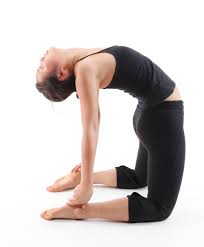
Ustrasana – Camel Posture (ustra – camel) Practice: Come to kneeling posture called (Vajrasana) thunder bolt posture, by keeping knees together, hips touching heels, toes pointing outward. Now stand on your knees, support both palms at back of waist, and exhale bend backward make nice arch on spine, place palms on respective heels. Thighs perpendicular to the floor. Push hip, waist, coccyx, sacral towards sky. Open chest and expand, neck falling backward. Stay in this posture for 10 to 20 seconds, breath deeply through nose. Inhales come up and relax at (Balasana) child posture. Benefits: Give flexible, suppleness to lower back especially at sacral, lumbar region. Remove hunch back or droop shoulders, by regular practice. Improves breathing. Strengthen entire spine, neck, shoulders, shoulder. Make spine flexible, supple and strong. Improves back pain.
Urdhva Mukha Svanasana – Urdhva Mukha Svanasana
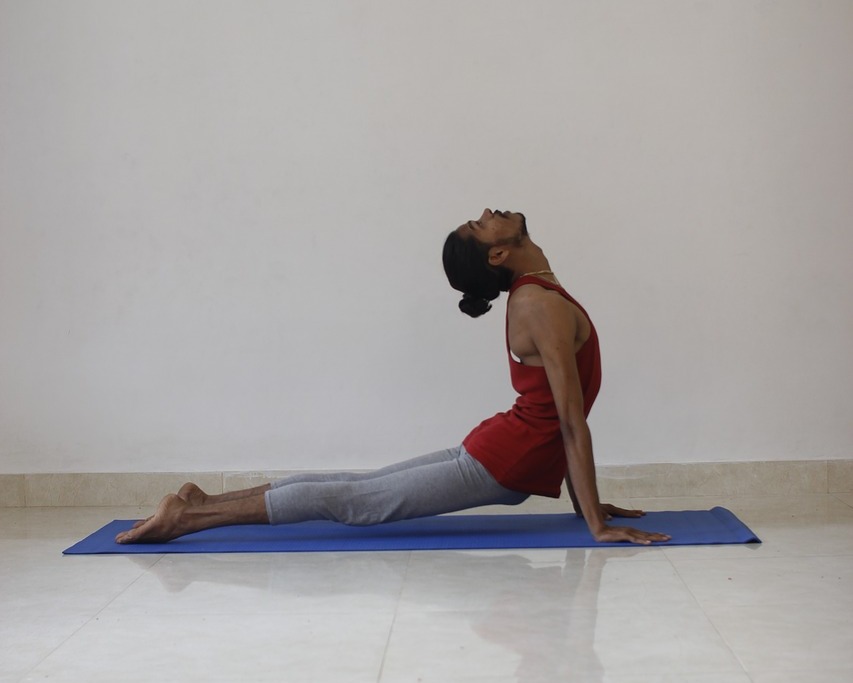
Urdhva Mukha Svanasana – Urdhva Mukha Svanasana (urdhva – upward, mukha – face, svana – dog) Practice: Come to Makrasana (crocodile posture), place palms beside chest at last rib bone, elbows up and close to each other. Keep the feet about one foot apart. The toes should point backward. Place the palms by the side of the waist, Inhale raise head, neck, chest, pelvic, hip, legs off the floor by keeping elbow straight and locked. Stretch and lengthen the head neck and trunk as far back as possible, without placing the knees on the ground. Keep the legs straight and tightened at the knees, balancing at your palms and your toes. Distribute the pressure evenly at your back. Do not shrug your back open your chest and widen your shoulder. Tighten calf, thigh, butt muscles. Open chest broad by pushing arms down against floor. Stay for 10 to 30 second, with deep inhalation and exhalation. Exhale, come back to Makrasana and relax. Benefits: The compressing action on the abdomen helps in squeezing out stagnant blood from the abdominal organs and encouraging fresh flow of blood. It is very useful for all stomach ailments, including indigestion and constipation. Arching the back exercises the spine, making the muscles supple and revitalizing the spinal nerves. God for all back related problems.
Utthita Trikonasana – Extended Triangle Posture
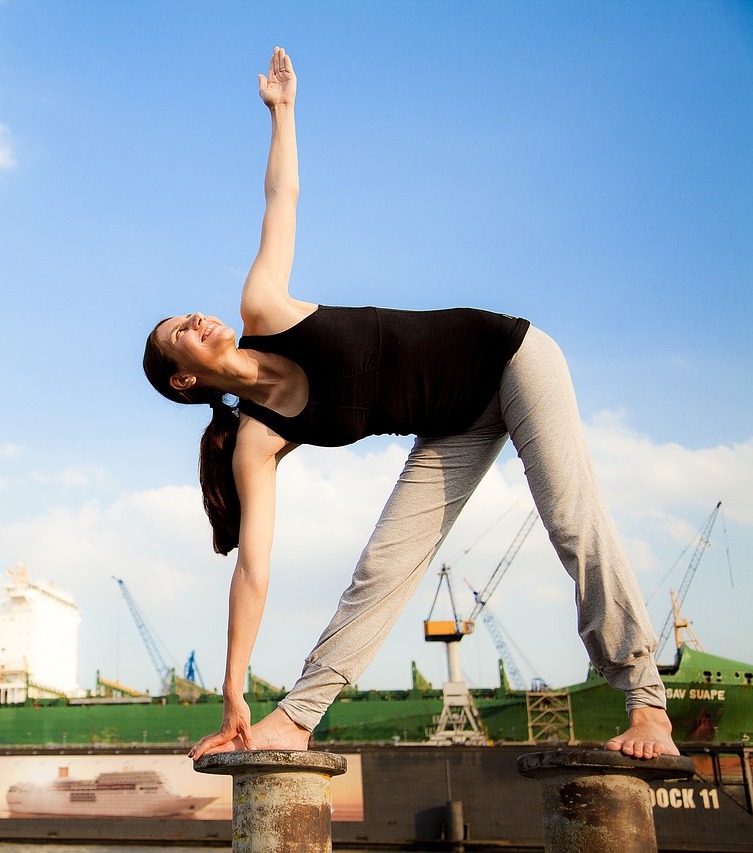
Utthita Trikonasana – Extended Triangle Posture (utthita – extended, tri – three, kon- angle) Practice: Come to (Tadasana) Mountain Posture, by palms beside thighs. Inhale keep legs apart for 3 to 4 foot according to your height, By arms straight, fingers together, inner palms facing downward. Turn right foot outward to 90 degree, same left foot for 45 degree. Keep both legs straight and strong. Exhale Slide towards right side laterally, catch hold big toe with index, middle and thumb finger. Keep spine and tail bone straight and extended, turning spine towards left side, gazing at tip of middle finger. Stay for 10 to 20 seconds, by breathing normally. Now bend right leg knee and come back to Tadasana. Repeat same for left side, same length of duration. Benefits: Good for flat feet, neck pain, and sciatica. Improves height, makes body aligned and balance both side. Improves droop or hunch back. Makes legs very stronger. Strengthens the Calf, thigh muscles, and waist muscles and makes the spine flexible. Strengthen the hips, groins, hamstrings, and calves, shoulders, chest, and spine .