
Padmasana (lotus pose)
Padmasana (lotus pose) Vamorupari dakshinam cha charanam Samsthapya vamam tatha / Dakshorupari paschimena vidhina Dhrtva karabhyam drdham // Angghushthau hrdaye nidhaya Chibukam nasaghramalokayet / Etadvyadhivinasakari yaminam Padmasanam prochyate//(Chapter -1, Verse 44) Place the right foot on the left thigh and the left foot on the right thigh, cross the hands behind the back and firmly hold the toes. Press the chin against the chest and look at the tip of the nose. This is called padmasana, the destroyer of a yogi’s diseases. (Chapter -1, Verse- 44). Uttanau charanau krtva urusamsthau prayatnatah / Urumadhye tathottanau pani krtva tato drsau//(Chapter -1, Verse-45) Place the feet on the thighs, soles upward, palms in the middle of the groin, facing upward. (Chapter -1, Verse-45) Nasaghre vinyasedrajadantamule tu jihvaya/ Uttambhya chibukam vakshasyutthapy pavanam sanaih//(Chapter -1, Verse-46) Gaze at the nose tip, keeping the tongue pressed against the root of the upper teeth and the chin against the chest, and slowly raise the prana upward. (Chapter -1, Verse-46) Idam padmasanam proktam sarvavyadhivinasanam/ Durlabham yena kenapi dhimata labhyate bhuvi//(Chapter -1, Verse-47) This is called padmasana, destroyer of all diseases. Ordinary people cannot achieve this posture, only the few wise ones on this earth can do. (Chapter -1, Verse -47).
Mayurasana (Peacock Pose)
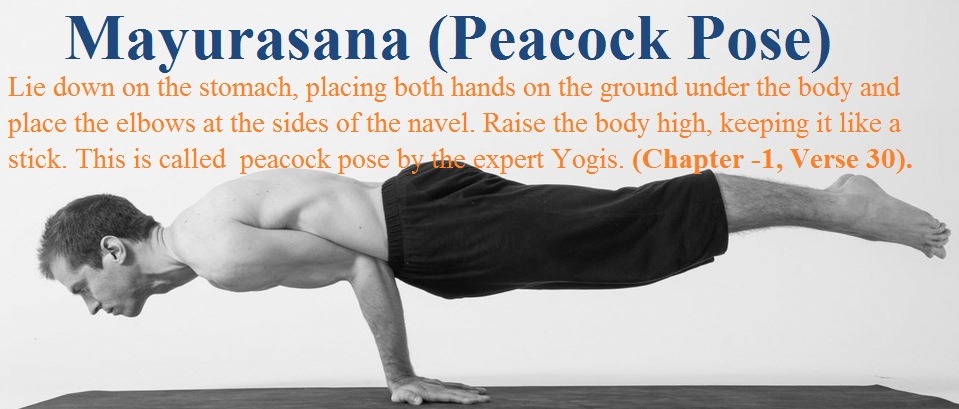
Mayurasana (Peacock Pose) Dharam avashtabhya karadvayena Tatkurparasthapitanabhiparsvah/ Uchchasano dandavad utthitah san Mayuram etat pravadanti pitham//(Chapter -1, Verse 30). Lie down on the stomach, placing both hands on the ground under the body and place the elbows at the sides of the navel. Raise the body high, keeping it like a stick. This is called peacock pose by the expert Yogis. (Chapter -1, Verse 30). Harati sakalaroghanasu ghulmodaradin Abhibhavati cha doshanasanam srimayuram/ Bahu kadasanabhuktam bhasma kuryadasesham Janayati // jatharaghnim jarayetkalakutam/(Chapter -1, Verse 31). Mayurasana quickly alleviates all diseases like enlargement of the glands, dropsy and other stomach disorders. It rectifies imbalance of the humors (vata, pitta, kapha). It reduces to ashes all food taken indiscriminately, kindles the gastric fire and enables destruction of deadly poison). (Chapter -1, Verse 31).
Matsyendrasana (Spinal Twist Pose)
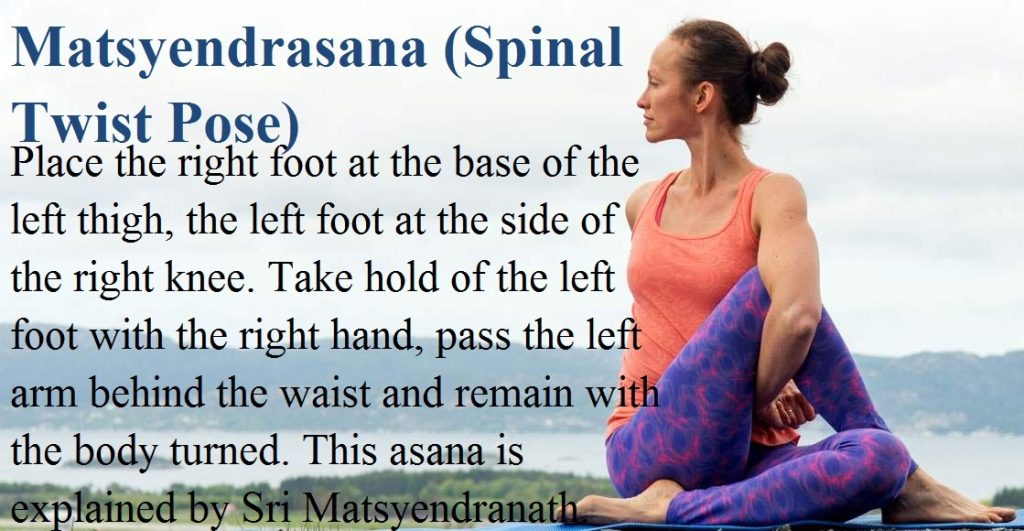
Matsyendrasana (Spinal Twist Pose) Vamoru mularpitadakshapadam Janor bahir veshtitavamapadam/ Praghrhya tishthet parivartitangghah srimatysanathoditam asanam syat//(Chapter -1, Verse 26). Place the right foot at the base of the left thigh, the left foot at the side of the right knee. Take hold of the left foot with the right hand, pass the left arm behind the waist and remain with the body turned. This asana is explained by Sri Matsyendranath. (Chapter -1, Verse 26). Matsyendrapitham jatharapradiptim Prachandarughmandalakhandanastram/ Abhyasatah kundaliniprabodham Chandrasthiratvam cha dadati pumsam//(Chapter -1, Verse 27). Practice of this asana Matsyendrasana increases the digestive fire to such an incredible capacity, this will eradicate all stomach diseases and thus awakening the serpent power and bringing equilibrium in the Bindu. (Chapter -1, Verse 27).
Kukkutasana (Cockerel Pose)
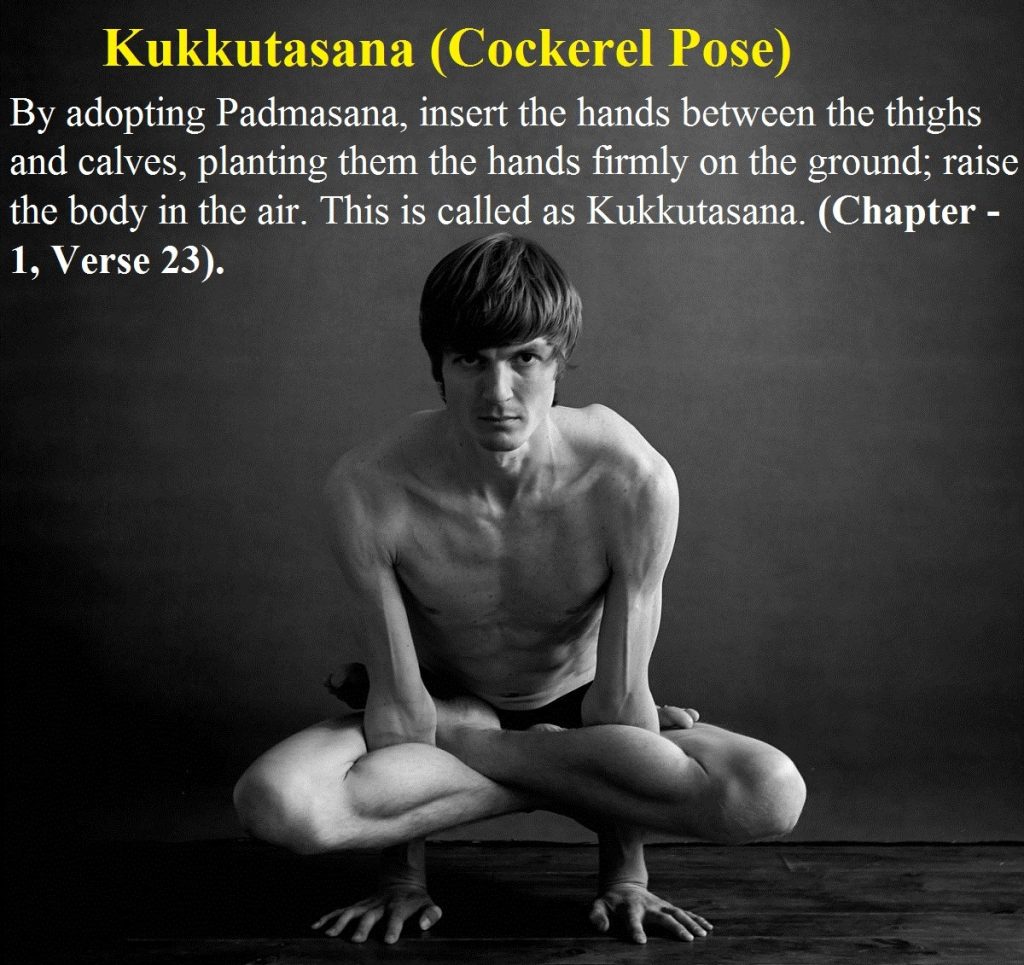
Kukkutasana (Cockerel Pose) Padmasanam tu samsthapya janurvorantare karau / Nivesya bhumau samsthapya vyomastham kukkutasanam//(Chapter -1, Verse 23). By adopting Padmasana, insert the hands between the thighs and calves, planting them the hands firmly on the ground; raise the body in the air. This is called as Kukkutasana. (Chapter -1, Verse 23).
Koormasana (Tortoise Pose)
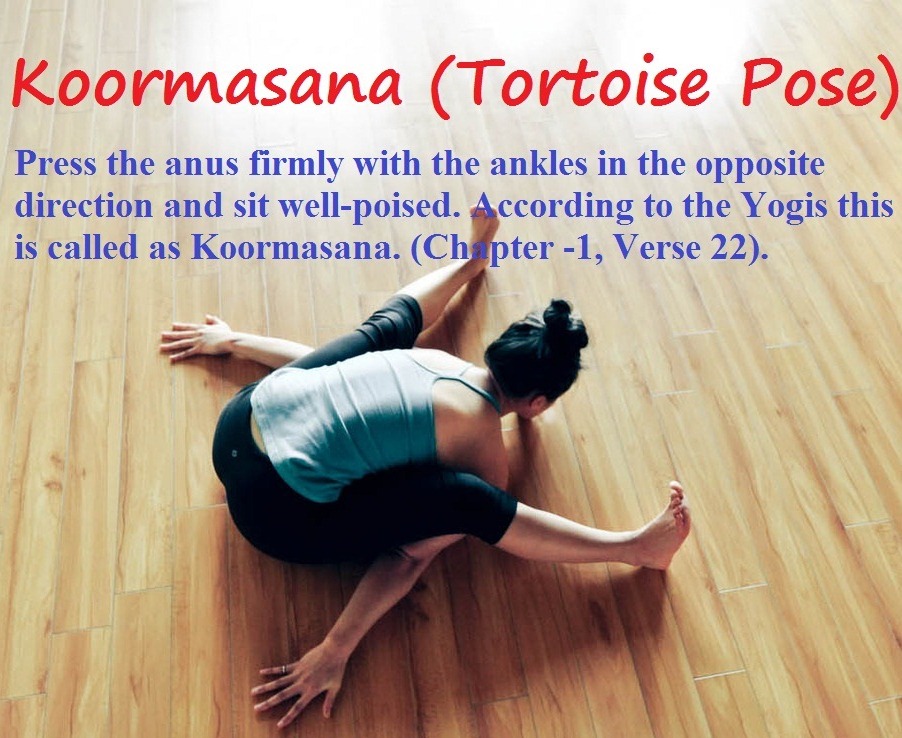
Koormasana (Tortoise Pose) Ghudam nirudhya ghulphabhyam vyutkramena samahitah/ Kurmasanam bhavedetaditi yogavido viduh//(Chapter -1, Verse 22). Press the anus firmly with the ankles in the opposite direction and sit well-poised. According to the Yogis this is called as Koormasana. (Chapter -1, Verse 22).
Gomukhasana (Cow’s Face Pose)
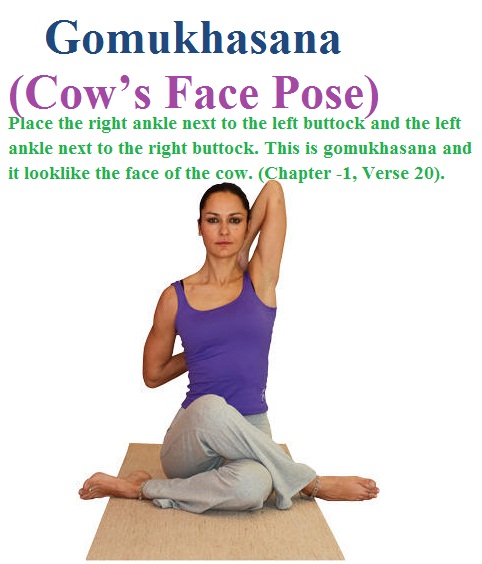
Gomukhasana (Cow’s Face Pose) Savye dakshinaghulpham tu prshthaparsve niyojayet / Dakshineapi tatha savyam ghomukham ghomukhakrtih//(Chapter -1, Verse 20). Place the right ankle next to the left buttock and the left ankle next to the right buttock. This is gomukhasana and it looklike the face of the cow. (Chapter -1, Verse 20).
Dhanurasana (Bow Pose)
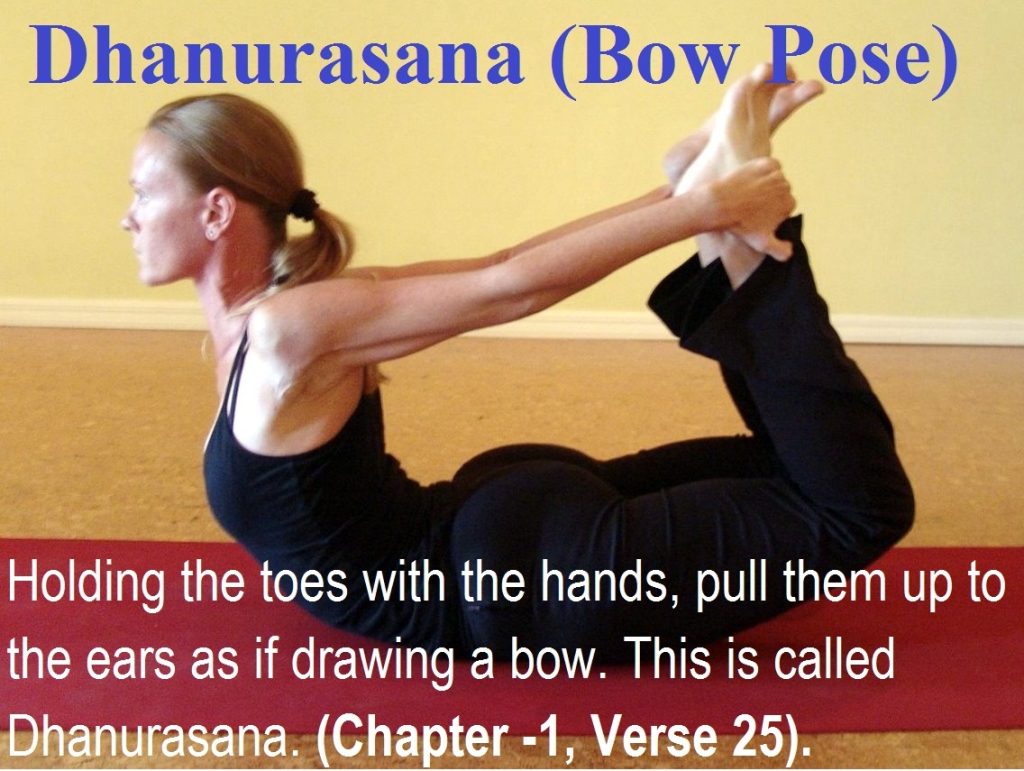
Dhanurasana (Bow Pose) Padanghushthau tu panibhyam ghrhitva sravanavadhi / Dhanurakarshanam kuryad dhanurasanam uchyate//(Chapter -1, Verse 25). Holding the toes with the hands, pull them up to the ears as if drawing a bow. This is called Dhanurasana. (Chapter -1, Verse 25).
Bhadrasana (gracious pose)
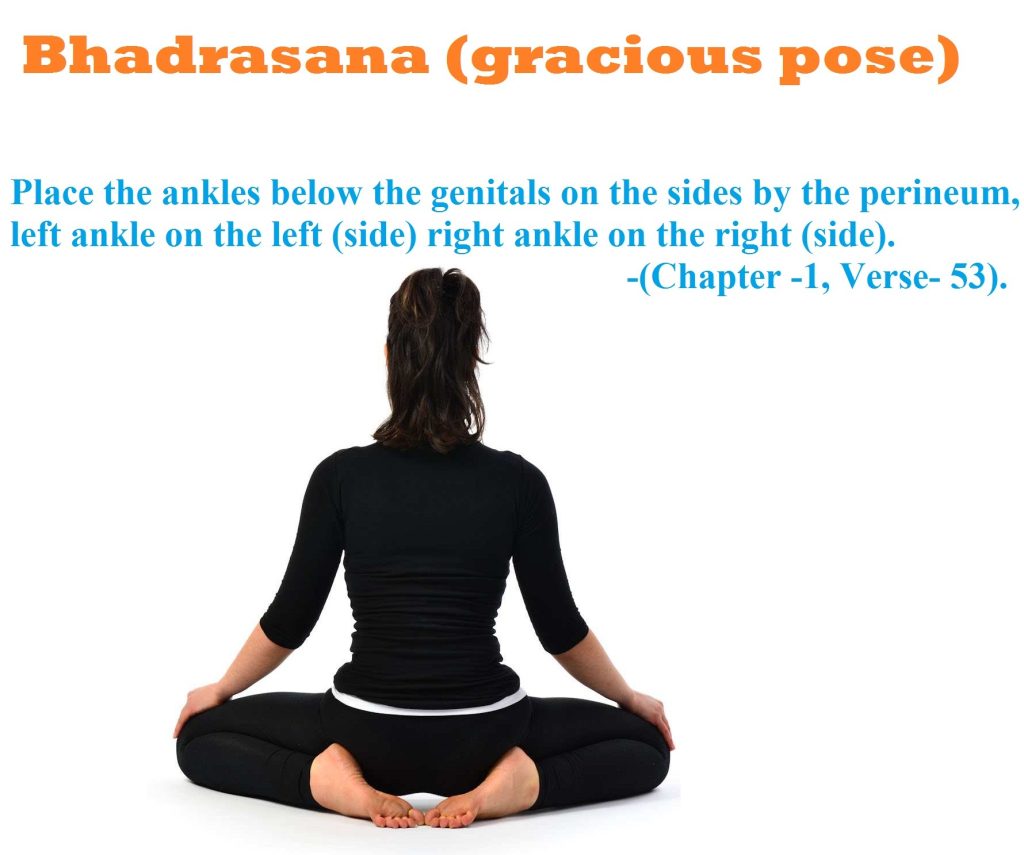
Bhadrasana (gracious pose) Ghulphau cha vrshanasyadhah Sivantyah parsvayoh kshipet / Savyaghulpham tatha savye Dakshaghulpham tu dakshine // Parsvapadau cha panibhyam Drdham baddhva sunischalam / Bhadrasanam bhavedetatsarvavyadhivinasanam //(Chapter -1, Verse- 53). Place the ankles below the genitals on the sides by the perineum, left ankle on the left (side) right ankle on the right (side).(Chapter -1, Verse- 53). Ghorakshasanamityahuridam vai siddhayoghinah/ Evamasanabandheshu yogindro vighatasramah // Abhyasennadikasuddhim mudradipavanakriyam/(Chapter -1, Verse-54). Then hold the feet, which are on their sides, firmly with the hands and remain motionless. This is bhadrasana which destroys all diseases. The yogis who are perfected (siddhas) call it gorakshasana. (Chapter -1, Verse-54).
Food conducive for Hatha Yogic Practices
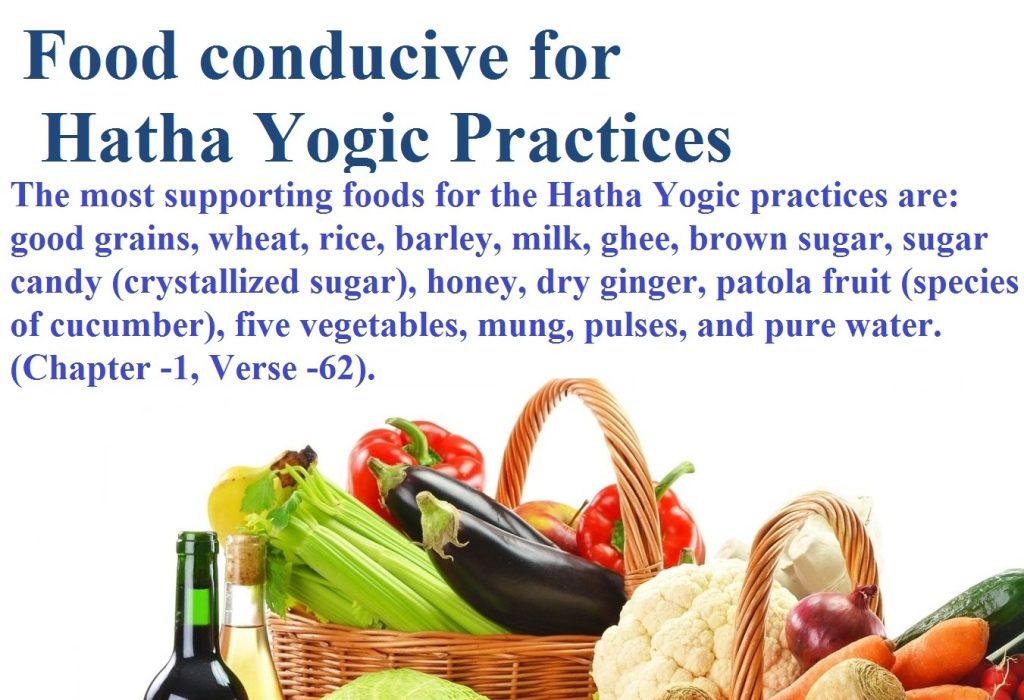
Hatha Yoga Pradipika – Food conducive for Hatha Yogic Practices Ghodhuma-sali-yava-shashtika-sobhanannam / Kshirajyakhanda-navanitasi hamadhuni// Sunthipatolakaphaladikapanchasakam / Mudghadidivyam udakam cha yamindrapathyam//(Chapter -1, Verse -62). The most supporting foods for the Hatha Yogic practices are: good grains, wheat, rice, barley, milk, ghee, brown sugar, sugar candy (crystallized sugar), honey, dry ginger, patola fruit (species of cucumber), five vegetables, mung, pulses, and pure water. (Chapter -1, Verse -62). Pushtam sumadhuram snighdham Gavyam dhatupraposhanam / Manobhilashitam yoghyam yogi bhojanamacharet//(Chapter -1, Verse-63). The Hatha Yogi should take nourishing and sweet food mixed with, ghee and milk; it should nourish the dhatus (basic body constituents) and be pleasing and suitable for body-mind-soul. (Chapter -1,Verse-63).
Food Prohibited for Hatha Yogic Practices
Hatha Yoga Pradipika – Food Prohibited for Hatha Yogic Practices Katvamla-tikshna-lavanoshna-haritasaka / Sauvira-taila-tila-sarshapa-madya-matsyan // Ajadi-mamsa-dadhi-takra-kulattha-kola / Pinyaka-hingghu-lasunady-amapathyam-ahuh//(Chapter -1, Verse- 59). The foods which prohibited for the Hatha Yogic practitioners are: those which are bitter, sour, pungent, salty, heating, green vegetables, sour gruel, oil, sesame and mustard, alcohol, fish, flesh foods, curds, buttermilk, horse gram, fruit of jujube, oil cakes, asafetida and garlic. (Chapter -1, Verse- 59). Bhojanam ahitam vidyāt punarasyoshnīkrtam rūksham/ Atilavanamam layuktam kadaśanaśākotkam varjyam// (Chapter -1, Verse -60). Unnourishing food should not be consumed, that which is reheated after becoming cold, which is dry (devoid of natural oil), which is excessively salty or acidic, stale or has too many mixed vegetables. (Chapter -1, Verse -60).