
Tolasana(Scale or Lifted Lotus Pose)
This is the hand balancing asana named for measuring scales. Come into padmasana and breathe easily. Then place both hands on either side of the body. As you exhale, push through the hands with palms flat on the floor. Contract your abdominal muscles until you lift the legs and buttocks off the floor. Balance here for thirty seconds breathing easily. Then inhale and lower back down and relax. Precaution: Shoulder or wrist injuries. Ankle injury Knee injury. Tight hips or thighs. Benefits: Strengthens the wrists, arms, and abdomen.
Parsva Dhanurasana(Side/Flank Bow Pose)
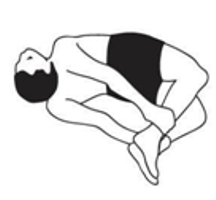
This the sideways bow pose. First lie on your stomach with your legs and arms outstretched. Then bend the knees so the toes are pointing towards your head and grasp the toes or ankles with your hands. This is the bow pose. Now exhale and roll over onto your right side. Stay here breathing easily for about thirty seconds. Now return to centre and then exhale and flip onto your left side and breathe easily here for thirty seconds. Then return to centre and relax back into a prone position. Precaution: Pregnancy. Acute low-back injury, high blood pressure, or heart concerns. Shoulder concerns weak heart, high blood pressure, hernia, colitis, peptic or duodenal ulcers Benefits: Brings back elasticity to the spine and tones the abdominal organs. Slipped discs. The liver, abdominal organs and muscles are massaged. The pancreas and adrenal glands are toned, balancing their secretions. The kidneys are massaged and excess weight is reduced around the abdominal area. This leads to improved functioning of the digestive, excretory and reproductive organs and helps to remove gastrointestinal disorders, dyspepsia, chronic constipation and sluggishness of the liver. The spinal column is realigned and the ligaments, muscles and nerves are activated, removing stiffness. It helps to correct hunching of the upper back.
Ardha Dhanurasana(Half Bow Pose)
This is the prone half bow pose. Start by lying flat on your stomach with your hands stretched out over your head on the floor. Slowly rise up from your lower back and with the right hand outstretched on the floor, reach back towards your right foot with your left hand. Bend the right knee back towards the body so that you can clasp it in your left hand. Your left leg is stretched straight out on the floor. The opposite hand clasps the opposite foot. Then lower back down to the floor and rest for a few seconds. Then repeat this on the other side. Precaution: Pregnancy. Acute low-back injury, high blood pressure, or heart concerns. Shoulder concerns weak heart, high blood pressure, hernia, colitis, peptic or duodenal ulcers Benefits: Brings back elasticity to the spine and tones the abdominal organs. Slipped discs. The liver, abdominal organs and muscles are massaged. The pancreas and adrenal glands are toned, balancing their secretions. The kidneys are massaged and excess weight is reduced around the abdominal area. This leads to improved functioning of the digestive, excretory and reproductive organs and helps to remove gastrointestinal disorders, dyspepsia, chronic constipation and sluggishness of the liver. The spinal column is realigned and the ligaments, muscles and nerves are activated, removing stiffness. It helps to correct hunching of the upper back.
Pindasana in Sarvangasana(Embryo or Foetus Pose in Shoulder Stand)
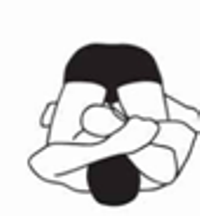
This is the embryo pose. Start in sarvangasana which is the shoulder stand. Then fold your legs into urdhva padmasana, which is the upside down padmasana, with your knees folded in the lotus pose with the knees still raised to the sky and the shoulders resting on the floor. From here move the legs over the head and your hands move from supporting the back to clasping the legs. Stay here for thirty seconds breathing easily and relax back down. Benefits: Relieves constipation.
Urdhva Padmasana in Sarvangasana(Upward Lotus in Shoulderstand)
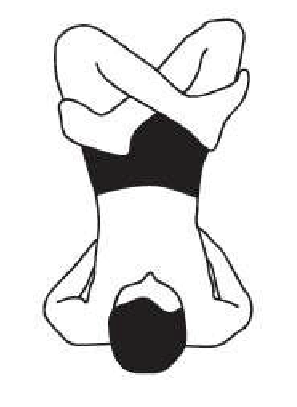
This is the upward facing lotus pose in a shoulder stand. From the sarvangasana. Precaution: Benefits:
Eka Pada Urdhva Dhanurasana(One-Legged Wheel Pose)
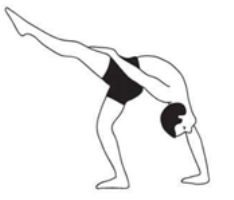
This is the one legged or asymmetrical bow pose. Start in the bridge pose here with your back flat on the floor, your knees bent, your palms by your ear. Then raise your arms, chest and buttocks off the ground so that your body looks like an inverted bow. Here, raise the right leg and point it straight towards the ceiling. Stay here breathing easily for thirty seconds. Then lower the leg, lower the body back to the floor, rest and repeat the pose with the other leg. Precaution: Benefits:
Dwi Pada Viparita Dandasana(Upward Facing Two-Foot Staff Pose)
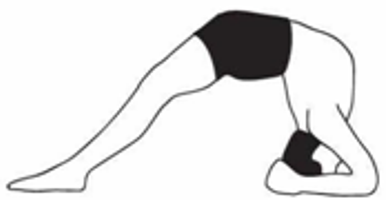
This is the two legged inverted staff pose. Start by lying flat on the floor. Stretch the arms over the head, bend the elbows and place your palms on the floor facing the shoulders. Keep them shoulder width apart. Breathe easily. Now exhale and press your knees as you lift your hips, shoulders and head. Straighten the arms and lift the shoulders. Now place the crown of your head on the floor between your hands and feet. On an exhale interlock your hands behind your head and bring your weight onto your forearms. Now on an exhale lift your chest off the ground so your head is also raised and resting fully on the crown. Your feet are resting flat on the floor. If your knees are bent here, you can straighten out in front of you so they are straight, with the feet still flat on the ground. Breathe easily here for thirty seconds then relax back down on the floor. Precaution: Benefits: keeps the spine sound and healthy while the chest expands fully. good for relieving pain in the coccyx region of the spine.
Karnapidasana(Knee to Ear Pose)
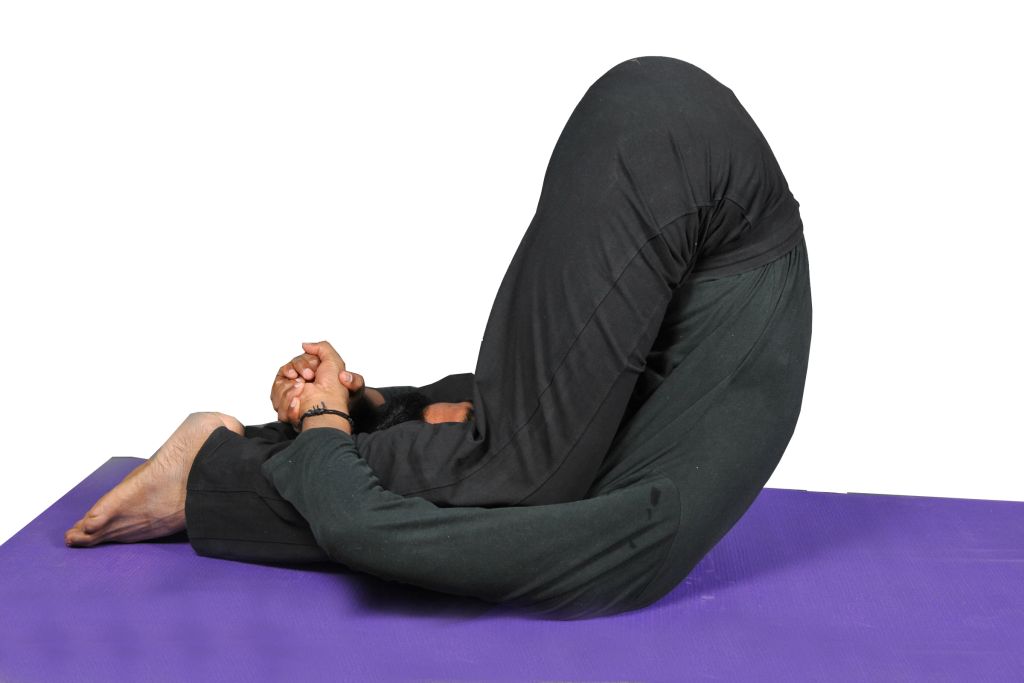
This is the ear to pressure pose. First start in halasana or the plough pose. From here bring the right knee by the right ear and the left knee by the left ear so both knees are resting on the ground near the respective ears. Stretch the toes and make sure the heels and toes are joined. Rest the hands on the back of the ribs or you can link them and stretch them arms out away from the body. Stay here breathing easily for about thirty seconds. Then slowly relax out of the pose. Precaution: Asthma and high blood pressure Pregnancy, Back pain. Benefits: This asana rests the trunk, heart and legs. The spine is stretched more while bending the knees, and this helps the circulation of blood round the waistline.
Halasana(Plow Pose)
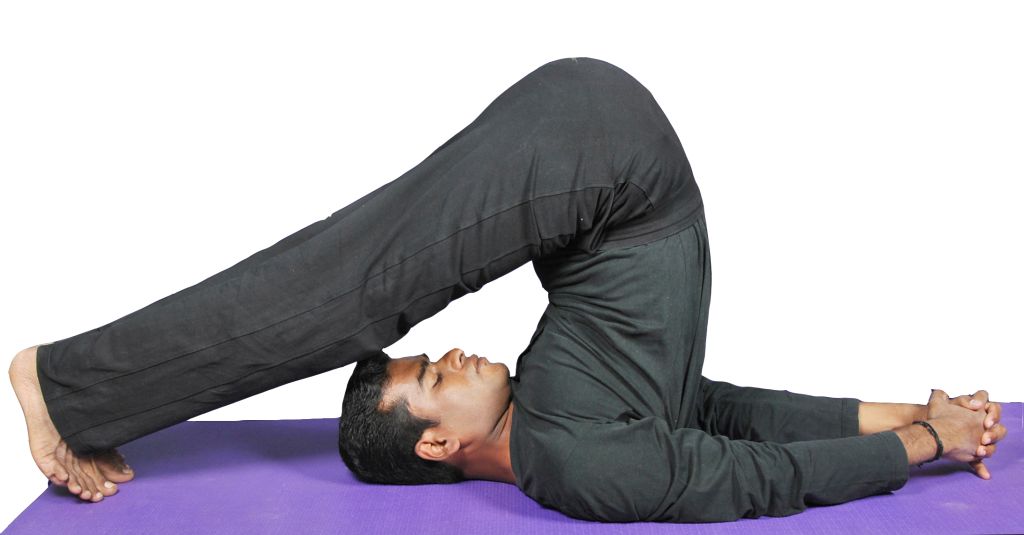
This is the plough pose. Come into a salambha sarvangasana while keeping your chin locked in place and the arms outstretched on the floor over the head. Then relax the chin and bring the legs down until they rest on the floor over your head. The knees are straightened and the hands are outstretched, straight and away from the rest of the body with the fingers interlocked. Stay here breathing easily for thirty seconds. Then slowly relax out of the pose. Precaution: Asthma and high blood pressure Pregnancy, Back pain. Benefits: Stretches the neck, back, and shoulders. Can relieve indigestion. Stimulates the thyroid gland, abdominal organs, and digestion.
Supta Padangusthasana (Reclining Hand to Big Toe Pose)
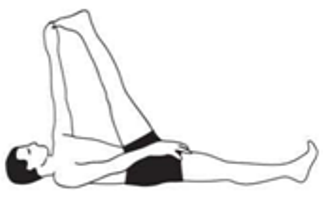
This is a reclining pose where you hold onto the big toe. Lie flat on the ground with your legs stretched out, the knees straightened. Inhale and stretch the left leg so the it is perpendicular while the right leg is straight on the floor and the right hand is on the right thigh. With the left arm raised catch the left big toe between the left thumb and two left forefingers. Then raise the head on an exhale and pull the leg toward the head and trunk. Try and touch the chin to the left knee. Stay here for about thirty seconds breathing easily. Now, take your left hand and left leg and stretch them to the left side until both rest on the floor with the left leg at a right angle to the right leg. Now inhale and come out of the pose. Rest and repeat this on the other side. Precaution: Benefits: The legs will develop properly by the practice of this asana. Persons suffering from sciatica and paralysis of the legs will derive great benefit from it. The blood is made to circulate in the legs and hips where the nerves are rejuvenated. The pose removes stiffness in the hip joints and prevents hernia.