
Ardha Navasana(Half Boat Pose)
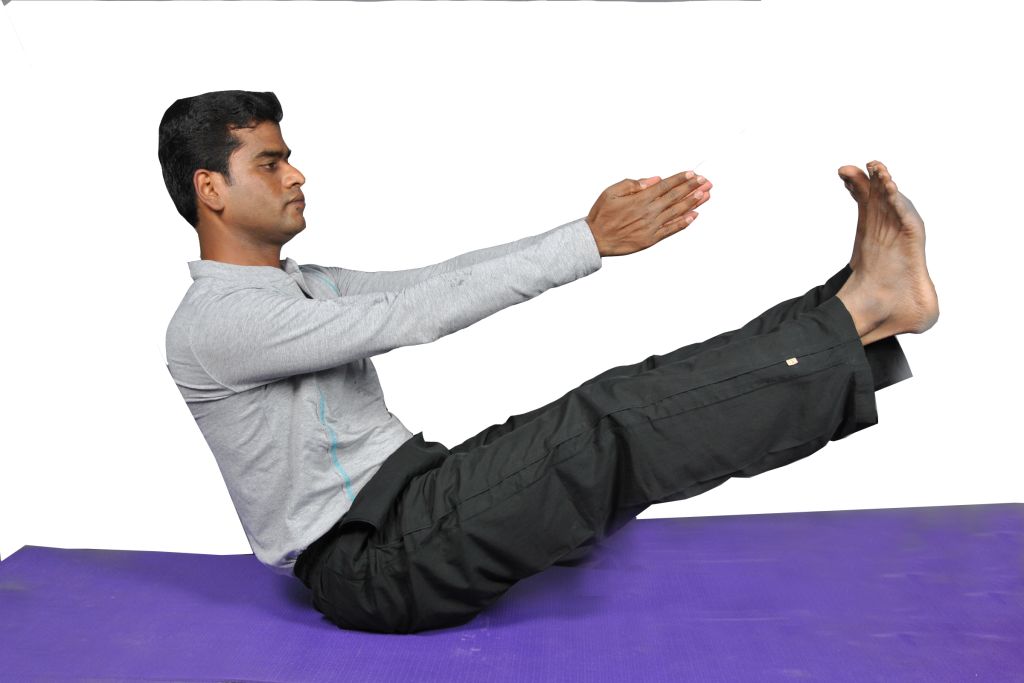
This is the half boat pose. First sit on the floor with the legs stretched out in front of you. Link your fingers behind the back of your head. Exhale and recline the trunk while you raise both legs off the floor. Here you are resting only on the buttocks, keeping the knees straight and the legs at an angle of roughly thirty five degrees. Hold this pose as you breathe easily for thirty seconds. Then slowly release back down to the ground. PRECAUTION: Pregnancy or injury. BENEFITS: Ardha Navasana works on the liver, gall bladder and spleen. In the beginning, the back is too weak to bear the strain of the pose bring life and vigour to the back.
Marichyasana(Half Spinal Twist Pose or Sage Marichi Pose)
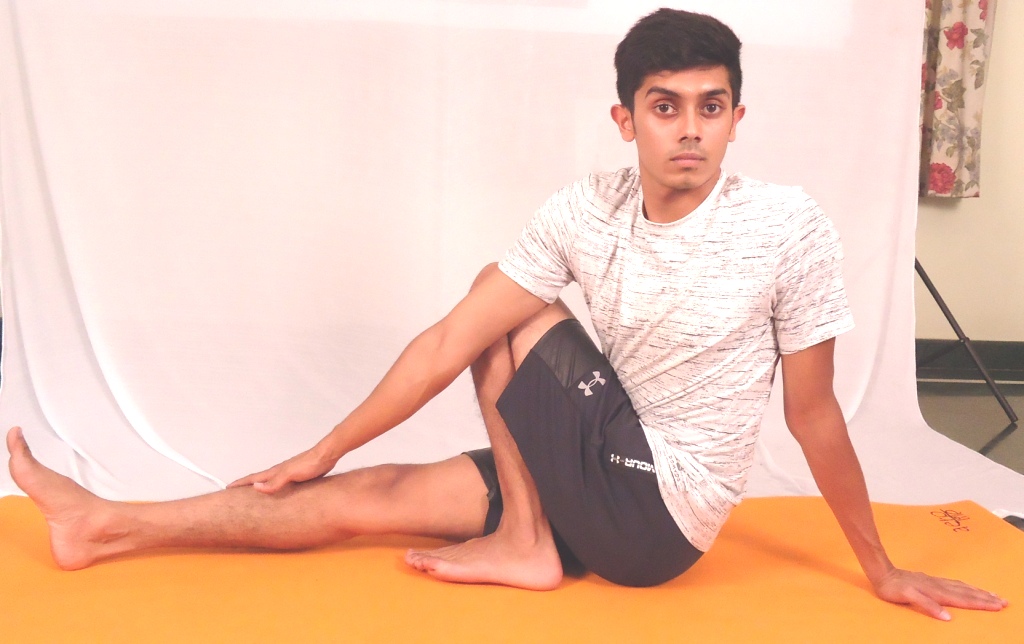
This is a seated position and is named after the sage Mariachi. First sit on the floor with the legs stretched out in front of you. Bend your left knee and place the left foot flat on the floor and the calf should touch the back of the thigh. Exhale and turn the spine ninety degree to the left and bring the right arm so it is over the left thigh. The right shoulder should be beyond the left knee, stretched out forwards. The left arm is behind the back. Turn the spine more to the left and stay here for thirty seconds breathing easily. You can try to clasp the hands behind the back if possible. Then come out of the pose and repeat it on the other side. PRECAUTION: Pregnancy and who have undergone abdominal surgery should not do. BENEFITS: By the regular practice of this asana, splitting backaches, lumbago and pains in the hips disappear rapidly. The liver and the spleen are contracted and so are toned and cease to be sluggish. The muscles of the neck gain power. Sprains in the shoulder and displacement of the shoulder joints are relieved and the shoulder movements become free. The intestines also benefit from this asana. It also helps to reduce the size of the abdomen.
Gomukhasana(Cow Face Pose)
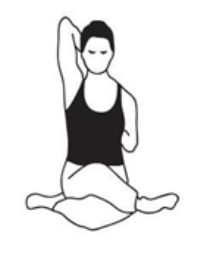
This is the cow faced pose and is a seated pose. First sit on the floor with the legs stretched out in front of you. Bend your left knee and sit on the left foot and then bend the right leg and bring it to rest on top of the left. The heels should be touching and the seat should be raised. Raise the left arm over your head and bend it at the elbow and place it behind the nape of the neck. Lower your right arm, bend it at the elbow and place it between your shoulder blades. Try and clasp both your hands together. Hold the position for about thirty seconds as you breathe comfortably with your neck erect and looking ahead. Unclasp the hands, change the top leg to make it the bottom leg and then repeat the pose on the other side, reversing the hands. PRECAUTION: Hip replacements Shoulder injury. BENEFITS: Cures cramp in the legs and makes the leg muscles elastic. The chest is well expanded and the back becomes erect. . It relieves backache, sciatica, rheumatism and general stiffness in the shoulders and neck, and improves posture by increasing energy, awareness, and generally opening the chest area.
Paschimottansana(Seated Forward Bend Pose)
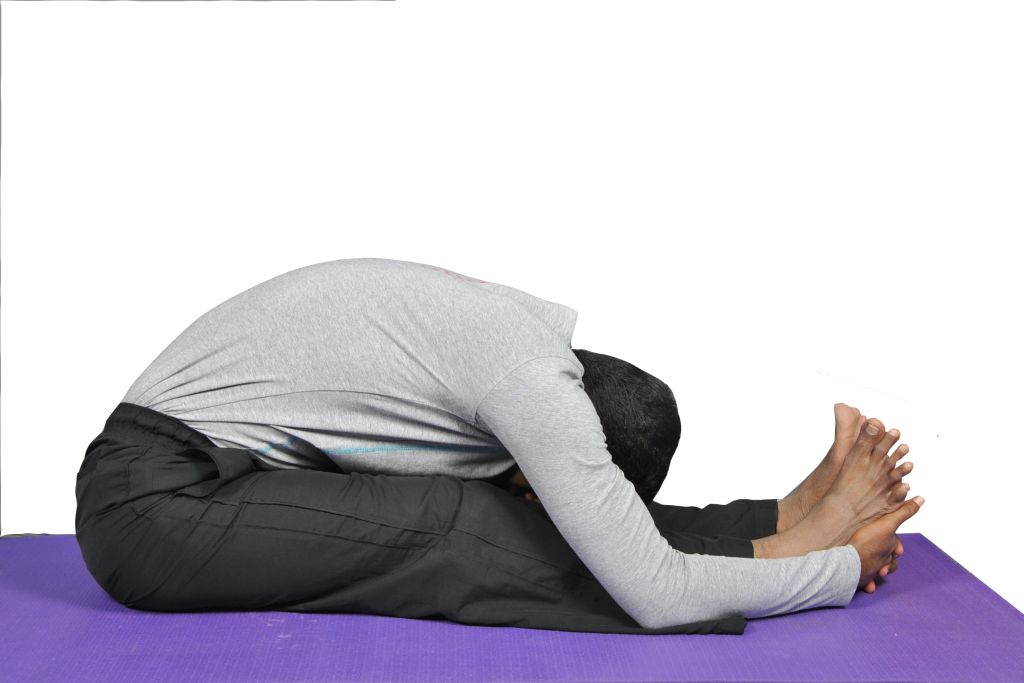
Sit on the floor and stretch your legs out in front of you and keep the palms on the floor, near the hips. Breathe easily then on an exhale stretch out the hands and extend until you are grasping the toes. The right big toe is in between the right thumb and first two fingers and the same with the opposite hand. Extend the spine and bend down from the pelvic region, extending the arms from the shoulders. Pull the trunk forward and try and touch the forehead to the knees. Stay here for thirty seconds, trying to bring your elbows to rest on the floor. Breathe easily and make you’re your knees are not rising up off the floor. You should eventually be able to rest the chin on the shins beyond the knees. Inhale and rise back up. PRECAUTION: Back injury, slipped disc, sciatica or hernia should not practice. BENEFITS: • Can relieve some symptoms of menstrual discomfort and menopause. • May alleviate headache, anxiety, and fatigue. • Can help relieve high blood pressure, infertility, insomnia, and sinusitis. Tones and massages the entire abdominal and pelvic region, including the liver, pancreas, spleen, uro-genital system, kidneys and adrenal glands.
Parivrtta Janu Sirsasana(Revolved Head to Knee Pose)
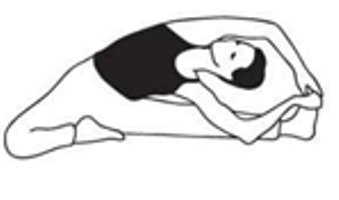
This is the revolved head to knee pose. Sit on the floor and stretch your legs out in front of you. Bend the left leg and place the left heel as close to the right inner thigh as possible. Try and keep the right knee firmly touching the ground, it should not rise off. Now twist your trunk to the left and stretch the right arm to the stretched out right leg and grasp the right foot. Then with the left hand stretched over the head, try and grasp the outer side of the right foot. Try and bend the right arm and rest the elbow on the floor as you try and bring the back of the head (face towards the ceiling) towards the knee. Release the foot and then rise back up. Repeat the pose on the other side.
Janu Sirsasana(Head to Knee Forward Bend Pose)
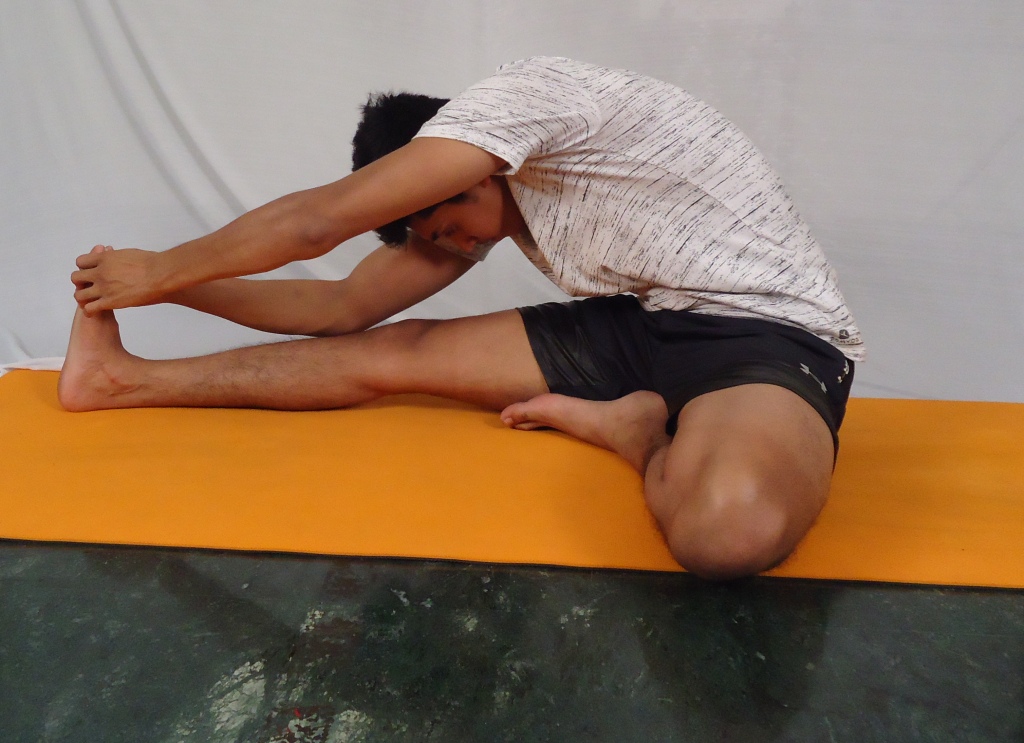
This is a pose in which you will attempt to touch your head to the knee. Sit on the floor and stretch your legs out in front of you. Bend the left leg and place the left heel as close to the right inner thigh as possible. Try and keep the right knee firmly touching the ground, it should not rise off. Make sure your legs are at an obtuse angle. Extend your arms forwards towards the right foot and hold it with both hands. Then, bending from the lower back, try and rest your forehead, then the nose and then the lips above the right knee. Stay here for about thirty seconds, breathing easily. Then come out of this pose and repeat it on the other side. precaution: Acute knee or back pain or Intestinal discomfort. benefits: • Stretches and strengthens the spine. • Stretches the hamstrings and groin. • Relieves symptoms of high blood pressure, insomnia, and sinusitis. This asana tones the liver and the spleen and thereby aids digestion. It also tones and activates the kidneys. Persons suffering from enlargement of the prostate gland will benefit by staying longer in this pose.
Padmasana(Lotus Pose)
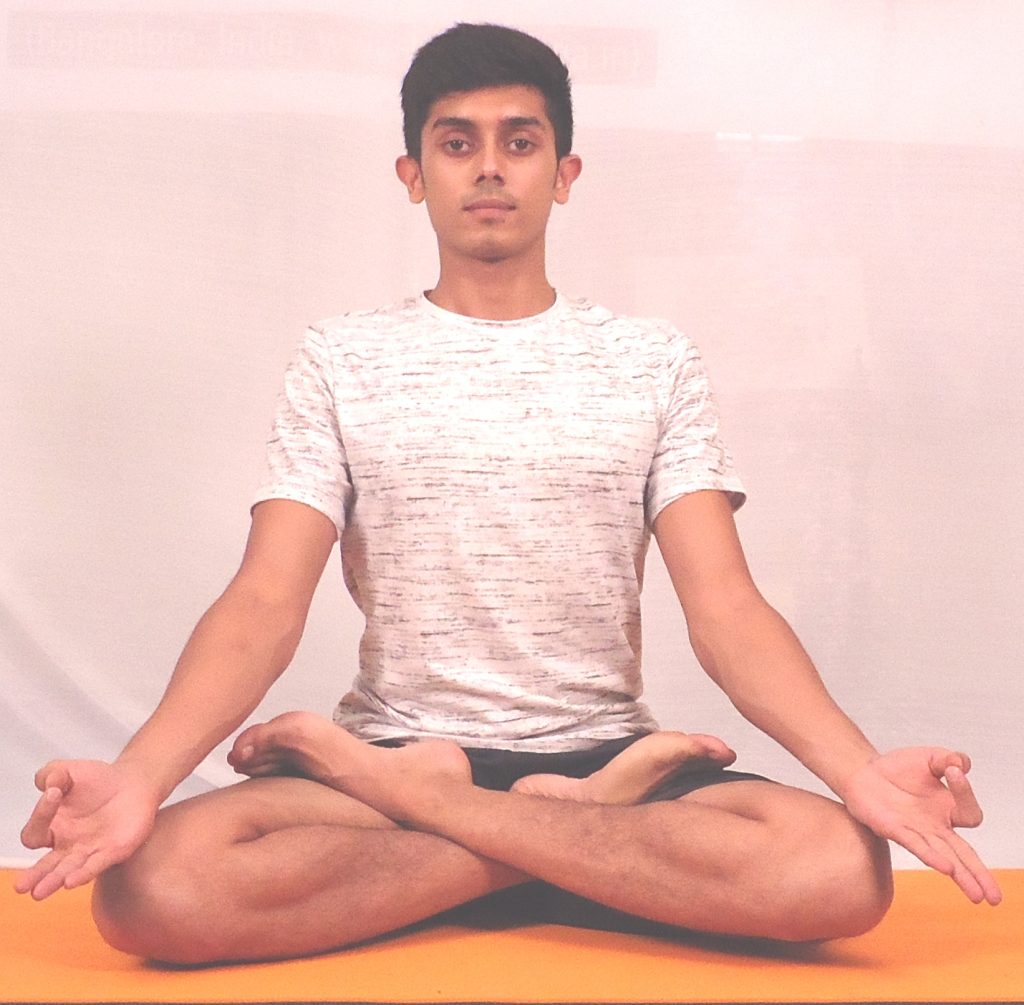
This is the lotus pose. Sit on the floor with your legs stretched out straight in front of you. Bend the right leg and take the right foot, placing it at the root of the left thigh. The right heel should be close to the navel. Place the left leg over the right so that again, the left heel is near the navel. Make sure the soles of your feet are facing the sky. Keep the spine and neck erect and firm. You can place the hands on the respective knees or stretch them in gyana or chin mudra. precaution: Acute knee injury. benefits: • Relieves stiffness in the hips, knees, and ankles. The breath becomes slow, muscular tension is decreased and blood pressure is reduced. The normally large blood flow to the legs is redirected to the abdominal region.
Siddhasana(Accomplished or Perfect Pose)
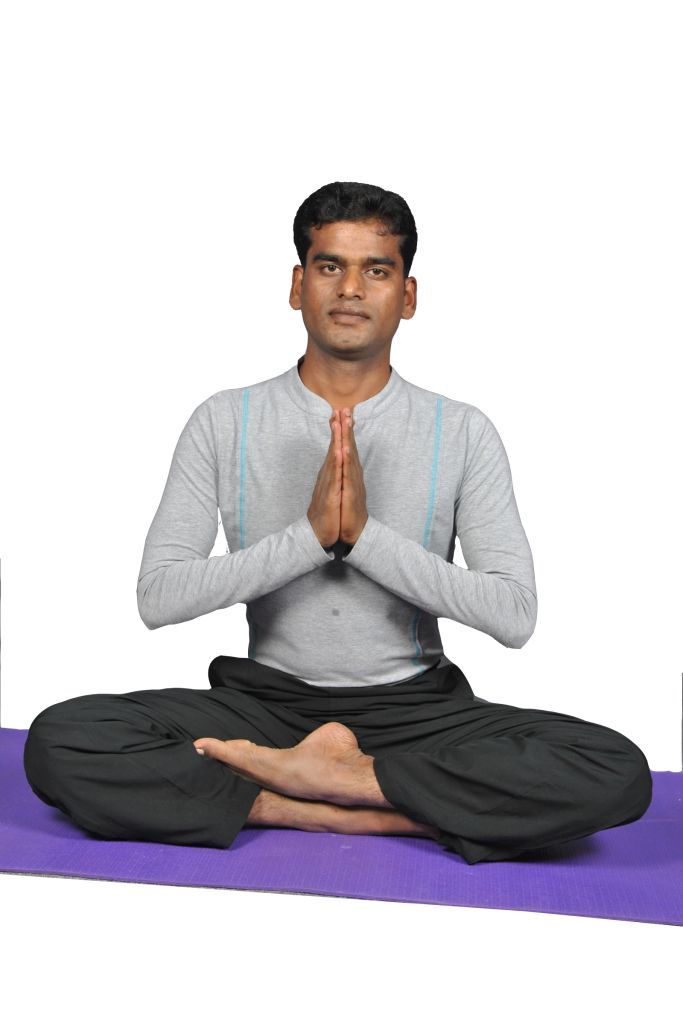
This is the adept’s pose and is also known as the psychic pose. Sit on the floor with your legs stretched out in front of you. Bend the right leg and bring the sole of the foot so that it is resting against the inner left thigh with the heel pressed to the groin. Bend the left leg and fit the toes in between the right calf and thigh. Now pull the toes of the right foot so that the they fit between the left calf and thigh. The left heel may be against the pubis here. Rest your knees on the floor and make yourself as comfortable as possible. Keep your spine and head straight and breath easily. Benefits: Makes reproductive organs stronger, awaken, and makes to move energy upward instead of going downward vainly. It is one of the best among all. This posture is recommended for Meditation and breathing practices.
Swastikasana(Auspicious Pose)
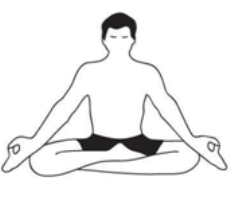
This is the auspicious pose. Sit on the floor with the legs stretched straight out in front of the body. Bend the left knee and place the sole of the left foot against the inner right thigh. The heel should not touch the perineum. Bend the right knee and place the right foot in the space between the left thigh and calf. The heel should not touch the pubic area. Grasp the left foot and pull them up into the space between the right thigh and calf. Make yourself as comfortable as possible with your knees firmly on the floor. Straighten the spine and keep your palms on your knees or in gyana or chin mudra.
Dandasana(Staff Pose)
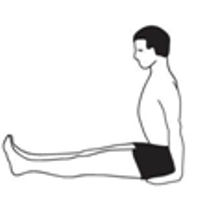
This is the seated staff pose. You can sit on the floor with your legs stretched straight out in front of you and make sure not to bend the knees. Place your palms near the hips on the floor. Your fingers should be pointing to the feet. Make the arms straight and keep your back straight and erect. Sit like this as you breathe comfortably and easily.