
Sukhasana(Easy Pose)
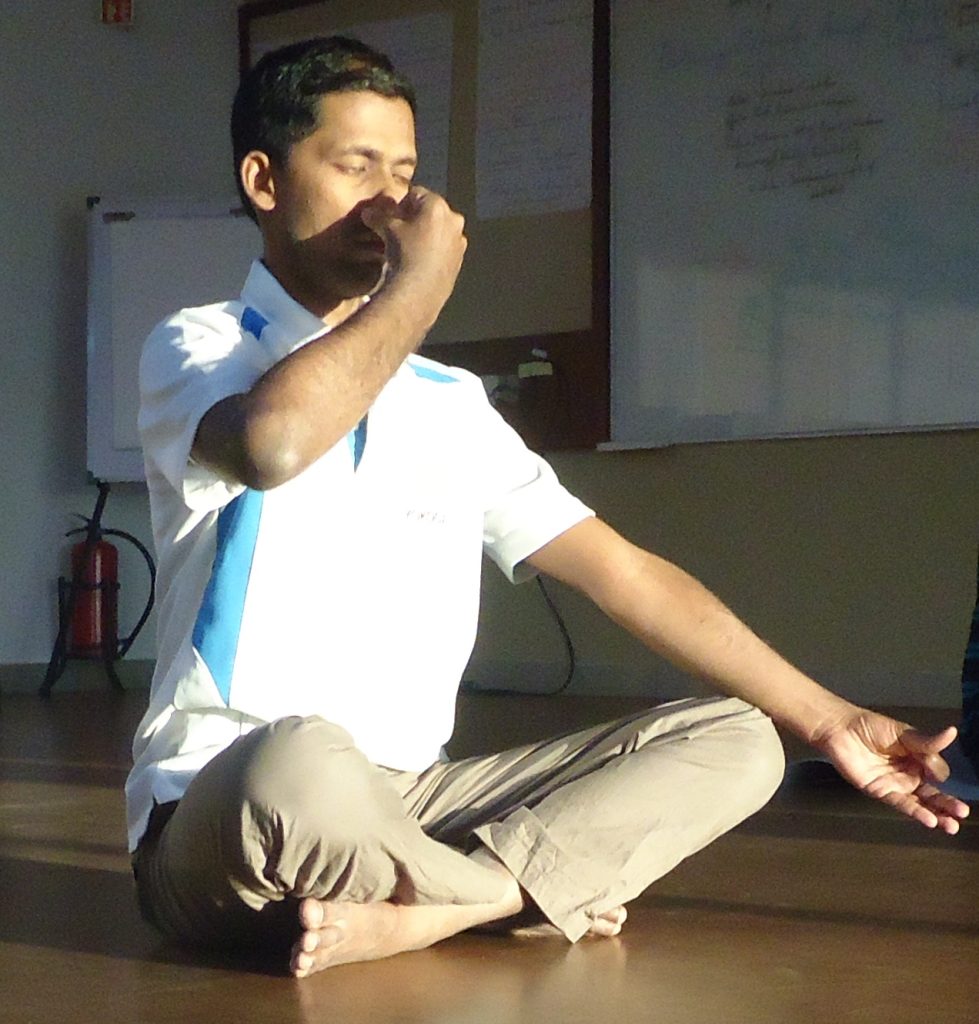
This is the easy pose. Sit with the legs stretched out in front of you. Then bend one leg and place the foot under the opposite thigh and do the same with the other leg. Place your hands on your kneed or you can press the fingers into chin or gyana mudra. Keep your head and neck straight and relaxed and your spine should be erect but not stiff. Relax your whole body and breathe easily. precaution: no precaution. benefits: It can be utilized without ill effect by persons who are unable to sit in the more difficult meditation postures. It facilitates mental and physical balance without causing strain or pain.
Supta Virasana(Reclining Hero Pose)
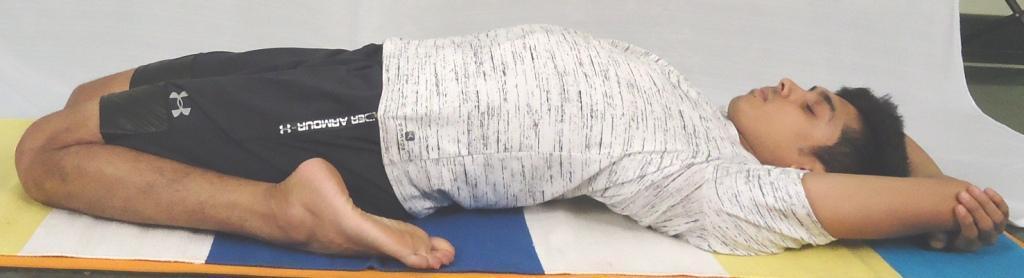
This is a reclined hero pose. You start in the hero pose or virasana with your knees together and your feet apart. Rest your buttocks on the floor and then recline the trunk backwards until your elbows are on the floor. Rest the crown of your head on the floor and then slowly lower the back of the head down and then finally rest your back on the floor. You can stretch your arms out over your head on the floor and breathe comfortably, staying here as long as you can. Rise up again by placing your elbows by your trunk and coming up again as you exhale. PRECAUTION: Neck problems, sciatica, slipped disc, sacral ailments or knee complaints. BENEFITS: This asana stretches the abdominal organs and the pelvic region. People whose legs ache will get relief from holding this pose for 10 to 15 minutes and it is recommended to athletes and all who have to walk or stand about for long hours.
Ustrasana(Camel Pose)
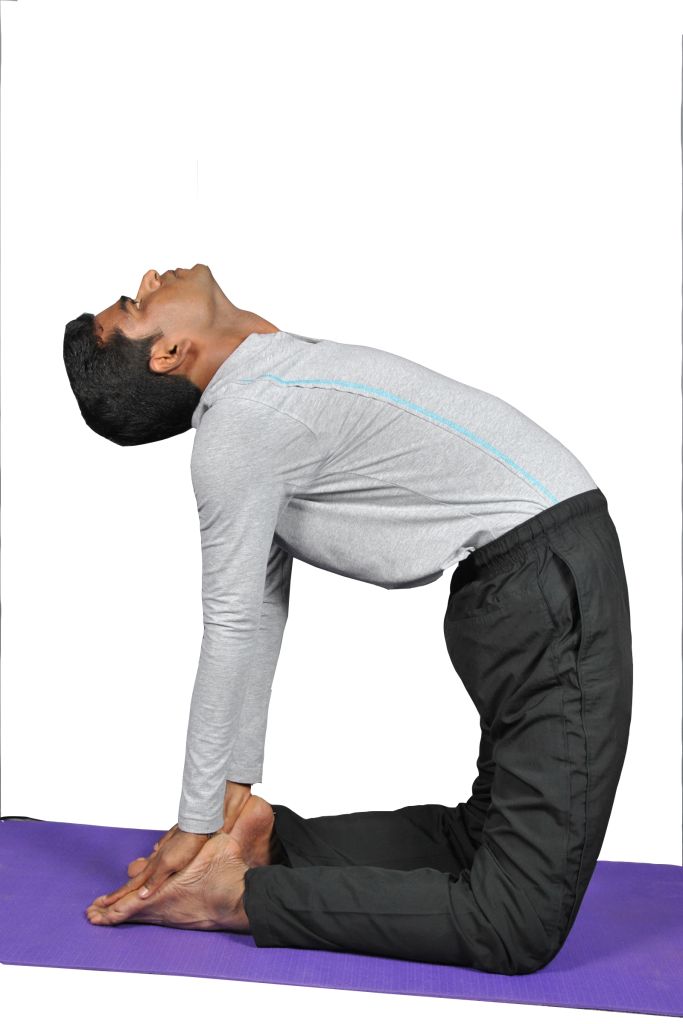
This is the camel pose. For this come into a kneeling position on your mat. Then rise up so that your thighs, torso and head are in a straight line. Stretch your arms out straight in front of you, then slowly move your right hand behind your back as you bend your spine backwards as you reach your right hand for your right ankle. Then reach your left hand down and grasp your left ankle. Throw your head back if possible, contract the buttocks and stretch the dorsal and coccyx regions. Remain here with steady and comfortable breathing for about thirty seconds. Then release your hands and bring them to rest on your hips. Then sit in a relaxed position on the floor. PRECAUTION:Severe Back or neck concerns. High blood pressure. BENEFITS: Spine is stretched back and is toned. This pose can be tried conveniently by the elderly and even by persons with spinal Injury. This asana is beneficial for the digestive and reproductive systems. It stretches the stomach and intestines, alleviating constipation. The backward bend loosens up the vertebrae and stimulates the spinal nerves, relieving backache, rounded back and drooping shoulders.
Virasana(Hero Pose)
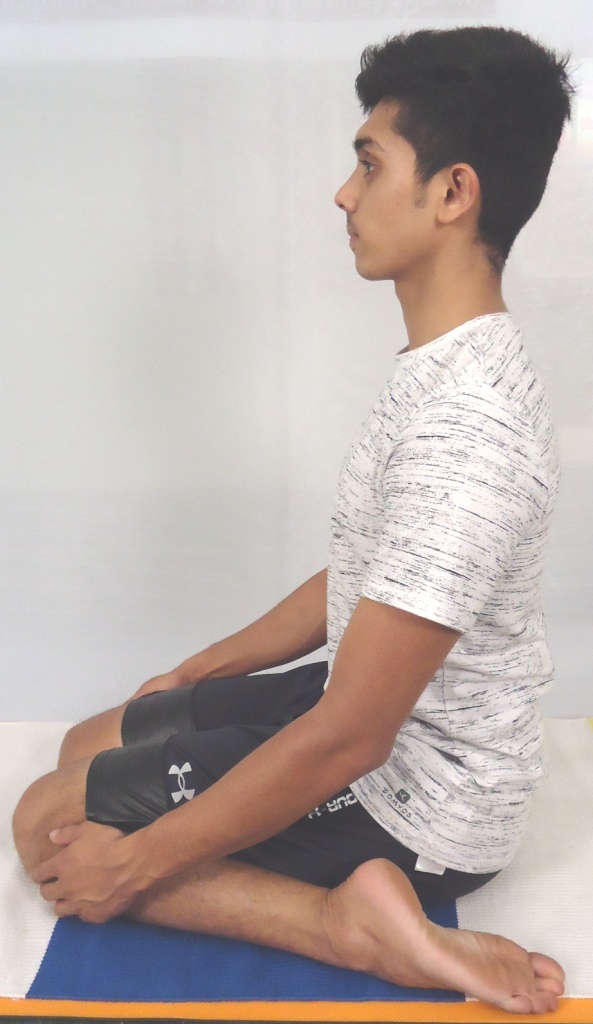
This is the hero pose and is another kneeling pose. Kneel on the floor in diamond pose. Then, keeping the knees together, spread the feet apart a few inches. Try and rest your buttock on the floor or on the mat. Your feet should be to the side of your thighs with your toes pointing backwards and touching the floor. Your wrists rest on your knees, palms facing towards the sky. Keep your thumb and forefinger of each hand joined. Stay here for as long as possible, breathing easily. PRECAUTION: Serious knee or back concerns. BENEFITS: Cures rheumatic pains in the knees and gout, and is also good for flat feet. Due to the stretching of the ankles and the feet, proper arches will be formed. This, however, takes a long time and requires daily practice of the pose for a few minutes for several months. done immediately after food and will relieve heaviness in the stomach.
Vyaghrasana(Tiger Pose)
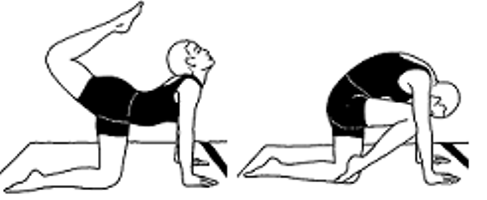
This is the tiger pose. To come into this pose, you must start in cat pose, on your hands and knees with a comfortable distance between your knees. Arching the back down, take your right leg out and stretch it up and backwards, then bend it. If possible, bring your toes towards the back of your head. Hold your breath for a couple of seconds. Then arch the back upwards and bend the head, bringing your nose to your knee. Repeat the movements a few times and then rest the leg back on the mat in cat pose. Now repeat this on the other side.
Marjaryasana(Cat-Cow Pose)
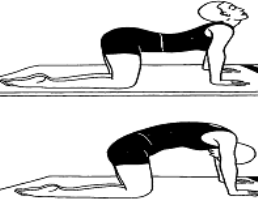
This is the cat pose. It begins in the kneeling diamond pose. From here come to cat pose, in which you must get on your hands and knees, with a comfortable distance between your knees, and your palms flat on the mat, directly under your shoulder. Your hands and knees should be in line and your arms and thighs are perpendicular to the ground. As you inhale, raise your head to look up and make your back concave in a cow stretch. Exhale and lower the head so that it is between the arms and then round the back into cat stretch.
Mandukasana(Frog Pose) or Bhadrasana (Gracious Pose)
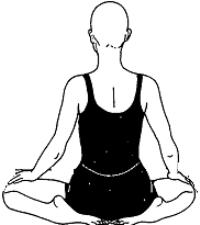
This is the frog pose, another kneeling posture. You must start in diamond pose. From here, open and separate the knees as far as you can go while the toes remain in contact with the floor or mat. Separate your feet so that you can rest your buttocks on the floor or mat, between your feet. If you can, separate the knees further. Here, you can concentrate on the tip of your nose or nasikagra dristi. Breathe easily and try to remain here for as long as possible. Slowly increase the length of time you can stay in this pose to increase your flexibility. PRECAUTION: Knee issues. BENEFITS: Stimulating influence on mooladhara chakra. It is an excellent meditation pose. The benefits are basically the same as for vajrasana.
Balasana – Child’s Pose or Shashankasana – Moon / Hare Pose
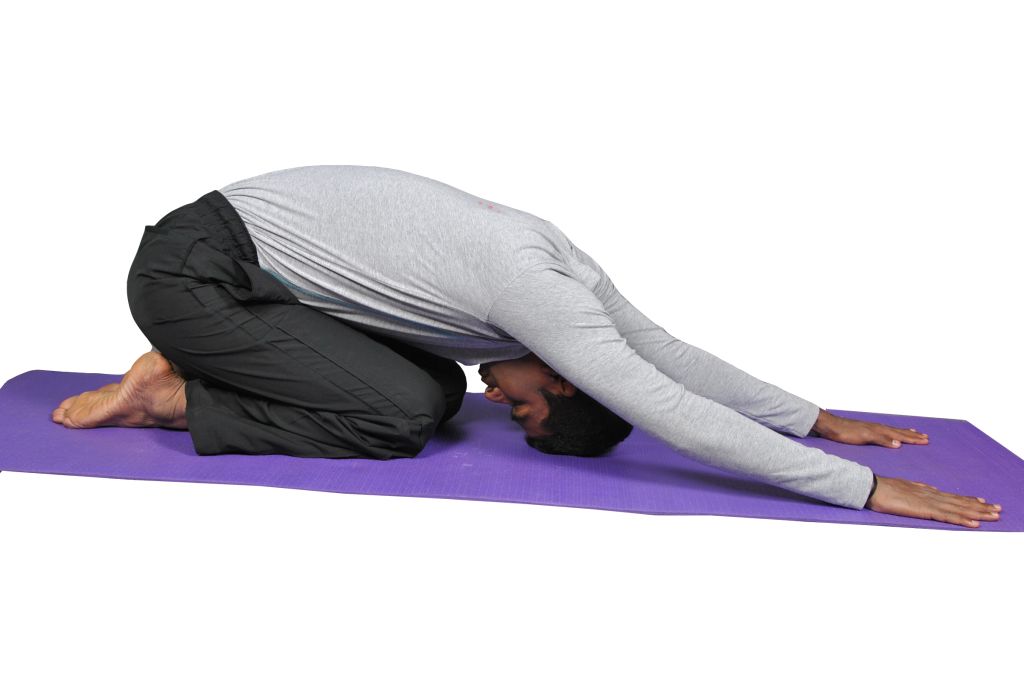
This is the child’s pose. You must start in the diamond pose or kneeling posture, with your palms face down on your thighs. Relax and keep your spine and head straight as you breathe comfortably. Exhale and bend down from the hips so that your head and arms are in line with the trunk. Rest your forehead on the mat with your arms resting outstretched in front of you, also resting on the mat. Take a few breaths here and clear your mind. Then inhale and raise your arms, trunk and head back up and return to diamond pose. PRECAUTION: Knee pain. BENEFITS: Stretches and strengthens the back muscles and separates the individual vertebrae from each other, releasing pressure on the discs. Often nerve connections emanating from the spinal cord are squeezed by these discs. It also regulates the functioning of the adrenal glands. It tones the pelvic muscles and the sciatic nerves. Relieve Constipation
Ardha Baddha Padmottanasana( Half Bound Lotus Standing Forward Bend Pose)
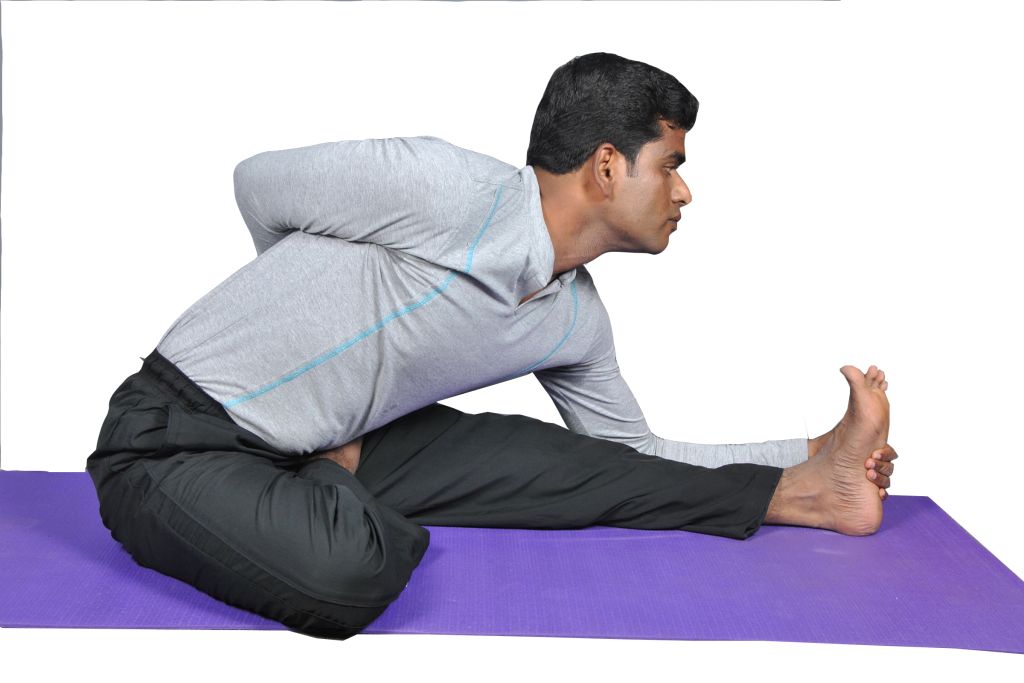
This is the standing half bound lotus pose. From Tadasana inhale as you bring your right knee to the chest. Then, place the right foot on top of the left inner thigh. Place your left hand behind your back and exhale. Then lean down from your lower back so that your right hand is on the ground by your right foot. Make your back as concave as possible and take a few breaths. Exhale and bring your forehead or chin to your left knee. Place your left palm on the floor by the left foot. Come out of the pose and repeat the pose on the other side.
Urdhva Parasarita Eka Padasana(Standing Split Pose)
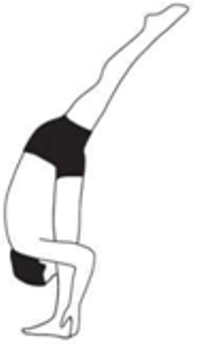
This is a standing split. Here it is about stretching your quad and hamstring and not about how high you can extend your leg. You must begin in the standing forward bend. Inhale as you elongate your spine and press your hands into the ground. Breathe easily and on an inhale lift your right leg so that it is parallel to the floor and then rotate the inner thigh upwards, pressing into the ball of the foot. Lift the right leg higher and straighten the leg on the ground by pulling in the knee caps. Come back to the forward fold and then repeat the pose on the other side.