
Nadis(Yoga course in India)
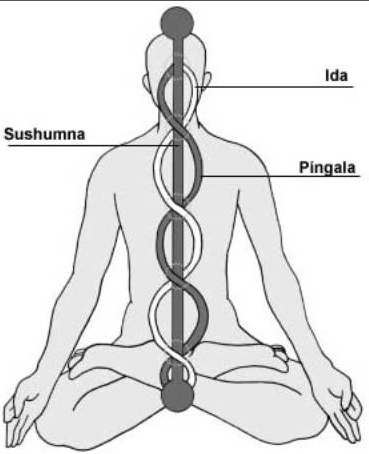
Nadis Nadis are not nerves but rather channels for the flow of consciousness. The literal meaning of nadi is flow. Just as negative and positive forces of electricity flow through complex circuits, in the same way bija prana (vital force) and Manas sakti (mental force) flow through every part of our body via these nadis {There are 72,000 nadis throughout the cage of the body. Susumna is the Sambhavi, the remaining nadis are unimportant.} According to the Tantras there are 72000 or more such channels or networks through which the stimuli flow like an electric current from one point to another. Human body is understood with great accuracy while our ancient seers understood the structure and the functioning of the vital body called Pranamaya Kosa These näòés cover the whole body and through them the inherent rhythms of activity in the different organs of the body are mentioned. Within this network of nadi, there are 10 main channels and of these ten, three are most important for the control of flow of prana and consciousness within all the other nadis of the body. These three nadis are called Ida, Pingla and Susumna. Ida nadi Controls all the mental process while Pingla nadi controls all the vital process. Ida is known as the moon, Pingla as the sun. A third nadi, Susumna is the channel for the awakening of the spiritual consciousness. The sun and moon divide time into day and night. Susumna is the consumer of time .This is the conveyed secret. One can consider them as prana force, mental force and spiritual force. As Susumna flows inside the center canal of the spinal cord, Ida and Pingla simultaneously flow on the outer surface of the spinal cord, still within the bony vertebral column. It is also said that Ida is Ganga, Pingla the river Yamuna. Between Ida and Pingla in the middle is this young widow, Kundalini. Ida Pingla and Susumna nadis begin in Mooladhara in the pelvic floor. From Mooladhara Susumna flows directly upwards within the canal, while Ida passes to the left and Pingla to the right. At Svadhisthana cakra or the sacral plexus the three nadis come together again and Ida and Pingla cross over one another. Ida passes up to the right, Pingla to the left and Susumna continues to flow directly upwards in the central canal. The three nadis come together again at Manipura cakra, the solar plexus, and so on. Finally, Ida, Pingla and Susumna meet in the ajna Cakra. Ida and Pingla function in the body alternately and not simultaneously. If one observes his nostrils, he will find that generally one is flowing freely and other is blocked. When the left nostril is open, it is the lunar energy or Ida nadi which is flowing. When the right nostril is free, the solar energy or Pingla nadi is flowing. Investigations have shown that when the right nostril is flowing, the left hemisphere of the brain is activated. When the left nostril is flowing, the right hemisphere is activated. This is how the nadis or energy channels control the brain and the events of life and consciousness. Now, if these two energies – prana and citta, Pingla and Ida, life and consciousness, can be made to function simultaneously, then both hemispheres of the brain can be made to function simultaneously and to participate together in the thinking, living, intuitive and regulating processes. In ordinary life this does not happen because the simultaneous awakening and function of life force and consciousness can take place only if the central canal Susumna, is connected with Kundalini, the source of energy. If Susumna can be connected in the physical body, it can reactivate the brain cells and create a new physical structure. #300 – Hrs Yoga Teacher Training Certificate Course in Bangalore#200 – Hrs Yoga Teacher Training Certificate Course in Bangalore #100 – Hrs Yoga Teacher Training Certificate Course in Bangalore
YOGA FOR MIGRAINE

YOGA FOR MIGRAINE It can be defined as paroxysmal headache, generally on one side of the head. It is also known as sick headache because nausea and vomiting occasionally accompany the excruciating pain which lasts for as long as three days. Migraine usually gives warning before it strikes. Black spots or a brilliant zigzag lines appears before the eyes or the patient has blurring of vision or has part of vision blanked out. When the headache occurs the patient may feel tingling, numbness or weakness in an arm or leg. It is purely physiological process. The head and neck muscles reacting to continuous stress become over worked. The tightened muscles squeeze the arteries and reduce the blood flow. When a person relaxes suddenly the constricted muscles expand, stretching the walls of the vessel. These vessels expand them further and causes incredible pain. YOGIC PRACTICES ASANAS: Relaxations poses Pawanamuktasana part I Eye exercises Shashankasana Tadasana Dwikonasana – Kati chakrasana PRANAYAMA: Nadisodhana Ujjayi Brahmari SHATKARMA: Kunjal Kriya #500 – Hrs Yoga Teacher Training Certificate Course in Bangalore #50 – Hrs Yoga Teacher Training Certificate Course in Bangalore#Yoga teacher training course fees in Bangalore
YOGA FOR LOW BACK ACHE

YOGA FOR LOW BACK ACHE CAUSES Muscular tension – lack of exercise. Joint Strain – Resulting from sitting for a long time, improper lifting of weights, high heels, emotional problems. Which may came painful muscle camp. Poor posture – Results from soft chairs and coaches sleeping on too soft a mattress. Acute or chronic illnesses like kidney or prostate problems YOGIC PRACTICES BREATHING EXERCISES Folded leg lumber stretch Crossed leg lumber stretch Pawanmuktasana lumber stretch Setubandhasana lumber stretch Tiger breathing Sasankasana breathing Bhujangasana breathing Salabhasana breathing Straight leg raising Side leg lumber stretch ASANAS Makrasana Ardhakati Chakrasana Matsyasana Ushtrasana Viparithakarani PRANAYAMA Nadi Suddhi Bhramari #500 – Hrs Yoga Teacher Training Certificate Course in Bangalore #50 – Hrs Yoga Teacher Training Certificate Course in Bangalore#Yoga teacher training course fees in Bangalore
NUTRITION AND DIETETICS

NUTRITION AND DIETETICS DEFINITION Nutrition may be defined as the science of food and its relationship to health. FOOD: is the substance taken into the body that will help meet the body’s need for energy. Maintenance of health, growth and reproduction. #Best Yoga teacher Training course in Bangalore#Yoga Teacher Training course near me#Best yoga Institute in Bangalore CLASSIFICATION OF FOODS There are many ways of classifying foods. CLASSIFICATION BY ORIGIN Foods of animal origin Foods of vegetable origin. CLASSIFICATION BY CHEMICAL COMPOSITION Proteins Fats Carbohydrates Vitamins Minerals PREDOMINANT FUNCTION Body-building foods. Eg: Milk Meat Poultry Fish Eggs Energy giving foods Eg: Cereals Sugars Roots Tubers Fats and Oils. #Best Yoga teacher Training course in Bangalore#Yoga Teacher Training course near me#Best yoga Institute in Bangalore PROTECTIVE FOODS Eg: Vegetables Fruits CLASSIFICATION BY NUTRITIVE VALUE Cereals and Millets Pulses Vegetables Nuts and oilseeds Fruits Animal Foods Fats and oils Sugar and jaggery Condiments and spices Miscellaneous foods. HUMAN NUTRITION IS GOVERNED BY MANY FACTORS LIKE Food habits and behavior ethnic influences geographic influences, religions and sociological factors, psychological factors, income, educational status etc., Health is reflected in arson’s nutritional status. Nutritional status is the condition of the individual as influenced by the utilisation of the nutrients. Thus food play a prominent role in providing physical, mental and social well being which is otherwise known as health to people. #500 – Hrs Yoga Teacher Training Certificate Course in Bangalore #50 – Hrs Yoga Teacher Training Certificate Course in Bangalore#Yoga teacher training course fees in Bangalore DIETETICS It is the practical application of the principles of nutrition, it includes the planning of meals for the well and the sick. OBJECTIVE PRINCIPLES To maintain good nutritional status of a sick person and to correct deficiencies. Formulation of diet based on the needs and food habits. Education of the patient regarding dietary modification. MAINTENANCE OF GOOD NUTRITIONAL STATUS To understand the underlying cause of disease. To evaluate the duration of disease and categories into acute and chronic diseases. Clearly analyse the food habits of the patient To Select the appropriate nature of dietary change FORMULATION OF DIET Effect of the present disease on food acceptance. Likes and dislikes of the patient Any specific food allergies of the patient EDUCATION OF THE PATIENT It is important to educate the patient as well as his or her family members about the dietary prescription. Property explain the patient to the procedure, timing and detailed explanation of the preparatory methods at home. DIETS ARE MODIFIED IN THREE DIFFERENT WAYS Liquid diet – Clear Fluid Full fluid Soft Diet Light Diet LIQUID DIET CLEAR FLUID: It is usually prescribed for patients in the pre or post operative stage for 1-2 days. This diet is nutritionally inadequate but is used for a very short period of time. Ex: Tea, coffee, Milk, soups etc., FULL FLUID: Used for patients who are actually ill or who are unable to chew or swallow solid food. SOFT DIET This diet is intermediate between a full fluid and light diet. Used for patients who are convalescing from surgery, gastro – intestinal disturbances and acute infections. This diet can be nutritionally adequate when planned on the basis of a normal diet. LIGHT DIET It is very similar to soft diet. It includes sample salads such as fruits, vegetables ete. Dietetics play an important role in the treatment can be grouped as Deficiency Diseases Gastro intestinal diseases Kidney diseases Diseases of the heart Diseases of the liver and biliary tract Metabolic disorders Hormonal disorders #500 – Hrs Yoga Teacher Training Certificate Course in Bangalore #50 – Hrs Yoga Teacher Training Certificate Course in Bangalore#Yoga teacher training course fees in Bangalore
YOGA FOR INSOMNIA – SLEEPLESSNESS
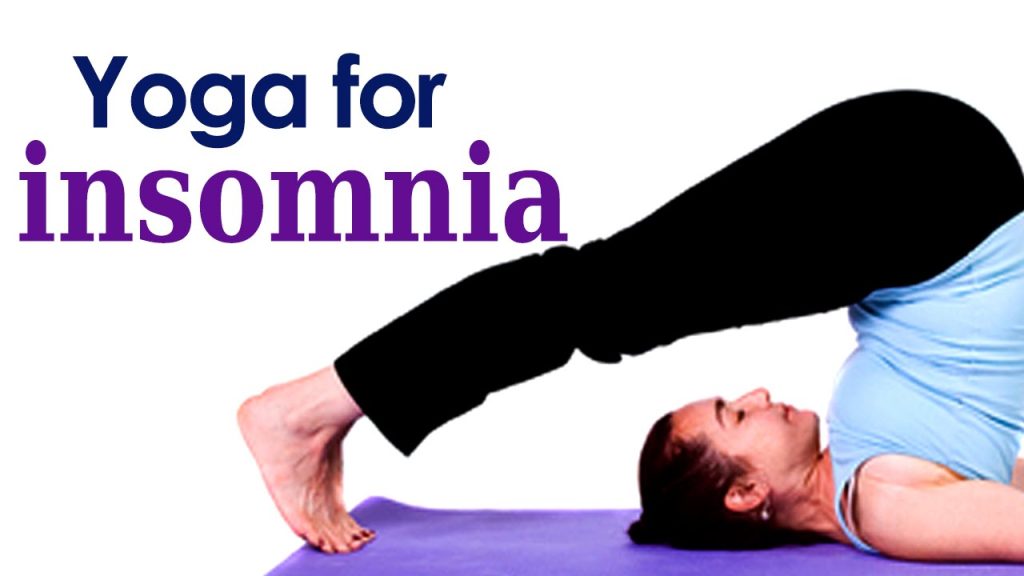
YOGA FOR INSOMNIA – SLEEPLESSNESS It Is a Condition Of Inadequate Quantity Or Quality Of Sleep. CAUSES Mental tension brought about by anxiety, worries, overwork, over excitement, anger. Constipation Dyspepsia Excessive intake of tea or coffee Smoking SYMPTOMS The signs of pathological insomnia are dramatic changes in the duration and quality of sleep. Persistent changes in the sleep patterns, lapses of memory, and lack of concentration during the day. Other symptoms are emotional instability, loss of co-ordination, confusion and lingering feeling of indifference. YOGIC PRACTICES ASANA Pawanamuktasana part I Shashankasana PRANAYAMA: Brahmari Ujjayi abdominal breathing in shavasana before going to sleep SHATKARMA: Trataka OTHERS: Yoga nidra before sleep #yoga#yogabangalore#yogaindia#yogacourse#yogacoursebangalore#ryt200ttc#bestyogacourse#karunayogavidyapeetham#yogaattc#yacep#yogaanatomyphysiology#yogabiomechanism#yogakinesiology
YOGA FOR HYPOTHYROIDISM
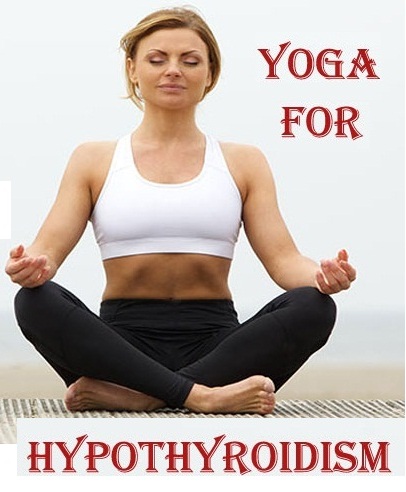
YOGA FOR HYPOTHYROIDISM Insufficient production of thyroid secretion due to inactivity of the gland #yoga#yogabangalore#yogaindia#yogacourse#yogacoursebangalore#ryt200ttc#bestyogacourse#karunayogavidyapeetham#yogaattc#yacep#yogaanatomyphysiology#yogabiomechanism#yogakinesiology CAUSES Autoimmune disease Iatrogenic Congenital Drug induced Hypothalamic dysfunction CLINICAL FEATURES Weakness, lethargy Weight gain Cold intolerance Memory impairment Hoarseness of voice Hair loss Deafness Constipation Dry, coarse, Cold skin Bradycardia Anaemia YOGIC PRACTICES ASANAS: Suryanamaskara Inverted asanas especially Sarvangasana Halasana Matsyasana Suptavajrasana Yogamudrasana All backward bending asanas espceially grivasana. PRANAYAMA: Ujjayi Brahmari Bhastrika With Bandhas MUDRA: Pashinee and vipareetakarani mudra BANDHA: Jalandara bandha SHATKARMA: Neti Kunjal #yoga#yogabangalore#yogaindia#yogacourse#yogacoursebangalore#ryt200ttc#bestyogacourse#karunayogavidyapeetham#yogaattc#yacep#yogaanatomyphysiology#yogabiomechanism#yogakinesiology
YOGA FOR HYPERTENSION
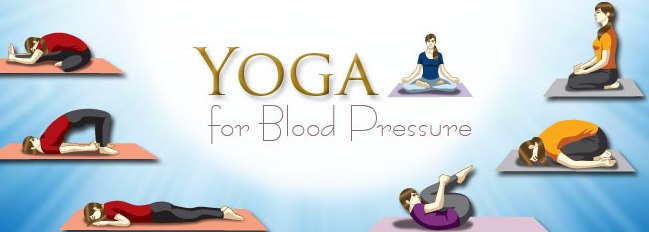
YOGA FOR HYPERTENSION DEFINITION Hypertension is a condition in which systolic pressure exceeds 140mm Hg and diastolic pressure exceeds 90mm Hg. CAUSES Cardiovascular diseases Renal diseases like glomerulonephritis, polycystic renal disease pyelonephritis Tumours of the brain Hyperthyroidism Diseases of the ovaries and pituitary PREDISPOSING FACTORS Heredity Obesity Stress Smoking High Viscosity of blood due to too many red blood cells in the circulating blood. Narrowing of the main blood vessels due to hormone secretions especially cortisone, aldosterone, adrenaline and nor adrenaline SYMPTOMS Many persons with hypertension have no symptoms Headache Dizziness Impaired Vision Pain over the heart Gastro – intestinal disturbance YOGIC PRACTICES ASANA: Pawanmuktasana part I Anandha madirasana Siddhasana Relaxative asanas Trikonasana Vrksasana Vakrasana Ardha matsyendrasana kati chakrasans. PRANAYAMA: Nadi shodhana Sheetali Sitkari Ujjayi Brahmari Others: Yoga nidra, Meditaion. #yoga#yogabangalore#yogaindia#yogacourse#yogacoursebangalore#ryt200ttc#bestyogacourse#karunayogavidyapeetham#yogaattc#yacep#yogaanatomyphysiology#yogabiomechanism#yogakinesiology
How to eat according to Ayurveda?
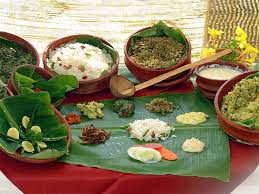
How to eat according to Ayurveda? In the context of diet or food, the mental condition during meal has also been taken care of in detail. However one should take care of the following things while eating. When considering diet, the quality and freshness of food are important factors. There also are certain foods that are incompatible when eaten together, such as fish and milk, meat and milk, yogurt and beef, and sour fruits and milk. In addition, most melons should be eaten alone. In combination with other foods, they create clogging and may prevent absorption by the intestines. These effects could cause an imbalance in the tridoñas. Toxins result when these incompatible foods are ingested together. The in- take of food should be regulated by the condition of the agni, the digestive fire in the body. Do not eat unless you feel hungry and do not drink unless you are thirsty. Do not eat when you feel thirsty and do not drink when you feel hungry. If you feel hungry, it means your digestive fire is enkindled. If you drink at this time, the liquid will dissolve the digestive enzymes and the agni will be reduced. It is food that nourishes the body, mind and consciousness How you eat is very important.While eating, one should sit straight and avoid distractions such as television, conversation or reading. Focus your mind upon and be aware of the taste of the food. Chew with love and compassion and you will clearly experience the taste. Taste does not originate in food; it originates in the experience of the one who eats. If your agni is impaired, you will not taste the food properly. The taste of food depends upon agni. Spices help to enkindle agni, as well as to cleanse the body and to enrich the taste of the food. Each mouthful should be chewed at least thirty-two times before it is swallowed. This practice allows the digestive enzymes in the mouth to do their work properly and in addition it gives the stomach time to prepare for the arrival of the masticated food. It is important that one eats at a moderate speed. How much food you take at one time also is important. One-third of the stomach should be filled with food, one-third with water and one-third with air. The amount of food eaten at a meal should be the equivalent of two handful of food. If one eats in excess, the stomach will expand and demand additional food. An overeater’s stomach expands like a balloon. Overeating also results in the creation of additional toxins in the digestive tract. The food becomes a poison that the body must eliminate through effort. One should eat and drink with discipline and regularity for eating is a meditation. Eating in this way will nourish your body, mind and consciousness and will also enhance longevity. Water plays a vital role in maintaining balance in the body. Water may be taken in the form of fruit juices. Although fruit juice should not be taken during meals, water is necessary at meals. One should sip water while eating. Water taken with meals becomes nectar that aids digestion. If a quantity of water is drunk after the completion of a meal, the digestive juices will be diluted and digestion hampered. Climate will affect the amount of water the body requires. A person should eat that food which he is accustomed to and which agrees with him. #yoga#yogabangalore#yogaindia#yogacourse#yogacoursebangalore#ryt200ttc#bestyogacourse#karunayogavidyapeetham#yogaattc#yacep#yogaanatomyphysiology#yogabiomechanism#yogakinesiology
Health Benefits of Yoga

Health Benefits of Yoga Physiological Benefits of Yoga Stable autonomic nervous system equilibrium, with a tendency toward parasympathetic nervous system dominance rather than the usual stress induced sympathetic nervous system dominance. Pulse rate decreases. Respiratory rate decreases. Blood pressure decreases (of special significance for hyporeactors) Galvanic Skin Response (GSR) increases. EEG – alpha waves increase (theta, delta and beta waves also increase during various stage of meditation) Cardiovascular efficiency increases Respiratory efficiency increases (respiratory amplitude and smoothness increase, tidal volume increases, vital capacity increases, breath – holding time increases). Gastrointestinal function normalizes Excretory functions improve Musculoskeletal flexibility and joint range of motion increase Posture improves Strength and resiliency increase Endurance increase Energy level increases Weight normalizes Sleep improves Immunity increases Pain decreases Psychological Benefits Somatic and Kinesthetic awareness increase Mood improves and subjective well-being increases Self-acceptance and Self-actualization increase Social adjustment increases Anxiety and depression decrease Hostility decreases Psycho Motor Benefits of Yoga Psychomotor function improve Grip strength increases Dexterity and fine skills improve Eye-hand coordination improves Choice reaction time improves Steadiness improves Depth perception improves Balance improves Integrated functioning of body parts improves Cognitive Benefits of Yoga Cognitive function improves Attention improves Concentration improves Memory improves Learning efficiency improves Symbol coding improves Depth perception improves Flicker fusion frequency improves Biochemical Benefits The biochemical profile improves, indicating an anti-stress and antioxidant effect, important in the prevention of degenerative diseases. Glucose decreases Sodium decreases Total cholesterol decreases Triglycerides decreases HDL cholesterol increases LDL cholesterol decreases VLDL cholesterol decreases Cholinesterase increase Catecholamines decrease A TPase increases Hematocrit increase Lymphocyte count increases Total white blood cell count decreases Thyroxin increases Vitamin C increase Total serum protein increases #yoga#yogabangalore#yogaindia#yogacourse#yogacoursebangalore#ryt200ttc#bestyogacourse#karunayogavidyapeetham#yogaattc#yacep#yogaanatomyphysiology#yogabiomechanism#yogakinesiology
FUNDAMENTALS OF YOGA
FUNDAMENTALS OF YOGA According to yogic view diseases and ailments are the result of faulty ways of living, bad habits, lack of proper knowledge of things related to individual’s life and improper food. The diseases are thus the resultant state of short as prolonged malfunctioning of the body system. This malfunctioning is caused by an imbalanced internal condition, created due to certain errors of the individuals. The yogic process of treatment comprises three steps #200 hour Yoga teacher training India Proper diet Proper yoga practice Proper knowledge of things. PROPER DIET The diet is recommended according to the nature of the disease and condition of the patient. A diet chart for breakfast, lunch, dinner is prepared for each patient according to his body condition and the nature of his disease. #200 hour Yoga teacher training Bangalore The most common items of diet for almost all yoga practitioners are: Fruits, salad, leafy vegetables, green vegetables and pulses. Whatever be the variations in diet – chart of patients, all of them are asked to follow some basic principles of eating which means. To eat slowly To eat only 85% of the capacity. To avoid drinking water while eating Not to eat hot, spicy, fried and roasted food. Not to take more than one or two cups of coffee or tea in a day and if possible to stop these completely. To avoid the use of alcohol. PROPER YOGA PRACTICE The patient is asked to practice yoga according to his disease and his bodily conditions. In a majority of the cases a regular practice of only a few asanas is enough for curing the diseases. In some of the diseases, the practice of pranayama together with the asanas becomes essential for good results. In certain cases. Specific kriyas, bandhas, mudras and yogic techniques are used for the desired result. A large number of diseases are cured within two months of yoga practice. In certain cases, it takes about four months or even more. Diseases that take a longer time are diabetes, obesity, ulcer, mental health cases etc. PROPER KNOWLEDGE: Though most of the patients are cured with only proper diet and yoga practice. There are some cases which are complicated. Some patients develop diseases and disorders on account of their false assumptions, unhealthy habits, and lack of proper knowledge about life, nature and society. In such cases a lot of things need to be told to the patient which are informative conceptual, theoretical and also philosophical, yogic literature is very rich in this respect and is divided into two main categories. Spiritual interpretation of things Scientific interpretation of things. However, the literature is available in the second category is much less than in the first one. Depending upon the nature of disease, a patient is counseled and informed in detail about the various concerned aspects of life. LIMITATIONS Yoga cannot be of much use in acute diseases and infective diseases. But it can prevent such attacks by improving one’s general resistance and power of immunity. It could also provide rehabilitatory treatment after the diseases have been tackled successfully and help restoration of function which results in the real cure of the diseases. Yoga seems to have only a few contra indications. But various practices of yoga will have to be prescribed with due caution and care bearing in mind the physiological effect of each procedure being applied. Yoga should not give in Below 5 Years of children During menstruation During pregnancy Weak Persons. Hernia – all yoga practices that are likely to increase the intra – abdominal pressure have to be avoided. Spondylosis – Bending and stretching should be avoided. Hypertension – It should be only of sedative character. #yoga#yogabangalore#yogaindia#yogacourse#yogacoursebangalore#ryt200ttc#bestyogacourse#karunayogavidyapeetham#yogaattc#yacep#yogaanatomyphysiology#yogabiomechanism#yogakinesiology