
asana alignment and adjustment cue
Ashtanga Vinyasa Yoga
Traditionally, Ashtanga Vinyasa Yoga is taught in the “Mysore style”. In this course, each student in the class can perform a series of asana training on their own, while the teacher provides personalized guidance. By regularly practicing the Basic Series, an intense series of poses also known as chikitsa yoga, which means “yoga therapy”, opens the body’s energy pathways (nadi) and the prana flows throughout the body, removing toxins and relaxing the nervous system. . The second, intermediate series, called nadi shodhana, which means “nerve cleansing”, focuses intensely on the spine and pelvis, further opening and balancing the energy channels in and around the spine. When the teacher senses the student’s ease and stability in the pose, he gives the student the next pose, and when the student completes the series with stability and ease, the first item in the next series is entered. Advanced learners continue their education through the Basic and Intermediate series. Ashtanga Vinyasa is a highly focused practice. Dristana’s approach is that people constantly look at specific points in each asana and between them, which helps pratyahara, which is a more inner consciousness. Ujjayi pranayama has always maintained, maintaining a steady rhythm of breathing between postures. The sounds and feelings create a spell that promotes greater mental concentration and acuity. Bandhas are used in most practices to help regulate the energy of benevolence flowing through the body. This kind of exercise is closely integrated through vinyasa, which is a conscious connection between breathing and movement, which helps to create a “balance between strength and flexibility, lightness and heaviness, movement and stillness.”
108 Upanishads listed by Muktikopanishad
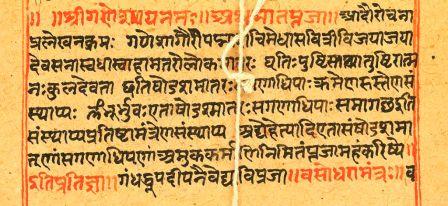
Rig Veda: Aitareya Upanishad Atmabodha Upanishad Kaushitaki Upanishad Mudgala Upanishad Nirvana Upanishad Nadabindu Upanishad Akshamaya Upanishad Tripura Upanishad Bahvruka Upanishad Saubhagyalakshmi Upanishad Sama Veda: Kena Upanishad Chandogya Upanishad Mahat Upanishad Maitrayani Upanishad Vajrasuci Upanishad Savitri Upanishad Aruneya Upanishad Kundika Upanishad Maitreyi Upanishad Samnyasa Upanishad Jabaladarsana Upanishad Yogachudamani Upanishad Avyakta Upanishad Vasudeva Upanishad Jabali Upanishad Rudrakshajabala Upanishad Yajur Veda: Katha Upanishad Taittiriya Upanishad Isavasya Upanishad Brihadaranyaka Upanishad Akshi Upanishad Ekakshara Upanishad Garbha Upanishad Prnagnihotra Upanishad Svetasvatara Upanishad Sariraka Upanishad Sukarahasya Upanishad Skanda Upanishad Sarvasara Upanishad Adhyatma Upanishad Niralamba Upanishad Paingala Upanishad Mantrika Upanishad Muktika Upanishad Subala Upanishad Avadhuta Upanishad Katharudra Upanishad Brahma Upanishad Jabala Upanishad Turiyatita Upanishad Paramahamsa Upanishad Bhikshuka Upanishad Yajnavalkya Upanishad Satyayani Upanishad Amrtanada Upanishad Amrtabindu Upanishad Kshurika Upanishad Tejobindu Upanishad Dhyanabindu Upanishad Brahmavidya Upanishad YogakundalinI Upanishad Yogatattva Upanishad Yogasikha Upanishad Varaha Upanishad Advayataraka Upanishad Trisikhibrahmana Upanishad Mandalabrahmana Upanishad Hamsa Upanishad Kalisantaraaa Upanishad Narayana Upanishad Tarasara Upanishad Kalagnirudra Upanishad Dakshinamurti Upanishad Pancabrahma Upanishad Rudrahrdaya Upanishad SarasvatIrahasya Upanishad Atharva Veda: Prasna Upanishad Mandukya Upanishad Mundaka Upanishad Atma Upanishad Surya Upanishad Narada-Parivrajakas Upanishad Parabrahma Upanishad Paramahamsa-Parivrajakas Upanishad Pasupatha-Brahma Upanishad Mahavakya Upanishad Sandilya Upanishad Krishna Upanishad Garuda Upanishad Gopalatapani Upanishad Tripadavibhuti-mahnarayana Upanishad Dattatreya Upanishad Kaivalya Upanishad NrsimhatapanI Upanishad Ramatapani Upanishad Ramarahasya Upanishad HayagrIva Upanishad Atharvasikha Upanishad Atharvasira Upanishad Ganapati Upanishad Brhajjabala Upanishad Bhasmajabala Upanishad Sarabha Upanishad Annapurna Upanishad Tripuratapan Upanishad Devi Upanishad Bhavana Upanishad Sita Upanishad
Difference between Yin Yoga and Restorative Yoga
What is Yin Yoga? Yin yoga is a training that centers around extending your connective tissues (especially the fascia) to fortify and lengthen them. Yin yoga is a practice that focuses on stretching your connective tissues (particularly the fascia) in order to strengthen and lengthen them. Hold the posture for 3-5 minutes each, and work with the energy meridians in the body, and cultivate active stretching ability in the connective tissue to increase strength and flexibility, improve joint mobility, improve posture and release internal trauma. What is Restorative Yoga? Regenerative Yoga is a meditation practice that uses props such as blocks, straps, sandbags, supports, and blankets to encourage you to passively release tension from your mind and body. This style can passively release deep tension without active stretching. Difference between Yin Yoga and Restorative Yoga These practices are similar in a sense; they are slow, contemplative practices for long-term holding. So how are they different? Props: Both styles can use accessories, but in yin yoga, if accessories are used, they are used to deepen or soften the stretch. In restorative yoga, accessories are used to fully support your body. Generally, restorative yoga will use many more accessories than yin, which can include straps, blankets, blocks, sandbags, and bolsters. Stretch: In yin yoga, there is active stretching, but in restorative yoga, the goal is 100% support and passivity without active stretching. Focus: In Yin Yoga, the focus is on stretching the connective tissues, while in Restorative Yoga, the focus is on passively releasing physical and mental tension. Poses: Maintain the Yin yoga posture for about 3-5 minutes, while the restorative yoga posture for 5-10 minutes. Yin yoga benefits: promotes strength and flexibility Maintain joint health and mobility Improve posture Relieve the trauma and emotions stored in the connective tissue of the human body Bring negative thinking patterns into your consciousness so that you can work with them and remove them To whom for Yin Yoga Do you have a very hectic lifestyle? Do you cling to narratives from the past that no longer serve you? Do you sit at a desk most of the time? Are over 50 years old? Benefits of Restorative Yoga Relieve stress Deep relaxation Breathing work Create a sense of security in mind and body. Reaching a state of higher level of consciousness Cultivate satisfaction To whom for Restorative Yoga Do you deal with excessive stress and anxiety every day? Is it difficult for you to relax after a normal working day? Do you have trouble finding time for yourself?
Yin Yoga Principles
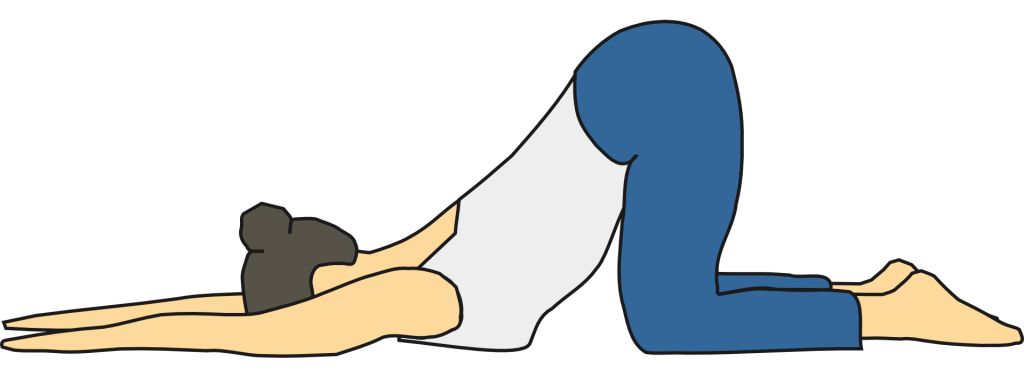
Yin Yoga Principles The three main principles of Yin Yoga are: First, we form a shape, reach the first point of resistance, and then observe what we feel from that slight sensation “edge”. The sensation should be just a slight dull pain, and should not be inclined to anything sharp, stabbing or burning. The second principle is to stay still. As the muscles relax relatively, the pressure will shift to denser connective tissue. Remember, you will not be fixed in one position during the entire posture. Make sure to change the angle of the posture to accommodate any release, or stay away from too strong feelings. Finally, maintain the Yin posture for a longer time. The posture can be held anywhere from three to twenty minutes, but start with a time frame that is meaningful to you and follow the above principles. Practice the postures in the order listed, allowing 3-6 minutes for each posture. There should be at least 1-2 minutes between the two positions, so that you can lie on your stomach or on your back to observe the effect. It is normal to feel a little weak when exiting the position, and this feeling may last for a minute or two.
Yoga Nidra practices to increase your immunity against COVID-19
Yoga Nidra practices to increase your auto- immunity against COVID-19 Yoga is a holistic exercise that strengthens our bodies and microscopic systems that are invisible to our eyes. As a result, the body’s natural defense mechanism has also been improved. Adopting a healthy lifestyle, including eating unprocessed whole foods, maintaining regular yoga and meditation exercises, getting enough sleep and minimizing stress, can easily achieve a healthy, disease-free body. Yoga and meditation are the keys to realizing our full potential. To get the effect of yoga to enhance immunity, be sure to keep daily practice! Regular yoga practice and 10 minutes of meditation can improve health. However, know that it cannot replace medical treatment. It is very important to learn and practice yoga postures under the guidance of a well-trained teacher. In case of physical discomfort, practice yoga postures after consulting a doctor. Practice: Yoga Nidra for Sleep (Guided Meditation) Now this time to prepare for conscious sleep. By switching off the lights, shutting down any unnecessary Electronics. Make yourself absolutely comfortable. Adjusting your body in completely. And sinking down into perfect physical relaxation Release the mind grip over your body. And see how quickly and fully you can just totally relax. Enjoying the pleasurable sense of perfect Comfort coming over your body. That’s it. Release all muscular tension and just sink down into the surface beneath you. Sinking down deeper and even deeper Your eyelids are becoming heavier. And heavier The pull of gravity weighing your body down against the surface beneath you. Take this moment to adjust your body one last time. Trusting your body to know exactly how to really relax most fully. See yourself walking barefoot in the warm white sand of beautiful seashore. The crystal clear water has an endless variety of brightly colored fish. Behind you is the lush green jungle. Growing right up to the edge of the beach With Banyan papaya Tamarind Guava and mango trees You can smell the fresh scent of pineapple. Flowers Beyond the jungle you can see steaming volcanic mountains. With thick vegetation Countless waterfalls And decide to lie down and relax. I’m closing your eyes. You can hear the sound of parrots. The birds chirping and singing in the trees. As well as the sound of sea shells and Pebbles rolling up and down the beach with the waves. Continue to enjoy releasing and relaxing in this Pleasant While you rotate your awareness around your body. Beginning with the right hair the thumb Second finger Third Fourth And stiff finger Palm of the hand Back of the hair The right wrist Lower arm Elbow Upper arm Right shoulder Armpit Waist Back of the thigh Right kneecap Back of the knee Right shin Calf muscle Heel Ankle Sole of the right foot Top of the foot Right big toe. Second toe Third Fourth And fifth toe the top of the foot Soul Ankle Heels Calf muscle Right shin Back of the knee Top of the knee Back of the thigh Top of the thigh. Right waist Armpit Shoulder Upper arm Elbow Lower arm Right wrist Back of the hand Palm of the hand Right thumb. Second finger Third Four And fifth finger The whole right side of the body The left hand thumb Second finger Third Four And fifth finger Palm of the hand Back of the hand the left wrist. Lower arm Elbow Upper arm Left shoulder Armpit Waist Hip Pelvic Back of the thigh Left kneecap Back of the knee Left shin Calf muscle Heel Ankle Sole of the left foot Top of the foot Left big toe Second toe Third Fourth And fifth toe Top of the foot Sole Ankle Heel Calf muscle Left shin Back of the knee Top of the knee Back of the thigh Top of the thigh. Hip Waist Armpit Shoulder Upper arm Elbow Lower arm Palm of the hand Left thumb Second finger Third Four And fifth finger The whole left side of the body The top of the head Forehead Right, eyebrow Left, eyebrow The center of the eyebrows Right, eyeball. Left eyeball Right ear Left ear The nose The tip of the nose Upper lip Lower lip The muscles inside of the mouth And the tongue Right cheek Left cheek Right jaw Left jaw The chin Throat Right collarbone Left collarbone Right chest muscle Left chest muscle The center of the chest Navel Abdomen Growing Right thigh. Left thigh Right ankle. Left ankle Right foot Left foot Right thigh. Left thigh Abdomen Navel Right chest muscle Left chest muscle The center of the chest Right collarbone Left collarbone The throat Chin Right jaw Left jaw Right cheek Left cheek The muscles inside of the mouth And the tongue Upper lip Lower lip The nose And the tip of the nose. Right ear Left ear Right, eyeball. Left eyeball Right eyelid Left eyelid Right, eyebrow Laughed eyebrow The center of the eyebrows Forehead And top of the head Back of the head Back of the neck Right shoulder blade Left shoulder blade The whole spinal column Right buttock Left buttock Back of the right thigh Back of the left thigh Back of the right knee Back of the left knee Right calf muscle Left calf muscle Right heel Left heel Sole of the right foot Sole of the left foot Right heel Left heel Right calf muscle Laughed calf muscle Back of the right heel Back of the left heel Back of the right thigh Back of the left thigh Right buttock Left buttock The whole spinal column Right shoulder blade Left shoulder blade Back of the neck Back of the head The whole right leg Pull left leg Both legs together Whole right arm Whole left arm Both arms together The abdomen Navel Chest The whole back The whole torso together The neck Face Right side of the head Left side of the head Back of the head Top of the head The whole head together The whole
Yoga practices to increase your auto-immunity against COVID-19
Yoga practices to increase your auto-immunity against COVID-19 Can yoga help me strengthen my immunity? Does it work immediately or is it slow to display results? Can I practice yoga during the COVID-19 period commonly referred to as the Coronavirus Quarantine? The answer is yes. Regular yoga practice has shown effective results. Different asanas can enhance immunity, enhance physical strength, increase energy levels, reduce anxiety and stress, and inject positivity and freshness into the brain. When considering the cause of disease, weather and other external pollutants are usually the first to blame. However, talking to any yogi, you will most likely find that they rarely get sick. Regular yoga practice and 10 minutes of meditation can improve health. However, know that it cannot replace medical treatment. It is very important to learn and practice yoga postures under the guidance of a well-trained teacher. In case of physical discomfort, practice yoga after consulting a doctor. Why should we practice sun salutation during corona virus? Surya Namaskara is a well-known technique within the yogic practices. Its versatility and application make it one of the most useful methods to induce a healthy, vigorous and active life and at the same time prepare for spiritual awakening and the resultant expansion of awareness. Surya Namaskara, meaning “salutation to the sun ”, can be seen as a form of worship of the sun, amend all that it represents on the micro and macrocosmic levels. In yogic terms this indicates that the practice of Surya Namaskara awakens the solar aspects of man’s nature and releases this virtual energy for the development of higher awareness. This can be realized by the practice of Surya Namaskara each morning as well as being fine way to pay tribute to the source of creation and life. Surya is sun. Namaskara is to name, to greet. Surya Namaskara is Sun Salute. This vinyasa is traditionally practiced in the morning before sunrise. It is invigorating and good for digestion. If the postures are donebetween jumping’s, the fast movements and quick change in position ensure freedom of movement, creating agility and flexibility and improving blood circulation. The dull brain becomes active and the brooding mind gets refreshed. Surya Namaskara There are twelve positions in classical Surya Namaskara. Twenty-five such Namaskaras form one avrtti(frequency). Surya Namaskara must be performed preferably in an open and airy place. Perform Surya Namaskara slowly without exerting too much or panting and puffing. There is one Mantra for each of the twelve Namaskäras- there by you also recites the 12 names of Sun. Procedure: In the first position of Surya Namaskara contemplate the virtues of Lord Surya with concentrated mind and feel that you are the friend of everybody and have friendship with every creature on the earth. Immersing yourself with these feelings stand erect stretching your hands, neck and all other parts of your body. Stretching both of your arms, touch your thighs with palms and inflate the chest and point your vision on the tip of the nose. This is a position of attention. 1st Step: Pranamasana (Prayer pose) Mantra: aum hram mitraya namah| Concentration: Heart centre (Anahata). Procedure: Stand erect with your chest out, feet together, knees pulled up and thighs tight like in Tadasana. Bring your hands forward, in front of your chest as if in prayer, elbows straight and not drooping. Benefits: Good for the diseases of the throat and voice is enhanced. Both mind and body become healthy. 2ndStep: Hasta utthanasan (Raised arms pose) Mantra: aum hrim ravaye namah| Concentration: Neck centre (Visuddhi) Procedure: On inhale, stretch your arms up over your head, palms still together. Then arching back as far as you can go, stretch with your arms apart for next pose. Benefits: Both the shoulders and the food pipe (Esophagus) get exercise and diseases related to them are corrected. Eyesight is also improved. 3rdStep: Padahastasana (Hand to foot pose) Mantra: aum hrum suryaya namah| Concentration: Root of spinal column (Svadhisthana). Procedure: While exhaling, swing down from the hips keeping your upper body and torso straight. Without bending the knees place your hands on either sides of your feet flat on the mat, head as close to your knees as possible. Benefits: Disorders of the belly and digestive system are corrected. The chest and hands become stronger and you become well balanced, beautiful and good looking. Diseases of the feet and fingers are also corrected. 4th Step: Asva Sancalanasan (Equestrian pose) Mantra: aum hraim bhanave namah| Concentration: Eyebrow Centre (Ajna). Procedure: Inhale, bring the right foot to the back of the mat on the toes like a lunge. Using your finger tips for support and the left leg at a right angle start bending the extended leg at the knee towards the floor and look up. Benefits: The posture stretches the small intestine and the seminal vesicles. Hence this posture helps in correcting the constipation and diseases of the liver. Thinness of the semen is also corrected. Diseases of the throat are also corrected. 5thStep: Dandasan (Plank pose) Mantra: aum hroum khagyaa namah| Concentration: Neck Centre (Vishuddhi). Procedure: Retain your breath and extend your left leg back on your toes side by side, your right without moving the position of your hands and leg at all. Palms flat on the mat, keep your spine straight and elbows locked. Do not let your head or hips drop. It should look like you are about to do a push up. Benefits: One gets relief from the pains – especially of arms, legs and the knees. Bulging waist is trimmed and it is good for the abdominal disorders. 6thStep: Astanaga Namaskar (Salute with eight parts or points) Mantra: aum hrah pusne namah| Concentration: Behind Navel (Manipura). Procedure: Exhale, bending your elbows towards your body and going down as low as you can at the shoulders while keeping the rest of your body perfectly stiff exactly like a push up. Once down near the floor, bend and drop your knees, chest and forehead to the ground lightly touching in that order. Your hips and pelvic should still be raised. Eight points should be touching the floor in this step- forehead, chest, and two palms, both knees and both feet. Benefits: This posture makes the
Yoga Registration /Application Form
Yoga Syllabus PDF
click here pdf file 200 syllabus2020
Certificate Course in Yoga Syllabus PDF
click here to pdf file 200 syllabus2020