
Importance of teaching methodology in the application of different styles of hatha yoga teachings
Importance of teaching methodology in the application of different styles of hatha yoga teachings “The mediocre teacher tells. The good teacher explains. The superior teacher demonstrates. The great teacher inspires.” — William Arthur Ward Kindling a desired change among the students is an art in itself. A technique that leads the student’s mind to get engrossed with the joy of learning, structured in such a manner to encourage each individual to put in their maximum effort. In order to derive such a formula, a teacher must train themselves to be well knowledgeable over the subject matter and enhance their organizing skills. The same applies for yoga trainers also. As a yoga trainer, one must not only be skillful in doing asanas and the subject matter but must be confident enough to assess and inspire their group of students, he/she must know: – how to manage the class timing, – make the session interesting, – use clear instructions and a modulated voice – have a broad mindset – Finally follow yogic manners with discipline. Using their inner creativity to organize a class for various groups of students will also add up as a bonus point for their careers. In this essay, we will see the importance of the application of different styles of hatha yoga. Modern trend demands for a skillful yoga teacher world wide, who tends to cater the needs of a huge population of students. Therefore, group practice is needed to maintain systematic learning. Lets see the styles of hatha yoga for a few groups of students. – Those who are fitness enthusiasts prefer dynamic yoga practices like Vinyasa yoga or Ashtanga yoga. – For healthy and absolute Beginners: Hatha yoga and Yin yoga. – For the old and those with physical ailments: Restorative or gentle yoga – Prenatal yoga for pregnant women. In general Yoga trainers are mostly specialized in one particular style of Hatha yoga, and according to the time and setting of the environment he/she structures the asana, pranayama, and meditation practice required. For example : – Early Morning classes might require lots of warm up during cold weather. – Afternoon and evening classes may be dynamic when the air is warm. – Night practice can be gentle and relaxing. Apart from that, it’s mandatory for a yoga teachers to be aware of the health condition of their students to assess them accordingly. Trainers must have a broad and strong mindset to deal with different aspects of students and avoid creating attachment with them, to focus on the efficient bilateral process, where the teacher and pupil venture together in a rhythmic flow that benefits each other both mentally and physically. In conclusion, some are born teachers, but many can develop teaching skills through training and practice. Yogic lesson plans require creativity to make your class more attractive and enthusiastic, which in itself can be fun and interesting work to do. Courtesy To : Ananya Kasiraj, RYT – 200 hours (student assignment)
Yoga class Room Physical Settings
Yoga class Room Physical Settings Certainly, the ambiance around a person can influence their mental state. At a high level, we can practice yoga almost anywhere, with the idea of being aware of our breath, body, and mind. Yet, it’s ideal to begin learning from a yoga studio or a yoga ashram, where the pious look and feel of these yoga places can influence a beginner’s mind to focus and practice effectively. The attractiveness of a yoga studio depends on various factors, which need to meet the student’s expectations of a pleasing infrastructure motivating them to practice and wanting to visit again. Let’s see the description of a magnificent yoga studio. To enter a breathable and spacious hall with big windows covered with fabric curtains automatically gives us a sense of mental freedom devoid of clusters. As a fresh warm breeze enters the studio it makes us feel at peace. The flooring used in the room affects the temperature settings, ideally, a wooden floor helps in keeping the students warm while a granite or marble floor tends to remain cold for the barefoot. Temperature regulation in a studio is important for the sense of comfort so that students won’t feel too hot or cold during the time of practice and even air conditioners can be an option used for this purpose. In exceptional cases like the practice of hot yoga, the studio must have a slightly warmer temperature than the regular temperature used. The bright sunlit room welcomes the morning sessions, while the studio lights are used for the evening times. For relaxed practices, dim lights or candles add a soothing effect, and with a hint of harmonized mild music, it will surely boost the quality of the healing session. Music is mostly not recommended but can be used low tuned enough, for the instructor’s and students’ voices to be heard. To enhance the yogic mood and freshness, a certain mild amount of pleasant fragrances can be used as long as it does not have adverse effects over the student’s health. Flexibility is not easily achieved without consistent practice and to help students support their practice an yoga studio must have the provision of props. Sturdy and clean yoga mats are essential for every student, they can be encouraged to bring their own mat or use the ones provided in the studio. Empty walls is a requirement for students who take wall support for balance, walls can have built in straps but they are not mostly recommended. Speaking of straps, they are very handy for extended reaching practices with a design that gives way for easy secure and release. Bolsters and thick folded blankets can be used as a cushion for knees and hips or for relaxation. Wooden or foam blocks are used as multi purpose props that give the best support, reachability, and balance for those who find certain postures difficult. At last chairs are props that can be used for prenatal yoga and old practitioners. Once a person masters the sense of awareness, he/she can practice yoga in harsh winters or the extreme hot desert region, or anywhere from the quiet tropical forest to the chaotic city streets. Overall a natural setting with a few plants and fresh air in the spacious yoga hall can kindle a yogic mood within a person to forget all worries and become aware of their breath, body and mind. A therapeutic setting brings in a sense of positivity in all, helping them to recollect themselves and focus. Courtesy To : Ananya Kasiraj, RYT – 200 hours (student assignment)
Yoga Teacher Code of Ethics
As a Yoga educator, one accepts accountability to act in the most ideal manner. To attempt to lead a daily existence that upholds the lessons and good standards of the act of Yoga. As an educator, you have an obligation to your understudies – an obligation to show others how it’s done – and to plainly exhibit the characteristics and qualities related to being an extraordinary instructor by your conduct both on and off the mat. Yoga educators comprehend and like that showing, Yoga is a respectable and recognizing attempt, which adjusts them to a long queue of decent instructors. Yoga educators are focused on rehearsing Yoga as a lifestyle. Yoga educators are focused on keeping up with perfect norms of expert skill and respectability. Yoga educators commit themselves to an exhaustive and proceeding with study and practice of Yoga, specifically the hypothetical and down-to-earth parts of the branch or kind of Yoga that they instruct others. Yoga educators are focused on staying away from substance misuse and, if for reasons unknown, they surrender to synthetic reliance will quit instructing until they are free again from medication and liquor misuse. All things considered, they will do their best to remain free, including full responsibility to a care group. Yoga instructors will precisely address their schooling, preparing, and experience pertinent to their educating of Yoga. Yoga instructors are focused on advancing the physical, mental, and profound prosperity of their understudies. Yoga instructors, particularly those showing Hatha-Yoga, will keep away from offering clinical guidance, or counsel that could be deciphered accordingly, except if they have the essential clinical capabilities. Yoga educators especially embrace the ideal of honesty in managing understudies and others. Yoga instructors are available to educating all understudies independent race, identity, sex, sexual direction, and social or monetary status. Yoga educators will acknowledge understudies with actual inabilities, giving they have the ability to show those understudies appropriately. Yoga educators will approach their understudies with deference. Yoga educators won’t ever compel their own viewpoints on understudies yet like the way that each individual is qualified for their perspective, thoughts, and convictions. Yoga instructors will stay away from any type of lewd behavior of understudies. Yoga instructors wishing to enter a consensual sexual relationship with a present or previous understudy should look for the prompt insight of their friends prior to making any move. Yoga educators will bend over backward to try not to take advantage of the trust and expected reliance of understudies and rather urge them to discover more prominent inward opportunity. Yoga instructors recognize the significance of the legitimate setting for educating and consent to try not to instruct in an easygoing way, which incorporates noticing appropriate propriety inside and outside of class. Yoga educators endeavor to rehearse resistance toward other Yoga instructors, schools, and customs. At the point when analysis must be brought, this ought to be done in decency and with suitable respect for current realities. These Ethical Guidelines are not comprehensive, and the way that a given lead isn’t explicitly covered by these Guidelines remains silent with regards to the moral or deceptive nature of that direct. Yoga instructors consistently try to regard and, as well as could be expected, stick to the conventional yogic implicit rules just as to the law current in their nation or state.
3 Ways, Will Make You a Better Yoga Teacher
You’ll figure out who you are as a teacher When you are alone with us, we will focus on your strengths and weaknesses as a teacher so that you can grow and develop your own unique talents. We will ask you, “How do you present the idea of yoga to your students?” Once we have defined your point of view, we will take a look at where you are missing the mark and build on what you are really good at. When you teach what you are good at, it feels truly authentic, whether it’s alignment, anatomy or philosophy. You’ll grow into a master Claiming a room and being exceptionally certain doesn’t come effectively to certain individuals. A few educators don’t have the certainty to state, “Actually no, not in my room, not that way.” We’ll show the abilities to catch up on “no” with helpful strides forward, which makes a more associated instructor understudy relationship. We’ll additionally chip away at drawing in with the class and getting your understudies to realize that you see them. Think before you say If you want to say something, make sure you know what you are saying and why. For example, when aligning, one size fits all is impossible. I will not teach you “hints” that you can recite. Many times people don’t know what is in their mouth and why they say that.
3 myths about Yoga, Bio-Mechanism & posture alignment
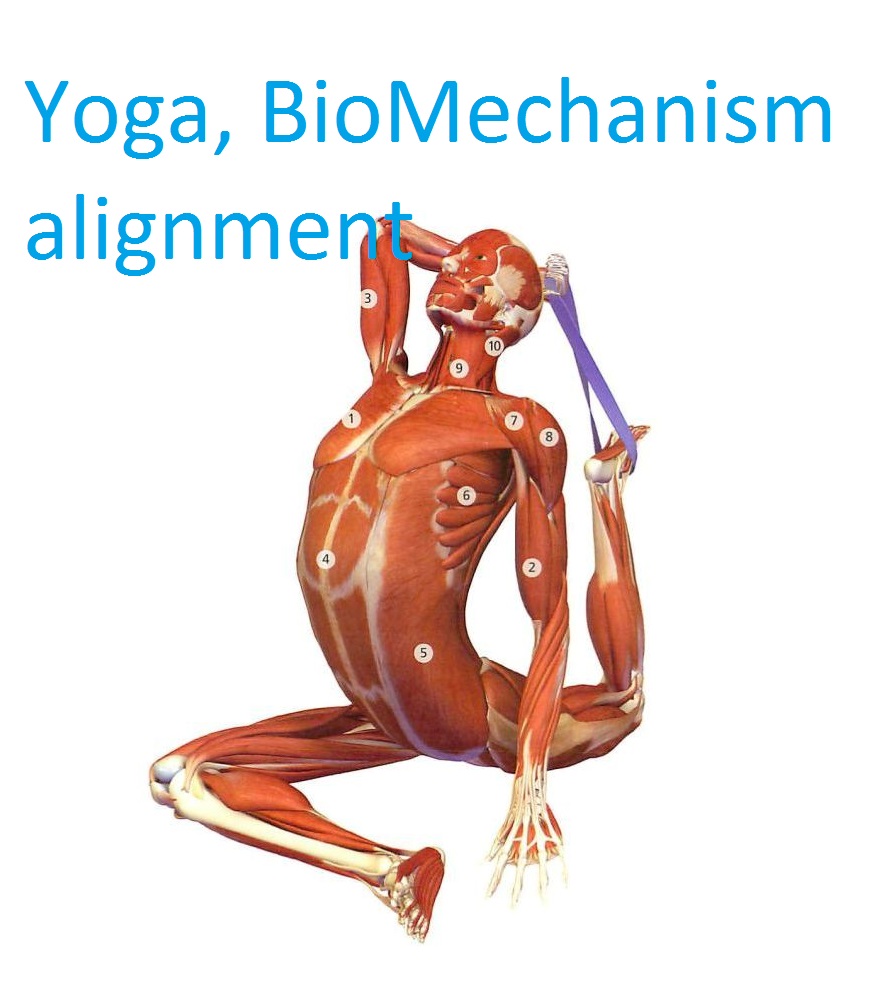
How important is bio-mechanism education for yoga teachers? The bio-mechanism is the science of movement. It includes the study of all physiological mechanisms of the body. The study of kinetics is important in educational disciplines such as rehabilitation therapy, sports medicine, exercise, biomechanics, and orthopedics. Since Hatha Yoga is based on movement, it makes sense for someone who specializes in teaching the physical form of yoga to know the kinetics of the body. More specifically, biomechanics is the scientific study of human bones, joints, tissues, nerves, and muscles. The practice of yoga focuses on moving the body to the proper position, which will strengthen and lengthen the joints and muscles. Kinetics and yoga seem to go hand in hand. When teaching yoga, you are teaching students how to safely move their bodies to specific positions to obtain specific effects. Yoga teachers must understand how different parts of the bodywork together. Bio-mechanism Education for Safety and Alignment Imagine a scenario where you teach a class full of beginners how to perform the Triangle pose for the first time. You will make sure that students adopt a broad posture with proper alignment, and then position their toes to the desired extent. Then, students must focus on the hips, keep them straight forward, and practice moving from the hips instead of guiding them with the shoulders or another part of the body. Once the hips are in place, students should reach with the upper arm up, the shoulders down, and back. Finally, the yoga instructor must convey how to extend the hand towards the front foot, while reaching towards the ceiling, opening the chest, and directing the gaze upwards. One posture covers almost the entire body, from toes to head. When students learn to pose, yoga instructors need to be able to understand the limitations of the students and adjust their bodies accordingly. This requires not only understanding the posture itself but also understanding how the body works. If the student feels pain or discomfort due to the posture, then the job of the yoga instructor is to adjust the body to reduce the discomfort. This requires understanding human dynamics. Importance of bio-mechanism Education Biomechanics knowledge is vital background information for yoga instructors. Although you may not always teach your students about specific tissues or joints, it is important to develop a general understanding of how the human body works. One of the aspects of Hatha Yoga is to get closer contact with our body. Therefore, it is meaningful for yoga teachers to understand the scientific knowledge and knowledge of the body.
Vinyasa Flow Yoga
The definition of Vinyasa Flow Yoga is more difficult to define than other methods because it embodies the continuous, dynamic, and conscious evolution of this practice. It reflects the continuous interaction of human beings in the flow of life, linking our inner essence, life experience and accepted traditional wisdom together because we have explored and discovered new possibilities for creative expression and conscious life on this planet earth. The term vinyasa comes from nyasa, which means “to place” and vi means “in a special way.” The term flow, when referring to Hatha yoga, “means to practice with a theme or purpose with interconnected or interrelated poses.” In conclusion, Vinyasa Flow suggests a practice where we consciously place the body-breath-mind in a continuous flow of space and time. Like Ashtanga Vinyasa Yoga, Vinyasa Flow moves steadily from one posture to another in synchronization with ujjayi pranayama, often pausing and maintaining the posture at different times while maintaining the rhythm of breathing. Unlike Ashtanga Vinyasa, each class usually provides a different sequence of poses, although most classes use some form of Surya Namaskara A and B from the astanga lineage. Many classes also closely follow the basic standing postures and the ending sequence found in Ashtanga Vinyasa. Many Vinyasa Flow classes use the principle of Iyengar alignment, dynamic movements in poses, and the use of props. In Vinyasa Flow’s emphasis on vinyasa krama, one can see Krishnamacharya’s insights and methods, krama refers to the “stage” of creating conscious body sequencing. Vinyasa krama also refers to the stages of practice that adapt to different intentions and abilities, so you start where you are and move consciously in “a special way”, from simple to more complex positions. Vinyasa Flow often employs the concept of pratikriyasana, which means neutralization or “opposite poses”. Working on the idea of “special placement”, many Vinyasa Flow teachers emphasize this concept in several relationships within the practice: being aware of how the body is moved and placed in and between poses; conscious connection of breath and body with a mind in and between poses the way you approach your mat, set your intention, stay in touch with that intention throughout your practice, get up from the mat and go out into the bigger world; paying attention to what you are doing, exercising, breathing, moving, feeling, observing, being upstream; opening in a more intuitive way that expresses and embodies the feeling of pranic energy flowing in the universe. Unlike most Hatha yoga approaches, which have a fixed system, Vinyasa Flow is not a system. This allows for creativity in asana sequencing and offers a wide range of topics in different classes. This freedom and dynamism help make Vinyasa Flow one of the most attractive forms of yoga today, resonant in various ways with the spirit, intentions, and life experiences of different teachers and students.
Vini Yoga
Viniyoga is about adapting and appropriately applying the teachings and practices of yoga according to each person’s needs, abilities, and interests. The method is based on the traditional guru-learner model in which highly competent and qualified teachers work individually with each student to create a personalized yoga program based on individual health, age, and physical conditions and limitations, including past and present. Injuries as well as personal potential and intention to exercise. Whether your goal is physical well-being, emotional balance, spiritual attainment, or any combination of these, Viniyoga aims to teach you how to start wherever you are, giving you the tools necessary to achieve your individual goals. The Sanskrit term Viniyoga actually means distinction, adaptation and proper application. Teacher Viniyoga draws on the broad teachings of yoga, including asanas, pranayama, chanting, meditation, personal etiquette, and scripture learning. Teacher Viniyoga adjusts various practice methods and methods according to everyone’s needs to enhance overall and overall happiness sense. Support their intention to practice. This method emphasizes the principle of breathing as the main movement in asanas (the way of breathing when changing postures to produce different therapeutic effects), the biomechanics of yoga postures, the safe ordering and functional form, and once again adapted to the form of yoga. Various postures that meet individual needs can achieve various effects. The class is a combination of dynamic movement and static maintenance, which can maintain posture alignment to maintain a consistent number of breaths, and take a short break in between. Viniyoga is also good at repetitive movements, including in and out postures, to warm the body, increase circulation to the target area, and trigger neuromuscular rearrangement. The scientific method aims to replace dysfunctional movement patterns with more functional ones that will not put too much pressure on your structure. Ultimately, the personalized approach aims to provide students with insights into their own nature, thereby starting their own unique process of self-discovery and personal transformation. Viniyoga lays the foundation for deeper yoga practice in case you want to deepen your mental commitment, although this is not required. The integration of breath and body consciousness is an indispensable part of this method, just like breathing method. In addition to preparing and training students for sitting meditation, Viniyoga also teaches them to express their breath through continuous breathing awareness, which can calm the mind, balance the nervous system and relieve stress.
Svaroopa Yoga
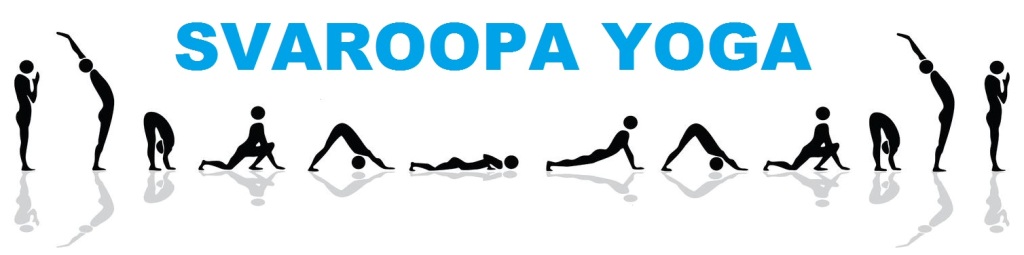
Svaroopa Yoga aims to provide students with an “inside-out” experience, that is, “core openness”. Svaroopa Yoga is expected to bring you “own happiness”. This method is based on spinal decompression, which “Svaroopa” calls core release, which aims to release the tension held deeply in the muscles connected to the spine, allowing you to gain your own divine experience. Compared with other people, yoga is less active, regardless of their physical condition, age or ability, everyone can fully accept it. Svaroopa Yoga utilizes precise angles and alignment of specific yoga poses to open the spine, starting from the tailbone and extending to each spine area. With the support of blankets, wooden blocks and other yoga props, students can fully pose for each posture within a period of time to relax the core muscles of the spine and decompress the vertebrae. The effect is to heal and transform, promote deep relaxation and pressure release, which are inherent to the release of core muscles, while also reducing back pain and tension in the shoulders and neck.
Power Yoga
Overall, power yoga classes are very fitness-based and physically demanding. With many of the same elements as Ashtanga yoga practice, Vinyasa, ujjayi breath, sun salutations, active postures, inner warmth and sweat, power yoga also has many of the same benefits that this yoga style gives, including increased endurance, strength, balance and flexibility as well as detoxification, weight loss and stress reduction. Since both styles are rooted in the vigorous Vinyasa style of Ashtanga yoga, requiring students to synchronize their breath with movement as they flow through a dynamic sequence of poses, variety is a key difference between the two styles. Power yoga does not involve a fixed series of positions. Teachers creatively design their own lesson sequences with one pose advancing directly into the next, and their teaching style often develops from their own home exercises. The presence or absence of any overtly spiritual component is entirely up to the teacher or studio, although many say it is almost impossible to remove all spirituality from yoga. With that being said, the poses are given in their English names, usually there aren’t many chants or meditations, and any yoga philosophy or wisdom is presented in a very accessible, contextual way. Principles of Power Yoga The general guiding principle of power yoga is to listen to your body and breathing: if you feel unwell, stop. If you find that you are not breathing deeply or cannot keep your breath full, please exit the posture. In class, it is recommended that you skip Vinyasa or take Child’s Pose when appropriate.
17 mantras for the practice of expressing our inner potential

Mantras give your yoga or meditation practice something to focus on and resonate with. They can be as simple as a quote, word, or sound that sets an intention for your practice, your day, or your life. With the Christmas blues and stressful planning looming, setting a mantra can help you block out any stress, anxiety, or depression you may be feeling and allow you to focus on the present. Repeat your mantra, in your head or out loud, throughout your practice or meditation, whenever you feel your mind starting to wander. We have compiled a list of 17 mantras to express and arouse gratitude this season. We also included social media graphics that you can share on your social media channels to express your thanks. Mantras Om Sri Maha-Ganapataya Namah Om Namassivaya (Panchakshara Mantra) Om Namo Narayanaya (Ashtakshara Mantra) Harih Om Harih Om Tat Sat Hare Rama Hare Rama, Rama Rama Hare Hare; Hari Krishna Hare Krishna, Krishna Krishna Hare Hare Om Namo Bhagavate Vssudevaya Om Sri Krishnaya Govindaya Gopijana Vallabhaya Namah Om Sri Krishnaya Namah Om Sri Rama, Jaya Rama, Jaya Jaya Rama Om Sri Ramaya Namah Om Sri Sita-Ramachandrabhyam Namah Om Sri Durgayai Namah Om Sri Maha-Lakshmyai Namah Om Sri Saravanabhavaya Namah Om Sri Tripura-Sundaryai Namah Om Sri Bala-Parameshvaryai Namah