
Introduction
Cat Pulling Its Tail Pose is a classic Yin Yoga posture characterized by a gentle spinal twist combined with a quad and hip flexor stretch. The name evokes the image of a cat turning its body to reach its tail, symbolizing flexibility, curiosity, and fluidity. This pose is deeply restorative and targets multiple areas simultaneously, including the spine, hips, thighs, and abdomen.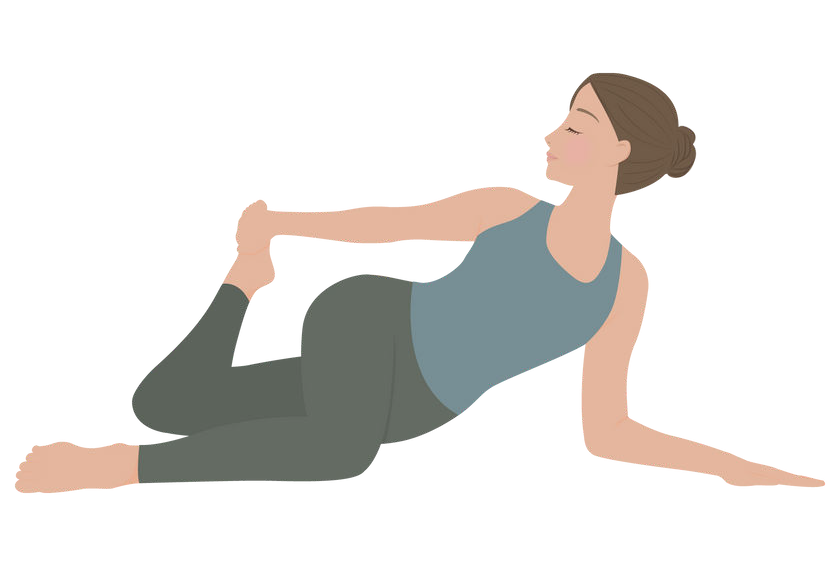
Unlike dynamic yoga styles, Yin Yoga emphasizes stillness, passive stretching, and longer hold times. In Cat Pulling Its Tail Pose, practitioners settle into the posture for several minutes, allowing gravity and time to work on the deeper connective tissues such as fascia, ligaments, and joint capsules. This makes it particularly beneficial for improving joint mobility, releasing chronic tension, and enhancing energetic flow through the meridian system.
The pose is also a powerful tool for stimulating digestion, improving spinal rotation, and balancing the nervous system. It is often included in Yin sequences aimed at detoxification, relaxation, and emotional release.
Cat Pulling Its Tail Pose is a deeply therapeutic Yin Yoga posture that integrates spinal rotation, hip opening, and organ stimulation. Its gentle yet profound effects make it suitable for practitioners of all levels when approached with mindfulness and proper support.
Through sustained stillness, the pose allows for deep release in connective tissues, improved joint mobility, and enhanced organ function. It also offers significant mental and emotional benefits, promoting relaxation, clarity, and emotional balance.
In a world dominated by fast-paced movement and stress, this pose invites practitioners to slow down, turn inward, and reconnect with their body. With consistent practice, it becomes a powerful tool for physical healing, emotional release, and overall well-being.
Getting Into the Pose
Entering Cat Pulling Its Tail Pose requires mindful alignment and a gradual approach to ensure safety and effectiveness.
Step-by-Step Instructions
- Starting Position
Begin by lying on your back in a relaxed position with both legs extended and arms resting by your sides. - Bending One Knee
Bend your right knee and draw it toward your chest. - Twisting the Spine
Guide your right knee across your body toward the left side, allowing the spine to rotate gently. - Grasping the Foot or Ankle
Reach your left hand back to hold the right foot, ankle, or shin. If this is not accessible, use a strap. - Positioning the Opposite Arm
Extend the right arm out to the side or overhead for balance. - Head Alignment
Turn your head to the right (opposite direction of the twist) to deepen the spinal rotation. - Settling Into the Pose
Allow the body to relax completely, letting gravity draw the knee toward the floor. - Using Props (Yin Variation)
- Place a bolster under the bent knee
- Use a strap for the foot
- Support the head with a cushion
- Breath Awareness
Maintain slow, deep breathing, especially into the abdomen.
Coming Out of the Pose
Exiting the pose slowly is essential to prevent strain.
- Release the Foot Gently
Let go of the foot or ankle. - Return to Center
Bring the bent knee back to the chest. - Extend the Leg
Slowly straighten the leg onto the floor. - Rest in Neutral Position
Pause and observe sensations. - Repeat on the Other Side
Ensure balanced practice.
Counterposes
After a deep twist, counterposes help neutralize the spine.
- Supine Neutral Rest
Allows integration. - Gentle Backbend (Bridge Pose)
Rebalances spinal movement. - Knees-to-Chest Pose
Releases lower back tension. - Happy Baby Pose
Opens hips symmetrically. - Cat-Cow Stretch
Restores spinal mobility.
Meridians & Organs Affected
Cat Pulling Its Tail Pose stimulates several meridians due to the twisting and compression of the torso.
Primary Meridians
- Liver Meridian
- Supports detoxification
- Associated with emotional balance
- Gallbladder Meridian
- Runs along the side body
- Influences decision-making and clarity
- Stomach Meridian
- Affects digestion
- Spleen Meridian
- Supports energy and immunity
Organs Affected
- Liver
- Gallbladder
- Stomach
- Intestines
- Kidneys
The twisting motion massages these organs, enhancing their function and promoting detoxification.
Joints Affected
- Spine (Thoracic and Lumbar)
- Rotation improves mobility
- Hip Joint
- Flexion and slight rotation
- Knee Joint
- Maintained in flexion
- Shoulder Joint
- Opened through arm extension
- Ankle Joint
- Engaged when holding foot
Recommended Hold Times
- Beginners: 1–2 minutes per side
- Intermediate: 3–4 minutes per side
- Advanced: 5–6 minutes per side
Practice Tips
- Use props for comfort
- Avoid forcing the twist
- Maintain steady breathing
Contra-indications
- Spinal Injuries
- Avoid deep twists
- Herniated Disc
- Practice under supervision
- Knee Injuries
- Avoid excessive bending
- Pregnancy
- Avoid deep twisting
- Recent Abdominal Surgery
- Avoid compression
- Severe Hip Issues
- Modify with props
Benefits
Physical Benefits
- Improves Spinal Mobility
- Enhances rotational flexibility
- Stretches Quadriceps and Hip Flexors
- Relieves tightness
- Enhances Digestive Function
- Stimulates abdominal organs
- Releases Lower Back Tension
- Reduces stiffness
- Improves Circulation
- Encourages blood flow
Therapeutic Benefits
- Detoxification
- Stimulates liver and digestive organs
- Relieves Digestive Issues
- Helps with bloating and constipation
- Reduces Chronic Pain
- Targets connective tissues
- Improves Posture
- Balances spinal alignment
Mental and Emotional Benefits
- Reduces Stress
- Activates relaxation response
- Enhances Mindfulness
- Encourages inward focus
- Releases Emotional Tension
- Stored in hips and abdomen
- Promotes Calmness
- Soothes nervous system
Energetic Benefits
- Balances liver and gallbladder energy
- Promotes smooth energy flow
- Supports emotional clarity
Anatomy and Physiology
Muscles Involved
Primary Muscles
- Obliques (internal and external)
- Erector spinae
- Quadriceps
Muscles Being Stretched
- Gluteus maximus
- Hip rotators
- Psoas
In Yin Yoga, muscles are relaxed to allow deeper tissue engagement.
Connective Tissue
The pose targets:
- Spinal ligaments
- Fascia along the side body
- Hip joint capsules
Long holds increase elasticity and hydration of tissues.
Spinal Mechanics
- Involves rotation
- Improves segmental mobility
- Reduces stiffness
Digestive System Effects
- Compression stimulates digestion
- Enhances peristalsis
- Supports detoxification
Circulatory System
- Improves blood flow
- Enhances nutrient delivery
Respiratory System
- Encourages diaphragmatic breathing
- Improves lung function
Nervous System Effects
- Activates parasympathetic system
- Reduces stress hormones
Endocrine System
- Stimulates adrenal glands
- Supports hormonal balance
Fascial Lines
- Lateral line
- Spiral line
These lines are engaged due to twisting and lateral stretch.
Psychological and Subtle Body Perspective
Cat Pulling Its Tail Pose has a deep emotional and energetic dimension.
Energetic Interpretation
- Stimulates liver energy (linked to anger and frustration)
- Encourages emotional release
- Promotes mental clarity
Twisting poses are often associated with letting go—physically and emotionally.
Integration in Yin Yoga Practice
This pose is often included in sequences focusing on:
- Twists
- Detoxification
- Hip opening
Complementary Poses
- Spinal Twist
- Butterfly Pose
- Dragon Pose
- Sphinx Pose