
1. Introduction
Yoga is a holistic system that integrates mind, body, and spirit. Among the myriad asanas, Sarvangasana (Shoulder Stand) holds a special place as the “queen of asanas” due to its profound physiological, mental, and spiritual benefits. Within Sarvangasana, there are several advanced variations that challenge flexibility, balance, and concentration. One such advanced variation is Urdhva Padmasana in Sarvangasana, which combines the inverted posture of Sarvangasana with the full lotus position of Padmasana (cross-legged lotus).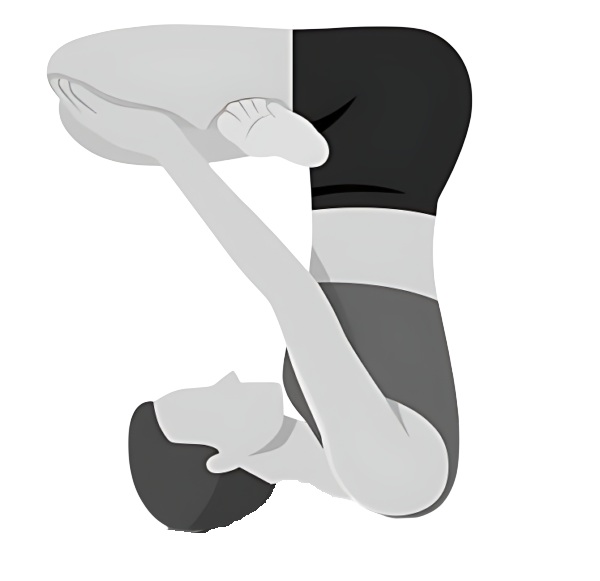
This asana requires strength, spinal alignment, hip flexibility, and shoulder stability. It provides numerous benefits for the musculoskeletal system, nervous system, endocrine system, and mental focus, making it an important posture for intermediate to advanced practitioners.
Urdhva Padmasana in Sarvangasana is an advanced yoga variation that combines inversion, spinal elongation, core engagement, and hip flexibility. When practiced correctly with alignment awareness, preparatory exercises, and modifications, it offers profound benefits for the musculoskeletal system, nervous system, endocrine function, digestion, and mental focus. This asana develops strength, flexibility, balance, and concentration, making it a valuable addition to intermediate and advanced yoga practices.
2. Word Meaning and Definition
Word Meaning:
- Urdhva: Upward / Elevated
- Padma: Lotus
- Asana: Posture / Pose
- Sarvangasana: All-limbs or Shoulder Stand Pose
Definition:
Urdhva Padmasana in Sarvangasana is an advanced yoga posture in which the practitioner enters the inverted position of Sarvangasana and brings the legs into full Padmasana (lotus), stacking one foot over the opposite thigh. The body remains vertical on the shoulders, with the spine elongated and core engaged. This combination challenges flexibility, strength, and balance while maintaining the inverted alignment and spinal decompression of the Shoulder Stand.
3. Method of Practice – Step by Step
Step 1: Preparatory Position
- Lie supine on a yoga mat with arms resting beside the body.
- Take slow, deep breaths to relax the spine and prepare the body for inversion.
- Engage the abdominal muscles gently to create core stability.
Step 2: Entering Sarvangasana
- Inhale deeply and lift the legs overhead.
- Place the hands on the lower back or hips for support.
- Lift the hips vertically, bringing the spine into a straight line.
- Distribute the weight on the shoulders while keeping the neck relaxed.
Step 3: Preparing for Lotus Legs
- Bring the knees toward the chest.
- Cross the right leg over the left, placing the foot on the opposite thigh.
- Bring the left leg over the right, forming the full lotus (Padmasana).
- Ensure knees are at approximately 90° angles and do not strain the hip joints.
Step 4: Alignment and Stability
- Shoulders press firmly into the mat to stabilize the inverted posture.
- Neck remains neutral with cervical length maintained.
- Core muscles are engaged to support the spine and prevent collapse.
- Arms can be extended along the torso, or hands may support the lower back for additional stability.
Step 5: Holding the Pose
- Close the eyes to enhance concentration and balance.
- Maintain steady breathing for 30–60 seconds initially.
- Gradually increase duration with experience and flexibility.
Step 6: Exiting the Pose
- Slowly release one leg at a time from the lotus position.
- Return the legs to full Sarvangasana alignment.
- Lower the body vertebra by vertebra while exhaling.
- Rest in Savasana or Supta Baddha Konasana to neutralize the spine and calm the nervous system.
4. Alignment Cues
- Neck: Avoid compressing the cervical spine; maintain length and relaxation.
- Shoulders: Press firmly into the mat for spinal support.
- Spine: Keep a vertical alignment from shoulders to hips.
- Hips: Maintain lotus alignment without forcing the knees; hip flexibility is essential.
- Legs: Stack feet properly over thighs; avoid rotation that strains knees.
- Core: Engage abdominal and oblique muscles to stabilize the spine.
- Breathing: Maintain slow, rhythmic, and steady breaths.
5. Benefits of Urdhva Padmasana in Sarvangasana
- Spinal Health and Flexibility:
- Promotes elongation and decompression of the spine.
- Strengthens back extensors for improved posture.
- Hip Flexibility:
- Full lotus position stretches hip rotators, gluteal muscles, and groin.
- Shoulder and Chest Opening:
- Enhances thoracic flexibility and opens pectoral muscles.
- Core Strength:
- Engages abdominal and oblique muscles for stability.
- Endocrine Activation:
- Stimulates thyroid and parathyroid glands through cervical extension and inversion.
- Circulatory Benefits:
- Inversion improves venous return, blood flow to the brain, and cardiovascular efficiency.
- Mental Focus and Relaxation:
- Enhances concentration, mindfulness, and stress reduction.
- Digestive System Benefits:
- Abdominal compression massages internal organs, promoting better metabolism.
6. Contraindications
- Cervical spine injuries or instability
- High blood pressure or cardiovascular disorders
- Glaucoma or other eye conditions
- Pregnancy (especially advanced stages)
- Severe hip, knee, or ankle injuries
- Neck pain or cervical spondylosis
7. Counterposes
- Matsyasana (Fish Pose): Neutralizes spinal extension and opens the chest.
- Supta Baddha Konasana: Releases hip and lower back tension.
- Savasana: Provides restorative relaxation for the nervous system.
8. Preparatory Practice
- Sarvangasana (Shoulder Stand): Prepares inversion and shoulder stability.
- Padmasana (Lotus Pose): Develops hip flexibility for lotus legs in inversion.
- Halasana (Plow Pose): Prepares hamstrings and lower back for inversion.
- Setu Bandhasana (Bridge Pose): Strengthens posterior chain and core.
- Baddha Konasana (Bound Angle Pose): Opens hips and groin for lotus.
9. Modifications
- Support for Shoulders: Use folded blankets to reduce cervical compression.
- Partial Lotus: Keep one leg in half-lotus if full lotus is not yet possible.
- Wall Support: Practice near a wall to maintain vertical alignment and balance.
- Arm Assistance: Keep hands on the lower back for additional support.
- Props for Knees: Use yoga blocks or straps to support legs if hips are tight.
10. Muscles Involved
Primary Muscles:
- Rectus Abdominis (core stabilization)
- Obliques (lateral stability)
- Erector Spinae (spinal support)
- Gluteus Maximus and Medius (hip stabilization)
- Deltoids and Triceps (shoulder support)
Secondary Muscles:
- Hip rotators (external rotation for lotus)
- Hamstrings (stabilization of legs)
- Neck extensors (cervical support)
- Latissimus Dorsi (spinal support)
- Adductors and iliopsoas (hip alignment)
11. Kinesiology and Kinematics
- Joint Movements:
- Spine: Cervical, thoracic, and lumbar extension
- Shoulder: Abduction, external rotation
- Hip: Flexion, external rotation (for lotus)
- Knee: Flexion and stabilization
- Ankle: Dorsiflexion for lotus foot placement
- Movement Planes:
- Sagittal plane: Primary (spinal extension)
- Frontal plane: Shoulder abduction
- Transverse plane: Hip external rotation
- Type of Motion:
- Eccentric control during entry
- Isometric engagement while holding
- Concentric activation during exit
12. Biomechanics and Functional Anatomy
- Spinal Loading:
- Shoulder support distributes weight; cervical spine is protected.
- Hip and Knee Mechanics:
- Lotus requires controlled external rotation; knees should avoid strain.
- Muscle Coordination:
- Core, back extensors, shoulder stabilizers, and hip rotators work synergistically.
- Physiological Effects:
- Inversion promotes cerebral blood flow and venous return.
- Hip flexion and lotus compress the abdominal cavity, stimulating digestion.
- Endocrine stimulation supports thyroid function.
13. Functional Anatomy & Physiology
- Spine: Promotes flexibility, alignment, and decompression.
- Muscular System: Strengthens shoulders, back, core, and hip muscles.
- Nervous System: Parasympathetic activation reduces stress; increases cerebral perfusion.
- Endocrine System: Stimulates thyroid and parathyroid glands.
- Digestive System: Compression and release enhance organ function.
- Circulatory System: Inversion improves venous return and circulation efficiency.
14. How to Correct and Adjust While Teaching
- Neck Safety:
- Ensure cervical spine length; use folded blankets if needed.
- Shoulder and Arm Position:
- Ground shoulders; maintain arms for support and balance.
- Hip and Knee Alignment:
- Ensure lotus placement without forcing knees; half-lotus if required.
- Core Engagement:
- Cue rectus abdominis, obliques, and lower back muscles for spinal support.
- Breathing:
- Encourage slow, steady breaths; avoid breath holding.
- Gradual Entry and Exit:
- Guide stepwise from Sarvangasana; avoid abrupt movement.
- Props and Modifications:
- Use blankets, blocks, straps, or walls for safety and support.
15. Tips for Teaching Urdhva Padmasana in Sarvangasana
- Warm-up properly with preparatory asanas.
- Demonstrate step-by-step entry and exit to maintain safety.
- Offer modifications for varying flexibility levels.
- Integrate counterposes like Matsyasana and Savasana.
- Continuously monitor shoulder, neck, and spinal alignment.
- Encourage mindfulness, focus, and breathing awareness.
QUESTION AND ANSWER
- Urdhva Padmasana in Sarvangasana is a variation of:
a) Headstand
b) Shoulder Stand ✅
c) Downward Dog
d) Lotus Pose - “Urdhva” in Sanskrit means:
a) Downward
b) Upward / Elevated ✅
c) Lotus
d) Egg - Primary muscles engaged include:
a) Rectus Abdominis, Obliques, Erector Spinae ✅
b) Quadriceps only
c) Pectorals only
d) Soleus only - Contraindications include:
a) Neck injury ✅
b) Mild fatigue
c) Slight anxiety
d) General stress - Recommended counterpose:
a) Matsyasana ✅
b) Trikonasana
c) Virabhadrasana
d) Halasana - Preparatory asanas include:
a) Sarvangasana, Padmasana, Halasana ✅
b) Tadasana only
c) Dhanurasana only
d) Virabhadrasana only - Key alignment cue:
a) Press shoulders into mat ✅
b) Compress cervical spine
c) Keep knees straight
d) Lift head off mat - Recommended duration initially:
a) 5–10 seconds
b) 30–60 seconds ✅
c) 2–3 minutes
d) 10 minutes - Physiological benefits include:
a) Stimulates thyroid and parathyroid ✅
b) Weakens core muscles
c) Reduces circulation
d) Compresses lungs - Primary plane of movement:
a) Frontal
b) Sagittal ✅
c) Transverse
d) Oblique
1. Meaning and Definition
- Urdhva Padmasana in Sarvangasana is a variation of:
a) Headstand
b) Shoulder Stand ✅
c) Downward Dog
d) Lotus Pose - “Urdhva” in Sanskrit means:
a) Downward
b) Upward / Elevated ✅
c) Lotus
d) Egg - “Padma” refers to:
a) Shoulder
b) Lotus ✅
c) Spine
d) Egg
2. Method of Practice
- The first step to enter Urdhva Padmasana in Sarvangasana is:
a) Lie prone on the mat
b) Lie supine, lift legs overhead, support lower back with hands ✅
c) Sit cross-legged
d) Stand with arms overhead - During the pose, the knees should be:
a) Extended straight
b) Drawn into full lotus position ✅
c) Apart at hip-width
d) Folded toward chest only - To safely exit the pose:
a) Lower legs abruptly
b) Release lotus legs first, then lower vertebra by vertebra ✅
c) Jump onto feet
d) Roll sideways
3. Alignment and Technique
- Shoulder alignment in this pose should be:
a) Lifted off the mat
b) Pressed firmly into the mat ✅
c) Relaxed forward
d) Rotated inward - Cervical spine alignment requires:
a) Compressed neck
b) Neutral length with slight extension ✅
c) Fully flexed chin to chest
d) Head turned to side - Breathing should be:
a) Rapid and shallow
b) Slow, deep, and rhythmic ✅
c) Completely held
d) Exhalation only
4. Muscles and Anatomy
- Primary muscles engaged include:
a) Rectus Abdominis, Obliques, Erector Spinae ✅
b) Quadriceps only
c) Pectorals only
d) Soleus only - Secondary muscles involved include:
a) Hip rotators, Gluteus Maximus, Latissimus Dorsi ✅
b) Soleus only
c) Triceps only
d) Neck flexors only - Joint movements in Urdhva Padmasana include:
a) Spine extension, shoulder abduction, hip flexion/external rotation ✅
b) Hip extension only
c) Shoulder adduction only
d) Knee extension only
5. Physiology and Functional Benefits
- Endocrine glands stimulated include:
a) Thyroid and Parathyroid ✅
b) Adrenal only
c) Pineal only
d) Pituitary only - Benefits of the pose include:
a) Spinal flexibility, hip opening, core strengthening ✅
b) Decreased circulation
c) Weakens back muscles
d) Raises blood pressure drastically - Nervous system effect:
a) Parasympathetic activation ✅
b) Sympathetic dominance
c) No effect
d) Reduces cerebral blood flow
6. Contraindications
- This pose should be avoided in case of:
a) Neck injury ✅
b) Mild fatigue
c) Slight anxiety
d) General stress - Which condition is a contraindication?
a) Pregnancy ✅
b) Morning practice
c) Evening practice
d) Restorative practice - Eye-related contraindication:
a) Myopia
b) Glaucoma ✅
c) Cataracts
d) Color blindness
7. Counterposes and Preparatory Asanas
- Recommended counterpose after Urdhva Padmasana:
a) Matsyasana ✅
b) Trikonasana
c) Virabhadrasana
d) Halasana - Preparatory asanas include:
a) Sarvangasana, Padmasana, Halasana ✅
b) Tadasana only
c) Dhanurasana only
d) Virabhadrasana only
8. Teaching and Adjustment
- For correcting students, the teacher should first check:
a) Shoulder and neck alignment ✅
b) Foot size
c) Hair length
d) Eye position - For beginners unable to enter full lotus, the modification is:
a) Force the legs
b) Keep one leg in half-lotus or use straps ✅
c) Skip the pose entirely
d) Keep legs straight - Props are used to:
a) Increase spinal compression
b) Support shoulders and neck ✅
c) Make pose harder
d) Avoid core engagement
9. Kinesiology and Biomechanics
- Primary plane of movement:
a) Frontal
b) Sagittal ✅
c) Transverse
d) Oblique - Muscular action during entry:
a) Concentric
b) Eccentric ✅
c) Isometric only
d) None - Biomechanical safety measure:
a) Hyperextend cervical spine
b) Keep shoulders grounded ✅
c) Lock elbows fully
d) Rotate head to side