
1. Introduction
Supta Pawanmuktasana (Sanskrit: commonly known as Reclining Wind-Relieving Pose, is a restorative yoga asana that combines gentle spinal flexion, abdominal compression, and hip engagement. It is primarily practiced to improve digestion, relieve gas, and relax the lower back.
This supine posture is considered both therapeutic and preparatory, often used in Hatha, Iyengar, and Ashtanga yoga sequences. Despite its simplicity, it requires mindful alignment and breathing to achieve its full benefits while avoiding strain.
2. Word Meaning and Definition
2.1 Word Meaning
- Supta : Reclined or supine
- Pawana : Wind or gas
- Mukta : Released or liberated
- Asana : Posture
Thus, Supta Pawanmuktasana translates to “Supine Pose for Releasing Gas” or “Reclining Wind-Relieving Pose”, reflecting both physiological effects on digestion and the physical form of the body.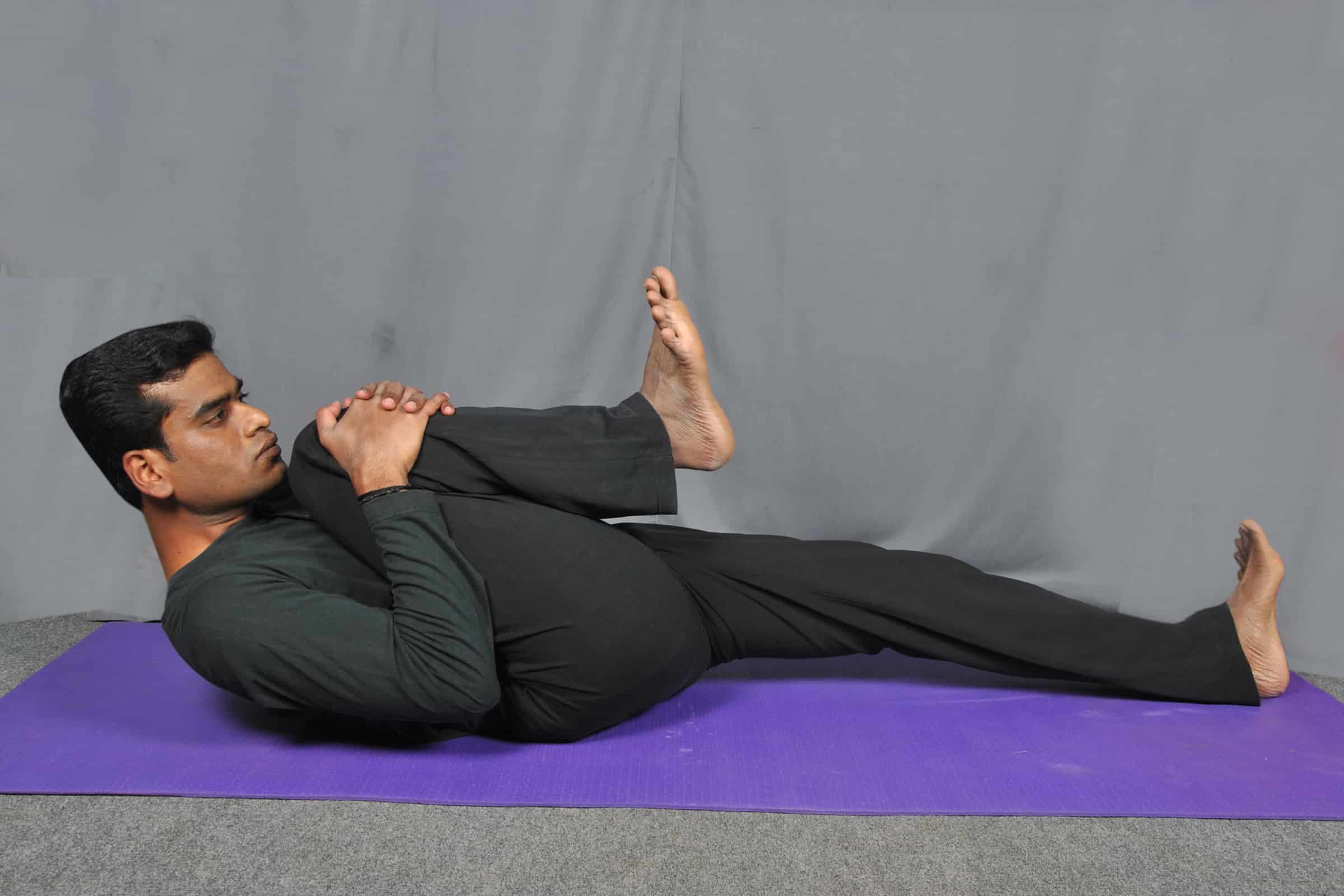
2.2 Definition
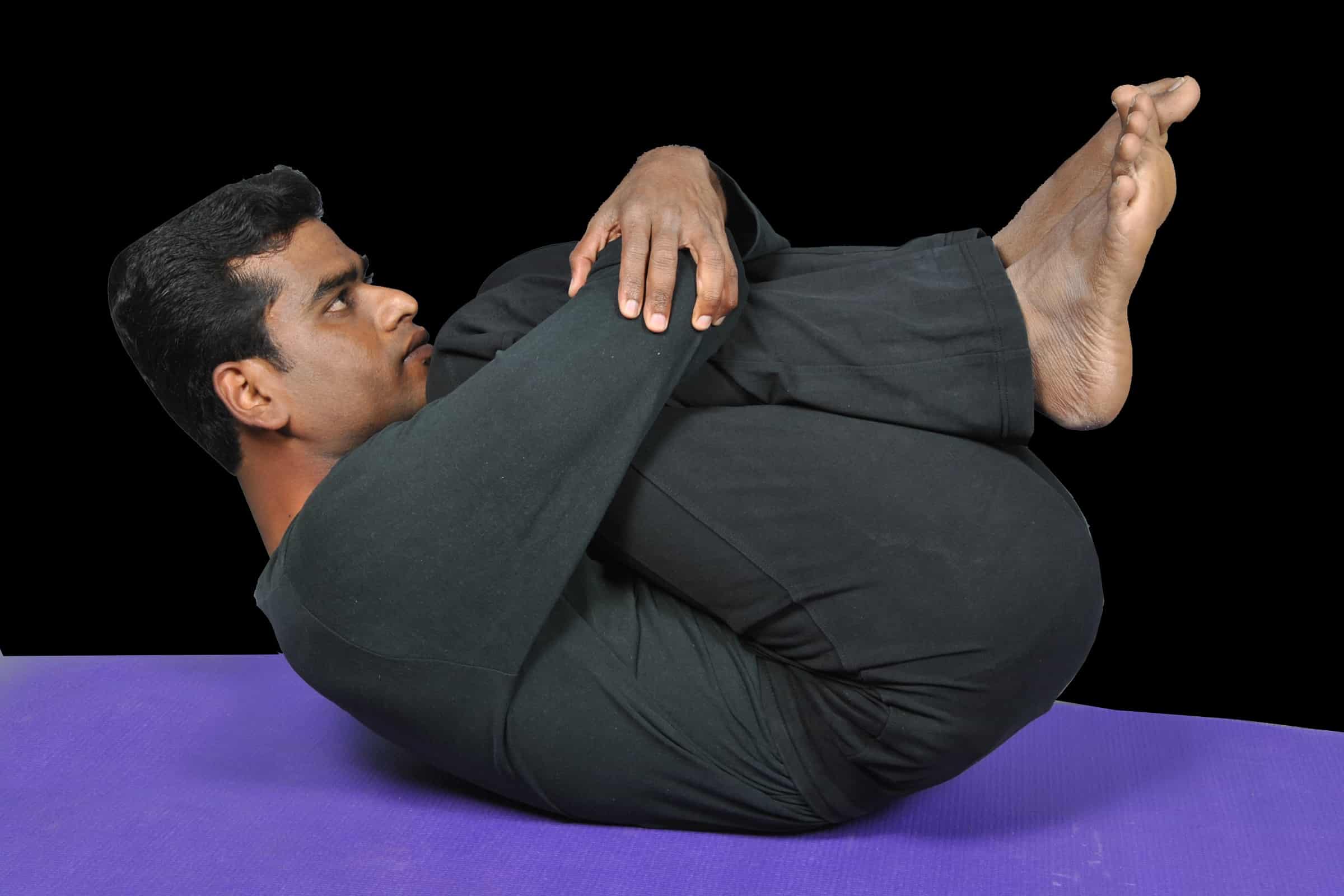
Supta Pawanmuktasana is a supine asana in which the practitioner draws one or both knees toward the abdomen, gently compressing the abdomen to stimulate digestion, release trapped gas, massage the intestines, and relieve tension in the lumbar spine.
3. Method of Practice — Step by Step
Step 1: Preparation
- Lie flat on your back on a yoga mat, legs extended, arms by the sides.
- Close the eyes and focus on deep, natural breathing.
Step 2: Single-Leg Variation (Eka Pawanmuktasana)
- Bend the right knee and draw it toward the chest.
- Hold the knee or shin with both hands.
- Keep the left leg extended, foot relaxed.
Step 3: Double-Leg Variation (Dwi Pawanmuktasana)
- Bend both knees and draw them toward the chest.
- Wrap arms around the knees, interlacing fingers or holding shins.
- Keep the back relaxed, lower back gently pressed toward the mat.
Step 4: Breathing and Engagement
- Inhale to lengthen the spine, exhale to deepen the compression.
- Maintain slow, deep diaphragmatic breathing.
- Optional: Rock gently side to side for intestinal massage.
Step 5: Duration
- Hold for 30 seconds to 2 minutes depending on comfort and digestive needs.
Step 6: Release
- Slowly release the knees, extend legs back to the mat.
- Rest in Shavasana to integrate the benefits.
4. Alignment Cues
- Spine: Neutral and fully supported on the mat.
- Lower Back: Gently pressed to the floor; avoid excessive lumbar arching.
- Knees and Hips: Knees drawn toward chest without forcing.
- Arms and Hands: Securely hold the knees or shins; elbows relaxed.
- Head and Neck: Neutral, resting naturally on the mat.
- Breath: Deep, even, and unforced.
5. Benefits
5.1 Physical Benefits
- Relieves gas and bloating by gentle abdominal compression.
- Improves digestion and stimulates peristalsis.
- Stretches lumbar spine, hips, and lower back muscles.
- Improves hip and knee mobility.
- Gently massages internal organs, including intestines and kidneys.
5.2 Physiological Benefits
- Activates parasympathetic nervous system, promoting relaxation.
- Enhances circulation in abdominal organs.
- Reduces spinal tension and muscle stiffness.
- Helps in detoxification through gentle organ stimulation.
5.3 Psychological Benefits
- Reduces stress and anxiety.
- Encourages mind-body awareness.
- Promotes restorative mental state, particularly after meals or intense activity.
6. Contraindications
- Severe knee or hip injuries.
- Herniated disc or acute lumbar spine issues.
- Recent abdominal surgery.
- Pregnancy (practice with modifications or avoid compression of the abdomen).
- Severe digestive disorders (consult a doctor before practice).
7. Counterposes
- Apanasana (Knees-to-Chest Pose) — gentle spinal release after deeper abdominal compression.
- Supta Baddha Konasana (Reclining Bound Angle Pose) — relaxation and hip opening.
- Shavasana — full-body relaxation and nervous system integration.
- Setu Bandhasana (Bridge Pose) — optional spinal stretch to complement lumbar engagement.
8. Preparatory Practices
- Supine Knee-to-Chest Pose — prepares lumbar spine and abdomen.
- Malasana (Garland Pose) — stretches hip flexors.
- Baddha Konasana (Bound Angle Pose) — prepares inner thighs and groin.
- Gentle spinal twists — prepare for supine spinal flexion.
9. Modifications
- Use a yoga strap around feet or knees if hands cannot reach.
- Place a blanket under the head or sacrum for comfort and lumbar support.
- Keep knees slightly away from chest for tight hips or lower back discomfort.
- Practice single-leg variation first if double-leg compression is difficult.
- Gentle rocking from side to side can reduce pressure and aid digestion.
10. Muscles Involved
- Hip Flexors: Iliopsoas, rectus femoris.
- Hamstrings: Biceps femoris, semitendinosus, semimembranosus.
- Abdominal Muscles: Rectus abdominis, transverse abdominis.
- Spinal Muscles: Erector spinae gently stretched.
- Quadriceps: Stabilize the knees and thighs.
- Shoulders and Arms: Deltoids, biceps, forearms for holding legs.
11. Kinesiology
- Hip flexion: Draw knees toward the chest.
- Knee flexion: Compressed to the abdomen.
- Spinal flexion: Lumbar and thoracic regions gently rounded.
- Shoulder flexion and elbow flexion: Arms wrap around knees or shins.
12. Kinematics
- Supine dynamic or static position with controlled limb movement.
- Joint movements: Hip abduction/flexion, knee flexion, shoulder flexion.
- Symmetry: Both sides of the body ideally move evenly.
- Optional rocking motion engages proprioception and aids intestinal massage.
13. Biomechanism
- Load distribution: Body weight supported on mat; abdominal compression directed toward torso.
- Hip and lumbar engagement: Controlled flexion and abdominal pressure relieve tension and massage organs.
- Spinal traction: Gentle decompression of thoracic and lumbar spine.
- Muscle stretch: Hamstrings, hip flexors, lower back, and arms engaged.
14. Functional Anatomy & Physiology
- Spinal Alignment: Neutral or slightly flexed spine; lumbar support maintained.
- Respiratory System: Deep, diaphragmatic breathing enhances relaxation.
- Digestive System: Abdominal compression stimulates intestines, aids peristalsis, and relieves bloating.
- Circulatory System: Improves venous return from lower extremities; enhances abdominal organ perfusion.
- Nervous System: Parasympathetic activation reduces stress and promotes calm.
- Musculoskeletal System: Improves hip and knee mobility; stretches and decompresses lower back muscles.
- Mind-Body Integration: Enhances proprioception, mindful awareness, and emotional regulation.
15. How to Correct and Adjust While Teaching
15.1 Hip and Knee Alignment
- Ensure knees are drawn toward chest comfortably, without forcing.
- Offer yoga straps for less flexible practitioners.
- Support tight hips with folded blankets under sacrum or knees.
15.2 Spine and Shoulders
- Maintain lower back contact with the mat; avoid excessive lumbar arching.
- Shoulders relaxed away from ears; neck neutral.
15.3 Foot and Hand Position
- Hands securely hold knees, shins, or feet depending on flexibility.
- Feet flexed to protect knees and ankle joints.
15.4 Breath and Mindfulness
- Cue slow, deep breaths, synchronizing exhalation with drawing knees toward chest.
- Encourage practitioners to notice abdominal sensations and body awareness.
15.5 Duration
- Beginners: 30–60 seconds
- Intermediate: 1–2 minutes
- Advanced: 2–5 minutes
16. Conclusion
Supta Pawanmuktasana is a therapeutic, accessible, and restorative supine pose that addresses both physical and physiological needs. Its benefits span hip flexibility, spinal mobility, digestive stimulation, and mental relaxation.
Through mindful alignment, breath awareness, and gentle modifications, practitioners of all levels can experience full-body relaxation, intestinal massage, and stress relief. It remains a vital pose in yoga sequences aimed at therapeutic recovery, digestion improvement, and holistic well-being.
QUESTION AND ANSWER
1. Supta Pawanmuktasana is commonly known as:
A. Bow Pose
B. Reclining Wind-Relieving Pose
C. Happy Baby Pose
D. Child’s Pose
Answer: B
2. The Sanskrit word “Supta” means:
A. Child
B. Reclined or supine
C. Wind
D. Pose
Answer: B
3. The Sanskrit word “Pawan” refers to:
A. Joy
B. Gas or wind
C. Child
D. Strength
Answer: B
4. The word “Mukta” means:
A. Strengthened
B. Released or liberated
C. Bent
D. Tensed
Answer: B
5. Which part of the body is primarily stretched in Supta Pawanmuktasana?
A. Neck and shoulders
B. Hips, lower back, and hamstrings
C. Chest and arms
D. Calves and ankles
Answer: B
6. Which muscles are engaged while holding the legs?
A. Quadriceps and biceps
B. Hip flexors, hamstrings, and arms
C. Trapezius and deltoids only
D. Pectorals only
Answer: B
7. What is the primary physiological benefit of Supta Pawanmuktasana?
A. Cardiovascular endurance
B. Abdominal massage and digestive stimulation
C. Arm strengthening
D. Eye relaxation
Answer: B
8. Which system is primarily stimulated during this pose?
A. Sympathetic nervous system
B. Parasympathetic nervous system
C. Muscular system only
D. Skeletal system only
Answer: B
9. Which joint movements are involved in Supta Pawanmuktasana?
A. Hip flexion and knee flexion
B. Shoulder flexion
C. Ankle dorsiflexion
D. All of the above
Answer: D
10. Contraindications for Supta Pawanmuktasana include:
A. Recent abdominal surgery
B. Severe lumbar spine issues
C. Knee or hip injury
D. All of the above
Answer: D
11. Single-leg variation of Supta Pawanmuktasana is called:
A. Eka Pawanmuktasana
B. Dwi Pawanmuktasana
C. Shavasana
D. Malasana
Answer: A
12. Double-leg variation of Supta Pawanmuktasana is called:
A. Eka Pawanmuktasana
B. Dwi Pawanmuktasana
C. Setu Bandhasana
D. Baddha Konasana
Answer: B
13. Which preparatory pose is suitable for Supta Pawanmuktasana?
A. Supine Knee-to-Chest Pose
B. Malasana (Garland Pose)
C. Baddha Konasana (Bound Angle Pose)
D. All of the above
Answer: D
14. How should the lower back be positioned during this pose?
A. Lifted off the mat
B. Gently pressed to the mat
C. Arched excessively
D. Rotated to one side
Answer: B
15. Recommended duration for beginners is:
A. 5–10 minutes
B. 30–60 seconds
C. 1–2 hours
D. 10–15 minutes
Answer: B
16. Optional gentle movement in this pose is:
A. Rocking side to side
B. Jumping
C. Arm flapping
D. Head rotation
Answer: A
17. Which organs are massaged or stimulated in Supta Pawanmuktasana?
A. Lungs and heart
B. Intestines and kidneys
C. Eyes and ears
D. Thyroid and pituitary
Answer: B
18. The pose improves:
A. Hip and knee mobility
B. Upper back flexibility
C. Shoulder strength
D. Calf muscle endurance
Answer: A
19. Props such as straps or blankets are used to:
A. Increase compression on abdomen
B. Reduce strain and support alignment
C. Stretch arms further
D. Improve cardiovascular effects
Answer: B
20. Breathing in Supta Pawanmuktasana should be:
A. Rapid and shallow
B. Slow, deep, and diaphragmatic
C. Held throughout
D. Forced and loud
Answer: B
21. Which of the following is a counterpose to Supta Pawanmuktasana?
A. Apanasana (Knees-to-Chest Pose)
B. Shavasana
C. Supta Baddha Konasana
D. All of the above
Answer: D
22. For tight hips, one modification is:
A. Keep knees slightly away from chest
B. Use a yoga strap to hold legs
C. Both A and B
D. None of the above
Answer: C
23. Which part of the nervous system is primarily activated to reduce stress?
A. Somatic nervous system
B. Parasympathetic nervous system
C. Sympathetic nervous system
D. Central nervous system only
Answer: B
24. The pose can help in relieving:
A. Gas and bloating
B. Neck pain
C. Shoulder stiffness
D. Eye strain
Answer: A
25. Key teaching cue for Supta Pawanmuktasana includes:
A. Keep lower back relaxed and pressed to mat
B. Maintain slow, deep breaths
C. Relax shoulders and jaw
D. All of the above
Answer: D