
1. Introduction
Yoga, the ancient science of harmonizing body, mind, and spirit, emphasizes physical postures (asanas) to cultivate strength, flexibility, and awareness. Among the myriad asanas, Sarpasana, also referred to as Snake Pose, plays a unique role in improving spinal flexibility, strengthening the posterior chain, and stimulating energy flow along the back. This pose closely resembles Bhujangasana (Cobra Pose) in its initial execution, but Sarpasana emphasizes a more snake-like undulation of the torso, embodying the qualities of a serpent in movement.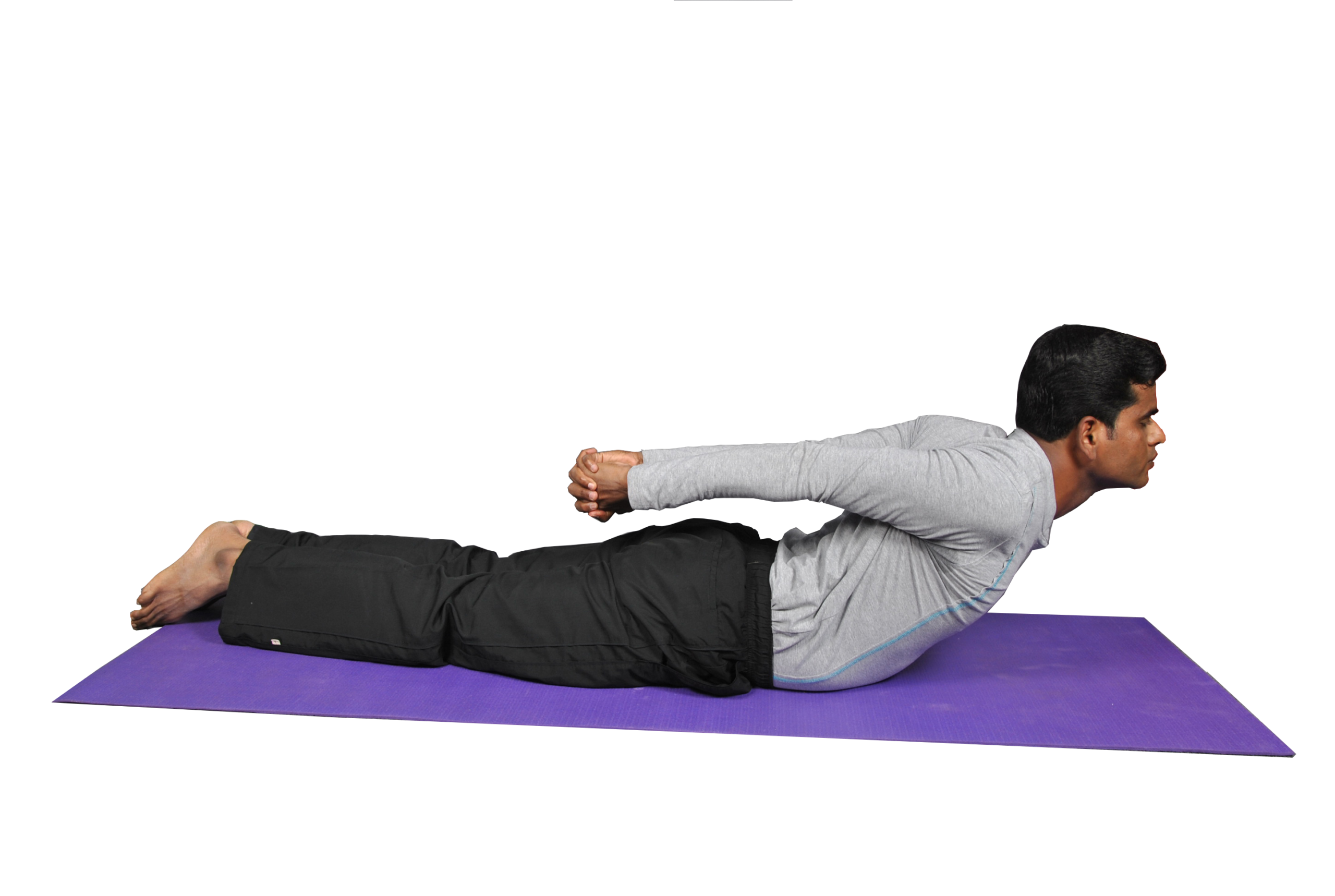
Sarpasana is primarily a prone posture that enhances spinal extension, strengthens the erector spinae, engages the gluteals, and improves overall postural alignment. Beyond the physical benefits, it also fosters mental alertness, body awareness, and stimulates the Muladhara (root) and Anahata (heart) chakras, promoting vitality and emotional balance.
Regular practice of Sarpasana can serve as a therapeutic exercise for spinal health, postural correction, and as a preparatory posture for advanced backbends. Its integration of gentle undulation with spinal extension provides both strength and mobility to the posterior musculature.
2. Word Meaning and Definition
Word Meaning:
- Sarpa: Snake or serpent
- Asana: Pose or posture
Definition:
Sarpasana is a prone posture in which the practitioner lies on the abdomen and lifts the torso with the support of arms, extending the spine in a snake-like curve. The pose encourages flexibility of the thoracic and lumbar spine while engaging the posterior muscles of the body. Unlike the more rigid Bhujangasana, Sarpasana often involves subtle undulation, mimicking a serpent’s movements, hence the name.
Sanskrit Interpretation:
The word “Sarpa” embodies qualities such as agility, alertness, and fluidity, reflecting the dynamic nature of this asana. The pose not only strengthens the back but also awakens energy channels along the spinal column, promoting vitality and awareness.
3. Method of Practice – Step by Step
Step 1: Initial Position
- Lie prone on a yoga mat with legs extended and feet together.
- Rest the forehead lightly on the mat.
- Place palms flat on the floor beneath the shoulders, elbows close to the body.
Step 2: Arm Placement and Engagement
- Slightly bend elbows and draw shoulder blades together, maintaining relaxed shoulders.
- Keep arms close to the torso, palms pressing gently to prepare for spinal lift.
Step 3: Torso Lift
- Inhale and gently lift the head, chest, and upper torso off the floor.
- Engage the erector spinae, gluteus maximus, and core muscles.
- Ensure the pelvis remains grounded.
Step 4: Spinal Extension
- Arch the thoracic and lumbar spine gently, avoiding excessive hyperextension.
- Maintain shoulder blades drawn toward the back while keeping shoulders away from ears.
- Slightly tuck the chin to maintain cervical spine alignment.
Step 5: Snake-like Undulation (Optional)
- Advanced practitioners may create a subtle wave-like motion along the spine, beginning from the thoracic region to the lumbar region.
- This undulation should be slow, controlled, and mindful, reflecting the movement of a serpent.
Step 6: Holding the Pose
- Beginners: Hold for 10–20 seconds.
- Intermediate/Advanced: Hold for 30–60 seconds, focusing on slow, deep breaths.
- Maintain awareness of core engagement and spinal alignment.
Step 7: Releasing the Pose
- Exhale and lower the torso slowly to the mat.
- Relax the body and breathe deeply for a few moments.
- Repeat 2–5 rounds depending on strength and endurance.
4. Alignment Cues
- Head and Neck: Slight chin tuck; avoid craning neck backward.
- Shoulders: Draw shoulder blades together; avoid elevation toward ears.
- Spine: Maintain gentle, natural extension; avoid lumbar hyperextension.
- Pelvis: Remain grounded to stabilize the base.
- Legs: Extended and together; activate glutes for support.
- Breathing: Deep, rhythmic inhalation during lift, exhalation during descent.
5. Benefits of Sarpasana
- Spinal Strength and Flexibility:
- Enhances thoracic and lumbar extension.
- Strengthens erector spinae, multifidus, and posterior chain.
- Core Stabilization:
- Activates rectus abdominis and obliques to maintain pelvic stability.
- Posture Improvement:
- Reduces slouching, kyphotic posture, and strengthens postural muscles.
- Energy Activation:
- Stimulates spinal energy channels (sushumna nadi) and awakens Muladhara and Anahata chakras.
- Therapeutic Benefits:
- Alleviates mild lower back discomfort.
- Strengthens muscles needed for walking, standing, and lifting.
- Mental Awareness:
- Enhances body-mind coordination, focus, and concentration.
- Shoulder and Upper Back Strength:
- Strengthens rhomboids, trapezius, and posterior deltoids.
6. Contraindications
- Acute or chronic spinal injury
- Herniated discs or severe lumbar pain
- Pregnancy, especially in later stages
- Recent abdominal or thoracic surgery
- Severe hip, shoulder, or wrist problems
- Cervical spine instability
7. Counterposes
- Balasana (Child’s Pose): Provides gentle spinal decompression.
- Adho Mukha Svanasana (Downward-Facing Dog): Stretches the posterior chain.
- Supta Baddha Konasana (Reclined Bound Angle Pose): Relieves tension in the lower back and hips.
- Ardha Bhujangasana (Half Cobra Pose): Reduces lumbar load while maintaining posterior chain engagement.
8. Preparatory Practice
- Bhujangasana (Cobra Pose): Opens thoracic spine and strengthens back muscles.
- Setu Bandhasana (Bridge Pose): Activates glutes and stabilizes lumbar spine.
- Cat-Cow Stretch: Mobilizes thoracic and lumbar spine.
- Hip Flexor and Quadriceps Stretch: Reduces anterior tension for smoother spinal extension.
- Ardha Sarpasana (Half Snake Pose): Prepares spine and posterior chain for full pose.
9. Modifications
- Beginner Lift: Raise only the chest or thoracic region initially.
- Leg Support: Place a blanket under pelvis to reduce lumbar strain.
- Arm Adjustment: Keep elbows bent for support.
- Partial Lift: Raise torso only a few inches initially.
- Snake-like Undulation: Optional for advanced practitioners; beginners can focus on static lift.
10. Muscles Involved
Primary Muscles:
- Erector Spinae (spinal extension)
- Multifidus (spinal stabilization)
- Gluteus Maximus (hip extension)
- Posterior Deltoids (shoulder stabilization)
Secondary Muscles:
- Rectus Abdominis and Obliques (core stabilization)
- Rhomboids and Trapezius (scapular stabilization)
- Latissimus Dorsi (posterior support)
- Gastrocnemius and Soleus (posterior leg stabilization)
11. Kinesiology and Kinematics
- Joint Movements:
- Spine: Thoracic and lumbar extension
- Hip: Slight extension and stabilization
- Shoulder: Scapular retraction and stabilization
- Knee: Extension
- Ankle: Plantarflexion
- Planes of Movement:
- Sagittal plane: Primary spinal and hip extension
- Frontal plane: Minimal pelvic stabilization
- Transverse plane: Minimal rotation
- Type of Muscle Action:
- Concentric: Erector spinae and glutes during torso lift
- Eccentric: Controlling descent
- Isometric: Core and scapular stabilizers
12. Biomechanics and Functional Anatomy
- Spinal Mechanics:
- Strengthens posterior spinal muscles and improves thoracolumbar mobility.
- Reduces risk of lumbar stiffness and postural collapse.
- Hip Mechanics:
- Engages gluteals for hip extension; supports spinal alignment.
- Muscle Coordination:
- Synchronizes core, glutes, and spinal extensors for controlled movement.
- Physiological Effects:
- Improves posterior circulation, reduces muscular tension, and enhances proprioception.
13. Functional Anatomy & Physiology
- Spine: Strengthens erector spinae and multifidus.
- Muscular System: Activates gluteals, rhomboids, trapezius, and posterior deltoids.
- Nervous System: Enhances proprioception and neuromuscular coordination.
- Circulatory System: Improves blood flow to posterior musculature.
- Respiratory System: Encourages diaphragmatic breathing with torso lift.
- Joint Health: Maintains mobility in spine, hips, shoulders, and knees.
14. How to Correct and Adjust While Teaching
- Pelvis: Keep grounded; avoid tilting.
- Spine: Maintain natural curvature; prevent hyperextension.
- Shoulders: Relax, draw blades slightly together.
- Neck: Slight chin tuck to maintain cervical alignment.
- Torso Lift: Adjust height for strength level; avoid overextension.
- Core Engagement: Cue transverse abdominis and obliques.
- Breathing: Controlled inhale during lift, exhale during descent.
- Props: Use blanket under pelvis or forearms for beginners.
- Gradual Progression: Start with shorter hold times, increase as strength develops.
15. Teaching Tips
- Demonstrate proper lift and alignment before students attempt.
- Emphasize spinal safety and core stabilization.
- Use tactile and verbal cues for alignment.
- Integrate Sarpasana as preparation for advanced backbends.
- Encourage slow, mindful movements to enhance proprioception.
16. Variations and Advanced Practice
- Full Sarpasana with Snake Undulation: Advanced movement integrating wave-like spinal extension.
- Arm Extended Variant: Enhances shoulder and upper back engagement.
- Single Arm Lift Variation: Improves unilateral strength and coordination.
- Props for Therapeutic Practice: Bolster or blanket under pelvis for spinal decompression.
17. Conclusion
Sarpasana is a foundational yoga posture that combines spinal extension, posterior chain strengthening, and controlled undulation to mimic the movements of a serpent. Regular practice improves spinal mobility, core stability, posture, and posterior muscular endurance while fostering mental focus and energy awareness. With proper alignment, modifications, and preparatory practices, Sarpasana can be safely practiced by beginners and advanced students alike.
It serves as both a therapeutic tool for spinal health and a preparatory pose for deeper backbends, making it an integral part of holistic yoga practice.
QUESTIONS AND ANSWERS
1. Meaning and Definition
- The literal meaning of Sarpasana is:
a) Crocodile Pose
b) Snake Pose ✅
c) Locust Pose
d) Fish Pose - The Sanskrit word “Sarpa” refers to:
a) Snake ✅
b) Locust
c) Crocodile
d) Lion - Sarpasana primarily focuses on:
a) Forward bending
b) Spinal extension and posterior chain strengthening ✅
c) Inversion
d) Hip flexion - “Asana” in yoga terminology refers to:
a) Breath control
b) Meditation
c) Posture or Pose ✅
d) Energy channel
2. Method of Practice
- The initial position for Sarpasana is:
a) Sit cross-legged
b) Lie prone on the mat ✅
c) Stand with arms overhead
d) Lie supine - Arm placement for beginners is:
a) Under shoulders with elbows slightly bent ✅
b) Fully extended overhead
c) Crossed behind back
d) Dangling off mat - During the pose, legs should be:
a) Lifted straight together, toes pointing backward ✅
b) Bent at knees
c) Crossed under hips
d) Lifted one at a time - Head position should be:
a) Chin tucked slightly, gaze forward ✅
b) Craned backward
c) Turned sideways
d) Pressed into mat
3. Alignment and Technique
- Shoulder alignment cue is:
a) Relax shoulders and draw shoulder blades slightly together ✅
b) Lift toward ears
c) Rotate forward
d) Compress chest - Spine alignment should be:
a) Maintain gentle thoracic and lumbar extension ✅
b) Flattened
c) Over-arched
d) Twisted - Pelvis should:
a) Remain grounded ✅
b) Lift off mat
c) Rock side to side
d) Tilt backward - Breathing cue during torso lift:
a) Inhale to lift, exhale to lower ✅
b) Hold breath
c) Rapid shallow breaths
d) Exhale to lift, inhale to lower
4. Muscles and Anatomy
- Primary muscles engaged include:
a) Erector Spinae, Gluteus Maximus, Multifidus ✅
b) Quadriceps only
c) Deltoids only
d) Pectorals only - Secondary muscles involved:
a) Rhomboids, Trapezius, Rectus Abdominis, Obliques ✅
b) Biceps only
c) Gastrocnemius only
d) Soleus only - Which muscle is primarily responsible for spinal extension in Sarpasana?
a) Rectus Abdominis
b) Erector Spinae ✅
c) Quadriceps
d) Deltoid - Muscles that stabilize the pelvis during torso lift include:
a) Obliques and Quadratus Lumborum ✅
b) Hamstrings only
c) Gluteus Medius only
d) Gastrocnemius only
5. Benefits
- Sarpasana strengthens:
a) Posterior chain ✅
b) Anterior chain only
c) Arms only
d) Neck only - Other benefits include:
a) Improved posture ✅
b) Increased heart rate
c) Compression of lumbar spine
d) Decreased flexibility - Therapeutic application of Sarpasana includes:
a) Mild lower back pain relief ✅
b) Cardiovascular endurance
c) Forward bending therapy
d) High-intensity training - Which system benefits from improved proprioception through this pose?
a) Respiratory
b) Nervous ✅
c) Digestive
d) Circulatory
6. Contraindications
- Sarpasana should be avoided in:
a) Acute or chronic spinal injury ✅
b) Mild fatigue
c) General stress
d) Sedentary lifestyle - Which condition is also a contraindication?
a) Advanced pregnancy ✅
b) Morning practice
c) Evening relaxation
d) Light stretching - Severe hip or shoulder problems make Sarpasana:
a) Safer
b) Contraindicated ✅
c) Optional
d) Beneficial - Herniated discs require:
a) Regular Sarpasana
b) Avoidance ✅
c) Deep backbends
d) Full arm extension
7. Counterposes and Preparatory Asanas
- Recommended counterpose after Sarpasana:
a) Balasana (Child’s Pose) ✅
b) Headstand
c) Dhanurasana
d) Padmasana - Preparatory asanas include:
a) Bhujangasana, Setu Bandhasana, Cat-Cow Stretch ✅
b) Tadasana only
c) Headstand only
d) Virabhadrasana only - Modification for beginners:
a) Lift only chest or thoracic region ✅
b) Full arm extension
c) Jumping leg lifts
d) Simultaneous leg lifts only - Pose to strengthen glutes and posterior chain for Sarpasana preparation:
a) Setu Bandhasana ✅
b) Tadasana
c) Sirsasana
d) Vajrasana
8. Teaching and Adjustment
- How to protect the lower back?
a) Keep pelvis grounded and engage core ✅
b) Over-arch spine
c) Rotate pelvis
d) Lift torso excessively - Cue for torso lift:
a) Engage glutes, erector spinae, and core ✅
b) Lift without core engagement
c) Use arms only
d) Keep feet flexed - Duration recommendation for beginners:
a) 10–20 seconds ✅
b) 1–2 minutes
c) 3–5 minutes
d) 3–5 seconds - Props can be used for:
a) Lumbar support ✅
b) Arm strengthening
c) Shoulder flexibility
d) Neck extension - Arm positioning should focus on:
a) Support under shoulders or slightly bent ✅
b) Fully extended overhead
c) Crossed behind back
d) Dangling - Key alignment cue:
a) Ground pelvis, maintain gentle spinal extension ✅
b) Lift pelvis off mat
c) Rotate hips
d) Overextend spine - Shoulder adjustment cue:
a) Elevate toward ears
b) Relax shoulders, draw blades slightly together ✅
c) Shrug repeatedly
d) Compress chest - Correct torso lowering:
a) Lower slowly and controlled ✅
b) Drop quickly
c) Swing torso
d) Keep torso lifted - Cue for gaze:
a) Slightly forward, chin tucked ✅
b) Up at ceiling
c) Sideways
d) Closed eyes only - Breathing pattern:
a) Inhale lift, exhale lower ✅
b) Hold breath
c) Rapid shallow breaths
d) Exhale lift, inhale lower
9. Advanced Variations
- Full Sarpasana with subtle undulation engages:
a) Thoracic and lumbar spine dynamically ✅
b) Neck only
c) Core only
d) Legs only - Arm extended variant enhances:
a) Shoulder and upper back activation ✅
b) Cardiovascular endurance
c) Forward bending
d) Hip flexion only - Using a blanket under pelvis provides:
a) Lumbar support ✅
b) Additional difficulty
c) Arm strengthening
d) Neck extension - Partial lift variation reduces:
a) Spinal strain ✅
b) Core engagement
c) Shoulder activity
d) Hip extension
10. Functional Anatomy and Biomechanics
- Primary joint movement in Sarpasana is:
a) Spine extension ✅
b) Hip flexion
c) Shoulder flexion
d) Ankle dorsiflexion - Secondary joint movement includes:
a) Scapular stabilization ✅
b) Hip flexion
c) Elbow flexion
d) Wrist rotation - Muscle action type for lifting torso:
a) Concentric ✅
b) Eccentric
c) Isometric
d) Plyometric - Controlling descent of torso uses:
a) Concentric
b) Eccentric ✅
c) Isometric
d) None - Stabilizing pelvis requires:
a) Isometric contraction ✅
b) Concentric only
c) Eccentric only
d) Dynamic swinging - Posterior chain engagement includes:
a) Erector spinae, glutes, hamstrings ✅
b) Quadriceps only
c) Rectus abdominis only
d) Deltoids only - Which system benefits from improved posture and spinal extension?
a) Nervous ✅
b) Digestive
c) Immune
d) Respiratory - Sarpasana enhances body awareness by stimulating:
a) Proprioceptors ✅
b) Photoreceptors
c) Chemoreceptors
d) Baroreceptors
Answer Key
- b
- a
- b
- c
- b
- a
- a
- a
- a
- a
- a
- a
- a
- a
- b
- a
- a
- a
- a
- b
- a
- a
- b
- b
- a
- a
- a
- a
- a
- a
- a
- a
- a
- a
- b
- a
- a
- a
- a
- a
- a
- a
- a
- a
- a
- b
- a
- a
- a
- a