
1. Introduction
Salamba Sarvangasana, known as Supported Shoulder Stand, is one of the most profound inverted yoga postures, often referred to as the “Queen of Asanas.” In classical Hatha Yoga texts, it is highlighted for its therapeutic, restorative, and energetic benefits, as it stimulates the thyroid, balances the endocrine system, and promotes mental clarity.
Salamba Sarvangasana is a full-body asana where the body is inverted, resting on the shoulders, with legs extended vertically or slightly inclined. It is considered a counterpose to standing and forward-bending postures and is often included in therapeutic sequences, pranayama practices, and advanced yoga therapy programs.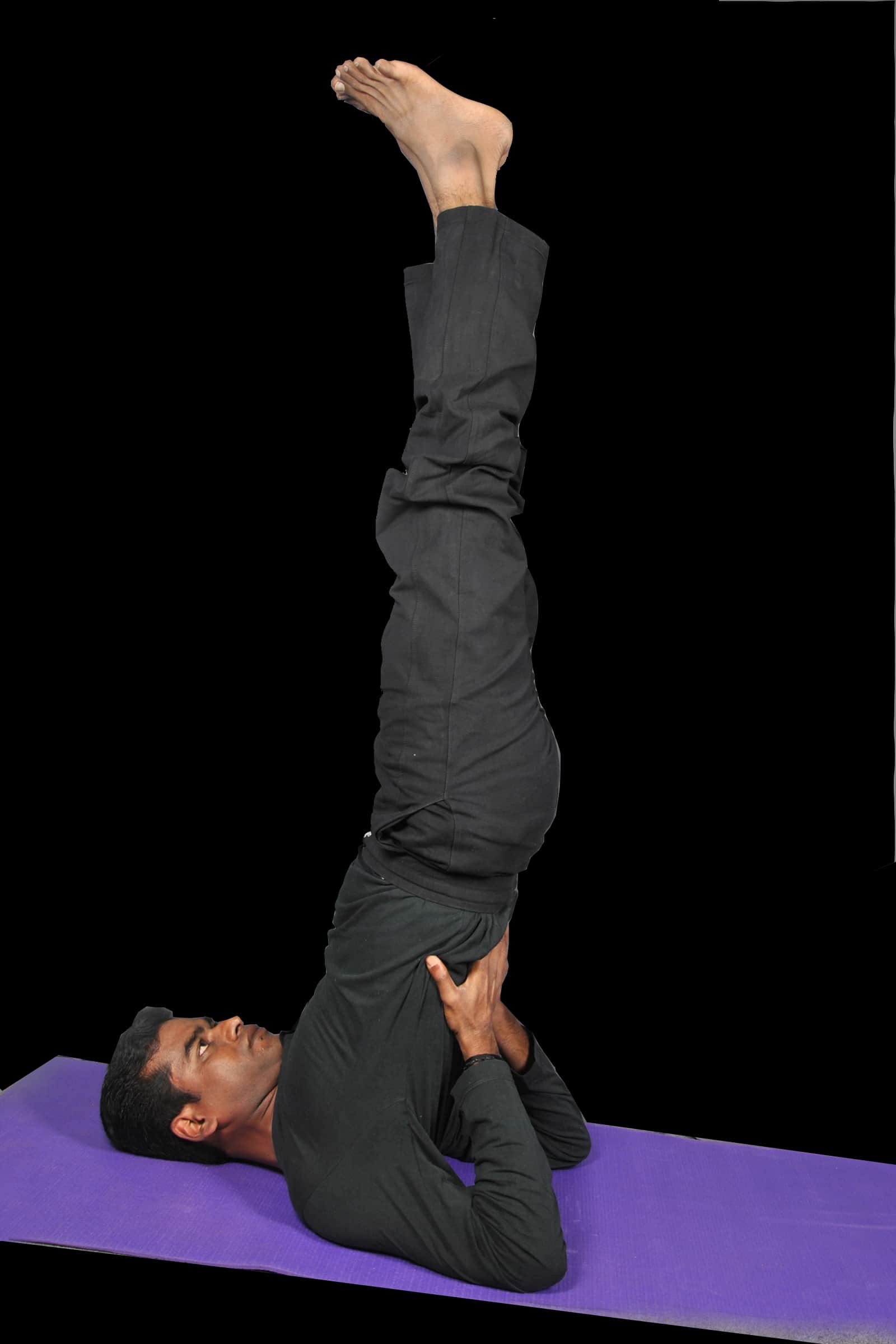
2. Word Meaning and Definition
2.1 Word Meaning
- Salamba: Supported
- Sarvanga: All limbs / entire body
- Asana: Pose or posture
Thus, Salamba Sarvangasana translates as “Supported Posture of the Whole Body”, emphasizing full-body alignment with support through shoulders and arms.
2.2 Definition
Salamba Sarvangasana is an inverted asana in which the body is supported by the shoulders and arms, the spine is vertically aligned, and the legs extend upward, creating an axial compression that stimulates the thyroid, improves circulation, and strengthens musculoskeletal and nervous systems.
3. Method of Practice — Step by Step
Step 1: Preparation
- Lie supine on a yoga mat with legs extended, feet together, and arms resting alongside the body.
- Relax the neck, shoulders, and back, and take a few deep breaths to center awareness.
Step 2: Initial Lift
- Bend the knees and draw them toward the chest.
- Place the hands on the back near the lower ribs, fingers pointing upward.
- Press the elbows firmly into the mat for stability.
Step 3: Leg Extension
- Inhale and lift the hips, lower back, and torso off the floor.
- Slowly extend the legs vertically, keeping the knees straight if possible.
- Ensure shoulders, arms, and upper back bear the weight, not the neck or head.
Step 4: Alignment
- Head remains on the mat; neck is neutral, chin slightly tucked toward the chest.
- Shoulder blades are pressed firmly into the mat to protect cervical spine.
- Arms are bent at elbows, supporting the torso; hands press against the mid-back.
Step 5: Breath and Hold
- Maintain steady diaphragmatic breathing, keeping the body tall and aligned.
- Hold the pose initially for 15–30 seconds for beginners, extending to 1–5 minutes with practice.
Step 6: Release
- Slowly bend the knees, bring the legs toward the forehead, and roll down vertebra by vertebra.
- Rest in Shavasana (Corpse Pose) or Apanasana (Knees-to-Chest Pose) to release the spine.
4. Alignment Cues
- Shoulders: Press firmly into mat to relieve neck pressure.
- Neck: Keep neutral; chin slightly tucked.
- Elbows: Shoulder-width apart; hands support mid-back.
- Spine: Lengthen and align from pelvis to toes.
- Legs: Straight, toes pointing upward; knees firm but not locked.
- Breath: Smooth, slow, and diaphragmatic.
5. Benefits
5.1 Physical Benefits
- Strengthens spinal extensors, shoulders, arms, and legs.
- Increases spinal flexibility and lengthens thoracic vertebrae.
- Improves balance, coordination, and proprioception.
- Stimulates digestion and abdominal organs.
5.2 Physiological Benefits
- Endocrine system: Stimulates thyroid, parathyroid, and pituitary glands, balancing hormones.
- Circulatory system: Encourages venous return, reducing edema in legs.
- Nervous system: Reduces stress and induces relaxation via parasympathetic activation.
- Respiratory system: Opens thoracic cavity, improving lung capacity.
5.3 Psychological Benefits
- Reduces stress, anxiety, and mild depression.
- Enhances concentration, mental clarity, and focus.
- Promotes meditative calmness when held with breath awareness.
6. Contraindications
- Neck injury or cervical instability.
- High blood pressure or cardiac conditions.
- Glaucoma or eye problems.
- Pregnancy (especially advanced).
- Hernia or recent abdominal surgery.
- Severe osteoporosis or spinal fractures.
7. Counterposes
- Halasana (Plow Pose): Supports spinal lengthening and gradual release.
- Matsyasana (Fish Pose): Stretches anterior neck and chest post-inversion.
- Shavasana: Relaxes spine, shoulders, and nervous system.
- Apanasana (Knees-to-Chest): Neutralizes lumbar and thoracic spine.
8. Preparatory Practice
- Setu Bandha Sarvangasana (Bridge Pose): Prepares spine and shoulders.
- Bhujangasana (Cobra Pose): Activates spinal extensors.
- Dandasana (Staff Pose): Improves posture and core engagement.
- Adho Mukha Svanasana (Downward Dog): Strengthens arms and shoulders.
- Supta Padangusthasana (Supine Leg Stretch): Prepares hamstrings and hips.
9. Modifications
- Use a blanket under shoulders to reduce cervical pressure.
- Keep knees bent if hamstrings are tight.
- Advanced practitioners may extend legs fully or practice Halasana transition.
- Use wall support for legs if unable to maintain vertical alignment.
10. Muscles Involved
- Primary movers: Erector spinae, gluteus maximus, hamstrings, deltoids.
- Secondary movers: Rectus abdominis, obliques, quadriceps.
- Stabilizers: Trapezius, rhomboids, rotator cuff, core muscles.
- Flexibility engagement: Cervical spine muscles, chest muscles, hamstrings.
11. Kinesiology
- Spinal mechanics: Axial load on cervical spine is minimized via shoulder support; thoracic and lumbar spine extend and align vertically.
- Shoulder joint: Flexion and stabilization through elbow support.
- Hip joint: Extension with neutral alignment; hamstrings engaged.
- Neck: Cervical extension neutralized by chin tuck.
12. Kinematics
- Axial loading: Vertical alignment transfers body weight through shoulders and upper back.
- Segmental spinal alignment: Vertebrae elongate along vertical axis.
- Joint angles: Hip extension, knee extension, shoulder flexion, elbow flexion.
- Dynamic stability: Requires micro-adjustments from core and scapular stabilizers.
13. Biomechanism
- Load-bearing: Shoulders and upper arms support axial weight; cervical spine protected.
- Spinal elongation: Reduces compression in intervertebral discs.
- Circulatory effect: Inversion enhances venous return and lymphatic drainage.
- Endocrine stimulation: Axial compression of neck region stimulates thyroid and parathyroid glands.
- Musculoskeletal engagement: Core muscles, glutes, and hamstrings stabilize vertical alignment.
14. Functional Anatomy & Physiology
- Musculoskeletal system: Strengthens shoulders, arms, core, legs; elongates thoracic spine.
- Endocrine system: Stimulates thyroid, parathyroid, and pituitary glands.
- Circulatory system: Improves venous and lymphatic return; reduces leg edema.
- Nervous system: Enhances parasympathetic activity, reducing stress and anxiety.
- Respiratory system: Opens chest cavity, enhancing lung expansion.
- Digestive system: Improves abdominal organ tone, stimulating metabolism.
15. How to Correct and Adjust While Teaching
15.1 Neck and Cervical Spine
- Ensure chin tucked slightly, preventing excessive cervical extension.
- Support shoulders with a folded blanket to reduce neck strain.
15.2 Shoulders and Arms
- Cue students to press elbows firmly into mat, shoulder-width apart.
- Hands must support mid-back without compressing the spine.
15.3 Spine Alignment
- Encourage lengthening through thoracic and lumbar spine, avoid rounding.
- Micro-adjust hips and shoulders for vertical alignment.
15.4 Legs and Feet
- Keep legs together, straight, and active.
- Toes extended; engage quadriceps to maintain height.
15.5 Breath
- Maintain slow, deep diaphragmatic breathing.
- Avoid holding breath; exhale gently when stabilizing.
15.6 Safety Cues
- Avoid neck strain or lateral tilt.
- Beginners may use a wall or props for support.
- Gradually increase hold duration; do not force flexibility.
16. Conclusion
Salamba Sarvangasana (Supported Shoulder Stand) is an advanced, full-body inversion that combines strength, flexibility, and therapeutic benefits.
- Enhances spinal alignment, core stability, and shoulder strength.
- Stimulates endocrine glands, improving hormonal balance.
- Promotes circulatory efficiency, stress reduction, and mental clarity.
- Serves as a therapeutic pose for digestion, lymphatic drainage, and mild depression.
When taught with proper alignment, modifications, and breath awareness, Salamba Sarvangasana is safe for beginner to advanced practitioners. Its inverted nature makes it one of the most effective poses for holistic health, integrating body, mind, and energy systems.
QUESTION AND ANSWER
1. The Sanskrit word “Salamba” means:
A. Shoulder
B. Supported
C. Inverted
D. Whole body
Answer: B
2. The Sanskrit word “Sarvanga” refers to:
A. Neck
B. Legs
C. Whole body
D. Spine
Answer: C
3. Salamba Sarvangasana is classified as:
A. Forward Bend
B. Backbend
C. Inversion Pose
D. Arm Balance
Answer: C
4. Which part of the body bears the primary weight in this pose?
A. Head
B. Shoulders and arms
C. Hips
D. Feet
Answer: B
5. A major benefit of Salamba Sarvangasana is:
A. Strengthening wrists only
B. Stimulating thyroid and parathyroid glands
C. Stretching calves only
D. Relaxing shoulders exclusively
Answer: B
6. Which muscle group is actively engaged to maintain leg extension?
A. Hamstrings
B. Quadriceps
C. Deltoids
D. Trapezius
Answer: B
7. The cervical spine is protected by:
A. Pressing the elbows into the mat and slight chin tuck
B. Extending the neck fully backward
C. Keeping hands on knees
D. Locking the elbows
Answer: A
8. A common modification for beginners is:
A. Using a folded blanket under the shoulders
B. Bending the elbows
C. Keeping legs bent
D. All of the above
Answer: D
9. Contraindications for Salamba Sarvangasana include:
A. Neck injury
B. High blood pressure
C. Glaucoma
D. All of the above
Answer: D
10. Which preparatory pose is recommended?
A. Setu Bandha Sarvangasana (Bridge Pose)
B. Bhujangasana (Cobra Pose)
C. Dandasana (Staff Pose)
D. All of the above
Answer: D
11. How should the legs be positioned?
A. Together, extended, and active
B. Spread wide apart
C. Bent at knees
D. Crossed at ankles
Answer: A
12. Which physiological system is positively affected by inversion in this pose?
A. Digestive system
B. Circulatory system
C. Nervous system
D. All of the above
Answer: D
13. Which is a key alignment cue for the elbows?
A. Keep elbows shoulder-width apart
B. Press elbows lightly off the mat
C. Extend elbows fully
D. Cross elbows behind back
Answer: A
14. Counterposes after Salamba Sarvangasana include:
A. Halasana (Plow Pose)
B. Matsyasana (Fish Pose)
C. Shavasana (Corpse Pose)
D. All of the above
Answer: D
15. The breathing technique during the pose should be:
A. Rapid and shallow
B. Slow and diaphragmatic
C. Breath-holding only
D. Only exhalation
Answer: B
16. Psychological benefit of this pose includes:
A. Reduces anxiety
B. Enhances focus and clarity
C. Promotes relaxation
D. All of the above
Answer: D
17. Which endocrine glands are primarily stimulated?
A. Thyroid and parathyroid
B. Adrenal only
C. Pancreas only
D. Pituitary only
Answer: A
18. How long should beginners hold Salamba Sarvangasana initially?
A. 5–10 seconds
B. 15–30 seconds
C. 1–2 minutes
D. 5 minutes
Answer: B
19. For safety, the head should:
A. Remain on the mat with chin slightly tucked
B. Be lifted off the mat
C. Tilt to one side
D. Extend backward
Answer: A
20. Which muscles stabilize the pelvis and core?
A. Transverse abdominis and obliques
B. Quadriceps only
C. Hamstrings only
D. Pectoralis major
Answer: A
21. In teaching, if a student’s shoulders lift off the mat, you should:
A. Ignore it
B. Cue to press elbows and shoulders down
C. Straighten legs
D. Lift head
Answer: B
22. Which preparatory stretch improves hamstring flexibility for this pose?
A. Supta Padangusthasana
B. Bhujangasana
C. Adho Mukha Svanasana
D. Apanasana
Answer: A
23. How does Salamba Sarvangasana improve circulation?
A. By compressing arms
B. By inverting the body, promoting venous return
C. By extending legs backward
D. By twisting the torso
Answer: B
24. Common teaching cue for advanced alignment:
A. Lengthen spine and engage legs actively
B. Let knees bend
C. Press head into mat
D. Relax shoulders off mat
Answer: A
25. Safety advice for students with glaucoma:
A. Pose is safe
B. Avoid inversion
C. Use extra blanket under shoulders
D. Only do with support
Answer: B