
1. Word Meaning and Etymology
The Sanskrit term Niralamba Sirsasana is composed of:
- Niralamba – “Without support” or “unsupported”
- Sirsa / Shira – “Head”
- Asana – “Pose” or “Posture”

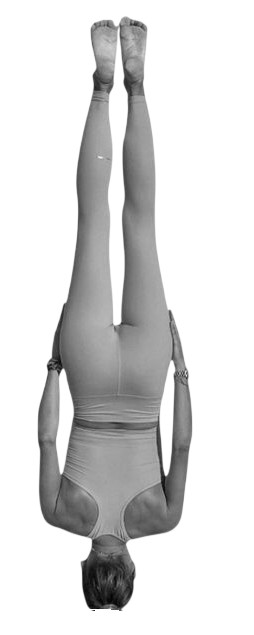
Translation:
“Free-standing Headstand Pose” or “Unsupported Headstand”
This advanced inversion is considered a progression from Salamba Sirsasana (Supported Headstand), requiring balance, core strength, and mental focus. Niralamba Sirsasana embodies physical independence and energetic mastery, as the practitioner maintains the headstand without the support of forearms or hands.
In yogic tradition, it symbolizes self-reliance, focus, and control over body and mind, cultivating alertness, poise, and strength.
2. Definition
Niralamba Sirsasana is an advanced, unsupported inversion in which:
- The top of the head lightly rests on the mat
- Hands are either lightly touching the floor or held free (not bearing weight)
- Weight is maintained through core engagement, shoulder stability, and leg alignment
- The body is held vertically with legs extended upward in a straight line
It is considered one of the most challenging inversions, demanding balance, proprioception, and precise control of muscle engagement. It is commonly used as an advanced pose in Hatha, Ashtanga, and Iyengar yoga practices.
3. Method of Practice: Step-by-Step
Step 1: Preparatory Warm-Up
Before attempting Niralamba Sirsasana, the following preparation is recommended:
- Shoulder openers: Downward Dog, Dolphin Pose
- Forearm and wrist conditioning: Wrist circles, palm presses, plank variations
- Core activation: Lolasana, Boat Pose, Forearm Plank
- Neck and spine mobility: Cat-Cow, Neck rotations, gentle spinal stretches
Step 2: Establishing the Base
- Begin in Salamba Sirsasana to find alignment and comfort
- Place the top of the head lightly on the mat
- Engage core muscles, shoulders, and legs
- Maintain neutral spine and cervical alignment
Step 3: Gradual Weight Shift
- Slowly reduce reliance on forearms
- Engage shoulders, core, and glutes to stabilize the vertical line
- Hands may hover lightly or touch the floor without bearing weight
Step 4: Lifting Legs into Free-standing
- From head-supported position, lift one leg at a time if needed
- Gradually align both legs vertically above the head
- Maintain straight legs and active feet
- Engage inner thighs and glutes for stability
Step 5: Stabilization
- Core, shoulders, and neck maintain the vertical line
- Balance achieved through micro-adjustments of torso and legs
- Breathing remains steady and controlled
Step 6: Exiting the Pose
- Slowly bend knees and lower legs in a controlled motion
- Rest in Child’s Pose (Balasana) for spinal and shoulder relief
- Relax arms, wrists, and neck
4. Alignment Cues
Head and Neck:
- Light touch of the crown of the head on the mat
- Cervical spine neutral, no pressure
Shoulders and Arms:
- Draw shoulders away from ears
- Slight micro-engagement of upper arms for stability
Spine and Core:
- Engage rectus abdominis, obliques, and transverse abdominis
- Maintain a straight vertical line
Legs:
- Fully extended, quadriceps engaged
- Inner thighs slightly rotated inward
Breath:
- Maintain smooth, steady nasal inhalations and exhalations
5. Benefits of Niralamba Sirsasana
Physical Benefits
- Develops balance, proprioception, and coordination
- Strengthens core, shoulders, arms, and legs
- Enhances spinal stability and posture awareness
- Improves blood circulation to the brain
- Boosts body awareness and muscular control
Mental and Emotional Benefits
- Enhances concentration, focus, and mental clarity
- Builds confidence and self-reliance
- Reduces stress and mental fatigue
- Improves mind-body integration
Energetic Benefits
- Stimulates Ajna (Third Eye) and Sahasrara (Crown) chakras
- Enhances Pranic flow and energetic balance
- Supports mental alertness and spiritual awareness
6. Contraindications
Absolute
- Neck injuries or cervical spine disorders
- High blood pressure
- Glaucoma or severe eye problems
- Heart conditions
- Recent head trauma
Relative
- Pregnancy (avoid unsupported inversions)
- Weak core or shoulder muscles
- Severe osteoporosis or joint instability
- Beginners without supervision
7. Counterposes
- Child’s Pose (Balasana) – spinal and neck release
- Downward-Facing Dog (Adho Mukha Svanasana) – shoulder release
- Seated Forward Bend (Paschimottanasana) – spinal elongation
- Supta Baddha Konasana – hip and lower back relaxation
- Legs-Up-The-Wall (Viparita Karani) – gentle inversion recovery
8. Preparatory Practices
A. Strength
- Salamba Sirsasana (supported headstand)
- Dolphin Pose and Forearm Plank
- Core activation exercises (Lolasana, Boat Pose)
- Shoulder strengthening (Chaturanga Dandasana, Side Plank)
B. Flexibility
- Shoulder and thoracic spine openers
- Hamstring stretches
- Neck and upper back mobility
C. Balance
- Wall-supported headstands
- Tripod headstand
- Plank variations for stability
9. Modifications for Beginners
- Wall-supported Niralamba Sirsasana
- Partial leg lift – lift one leg at a time
- Tripod headstand – reducing load on cervical spine
- Use yoga blocks under shoulders or head
- Maintain hands lightly on floor for micro-balance
10. Muscles Involved
Primary Muscles
- Shoulders & Arms: Deltoids, triceps, rotator cuff
- Core: Rectus abdominis, obliques, transverse abdominis
- Legs: Quadriceps, gluteus maximus, adductors
Secondary Muscles
- Erector spinae
- Serratus anterior
- Neck stabilizers (sternocleidomastoid, scalenes)
- Pectoralis minor
11. Kinesiology
Joint Actions
- Wrists / Hands: Micro-stabilization if touching floor
- Elbows: Slight flexion for stabilization
- Shoulders: Flexion and stabilization
- Cervical spine: Neutral alignment
- Hips / Knees: Extension
- Ankles: Stabilization
12. Kinematics
- Plane of motion: Sagittal (vertical alignment), frontal (balance), transverse (minor rotational adjustments)
- Movement: Gradual weight shift → leg lift → stabilization
- Execution: Slow, controlled ascent and descent
- Visual quality: Vertical line from head to toes
13. Biomechanics
- Center of Gravity: Vertical line through head and torso
- Levers: Legs act as stabilizers; core as central column; arms assist micro-balance
- Ground Reaction Forces: Minimal through hands; mostly through head and core stabilization
- Anti-gravity Engagement: Core, shoulders, neck, and legs
- Risk Areas: Cervical spine, shoulders, wrist micro-strains
14. Functional Anatomy & Physiology
Upper Body:
- Strengthens shoulder girdle and stabilizers
- Improves proprioception
Core:
- Engages deep abdominal muscles for vertical lift
- Supports spinal alignment
Lower Body:
- Quadriceps and glutes maintain vertical leg position
- Hip flexors maintain pelvis alignment
Nervous System:
- Enhances cerebellar coordination and balance
- Improves mental focus and cortical control
Cardiovascular & Respiratory:
- Mild cardiovascular activation
- Increases cerebral blood flow
15. Correcting and Adjusting While Teaching
Verbal Cues:
- “Engage core and glutes, lift legs slowly”
- “Maintain spine neutral and shoulders stable”
- “Breathe steadily through nose”
Hands-On Adjustments:
- Guide hips or legs to maintain vertical alignment
- Support micro-adjustments of shoulders and head
- Ensure safe weight distribution
Safety Rules:
- Avoid unsupported practice for beginners
- Use wall or props for balance
- Never force neck or spine
Common Mistakes:
- Shoulder collapse
- Sagging hips
- Breathing irregularities
16. Psychological Coaching
- Encourage gradual progression and patience
- Reinforce mindful awareness and confidence
- Emphasize steady breathing and alignment
- Use props and walls for safety and skill building
Conclusion
Niralamba Sirsasana (Free-standing Headstand) represents the pinnacle of headstand mastery, developing:
- Balance, proprioception, and body awareness
- Strength in shoulders, arms, core, and legs
- Mental focus, confidence, and energetic alignment
With mindful preparation, alignment awareness, and gradual practice, Niralamba Sirsasana allows practitioners to integrate physical, mental, and energetic mastery, exemplifying the full potential of advanced yoga practice.
Questions with Answers
1. The Sanskrit term “Niralamba Sirsasana” means:
A. Supported Headstand
B. Free-standing / Unsupported Headstand
C. Shoulder Stand
D. Lotus Pose
Answer: B
2. Niralamba Sirsasana is classified as:
A. Forward bend
B. Advanced inversion
C. Side twist
D. Backbend
Answer: B
3. In Niralamba Sirsasana, the main load is borne by:
A. Core, shoulders, and legs
B. Hands and forearms
C. Head and neck only
D. Hips
Answer: A
4. Compared to Salamba Sirsasana, Niralamba Sirsasana requires:
A. Less balance
B. Greater independence and control
C. More arm support
D. No core engagement
Answer: B
5. Which muscles are primarily responsible for maintaining vertical leg alignment?
A. Quadriceps, gluteus maximus, hip adductors
B. Hamstrings only
C. Soleus only
D. Calves only
Answer: A
6. Core muscles engaged in Niralamba Sirsasana include:
A. Rectus abdominis, obliques, transverse abdominis
B. Erector spinae only
C. Neck muscles only
D. Pectoralis major only
Answer: A
7. Cervical spine alignment in Niralamba Sirsasana should be:
A. Hyperextended
B. Neutral and supported by micro-engagement
C. Flexed forward excessively
D. Rotated
Answer: B
8. Preparatory poses include:
A. Salamba Sirsasana, Dolphin Pose, Lolasana, Forearm Plank
B. Standing Forward Fold only
C. Savasana only
D. Bridge Pose only
Answer: A
9. Contraindications include:
A. Neck injuries or cervical spine disorders
B. High blood pressure
C. Glaucoma or eye problems
D. All of the above
Answer: D
10. For beginners, a modification is:
A. Wall-supported Niralamba Sirsasana
B. Partial leg lift
C. Tripod Headstand
D. All of the above
Answer: D
11. Correct shoulder alignment involves:
A. Shoulders pressing down and away from ears
B. Collapsed shoulders
C. Hyperextended shoulders
D. Relaxed without engagement
Answer: A
12. Counterposes after the pose include:
A. Child’s Pose (Balasana)
B. Downward-Facing Dog (Adho Mukha Svanasana)
C. Seated Forward Bend (Paschimottanasana)
D. All of the above
Answer: D
13. Common mistakes in Niralamba Sirsasana include:
A. Collapsed shoulders
B. Sagging hips
C. Holding breath
D. All of the above
Answer: D
14. Drishti (gaze) should be:
A. Forward or slightly upward
B. Directly downward
C. Closed eyes only
D. Behind the body
Answer: A
15. Plane of motion emphasized:
A. Sagittal (vertical alignment)
B. Frontal (balance adjustments)
C. Transverse (minor leg rotation)
D. All of the above
Answer: D
16. Kinesiology focus:
A. Core stabilization for vertical alignment
B. Shoulder engagement
C. Leg activation for balance
D. All of the above
Answer: D
17. Joints most stressed include:
A. Shoulders, cervical spine, hips
B. Knees only
C. Ankles only
D. Elbows only
Answer: A
18. Breathing should be:
A. Steady, slow, nasal inhalation and exhalation
B. Rapid chest breathing
C. Breath retention only
D. Mouth breathing
Answer: A
19. Energetic benefits primarily affect which chakras?
A. Ajna (Third Eye) and Sahasrara (Crown)
B. Muladhara (Root)
C. Manipura (Solar Plexus)
D. Anahata (Heart)
Answer: A
20. Biomechanical considerations include:
A. Core engagement and micro-balance
B. Shoulder and leg stability
C. Vertical center of gravity alignment
D. All of the above
Answer: D
21. Preparatory arm balance poses include:
A. Wall-supported headstand
B. Tripod Headstand
C. Dolphin Pose and Forearm Plank
D. All of the above
Answer: D
22. Muscles that prevent lateral sway include:
A. Deltoids, serratus anterior, obliques
B. Hamstrings only
C. Calves only
D. Neck muscles only
Answer: A
23. Wrist support in free-standing variation:
A. Minimal to none; hands hover or lightly touch floor
B. Entire body weight on wrists
C. Ignore wrist placement
D. Keep wrists hyperextended
Answer: A
24. The head in Niralamba Sirsasana should:
A. Lightly touch mat without pressure
B. Bear full body weight
C. Not touch the floor
D. Press hard into mat
Answer: A
25. Teaching adjustments include:
A. Guiding hip and leg alignment
B. Correcting shoulder and head position
C. Ensuring core engagement
D. All of the above
Answer: D