
1. Introduction
Yoga, the ancient Indian practice of harmonizing body, mind, and spirit, includes a vast array of asanas (postures) designed to promote physical health, mental clarity, and spiritual growth. Among these, Karnapidasana, commonly known as the “Ear Pressure Pose,” is a supine, forward-bending asana that offers deep spinal, shoulder, and hip flexibility, while stimulating the nervous and circulatory systems.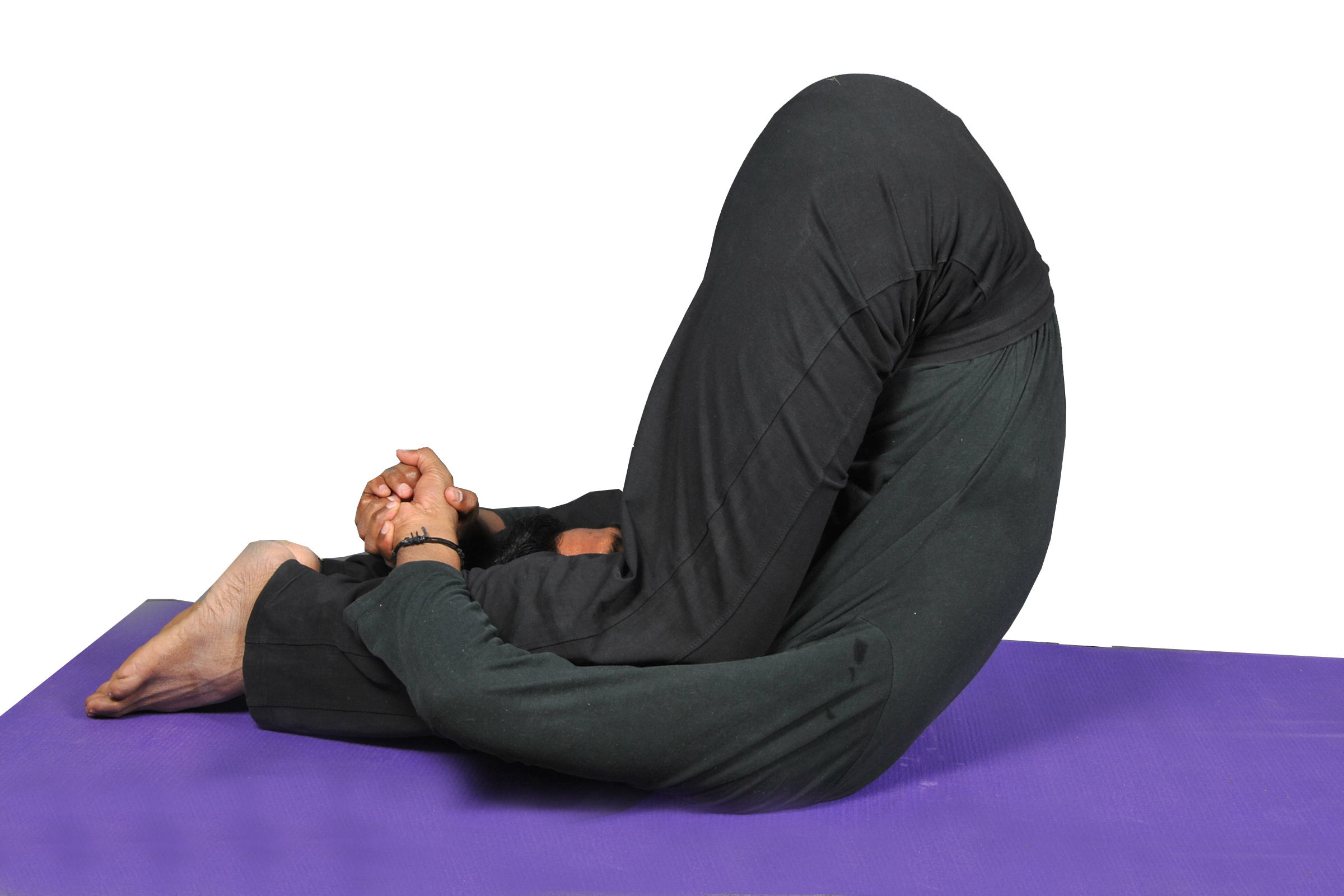
Karnapidasana is often practiced in intermediate to advanced yoga classes due to its inversion nature and the flexibility required in the spine, neck, and legs. It is closely related to Halasana (Plow Pose) and shares similarities with Sarvangasana (Shoulder Stand) in terms of circulatory and endocrine benefits.
2. Word Meaning and Definition
Word Meaning:
- Karna: Ear
- Pida: Pressure / Squeeze
- Asana: Posture or Seat
Definition:
Karnapidasana is a supine forward-bending asana where the practitioner folds the legs over the head such that the knees rest near or press gently on the ears, creating a mild compression effect. The posture is considered both restorative and stimulating, integrating spinal flexibility with inverted body mechanics.
3. Method of Practice – Step by Step
Step 1: Preparatory Position
- Begin by lying supine on a yoga mat with arms relaxed alongside the body and legs extended.
- Focus on breathing deeply to prepare the nervous system for inversion.
Step 2: Entering Halasana (Plow Pose)
- Inhale deeply.
- Engage the core muscles and lift the legs overhead, keeping them straight.
- Support the back with the hands if needed, allowing the legs to extend over the head until toes touch the floor behind.
Step 3: Folding into Karnapidasana
- Exhale and slowly bend the knees, bringing them toward the ears.
- Ideally, the knees gently press on the sides of the head near the ears.
- Arms can remain on the mat alongside the body, with palms pressing lightly to stabilize, or hands can clasp behind the back for additional support.
Step 4: Alignment and Holding
- Keep the shoulders grounded to maintain spinal safety.
- Lengthen the spine and ensure the neck is free from strain.
- Close the eyes and focus on slow, rhythmic breathing.
- Hold the pose for 30–60 seconds initially, gradually increasing with experience.
Step 5: Exiting the Pose
- To exit safely, release the knees slowly and extend the legs overhead again into Halasana.
- Lower the legs slowly to the mat, vertebra by vertebra.
- Rest in Savasana for at least 1–2 minutes.
4. Alignment Cues
- Neck: Keep the cervical spine long; avoid excessive compression.
- Shoulders: Press shoulder blades firmly into the mat to protect the neck.
- Spine: Lengthen vertebrae; avoid rounding excessively in the thoracic region.
- Knees: Apply gentle pressure to ears; avoid forceful pressing.
- Arms: Either keep palms on the mat for stability or clasp hands behind back for a supported variation.
- Breathing: Maintain slow, even breaths; avoid holding the breath.
5. Benefits of Karnapidasana
- Spinal Flexibility:
Deep forward bend stretches the thoracic, lumbar, and cervical spine. - Nervous System Regulation:
Inversion increases blood flow to the brain, improving focus and mental clarity. - Circulatory Benefits:
Stimulates venous return from lower extremities, aiding circulation and reducing varicosities. - Thyroid and Parathyroid Stimulation:
Compresses the neck region gently, activating endocrine glands. - Digestive Health:
Abdominal compression massages internal organs, improving digestion and relieving constipation. - Stress Reduction:
Promotes parasympathetic activation and relaxation. - Shoulder and Back Strength:
Stabilizes shoulders and upper back while maintaining the inversion.
6. Contraindications
- Neck injuries or cervical spondylosis
- Severe back pain or spinal disc problems
- High blood pressure or glaucoma
- Pregnancy (especially advanced stages)
- Recent abdominal or spinal surgery
7. Counterpose
- Matsyasana (Fish Pose): Opens the chest and neck after deep flexion.
- Savasana (Corpse Pose): Restorative for complete relaxation.
- Bhujangasana (Cobra Pose): Gentle spinal extension to neutralize flexion.
8. Preparatory Practices
- Halasana (Plow Pose): Provides familiarity with inversion and spinal flexibility.
- Sarvangasana (Shoulder Stand): Prepares the cervical region and upper back.
- Paschimottanasana (Seated Forward Bend): Strengthens spinal flexibility and hamstring stretch.
- Supta Konasana (Reclined Wide Angle Pose): Opens hips and inner thighs.
9. Modifications
- Support Under Shoulders: Fold a blanket to reduce neck strain.
- Leg Position: Keep knees slightly apart if they cannot reach the ears.
- Arm Variations: Place hands under lower back for support instead of on the mat.
- Wall Support: Practice near a wall to stabilize legs during inversion.
10. Muscles Involved
Primary Muscles:
- Erector Spinae: Spinal extension and stabilization
- Rectus Abdominis: Core engagement for control during fold
- Hamstrings: Hip flexion support
- Gluteus Maximus and Medius: Hip stabilization
Secondary Muscles:
- Deltoids and Trapezius: Shoulder stabilization
- Quadriceps: Knee extension control
- Neck Flexors and Extensors: Cervical spine support
- Obliques: Lateral stabilization
11. Kinesiology and Kinematics
- Joint Movement:
- Spine: Flexion, particularly thoracic and lumbar regions
- Hip: Flexion
- Knee: Flexion
- Neck: Flexion
- Shoulder: Stabilization with slight extension
- Movement Planes:
- Sagittal Plane: Primary plane for spinal and hip flexion
- Frontal Plane: Secondary plane in subtle lateral knee adjustments
- Type of Motion: Controlled, slow, active-assisted, requiring eccentric muscle engagement for safe descent.
12. Biomechanics and Functional Anatomy
- Spinal Loading:
Inversion reduces compressive load on lumbar vertebrae; thoracic and cervical flexion must be gradual to avoid injury. - Muscle Coordination:
Requires synchronized engagement of core, shoulders, and legs for stability and safe inversion. - Joint Safety:
Proper alignment avoids hyperflexion of cervical spine. Shoulders bear weight partially for support. - Physiological Effects:
- Increased venous return
- Spinal decompression during inversion
- Gentle compression of thyroid and parathyroid glands
13. Functional Anatomy & Physiology
- Spine: Mobilizes vertebral joints, improves intervertebral disc nutrition.
- Nervous System: Increases blood flow to the brain; balances autonomic nervous system.
- Endocrine System: Stimulates thyroid, parathyroid, and potentially pituitary glands.
- Muscular System: Strengthens posterior chain, stretches hamstrings, glutes, and spinal muscles.
- Respiratory System: Encourages diaphragmatic breathing; mild compression improves lung elasticity.
14. How to Correct and Adjust While Teaching
- Neck Alignment:
Ensure the neck is long, not compressed. Use a folded blanket under shoulders if necessary. - Knee Position:
Knees should lightly press the ears; avoid forceful pressing which can strain the cervical spine. - Shoulder Engagement:
Shoulders must stay grounded; cue students to press shoulder blades into the mat. - Leg Extension:
Encourage active engagement of hamstrings and quadriceps to maintain control. - Breathing Awareness:
Remind students to breathe evenly and avoid holding breath. - Use Props:
Bolsters or blankets can support lower back or shoulders for beginners. - Observation:
Watch for signs of discomfort in neck, back, or knees; adjust or exit pose if necessary.
15. Tips for Teaching Karnapidasana
- Start with thorough warm-up and preparatory asanas.
- Emphasize gradual entry and exit from the pose.
- Offer modifications for beginners.
- Integrate counterposes to balance deep spinal flexion.
- Monitor students individually for cervical safety and shoulder stability.
- Encourage mindfulness and awareness of bodily sensations.
16. Summary
Karnapidasana, though an advanced posture, offers a multitude of physical, mental, and physiological benefits when practiced mindfully. Its unique combination of spinal flexion, inversion, and ear pressure stimulates multiple systems, promotes relaxation, and strengthens key muscle groups. With proper alignment, preparatory practices, and modifications, Karnapidasana can be safely integrated into yoga classes to enhance spinal mobility, circulatory efficiency, and holistic well-being.
By respecting anatomical limitations, providing correct adjustments, and combining this posture with counterposes, students can safely experience its profound benefits while minimizing risks of injury. It exemplifies how yoga merges science, art, and mindfulness into a single transformative practice.
1. QUESTIONS AND ANSWERS
- What does “Karnapidasana” mean?
a) Ear Pressure Pose ✅
b) Shoulder Stand
c) Fish Pose
d) Plow Pose - Which muscles are primarily engaged in Karnapidasana?
a) Quadriceps and Calves
b) Erector Spinae and Rectus Abdominis ✅
c) Pectorals and Biceps
d) Latissimus Dorsi only - Which is a contraindication for practicing Karnapidasana?
a) Low blood pressure
b) Neck injury ✅
c) Mild fatigue
d) Anxiety - Recommended counterpose for Karnapidasana:
a) Halasana
b) Savasana ✅
c) Downward Dog
d) Trikonasana - Primary plane of motion in Karnapidasana:
a) Frontal
b) Sagittal ✅
c) Transverse
d) Oblique
2. QUESTIONS AND ANSWERS
1. Meaning and Definition
- The word “Karnapidasana” literally means:
a) Ear Pressure Pose ✅
b) Shoulder Stand
c) Fish Pose
d) Plow Pose - Karnapidasana is primarily a:
a) Supine forward bend ✅
b) Standing twist
c) Seated lateral stretch
d) Backbend - Which asana is most closely related to Karnapidasana?
a) Bhujangasana
b) Halasana ✅
c) Trikonasana
d) Virabhadrasana
2. Method of Practice
- The first step to enter Karnapidasana is:
a) Sit cross-legged
b) Lie supine and lift legs overhead into Halasana ✅
c) Stand on one leg
d) Lie prone - During Karnapidasana, the knees should ideally:
a) Touch the floor behind the head
b) Press lightly on the ears ✅
c) Remain straight and extended
d) Cross over each other - To safely exit Karnapidasana, one should:
a) Jump up immediately
b) Slowly return to Halasana, then lower legs vertebra by vertebra ✅
c) Roll sideways
d) Push off the mat with arms
3. Alignment and Technique
- In Karnapidasana, the shoulders should be:
a) Lifted off the mat
b) Pressed firmly into the mat ✅
c) Relaxed and forward
d) Rotated inward - To protect the neck, a teacher should advise:
a) Force the knees onto ears
b) Keep the cervical spine long and use blanket support if needed ✅
c) Turn the head to one side
d) Lock the neck completely - Proper breathing in Karnapidasana involves:
a) Holding the breath
b) Rapid inhalation only
c) Slow, rhythmic breathing ✅
d) Exhaling only
4. Muscles and Anatomy
- Which muscles are primarily involved in Karnapidasana?
a) Erector Spinae and Rectus Abdominis ✅
b) Pectoralis Major and Deltoid
c) Gastrocnemius and Soleus
d) Biceps and Triceps - Secondary muscles engaged during the pose include:
a) Neck flexors and extensors, Obliques ✅
b) Quadriceps only
c) Hamstrings only
d) Gluteus medius only - The primary joint movements in Karnapidasana include:
a) Hip extension, knee extension
b) Spinal flexion, hip flexion, knee flexion ✅
c) Shoulder abduction, elbow extension
d) Ankle dorsiflexion, plantarflexion
5. Physiology and Functional Benefits
- Karnapidasana stimulates which endocrine glands?
a) Adrenal and Pancreas
b) Thyroid and Parathyroid ✅
c) Pituitary only
d) Pineal only - Physiological benefits of Karnapidasana include:
a) Improves circulation, stimulates nervous system, massages abdominal organs ✅
b) Decreases spinal flexibility
c) Weakens the core
d) Raises blood pressure significantly - In terms of nervous system effects, Karnapidasana:
a) Activates parasympathetic response ✅
b) Increases sympathetic dominance
c) Has no effect
d) Reduces brain blood flow
6. Contraindications
- Which condition is a contraindication for practicing Karnapidasana?
a) Neck injury ✅
b) Mild anxiety
c) Low back stiffness
d) Occasional fatigue - Karnapidasana should be avoided during:
a) Early morning practice
b) Pregnancy ✅
c) Before meals
d) Restorative sequences - Which eye-related condition is a contraindication?
a) Myopia
b) Glaucoma ✅
c) Cataracts
d) Color blindness
7. Counterposes and Preparatory Asanas
- A recommended counterpose after Karnapidasana is:
a) Savasana ✅
b) Halasana
c) Trikonasana
d) Ardha Matsyendrasana - Preparatory asanas for Karnapidasana include:
a) Halasana, Sarvangasana, Paschimottanasana ✅
b) Tadasana only
c) Virabhadrasana exclusively
d) Dhanurasana only
8. Teaching and Adjustment
- When adjusting a student in Karnapidasana, the teacher should first check:
a) Neck and shoulder alignment ✅
b) Foot size
c) Eye position
d) Hair length - For students unable to press knees to ears, the modification is:
a) Forcefully push the knees
b) Keep knees slightly apart ✅
c) Skip the pose
d) Hold legs overhead without bending - Props such as blankets are used in Karnapidasana to:
a) Increase the pressure on ears
b) Support the shoulders and reduce neck strain ✅
c) Make it harder to enter the pose
d) Avoid spinal flexion
9. Kinesiology and Biomechanics
- The primary plane of movement in Karnapidasana is:
a) Frontal
b) Sagittal ✅
c) Transverse
d) Oblique - Type of muscular action during descent into the pose:
a) Concentric
b) Isometric
c) Eccentric ✅
d) None - Which is a biomechanical safety measure in Karnapidasana?
a) Allow knees to hyperflex
b) Keep shoulders grounded ✅
c) Lock elbows completely
d) Rotate neck sideways