
Introduction
Yin Yoga is a contemplative and therapeutic style of yoga that emphasizes long-held, passive postures designed to target the deeper layers of the body—particularly fascia, ligaments, joints, and bones. Unlike dynamic or Yang styles of yoga, Yin Yoga encourages stillness, surrender, and mindfulness, allowing gravity and time to gently stress connective tissues and enhance overall flexibility and mobility.
Among the foundatio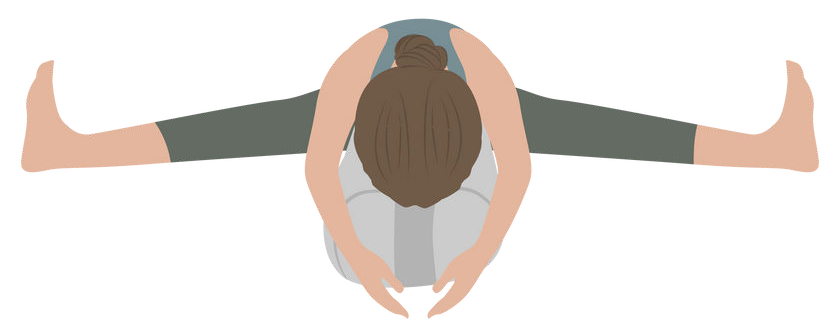 nal poses in Yin Yoga, Straddle Pose—also known as Wide-Legged Seated Forward Fold or Upavistha Konasana—stands out as a powerful posture for opening the hips, stretching the inner thighs, and stimulating the energetic pathways of the lower body. This pose is both physically intense and deeply introspective, making it an essential component of Yin Yoga practice.
Straddle Pose targets the adductors (inner thigh muscles), hamstrings, and lower back while also influencing the pelvic region and abdominal organs. Its wide-legged configuration allows for a deep stretch that is difficult to achieve in other postures, making it particularly beneficial for individuals seeking to improve hip flexibility and release tension in the lower body.
This essay explores Straddle Pose in detail, including its execution, anatomical and physiological effects, energetic implications, contraindications, benefits, and integration into a Yin Yoga practice.
Understanding Straddle Pose in Yin Yoga
In a Yin context, Straddle Pose is not about achieving maximum flexibility or touching the forehead to the floor. Instead, the focus is on finding a comfortable edge where sensation is present but not painful, and then remaining still for an extended period.
The wide-leg position creates a deep stretch in the inner thighs and pelvis, areas that often hold both physical and emotional tension. Over time, the sustained hold allows the connective tissues to adapt, improving flexibility and joint health.
Straddle Pose is a powerful Yin Yoga posture that offers profound physical, energetic, and psychological benefits. By targeting the hips, inner thighs, and connective tissues, it enhances flexibility, supports joint health, and promotes emotional release.
Through mindful practice, Straddle Pose becomes more than a physical stretch—it becomes a meditative experience that fosters awareness, patience, and inner balance. By respecting the body’s limits and embracing stillness, practitioners can unlock the full potential of this transformative posture.
Ultimately, Straddle Pose embodies the essence of Yin Yoga—surrender, mindfulness, and deep connection, guiding practitioners toward harmony in body and mind.
Getting Into the Pose
Entering Straddle Pose requires patience and mindful alignment to ensure safety and effectiveness.
- Starting Position
Begin by sitting on the floor with your legs extended straight in front of you (Staff Pose). - Opening the Legs
Slowly separate your legs into a wide “V” shape. The degree of the straddle depends on your flexibility—avoid forcing the legs wider than is comfortable. - Foot Position
Flex the feet gently, with toes pointing upward. This helps protect the knees and engage the legs lightly. - Pelvic Alignment
Sit evenly on both sitting bones. If the pelvis tilts backward and the spine rounds, sit on a folded blanket or bolster to elevate the hips. - Spinal Alignment
Begin with an upright spine, lengthening through the crown of the head. - Forward Fold (Optional)
Gently hinge forward from the hips, maintaining a long spine. Place your hands, forearms, or torso on the floor or on props such as bolsters or blocks. - Relaxation and Stillness
Once you reach your edge, relax the muscles and allow gravity to deepen the stretch. Close your eyes and focus on slow, steady breathing. - Variations
- Upright Straddle (no forward fold)
- Side stretch (leaning toward one leg)
- Supported forward fold (using props)
The key is to avoid muscular effort and allow the connective tissues to receive the stress.
Coming Out of the Pose
Exiting Straddle Pose should be done slowly and mindfully to avoid strain.
- Lift the Torso
If folded forward, gently press into the hands and lift the torso back to an upright position. - Bring Legs Together
Slowly draw the legs back toward each other, returning to Staff Pose. - Relax and Observe
Shake out the legs gently and observe the sensations in the hips and thighs. - Pause Before Transitioning
Allow the body to integrate the effects before moving into the next pose.
Counterposes
Counterposes help neutralize the effects of Straddle Pose and restore balance.
- Butterfly Pose (Baddha Konasana)
A gentle hip opener that balances the intensity of the straddle. - Knees-to-Chest Pose (Apanasana)
Relieves tension in the lower back and hips. - Gentle Backbend (e.g., Sphinx Pose)
Counteracts the forward folding aspect. - Seated Upright Pose
Helps reset the spine. - Rebounding
Lying flat on the back to observe sensations and allow energy to circulate.
Meridians and Organs Affected
In Yin Yoga, Straddle Pose strongly stimulates the meridians running through the inner and outer legs.
Primary Meridians Stimulated
- Liver Meridian
- Kidney Meridian
- Spleen Meridian
These meridians run along the inner thighs and are deeply influenced by the wide-leg position.
Secondary Meridians
- Urinary Bladder Meridian
Organs Affected
- Liver
- Kidneys
- Spleen
- Digestive organs
- Reproductive organs
The stimulation of these meridians is believed to enhance the flow of energy (Qi), support detoxification, and promote emotional balance.
Joints Affected
Straddle Pose primarily targets the following joints:
- Hip Joints
Deep abduction and external rotation. - Knee Joints
Stabilized through gentle engagement. - Sacroiliac Joint (SI Joint)
Mild stress enhances mobility. - Lumbar Spine
Flexion occurs during forward folding.
The pose improves joint health by promoting circulation and flexibility.
Recommended Hold Times
Yin Yoga emphasizes long holds:
- Beginners: 1–2 minutes
- Intermediate: 3–5 minutes
- Advanced: 5–10 minutes
The duration should be guided by comfort and breath awareness.
Contraindications
Straddle Pose requires caution in certain conditions:
- Hamstring Injuries
Deep stretching may aggravate injury. - Groin Strain
Avoid overstretching the inner thighs. - Lower Back Pain
Forward folding may increase discomfort. - Sciatica
May aggravate symptoms. - Hip Replacement
Requires professional guidance.
Modifications
- Sit on a bolster
- Reduce the width of the straddle
- Avoid forward folding
- Use props for support
Listening to the body is essential.
Benefits of Straddle Pose
Physical Benefits
- Deep Inner Thigh Stretch
Targets the adductors effectively. - Improves Hip Flexibility
Enhances range of motion. - Relieves Lower Back Tension
Especially when practiced mindfully. - Enhances Circulation
Promotes blood flow to the pelvis. - Supports Posture
Encourages spinal alignment.
Mental and Emotional Benefits
- Encourages Introspection
The inward fold promotes mindfulness. - Releases Emotional Tension
Hips are associated with stored emotions. - Reduces Stress
Activates the parasympathetic nervous system.
Energetic Benefits
- Stimulates Liver Qi Flow
Supports detoxification and emotional balance. - Enhances Kidney Energy
Promotes vitality. - Balances Energy in the Lower Body
Encourages grounding and stability.
Anatomy and Physiology
Muscles Involved
- Adductors (inner thighs)
- Hamstrings
- Gluteal muscles
- Lower back muscles (erector spinae)
These muscles are passively stretched.
Connective Tissue Focus
Straddle Pose targets:
- Fascia of the inner thighs
- Hip joint capsules
- Ligaments around the pelvis
The sustained stretch improves elasticity.
Joint Mechanics
The pose involves:
- Hip abduction
- External rotation
- Spinal flexion (in forward fold)
These movements enhance joint mobility.
Nervous System Effects
The long hold activates the parasympathetic nervous system, leading to:
- Relaxation
- Reduced stress
- Improved mental clarity
Fascial System
Fascia responds to sustained stretching by:
- Releasing adhesions
- Improving hydration
- Enhancing mobility
Circulatory Effects
The pose improves:
- Blood flow
- Lymphatic drainage
- Tissue nourishment
Psychological and Meditative Aspects
Straddle Pose is deeply introspective:
- Encourages stillness and patience
- Builds mental resilience
- Promotes self-awareness
The intensity of the stretch provides an opportunity to observe reactions and cultivate acceptance.
Integration into Practice
Straddle Pose can be included:
- Mid-practice for deep hip work
- After warming up the body
- Before meditation for grounding
It pairs well with gentle backbends and twists.