
Introduction
Saddle Pose is a profound Yin Yoga posture that creates a deep, passive backbend while strongly stimulating the front body, particularly the thighs, hip flexors, and abdominal region. Derived from the classical pose Supta Virasana (Reclined Hero Pose), Saddle Pose in Yin Yoga is practiced with minimal muscular effort and extended holding times, allowing gravity to gently open the body and target deeper connective tissues.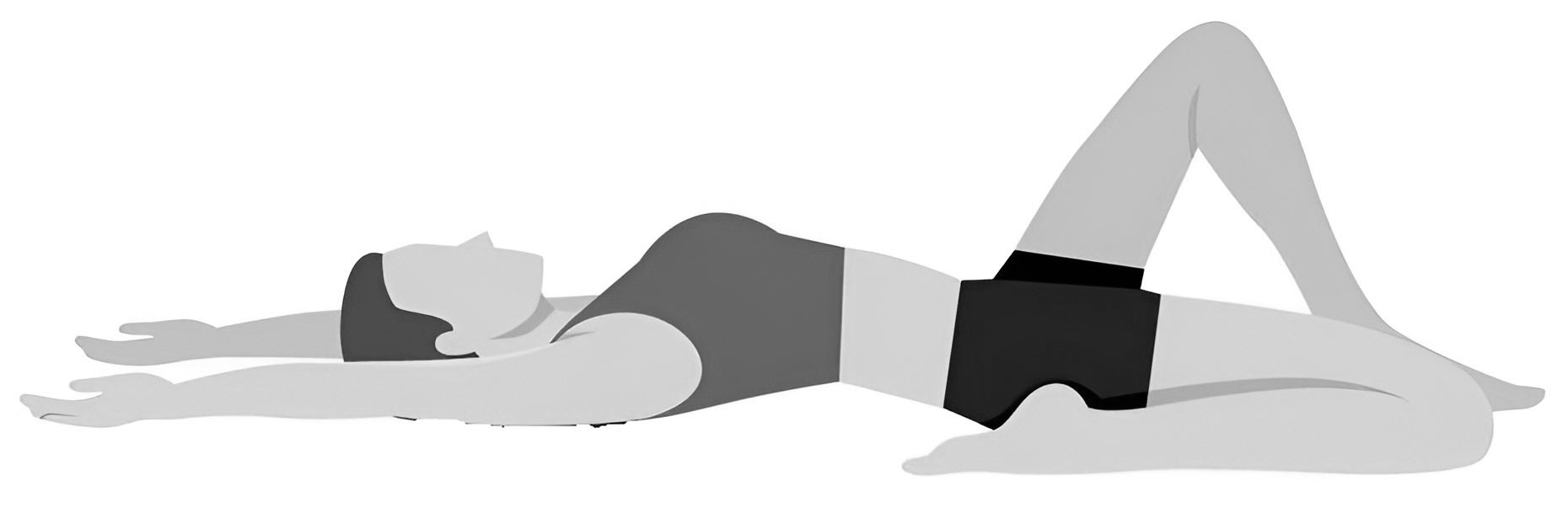
In modern life, prolonged sitting and sedentary habits shorten the hip flexors and compress the lumbar spine. Saddle Pose offers an effective antidote by lengthening the quadriceps, opening the hip flexors, and promoting spinal extension. It is particularly beneficial for counteracting forward-bending postures and improving overall posture.
However, Saddle Pose can be intense due to the combination of knee flexion and spinal extension. Therefore, it requires mindful entry, proper alignment, and the use of props to ensure safety and comfort. When practiced correctly, it offers powerful physical, physiological, and emotional benefits, making it an essential posture in Yin Yoga practice.
Saddle Pose is a powerful Yin Yoga posture that offers deep physical, physiological, and emotional benefits. Its ability to open the front body, stretch the quadriceps, and stimulate internal organs makes it an essential pose in Yin Yoga practice.
Though intense, it provides profound rewards when practiced mindfully and with proper support. Through sustained stillness and awareness, practitioners can experience improved flexibility, enhanced organ function, and deep relaxation.
Ultimately, Saddle Pose embodies the essence of Yin Yoga—stillness, surrender, and inner transformation—making it a valuable tool for achieving balance and well-being.
Getting Into the Pose
Entering Saddle Pose requires careful progression and attention to body signals.
Step-by-Step Instructions
- Starting Position
Begin in a kneeling position (Hero Pose). Sit between your heels with knees together or slightly apart. - Check Knee Comfort
Ensure there is no pain in the knees. Use a cushion between the heels and hips if needed. - Lean Back Gradually
Place your hands behind you and begin to lean backward slowly. - Lower Onto Forearms
First, come down onto your forearms, keeping the chest lifted. - Full Recline (Optional)
If comfortable, lower your back onto the floor. - Arm Placement Options
- Arms alongside the body
- Arms overhead for a deeper stretch
- Use of Props (Yin Variation)
- Place a bolster or cushions under the back
- Support the head and neck
- Elevate the hips if needed
- Spinal Alignment
Maintain a natural curve in the spine without forcing the lower back. - Relaxation Phase
Release muscular effort and allow gravity to deepen the stretch. - Breath Awareness
Breathe deeply into the abdomen and chest.
Coming Out of the Pose
Exiting Saddle Pose must be done very slowly.
- Bring Awareness Back
Deepen your breathing. - Engage Core Muscles
Activate the abdomen slightly. - Lift Onto Elbows
Gradually come up onto your forearms. - Return to Upright
Use your hands to lift the torso. - Extend the Legs
Stretch the legs forward gently. - Rest
Pause before moving into another pose.
Counterposes
Counterposes are essential after Saddle Pose.
- Child’s Pose
Neutralizes the spine. - Caterpillar Pose
Forward fold to balance backbend. - Knees-to-Chest Pose
Releases lower back. - Gentle Twist
Restores spinal balance.
Meridians & Organs Affected
Saddle Pose stimulates the front body meridians.
Primary Meridians
- Stomach Meridian
- Runs along the front of the body
- Supports digestion
- Spleen Meridian
- Enhances energy and immunity
- Kidney Meridian
- Supports vitality
Organs Affected
- Stomach
- Spleen
- Kidneys
- Intestines
- Reproductive organs
The backbend enhances organ stimulation and circulation.
Joints Affected
- Knee Joints
- Deep flexion
- Hip Joints
- Extension
- Spinal Joints
- Extension (backbend)
- Ankle Joints
- Plantar flexion
Recommended Hold Times
- Beginners: 1–2 minutes
- Intermediate: 3–5 minutes
- Advanced: 5–8 minutes
Practice Tips
- Use props generously
- Avoid pushing into pain
- Maintain steady breathing
Contra-indications
- Knee Injuries
- Avoid deep flexion
- Lower Back Pain
- Use support or modify
- Neck Issues
- Support the head
- Hip Problems
- Modify range
- Pregnancy
- Avoid deep backbend
Benefits
Physical Benefits
- Deep Quadriceps Stretch
- Improves flexibility
- Opens Hip Flexors
- Counteracts sitting
- Enhances Spinal Mobility
- Improves posture
- Stimulates Circulation
- Promotes healing
Therapeutic Benefits
- Improves Digestion
- Relieves Lower Back Tension
- Supports Pelvic Health
- Enhances Energy Flow
Mental and Emotional Benefits
- Reduces Stress
- Encourages Surrender
- Promotes Emotional Release
- Enhances Mindfulness
Energetic Benefits
- Stimulates stomach and spleen energy
- Balances vitality
- Releases emotional tension
Anatomy and Physiology
Muscles Involved
Primary Muscles
- Quadriceps
- Hip flexors (iliopsoas)
Muscles Being Stretched
- Rectus femoris
- Abdominal muscles
Connective Tissue Engagement
- Fascia of front body
- Ligaments of knees
- Hip joint capsules
Spinal Mechanics
- Extension (backbend)
- Opens chest and abdomen
Circulatory System
- Enhances blood flow
- Improves oxygenation
Digestive System
- Stimulates abdominal organs
- Improves digestion
Respiratory System
- Expands chest
- Improves lung capacity
Nervous System Effects
- Activates parasympathetic system
- Promotes relaxation
Endocrine System
- Influences adrenal glands
- Supports hormonal balance
Fascial Lines
- Superficial front line
- Deep front line
Psychological and Subtle Body Perspective
Saddle Pose can be emotionally intense.
Energetic Interpretation
- Opens heart and front body
- Encourages emotional release
- Promotes vulnerability and acceptance
Integration in Yin Yoga Practice
Saddle Pose is used in:
- Backbend sequences
- Digestive stimulation practices
- Deep relaxation sessions
Complementary Poses
- Dragon Pose
- Butterfly Pose
- Child’s Pose
- Sphinx Pose