
Introduction
Caterpillar Pose is a fundamental forward-folding posture in Yin Yoga, often considered the passive counterpart to the more dynamic seated forward bend found in other yoga styles. It is a deeply introspective posture that emphasizes stillness, surrender, and the gradual release of tension in the posterior chain of the body. The name “Caterpillar” reflects the rounded shape of the spine in this pose, resembling the gentle curve of a caterpillar at rest.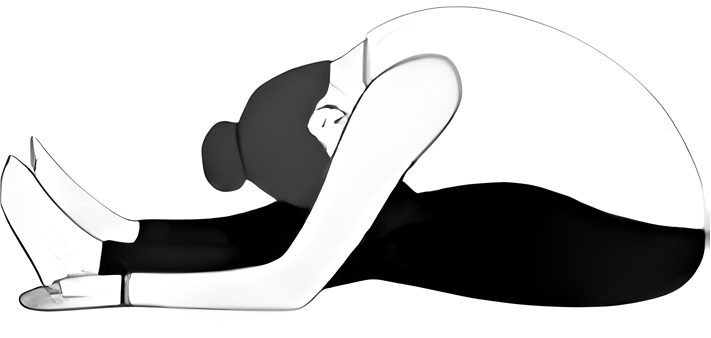
In Yin Yoga practice, Caterpillar Pose is not about reaching the toes or achieving a particular aesthetic form. Instead, it is about relaxing into gravity and allowing the body to naturally fold forward over time. This posture primarily targets the connective tissues of the spine, hips, and legs, particularly the fascia and ligaments, rather than focusing on muscular effort.
Caterpillar Pose is known for its calming effect on the nervous system, making it an excellent posture for reducing stress, promoting introspection, and enhancing mental clarity. It is also highly beneficial for stimulating the urinary bladder meridian, which runs along the back body, influencing both physical and energetic balance.
Caterpillar Pose is a cornerstone of Yin Yoga practice, offering profound benefits for the body, mind, and energy system. Its simplicity makes it accessible, while its depth makes it transformative.
By encouraging stillness and surrender, the pose allows practitioners to explore the deeper layers of the body and mind. It improves flexibility, supports organ function, and promotes relaxation, making it an essential posture for holistic well-being.
With regular practice, Caterpillar Pose becomes more than a stretch—it becomes a meditative experience that fosters self-awareness, balance, and inner peace.
Getting Into the Pose
Entering Caterpillar Pose requires patience and mindful awareness, ensuring that the body is supported and relaxed.
Step-by-Step Instructions
- Starting Position
Sit on the floor with both legs extended straight in front of you. Feet should be relaxed, either falling outward or gently flexed. - Pelvic Positioning
Sit upright on the sitting bones. If the pelvis tilts backward, sit on a folded blanket or cushion to elevate the hips. - Initiating the Forward Fold
Begin to hinge forward from the hips, allowing the spine to naturally round rather than forcing a straight back. - Relaxing the Upper Body
Let the head drop forward, allowing the neck to relax completely. - Hand Placement
- Rest hands on legs, ankles, or feet
- Alternatively, place arms alongside the legs
- Using Props (Yin Variation)
- Place a bolster over the legs to rest the torso
- Use cushions under the knees for support
- Support the head with a block
- Settling Into Stillness
Once in the pose, release muscular effort and allow gravity to deepen the stretch. - Breathing Awareness
Maintain slow, deep breathing, especially into the back body.
Coming Out of the Pose
Exiting Caterpillar Pose should be done slowly to avoid strain.
- Bring Awareness Back
Deepen the breath and gently engage the core. - Lift the Torso Slowly
Roll up vertebra by vertebra, keeping the head heavy until the last moment. - Return to Upright Position
Sit tall and observe sensations. - Pause for Integration
Allow the body to absorb the effects before moving.
Counterposes
After a deep forward fold, counterposes help restore balance.
- Seated Backbend (Reverse Tabletop)
Opens the front body. - Gentle Cobra Pose
Provides spinal extension. - Knees Bent Sitting
Neutralizes the spine. - Cat-Cow Movement
Restores mobility. - Reclined Position
Allows relaxation.
Meridians & Organs Affected
Caterpillar Pose strongly stimulates the posterior body meridians.
Primary Meridians
- Urinary Bladder Meridian
- Runs along the entire back body
- Influences nervous system and energy flow
- Kidney Meridian
- Associated with vitality and life force
- Liver Meridian (secondary)
- Supports detoxification
Organs Affected
- Kidneys
- Urinary bladder
- Liver
- Intestines
The forward fold gently compresses the abdominal region, stimulating organ function.
Joints Affected
- Spine (Entire Length)
- Flexion stretches ligaments
- Hip Joints
- Flexion
- Knee Joints
- Extended
- Ankle Joints
- Slight dorsiflexion or relaxation
Recommended Hold Times
- Beginners: 2–3 minutes
- Intermediate: 3–5 minutes
- Advanced: 5–10 minutes
Guidelines
- Stay within a comfortable range
- Avoid sharp pain
- Use props for support
Contra-indications
- Severe Lower Back Issues
- Avoid deep flexion
- Herniated Disc
- Practice with caution
- Sciatica
- Modify with bent knees
- Hamstring Injury
- Avoid overstretching
- Pregnancy
- Avoid deep compression
Benefits
Physical Benefits
- Improves Spinal Flexibility
- Enhances range of motion
- Stretches Posterior Chain
- Hamstrings, calves, back
- Enhances Circulation
- Improves blood flow
- Supports Joint Health
- Nourishes connective tissue
Therapeutic Benefits
- Relieves Back Pain
- Reduces stiffness
- Improves Digestion
- Stimulates abdominal organs
- Supports Kidney Function
- Enhances energy flow
- Reduces Fatigue
- Restorative effect
Mental and Emotional Benefits
- Promotes Introspection
- Encourages inward focus
- Reduces Anxiety
- Calms the mind
- Enhances Mindfulness
- Deepens awareness
- Emotional Release
- Letting go posture
Energetic Benefits
- Balances kidney energy
- Promotes grounding
- Enhances inner calm
Anatomy and Physiology
Muscles Involved
Primary Muscles
- Erector spinae (lengthened)
- Hamstrings
- Gastrocnemius
Relaxed Muscles (Yin Focus)
- Abdominals
- Hip flexors
Connective Tissue Engagement
Targets:
- Spinal ligaments
- Fascia along back body
- Tendons and joint capsules
Long holds improve tissue elasticity.
Spinal Mechanics
- Involves flexion
- Stretches posterior ligaments
- Improves spinal health
Circulatory System
- Enhances blood flow
- Supports tissue nourishment
Respiratory System
- Encourages posterior breathing
- Expands rib cage
Nervous System Effects
- Activates parasympathetic system
- Reduces stress
Endocrine System
- Influences adrenal glands
- Supports hormonal balance
Fascial Lines
- Superficial back line
- Deep back line
These are lengthened in the pose.
Psychological and Subtle Body Perspective
Caterpillar Pose is deeply meditative.
Energetic Interpretation
- Stimulates bladder and kidney energy
- Encourages introspection
- Promotes emotional release
The inward folding symbolizes turning attention inward.
Integration in Yin Yoga Practice
Caterpillar Pose is commonly used in:
- Forward fold sequences
- Restorative sessions
- Meditation-focused practice
Complementary Poses
- Butterfly Pose
- Dragon Pose
- Sphinx Pose
- Child’s Pose