
Introduction
Camel Pose, known as Ustrasana in Sanskrit, is a deep backbend that powerfully opens the front body, particularly the chest, abdomen, and hip flexors. In traditional (Yang) yoga, Camel Pose is performed actively, requiring muscular engagement, strength, and balance. However, in Yin Yoga, Camel Pose is adapted into a more passive and supported posture, emphasizing long holds, relaxation, and deep connective tissue release.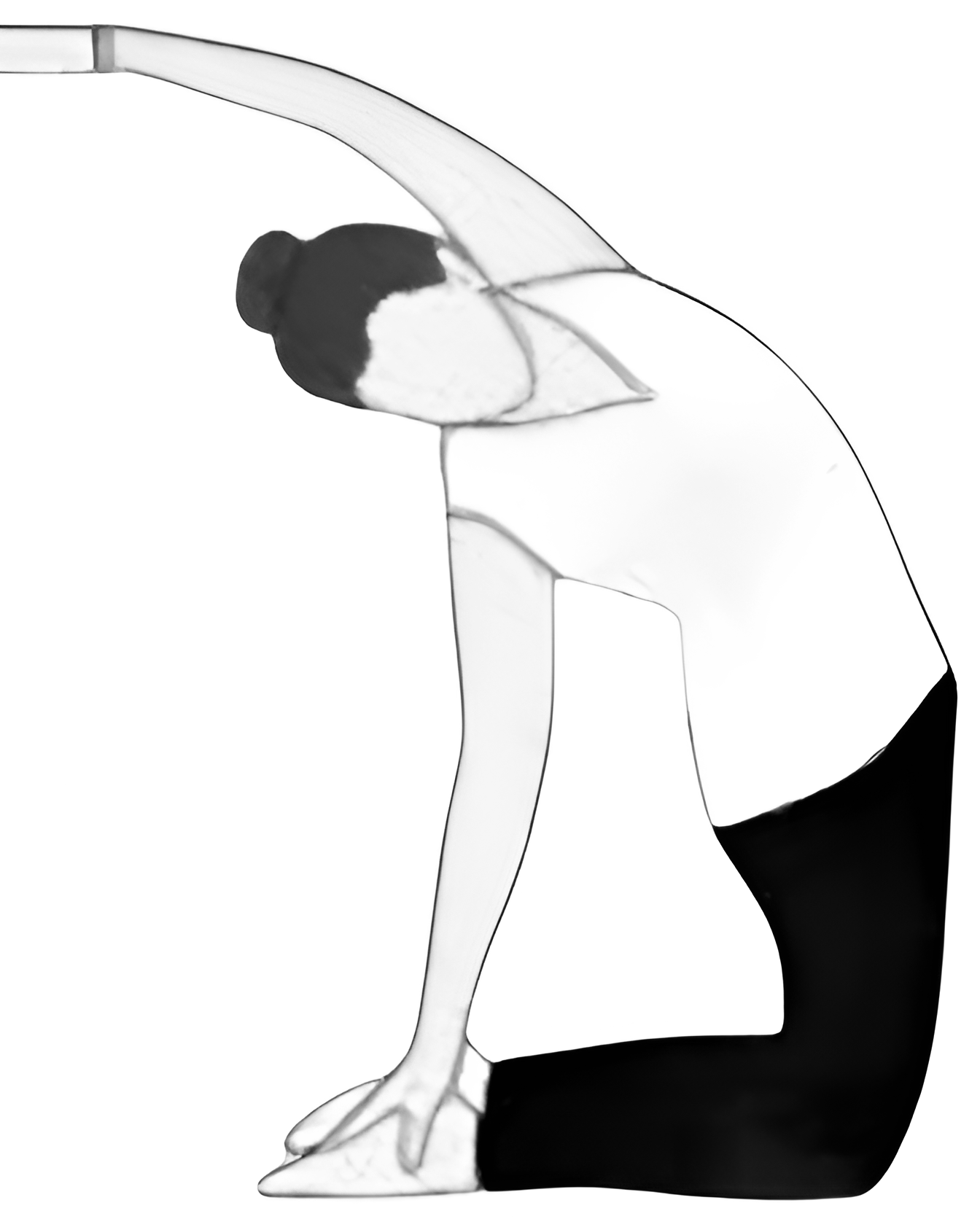
The Yin variation of Camel Pose is typically practiced with the support of props such as bolsters, blocks, or cushions to reduce muscular effort and allow gravity to gradually deepen the backbend. This approach targets the fascia, ligaments, and joints rather than the superficial muscles, making it a therapeutic posture for improving spinal mobility and releasing tension in the front body.
Camel Pose is often described as a “heart-opening” posture. It stimulates not only the physical chest region but also emotional and energetic centers associated with compassion, courage, and vulnerability. It is particularly beneficial in counteracting modern lifestyle patterns such as prolonged sitting, slouching, and forward head posture.
Camel Pose in Yin Yoga is a powerful posture that integrates physical, emotional, and energetic dimensions. By combining deep backbending with passive relaxation, it provides profound benefits for the spine, chest, and internal organs.
It is particularly effective in counteracting modern lifestyle issues such as poor posture and stress. Through mindful practice, it enhances flexibility, improves circulation, and promotes emotional release.
When practiced with awareness and proper support, Yin Camel Pose becomes more than a physical stretch—it transforms into a meditative and therapeutic experience that fosters balance, vitality, and inner harmony.
Getting Into the Pose
Entering Yin Camel Pose requires patience, awareness, and proper use of props to ensure safety and comfort.
Step-by-Step Instructions
- Starting Position
Begin in a kneeling position with knees hip-width apart. The thighs are vertical, and the tops of the feet rest flat on the floor. - Pelvic Alignment
Keep the hips stacked over the knees. Engage gently to prevent excessive compression in the lower back. - Hand Placement Options
- Place hands on the lower back (sacrum) for support
- Reach back toward the heels (deeper variation)
- Use blocks beside the ankles for easier access
- Initiating the Backbend
Slowly lean the torso backward, opening the chest upward rather than collapsing into the lower back. - Head Position
- Keep the chin slightly tucked for beginners
- Allow the head to drop back in advanced variation
- Using Props (Yin Adaptation)
- Place a bolster behind the back to rest on
- Sit partially on a block for support
- Use cushions under the knees
- Relaxation Phase (Yin Approach)
Once in the pose, reduce muscular effort and allow the body to soften into the support. - Breathing Awareness
Focus on deep, slow breathing into the chest and abdomen.
Coming Out of the Pose
Exiting Camel Pose must be done carefully to avoid dizziness or strain.
- Engage the Core Gently
Bring awareness back to the body and engage the abdominal muscles slightly. - Support the Lower Back
Place hands on the lower back if needed. - Lift the Torso Slowly
Gradually return to an upright kneeling position. - Sit Back on Heels
Rest in a neutral position. - Pause and Observe
Notice sensations in the spine, chest, and hips.
Counterposes
Counterposes are essential after deep backbends to restore spinal balance.
- Child’s Pose (Balasana)
Gently flexes the spine and relaxes the back. - Cat-Cow Stretch
Mobilizes the spine. - Knees-to-Chest Pose
Releases lower back tension. - Seated Forward Fold
Provides gentle spinal flexion. - Neutral Rest Position
Allows integration of effects.
Meridians & Organs Affected
Camel Pose strongly stimulates the front body meridians.
Primary Meridians Stimulated
- Stomach Meridian
- Runs along the front body
- Influences digestion and nourishment
- Spleen Meridian
- Supports immune function and energy
- Kidney Meridian
- Associated with vitality and life force
- Liver Meridian (secondary)
- Influences detoxification and emotional balance
Organs Affected
- Stomach
- Liver
- Kidneys
- Intestines
- Thyroid and adrenal glands
- Reproductive organs
The pose enhances circulation and stimulates organ function.
Joints Affected
Camel Pose influences multiple joints:
- Spine (Lumbar and Thoracic regions)
- Deep extension
- Improves flexibility
- Hip Joints
- Extended position
- Stretches hip flexors
- Knee Joints
- Maintained in flexion
- Shoulder Joints
- Extended when reaching back
- Ankle Joints
- Plantar flexion
Recommended Hold Times
Yin Yoga emphasizes long holds.
- Beginners: 1–2 minutes
- Intermediate: 3–5 minutes
- Advanced: 5–8 minutes
Guidelines
- Use props for support
- Avoid discomfort in lower back
- Maintain steady breathing
- Stay relaxed
Contra-indications
Camel Pose should be approached cautiously in certain conditions:
- Lower Back Pain
- Avoid deep backbend
- Neck Problems
- Keep head neutral
- Knee Issues
- Use padding
- High Blood Pressure
- Practice gently
- Pregnancy
- Avoid deep extension
- Recent Surgery
- Especially spinal or abdominal
Benefits
Physical Benefits
- Improves Spinal Flexibility
- Enhances extension
- Opens Chest and Shoulders
- Improves posture
- Stretches Hip Flexors
- Counteracts sitting
- Enhances Circulation
- Improves blood flow
- Strengthens Connective Tissue
- Targets fascia and ligaments
Therapeutic Benefits
- Relieves Back Pain
- Reduces stiffness
- Improves Digestion
- Stimulates abdominal organs
- Supports Respiratory Health
- Expands chest
- Boosts Energy Levels
- Stimulates nervous system
Mental and Emotional Benefits
- Reduces Stress and Anxiety
- Activates relaxation response
- Promotes Emotional Release
- Heart-opening posture
- Enhances Confidence
- Expands chest
- Improves Focus
- Encourages mindfulness
Energetic Benefits
- Opens heart and solar plexus energy
- Enhances vitality
- Balances emotional energy
Anatomy and Physiology
Muscles Involved
Primary Muscles
- Erector spinae
- Gluteus maximus
- Hamstrings
Stretch Muscles
- Hip flexors (iliopsoas)
- Rectus abdominis
- Pectoral muscles
In Yin variation, muscular effort is minimized.
Connective Tissue Engagement
Targets:
- Ligaments of spine
- Fascia of front body
- Joint capsules
Long holds improve elasticity.
Spinal Mechanics
- Promotes extension
- Counteracts forward bending posture
- Improves alignment
Circulatory System
- Enhances blood flow
- Improves oxygen delivery
- Supports cardiovascular health
Respiratory System
- Expands chest
- Improves lung capacity
Nervous System Effects
- Activates parasympathetic system
- Reduces stress
Endocrine System
- Stimulates thyroid and adrenal glands
- Supports hormonal balance
Fascial Lines
- Superficial front line
- Deep front line
Psychological and Subtle Body Perspective
Camel Pose is associated with heart opening and emotional release.
Energetic Interpretation
- Activates heart center
- Encourages openness and vulnerability
- Releases emotional tension
Holding the pose may bring up deep emotional responses.
Integration in Yin Yoga Practice
Camel Pose is used in sequences focusing on:
- Backbends
- Heart opening
- Energy activation
Complementary Poses
- Sphinx Pose
- Seal Pose
- Child’s Pose
- Butterfly Pose