
Introduction
Bridge Pose, known traditionally as Setu Bandha Sarvangasana, is a foundational backbend in yoga. In a Yin Yoga context, however, the pose is adapted into a more passive, supported version that emphasizes stillness, long holds, and deep release into connective tissues rather than muscular engagement. Unlike its dynamic (Yang) counterpart, where strength and active lifting dominate, Yin Bridge Pose typically involves the use of props such as bolsters or blocks placed under the sacrum to allow gravity and time to create a gentle opening through the front body.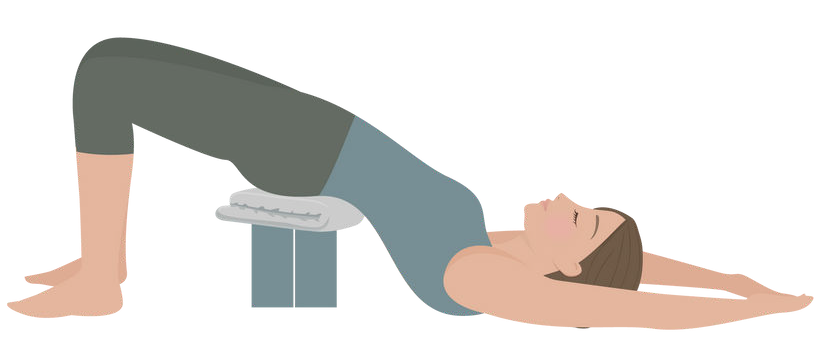
The name “Setu Bandha” translates to “bridge lock,” symbolizing the bridging of physical and energetic gaps within the body. In Yin Yoga, this symbolism extends further into bridging the body and mind, the conscious and subconscious, and tension with relaxation. The pose primarily targets the spine, hips, and front body, while also stimulating vital organs and energetic pathways.
Bridge Pose in Yin Yoga is deeply restorative and introspective. It promotes spinal extension, enhances circulation, stimulates endocrine function, and opens the heart and chest region. It is particularly beneficial in counteracting the effects of prolonged sitting, poor posture, and stress.
Bridge Pose in Yin Yoga is a powerful yet accessible posture that combines physical, emotional, and energetic benefits. By using support and holding the pose for extended periods, practitioners can experience deep release in the spine, hips, and chest while stimulating vital organs and energy pathways.
It is particularly effective in counteracting modern lifestyle issues such as poor posture, stress, and inactivity. Through mindful practice, Bridge Pose becomes more than a physical stretch—it transforms into a meditative experience that fosters balance, relaxation, and inner awareness.
When practiced with proper alignment and awareness, Yin Bridge Pose serves as a bridge not only within the body but also between physical health and emotional well-being.
Getting Into the Pose
Entering Yin Bridge Pose requires careful alignment and the use of props to ensure comfort and safety.
Step-by-Step Instructions
- Starting Position
Lie on your back (supine position) with knees bent and feet flat on the floor. Place the feet hip-width apart and parallel, with heels close to the sitting bones. - Arm Placement
Rest the arms alongside the body with palms facing down. - Lifting the Hips
Gently press into the feet and lift the hips slightly off the ground. - Placement of Support
Slide a yoga block, bolster, or cushion under the sacrum (lower back, not the lumbar spine).- Low height: gentle stretch
- Medium height: moderate stretch
- High height: deeper opening
- Settling into the Pose
Allow the pelvis to rest fully on the support. Relax the glutes and abdomen. - Leg Variations
- Keep feet grounded (beginner)
- Extend one leg at a time (intermediate)
- Extend both legs fully (advanced Yin variation)
- Arm Variations
- Arms relaxed by the sides
- Arms overhead for deeper chest opening
- Relaxation Phase (Yin Approach)
Once supported, completely relax muscular effort. Allow gravity to open the front body. - Breathing Awareness
Focus on slow, deep breathing into the abdomen and chest.
Coming Out of the Pose
Exiting the pose must be done slowly to protect the spine and avoid dizziness.
- Return Feet to Ground
If legs are extended, bring them back to a bent position. - Lift the Hips Slightly
Press into the feet to lift the pelvis just enough to remove the support. - Remove the Prop
Gently slide the block or bolster out. - Lower the Spine Slowly
Roll the spine down vertebra by vertebra. - Rest in Neutral
Pause in a supine position or hug the knees to the chest. - Observe Sensations
Notice warmth, pulsation, or release in the spine and chest.
Counterposes
Counterposes are essential after backbends to neutralize the spine.
- Knees-to-Chest Pose (Apanasana)
Gently flexes the spine and releases tension. - Supine Twist
Restores spinal balance and relaxes the back. - Child’s Pose (Balasana)
Provides a gentle forward bend to counter extension. - Happy Baby Pose
Releases the lower back and hips. - Neutral Rest (Savasana)
Allows integration of the pose’s effects.
Meridians & Organs Affected
Bridge Pose strongly influences energetic pathways in the front body.
Primary Meridians Stimulated
- Kidney Meridian
- Associated with vitality and energy reserves
- Activated through lower back stimulation
- Stomach Meridian
- Runs along the front body
- Influences digestion and nourishment
- Spleen Meridian
- Supports immune function and energy
- Liver Meridian (secondary)
- Enhances detoxification and emotional balance
Organs Affected
- Kidneys
- Liver
- Stomach
- Intestines
- Thyroid and parathyroid glands
- Reproductive organs
The pose enhances circulation and stimulates organ function, contributing to overall health.
Joints Affected
Bridge Pose influences multiple joints:
- Spine (Lumbar and Thoracic regions)
- Encourages extension
- Improves flexibility
- Hip Joints
- Extended in the pose
- Stretches hip flexors
- Knee Joints
- Maintained in flexion
- Shoulder Joints
- Mild extension if arms are used
- Sacroiliac Joint
- Stabilized with support
Recommended Hold Times
Yin Yoga emphasizes longer, passive holds.
- Beginners: 2–3 minutes
- Intermediate: 3–5 minutes
- Advanced: 5–10 minutes
Guidelines
- Use appropriate support
- Avoid discomfort in lower back
- Maintain steady breathing
- Stay relaxed throughout
Contra-indications
Bridge Pose should be approached cautiously in certain conditions.
- Lower Back Injuries
- Avoid excessive arching
- Neck Problems
- Ensure head remains neutral
- Knee Pain
- Adjust foot placement
- Pregnancy
- Avoid deep backbends in later stages
- Recent Surgery
- Especially abdominal or spinal
- High Blood Pressure
- Monitor carefully
- Hyper-mobility
- Avoid overstretching
Benefits
Physical Benefits
- Improves Spinal Flexibility
- Encourages healthy extension
- Opens Chest and Shoulders
- Improves posture
- Strengthens Lower Body (mildly)
- Engages glutes and legs
- Enhances Circulation
- Improves blood flow
- Stimulates Endocrine System
- Supports hormonal balance
Therapeutic Benefits
- Relieves Back Pain
- Reduces stiffness
- Improves Digestion
- Stimulates abdominal organs
- Supports Reproductive Health
- Enhances pelvic circulation
- Reduces Fatigue
- Energizes the body
Mental and Emotional Benefits
- Reduces Stress and Anxiety
- Activates relaxation response
- Enhances Mood
- Heart-opening effect
- Promotes Emotional Release
- Releases stored tension
- Improves Focus and Clarity
- Encourages mindfulness
Energetic Benefits
- Opens heart and solar plexus energy
- Balances energy flow
- Enhances vitality
Anatomy and Physiology
Muscles Involved
Primary Muscles
- Gluteus maximus
- Hamstrings
- Erector spinae
Stretch Muscles
- Hip flexors (iliopsoas)
- Rectus abdominis
- Chest muscles (pectorals)
In Yin variation, muscular effort is minimized, focusing on passive stretch.
Connective Tissue Engagement
Targets:
- Ligaments of the spine
- Fascia of the front body
- Joint capsules
Long holds improve elasticity and hydration.
Spinal Mechanics
- Promotes extension
- Counteracts forward bending posture
- Improves spinal alignment
Circulatory System
- Enhances blood flow to organs
- Improves oxygen delivery
- Supports cardiovascular health
Respiratory System
- Expands chest
- Improves lung capacity
- Encourages deep breathing
Nervous System Effects
- Activates parasympathetic system
- Reduces stress
- Promotes relaxation
Endocrine System
- Stimulates thyroid and adrenal glands
- Supports hormonal balance
Fascial Lines
- Front line (deep front fascia)
- Superficial front line
These lines influence posture and movement.
Psychological and Subtle Body Perspective
Bridge Pose is associated with opening the heart and solar plexus regions.
Energetic Interpretation
- Encourages openness and confidence
- Releases emotional tension
- Enhances self-awareness
Holding the pose can evoke a sense of vulnerability and release.
Integration in Yin Yoga Practice
Bridge Pose is often included in sequences focusing on:
- Backbends
- Heart opening
- Energy activation
Complementary Poses
- Sphinx Pose
- Seal Pose
- Child’s Pose
- Reclined Twist
These create a balanced sequence for spinal health.