
1. Introduction
Vyaghrasana—commonly known in English as Tiger Pose—is a dynamic, rhythmic, and stabilizing posture widely used in traditional Hatha Yoga and contemporary therapeutic yoga. This asana integrates spinal mobility, pelvic stability, core activation, and contralateral limb coordination, making it both a warm-up and a stand-alone strengthening posture. It is a bridge between simple quadrupedal positions (like Marjaryasana–Bitilasana) and more advanced core-balancing poses.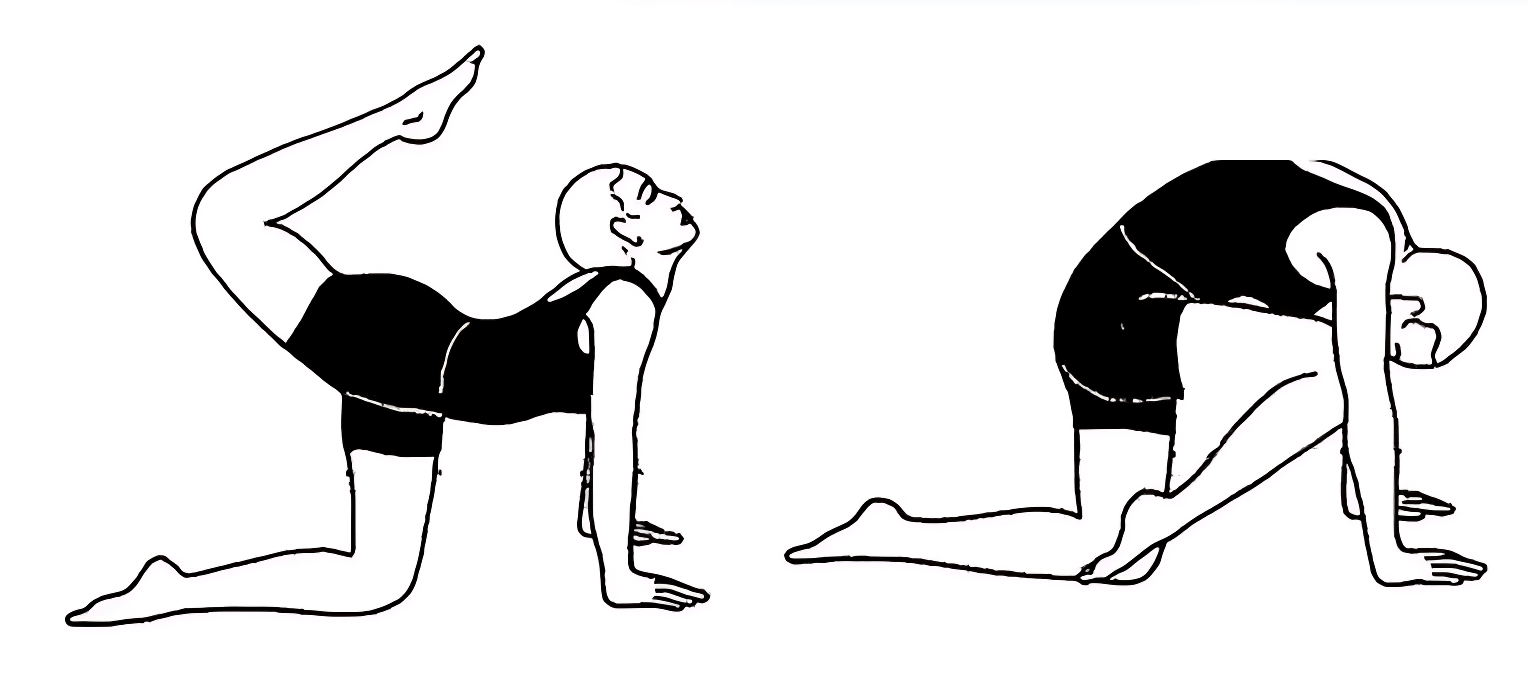
Rooted in symbolic expression, Vyaghrasana mimics the movement of a tiger stretching after rest, preparing its muscles and spine for agility and power. In yoga physiology, the pose is associated with awakening energy, unblocking the sacral region, and stimulating pranic flow. In modern anatomical terms, it mobilizes the spine through controlled flexion and extension while training neuromuscular coordination.
2. Word Meaning and Etymology
The Sanskrit word Vyaghrasana is composed of:
- Vyaghra – “Tiger”
- Asana – “Posture” or “Seat”
Thus, Vyaghrasana literally means Tiger Pose.
The symbolism of the tiger in yogic tradition represents:
- Strength
- Flexibility
- Awareness
- Grace
- Agility
- Predatory power (symbolically transformed into inner courage)
The pose imitates the action of a tiger stretching one leg back and arching its spine after a period of rest, suggesting a release of energy and activation of latent strength.
3. Definition of Vyaghrasana
Vyaghrasana is a quadrupedal spinal extension and core-coordination posture, performed on hands and knees. One leg lifts backward with the knee bent, while the spine extends in a controlled arch. Variations may include simultaneous arm extension forward, knee-to-nose spinal flexion, and dynamic repetitions.
In terms of functional description:
Vyaghrasana is a dynamic spinal mobility pose combining hip extension, lumbar extension, contralateral stabilization, and rhythmic breath-coordinated movement, improving neuromuscular efficiency, strength, and balance.
It is a fundamental posture used in:
- Hatha Yoga
- Vinyasa Yoga
- Pre- and post-natal practices
- Physical therapy
- Pilates-influenced core programs
4. Method of Practice: Step-by-Step Technique
Below is the traditional method followed in classic Hatha Yoga schools.
Step 1: Starting Position
- Come to the Tabletop position on hands and knees.
- Place knees hip-width apart, hands shoulder-width apart.
- Spread fingers evenly and root through palms.
- Keep spine in a neutral position.
Step 2: Establishing Alignment
- Wrists stacked under shoulders.
- Knees directly under hips.
- Neck in line with spine.
- Engage core gently (Uddiyana Bandha light activation).
- Stabilize shoulder girdle by engaging serratus anterior.
Step 3: Movement into Tiger Pose
- Inhale – Lift your right leg backward with knee bent.
- Heel moves toward the ceiling.
- Hip extends; thigh moves behind you.
- Simultaneously, allow the spine to extend gently (cow-like movement).
- Keep shoulders stable, chest broad.
Step 4: Dynamic Variation (Optional)
- Exhale – Round the spine (cat-like) and bring the knee toward the nose.
- Inhale – Lift the leg again into extension.
Repeat 5–10 rounds.
Step 5: Maintaining the Pose (Static Variation)
- Hold the leg lifted for 3–5 breaths.
- Keep weight evenly distributed.
- Engage the core to avoid sagging in the lumbar region.
Step 6: Exit the Pose
- Exhale and release the leg down.
- Return to Tabletop.
- Repeat on the left side.
Step 7: Rest
Move to Child’s Pose (Balasana) for 5 breaths.
5. Alignment Cues for Safe Practice
Alignment is essential to avoid lower back strain or shoulder overload.
Core Cues
- “Draw the navel slightly in to stabilize the spine.”
- “Avoid collapsing the belly.”
- “Keep the pelvis steady as you lift the leg.”
Spinal Cues
- “Lengthen the lumbar spine rather than compressing it.”
- “Lift the heart forward while drawing shoulder blades back and down.”
- “Create extension from the thoracic spine rather than only lumbar.”
Hip & Leg Cues
- “Keep hips square to the floor.”
- “Lift the leg by engaging gluteus maximus, not by overarching the back.”
- “Flex the foot if it helps your stability.”
Shoulder Cues
- “Press firmly through palms.”
- “Engage serratus anterior to prevent shoulder collapse.”
- “Avoid locking elbows.”
Breath Cues
- “Inhale to lift and extend.”
- “Exhale to round if using dynamic movement.”
- “Keep breath smooth and steady.”
6. Benefits of Vyaghrasana
Vyaghrasana offers benefits across physical, energetic, physiological, and psychological domains.
Physical Benefits
1. Strengthens the core
- Transverse abdominis
- Obliques
- Multifidus
- Pelvic floor muscles
2. Strengthens the glutes
- Powerful engagement of gluteus maximus
- Supports hip extension and lower-body stability
3. Enhances spinal mobility
- Controlled extension and flexion
- Lubrication of intervertebral joints
4. Strengthens the shoulder girdle
- Serratus anterior
- Rotator cuff muscles
- Trapezius
5. Improves balance and coordination
- Contralateral limb engagement
- Strengthens neuromuscular communication
Energetic Benefits (Nadis & Chakras)
- Activates Swadhisthana Chakra (pelvic energy)
- Stimulates Manipura Chakra (core strength, vitality)
- Awakens Prana through rhythmic movement
- Reduces stagnant energy in the lower back and hips
Physiological Benefits
- Enhances digestive functioning
- Improves circulatory flow to spine
- Stimulates lymphatic drainage
- Encourages respiratory expansion
Therapeutic Benefits
- Useful in mild lower back stiffness
- Helps in postpartum core recovery
- Improves proprioception
- Beneficial for sedentary individuals
- Supports rehabilitation after hip or spinal injury (gentle variation)
7. Contraindications of Vyaghrasana
Vyaghrasana is generally safe, but certain conditions require modification or avoidance.
Absolute Contraindications
- Recent wrist injury
- Carpal tunnel syndrome (unless modified)
- Acute knee pain
- Severe sciatica
- Spinal fractures
- Herniated lumbar disc in acute phase
Relative Contraindications (Caution Required)
- Pregnancy after 12 weeks (modify belly space)
- Hypermobility syndrome
- Shoulder instability
- Uncontrolled hypertension
- Post-abdominal surgery
- Recent hip replacement
Contraindications for Dynamic Rounds
Avoid intense knee-to-nose flexion if:
- There is severe abdominal pain
- Hernia
- Diastasis recti
- Pregnancy in any trimester
8. Counterposes
After Vyaghrasana, counterposes help neutralize the spine.
Primary Counterposes
1. Balasana (Child’s Pose)
Releases lower back and hips.
2. Adho Mukha Virasana
Lengthens spine and shoulders.
Secondary Counterposes
- Marjaryasana (Cat)
- Neutral Tabletop
- Bharmanasana (Quadruped neutral)
- Uttanasana (Forward fold, optional)
9. Preparatory Practices
Preparing the body ensures safe and efficient movement.
1. Cat–Cow (Marjaryasana–Bitilasana)
Mobilizes spine and warms up core.
2. Bird Dog (Dandayamana Bharmanasana)
Trains contralateral stability.
3. Low Lunges (Anjaneyasana)
Opens hip flexors for better hip extension.
4. Glute engagement exercises
- Glute bridges
- Donkey kicks
5. Wrist mobilization
- Wrist circles
- Tabletop with weight shifts
10. Modifications and Variations
1. Beginners
- Keep leg lower
- Use folded blanket under knees
- Keep spine neutral rather than deep extension
2. For Weak Wrists
- Perform on fists
- Use yoga blocks under forearms
- Practice on forearms (Ardha Vyaghrasana)
3. For Limited Balance
- Keep toes of lifted leg on the floor
- Use wall support
4. Advanced Variations
a. Opposite Arm & Leg Lift (Full Tiger Balance)
Improves coordination.
b. Grabbing the lifted foot
Creates deep quad stretch and chest opener.
c. Dynamic Core Variation
Knee-to-nose contralateral crunch.
d. Tiger Crawl
Movement across the mat for core endurance.
11. Muscles Involved
Vyaghrasana is a multi-joint, multi-muscle movement.
Primary Muscles Activated
1. Gluteus Maximus
Main hip extensor lifting the leg.
2. Hamstrings
Assist in hip extension.
3. Erector Spinae
Support spinal extension.
4. Serratus Anterior
Stabilizes scapula.
5. Transverse Abdominis & Obliques
Provide trunk stability.
Secondary Muscles
- Deltoids
- Latissimus dorsi
- Quadriceps
- Multifidus
- Rhomboids (slight engagement)
- Pelvic floor muscles
12. Kinesiology of Vyaghrasana
Kinesiology explains joint actions and muscle coordination.
Joint Movements
Hip
- Extension of the lifted leg
- Partial rotation stabilization
Spine
- Controlled extension
- Alternating flexion in dynamic variation
Shoulder
- Stabilization through isometric contraction
Knee
- Static flexion (bent leg)
- Pressure absorption
Pelvis
- Neutral or slight anterior tilt during extension
Force Chains
- Posterior chain activation (glutes, hamstrings, erectors)
- Anterior chain stability (core)
- Upper extremity support chain (shoulders → wrists)
13. Kinematics of the Pose
Kinematics focuses on movement patterns.
Movement Plane
Primarily sagittal plane:
- Hip extension
- Spinal extension
- Knee flexion
Movement Type
- Closed-chain in upper body (hands fixed)
- Open-chain in lifted leg
- Mixed-chain core stabilization
Movement Velocity
Depends on variation:
- Slow for therapeutic practice
- Moderate for warming
- Fast for vinyasa activation
Key Kinematic Principles
- Movement initiated from pelvis.
- Weight shifts diagonally to maintain balance.
- Leg lifts via hip extension, not lumbar hyperextension.
- Controlled spinal sequence prevents compression.
14. Biomechanics of Vyaghrasana
Biomechanics analyzes forces, loads, and tissue stress.
1. Load Distribution
- Shoulders bear approximately 30–40% of body weight.
- Knees bear 20–30%.
- Remaining weight shifts diagonally across the body.
2. Spinal Biomechanics
- Extension is shared across lumbar + thoracic spine.
- Excess lumbar flexion is limited by core activation.
3. Hip Biomechanics
- Gluteus maximus generates the lift force.
- Hamstrings assist but do not dominate.
- Hip flexors stretch passively.
4. Shoulder Biomechanics
- Serratus anterior prevents scapular winging.
- Rotator cuff stabilizes humeral head.
5. Balance & Proprioception
The lifted leg reduces the base of support, improving:
- Proprioceptive feedback
- Neuromuscular response
- Deep core stabilizer activation
15. Functional Anatomy & Physiology
Vyaghrasana benefits multiple systems.
Spinal Physiology
- Improves disc hydration through motion
- Increases synovial fluid in facet joints
- Balances spinal curves
Muscular Physiology
- Strengthens type I & type II muscle fibers
- Promotes core endurance
- Enhances gluteal tone
Respiratory Physiology
- Deep breathing expands thoracic cavity
- Improves diaphragmatic movement
Circulatory System
- Light inversion improves venous return
- Enhances lymphatic flow
Neurological Impact
- Improves bilateral coordination
- Enhances sensorimotor integration
- Reduces mental stress through rhythmic movement
16. How to Correct and Adjust While Teaching
Teaching corrections must prioritize safety, clarity, and biomechanical accuracy.
Common Mistakes and Corrections
1. Overarching the lower back
❌ Mistake: Excessive lumbar compression
✔ Correction Cue: “Lift the leg with your glutes, not your lower back.”
2. Hip lifting too high and rotating outward
❌ Mistake: Pelvic rotation
✔ Cue: “Keep the hip points facing the mat.”
3. Collapsing into shoulders
❌ Mistake: Scapular winging
✔ Cue: “Push the floor away and broaden the back.”
4. Head thrown back
❌ Mistake: Cervical hyperextension
✔ Cue: “Keep the neck long, gaze slightly forward.”
Hands-On Adjustments (Optional)
- Place one hand on the lower back to guide neutral alignment.
- Use the other hand near the lifted thigh to help student engage glutes.
- Light pressure on shoulders to encourage broadening and stability.
- Support pelvis from rotating out.
Always avoid:
- Pressing directly on the lower spine
- Forcing the leg higher
- Pushing the head or neck
Verbal Teaching Script Example
- “Ground through your hands.”
- “Lift your leg from the hip, not the back.”
- “Keep hips square.”
- “Lengthen through your spine.”
- “Breathe into your belly.”
17. Conclusion
Vyaghrasana (Tiger Pose) is a powerful yet accessible posture used across traditional and modern yoga traditions. It integrates strength, mobility, balance, and breath control, offering profound benefits for the spine, hips, core, and shoulders. Its dynamic variations make it adaptable for therapeutic use, prenatal yoga, strength training, and vinyasa sequences. Understanding its biomechanics, anatomy, and kinesiology helps teachers offer safe, effective cues and precise adjustments. When practiced regularly, Vyaghrasana enhances postural stability, spinal health, muscular strength, and nervous system regulation.
QUESTION AND ANSWER
1. The Sanskrit word “Vyaghrasana” primarily translates to:
a) Camel pose
b) Tiger pose
c) Dolphin pose
d) Cow pose
Answer: b) Tiger pose
2. Vyaghrasana is traditionally practiced in which category of asanas?
a) Forward bends
b) Balancing poses
c) Backbends
d) Inversions
Answer: c) Backbends
3. What is the primary movement in the spine during the leg-lifting phase of Vyaghrasana?
a) Spinal flexion
b) Spinal rotation
c) Spinal extension
d) Lateral flexion
Answer: c) Spinal extension
4. Which joint of the lifted leg performs the greatest degree of movement in Vyaghrasana?
a) Knee joint
b) Ankle joint
c) Hip joint
d) Sacroiliac joint
Answer: c) Hip joint
5. The lifted leg in Vyaghrasana moves primarily into:
a) Hip adduction
b) Hip internal rotation
c) Hip extension
d) Hip flexion
Answer: c) Hip extension
6. Which muscle is the prime mover for hip extension in Vyaghrasana?
a) Psoas major
b) Gluteus maximus
c) Tensor fascia lata
d) Rectus femoris
Answer: b) Gluteus maximus
7. The weight-bearing shoulder in Vyaghrasana requires activation of which stabilizing muscle?
a) Upper trapezius
b) Serratus anterior
c) Latissimus dorsi
d) Brachialis
Answer: b) Serratus anterior
8. Which muscle is MOST engaged when lifting the chest and arching the spine?
a) Rectus abdominis
b) Erector spinae
c) Quadratus lumborum
d) Teres minor
Answer: b) Erector spinae
9. Which breath pattern is traditionally coordinated with the leg-lifting (backbending) phase?
a) Inhalation
b) Exhalation
c) Breath retention
d) Rapid breathing
Answer: a) Inhalation
10. Which breath is used during the knee-to-forehead phase?
a) Breath retention
b) Slow inhalation
c) Deep exhalation
d) No specific breath used
Answer: c) Deep exhalation
11. What is the recommended knee positioning while lifting the leg in Vyaghrasana?
a) Fully bent
b) Completely locked
c) Neutral: can be bent or extended
d) Rotated outward
Answer: c) Neutral: can be bent or extended
12. Which common alignment error must be corrected?
a) Press the palms evenly
b) Knee lifting too high causing lumbar compression
c) Shoulder above wrist
d) Spine neutral
Answer: b) Knee lifting too high causing lumbar compression
13. Which of the following is NOT a benefit of Vyaghrasana?
a) Improves digestion
b) Strengthens glutes
c) Enhances spinal flexibility
d) Increases blood pressure
Answer: d) Increases blood pressure
14. Vyaghrasana is contraindicated in people with:
a) Asthma
b) Carpal tunnel syndrome
c) Mild knee pain
d) Frozen shoulder history
Answer: b) Carpal tunnel syndrome
15. Which condition requires modification or avoidance?
a) Pregnancy (late stages)
b) Myopia
c) Dry skin
d) Toothache
Answer: a) Pregnancy (late stages)
16. Which modification is appropriate for beginners?
a) Use a wall
b) Keep hands on blocks
c) Lift leg only halfway
d) Perform on soft bed
Answer: c) Lift leg only halfway
17. Vyaghrasana improves circulation to which internal organ primarily due to spinal movements?
a) Heart
b) Liver
c) Abdominal organs
d) Thyroid gland
Answer: c) Abdominal organs
18. What joint action occurs when the knee is pulled towards the forehead?
a) Hip extension
b) Hip abduction
c) Hip flexion
d) Hip external rotation
Answer: c) Hip flexion
19. The round-spine phase (knee to forehead) strengthens:
a) Thoracic extensors
b) Rectus abdominis
c) Gastrocnemius
d) Deltoids
Answer: b) Rectus abdominis
20. Which anatomical plane is primarily involved in the forward–backward spinal movement?
a) Coronal plane
b) Transverse plane
c) Sagittal plane
d) Horizontal plane
Answer: c) Sagittal plane
21. Which kinesiological principle is best demonstrated in Vyaghrasana?
a) Reciprocal inhibition
b) Lever class 2 action
c) Internal torque reduction
d) Elastic recoil
Answer: a) Reciprocal inhibition
(hip flexors lengthen as extensors contract)
22. In Vyaghrasana, the pelvis moves into:
a) Neutral tilt only
b) Anterior tilt during extension and posterior tilt during flexion
c) Lateral tilt
d) Rotation
Answer: b) Anterior tilt during extension and posterior tilt during flexion
23. Which part of the spine performs the greatest range in the backbend phase?
a) Cervical
b) Thoracic
c) Lumbar
d) Sacral
Answer: c) Lumbar
24. To avoid wrist strain, the teacher should instruct:
a) Bend the elbows
b) Keep fingers together
c) Distribute weight across the whole palm
d) Lift one hand
Answer: c) Distribute weight across the whole palm
25. Which cue prevents hyperextension of the elbow?
a) Rotate elbows inward
b) Push the chest down
c) Lock the elbows
d) Spread knees apart
Answer: a) Rotate elbows inward
26. The pose improves core stability mainly through which mechanism?
a) Compression of lungs
b) Isometric contractions
c) Ballistic movements
d) Kicking action
Answer: b) Isometric contractions
27. Which counterpose is best after Vyaghrasana?
a) Savasana
b) Balasana
c) Uttanasana
d) Paschimottanasana
Answer: b) Balasana
28. Which of the following best describes the biomechanics of the pose?
a) Pure spinal rotation
b) Alternating spinal flexion and extension
c) Fixed neutral spine
d) No effect on pelvis
Answer: b) Alternating spinal flexion and extension
29. A common teaching correction for students collapsing in shoulders:
a) Sink the chest
b) Pull shoulders back
c) Protract the scapulae
d) Bend elbows more
Answer: c) Protract the scapulae
30. Which movement pattern differentiates Vyaghrasana from Marjaryasana–Bitilasana?
a) Spinal extension
b) Use of bilateral limb support
c) Unilateral leg lift
d) Neutral head position
Answer: c) Unilateral leg lift