
1. INTRODUCTION
Virasana—widely known in English as Hero Pose—is a foundational seated posture practiced in classical hatha yoga, contemporary posture-based yoga, and therapeutic movement traditions. It is a deceptively simple posture at first glance: the practitioner kneels, separates the feet, and sits between the heels with an erect spine. Yet, beneath this external simplicity lies a rich biomechanical architecture involving the ankles, knees, hips, pelvis, spine, and core musculature.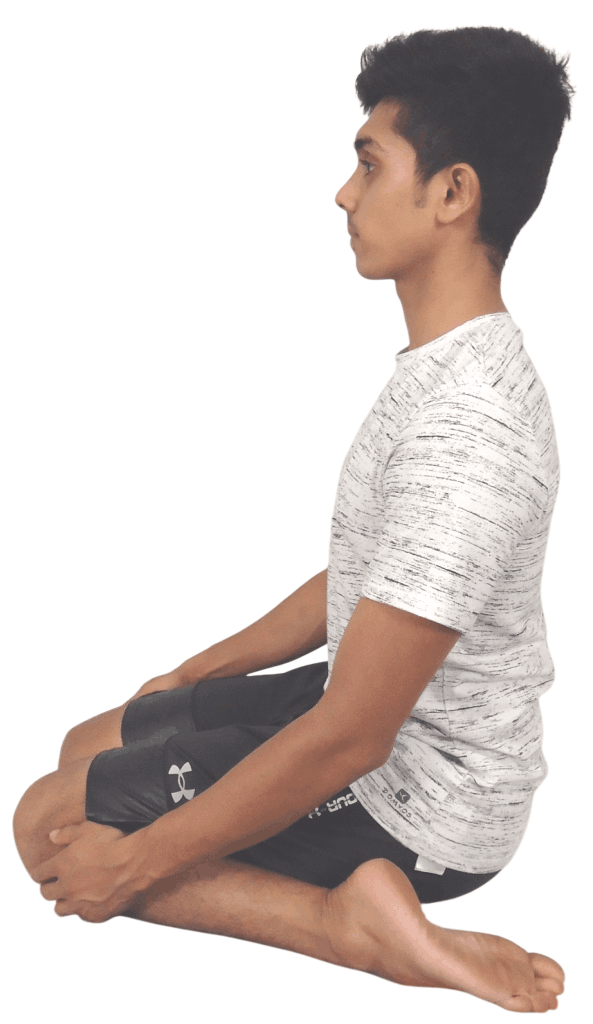
Virasana plays a unique role among seated yogāsanas because it is both a resting posture and a structural alignment posture. Unlike cross-legged sitting, Virasana aligns the pelvis neutrally, decompresses the lumbar spine, and creates an opportunity for spinal stacking. It is widely used in pranayama, meditation, chanting, and cool-down practices after intense asana sequences, particularly those involving lower-body work.
Its accessibility varies: some practitioners find Virasana extremely comfortable, while many others experience knee, ankle, or quadriceps tension that requires modification. Therefore, a deep understanding of anatomy, kinesiology, and biomechanics is essential for yoga teachers to offer safe entry into the posture.
2. WORD MEANING
The Sanskrit word Vīrāsana comes from:
- Vīra — hero, warrior, courageous person
- Āsana — posture, seat, or stable position
Thus Vīrāsana = “The Hero’s Seat” or “The Pose of the Courageous Person.”
The term “hero” in yogic philosophy symbolizes:
- steadfastness
- mental strength
- moral clarity
- humility and readiness for spiritual practice
This symbolic meaning aligns with the posture’s use for meditation and breathwork.
3. DEFINITION
Virasana is a kneeling posture in which the practitioner sits between the heels with the knees flexed, thighs internally rotated, feet beside the hips, spine erect, and pelvis neutral.
Key components of the definition include:
- Knee flexion at approximately 140–160 degrees
- Internal rotation of the femurs
- Neutral pelvic alignment with upright spine
- Plantarflexion of the ankles with the tops of the feet on the floor
- Sitting on the floor (or a prop) between the heels
Virasana is distinct from Vajrasana: in Vajrasana the practitioner sits on the heels, while in Virasana one sits between the heels.
4. METHOD OF PRACTICE (STEP-BY-STEP)
Step 1: Prepare the Kneeling Position
- Begin in a kneeling stance (Vajrasana).
- Ensure knees are touching or hip-distance apart, depending on comfort and tradition.
Step 2: Separate the Feet
- Slide the feet wider than the hips.
- Keep toes pointing straight back.
- The inner edges of the feet should hug the outer calves.
Step 3: Check Alignment of Ankles
- Press the tops of the feet firmly into the mat.
- Ensure the ankles do not roll outward excessively.
Step 4: Lower the Hips
- Slowly bring the pelvis down between the heels.
- If the hips do not reach the ground comfortably, place a block or bolster under them.
Step 5: Establish the Pelvic Position
- Maintain neutral pelvis—not overly tucked or arched.
- Allow the sitting bones to rest evenly.
Step 6: Lengthen the Spine
- Lift the sternum upward.
- Relax the shoulders down and slightly back.
- Elongate through the crown of the head.
Step 7: Position the Hands
- Place palms on the thighs, cupped or facing down.
- For meditative practice, use Jnana or Chin mudra.
Step 8: Breath Awareness
- Begin deep diaphragmatic breathing.
- Optionally practice Ujjayi or Nadi Shodhana pranayama.
Step 9: Hold
- Beginners: 30 seconds – 1 minute
- Intermediate: 3–5 minutes
- Advanced or meditative practice: 10–20 minutes (if knees and ankles allow)
Step 10: Exit the Pose Safely
- Lean forward and lift the hips.
- Bring feet together behind the pelvis.
- Gently straighten the legs in Dandasana to release the knees and ankles.
5. ALIGNMENT CUES
Feet and Ankles
- “Point the toes straight back—not inward, not outward.”
- “Press the top of the feet evenly into the floor.”
- “Avoid collapsing on the outer ankles.”
Knees
- “Keep knees comfortably close—not forced together.”
- “If you feel knee compression, elevate the hips immediately.”
Thighs
- “Internally rotate the thighs as you sit down.”
- “Spread the calves outward with the hands to create space.”
Pelvis and Spine
- “Lift the sternum; soften the lower ribs.”
- “Stack the spine tall like a column.”
- “Neutral pelvis—not tucked, not excessively arched.”
Upper Body
- “Relax the shoulders—no gripping.”
- “Chin parallel to the ground.”
- “Keep hands softly resting on the thighs.”
6. BENEFITS OF VIRASANA
Physical Benefits
- Improves knee joint mobility
- Stretches quadriceps and hip flexors
- Lengthens the tops of the ankles and feet
- Releases tight calves and shins
- Supports healthy pelvic alignment
- Improves digestion and reduces gas (traditional hatha yoga belief)
- Strengthens postural muscles through upright seated position
- Reduces varicose vein discomfort when practiced with neutral pelvis
Physiological Benefits
- Enhances diaphragmatic breathing
- Stimulates parasympathetic nervous system
- Promotes venous return from the lower body
- Facilitates upright spinal alignment for pranayama
Psychological Benefits
- Improves concentration and calmness
- Suitable for meditation due to stable base
- Creates introspective grounding
Therapeutic Applications
- Prevents or relieves foot and ankle stiffness
- Aids recovery from intense leg work (running, cycling)
- Useful alternative to cross-legged sitting for those with hip limitations
7. CONTRAINDICATIONS
Absolute Contraindications
- Severe knee arthritis
- Recent knee surgery
- Torn meniscus
- Ligament damage (ACL/PCL)
- Acute ankle sprain
Relative Contraindications (Modify or Use Props)
- Tight quadriceps or hip flexors
- Swelling around the knees
- Chronic ankle weakness
- Sciatica due to pelvic tilt
- Pregnancy (pressure on knees may be uncomfortable)
Red Flags
- Numbness or tingling in feet
- Sharp knee pain
- Extreme arching in the lower back
- Compression in the anklebone (talus)
8. COUNTERPOSES
To release tension after Virasana:
- Dandasana – stretches knees and ankles
- Adho Mukha Svanasana – lengthens quadriceps
- Uttanasana – decompresses spine
- Pavanamuktasana – releases the lower back
- Baddha Konasana – neutralizes hip rotation
- Supta Padangusthasana – lengthens hamstrings
9. PREPARATORY PRACTICES
For Knees
- Supta Virasana (reclining version)
- Ardha Virasana (half hero pose)
- Child’s Pose
- Knee flexion mobility exercises
For Ankles
- Ankle plantarflexion stretches
- Vajrasana practice
- Toe bending stretches
- Ankle circles and mobility work
For Quadriceps and Hip Flexors
- Low lunge
- Half saddle pose
- Standing quad stretch
- Prone quad stretch
For Spinal Alignment
- Cat–Cow
- Seated spinal extension work
- Tadasana alignment drills
10. MODIFICATIONS
1. Sitting on a Block
Most common and safest method.
Benefits: reduces knee flexion strain.
2. Using a Bolster or Cushion
Used for prolonged sitting or meditation.
3. Ardha Virasana (Half Hero Pose)
Sit on one heel, extending the other leg forward.
4. Using Blankets Under Ankles
Supports individuals with limited ankle mobility.
5. Reclined Hero Pose (Supta Virasana)
More intense stretch; only for advanced practitioners with healthy knees.
6. Chair Virasana
Sit on a chair while placing knees together and feet tucked under.
11. MUSCLES INVOLVED
Muscles Being Stretched
- Quadriceps (especially rectus femoris)
- Tibialis anterior
- Peroneals
- Gastrocnemius and soleus (indirectly)
- Hip flexors (psoas minor, iliacus)
- Anterior tibial structures
Muscles Being Activated
- Erector spinae – spinal extension
- Multifidus – stabilizing
- Transverse abdominis – core support
- Pelvic floor muscles – neutral pelvis
- Gluteus medius (isometric) – stabilizes pelvis
- Deep lateral rotators (modified internal rotation control)
12. KINESIOLOGY OF VIRASANA
Main Actions
- Knee flexion
- Ankle plantar flexion
- Hip internal rotation
- Neutral pelvic stabilization
- Spinal axial extension
Joint Angles
- Knee: 140–160° flexion
- Ankle: full plantarflexion
- Hip: internal rotation + slight extension
- Spine: neutral or extended
Muscle Activity Patterns
- Quadriceps lengthen under passive tension
- Erector spinae contract isometrically
- Pelvic stabilizers work to keep upright posture
- Core muscles maintain rib-pelvis spacing
Respiratory Kinesiology
- Diaphragm descends more efficiently due to upright posture
- Intercostals expand
- Optimal for pranayama
13. KINEMATICS
Movement Planes
- Sagittal plane: knee flexion and ankle plantarflexion
- Horizontal plane: hip internal rotation
- Vertical axis: spinal axial extension
Force Distribution
- Tibia bears weight downward
- Patella experiences superior glide
- Talus and tarsal bones undergo compressive loading
- Pressure distributed across dorsal foot surface
Motion Patterns
- Controlled descent into the space between the heels
- Static hold with minimal movement
- Subtle kinematic adjustments for balance
14. BIOMECHANISM OF VIRASANA
Knee Biomechanics
- Knee experiences compression between tibia and femur
- Menisci bear pressure; safe if no pathology
- Patellofemoral joint tolerates flexion well if quadriceps flexible
- Excess strain occurs if heels externally rotate excessively
Ankle Biomechanics
- Extreme plantarflexion lengthens anterior tibial ligament
- Talocrural joint compressed; hence modifications are important
- Plantar fascia lengthens in mild form
Hip Biomechanics
- Internal rotation of femur creates space at sacrum
- Transverse acetabular ligament experiences mild tension
- Psoas stays neutral, not excessively lengthened
Spinal Biomechanics
- Natural lumbar curve supported
- Erector spinae maintain isometric tension
- Ribcage lifts increasing lung volume
15. FUNCTIONAL ANATOMY & PHYSIOLOGY
Functional Anatomy
- Kneeling posture strengthens lower limb proprioception
- Requires coordinated action of:
- knee flexors and extensors
- ankle stabilizers
- hip rotators
- core muscles
- spinal extensors
Physiological Effects
- Increased blood flow to pelvic organs
- Enhanced lymphatic circulation in legs
- Parasympathetic activation through pressure on shins
- Improved gastric motility
- Enhanced diaphragmatic movement
16. HOW TO CORRECT AND ADJUST WHILE TEACHING
Common Errors & Corrections
1. Knees hurt or feel compressed
- Use a block under the pelvis
- Increase distance between feet
- Add blanket under knees
- Never force the student
2. Ankles splay outward
Correction cue:
“Keep your toes pointing straight back; draw the pinky-toe edge in.”
3. Lower back overarches
Correction cue:
“Draw the front ribs in and lengthen the tailbone down.”
4. Slouched spine
Cue:
“Lift from the sternum and reach up through the crown of the head.”
5. Hips do not touch the floor comfortably
Use bolster/block; never push them down manually.
Hands-On Adjustments (Optional)
For Feet
- Gently rotate ankles so toes point straight back.
- Press tops of feet evenly.
For Knees
- Place hands around lower thighs to guide them into internal rotation.
For Spine
- Place fingertips behind shoulders and lift slightly upward to encourage expansion.
For Pelvis
- Lightly guide the lower ribs backward to neutralize lumbar lordosis.
Safety Notes for Teachers
- Never press on knees.
- Avoid manipulating a student’s feet forcefully.
- Always offer props first.
- Encourage communication regarding discomfort.
- Observe facial expressions and breath.
CONCLUSION
Virasana is a versatile, foundational posture that combines biomechanical complexity with meditative stillness. While superficially simple, it significantly influences structural alignment of the legs, pelvis, and spine. Its real beauty lies in its adaptability: with modifications, nearly anyone can practice it safely.
For yoga teachers, understanding the posture’s anatomical, kinesiological, and biomechanical characteristics is essential. When instructed mindfully, Virasana becomes a transformative practice—opening the quadriceps, refining spinal posture, calming the nervous system, and preparing the practitioner for deeper yogic experiences such as pranayama and meditation.
QUESTION AND ANSWER
1. The Sanskrit term “Vīrāsana” translates to:
A. Lion Pose
B. Hero Pose
C. Thunderbolt Pose
D. Meditation Pose
Answer: B
2. Primary joint movement occurring in Virasana is:
A. Hip extension
B. Knee flexion
C. Hip abduction
D. Spinal extension
Answer: B
3. In Virasana, the feet should be placed:
A. Together under the buttocks
B. Wide apart with toes turned outward
C. On either side of the hips
D. Directly beneath the knees
Answer: C
4. A common preparatory pose for Virasana is:
A. Adho Mukha Svanasana
B. Vajrasana
C. Tadasana
D. Balasana
Answer: B
5. Sitting on a block in Virasana helps primarily with:
A. Improving thoracic mobility
B. Reducing strain on knees and ankles
C. Strengthening hip flexors
D. Enhancing forward bends
Answer: B
6. The muscle primarily lengthened in Virasana is:
A. Hamstrings
B. Quadriceps
C. Gastrocnemius
D. Deltoids
Answer: B
7. A student with knee ligament injury should:
A. Avoid Virasana
B. Practice with ankles crossed
C. Perform only with teacher support
D. Do it without props
Answer: A
8. Which breath cue is appropriate in Virasana?
A. Hold breath
B. Rapid inhalation
C. Slow diaphragmatic breathing
D. Chest breathing only
Answer: C
9. What is one key alignment cue for the pelvis in Virasana?
A. Anterior tilt
B. Posterior tilt
C. Neutral pelvis
D. Lateral tilt
Answer: C
10. In Virasana, internal rotation of which bone helps reduce knee compression?
A. Femur
B. Tibia
C. Fibula
D. Sacrum
Answer: A
SET-2: INTERMEDIATE / TTC LEVEL MCQs
11. Which anatomical structure receives mild compression in Virasana?
A. SI joint
B. Meniscus of the knee
C. Glenohumeral joint
D. Elbow joint
Answer: B
12. A student with tight quadriceps may experience:
A. Hip over-flexion
B. Lumbar hyperextension
C. Knee lifting off the floor
D. Rib compression
Answer: C
13. The safest way to exit Virasana is:
A. Jump up
B. Roll to one side
C. Gently lean forward and lift hips
D. Pull the feet out quickly
Answer: C
14. When teaching Virasana, the first check should be:
A. Breath pattern
B. Height of props
C. Knee comfort
D. Shoulder position
Answer: C
15. Which nerve may be compressed if the foot position is incorrect?
A. Sciatic
B. Tibial
C. Median
D. Radial
Answer: B
16. In Virasana, the thighs should be:
A. Internally rotated
B. Externally rotated
C. Hyperextended
D. Wider than hip width
Answer: A
17. Which modification helps ankle discomfort?
A. Kneeling on bolster
B. Padding under shins
C. Feet turned outward
D. Keeping feet touching
Answer: B
18. Excessive anterior pelvic tilt leads to:
A. Lumbar rounding
B. Lumbar compression
C. Thoracic flattening
D. Hip abduction
Answer: B
19. Major synergist muscle in maintaining upright torso in Virasana:
A. Transverse abdominis
B. Spinal erectors
C. Rhomboids
D. Iliacus
Answer: B
20. Which pose is commonly used as counterpose to Virasana?
A. Uttanasana
B. Baddha Konasana
C. Dandasana
D. Adho Mukha Svanasana
Answer: D
SET-3: ADVANCED ANATOMY & BIOMECHANICS MCQs
21. What kinematic chain is heavily involved in Virasana?
A. Closed-chain knee flexion
B. Open-chain hip extension
C. Open-chain ankle inversion
D. Closed-chain spinal extension
Answer: A
22. The tibia in Virasana is typically in:
A. External rotation
B. Internal rotation
C. Neutral rotation
D. Hyperextension
Answer: C
23. Which soft tissue structure is lengthened around the ankle?
A. Achilles tendon
B. Plantar fascia
C. Ligamentum flavum
D. Deltoid ligament
Answer: A
24. Biomechanically, Virasana increases:
A. Patellofemoral pressure
B. Hip adduction
C. Foot dorsiflexion load
D. Scapular upward rotation
Answer: A
25. A student with high arches may feel strain because of:
A. Increased ankle plantarflexion
B. Decreased tibial rotation
C. Reduced shin contact
D. More pressure on talocrural joint
Answer: D
26. In Virasana, the femur performs:
A. External rotation + flexion
B. Internal rotation + flexion
C. Neutral rotation + extension
D. Abduction + extension
Answer: B
27. Which muscle stabilizes the pelvis most in Virasana?
A. Gluteus maximus
B. Psoas major
C. Gluteus medius
D. Quadratus lumborum
Answer: C
28. A student reports numbness on the top of the foot. What is likely compressed?
A. Deep peroneal nerve
B. Saphenous nerve
C. Femoral nerve
D. Pudendal nerve
Answer: A
29. Sitting too low in Virasana reduces space for:
A. Hip mobility
B. Menisci
C. Patellar tracking
D. Femoral tibial glide
Answer: C
30. Which structure primarily resists excessive knee flexion?
A. ACL
B. MCL
C. PCL
D. LCL
Answer: C
SET-4: TEACHING METHODOLOGY & CUEING MCQs
31. Best first cue for students entering Virasana:
A. “Relax your shoulders.”
B. “Bring your knees together and feet slightly wider than hips.”
C. “Pull your belly in.”
D. “Close your eyes and breathe.”
Answer: B
32. A proper adjustment for knee pain is:
A. Press the hips down
B. Move feet closer to hips
C. Add height under the sitting bones
D. Externally rotate thighs
Answer: C
33. While adjusting the torso, the teacher should encourage:
A. Neutral spine
B. Rounding spine
C. Hyperextension
D. Posterior pelvic tilt
Answer: A
34. A hands-on adjustment in Virasana should avoid:
A. Touching the shoulders
B. Lifting the ribs
C. Pushing the student’s knees
D. Aligning the pelvis
Answer: C
35. A beginner-friendly verbal cue is:
A. “Let your heels press into the sacrum.”
B. “Sit between your ankles, not on them.”
C. “Spread your collarbones aggressively.”
D. “Contract your glutes tightly.”
Answer: B
36. Key safety reminder while teaching Virasana:
A. Do not allow the student to change breath
B. Props are mandatory
C. Knees must stay pain-free at all times
D. Hold for a minimum of 2 minutes
Answer: C
37. Best prop to support a student with ankle tightness:
A. Block
B. Bolster under chest
C. Rolled blanket under ankles
D. Strap around knees
Answer: C
38. If the student leans backward excessively, cue:
A. “Lift the sternum.”
B. “Drop the ribs.”
C. “Push hips forward.”
D. “Tuck the chin.”
Answer: A
39. Virasana improves diaphragmatic breathing because:
A. Hips are higher
B. Shoulders tense naturally
C. Spine stays neutral with relaxed abdomen
D. Knees press into the floor
Answer: C
40. An advanced cue for spinal alignment is:
A. “Lift the skin of your back upward.”
B. “Let the spine collapse.”
C. “Round the lower back deeply.”
D. “Shift weight into one hip.”
Answer: A