
1. Word Meaning
Supta Padangusthasana is derived from Sanskrit:
- Supta = reclined or lying down
- Pada = foot
- Angustha = big toe
- Asana = posture
Hence, Supta Padangusthasana literally means “Reclining Hand-to-Big-Toe Pose”, a supine yoga posture in which the practitioner stretches one leg upward, holding the big toe with the hand, promoting flexibility, balance, and alignment in the lower body.
2. Definition
Supta Padangusthasana is a supine stretching asana in Hatha and modern yoga traditions. The pose primarily targets the hamstrings, calves, and hip flexors, while also engaging the core and promoting spinal alignment and pelvic stability. It can be performed unilaterally (one leg at a time) or bilaterally (both legs), with modifications such as using a strap to reach the foot if flexibility is limited.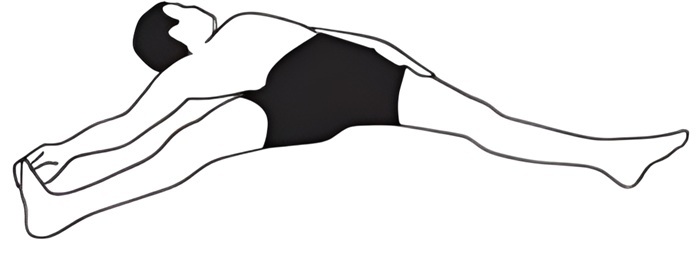
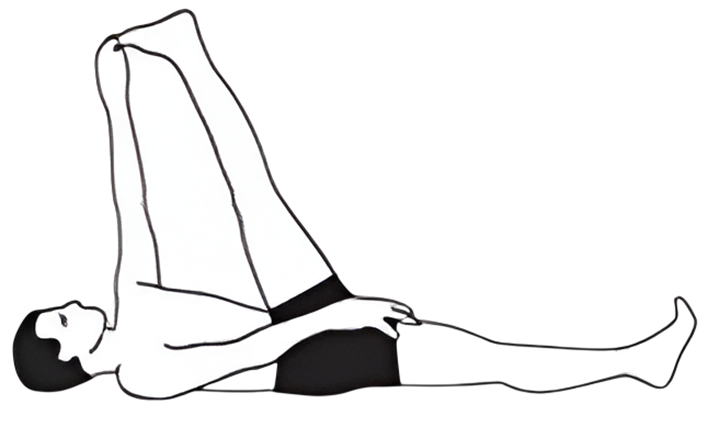
It is widely used in therapeutic yoga for improving lower limb flexibility, relieving sciatica, and enhancing balance and proprioception.
3. Method of Practice (Step by Step)
Step 1: Preparation
- Lie supine on a yoga mat with spine neutral and legs extended.
- Arms rest alongside the body.
- Relax the shoulders and jaw, take a few deep breaths.
Step 2: Engaging the Core
- Slightly engage the core muscles (rectus abdominis and transverse abdominis) to stabilize the pelvis.
- Press the sacrum and lower back gently into the mat, ensuring spinal alignment.
Step 3: Lifting One Leg
- Bend the right knee and bring the thigh toward the chest.
- Place the index and middle finger and thumb around the big toe of the right foot.
- If the foot cannot be reached, loop a yoga strap or belt around the sole of the foot.
Step 4: Extending the Leg
- Slowly straighten the right leg toward the ceiling, keeping the knee extended or slightly bent if hamstrings are tight.
- Press the left leg firmly into the mat, keeping toes pointed or flexed.
- Maintain a neutral spine and relaxed shoulders.
Step 5: Leg Variations
- Leg straight up: Keep leg vertical for maximum hamstring stretch.
- Leg outward (abduction): Stretch hip abductors and inner thighs.
- Leg across body (adduction): Opens inner thigh and hip adductors.
Step 6: Hold the Pose
- Maintain the posture for 30–60 seconds per side initially.
- Breathe deeply and evenly, focusing on the lengthening of hamstrings and the opening of the hip joint.
Step 7: Returning to Neutral
- Slowly bend the leg, bringing the foot back to the mat.
- Release the strap if used.
- Lower the leg gently and allow the body to return to neutral supine position.
- Repeat with the opposite leg.
4. Alignment Cues
- Pelvis: Press firmly into the mat to prevent rotation.
- Lower back: Keep spine long and avoid arching.
- Hips: Square to the ceiling; avoid tilting toward lifted leg.
- Knee of raised leg: Engage quadriceps; maintain slight micro-bend if tight.
- Foot: Point or flex as per stability and stretch.
- Neck and shoulders: Relax shoulders; gaze neutral.
5. Benefits
Physical Benefits
- Lengthens and strengthens hamstrings, calves, quadriceps, hip flexors, and adductors.
- Improves hip mobility and flexibility.
- Enhances spinal alignment and posture awareness.
- Strengthens core muscles, aiding pelvic stability.
- Improves balance and coordination when variations with leg movements are practiced.
Physiological Benefits
- Improves circulation to lower extremities.
- Stimulates nervous system by stretching sciatic nerve (relieves sciatica).
- Reduces muscle tension and stiffness in legs and lower back.
Mental Benefits
- Promotes focus and concentration.
- Reduces stress and anxiety by calming the nervous system.
- Enhances mind-body awareness and body alignment consciousness.
6. Contraindications
- Severe hamstring or calf injuries
- Sciatic nerve inflammation (acute stage)
- Lower back injury or disc herniation (without modifications)
- Hip replacement or severe hip joint limitations
- Pregnancy (especially 2nd and 3rd trimester)
Note: Always consult a physician for pre-existing conditions. Use a strap or slightly bent knee to reduce risk.
7. Counterposes
- Supta Baddha Konasana: Opens hips after hamstring stretch.
- Apanasana (Knees-to-Chest): Relieves lumbar spine tension.
- Savasana: Neutralizes the spine and relaxes muscles.
- Pawanmuktasana: Gentle inversion and release for lower back.
8. Preparatory Practice
To safely approach Supta Padangusthasana:
- Janu Sirsasana: Prepares hamstrings and spine for forward stretch.
- Paschimottanasana: Lengthens hamstrings and posterior chain.
- Utthita Hasta Padangusthasana (standing version): Improves hamstring flexibility and balance.
- Leg raises or core strengthening exercises: Build stability for supine leg lifting.
9. Modifications
- Use a yoga strap for foot if hamstring flexibility is limited.
- Keep the knee slightly bent to prevent overstretching.
- Practice leg abduction/adduction with strap support for hip mobility.
- Place a small folded blanket under the sacrum to support lower back.
10. Muscles Involved
- Hamstrings (Biceps Femoris, Semitendinosus, Semimembranosus) – primary stretch
- Quadriceps (Rectus Femoris) – stabilization during lift
- Hip Flexors (Iliopsoas) – engage for hip stabilization
- Adductors & Abductors – control leg movement in variations
- Calf Muscles (Gastrocnemius, Soleus) – lengthened when foot is flexed
- Core Muscles (Rectus Abdominis, Transverse Abdominis, Obliques) – maintain pelvic stability
- Spinal Erectors (Erector Spinae) – maintain neutral spine
11. Kinesiology
- Joint Actions:
- Hip: Flexion (raised leg), slight abduction/adduction in variations
- Knee: Extension (with micro-bend if needed)
- Ankle: Dorsiflexion or plantarflexion depending on stretch
- Muscle Contractions:
- Isometric: Core and supporting leg
- Eccentric: Hamstrings when lowering the leg
- Concentric: Quadriceps and hip flexors during lift
- Plane of Movement: Primarily sagittal, with optional frontal plane movements (abduction/adduction).
12. Kinematics
- Controlled leg lift requires precise joint coordination and neuromuscular control.
- Maintaining spine-neutral while lifting leg enhances pelvic stability.
- Leg variations recruit different hip, groin, and adductor muscle fibers.
13. Biomechanics
- Lever mechanics: The raised leg acts as a lever arm; core must stabilize pelvis.
- Force distribution: Supporting leg presses into the mat, counteracting weight of lifted leg.
- Load management: Gradual leg lifting prevents excessive hamstring strain.
- Balance and alignment: Pelvis, spine, and shoulder alignment prevent rotation and injury.
- 14. Functional Anatomy & Physiology
- Nervous System:
- Stimulates proprioceptors in hip, knee, ankle, and spine.
- Stretches sciatic nerve, relieving nerve tension when performed gently.
- Musculoskeletal System:
- Lengthens posterior chain (hamstrings, calves, gluteals).
- Engages anterior stabilizers (hip flexors, quadriceps, core).
- Circulatory System:
- Supine position aids venous return from lower limbs.
- Enhances oxygenation and lymphatic flow.
- Endocrine System:
- Indirectly improves nervous system efficiency, reducing cortisol levels.
15. How to Correct and Adjust While Teaching
Common Mistakes
- Raised leg bent too much or hyperextended
- Pelvic rotation toward lifted leg
- Spinal arching in lower back
- Foot not flexed or pointed correctly
Correction Strategies
- Encourage micro-bend in knee if hamstrings are tight.
- Cue pelvis square and shoulders relaxed.
- Use strap for foot to gradually increase stretch.
- Engage core to prevent lumbar arching.
Hands-On Adjustments
- Support ankle/heel gently for alignment.
- Stabilize pelvis with hand on iliac crest.
- Guide leg along sagittal plane for abduction/adduction variations.
Verbal Cueing
- “Engage your core and press the opposite leg into the mat.”
- “Keep your spine long, lift leg gently toward the ceiling.”
- “Micro-bend knee if hamstring tight; gradually straighten with practice.”
16. Variations of Supta Padangusthasana
- Single-Leg Variation: Classic hand-to-big-toe stretch.
- Leg to Side (Abduction): Opens inner thigh and hip abductors.
- Leg Across Body (Adduction): Stretches inner thigh and groin.
- Both Legs Up: Advanced variation for posterior chain flexibility.
- Strap-Assisted: For beginners with limited hamstring flexibility.
17. Therapeutic Applications
- Sciatica relief: Gentle hamstring and nerve stretch.
- Lower back tension: Spinal alignment reduces compression.
- Hip mobility: Abduction and adduction variations improve range of motion.
- Postural correction: Strengthens core and stabilizing muscles.
18. Safety and Precautions
- Always warm up hamstrings and hip joints.
- Avoid forced stretching; progress gradually.
- Use props (straps, blankets) for beginners.
- Maintain neutral spine; avoid excessive lumbar arch.
- Keep breathing slow and mindful.
19. Conclusion
Supta Padangusthasana is an essential supine yoga pose that combines flexibility, strength, and alignment. It is particularly valuable for:
- Stretching hamstrings, calves, and hip muscles
- Stabilizing pelvis and core
- Enhancing spinal health and posture awareness
- Improving neuromuscular coordination and proprioception
When practiced mindfully, with appropriate modifications, preparatory poses, and alignment awareness, it becomes a therapeutic and integrative posture suitable for both yoga beginners and advanced practitioners.
QUESTION AND ANSWER
1. What does “Supta” in Supta Padangusthasana mean?
A. Sitting
B. Reclined/Lying Down
C. Standing
D. Bent
Answer: B – “Supta” means reclined or lying down.
2. What does “Padangustha” refer to?
A. Hand
B. Big Toe
C. Foot Arch
D. Knee
Answer: B – “Padangustha” means big toe.
3. Supta Padangusthasana primarily stretches which muscle group?
A. Quadriceps
B. Hamstrings
C. Deltoids
D. Erector Spinae
Answer: B – It stretches the hamstrings of the lifted leg.
4. Which preparatory pose is most suitable for Supta Padangusthasana?
A. Halasana
B. Paschimottanasana
C. Tadasana
D. Balasana
Answer: B – Paschimottanasana prepares hamstrings and posterior chain.
5. Which of the following is a primary benefit of Supta Padangusthasana?
A. Strengthens arms and shoulders
B. Improves hamstring flexibility and hip mobility
C. Enhances chest expansion
D. Develops hand-eye coordination
Answer: B – The pose lengthens hamstrings, calves, and improves hip mobility.
6. Which muscle group stabilizes the pelvis during Supta Padangusthasana?
A. Core muscles (rectus abdominis, transverse abdominis, obliques)
B. Pectorals
C. Triceps
D. Soleus
Answer: A – Core muscles prevent pelvic rotation and maintain alignment.
7. What is the safest way to reach the foot if hamstrings are tight?
A. Force the leg to straighten fully
B. Use a yoga strap around the foot
C. Lift both legs at once
D. Keep hands on the floor
Answer: B – Using a strap prevents overstretching and maintains alignment.
8. Which alignment cue is correct for the pelvis?
A. Allow pelvis to tilt toward the lifted leg
B. Square pelvis to the ceiling
C. Lift pelvis off the floor
D. Rotate pelvis backward
Answer: B – Pelvis should be square to maintain spinal alignment.
9. Supta Padangusthasana can help in alleviating which condition?
A. Shoulder dislocation
B. Sciatica
C. Carpal tunnel
D. Tennis elbow
Answer: B – It gently stretches hamstrings and sciatic nerve, relieving sciatica.
10. Contraindication for this pose includes:
A. Mild hamstring tightness
B. Sciatic nerve inflammation (acute)
C. Neck tension
D. General fatigue
Answer: B – Acute sciatica or lower back injury is a contraindication.
11. Which variation opens the inner thighs and hip abductors?
A. Raising leg straight up
B. Leg lifted to the side (abduction)
C. Leg lowered to the floor
D. Both legs together
Answer: B – Abduction variation stretches adductors and hips.
12. Which of the following is a counterpose for Supta Padangusthasana?
A. Sirsasana
B. Apanasana (knees-to-chest)
C. Trikonasana
D. Virabhadrasana
Answer: B – Apanasana relaxes the lumbar spine and neutralizes hamstring stretch.
13. During Supta Padangusthasana, what is the correct position of the neck and shoulders?
A. Shoulders lifted and neck extended
B. Shoulders relaxed and neck neutral
C. Chin tucked aggressively
D. Head rotated toward raised leg
Answer: B – Relaxed shoulders and neutral neck prevent strain.
14. Which muscles are primarily involved in lifting the leg?
A. Hamstrings
B. Quadriceps and hip flexors
C. Deltoids
D. Gluteus medius only
Answer: B – Quadriceps and hip flexors lift and stabilize the leg.
15. Which type of contraction occurs in the hamstrings while lowering the leg slowly?
A. Concentric
B. Eccentric
C. Isometric
D. Plyometric
Answer: B – Eccentric contraction occurs during controlled lowering.
16. Which of the following is a key cue for knee alignment?
A. Hyperextend fully
B. Keep knee slightly bent if tight
C. Allow knee to rotate inward
D. Keep both knees off the mat
Answer: B – Micro-bend prevents strain and preserves hamstring integrity.
17. Which core muscles engage to maintain pelvic stability?
A. Rectus abdominis and transverse abdominis
B. Latissimus dorsi
C. Pectoralis major
D. Sternocleidomastoid
Answer: A – Core engagement stabilizes pelvis and spine.
18. Which type of yoga strap use is correct?
A. Around the ankle for balance only
B. Around the sole of the foot to assist stretch
C. Around the thigh for knee support
D. Around the wrists for traction
Answer: B – Strap around the sole helps extend the leg safely.
19. Which physiological system benefits from enhanced circulation in Supta Padangusthasana?
A. Digestive
B. Circulatory
C. Respiratory
D. Lymphatic
Answer: B – Supine position improves venous return and circulation in legs.
20. What is a suitable duration for holding Supta Padangusthasana initially?
A. 5–10 seconds
B. 15–20 minutes
C. 30–60 seconds per side
D. 2–3 hours
Answer: C – 30–60 seconds per side is appropriate for beginners.
21. Which variation increases spinal rotation and flexibility?
A. Leg straight up
B. Leg abducted to side
C. Leg across body (adduction)
D. Both legs up together
Answer: C – Adduction variation stretches inner thigh and rotates pelvis slightly.
22. Which preparatory exercise strengthens core for Supta Padangusthasana?
A. Boat Pose (Navasana)
B. Downward Dog (Adho Mukha Svanasana)
C. Child Pose (Balasana)
D. Bridge Pose (Setu Bandha)
Answer: A – Boat Pose strengthens core for pelvic stability.
23. In Supta Padangusthasana, how should breathing be coordinated?
A. Hold breath during stretch
B. Inhale while lifting leg, exhale while lowering
C. Exhale while lifting leg, inhale while lowering
D. Breathing is irrelevant
Answer: B – Inhale to lift, exhale to lower slowly.
24. Which is a common mistake in Supta Padangusthasana?
A. Pressing supporting leg into the mat
B. Pelvis rotation toward lifted leg
C. Engaging core
D. Relaxed shoulders
Answer: B – Pelvic rotation toward lifted leg compromises spinal alignment.
25. Which population should avoid Supta Padangusthasana?
A. Individuals with mild hamstring tightness
B. Acute lower back or hamstring injury
C. Healthy adults
D. Yoga beginners with props
Answer: B – Acute lower back or hamstring injuries are contraindications.