
1. Word Meaning
The Sanskrit term Parvatasana is composed of:
- Parvata – Mountain
- Asana – Posture
Thus, Parvatasana literally translates to “Mountain Pose”, symbolizing steadiness, strength, and equilibrium. In yoga philosophy, the mountain represents immovability, inner calm, and resilience, qualities that the practitioner cultivates through this posture.
In the standing variation, the pose emphasizes vertical alignment, balance, and centered energy, serving as a foundation for both physical and mental discipline. It is considered a foundational standing asana in Hatha and modern yoga systems, often used as the starting posture for sequences.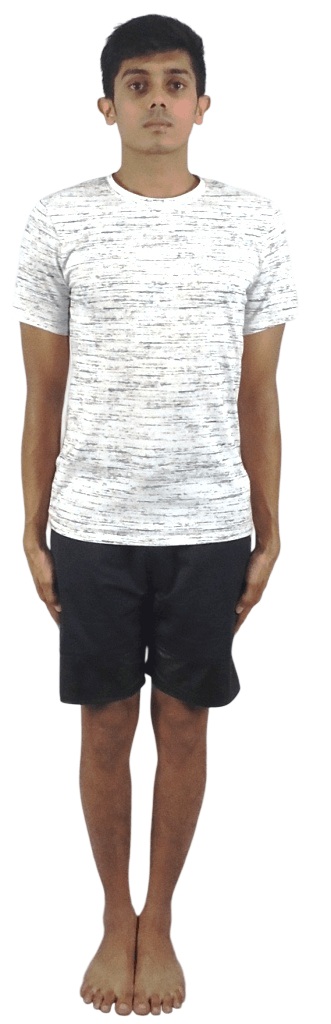
2. Definition
Standing Parvatasana is a foundational, standing yoga posture characterized by:
- Feet grounded firmly on the floor
- Legs straight and engaged
- Spine elongated from sacrum to crown
- Shoulders relaxed and arms extended overhead or alongside the body
- Head in neutral alignment, gaze forward
- Integration of breath awareness, core engagement, and postural stability
Functionally, it develops postural strength, body awareness, and alignment, and acts as a preparatory pose for advanced standing asanas and balance work.
3. Method of Practice – Step by Step
Step 1: Establish a Base
- Stand with feet hip-width apart, toes pointing forward
- Distribute weight evenly across both feet
- Ensure heels and balls of feet are grounded
Step 2: Align the Lower Body
- Engage quadriceps and hamstrings gently
- Slightly tuck the pelvis to maintain neutral lumbar curve
- Lift kneecaps and engage thigh muscles
Step 3: Spine and Core Engagement
- Lengthen the spine from sacrum to crown
- Engage transverse abdominis and obliques lightly
- Maintain natural thoracic curve without overarching
Step 4: Shoulder and Arm Placement
- Option A: Arms along sides of body, palms facing inward
- Option B: Arms overhead, palms together or apart, shoulders relaxed
- Avoid shrugging shoulders
Step 5: Head and Neck Alignment
- Neutral head position, gaze forward or slightly upward
- Neck elongated, chin parallel to floor
Step 6: Breath Awareness
- Inhale to elongate spine, exhale to stabilize posture
- Maintain steady diaphragmatic breathing
Step 7: Hold the Pose
- Beginners: 30–60 seconds
- Intermediate: 1–3 minutes
- Advanced: 5 minutes or more
Step 8: Release
- Lower arms gently if raised
- Transition to Tadasana, Shavasana, or next asana in sequence
4. Alignment Cues
- Feet: Hip-width apart, weight evenly distributed
- Legs: Quadriceps engaged, knees straight but not locked
- Pelvis: Neutral position, tailbone slightly tucked
- Spine: Elongated with natural curves maintained
- Shoulders: Drawn down and away from ears
- Arms: Relaxed, either by sides or overhead
- Head/Neck: Neutral alignment, gaze forward or upward
- Core: Slight engagement for stability
5. Benefits of Standing Parvatasana
A. Physical Benefits
- Strengthens legs, core, and back muscles
- Improves postural alignment and balance
- Enhances shoulder stability and flexibility
- Prepares body for advanced standing postures
B. Physiological Benefits
- Improves circulation and oxygenation
- Enhances respiratory efficiency through chest expansion
- Stimulates digestive organs and metabolism
C. Mental & Psychological Benefits
- Cultivates mental focus and concentration
- Promotes inner calm and emotional stability
- Reduces stress and anxiety
D. Energetic Benefits
- Activates Sahasrara (Crown), Ajna (Third Eye), and Manipura (Solar Plexus) chakras
- Enhances pranic flow along sushumna nadi
- Develops rootedness and grounding energy
6. Contraindications
- Recent spinal or lower limb injuries
- Knee or ankle injuries that prevent stable standing
- Shoulder or neck injuries if arms are raised
- Severe hypertension or vertigo
- Pregnancy in advanced stages (requires modification)
7. Counterposes
- Uttanasana (Standing Forward Bend): releases spine and hamstrings
- Adho Mukha Svanasana (Downward Dog): stretches spine and shoulders
- Tadasana (Neutral Mountain Pose): for postural reset
- Shavasana (Corpse Pose): relaxation
8. Preparatory Practices
- Tadasana (Mountain Pose – basic) for foundation
- Vrikshasana (Tree Pose) for balance
- Ardha Uttanasana (Half Forward Bend) for spinal elongation
- Shoulder and chest opening exercises
- Core activation exercises such as Navasana or gentle standing twists
9. Modifications
- Place a small block under heels for ankle issues
- Shorten duration for beginners
- Arms can remain by sides if shoulder mobility is limited
- Use wall support for feedback on alignment
- Micro-bend knees to reduce strain
10. Muscles Involved
A. Stretched Muscles
- Latissimus dorsi
- Deltoids
- Pectoralis major and minor
- Hamstrings (if arms raised overhead)
- Spinal erectors
B. Strengthened Muscles
- Quadriceps
- Gluteus maximus
- Core stabilizers (rectus abdominis, transverse abdominis, obliques)
- Scapular stabilizers (trapezius, rhomboids, serratus anterior)
- Erector spinae
C. Joints
- Spine: cervical, thoracic, lumbar
- Shoulders: flexion and abduction
- Hips: extension and neutral alignment
- Ankles: plantarflexion and stability
11. Kinesiology
- Spinal mechanics: axial elongation with neutral lumbar curve
- Hip mechanics: engagement for upright stability
- Shoulder mechanics: flexion, abduction, and stabilization
- Core mechanics: isometric engagement to stabilize trunk
12. Kinematics
- Sagittal plane: spinal elongation and slight shoulder flexion
- Frontal plane: minimal lateral deviation
- Transverse plane: pelvis remains neutral, slight natural rotation
- Dynamic action: inhale to lengthen, exhale to stabilize
13. Biomechanics
- Ground reaction forces: transmitted through feet into legs and spine
- Lever mechanics: arms overhead create moment requiring core engagement
- Isometric contraction: spinal and lower limb stabilizers maintain vertical alignment
- Respiratory biomechanics: enhanced diaphragmatic and thoracic expansion
14. Functional Anatomy & Physiology
A. Musculoskeletal System
- Strengthens spinal erecting muscles and postural muscles
- Engages legs, glutes, core, and shoulders
B. Nervous System
- Enhances proprioception and kinesthetic awareness
- Stimulates parasympathetic nervous system through calm awareness
C. Respiratory System
- Improves lung expansion and diaphragmatic function
D. Circulatory System
- Promotes blood flow to lower limbs, spine, and brain
E. Digestive System
- Stimulates abdominal organs indirectly through upright posture
F. Energetic System
- Opens sushumna nadi, enhancing pranic flow
- Aligns root to crown energy pathways
- Supports mental clarity and energetic balance
15. How to Correct and Adjust While Teaching
Common Misalignments
- Collapsed chest or rounded shoulders
- Overarched lumbar spine
- Uneven weight distribution in feet
- Tension in neck or jaw
- Knees hyperextended
Verbal Cues
- “Ground your feet evenly, lift kneecaps, and lengthen spine”
- “Relax shoulders down and away from ears”
- “Engage core lightly to maintain upright posture”
- “Gaze forward, chin level, neck relaxed”
Hands-On Adjustments
- Stabilize pelvis to maintain neutral lumbar curve
- Guide arms for proper shoulder alignment
- Encourage balanced weight distribution on feet
- Align head/neck with spine
16. Variations
- Arms at sides: for beginners or shoulder restrictions
- Arms overhead with palms together: for chest opening and upper back strength
- Wall support: maintain vertical alignment for beginners
- Micro-bend knees: for reduced strain on joints
17. Philosophical and Energetic Aspect
- Symbolizes steadiness, inner focus, and resilience
- Develops mental awareness and alignment of body and mind
- Integrates breath with posture to cultivate mindfulness and calmness
- Serves as foundation for advanced standing postures and meditation
18. Conclusion
Standing Parvatasana is a foundational standing yoga posture that cultivates:
- Physical strength and postural alignment through leg and spinal engagement
- Respiratory and circulatory efficiency through chest opening
- Mental focus, balance, and emotional stability
- Energetic alignment and pranic flow through spinal and chakra activation
Through progressive practice, alignment awareness, and mindful breath, Standing Parvatasana serves as a cornerstone for both physical and mental yoga practice, preparing the body for advanced asanas, meditation, and pranayama.
QUESTION AND ANSWER
1. What does “Parvata” mean in Sanskrit?
a) Peak
b) Mountain
c) Hill
d) Tree
Answer: b
2. The primary focus of Standing Parvatasana is:
a) Spinal elongation and upright posture
b) Arm strength only
c) Knee flexibility
d) Balance on one leg
Answer: a
3. Which muscles are primarily engaged in Standing Parvatasana?
a) Quadriceps, gluteus maximus, erector spinae, rectus abdominis, obliques, trapezius
b) Only hamstrings
c) Only biceps
d) Only calf muscles
Answer: a
4. Which joints are mobilized in Standing Parvatasana?
a) Spine (cervical, thoracic, lumbar), shoulders, hips, ankles
b) Only knees
c) Only elbows
d) Only cervical spine
Answer: a
5. Correct alignment of the pelvis is:
a) Neutral, tailbone slightly tucked
b) Excessive anterior tilt
c) Excessive posterior tilt
d) Tilted to one side
Answer: a
6. Arms in Standing Parvatasana are typically:
a) By the sides or overhead, palms together or apart
b) Behind back
c) Crossed over chest
d) Hanging loosely
Answer: a
7. Preparatory poses for Standing Parvatasana include:
a) Tadasana, Vrikshasana, Ardha Uttanasana, shoulder and chest openers
b) Paschimottanasana only
c) Balasana only
d) Gomukhasana arms only
Answer: a
8. Contraindications include:
a) Recent spinal, hip, knee, ankle, or shoulder injuries; severe hypertension or vertigo
b) Healthy adults
c) Children only
d) Mild backache
Answer: a
9. Benefits of Standing Parvatasana include:
a) Improved posture, spinal strength, core stability, mental focus, and balance
b) Only strengthens arms
c) Only stretches legs
d) Only improves digestion
Answer: a
10. Which chakras are stimulated in Standing Parvatasana?
a) Sahasrara (Crown), Ajna (Third Eye), Manipura (Solar Plexus)
b) Muladhara only
c) Swadhisthana only
d) Anahata only
Answer: a
11. How should feet be positioned?
a) Hip-width apart, weight evenly distributed
b) Together and tense
c) Staggered
d) One foot in front
Answer: a
12. Common misalignments include:
a) Collapsed chest, rounded shoulders, uneven weight distribution, neck tension
b) Upright posture with engaged core
c) Relaxed arms by sides
d) Straight legs
Answer: a
13. Breath cue:
a) Inhale to lengthen spine, exhale to stabilize posture
b) Hold breath
c) Rapid, shallow breathing
d) Exhale only
Answer: a
14. Modifications for beginners include:
a) Shorten duration, micro-bend knees, arms at sides, wall support
b) Overarching lumbar spine
c) Knees locked completely
d) Arms forcibly overhead
Answer: a
15. Counterposes include:
a) Uttanasana, Adho Mukha Svanasana, Tadasana, Shavasana
b) Warrior II
c) Tree Pose only
d) Cobra Pose only
Answer: a
16. Core engagement in this pose helps to:
a) Stabilize lumbar spine and maintain upright posture
b) Relax completely
c) Compress chest
d) Rotate torso
Answer: a
17. Duration for beginners:
a) 30–60 seconds
b) 5–10 minutes
c) 10–15 minutes
d) 3–5 minutes
Answer: a
18. Advanced duration:
a) 1–5 minutes or more
b) 10–15 seconds
c) 1–2 breaths
d) 5 seconds
Answer: a
19. Mental benefits include:
a) Focus, mindfulness, calmness, stress reduction
b) Confusion and distraction
c) Anxiety
d) None
Answer: a
20. Verbal cue for students:
a) “Ground your feet, lift your kneecaps, lengthen spine, relax shoulders, and breathe steadily”
b) “Slouch completely”
c) “Arch back excessively”
d) “Tense neck”
Answer: a
21. Why is this pose important for standing sequences?
a) Provides a stable base and alignment foundation
b) Weakens posture
c) Distracts attention
d) Only strengthens arms
Answer: a
22. Shoulder engagement cue:
a) Draw shoulders down and back while keeping arms lifted
b) Shrug shoulders to ears
c) Collapse chest
d) Rotate shoulders forcibly
Answer: a
23. Which breathing pattern is ideal?
a) Deep, slow, diaphragmatic breathing
b) Short, shallow breaths
c) Breath holding
d) Rapid panting
Answer: a
24. Energetic significance:
a) Develops stability, grounding, and pranic flow along spine
b) Weakens energy
c) Creates imbalance
d) None
Answer: a
25. Wall support helps to:
a) Maintain vertical alignment and feedback
b) Force knees together
c) Stretch legs forcibly
d) Rotate pelvis
Answer: a
26. Which muscles are stretched in this pose?
a) Latissimus dorsi, deltoids, pectoralis major/minor, erector spinae, hamstrings (if arms overhead)
b) Only calves
c) Only biceps
d) Only quadriceps
Answer: a
27. Which muscles are strengthened?
a) Quadriceps, gluteus maximus, core stabilizers, erector spinae, trapezius
b) Hamstrings only
c) Deltoids only
d) None
Answer: a
28. Common head/neck misalignment:
a) Forward head, chin lifted too high, neck tension
b) Neutral head and gaze
c) Chin parallel
d) Relaxed jaw
Answer: a
29. Philosophical benefit:
a) Cultivates steadiness, inner focus, and resilience
b) Weakens concentration
c) Distracts mind
d) None
Answer: a
30. Core stabilization is achieved through:
a) Engaging transverse abdominis and obliques
b) Relaxing abdominal muscles completely
c) Only holding breath
d) Contracting biceps
Answer: a