
1. Word Meaning
The Sanskrit term Simhasana consists of:
- Simha – Lion
- Asana – Posture or seat
Thus, Simhasana literally translates as “Lion Pose”, a yoga posture that emulates the majestic qualities of a lion, including strength, courage, and expression. This pose is distinctive for its forceful exhalation with tongue extension, symbolizing the lion’s roar, which is thought to release tension, stimulate facial muscles, and activate energy pathways.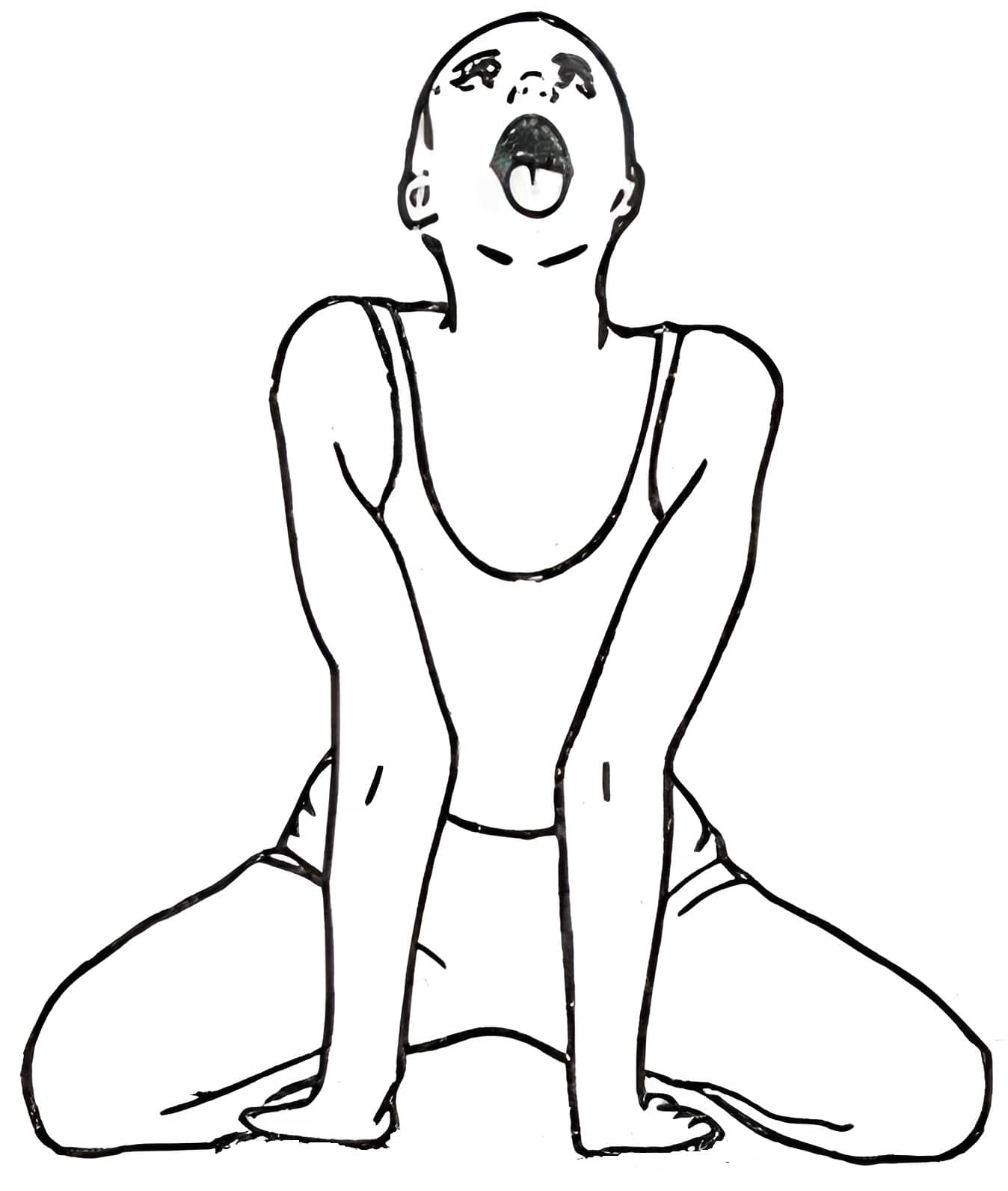
2. Definition
Simhasana is a seated, dynamic yoga posture characterized by:
- Sitting on the heels with knees apart (similar to Virasana or Kneeling Pose)
- Placing hands on the knees with fingers spread wide
- Leaning slightly forward from the hips
- Opening the mouth wide, extending the tongue downward toward the chin, and forcefully exhaling with a “roaring” sound
- Engaging the facial muscles, core, and respiratory system
This pose combines isometric muscle engagement, dynamic exhalation, and energetic expression, making it both physically and psychologically stimulating.
3. Method of Practice – Step by Step
Step 1: Begin in Vajrasana or Kneeling
- Sit on your heels with knees slightly apart
- Spine erect, shoulders relaxed, chest open
Step 2: Hand Placement
- Place palms on knees
- Fingers spread wide, pressing firmly to engage arm muscles
Step 3: Inhale Deeply
- Fill lungs completely
- Lengthen spine, lifting sternum
Step 4: Facial Engagement
- Open mouth wide, stretch tongue toward chin
- Eyes open, looking toward the tip of the nose or upward
Step 5: Exhale Forcefully
- Make a roaring sound from deep in the throat
- Engage abdominal muscles for a controlled exhalation
Step 6: Alignment Check
- Spine elongated, shoulders down and back
- Neck straight, not strained
- Hands pressing lightly on knees for stability
Step 7: Hold & Repeat
- Beginners: 3–5 breaths
- Intermediate: 5–10 breaths
- Advanced: 10–15 breaths
Step 8: Relaxation
- Return to Vajrasana
- Close eyes and breathe normally
- Shavasana can be used to restore balance
4. Alignment Cues
- Spine: Straight, elongated, avoid slumping
- Knees: Firmly grounded, hip-width apart
- Shoulders: Relaxed, scapulae slightly drawn back
- Hands: Palms on knees, fingers spread wide
- Neck & Head: Aligned with spine, tongue extended gently
- Core: Engaged to support controlled exhalation
5. Benefits of Simhasana
A. Physical Benefits
- Strengthens facial muscles, jaw, and throat
- Improves postural alignment and spinal stability
- Stretches hamstrings, feet, and wrists
- Enhances thoracic and cervical mobility
- Stimulates abdominal organs through core engagement
B. Physiological Benefits
- Improves respiratory efficiency by practicing deep exhalation
- Stimulates salivary glands, aiding digestion
- Enhances blood circulation to the face, throat, and neck
- Promotes detoxification through exhalation
C. Mental & Psychological Benefits
- Reduces stress and anxiety
- Releases emotional tension
- Enhances confidence, self-expression, and courage
D. Energetic Benefits
- Activates Manipura (solar plexus) and Vishuddha (throat) chakras
- Facilitates pranic flow in head, neck, and chest
- Stimulates energy centers responsible for communication and self-expression
6. Contraindications
- Jaw or facial injuries
- Neck or spinal injuries
- Hypertension or cardiovascular disorders (forceful exhalation may increase pressure)
- Recent abdominal surgery or hernia
- Severe knee injuries (kneeling may aggravate)
7. Counterposes
- Balasana (Child’s Pose): relaxes spine, neck, and facial muscles
- Shavasana (Corpse Pose): full-body relaxation and recovery
- Bhujangasana (Cobra Pose): gently stretches anterior spine
- Seated forward bends: Paschimottanasana for gentle spinal flexion
8. Preparatory Practices
- Virasana/Vajrasana: seated kneeling for stability
- Neck stretches and rotations
- Jaw and facial warm-ups (opening/closing mouth, tongue stretches)
- Core engagement exercises
- Shoulder stretches and scapular mobilization
9. Modifications
- Sit on a folded blanket to relieve knee pressure
- Keep knees wider apart for balance and comfort
- Reduce tongue extension if jaw is tight
- Limit forceful exhalation for beginners or sensitive respiratory conditions
- Hands can rest lightly on thighs if knees are uncomfortable
10. Muscles Involved
A. Stretched Muscles
- Sternocleidomastoid and neck extensors
- Masseter and facial muscles (temporal, buccinator)
- Erector spinae (thoracic and lumbar)
- Hamstrings (slight stretch from kneeling)
B. Strengthened Muscles
- Rectus abdominis and obliques (isometric engagement during exhalation)
- Trapezius, rhomboids, and deltoids for scapular stability
- Core stabilizers for postural control
C. Joints
- Spine: cervical and thoracic extension/flexion
- Knees: flexion in kneeling
- Shoulders: flexion and stabilization
- Temporomandibular joint (TMJ): dynamic movement
11. Kinesiology
- Spinal mechanics: slight extension at cervical region, isometric stabilization of thoracic and lumbar spine
- Hip mechanics: flexion while sitting on heels
- Shoulder mechanics: scapular stabilization, slight protraction
- TMJ mechanics: controlled mouth opening and tongue extension
- Core mechanics: abdominal engagement for controlled exhalation
12. Kinematics
- Sagittal plane: flexion of spine at thoracic level, extension at cervical level
- Frontal plane: knees spread slightly, hands on knees
- Transverse plane: minimal rotation, neutral alignment
- Dynamic action: exhalation with tongue extension and facial expression
13. Biomechanics
- Lever principle: arms stabilize upper body while exhalation engages core
- Force distribution: knees support body weight, spine elongated
- Isometric contraction: core, shoulder, and facial muscles
- Respiratory mechanics: forceful exhalation stimulates diaphragm, abdominal muscles, and thoracic cavity
- Progressive adaptation: repeated practice enhances postural and facial muscle endurance
14. Functional Anatomy & Physiology
A. Musculoskeletal System
- Strengthens cervical, thoracic, and lumbar stabilizers
- Engages core and shoulder muscles
- Enhances postural alignment
B. Nervous System
- Activates facial nerve pathways
- Stimulates sympathetic and parasympathetic balance through deep exhalation
- Enhances proprioception of neck, spine, and facial muscles
C. Respiratory System
- Improves lung capacity
- Promotes efficient diaphragm function
- Strengthens intercostal muscles
D. Circulatory System
- Increases blood flow to face, neck, and chest
- Enhances oxygenation of tissues
E. Digestive System
- Stimulates salivary glands and digestive organs indirectly
- Improves metabolism
F. Energetic System
- Activates Vishuddha (throat) and Manipura (solar plexus) chakras
- Enhances pranic flow along cervical and thoracic meridians
15. How to Correct and Adjust While Teaching
Common Misalignments
- Slumped spine
- Knees collapsing inward
- Jaw strain from overextension
- Shoulders shrugged
- Neck hyperextended
Verbal Adjustments
- “Sit tall on your heels before roaring”
- “Relax shoulders and lengthen spine”
- “Extend tongue gently, exhale with control”
- “Engage core lightly to support lower back”
Hands-On Adjustments
- Support pelvis for stable kneeling
- Guide hand placement on knees
- Adjust scapula and shoulder alignment
- Ensure neck alignment and gentle tongue extension
16. Variations
- Supported Simhasana: sit on blanket, hands on thighs
- Dynamic breathing: alternate short and long exhalations
- Advanced expression: full facial engagement, tongue extended fully
- Combination with meditation: add mental focus on throat and solar plexus chakras
17. Philosophical and Energetic Aspect
- Symbolizes courage, self-expression, and release of inner tension
- Encourages prana activation and energetic purification
- Supports communication and emotional release through sound and expression
- Enhances mind-body integration and meditative awareness
18. Conclusion
Simhasana is a powerful and expressive yoga posture that:
- Physically: strengthens spine, core, shoulders, and facial muscles
- Mentally: reduces stress, enhances confidence and focus
- Physiologically: improves circulation, respiration, and digestion
- Energetically: stimulates throat and solar plexus chakras, pranic flow
With proper alignment, preparation, and gradual practice, Simhasana is safe, therapeutic, and deeply empowering, making it a must-include posture in both dynamic and meditative yoga sequences.
QUESTION AND ANSWER
1. What does “Simha” mean in Sanskrit?
a) Pose
b) Lion
c) Seal
d) Breath
Answer: b
2. Simhasana primarily targets which body parts?
a) Face, neck, thoracic spine, core
b) Arms only
c) Legs only
d) Feet only
Answer: a
3. What is the base posture for Simhasana?
a) Dandasana
b) Vajrasana/Kneeling
c) Tadasana
d) Padmasana
Answer: b
4. The main action in the spine during Simhasana is:
a) Flexion and slight cervical extension
b) Full extension
c) Lateral bending
d) Rotation
Answer: a
5. Which muscles are primarily engaged in Simhasana?
a) Rectus abdominis, obliques, trapezius, rhomboids, deltoids, facial muscles
b) Quadriceps only
c) Biceps only
d) Forearms only
Answer: a
6. Facial action in Simhasana involves:
a) Opening mouth wide, tongue extended toward chin
b) Lips closed tightly
c) Tongue inward
d) Jaw relaxed
Answer: a
7. Core engagement in this pose serves to:
a) Stabilize lumbar spine and assist in forceful exhalation
b) Relax abdominal muscles
c) Compress chest
d) None
Answer: a
8. Forceful exhalation in Simhasana helps:
a) Stimulate lungs, diaphragm, and abdominal muscles
b) Restrict breathing
c) Collapse the spine
d) None
Answer: a
9. Contraindications of Simhasana include:
a) Jaw injury, cervical injury, hypertension, recent abdominal surgery
b) Healthy individuals
c) Beginners only
d) None
Answer: a
10. Primary chakras stimulated in Simhasana:
a) Vishuddha (throat) and Manipura (solar plexus)
b) Ajna only
c) Sahasrara only
d) Muladhara only
Answer: a
11. Correct hand placement:
a) Palms on knees, fingers spread wide
b) Hands on thighs, fingers closed
c) Hands behind back
d) Hands on floor in front
Answer: a
12. Eye gaze in Simhasana:
a) Toward tip of the nose or slightly upward
b) Closed only
c) Looking at knees
d) Downward only
Answer: a
13. Benefits to the respiratory system include:
a) Improves lung capacity and strengthens diaphragm
b) Weakens lungs
c) Restricts thoracic movement
d) None
Answer: a
14. Physiological benefit for the digestive system:
a) Stimulates salivary glands and digestive organs
b) Compresses stomach excessively
c) Weakens metabolism
d) None
Answer: a
15. Which joints are mobilized in Simhasana?
a) Cervical spine, thoracic spine, knees, shoulders, TMJ
b) Only knees
c) Only wrists
d) Only elbows
Answer: a
16. Preparatory poses for Simhasana include:
a) Vajrasana, Virasana, neck stretches, shoulder mobilization
b) Tadasana only
c) Standing forward bend only
d) Tree Pose only
Answer: a
17. Counterposes for Simhasana include:
a) Balasana, Shavasana, Bhujangasana
b) Warrior II only
c) Tree Pose only
d) None
Answer: a
18. Common misalignments in Simhasana:
a) Slumped spine, shoulders shrugged, overextended jaw, knees collapsing inward
b) Upright spine, shoulders relaxed, tongue gently extended
c) Core engaged
d) None
Answer: a
19. Recommended duration for beginners:
a) 3–5 breaths
b) 10–15 breaths
c) 1 minute
d) 5 minutes
Answer: a
20. Advanced duration:
a) 10–15 breaths
b) 3 breaths only
c) 30 seconds
d) None
Answer: a
21. Mental benefits include:
a) Stress relief, emotional release, increased confidence
b) Anxiety increase
c) Confusion
d) None
Answer: a
22. Modifications for beginners:
a) Sit on folded blanket, hands on thighs, reduce tongue extension
b) Forcefully extend tongue fully
c) Knees tightly together
d) Hold breath
Answer: a
23. Muscles stretched in Simhasana include:
a) Sternocleidomastoid, masseter, facial muscles, erector spinae, hamstrings
b) Quadriceps only
c) Biceps only
d) Forearm muscles only
Answer: a
24. Breathing cue:
a) Inhale to lengthen, exhale forcefully with roaring sound
b) Hold breath
c) Shallow rapid breaths
d) Exhale only
Answer: a
25. Kinesiology aspect of Simhasana:
a) Isometric contraction of core, scapular stabilization, TMJ movement, cervical and thoracic engagement
b) Relaxed spine
c) No core engagement
d) Only neck rotation
Answer: a
26. Energetic symbolism of Simhasana:
a) Courage, self-expression, tension release
b) Weakness
c) Fear
d) None
Answer: a
27. Verbal cue to guide students:
a) “Sit tall, extend tongue gently, exhale with control like a lion’s roar”
b) “Collapse forward”
c) “Keep mouth closed”
d) None
Answer: a
28. Hands-on adjustment includes:
a) Stabilizing pelvis, guiding hands on knees, aligning scapula
b) Force jaw down
c) Push spine forward
d) None
Answer: a
29. Core engagement in Simhasana:
a) Provides stability and assists controlled exhalation
b) Relaxed completely
c) Compresses diaphragm
d) None
Answer: a
30. Which respiratory muscles are most engaged?
a) Diaphragm and intercostals
b) Only lungs
c) Only abdominal muscles
d) None
Answer: a