
1. Word Meaning
The Sanskrit term “Poornā Navasana” is composed of:
- Poornā – meaning “full” or “complete”
- Nava – meaning “boat”
- Asana – meaning “pose” or “seat”
Thus, Poornā Navasana translates to “Full Boat Pose”, representing a stable and balanced boat floating on water. It is an advanced core-focused asana that demands strength, stability, and concentration. Compared to Ardha Navasana (Half Boat Pose), Poornā Navasana requires full extension of legs and torso, creating a V-shaped alignment from head to toes.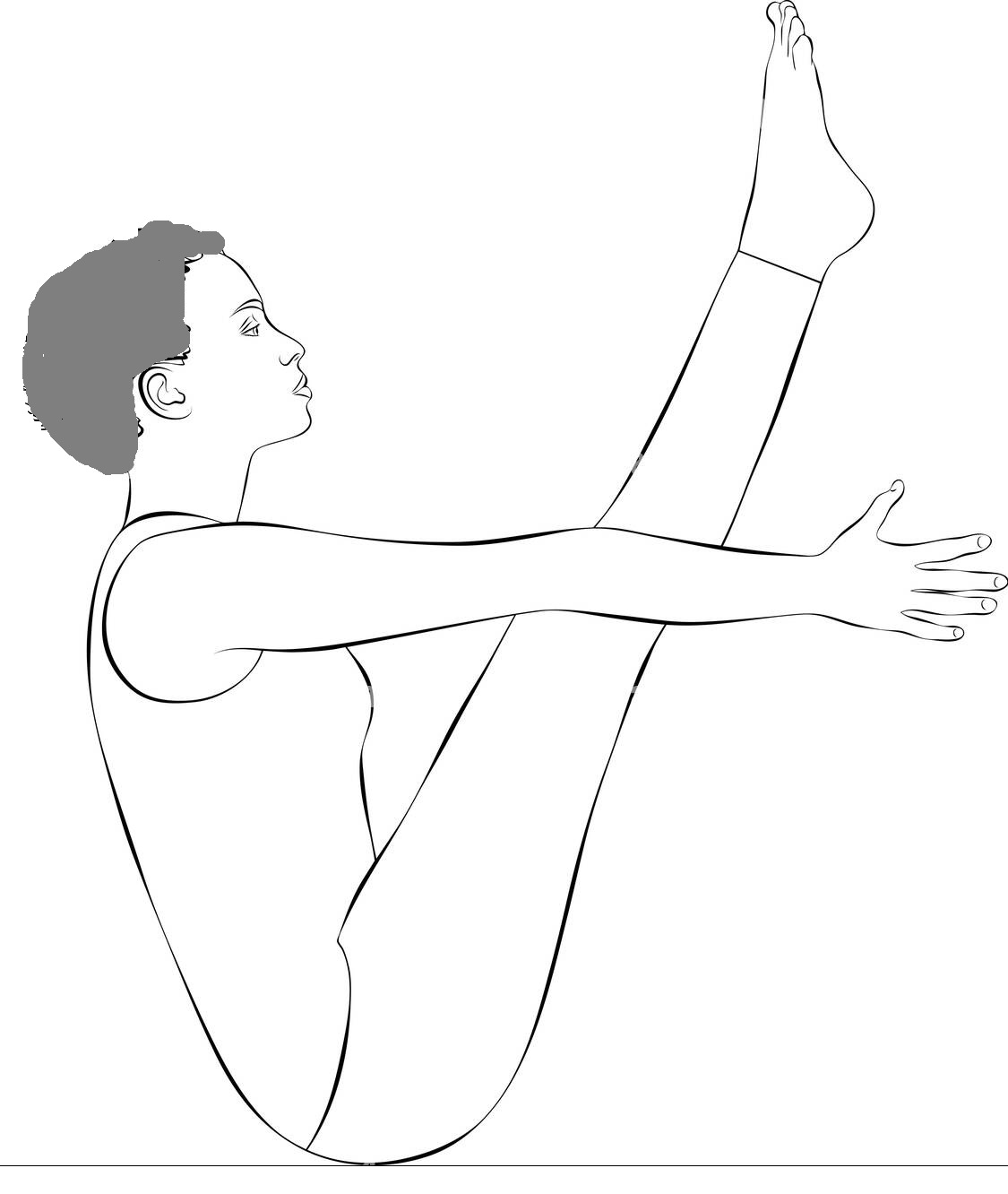
2. Definition
Poornā Navasana is a dynamic seated posture that engages the entire core, hip flexors, quadriceps, and spinal stabilizers, while demanding balance and coordination.
- It is considered an intermediate-to-advanced yoga posture in Hatha Yoga, Vinyasa, and Ashtanga sequences.
- The pose strengthens the abdominal muscles and improves body awareness, balance, and endurance.
- Physiologically, Poornā Navasana stimulates the digestive system, circulation, and respiratory efficiency.
- Energetically, it activates the Manipura (solar plexus) chakra, enhancing inner focus, determination, and pranic flow.
3. Method of Practice – Step by Step
Step 1: Begin in Dandasana
- Sit on the floor with legs extended straight in front
- Place hands on the floor beside the hips
- Keep spine long and shoulders relaxed
Step 2: Engage Core
- Draw navel toward the spine
- Activate rectus abdominis and obliques
- Lengthen the thoracic and lumbar spine
Step 3: Lift Legs
- Inhale and engage hip flexors and quadriceps
- Lift legs off the floor until toes reach eye level
- Keep knees straight (bend slightly if necessary for beginners)
Step 4: Lift Torso
- Exhale, lift torso simultaneously to meet legs
- Form a V-shape with torso and legs
- Extend arms forward parallel to the floor, palms facing each other
Step 5: Maintain Alignment
- Keep chest lifted, shoulders down and back
- Avoid rounding lower back
- Engage core and leg muscles to stabilize the position
Step 6: Breathing
- Maintain steady, diaphragmatic breathing
- Inhale to lengthen the spine, exhale to stabilize core and legs
- Avoid breath-holding
Step 7: Hold the Pose
- Beginners: 10–20 seconds
- Intermediate: 30–60 seconds
- Advanced: 1–2 minutes
Step 8: Release
- Exhale and slowly lower torso and legs to the floor
- Rest in Shavasana or Dandasana
- Repeat 2–3 rounds as part of a core-strengthening sequence
4. Alignment Cues
- Spine: Lengthened through thoracic and lumbar regions, avoid rounding
- Shoulders: Draw down and back, away from ears
- Arms: Extended forward parallel to the floor
- Legs: Active, straight, toes pointed upward
- Core: Abdominal muscles engaged, navel drawn toward spine
- Neck and Head: Neutral, gaze forward or slightly upward
5. Benefits of Poornā Navasana
A. Physical Benefits
- Strengthens rectus abdominis, transverse abdominis, obliques
- Tones hip flexors and quadriceps
- Improves spinal stability, posture, and balance
- Enhances core endurance and functional strength
- Stimulates abdominal organs and digestion
B. Mental Benefits
- Improves focus, concentration, and mental clarity
- Promotes mindfulness and body awareness
- Builds determination, patience, and inner endurance
C. Physiological Benefits
- Stimulates digestive organs, pancreas, liver, kidneys
- Enhances blood circulation to core and extremities
- Improves respiratory efficiency and lung capacity
D. Energetic Benefits
- Activates Manipura (solar plexus) chakra
- Improves pranic flow in core and upper body
- Cultivates inner awareness and willpower
6. Contraindications
- Lower back injuries – avoid deep lift or modify with bent knees
- Neck injuries – maintain neutral head position
- Pregnancy – avoid abdominal compression
- Hernia or abdominal surgery – contraindicated due to intense core engagement
- Hip or knee injuries – modify or avoid pose
7. Counterposes
- Paschimottanasana (Seated Forward Bend) – stretches hamstrings and spine
- Balasana (Child’s Pose) – relaxes core and spine
- Setu Bandhasana (Bridge Pose) – counter-stretches front body
- Shavasana (Corpse Pose) – restores equilibrium
8. Preparatory Practice
- Dandasana – foundation for alignment
- Ardha Navasana (Half Boat Pose) – prepares core and hip flexors
- Plank Pose – strengthens core and shoulder stabilizers
- Bhujangasana (Cobra Pose) – spinal extension
- Uttanasana (Standing Forward Bend) – hamstring stretch
- Adho Mukha Svanasana (Downward Dog) – engages core and stretches posterior chain
9. Modifications
- Bend knees for beginners or lower back sensitivity
- Hands on floor beside hips for support
- Use a strap around feet if balance is challenging
- Partial lift – lift only torso or legs initially
- Wall support – back against wall to learn alignment
10. Muscles Involved
A. Stretched Muscles
- Hamstrings (moderate stretch if legs straight)
- Spinal erectors (maintain upright spine)
- Hip flexors (especially iliopsoas)
B. Strengthened Muscles
- Rectus abdominis
- Transverse abdominis
- Internal and external obliques
- Quadriceps
- Iliopsoas
- Erector spinae (stabilization)
- Deltoids and shoulder stabilizers (arms extended)
C. Joints
- Hip: flexion
- Knee: extension
- Spine: isometric stabilization
- Shoulder: flexion with scapular stabilization
11. Kinesiology
- Spinal mechanics: Isometric stabilization with thoracic and lumbar lengthening
- Hip mechanics: Flexion and stabilization
- Knee mechanics: Extension with quadriceps engagement
- Shoulder mechanics: Flexion with scapular stabilization
- Core engagement: Prevents lumbar hyperlordosis and maintains balance
12. Kinematics
- Sagittal plane: Hip flexion, spinal stabilization
- Frontal plane: Minor lateral adjustments for balance
- Transverse plane: Minimal rotation, mainly stabilization
- Lever mechanics: Torso and legs act as two lever arms, core acts as fulcrum
13. Biomechanics
- Lever principle: Torso and legs form a V-shape, core as fulcrum
- Isometric contraction: Rectus abdominis and obliques prevent collapse
- Force distribution: Even through sit bones and hip flexors
- Progressive overload: Gradually increasing hold duration develops endurance
14. Functional Anatomy & Physiology
A. Musculoskeletal System
- Strengthens core stabilizers
- Improves posture and spinal stability
- Enhances hip and knee stability
B. Nervous System
- Activates proprioceptors in core and spine
- Enhances neuromuscular coordination
- Calms sympathetic nervous system
C. Circulatory System
- Improves blood flow to abdominal organs
- Enhances oxygen delivery to core and upper body
D. Respiratory System
- Expands chest and improves diaphragmatic breathing
- Increases lung capacity and breath awareness
E. Energetic System
- Stimulates Manipura chakra for vitality
- Enhances pranic energy flow
15. How to Correct and Adjust While Teaching
Common Misalignments
- Rounded spine or collapsed chest
- Legs not engaged or knees bent excessively
- Shoulders shrugging
- Neck craned forward
Verbal Adjustments
- “Lengthen your spine, lift chest, draw navel toward spine”
- “Keep legs straight and active”
- “Draw shoulders down and away from ears”
- “Engage core and breathe steadily”
Hands-On Adjustments
- Support pelvis to prevent tipping backward
- Guide shoulders and arms to proper height
- Encourage leg engagement and knee extension
- Assist balance by stabilizing torso
16. Variations
- Poornā Navasana with arms overhead – increases intensity
- Hands behind thighs – supports beginners
- Bent knees – reduces strain for beginners
- Wall-supported Poornā Navasana – teaches alignment
- Dynamic lifting and lowering (Utkata Navasana flow) – for strength training
17. Philosophical and Energetic Aspect
- Symbolizes balance between effort and ease
- Represents focus, willpower, and inner determination
- Enhances pranic flow in core and upper body
- Cultivates mind-body awareness and meditation
18. Conclusion
Poornā Navasana is a core-strengthening, balance-oriented pose integrating spinal stabilization, hip flexion, and mental focus.
- Physical Benefits: Strengthened core, hip flexors, and quadriceps; improved spinal stability
- Mental Benefits: Concentration, focus, and mindfulness
- Physiological Benefits: Stimulated abdominal organs, improved digestion, enhanced circulation
- Energetic Benefits: Manipura chakra activation, improved prana flow
QUESTION AND ANSWER
1. What does “Poornā” mean in Sanskrit?
a) Half
b) Full or complete
c) Boat
d) Pose
Answer: b
2. What does “Nava” mean in Sanskrit?
a) Pose
b) Boat
c) Stretch
d) Breath
Answer: b
3. Poornā Navasana is primarily a:
a) Forward bend
b) Core-strengthening and balance posture
c) Backbend
d) Inversion
Answer: b
4. Poornā Navasana is an advanced version of:
a) Ardha Navasana (Half Boat Pose)
b) Dandasana
c) Balasana
d) Sukhasana
Answer: a
5. Which muscles are primarily strengthened in Poornā Navasana?
a) Rectus abdominis, obliques, hip flexors, quadriceps
b) Triceps only
c) Calves only
d) Gluteus maximus only
Answer: a
6. What is the main action at the hip joint?
a) Flexion
b) Extension
c) Abduction
d) Adduction
Answer: a
7. A common alignment mistake in Poornā Navasana is:
a) Rounded spine and collapsed chest
b) Perfect spine alignment
c) Arms extended forward
d) Legs lifted properly
Answer: a
8. Which preparatory pose strengthens core muscles for Poornā Navasana?
a) Ardha Navasana
b) Shavasana
c) Sukhasana
d) Garudasana
Answer: a
9. Recommended counterpose for Poornā Navasana?
a) Paschimottanasana
b) Tadasana
c) Dandasana
d) None
Answer: a
10. Poornā Navasana should be avoided in:
a) Lower back injuries
b) Strong core
c) Shoulder flexibility
d) Healthy knees
Answer: a
11. Correct arm placement for Poornā Navasana?
a) Extend forward parallel to floor, palms facing each other
b) Hands behind head
c) Hands on knees
d) Arms at sides
Answer: a
12. Core alignment cue is:
a) Draw navel toward spine, engage abdominal muscles
b) Relax core
c) Only engage legs
d) None
Answer: a
13. Spine alignment cue for Poornā Navasana?
a) Lengthen thoracic and lumbar spine, avoid rounding
b) Round spine forward
c) Collapse chest
d) Hyperextend lumbar region
Answer: a
14. Shoulder cue for Poornā Navasana?
a) Draw shoulders down and back
b) Shrug toward ears
c) Round forward
d) Lift up
Answer: a
15. Breathing cue for Poornā Navasana?
a) Steady diaphragmatic breathing, inhale to lengthen, exhale to stabilize
b) Hold breath
c) Rapid shallow breathing
d) Only exhale
Answer: a
16. Beginners should hold Poornā Navasana for:
a) 10–20 seconds
b) 1–2 minutes
c) 5 minutes
d) 30 seconds to 2 minutes
Answer: a
17. Intermediate practitioners should hold Poornā Navasana for:
a) 30–60 seconds
b) 5 seconds
c) 10 minutes
d) 1–2 seconds
Answer: a
18. Muscles stretched in Poornā Navasana?
a) Hamstrings, spinal erectors, hip flexors
b) Only calves
c) Only triceps
d) None
Answer: a
19. Which energetic center is activated in Poornā Navasana?
a) Manipura (solar plexus) chakra
b) Throat chakra
c) Heart chakra
d) None
Answer: a
20. How can beginners modify Poornā Navasana?
a) Bend knees, hands on floor beside hips, or use strap around feet
b) Straighten legs fully immediately
c) Force torso backward
d) Ignore alignment
Answer: a
21. Recommended follow-up pose for spinal release?
a) Balasana or Paschimottanasana
b) Tadasana
c) Dandasana
d) None
Answer: a
22. How does Poornā Navasana improve posture?
a) Strengthens core, spinal stabilizers, and improves alignment
b) Weakens back
c) Collapses chest
d) None
Answer: a
23. Arms variation for increased intensity?
a) Raise arms overhead
b) Hands on floor
c) Cross hands behind back
d) Arms down
Answer: a
24. Primary lever principle in Poornā Navasana?
a) Torso and legs act as lever arms, core is fulcrum
b) Only arms work
c) Only legs work
d) None
Answer: a
25. Preparatory pose for hamstring flexibility before Poornā Navasana?
a) Uttanasana (Standing Forward Bend)
b) Tadasana
c) Sukhasana
d) Shavasana
Answer: a
26. Joint action at the knee?
a) Extension (slight flexion for beginners)
b) Flexion only
c) Rotation
d) None
Answer: a
27. Nervous system benefit?
a) Activates proprioceptors, improves neuromuscular coordination
b) Depletes nervous energy
c) None
d) Overstimulates arms
Answer: a
28. Why bend knees for beginners?
a) Reduces lumbar strain, allows proper lift
b) Makes pose harder
c) Collapses posture
d) None
Answer: a
29. Wall-supported variation is used for:
a) Learning alignment and stability
b) Collapsing chest
c) Avoiding balance
d) None
Answer: a
30. Key teaching cue summary for Poornā Navasana?
a) “Lengthen spine, lift chest, engage core, legs active, shoulders down, breathe steadily”
b) “Force twist”
c) “Collapse chest”
d) “Ignore alignment”
Answer: a
31. Primary functional benefit for digestive system?
a) Stimulates abdominal organs
b) Compresses spine excessively
c) Weakens organs
d) None
Answer: a
32. Common head/neck mistake?
a) Craned neck forward or backward
b) Neutral alignment
c) Relaxed
d) None
Answer: a
33. Arms placement cue for beginners?
a) Hands on floor beside hips for support
b) Straight arms forward forcibly
c) Arms down
d) None
Answer: a
34. Recommended practice frequency?
a) 3–5 times per week
b) Once a month
c) Daily without rest
d) Only summer
Answer: a
35. What is the energetic focus of Poornā Navasana?
a) Solar plexus activation, inner focus, willpower
b) Depletes energy
c) Throat chakra only
d) None
Answer: a
36. Muscles activated for stabilization?
a) Erector spinae, obliques, transverse abdominis
b) Only arms
c) Only legs
d) None
Answer: a
37. How to safely progress Poornā Navasana?
a) Gradually increase hold duration and leg extension
b) Lift fully immediately
c) Ignore alignment
d) Collapse core
Answer: a
38. Arm cue for advanced variation?
a) Extend overhead for added intensity
b) Keep hands on floor
c) Arms down
d) None
Answer: a
39. Which preparatory pose develops shoulder stability?
a) Plank Pose
b) Sukhasana
c) Shavasana
d) Balasana
Answer: a
40. Key mental benefit of Poornā Navasana?
a) Builds focus, determination, and mindfulness
b) Causes agitation
c) Promotes haste
d) None
Answer: a