
1. Word Meaning
The Sanskrit word “Parigha” literally means “gate” or “bar”, and “āsana”means posture or seat.
Thus, Parighāsana translates to “Gate Pose.”
The name derives from the lateral stretch of the body, resembling the shape of a gate’s barrier. Symbolically, it represents opening barriers, both physically in the body and metaphorically in energy and emotional flow. The posture emphasizes lateral extension, strengthening of obliques, spinal mobility, and a gentle opening of the thoracic cage.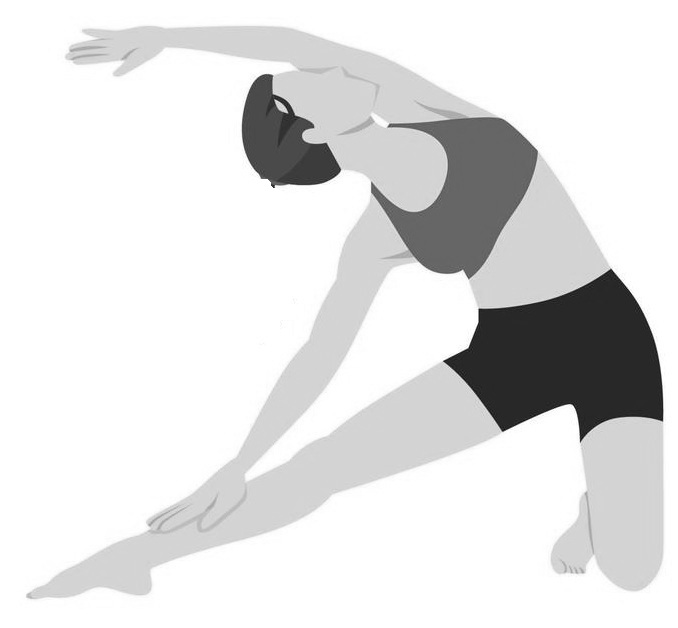
2. Definition
Parighāsana is a lateral kneeling side-stretch posture. It involves:
- Kneeling on one knee while extending the opposite leg laterally.
- Lifting the arms overhead and laterally bending toward the extended leg.
- Creating a side body stretch through obliques, intercostals, latissimus dorsi, and the spinal muscles.
It is classified as:
- A lateral flexion posture
- A thoraco-lumbar stretch
- An intermediate-level posture requiring flexibility, strength, and balance
Parighāsana improves lateral spinal mobility, thoracic expansion, hip flexibility, and side body elongation, making it an essential posture for a well-rounded yoga practice.
3. Method of Practice – Step by Step
Step 1: Begin in Vajrasana (Kneeling Pose)
- Knees hip-width apart
- Spine erect, shoulders relaxed
- Deep diaphragmatic breathing
Step 2: Extend One Leg Laterally
- Extend the right leg to the side, foot flat on the floor, toes pointing forward
- Keep the left knee grounded, aligned with hip
Step 3: Align Pelvis
- Square the hips toward the front
- Engage gluteus medius to stabilize the pelvis
Step 4: Lift Arms
- Inhale, extend arms overhead
- Palms facing each other or interlaced, elbows straight
- Shoulder blades retract and depress
Step 5: Lateral Stretch
- Exhale, bend toward the extended leg
- Side body stretches from hip to armpit
- Keep the spine long, avoid collapsing the thoracic area
Step 6: Engage Core
- Abdominal muscles support lateral flexion
- Quadratus lumborum and obliques stabilize the torso
Step 7: Breathe
- Maintain 5–8 slow, deep breaths
- Expand rib cage with each inhale
Step 8: Return to Center
- Inhale, rise back to vertical
- Repeat on opposite side
4. Alignment Cues
Pelvis
- Square and stable
- Avoid tilting toward extended leg
Spine
- Lengthen through lumbar region
- Initiate lateral bend from thoracic spine
Shoulders
- Avoid shrugging
- Draw scapula downward
Neck
- Keep aligned; gaze can follow top hand
- Avoid compression of cervical spine
Arms
- Extended but relaxed
- Maintain shoulder width if palms are apart
Legs
- Supporting knee under hip
- Extended leg aligned with hip and ankle
5. Benefits of Parighāsana
Physical Benefits
- Lateral spinal mobility – stretches obliques and intercostals
- Hip flexibility – stretches adductors of extended leg
- Thoracic expansion – improves breathing capacity
- Strengthens core – obliques, erector spinae
- Shoulder mobility – arm extension opens thoracic cage
- Lengthens quadratus lumborum – reduces lower back tightness
- Improves posture – corrects side body imbalances
Energetic Benefits
- Opens Anahata (Heart) chakra
- Stimulates Vishuddhi (Throat) chakra via side stretch and lateral extension
- Encourages smooth prana flow through the sides
Psychological Benefits
- Reduces tension and stiffness
- Improves focus and concentration
- Encourages emotional openness
6. Contraindications
- Knee injuries (especially supporting knee)
- Shoulder pain or injury
- Severe spinal issues or scoliosis
- Herniated disc (lumbar region)
- Pregnancy (especially second and third trimester)
- Recent abdominal surgery
Modifications are recommended to avoid strain.
7. Counterposes
After Parighāsana, the spine should be neutralized. Suitable counterposes:
- Balasana (Child’s Pose) – gentle spinal flexion
- Marjaryasana–Bitilasana (Cat–Cow) – spinal mobility
- Paschimottanasana (Seated Forward Bend) – balances side stretch with forward flexion
- Savasana – relaxes muscles after lateral extension
8. Preparatory Practices
Hip and Thigh Preparation
- Anjaneyasana (Low Lunge) – stretches hip flexors
- Baddha Konasana (Bound Angle Pose) – opens adductors
- Adho Mukha Virasana – stretches quads
Spinal Preparation
- Cat–Cow – spinal articulation
- Side bending stretches seated or standing
- Thread-the-Needle Twist – thoracic mobility
Shoulder and Arm Preparation
- Shoulder rolls
- Gomukhasana arms
- Wall-assisted arm stretches
Core Engagement
- Side plank variations
- Boat pose (Navasana) – strengthens obliques
9. Modifications of Parighāsana
1. Using a Block
- Place block under extended arm if reaching floor is difficult
- Supports stability and alignment
2. Supporting Knee on Blanket
- Cushion knee to avoid discomfort on hard floor
3. Hands on Hips
- For beginners, place hands on hips instead of overhead
- Allows safe lateral flexion
4. Partial Side Stretch
- Reduce the range of lateral bend if tightness exists
5. Chair-Assisted
- Sit on chair, extend one leg to side, lift arms overhead
- Ideal for limited mobility or elderly students
10. Muscles Involved
A. Stretched Muscles
- Obliques (external & internal)
- Quadratus lumborum
- Latissimus dorsi
- Intercostals
- Adductors of extended leg
- Pectoralis major & minor (if arms overhead)
B. Strengthened Muscles
- Erector spinae – supports lateral flexion
- Obliques – eccentric control
- Gluteus medius – stabilizes supporting hip
- Quadriceps – supporting knee
C. Stabilizing Muscles
- Transverse abdominis
- Multifidus
- Rhomboids & middle trapezius
11. Kinesiology
- Primary Motion: Lateral flexion (side bending)
- Supporting Motion: Thoracic extension & slight lumbar counterbalance
- Hip: Supporting knee flexion, extended leg hip extension
- Shoulder: Flexion and abduction overhead
- Spinal Mechanics: Controlled eccentric contraction on side opposite the bend
12. Kinematics
- Movement occurs in the frontal plane around anteroposterior axis
- Scapulae: protraction and upward rotation
- Pelvis: stable, minimal tilt
- Lower extremities: supporting leg stabilizes, extended leg abducted
13. Biomechanics
- Force distribution:
- Supporting knee absorbs weight
- Lateral flexion creates stretch along obliques and intercostals
- Spine lengthened to reduce compressive load
- Stabilization:
- Core stabilizes against gravitational pull
- Gluteus medius stabilizes supporting hip
- Load Consideration:
- Avoid excessive bending
- Encourage neutral pelvis
14. Functional Anatomy & Physiology
A. Respiratory System
- Expands intercostal muscles
- Improves rib cage mobility and lateral breathing
B. Musculoskeletal System
- Improves lateral spinal mobility
- Strengthens core stabilizers
- Opens shoulders and thoracic cage
C. Nervous System
- Lateral stretching activates proprioceptors
- Enhances body awareness and balance
D. Circulatory System
- Mild stimulation of abdominal and thoracic organs
15. How to Correct and Adjust While Teaching
Common Misalignments
- Collapsing torso toward floor
- Supporting knee sliding forward
- Rounded shoulders
- Neck overextension
Corrections
- Encourage lifting through sternum
- Stabilize pelvis by engaging glutes and obliques
- Suggest hands on hips if arms overhead compress shoulders
- Keep gaze neutral or follow top arm
Hands-on Adjustments
- Place hand lightly on lateral torso to guide stretch
- Support arm reaching toward floor with block
- Stabilize hips with gentle pressure to prevent shifting
16. Variations of Parighāsana
- Hands on Hips Variation – safe for beginners
- Block-Assisted – for longer torsos or tight shoulders
- Chair Variation – for reduced hip mobility
- Dynamic Side Stretch – lateral movement with breath
- Parighasana with Arm Interlace – increases thoracic and shoulder stretch
17. Philosophical Aspect
- “Gate” symbolizes opening barriers in body and mind
- Encourages flexibility and emotional openness
- Develops focus, balance, and resilience
18. Conclusion
Parighāsana is a side-stretch posture with extensive benefits for spine, hips, thorax, and core. When practiced mindfully, it enhances lateral flexibility, postural alignment, lung capacity, and overall strength. Proper preparation, modifications, and hands-on guidance make it accessible to all levels.
The pose exemplifies yoga’s integration of anatomy, biomechanics, and energetic philosophy. It trains practitioners to balance strength, stability, and flexibility while promoting awareness of body alignment, breath, and mindful movement.
Through dedicated practice, Parighāsana contributes to physical health, mental clarity, and emotional resilience, embodying the holistic essence of yoga.
QUESTION AND ANSWER
1. What does “Parigha” mean in Sanskrit?
a) Barrier / Gate
b) Camel
c) Lion
d) Mountain
Answer: a
2. Parighāsana primarily involves which spinal movement?
a) Flexion
b) Lateral flexion
c) Rotation
d) Extension
Answer: b
3. Which plane does Parighāsana mainly occur in?
a) Sagittal
b) Frontal
c) Transverse
d) Horizontal
Answer: b
4. Parighāsana is classified as:
a) Forward bend
b) Backbend
c) Lateral stretch / side bend
d) Balancing pose
Answer: c
5. What is the primary base of support?
a) Both feet
b) One knee and one extended leg
c) Hands
d) Sitting on heels
Answer: b
6. Which muscle group is stretched in Parighāsana?
a) Hamstrings
b) Obliques and intercostals
c) Gluteus maximus
d) Quadriceps only
Answer: b
7. Which muscles are strengthened in Parighāsana?
a) Obliques and erector spinae
b) Pectorals only
c) Gastrocnemius
d) Soleus
Answer: a
8. Which structure stabilizes the supporting hip?
a) Gluteus medius
b) Latissimus dorsi
c) Quadriceps
d) Hamstrings
Answer: a
9. In Parighāsana, the extended leg should be:
a) Behind the body
b) Laterally extended, foot flat
c) Crossed over supporting leg
d) Flexed under body
Answer: b
10. The supporting knee should be aligned with:
a) Ankle
b) Shoulder
c) Hip
d) Chest
Answer: c
11. What is the ideal arm position for traditional Parighāsana?
a) Hands on hips
b) Hands overhead, palms together
c) Arms behind back
d) Elbows bent on knees
Answer: b
12. The main benefit of Parighāsana is:
a) Forward spinal stretch
b) Lateral spinal stretch
c) Lumbar compression
d) Ankle strengthening
Answer: b
13. Parighāsana opens which region of the thorax?
a) Upper chest
b) Lower back only
c) Abdomen only
d) Neck only
Answer: a
14. Which breathing pattern is recommended?
a) Breath holding
b) Shallow chest breathing
c) Deep diaphragmatic and lateral breathing
d) Rapid exhalation only
Answer: c
15. Common mistake in Parighāsana is:
a) Lengthening side body
b) Collapsing torso toward floor
c) Engaging obliques
d) Lifting sternum
Answer: b
16. Which pose is a good counterpose?
a) Balasana (Child’s Pose)
b) Chakrasana (Wheel)
c) Tadasana (Mountain)
d) Parivrtta Trikonasana
Answer: a
17. Which preparatory pose is recommended?
a) Marjaryasana–Bitilasana (Cat-Cow)
b) Savasana
c) Tadasana
d) Padmasana
Answer: a
18. Parighāsana contraindicated for:
a) Shoulder injury
b) Mild stiffness
c) Healthy knees
d) Good spinal mobility
Answer: a
19. Which muscles are stretched in the extended leg?
a) Adductors
b) Hamstrings
c) Gluteus maximus
d) Soleus
Answer: a
20. Which core muscle stabilizes lateral flexion?
a) Rectus abdominis
b) Obliques
c) Transverse abdominis
d) Iliopsoas
Answer: b
21. Hands-on adjustments in Parighāsana involve:
a) Pushing the torso deeper forcibly
b) Guiding side stretch lightly
c) Compressing lumbar spine
d) Pulling neck back
Answer: b
22. Safe exit from Parighāsana involves:
a) Twisting torso suddenly
b) Rising slowly, neutral spine
c) Collapsing to floor
d) Jumping to stand
Answer: b
23. Which structure should not bear weight?
a) Supporting knee
b) Spine
c) Shoulder
d) Pelvis
Answer: c
24. Modifications for beginners include:
a) Hands on hips
b) Block under extended arm
c) Cushion under knee
d) All of the above
Answer: d
25. Which is the safest neck position?
a) Overextended
b) Neutral
c) Compressed
d) Hyper-rotated
Answer: b
26. Parighāsana primarily activates which region of the spine?
a) Cervical
b) Thoraco-lumbar lateral muscles
c) Sacral only
d) Coccyx
Answer: b
27. Parighāsana improves:
a) Lateral spinal mobility
b) Forward flexion
c) Backward spinal extension
d) Shoulder internal rotation
Answer: a
28. Which variation helps students with tight shoulders?
a) Hands on hips
b) Hands overhead
c) Hands behind back
d) Hands on floor
Answer: a
29. Which chakra is energetically stimulated?
a) Root (Muladhara)
b) Heart (Anahata)
c) Third Eye (Ajna)
d) Sacral (Svadhisthana)
Answer: b
30. Dynamic Parighāsana involves:
a) Holding static for 1 min
b) Flowing lateral stretch with breath
c) Jumping between sides
d) Twisting torso
Answer: b
31. Parighāsana improves posture by:
a) Stretching side body
b) Strengthening obliques
c) Expanding thoracic cage
d) All of the above
Answer: d
32. A contraindication related to the knee can be managed by:
a) Chair-assisted version
b) Cushion under knee
c) Avoiding the pose
d) Both a & b
Answer: d
33. Which muscle supports the spine during lateral flexion?
a) Erector spinae
b) Rectus femoris
c) Biceps brachii
d) Trapezius only
Answer: a
34. Parighāsana stretches which intercostals?
a) Only internal
b) Only external
c) Both internal and external
d) None
Answer: c
35. Which joint is primarily responsible for lateral bending?
a) Hip
b) Thoracic spine
c) Knee
d) Shoulder
Answer: b
36. Benefits for respiration include:
a) Compression of lungs
b) Expansion of rib cage
c) Reducing lung capacity
d) No effect
Answer: b
37. What should the gaze do?
a) Follow top hand or forward
b) Always downward
c) Closed eyes only
d) Rapid scanning
Answer: a
38. Preparatory core exercises include:
a) Boat pose (Navasana)
b) Side plank
c) Cat-Cow
d) All of the above
Answer: d
39. Why engage obliques during the pose?
a) To stabilize pelvis
b) To increase stretch
c) To collapse torso
d) None
Answer: a
40. Which physiological system benefits most?
a) Musculoskeletal
b) Circulatory
c) Respiratory
d) All of the above
Answer: d
41. Which modification reduces lateral stress on spine?
a) Hands on hips
b) Block under arm
c) Cushion under knee
d) All of the above
Answer: d
42. Which movement should be avoided?
a) Gradual side bend
b) Overrotation of lumbar spine
c) Lifting arms overhead safely
d) Breathing deeply
Answer: b
43. Best way to teach beginners:
a) Full pose immediately
b) Hands on hips or block assistance
c) No instruction
d) Quick repetition
Answer: b
44. Supporting knee alignment prevents:
a) Hip instability
b) Knee pain
c) Pelvic tilt
d) All of the above
Answer: d
45. Hands-on guidance should focus on:
a) Forcing deeper stretch
b) Guiding torso and pelvis
c) Pulling arms down
d) Overextending neck
Answer: b
46. The pose is helpful for:
a) Spinal lateral flexibility
b) Postural correction
c) Emotional openness
d) All of the above
Answer: d
47. A useful prop for taller practitioners is:
a) Block under hand
b) Cushion under knee
c) Chair
d) None
Answer: a
48. Recommended duration for holding Parighāsana:
a) 30 seconds to 1 minute per side
b) 10 minutes
c) 5 seconds
d) 15 minutes
Answer: a
49. Which preparatory stretch helps hip adductors?
a) Baddha Konasana (Bound Angle Pose)
b) Tadasana
c) Savasana
d) Shavasana
Answer: a
50. Core engagement in Parighāsana prevents:
a) Collapsing toward floor
b) Overstretching obliques
c) Lumbar compression
d) All of the above
Answer: d