
1. Word Meaning
“Niralamba Sarvangasana” is a Sanskrit compound
Yoga pose Niralamba Sarvangasana, word meaning, definition, Method of practice step by step, Alignment cue, Benefits, Contraindications, Counterpose, Preparatory practice, modification, muscles involved, Kinesiology, Kinematics ,Biomechanism, Functional anatomy& physiology, How to correct and adjust while teaching
Niralamba Sarvangasana (Unsupported Shoulderstand)
1. Word Meaning
The term Niralamba Sarvangasana is derived from Sanskrit:
- Niralamba: “Nir” = without; “Alamba” = support. Together, it means “unsupported” or “without support”.
- Sarvangasana: “Sarva” = all, “Anga” = limbs; “Asana” = posture. It translates as “the pose of all limbs”, commonly known in modern yoga as Shoulderstand.
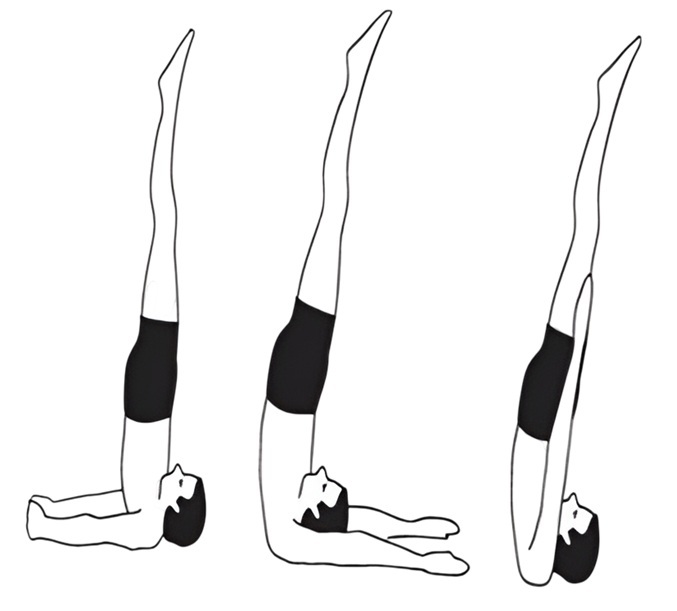
Hence, Niralamba Sarvangasana literally means Unsupported Shoulderstand, indicating that the body is balanced vertically on the shoulders without the hands supporting the back. It is an advanced inversion that challenges both strength and balance.
2. Definition
Niralamba Sarvangasana is an inverted asana where the practitioner balances the body vertically on the shoulders with the spine erect, head aligned, and legs extended overhead, either in a straight vertical line (Variant I) or with additional arm positions (Variant II). Unlike traditional Sarvangasana, the practitioner’s arms are not supporting the back, hence “niralamba” or unsupported.
This asana:
- Stimulates the endocrine system
- Enhances spinal alignment
- Improves venous return and circulatory efficiency
- Develops core, shoulder, and neck strength
It is considered advanced and should be attempted after mastery of supported Sarvangasana and preparatory poses.
3. Method of Practice (Step-by-Step)
Variant I – Classic Niralamba Sarvangasana (Arms Overhead on Floor)
Step 1 – Preparation:
- Lie supine (on your back) on a yoga mat.
- Keep legs together, arms alongside the body, palms facing downward.
- Take 3–5 deep breaths to center yourself.
Step 2 – Hip Lift:
- Engage the core and glute muscles.
- Slowly lift the legs together towards the ceiling while pressing the shoulders into the mat.
- Hands remain flat on the floor beside the body for balance.
Step 3 – Shoulder Support and Alignment:
- Tuck the chin slightly toward the chest to protect the cervical spine.
- Roll onto the shoulders so that the cervical vertebrae are free, supporting the body weight on the shoulders.
- Keep arms straight, extended overhead on the floor.
Step 4 – Leg Extension:
- Gradually straighten the legs upward, forming a vertical line from shoulders to toes.
- Keep the toes pointed or flexed depending on stability.
- Maintain awareness of even weight distribution across both shoulders.
Step 5 – Hold the Pose:
- Maintain deep, slow diaphragmatic breathing.
- Focus on core engagement and spinal elongation.
- Hold for 15–60 seconds initially, increasing with practice.
Step 6 – Exit Safely:
- Slowly bend the knees and bring feet down towards the floor.
- Lower hips gradually while keeping shoulders and back engaged.
- Release into Savasana or a gentle spinal counterpose.
Variant II – Niralamba Sarvangasana (Arms Crossed on Chest or Hands on Ribs)
Step 1 – Lie supine as described above.
Step 2 – Lift Legs and Hips:
- Engage core, lift legs vertically, press shoulders into mat.
- Cross arms over the chest or place hands on the lower ribs.
Step 3 – Shoulder Balance:
- Roll onto shoulders, keeping arms unsupported beneath the back.
- Maintain chin tucked, spine elongated, legs extended.
Step 4 – Leg and Body Alignment:
- Keep the hips, knees, and ankles aligned vertically.
- Engage glutes, quadriceps, and core to maintain stability.
Step 5 – Breathing & Focus:
- Focus on slow, even breathing, maintaining calm awareness.
- This variant is more challenging due to reduced leverage from hands.
Step 6 – Exit:
- Bend knees slowly, lower to the mat, release tension, counterpose.
4. Alignment Cues
- Chin tuck: Slightly tuck the chin to maintain cervical spine safety.
- Shoulder roll: Roll weight onto the shoulders, not the neck.
- Leg extension: Keep legs vertical, thighs active, toes pointed.
- Spinal elongation: Maintain a long, straight spine from shoulders to toes.
- Core engagement: Engage rectus abdominis, obliques, and transverse abdominis.
- Even weight distribution: Press evenly through both shoulders.
- Relax the face and jaw: Avoid tension in the cervical area.
5. Benefits
- Physical Benefits:
- Strengthens shoulders, upper back, arms, core, and glutes.
- Improves spinal flexibility and alignment.
- Stretches hamstrings and neck muscles.
- Enhances balance, coordination, and proprioception.
- Physiological Benefits:
- Stimulates thyroid and parathyroid glands.
- Improves blood circulation and venous return.
- Boosts lymphatic drainage.
- Mental Benefits:
- Enhances focus, concentration, and awareness.
- Reduces stress and anxiety through inversion therapy.
6. Contraindications
- Cervical spine injuries or chronic neck pain
- High blood pressure or heart conditions
- Glaucoma or eye-related disorders
- Shoulder injuries or dislocations
- Pregnancy (advanced trimester)
- Vertigo or balance disorders
7. Counterposes
After Niralamba Sarvangasana, spinal and shoulder counterposes help neutralize the body:
- Matsyasana (Fish Pose): Opens chest and stretches anterior neck.
- Balasana (Child’s Pose): Relieves spinal compression.
- Setu Bandha Sarvangasana (Bridge Pose): Mild inversion and chest opening.
8. Preparatory Practice
Before attempting Niralamba Sarvangasana:
- Supported Sarvangasana: Learn proper shoulder and spine alignment.
- Halasana (Plow Pose): Opens shoulders and stretches hamstrings.
- Dolphin Pose: Strengthens shoulders and core.
- Urdhva Dhanurasana (Wheel Pose): Opens anterior body and enhances spinal flexibility.
- Chaturanga Dandasana: Strengthens arms, shoulders, and core.
9. Modifications
- Use a folded blanket under shoulders to protect cervical spine.
- Wall support: Rest feet or back near a wall to aid balance.
- Bend knees slightly if hamstrings or lower back are tight.
- Hands on lower back: Gradual transition from supported Sarvangasana.
- Props under sacrum: Assist in vertical lift for beginners.
10. Muscles Involved
- Core muscles: Rectus abdominis, obliques, transverse abdominis
- Hip muscles: Gluteus maximus, gluteus medius
- Spinal stabilizers: Erector spinae, multifidus
- Shoulders & arms: Deltoids, trapezius, rotator cuff group
- Legs: Quadriceps, hamstrings, adductors
- Neck muscles: Sternocleidomastoid (stabilization), deep cervical flexors
11. Kinesiology
- Joint Actions:
- Shoulder: Scapular depression, glenohumeral stabilization
- Spine: Cervical flexion, thoracic extension, lumbar neutral
- Hip: Extension and adduction (active)
- Knee: Extension
- Planes of Movement:
- Sagittal plane (legs and trunk)
- Frontal plane (balance and stability via shoulders)
- Type of contraction: Isometric for core and shoulder muscles; concentric/eccentric during lift and descent
12. Kinematics
- Niralamba Sarvangasana involves controlled lifting and vertical alignment, requiring:
- Progressive hip extension from supine.
- Shoulder loading and weight transfer.
- Dynamic balance during vertical hold.
- Foot dorsiflexion or plantar flexion for stability.
- The movement is slow and deliberate, emphasizing neuromuscular control over speed.
13. Biomechanics
- Center of Mass: Shifted over shoulders; requires upper body strength for stabilization.
- Load Distribution: Shoulder girdle bears body weight; cervical spine must be protected.
- Torque: Minimal if core and legs aligned; imbalance causes shear stress on neck.
- Leverage: Hands-free variant increases demand on shoulders, trapezius, and core.
14. Functional Anatomy & Physiology
- Cardiovascular: Inversion enhances venous return to the heart, stimulates baroreceptors.
- Endocrine: Stimulates thyroid and parathyroid via neck compression, improving metabolism.
- Musculoskeletal: Strengthens posterior chain, stabilizes shoulder girdle, elongates spine.
- Neurological: Improves proprioception and vestibular awareness; promotes mental focus and calm.
- Respiratory: Controlled diaphragmatic breathing enhances oxygenation.
15. How to Correct and Adjust While Teaching
Common Issues
- Neck strain: Head too far forward or excessive pressure.
- Shoulder collapse: Weight not evenly distributed.
- Leg misalignment: Legs fall sideways or knees bend.
- Core disengagement: Body sways, unstable balance.
Correction Strategies
- Neck: Place folded blanket under shoulders; cue chin slightly tucked.
- Shoulders: Instruct pressing shoulders into mat, avoid lifting upper back.
- Legs: Engage quadriceps, adductors, keep feet flexed/pointed.
- Core: Cue engagement of rectus abdominis and obliques.
- Hands-free transition: Demonstrate in steps from supported Sarvangasana.
Hands-On Adjustments
- Stabilize shoulders gently with hands on lateral deltoids.
- Support hips if beginner struggles to lift vertically.
- Guide feet alignment without forcing legs.
Cueing Tips
- Use step-by-step verbal guidance: “Lift legs, engage core, roll onto shoulders, extend legs.”
- Encourage slow, mindful movement.
- Focus on breath coordination: inhale while lifting, exhale while adjusting.
16. Safety & Progression
- Always master supported Sarvangasana before attempting Niralamba Sarvangasana.
- Start with short holds (10–20 seconds), gradually increase duration.
- Use props and wall support initially.
- Avoid forced movements; ensure proper warm-up of shoulders, neck, and spine.
17. Conclusion
Niralamba Sarvangasana is an advanced inversion that challenges strength, balance, and awareness. By engaging the core, shoulders, and spinal stabilizers, the practitioner achieves:
- Enhanced physical strength and spinal health
- Improved circulation, endocrine function, and lymphatic flow
- Mental clarity and focus
QUESTION AND ANSWER
1. What does “Niralamba” in Niralamba Sarvangasana mean?
A. Supported
B. Unsupported
C. Inverted
D. Folded
Answer: B – “Niralamba” means unsupported, indicating no hand support for the back.
2. Niralamba Sarvangasana is classified as:
A. Supine forward bend
B. Arm balance
C. Unsupported inversion
D. Standing balance
Answer: C – It is an inverted asana balanced on shoulders without hand support.
3. Which part of the body primarily bears weight in Niralamba Sarvangasana?
A. Cervical spine
B. Shoulders
C. Hands
D. Hips
Answer: B – The shoulders bear the body weight; cervical spine is protected.
4. What is a key preparatory pose for Niralamba Sarvangasana?
A. Halasana
B. Paschimottanasana
C. Adho Mukha Svanasana
D. Uttanasana
Answer: A – Halasana (Plow Pose) opens shoulders and stretches the posterior chain.
5. Which muscles are primarily engaged to lift the legs and stabilize the body?
A. Deltoids, pectorals, gastrocnemius
B. Rectus abdominis, gluteus maximus, quadriceps
C. Sternocleidomastoid, latissimus dorsi
D. Soleus and tibialis anterior
Answer: B – Core, glutes, and quadriceps maintain vertical alignment.