
1. Introduction
Yoga, an ancient science that harmonizes body, mind, and spirit, comprises countless postures (asanas), each serving unique physical, mental, and spiritual purposes. Among these, Natarajasana, also known as Lord of the Dance Pose, stands out for its blend of balance, strength, flexibility, and grace. Its intricate structure combines elements of standing balance, backbend, and shoulder opening, making it a comprehensive asana that enhances both musculoskeletal and neuromuscular coordination.
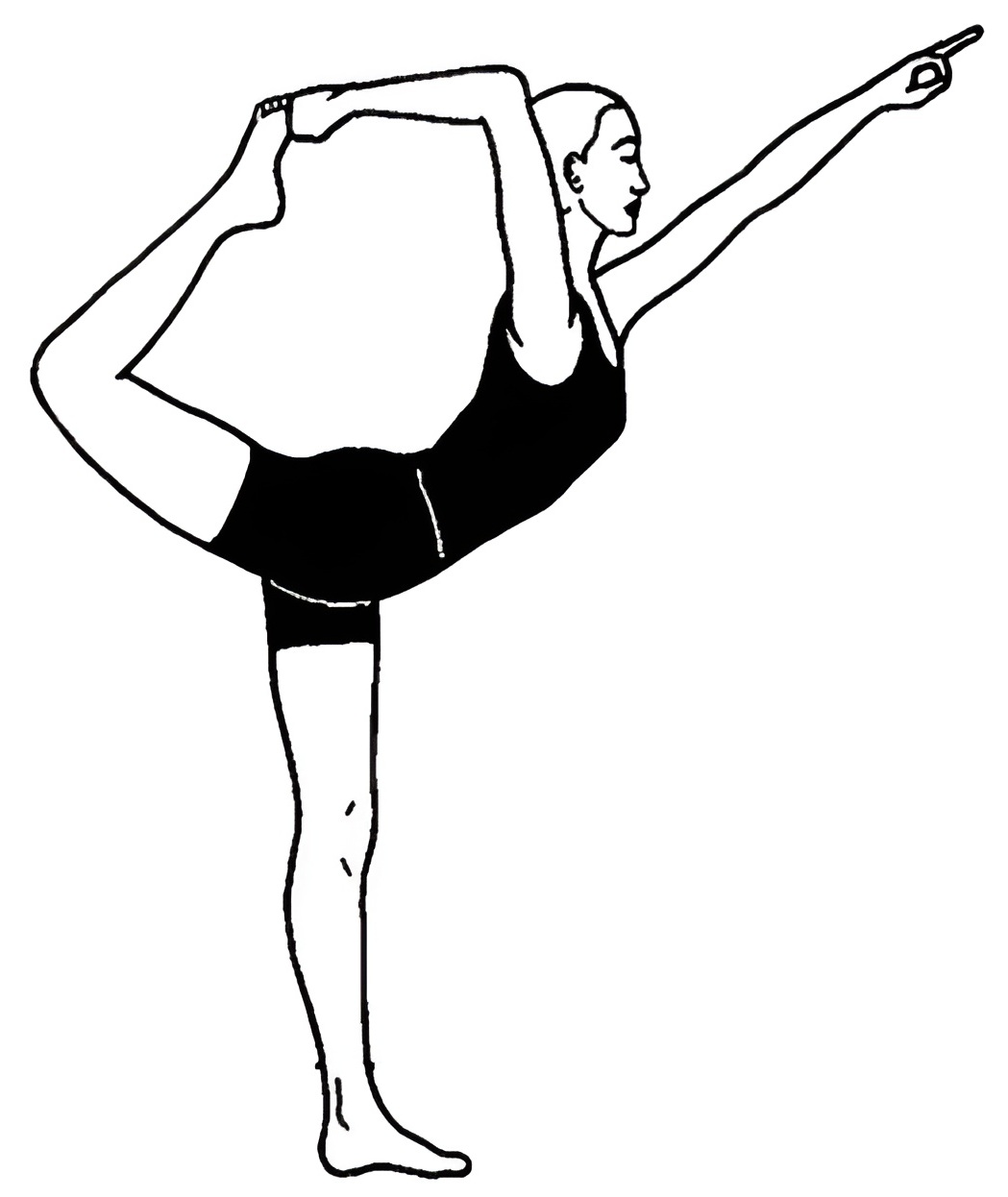
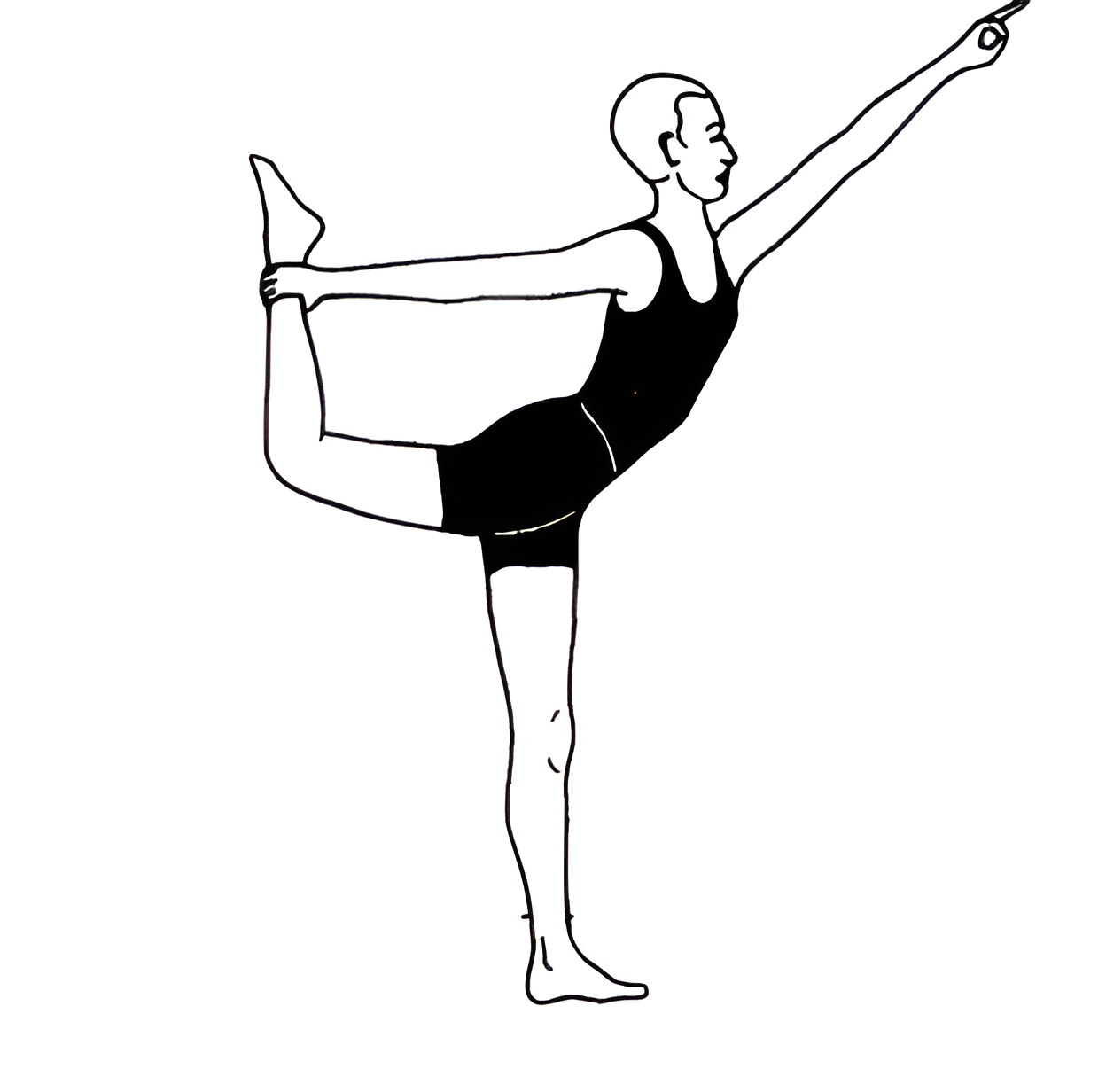
The practice of Natarajasana is not merely physical; it embodies a symbolic representation of cosmic dance, emphasizing fluidity, control, and inner awareness. By exploring the etymology, method, biomechanics, and physiology of this pose, practitioners and teachers can cultivate a deeper understanding of its holistic benefits.
2. Word Meaning and Etymology
- Nataraja: Derived from “Natya” (dance) and “Raja” (king), meaning the “King of Dance”, an epithet for Lord Shiva in his cosmic dancer form.
- Asana: Means posture or seat, representing a stable and poised position.
Thus, Natarajasana can be interpreted as “the pose of the cosmic dancing lord”, symbolizing rhythm, grace, and dynamic equilibrium.
3. Definition of Natarajasana
Natarajasana is a standing balancing posture that involves:
- Single-leg stance: Weight-bearing on one leg.
- Quadriceps stretch: The lifted leg is held posteriorly, opening the hip flexors.
- Backbend: The torso arches slightly backward.
- Shoulder and chest expansion: One hand reaches back to hold the foot, opening the chest.
- Focus and concentration: The gaze (drishti) is fixed for stability.
Classical Definition:
Natarajasana is a dynamic yoga posture that develops strength, flexibility, balance, and coordination, while embodying the grace and poise of the cosmic dancer.
4. Method of Practice: Step by Step
Step 1: Starting Position
- Begin in Tadasana (Mountain Pose), feet together, arms relaxed.
- Ground through the feet evenly, lengthen the spine.
Step 2: Weight Transfer
- Shift weight onto the left leg, rooting it firmly into the mat.
- Engage quadriceps, glutes, and core muscles for stability.
Step 3: Lift the Opposite Leg
- Bend the right knee, bringing the heel towards the glute.
- Reach the right hand backward to grasp the inside of the right ankle or foot.
Step 4: Extend and Arch
- Press the right foot into the hand while lifting it upward and backward.
- Simultaneously, extend the left arm forward or overhead for balance.
- Lift the chest, keeping the spine elongated.
Step 5: Alignment and Balance
- Square the hips forward.
- Keep the standing leg straight but not locked.
- Gaze (drishti) forward or slightly upward.
Step 6: Hold the Pose
- Maintain the position for 20-60 seconds, breathing deeply.
- Focus on steadiness and smooth, even breaths.
Step 7: Release
- Exhale, gently release the foot and return to Tadasana.
- Repeat on the opposite side.
5. Alignment Cues
- Feet: Standing foot rooted firmly; lifted foot flexed slightly to maintain grip.
- Knees: Standing leg engaged; avoid hyperextension.
- Hips: Square to the front; avoid lateral rotation.
- Spine: Lengthened; avoid collapsing the lumbar region.
- Chest & Shoulders: Open and broad; avoid shrugging shoulders.
- Head & Neck: Neutral, aligned with the spine; gaze forward or upward.
- Arms: Front arm extended forward; back arm holding foot with firm grip.
6. Benefits of Natarajasana
Physical Benefits:
- Improves balance and coordination.
- Strengthens legs, ankles, thighs, core, and back muscles.
- Opens the chest, shoulders, and hip flexors.
- Enhances spinal flexibility and posture.
Mental Benefits:
- Increases focus, concentration, and mindfulness.
- Reduces stress and anxiety through controlled breathing.
- Cultivates patience and body awareness.
Energetic and Spiritual Benefits:
- Stimulates Muladhara and Anahata chakras, promoting grounding and heart-opening.
- Symbolically represents grace, rhythm, and poise in life.
7. Contraindications
Natarajasana is not recommended for individuals with:
- Knee injuries: Avoid deep bending of the knee.
- Hip injuries: Excessive hip extension may worsen conditions.
- Lower back pain or disc issues: Backbend may strain the spine.
- Shoulder injuries: Avoid if shoulder flexibility is limited.
- Vertigo or balance disorders: Practice near a wall for support.
8. Counterpose
After Natarajasana, it is recommended to practice a forward-bending or grounding pose to neutralize the spine and release tension:
- Tadasana (Mountain Pose) – for centering.
- Uttanasana (Standing Forward Fold) – to release the back and hamstrings.
- Balasana (Child’s Pose) – for relaxation.
9. Preparatory Practices
To safely enter Natarajasana, the following preparatory poses are recommended:
- Vrksasana (Tree Pose) – improves balance.
- Bhujangasana (Cobra Pose) – opens the chest and strengthens the spine.
- Anjaneyasana (Low Lunge) – stretches hip flexors.
- Dhanurasana (Bow Pose) – strengthens back and shoulders.
- Utkatasana (Chair Pose) – strengthens quadriceps and core.
10. Modifications
- Beginner Modification: Hold a wall or chair for balance; loop a strap around the foot if hand cannot reach.
- Intermediate Variation: Lift the leg higher while keeping the torso upright.
- Advanced Variation: Combine with Lord of the Dance Mudra, extending arms overhead while holding the foot.
11. Muscles Involved
Primary Muscles:
- Quadriceps – standing and lifted leg stabilization.
- Hamstrings – balance and posture alignment.
- Gluteus Maximus & Medius – standing leg stability.
- Erector Spinae – back extension.
- Rectus Abdominis & Obliques – core stabilization.
- Deltoids & Trapezius – shoulder and arm engagement.
Secondary Muscles:
- Hip Flexors (Iliopsoas) – stretched in lifted leg.
- Adductors – stabilizing hip alignment.
- Calves & Ankle Muscles – for balance.
12. Kinesiology
Natarajasana involves multi-joint movement patterns:
- Hip joint: Extension and flexion.
- Knee joint: Flexion (lifted leg) and stabilization (standing leg).
- Spine: Extension and lateral flexion.
- Shoulder joint: Flexion, abduction, and external rotation.
- Ankle joint: Plantarflexion and dorsiflexion for balance.
It is a closed kinetic chain exercise on the standing leg, promoting proprioception and neuromuscular control.
13. Kinematics
- Weight Transfer: From bilateral stance to single-leg stance.
- Center of Mass (COM): Shifts forward and upward as the lifted leg extends back.
- Balance: Maintained through micro-adjustments in the ankle, knee, hip, and core muscles.
- Range of Motion (ROM):
- Hip extension: 10–20° for beginners, 25–35° for advanced.
- Shoulder flexion/abduction: 90–120°.
- Spinal extension: 20–30°.
14. Biomechanism
- Lever Mechanics: Standing leg acts as a support lever, lifting leg as a resistance lever, and arms creating counterbalance.
- Torque Generation: Quadriceps and glutes generate torque to stabilize the knee and hip.
- Spinal Load: Minimal if core is engaged; maximal lumbar extension if overarched.
- Balance Control: Vestibular system, proprioception, and visual feedback maintain equilibrium.
15. Functional Anatomy & Physiology
- Musculoskeletal Function: Combines strength, flexibility, and joint mobility.
- Neuromuscular Coordination: Engages core, lower limb, and upper limb muscles simultaneously.
- Circulatory Impact: Mild stimulation of venous return in standing leg.
- Respiratory Effect: Chest opening improves lung capacity and diaphragmatic breathing.
- Neurological Engagement: Enhances proprioception, balance, and focus.
16. How to Correct and Adjust While Teaching
Common Errors & Corrections:
- Collapsed Chest / Rounded Shoulders
- Correction: Cue shoulders down and back; engage scapular muscles.
- Hips Rotated Outward
- Correction: Cue to square hips forward; engage glutes.
- Bent Standing Leg
- Correction: Encourage micro-bend but stabilize knee; engage quadriceps.
- Unstable Balance
- Correction: Use drishti (focused gaze); adjust foot position; support with wall if needed.
- Neck Strain
- Correction: Keep head neutral, avoid tilting backward.
Hands-On Adjustments:
- Support pelvis gently to square hips.
- Guide lifted leg with a strap or hand to align hip and knee.
- Lightly encourage chest expansion and shoulder rotation.
Verbal Cues:
- “Lift your chest while keeping hips square.”
- “Root your standing foot and lengthen through the spine.”
- “Reach forward with your opposite hand for balance.”
17. Conclusion
Natarajasana, or Lord of the Dance Pose, epitomizes the harmony of strength, flexibility, balance, and mental focus. Beyond its aesthetic appeal, it offers a profound integration of biomechanical precision, functional anatomy, and mindfulness practice. By understanding its muscular involvement, kinematics, modifications, and alignment cues, yoga practitioners can safely explore its depth while experiencing both physical and mental transformation.
Through regular practice, Natarajasana cultivates resilience, grace, and poise, reminding us that yoga is not just about the body, but about embodying the dance of life with awareness and balance.
QUESTION AND ANSWER
1. Basic Knowledge
- The meaning of Natarajasana is:
A) Mountain Pose
B) Lord of the Dance Pose ✅
C) Bow Pose
D) Tree Pose - Natarajasana is primarily a:
A) Forward bend
B) Seated twist
C) Standing balance and backbend ✅
D) Inversion - The Sanskrit word “Nataraja” refers to:
A) The Sun God
B) The King of Dance / Lord Shiva ✅
C) The Wind God
D) The Lord of Fire - The primary focus of Natarajasana is:
A) Strength, balance, and flexibility ✅
B) Relaxation only
C) Cardio endurance
D) Core isolation
2. Alignment and Technique
- In Natarajasana, the standing leg should be:
A) Locked completely
B) Slightly bent and engaged ✅
C) Relaxed
D) Rotated outward - The lifted leg in Natarajasana is primarily in:
A) Hip flexion
B) Hip extension ✅
C) Hip abduction
D) Hip internal rotation - To maintain balance in Natarajasana, the practitioner should:
A) Close eyes
B) Focus gaze on a point (drishti) ✅
C) Move arms randomly
D) Lean backward - Which arm typically reaches backward to hold the foot?
A) Same side as standing leg
B) Opposite side of standing leg ✅
C) Both arms
D) Neither arm - Common mistake in Natarajasana: hips rotated outward. The correction is:
A) Rotate standing leg inward
B) Square hips forward ✅
C) Lean torso forward
D) Bend back more
3. Muscles Involved
- Primary muscles stretched in Natarajasana:
A) Hamstrings
B) Quadriceps of lifted leg ✅
C) Deltoids
D) Gastrocnemius - The standing leg is primarily strengthened by:
A) Hamstrings
B) Quadriceps and glutes ✅
C) Triceps
D) Biceps - Core muscles engaged in Natarajasana:
A) Rectus abdominis and obliques ✅
B) Soleus and gastrocnemius
C) Trapezius only
D) Pectorals only - Which muscles help open the chest in Natarajasana?
A) Pectoralis major and minor
B) Deltoids and trapezius ✅
C) Latissimus dorsi
D) Rhomboids only - Hip flexors of the lifted leg in Natarajasana are:
A) Engaged
B) Relaxed
C) Stretched ✅
D) Contracted concentrically
4. Biomechanics & Kinesiology
- Natarajasana is an example of:
A) Open kinetic chain exercise
B) Closed kinetic chain exercise on standing leg ✅
C) Isometric exercise only
D) Plyometric movement - Which joint is primarily extended in the lifted leg?
A) Knee
B) Hip ✅
C) Ankle
D) Shoulder - Natarajasana improves proprioception mainly through:
A) Upper body stretching
B) Single-leg stance and micro-adjustments ✅
C) Breathing techniques
D) Seated spinal rotation - The center of mass in Natarajasana shifts:
A) Backward
B) Forward and upward ✅
C) Laterally only
D) Remains unchanged - Which system is highly stimulated for balance in Natarajasana?
A) Digestive system
B) Vestibular and proprioceptive system ✅
C) Respiratory system only
D) Immune system
5. Benefits
- Physical benefits of Natarajasana include:
A) Improves balance, flexibility, and core strength ✅
B) Reduces vision
C) Strengthens only arms
D) Improves hearing - Mental benefits of Natarajasana include:
A) Improves focus and concentration ✅
B) Enhances long-term memory only
C) Reduces sleep
D) Stimulates appetite - Natarajasana opens which chakra primarily?
A) Muladhara and Anahata ✅
B) Ajna only
C) Vishuddha only
D) Sahasrara only - Which of the following is a spiritual benefit of Natarajasana?
A) Enhances cardiovascular endurance
B) Cultivates grace and poise ✅
C) Increases height
D) Improves digestion
6. Contraindications
- Natarajasana is contraindicated for:
A) People with shoulder injuries ✅
B) People with normal vision
C) Healthy adults
D) People with flexible hips - People with knee injuries should:
A) Perform the pose fully
B) Avoid or use modifications ✅
C) Bend further
D) Close eyes - Natarajasana should be avoided in:
A) Anxiety disorders
B) Lower back disc problems ✅
C) People who sleep well
D) Healthy athletes
7. Preparatory and Counter Poses
- Which of the following is a preparatory pose for Natarajasana?
A) Vrksasana (Tree Pose) ✅
B) Savasana
C) Halasana
D) Matsyasana - A good counterpose after Natarajasana is:
A) Uttanasana (Standing Forward Fold) ✅
B) Tadasana
C) Ardha Matsyendrasana
D) Adho Mukha Svanasana - Which pose strengthens the back in preparation for Natarajasana?
A) Bhujangasana (Cobra Pose) ✅
B) Balasana
C) Shavasana
D) Sukhasana
8. Teaching & Adjustments
- If a student cannot hold their foot, the teacher should suggest:
A) Stop practice
B) Use a strap ✅
C) Pull harder
D) Bend standing leg - For unstable balance, the teacher can cue:
A) Close eyes
B) Drishti (focus gaze) ✅
C) Throw arms up
D) Lean forward - Common correction for collapsed chest:
A) Shrug shoulders
B) Expand chest and roll shoulders back ✅
C) Arch lower back excessively
D) Bend standing leg more - Hands-on adjustment for squaring hips:
A) Push torso forward
B) Gently guide pelvis to face forward ✅
C) Pull head backward
D) Rotate ankle - A verbal cue for arm alignment in Natarajasana:
A) “Relax shoulders”
B) “Lift chest and reach forward with opposite hand” ✅
C) “Look down”
D) “Bend standing leg more”
9. Variations
- Beginner modification includes:
A) Holding a wall for balance ✅
B) Full backbend immediately
C) Standing on tiptoe
D) Closing eyes - Intermediate variation involves:
A) Lifting leg higher while keeping torso upright ✅
B) Leaning forward
C) Sitting down
D) Folding forward - Advanced variation involves:
A) Using Lord of the Dance Mudra ✅
B) Closing eyes
C) Bending knees completely
D) Rotating hips outward
10. Functional Anatomy & Physiology
- Natarajasana improves spinal flexibility mainly via:
A) Thoracic and lumbar extension ✅
B) Cervical flexion
C) Hip abduction only
D) Knee flexion - Breathing in Natarajasana primarily benefits:
A) Lung capacity and diaphragmatic movement ✅
B) Digestive system only
C) Ear balance
D) Heart rate alone - Neurological benefit of Natarajasana:
A) Improves proprioception and balance ✅
B) Reduces memory
C) Stimulates taste buds
D) Lowers vision - Natarajasana is a multi-joint movement involving:
A) Hip, knee, ankle, shoulder, spine ✅
B) Elbow and wrist only
C) Knee only
D) None - The pose strengthens stabilizing muscles of:
A) Spine, hips, legs, and core ✅
B) Face only
C) Upper arm only
D) Neck only