
1. WORD MEANING AND TERMINOLOGY
The Cat–Cow movement, known in Sanskrit as Marjaryasana–Bitilasana, is a foundational flow widely practiced in yoga for spinal mobility, nervous system regulation, breath coordination, and warm-up of the axial skeleton.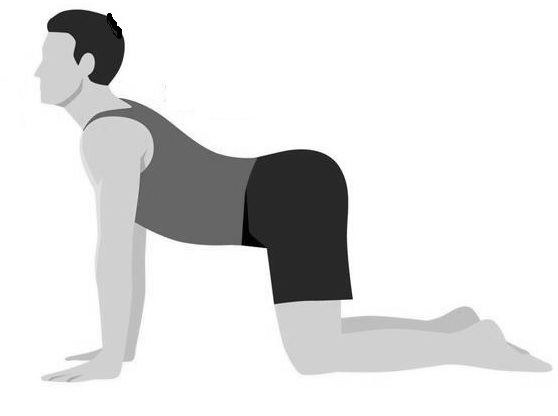
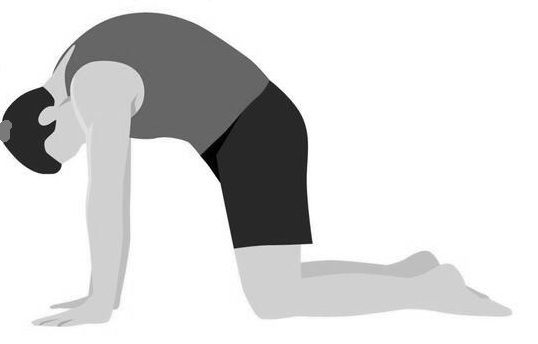
The term Marjaryasana is derived from the Sanskrit word Marjari, meaning cat, and asana, meaning posture or seat. Thus, Marjaryasana translates to Cat Pose, inspired by the way a cat stretches and arches its back to awaken its spine. This image reflects the organic, instinctive movement often seen in animals—movement that is rhythmic, fluid, and conscious. The rounded spine in Marjaryasana symbolizes withdrawal, internalization, and exhalation.
The term Bitilasana comes from the Sanskrit word Bitila, meaning cow. In Bitilasana, the spine dips and the chest broadens, representing openness, inhalation, and gentle extension. The posture resembles the relaxed, gentle swayback position of a cow, embodying softness, receptivity, and steadiness.
Together, Marjaryasana–Bitilasana forms a continuous dynamic vinyasa linking spinal flexion (Cat) with spinal extension (Cow). This pairing offers a complete, safe, and accessible movement of the entire spine—from occiput to sacrum—making it one of the most widely taught sequences in yoga, from beginners to advanced practitioners.
The fusion of Cat and Cow illustrates the yogic principle of Spanda—the pulsation of life, the oscillation between expansion and contraction. This movement brings awareness to the breath, centers the mind, releases tension, and prepares the body for deeper asanas.
2. DEFINITION AND DESCRIPTION
Marjaryasana–Bitilasana is a dynamic spinal articulation sequence practiced from a table-top (Bharmanasana) position. It involves alternating between:
1. Marjaryasana (Cat Pose):
– Spine rounds upward, creating global flexion
– Pelvis tucks into posterior tilt
– Shoulder blades protract
– Abdomen draws in
– Chin moves toward the chest
– Exhalation is synchronized with the movement
2. Bitilasana (Cow Pose):
– Spine dips downward into gentle extension
– Pelvis tilts anteriorly
– Shoulder blades retract
– Chest broadens
– Sternum moves forward and up
– Inhalation accompanies the movement
This oscillation mobilizes the entire vertebral column, lubricates joints, activates spinal stabilizers, and integrates breath with movement. It builds proprioceptive awareness and prepares the practitioner for backbends, twists, forward folds, and core work.
The sequence is used as:
• A warm-up for any yoga class
• A therapeutic movement for spinal stiffness
• A method for releasing tension in the neck, shoulders, and lower back
• A somatic repatterning for healthier movement habits
• A breath-coordinated practice for emotional regulation
In yoga therapy, the Cat–Cow sequence is considered a primary intervention for sedentary lifestyle, desk-related stiffness, lumbar discomfort, mild scoliosis patterns, and for retraining diaphragmatic movement.
Thus, Marjaryasana–Bitilasana forms the foundation of spinal health, integrating anatomy, breath, mindfulness, and movement.
3. METHOD OF PRACTICE, STEP BY STEP
Starting Position: Table-Top (Bharmanasana)
- Come onto hands and knees.
- Hands under shoulders, knees under hips.
- Spread fingers wide and ground palms evenly.
- Keep spine in neutral and gaze down.
A. Steps for Marjaryasana (Cat Pose)
- Begin in table-top with a neutral spine.
- Exhale slowly.
- Press palms into the floor to activate shoulder girdle.
- Round the upper back by spreading shoulder blades (protraction).
- Draw the navel toward the spine to initiate abdominal engagement.
- Drop the head gently, bringing the chin toward the chest.
- Tuck the pelvis into posterior tilt, allowing tailbone to move downward.
- Maintain evenly distributed weight between hands and knees.
- Keep breath steady and rhythmic.
B. Steps for Bitilasana (Cow Pose)
- From Cat, begin to inhale smoothly.
- Lift the sitting bones upward into anterior pelvic tilt.
- Allow the belly to soften downward (but keep core engaged lightly).
- Draw shoulder blades toward each other (retraction).
- Broaden the collarbones and lift the sternum forward.
- Gently lift the chin and gaze upward without collapsing the neck.
- Keep elbows straight but not locked.
C. Linking the Two Movements
- Move slowly between Cat (exhale) and Cow (inhale).
- Initiate each movement from the pelvis.
- Let the spine articulate vertebra by vertebra.
- Continue for 10–20 rounds or more based on the class intention.
4. ALIGNMENT CUES
Hand Alignment
✔ Spread fingers wide
✔ Press down through index finger knuckle
✔ Avoid collapsing into wrists
✔ Keep elbows soft and forward
Knee Alignment
✔ Knees under hips
✔ Pads or blankets under knees if sensitive
✔ Maintain even pressure
Spinal Cues
✔ In Cat, lift from the mid-back rather than only rounding upper back
✔ In Cow, avoid over-arching the lumbar spine
✔ Think “length before depth”
Pelvic Cues
✔ Cat → posterior tilt
✔ Cow → anterior tilt
✔ Movement starts from pelvis, not shoulders
Shoulder Cues
✔ Cat → protract scapulae
✔ Cow → retract scapulae gently
✔ Maintain stability around shoulder girdle
Neck Cues
✔ Cat → natural flexion
✔ Cow → lengthen the back of the neck before lifting
✔ Avoid compressing cervical spine
Breath Cues
✔ Cat = exhale
✔ Cow = inhale
✔ Maintain smooth transition
Awareness Cues
✔ Feel the spine wave through its length
✔ Move with gravity, not against it
✔ The movement should feel easeful and fluid
5. BENEFITS
Physical Benefits
- Enhances spinal mobility and flexibility
- Lubricates intervertebral joints
- Activates deep spinal stabilizers
- Strengthens abdominal muscles
- Releases tension in neck and shoulders
- Improves posture and reduces slouching
- Supports healthy breathing mechanics
- Opens the chest and improves circulation
- Relieves lower back stiffness
- Massages digestive organs and improves gut motility
Physiological Benefits
- Enhances cerebrospinal fluid circulation
- Improves autonomic balance (parasympathetic activation)
- Improves lymphatic flow in thoracic region
- Enhances diaphragmatic function
- Supports hormonal balance through stress reduction
Psychological Benefits
- Reduces anxiety and mental fatigue
- Grounds awareness in breath
- Promotes mindful movement
- Improves emotional regulation
- Helps release stored tension in spine (somatic release)
Therapeutic Uses
- Beneficial for sedentary lifestyle
- Relieves stiffness from desk work
- Helps in recovery from mild scoliosis patterns
- Improves proprioception and motor control
- Excellent for prenatal yoga for spinal relief
- Useful in yoga therapy for mild depression and anxiety
6. CONTRAINDICATIONS
✔ Severe wrist pain or carpal tunnel syndrome
✔ Recent spinal surgery
✔ Acute herniated disc
✔ Severe cervical spondylosis
✔ Knee pain without padding
✔ Shoulder injury limiting movement
✔ High blood pressure (if neck is over-extended in Cow)
✔ Dizziness or vertigo (modify head movement)
Use caution:
– Pregnancy: Cow pose should be gentle and avoid deep abdominal stretch.
– Hypermobile students: Avoid over-arching in Cow.
– Osteoporosis: Avoid excessive spinal flexion.
Modifications or props can make the pose accessible.
7. COUNTERPOSES
After Cat–Cow, the following counterposes help neutralize or deepen spinal comfort:
Neutralizing Counterposes
• Balasana (Child’s Pose)
• Adho Mukha Virasana
• Vajrasana (Thunderbolt Pose)
• Savasana (Resting Pose)
Complementary Poses
• Bhujangasana (Cobra)
• Tadasana (Mountain Pose)
• Setu Bandhasana (Bridge Pose)
• Apanasana (Knee-to-Chest)
These counterposes stabilize the spine and complement the mobility gained from Cat–Cow movement.
8. PREPARATORY PRACTICES
Before practicing Cat–Cow, the following warm-ups help activate the body:
1. Wrist warm-ups
– Wrist circles
– Palm stretches
– Table-top gentle mini-presses
2. Shoulder mobilization
– Shoulder rolls
– Scapular protraction–retraction
3. Pelvic mobility
– Pelvic tilts from seated
– Hip circles
4. Breath preparation
– Deep diaphragmatic breathing
– Ujjayi preludes
– Box breathing
5. Core preparation
– Gentle abdominal engagement
– Supine pelvic tilts
These prepare joints, breath, and nervous system.
9. MODIFICATIONS
For Wrist Pain
✔ Use fists
✔ Place forearms on floor
✔ Elevate hands on blocks
For Knee Pain
✔ Use thick blankets
✔ Practice seated Cat–Cow on chair
For Neck Conditions
✔ Keep head neutral
✔ Avoid deep extension
For Pregnancy
✔ Very gentle Cow
✔ Wider knees
✔ Keep abdominal area soft
For Limited Mobility
✔ Perform the sequence seated
✔ Or standing with hands on wall
10. MUSCLES INVOLVED
Primary Muscles in Marjaryasana (Cat)
– Rectus abdominis
– Transversus abdominis
– Obliques
– Serratus anterior
– Intercostal muscles
– Gluteus maximus (slight)
– Deep spinal flexors
Primary Muscles in Bitilasana (Cow)
– Erector spinae
– Multifidus
– Rhomboids
– Lower trapezius
– Hip flexors (psoas)
– Cervical extensors
Stabilizing Muscles
– Pelvic floor
– Quadriceps
– Hamstrings
– Shoulder stabilizers (rotator cuff)
The sequence offers a balanced engagement of both flexor and extensor muscle chains.
11. KINESIOLOGY & KINEMATICS
Marjaryasana (Cat) Kinematics
– Spinal flexion throughout thoracic, lumbar, and cervical regions
– Pelvic posterior tilt
– Scapular protraction
– Hip slight extension
– Rib cage moves inward
– Abdominal engagement increases intra-abdominal pressure
Bitilasana (Cow) Kinematics
– Spinal extension (gentle)
– Pelvic anterior tilt
– Scapular retraction
– Hip slight flexion
– Rib cage expands
– Chest opens and sternum lifts
Movement Sequence
The movement is a closed-chain kinetic exercise involving:
→ Hands and knees fixed
→ Spine articulating in a wave pattern
→ Lumbar spine initiating flexion and extension
→ Thoracic spine following
→ Cervical spine integrating last
This creates neuromuscular patterning essential for healthy posture.
12. BIOMECHANICS
Load Distribution
• Wrists bear compressive load → must be aligned
• Knees bear downward weight → supported through tibial alignment
• Spine experiences traction (in Cat) and compression (in Cow)
• Shoulder girdle stabilizes movement
Joint Actions
✔ Cat:
– Flexion increases space between vertebrae
– Improves elasticity of fascia
– Engages core to support spine
✔ Cow:
– Extension improves anterior fascial line elasticity
– Promotes thoracic mobility
– Helps spinal curves re-establish
Breath Biomechanics
✔ Exhalation with Cat empties lungs fully
✔ Inhalation with Cow expands lungs
✔ Diaphragm moves efficiently
✔ Improves rib cage mobility
Fascial Lines
The movement integrates:
– Deep front line (core)
– Superficial back line
– Lateral lines through pelvis
– Arm lines through shoulders
Thus, Cat–Cow enhances whole-body biomechanical efficiency.
13. FUNCTIONAL ANATOMY & PHYSIOLOGY
Spine Functionality
Cat–Cow mobilizes cervical, thoracic, and lumbar vertebrae, improving intervertebral disc hydration. Flexion pumps synovial fluid into facet joints; extension decompresses anterior discs.
Core Mechanics
Cat increases abdominal activation and stimulates pelvic floor engagement. Cow stretches abdominal wall and promotes diaphragmatic excursion.
Respiratory Physiology
The alternation activates rib mechanics:
– Exhalation eases parasympathetic dominance
– Inhalation enhances lung expansion
– Breath rhythm regulates vagal tone
Circulatory Function
Movement of thoracic cage enhances venous return, lymph flow, and improves cardiac-respiratory synchronization.
Digestive Physiology
The rhythmic massaging movement stimulates:
– Peristalsis
– Organ motility
– Solar plexus relaxation
Neuromuscular Function
Improves motor control, proprioception, and spinal reflex patterns.
14. TEACHING, CORRECTIONS & ADJUSTMENTS
Verbal Cues
✔ “Start the movement from your tailbone.”
✔ “Let the spine ripple like a wave.”
✔ “Inhale to open, exhale to round.”
✔ “Avoid collapsing in the lower back.”
✔ “Lengthen the neck instead of crunching it.”
Common Mistakes and Corrections
❌ Overarching lower back in Cow
✔ Cue: Engage core lightly and broaden chest
❌ Collapsing into wrists
✔ Cue: Press through finger pads
❌ Shoulders lifting toward ears
✔ Cue: Soften shoulders away
❌ Movement only in lower back
✔ Cue: “Move from tailbone to head”
Hands-On Adjustments
✔ In Cow:
– Place hands lightly on shoulders to guide retraction
– Support lower ribs to prevent collapse
✔ In Cat:
– Softly press between shoulder blades to encourage protraction
– Support hips to guide posterior tilt
Safety Considerations
– Never push student into deeper spinal flexion using force
– Always check for neck comfort
– Avoid extreme movements in hypermobile students
Teaching Methodology
– Begin with breath awareness
– Keep movement slow, somatic, mindful
– Encourage closed-eyes practice for internalization
– Use this as a warm-up for deeper backbends or twists
CONCLUSION
Marjaryasana–Bitilasana represents one of the most essential sequences in yoga practice—a simple, accessible, and profound movement that unites breath, body, and awareness. It offers a complete articulation of the spine, enhances mobility, regulates the nervous system, and prepares the practitioner for any asana. The Cat–Cow flow embodies the principle of rhythmic pulsation, balancing groundedness with openness, contraction with expansion, and stability with freedom.
For yoga teachers, understanding the biomechanics, anatomy, kinesiology, and alignment principles makes this movement not merely a warm-up but a transformational tool for spinal health and emotional well-being. For practitioners, it is a daily practice that reconnects them to breath, posture, and inner ease.
QUESTION AND ANSWER
1. What is the primary movement in Marjaryasana?
A. Spinal extension
B. Spinal flexion
C. Lateral flexion
D. Axial rotation
Answer: B
2. What is the primary movement in Bitilasana?
A. Spinal flexion
B. Spinal extension
C. Adduction
D. Compression
Answer: B
3. The term “Marjaryasana” is derived from Sanskrit meaning:
A. Cow
B. Cat
C. Mountain
D. Table
Answer: B
4. “Bitilasana” is derived from the Sanskrit word “Bitila,” meaning:
A. Sheep
B. Camel
C. Cow
D. Cat
Answer: C
5. Which breath pattern is traditionally paired with Marjaryasana?
A. Inhalation
B. Exhalation
C. Breath retention
D. Rapid breathing
Answer: B
6. Which breath pattern is traditionally paired with Bitilasana?
A. Exhalation
B. Inhalation
C. Kapalabhati
D. Ujjayi exhale
Answer: B
7. The Marjaryasana–Bitilasana flow is primarily used for:
A. Hip opening
B. Shoulder strengthening
C. Spinal mobilization
D. Arm balancing
Answer: C
8. Which part of the spine is MOST mobilized in Cat–Cow?
A. Cervical
B. Thoracic
C. Lumbar
D. All of the above
Answer: D
9. In Marjaryasana, the scapulae should:
A. Retract
B. Elevate
C. Protract
D. Depress
Answer: C
10. In Bitilasana, the scapulae naturally:
A. Protract
B. Retract
C. Elevate only
D. Depress only
Answer: B
11. Which muscle is MOST active in spinal flexion (Cat Pose)?
A. Erector spinae
B. Rectus abdominis
C. Trapezius
D. Rhomboids
Answer: B
12. Which muscles are primarily lengthened in Bitilasana?
A. Sternocleidomastoid
B. Spinal extensors
C. Rectus abdominis
D. Rhomboids
Answer: C
13. Which joint is the main axis of movement in Marjaryasana–Bitilasana?
A. Knee
B. Hip
C. Spine
D. Wrist
Answer: C
14. What wrist alignment is recommended in Cat–Cow?
A. Fingers toward knees
B. Hands behind shoulders
C. Wrists under shoulders
D. Hands very wide
Answer: C
15. Which condition requires caution with deep spinal extension in Bitilasana?
A. Sciatica
B. Herniated disc (posterior)
C. Frozen shoulder
D. Knee osteoarthritis
Answer: B
16. Which spinal segment initiates movement in ideal Cat–Cow kinematics?
A. Lumbar
B. Cervical
C. Thoracic
D. Sacrum
Answer: A
17. Excessive cervical hyperextension in Cow Pose commonly leads to:
A. Better alignment
B. Neck strain
C. Improved posture
D. Increased strength
Answer: B
18. A key teaching cue for Marjaryasana is:
A. Drop the belly
B. Lift the sternum
C. Push the floor away
D. Relax the core
Answer: C
19. A key teaching cue for Bitilasana is:
A. Tuck the tailbone
B. Let the belly drop
C. Round the spine
D. Push the floor away
Answer: B
20. Which muscle stabilizes the scapula during Cat–Cow?
A. Gluteus minimus
B. Serratus anterior
C. Soleus
D. Psoas major
Answer: B
21. The pelvis in Marjaryasana performs:
A. Anterior tilt
B. Posterior tilt
C. Lateral tilt
D. Rotation
Answer: B
22. The pelvis in Bitilasana performs:
A. Posterior tilt
B. Neutral alignment
C. Anterior tilt
D. Lateral rotation
Answer: C
23. What is the safest cervical alignment in Cat Pose?
A. Over-flexed with chin to chest
B. Neutral with gaze toward knees
C. Hyperextended
D. Dropped completely
Answer: B
24. Which is not a benefit of Cat–Cow?
A. Stimulates cerebrospinal fluid flow
B. Warms up spinal tissues
C. Strengthens forearms
D. Coordinates breath and movement
Answer: C
25. Which of the following BEST describes the biomechanics of Bitilasana?
A. Global spinal flexion
B. Global spinal extension
C. Global rotation
D. Spinal compression
Answer: B
26. Cat–Cow is an excellent preparatory pose for:
A. Handstand
B. Deep backbends
C. Forward folds
D. All of the above
Answer: D
27. In teaching beginners, a common mistake is:
A. Excessive knee flexion
B. Too much thoracic extension
C. Overuse of cervical spine movement
D. Lack of wrist activation
Answer: C
28. Pregnant practitioners should avoid:
A. Marjaryasana
B. Bitilasana with deep belly drop
C. Hands-and-knees position
D. All spinal movements
Answer: B
29. Which muscle engages to support the lumbar spine in Cat Pose?
A. Quadratus lumborum
B. Iliacus
C. Gluteus medius
D. Hamstrings
Answer: A
30. Which of the following is a modification for wrist discomfort?
A. Knees wider
B. Fists on floor
C. Chin lifted
D. Tucking toes
Answer: B
31. What is the main function of Cat–Cow in a yoga class?
A. Strength
B. Warm-up and mobilization
C. Endurance
D. Cardio
Answer: B
32. What is the ideal breathing tempo in Cat–Cow?
A. Fast breath
B. Slow, smooth breath
C. Breathing through the mouth
D. Breath retention
Answer: B
33. Counterpose after Cat–Cow may include:
A. Savasana
B. Balasana
C. Utthita Trikonasana
D. Tadasana
Answer: B
34. What tissue benefits from gentle rhythmic movement in Cat–Cow?
A. Bone density
B. Intervertebral discs
C. Skull sutures
D. Toenails
Answer: B
35. The thoracic spine in Bitilasana experiences:
A. Flexion
B. Extension
C. Neutral
D. Rotation
Answer: B
36. Cat–Cow helps improve proprioception primarily through:
A. Weight lifting
B. Repetitive spinal articulation
C. Breath holding
D. Isometric contractions
Answer: B
37. A common alignment error in Marjaryasana:
A. Shoulders over-protracted
B. Weak neck
C. Elbows bending out
D. Hips sagging
Answer: C
38. Which structure must be protected in excessive lumbar extension?
A. Spinous processes
B. Intervertebral discs
C. Sacrotuberous ligament
D. IT band
Answer: B
39. Cat–Cow improves:
A. Cardiovascular capacity
B. Lymphatic circulation
C. Hair growth
D. Gut bacterial count
Answer: B
40. A good verbal cue in Bitilasana is:
A. “Press the mat away.”
B. “Round your upper back.”
C. “Shine your heart forward.”
D. “Drop your chin deeply.”
Answer: C
41. Kinematically, Cat–Cow involves movement around:
A. The sagittal plane
B. Frontal plane
C. Transverse plane
D. Rotational axis
Answer: A
42. Cat Pose encourages activation of which chain?
A. Superficial back line
B. Deep front line
C. Lateral line
D. Spiral line
Answer: B
43. Cow Pose activates which chain?
A. Deep front line
B. Superficial back line
C. Functional line
D. Arm line
Answer: B
44. What is the key teaching principle for spinal articulation?
A. Move all segments at once
B. Start movement at the pelvis
C. Move from the neck
D. Focus only on the thorax
Answer: B
45. Which variation adds core strengthening?
A. Wide knees
B. Hovering knees Cat–Cow
C. Hands on blocks
D. Neutral spine
Answer: B
46. Cat–Cow stimulates which nervous system division?
A. Sympathetic
B. Parasympathetic
C. Enteric
D. Somatic
Answer: B
47. Which muscle is stretched in Marjaryasana?
A. Rectus abdominis
B. Erector spinae
C. Gastrocnemius
D. Gluteus minimus
Answer: B
48. Which shoulder joint movement occurs in Cat Pose?
A. Abduction
B. Adduction
C. Protraction
D. External rotation
Answer: C
49. A variation that reduces knee pressure is:
A. Blanket under knees
B. Fists under shoulders
C. Cat–Cow standing
D. All of the above
Answer: D
50. When teaching, the safest instruction is:
A. “Move fast for energy.”
B. “Let the breath guide the movement.”
C. “Force a deep backbend.”
D. “Over-round the neck for deeper flexion.”
Answer: B