
1. Introduction
Yoga, an ancient science of mind-body integration, emphasizes postures (asanas) not only for physical health but also for mental balance and relaxation. Among restorative poses, Makarasana (Crocodile Pose) is highly valued for its therapeutic and calming effects. It is primarily a prone resting posture that promotes deep relaxation, spinal alignment, diaphragmatic breathing, and nervous system regulation.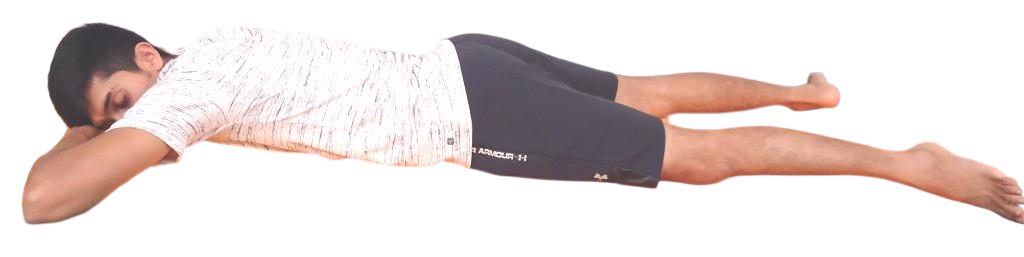
Makarasana is often used as a counterpose after vigorous asanas or as a preparatory posture for meditation and pranayama. Its simplicity, coupled with physiological benefits, makes it suitable for all levels of yoga practitioners, including beginners, seniors, and those in rehabilitation programs.
2. Word Meaning and Definition
Word Meaning:
- Makara: Crocodile
- Asana: Posture or Pose
Definition:
Makarasana is a prone relaxation posture resembling a crocodile lying on its belly. In this asana, the body lies flat on the ground with the legs extended backward, the abdomen and pelvis supported, the head turned to one side or resting on the hands, and the arms positioned to facilitate maximum relaxation. The pose aims to relieve tension in the back, improve diaphragmatic breathing, and enhance overall body awareness.
3. Method of Practice – Step by Step
Step 1: Preparatory Position
- Lie prone on a comfortable yoga mat with legs extended and toes pointing backward.
- Rest the forehead gently on a folded blanket or directly on the mat.
- Relax the shoulders away from the ears.
Step 2: Positioning the Arms
- Bring the arms forward with elbows bent, placing the forehead on the hands, forming a supportive pillow.
- Alternatively, arms can be placed alongside the body, palms facing upward, to relax the chest and shoulders.
Step 3: Positioning the Legs and Pelvis
- Legs remain extended with slight separation between the feet.
- Ensure the pelvis is fully supported, allowing the abdomen to rest naturally on the mat.
- Feet may be slightly turned outward for comfort.
Step 4: Alignment and Relaxation
- Allow the chest to relax onto the mat, encouraging diaphragmatic breathing.
- Keep the jaw relaxed and eyes closed.
- Focus on releasing tension in the neck, shoulders, back, and legs.
Step 5: Breathing and Holding
- Maintain slow, deep, rhythmic breathing.
- Observe inhalation and exhalation fully, engaging the diaphragm.
- Hold the pose for 5–15 minutes or longer, depending on comfort and practice level.
Step 6: Exiting the Pose
- Slowly roll to one side in a fetal position.
- Press into the hands and gently come up to a seated posture.
- Take a few deep breaths in a comfortable seated position to restore alertness.
4. Alignment Cues
- Head and Neck: Keep the forehead resting gently on the hands or mat; avoid neck strain.
- Shoulders: Allow shoulders to drop away from the ears; chest should be relaxed.
- Spine: Maintain a neutral, relaxed spinal curve with abdomen supported.
- Pelvis: Allow natural support from the mat; avoid lifting hips excessively.
- Legs and Feet: Extend legs fully; toes pointing backward; keep feet relaxed.
- Breathing: Focus on deep diaphragmatic breathing; chest should rise minimally.
5. Benefits of Makarasana
- Relaxation and Stress Relief:
- Reduces tension in the back, shoulders, and neck.
- Activates the parasympathetic nervous system, promoting calmness.
- Spinal Health:
- Supports lumbar curve, reducing lower back strain.
- Relieves tension in the thoracic and cervical regions.
- Respiratory Benefits:
- Encourages diaphragmatic breathing, enhancing oxygenation and lung capacity.
- Digestive Benefits:
- Gentle abdominal compression aids digestion and improves circulation to abdominal organs.
- Muscle Relaxation:
- Relaxes posterior chain muscles including erector spinae, gluteals, and hamstrings.
- Therapeutic Applications:
- Useful in rehabilitation for back pain, postural correction, and calming hyperactive nervous systems.
- Mental Focus and Mindfulness:
- Promotes introspection, mental clarity, and mindfulness.
6. Contraindications
- Acute back injuries or fractures
- Severe spinal deformities (e.g., advanced scoliosis)
- Recent abdominal surgery
- Severe respiratory conditions (with caution)
- Pregnancy (especially advanced stages)
7. Counterposes
- Bhujangasana (Cobra Pose): Gentle spinal extension to counter prolonged prone relaxation.
- Setu Bandhasana (Bridge Pose): Opens the chest and strengthens posterior muscles.
- Savasana: Full supine relaxation after Makarasana to restore energy and calm the nervous system.
8. Preparatory Practice
- Balasana (Child’s Pose): Opens the back and releases tension in the lumbar region.
- Adho Mukha Svanasana (Downward-Facing Dog): Stretches posterior chain and shoulders.
- Supta Baddha Konasana: Opens chest and hips for relaxed alignment.
- Bhujangasana (Cobra Pose): Prepares the back extensors for prone relaxation.
- Gentle Spinal Twists: Loosens thoracic and lumbar spine before deep relaxation.
9. Modifications
- Head Support: Use a folded blanket or small cushion under the forehead for neck support.
- Abdominal Support: Place a thin cushion or folded blanket under the abdomen for lumbar comfort.
- Arm Position: Arms may be positioned forward, alongside the body, or forming a pillow under the head, depending on comfort.
- Leg Position: Slightly bend knees if hamstrings or lower back are tight.
- Respiratory Support: Use slow-paced guided breathing to enhance relaxation.
10. Muscles Involved
Primary Muscles Relaxed/Engaged:
- Erector Spinae (lengthened and relaxed)
- Gluteus Maximus and Medius (posterior support)
- Latissimus Dorsi (posterior chain relaxation)
- Diaphragm (active engagement during deep breathing)
- Neck extensors and stabilizers
Secondary Muscles:
- Hamstrings (lengthened)
- Quadriceps (support stabilization)
- Rhomboids and Trapezius (shoulder relaxation)
11. Kinesiology and Kinematics
- Joint Movements:
- Spine: Neutral alignment with gentle thoracic flexion
- Shoulder: Minimal abduction or external rotation depending on arm position
- Hip: Neutral extension
- Knee: Extension with relaxation
- Neck: Slight rotation if head turned, neutral cervical length
- Movement Planes:
- Sagittal plane: Spinal alignment
- Frontal plane: Shoulder alignment
- Transverse plane: Minimal if head rotated
- Type of Motion:
- Static isometric relaxation
- Gentle passive stretching in posterior chain
12. Biomechanics and Functional Anatomy
- Spinal Loading:
- Weight is distributed along anterior body with abdominal support to reduce lumbar strain.
- Muscle Engagement:
- Primarily passive, promoting elongation and relaxation.
- Diaphragm actively engaged for deep breathing.
- Physiological Effects:
- Reduces sympathetic dominance; enhances parasympathetic activity.
- Improves blood flow to posterior muscles and abdominal organs.
- Reduces intra-abdominal pressure while supporting digestion.
13. Functional Anatomy & Physiology
- Spine: Maintains neutral alignment, reduces lumbar compression, relaxes thoracic muscles.
- Muscular System: Lengthens erector spinae, gluteals, and posterior chain; minimal active engagement promotes recovery.
- Respiratory System: Enhances diaphragmatic breathing and lung capacity.
- Nervous System: Activates parasympathetic response for relaxation, reducing heart rate and cortisol.
- Digestive System: Gentle abdominal support stimulates peristalsis.
- Circulatory System: Improves venous return and microcirculation in posterior chain muscles.
14. How to Correct and Adjust While Teaching
- Head and Neck:
- Ensure forehead or side of the head rests comfortably; avoid cervical strain.
- Shoulders:
- Encourage shoulders to drop naturally; palms under forehead if needed.
- Spine and Pelvis:
- Maintain neutral lumbar curve; provide cushion under abdomen if necessary.
- Legs and Feet:
- Legs relaxed, extended fully; toes naturally pointing backward.
- Breathing:
- Cue slow, diaphragmatic breathing; emphasize complete inhalation and exhalation.
- Gradual Practice:
- Hold for short periods initially (3–5 minutes), gradually increasing duration.
- Props and Modifications:
- Use blankets, cushions, or bolsters for support and comfort.
15. Tips for Teaching Makarasana
- Emphasize restorative nature; it is not a strength pose.
- Demonstrate arm and head positioning clearly.
- Encourage mindful attention to breath and body sensation.
- Integrate after dynamic or strenuous asanas as a counterpose.
- Observe spinal alignment and comfort, making adjustments as needed.
- Use this pose in guided relaxation or pranayama sessions to enhance parasympathetic activity.
16. Conclusion
Makarasana is a simple yet profoundly restorative yoga posture. Its therapeutic benefits include spinal alignment, diaphragmatic breathing, muscular relaxation, stress relief, and improved circulation. This prone relaxation pose serves as an effective counterpose to dynamic asanas and supports mental focus and mindfulness. With proper alignment, preparatory practices, modifications, and careful teaching, Makarasana can be safely practiced by individuals across all levels, from beginners to advanced practitioners, enhancing both physical and mental well-being.
QUESTION AND ANSWER
- The literal meaning of Makarasana is:
a) Crocodile Pose ✅
b) Fish Pose
c) Shoulder Stand
d) Egg Pose - The primary purpose of Makarasana is:
a) Strengthening the spine
b) Relaxation and spinal alignment ✅
c) Deep backbend
d) Inversion - Key muscle involved in diaphragmatic breathing during Makarasana:
a) Rectus Abdominis
b) Diaphragm ✅
c) Erector Spinae
d) Gluteus Medius - Contraindications include:
a) Mild fatigue
b) Recent spinal injury ✅
c) Stress
d) Sedentary lifestyle - Recommended counterpose:
a) Savasana ✅
b) Sarvangasana
c) Halasana
d) Padmasana - Preparatory asanas include:
a) Child’s Pose, Cobra Pose ✅
b) Headstand
c) Downward Dog only
d) Dhanurasana only - Key alignment cue:
a) Press shoulders into mat
b) Allow shoulders to drop naturally ✅
c) Lift head
d) Flex knees - Recommended duration initially:
a) 1–2 minutes
b) 3–5 minutes ✅
c) 15–20 minutes
d) 30 minutes - Benefits include:
a) Spinal relaxation, stress reduction, improved breathing ✅
b) Increases heart rate
c) Compresses lumbar spine
d) Reduces lung capacity - Arm placement options include:
a) Forward with forehead on hands ✅
b) Behind back only
c) Crossed overhead
d) Hanging off the mat
Answer Key:
- a
- b
- b
- b
- a
- a
- b
- b
- a
- a
1. Meaning and Definition
- The literal meaning of Makarasana is:
a) Fish Pose
b) Crocodile Pose ✅
c) Shoulder Stand
d) Egg Pose - “Makara” in Sanskrit refers to:
a) Dragon
b) Crocodile ✅
c) Lotus
d) Fish - The primary aim of Makarasana is:
a) Inversion
b) Relaxation and spinal alignment ✅
c) Backbend
d) Strengthening the arms
2. Method of Practice
- The recommended initial position for Makarasana is:
a) Sit cross-legged
b) Lie prone on the mat ✅
c) Stand with arms overhead
d) Lie supine - Arm positioning options in Makarasana include:
a) Forward with forehead resting on hands ✅
b) Behind back only
c) Crossed overhead
d) Arms dangling off the mat - Head positioning can be:
a) Turned to one side or resting on hands ✅
b) Lifted off the mat
c) Pressed hard into the mat
d) Hanging off the mat
3. Alignment and Technique
- Shoulder alignment in Makarasana should be:
a) Lifted
b) Relaxed and away from ears ✅
c) Compressed
d) Hyperextended - Spine alignment should be:
a) Neutral with slight natural lumbar curve ✅
b) Over-arched
c) Flat without curve
d) Twisted - Leg alignment:
a) Extended fully, toes pointing backward ✅
b) Bent at knees
c) Crossed under hips
d) Raised overhead
4. Muscles and Anatomy
- Primary muscles relaxed/engaged include:
a) Erector Spinae, Gluteus Maximus, Latissimus Dorsi ✅
b) Quadriceps only
c) Biceps only
d) Pectorals only - Secondary muscles involved include:
a) Hamstrings, Neck extensors ✅
b) Soleus only
c) Triceps only
d) Deltoids only - Which muscle is primarily engaged during deep diaphragmatic breathing in Makarasana?
a) Rectus Abdominis
b) Diaphragm ✅
c) Trapezius
d) Latissimus Dorsi
5. Physiology and Functional Benefits
- Makarasana primarily affects which part of the nervous system?
a) Sympathetic
b) Parasympathetic ✅
c) Central nervous system only
d) Somatic only - Benefits of Makarasana include:
a) Stress relief, spinal relaxation, improved breathing ✅
b) Increased heart rate
c) Compression of lumbar spine
d) Reduced lung capacity - Therapeutic application of Makarasana includes:
a) Rehabilitation for back pain ✅
b) Strengthening arm muscles
c) Cardiovascular training
d) High-intensity yoga
6. Contraindications
- Makarasana should be avoided in:
a) Mild fatigue
b) Recent spinal injury ✅
c) General stress
d) Sedentary lifestyle - Which of the following is also a contraindication?
a) Pregnancy (advanced stages) ✅
b) Morning practice
c) Evening relaxation
d) Post-meal practice - Which respiratory condition requires caution before performing Makarasana?
a) Mild cold
b) Severe asthma ✅
c) Normal breathing
d) Seasonal allergies
7. Counterposes and Preparatory Asanas
- Recommended counterpose after Makarasana:
a) Savasana ✅
b) Sarvangasana
c) Halasana
d) Padmasana - Preparatory asanas include:
a) Balasana (Child’s Pose), Bhujangasana (Cobra Pose) ✅
b) Headstand only
c) Dhanurasana only
d) Tadasana only
8. Teaching and Adjustment
- Key cue for shoulder alignment:
a) Compress shoulders
b) Drop shoulders away from ears ✅
c) Lift shoulders toward ears
d) Rotate shoulders inward - Key cue for spinal alignment:
a) Flatten spine completely
b) Maintain natural lumbar curve ✅
c) Over-arch spine
d) Twist spine - Props can be used for:
a) Abdominal or head support ✅
b) Increasing intensity
c) Arm strengthening
d) Inversion
9. Duration and Practice Tips
- Recommended initial duration for Makarasana:
a) 1–2 minutes
b) 3–5 minutes ✅
c) 15–20 minutes
d) 30 minutes - Ideal breathing technique:
a) Rapid and shallow
b) Slow, deep, diaphragmatic ✅
c) Hold breath throughout
d) Short exhalations only - Best time to practice Makarasana:
a) Immediately after strenuous asanas ✅
b) During heavy meals
c) During vigorous standing postures
d) During high-intensity exercises
Answer Key
- b
- b
- b
- b
- a
- a
- b
- a
- a
- a
- a
- b
- b
- a
- a
- b
- a
- b
- a
- a
- b
- b
- a
- b
- b
- a