
1. Introduction
Krounchasana, also known as Heron Pose, is a seated yoga posture that combines deep hamstring stretching with spinal elongation and core engagement. It is a meditative asana in which one leg is extended upward while the practitioner holds the foot with both hands, keeping the torso upright. Named after the graceful heron bird (Krouncha in Sanskrit), the posture symbolizes alertness, balance, and poise.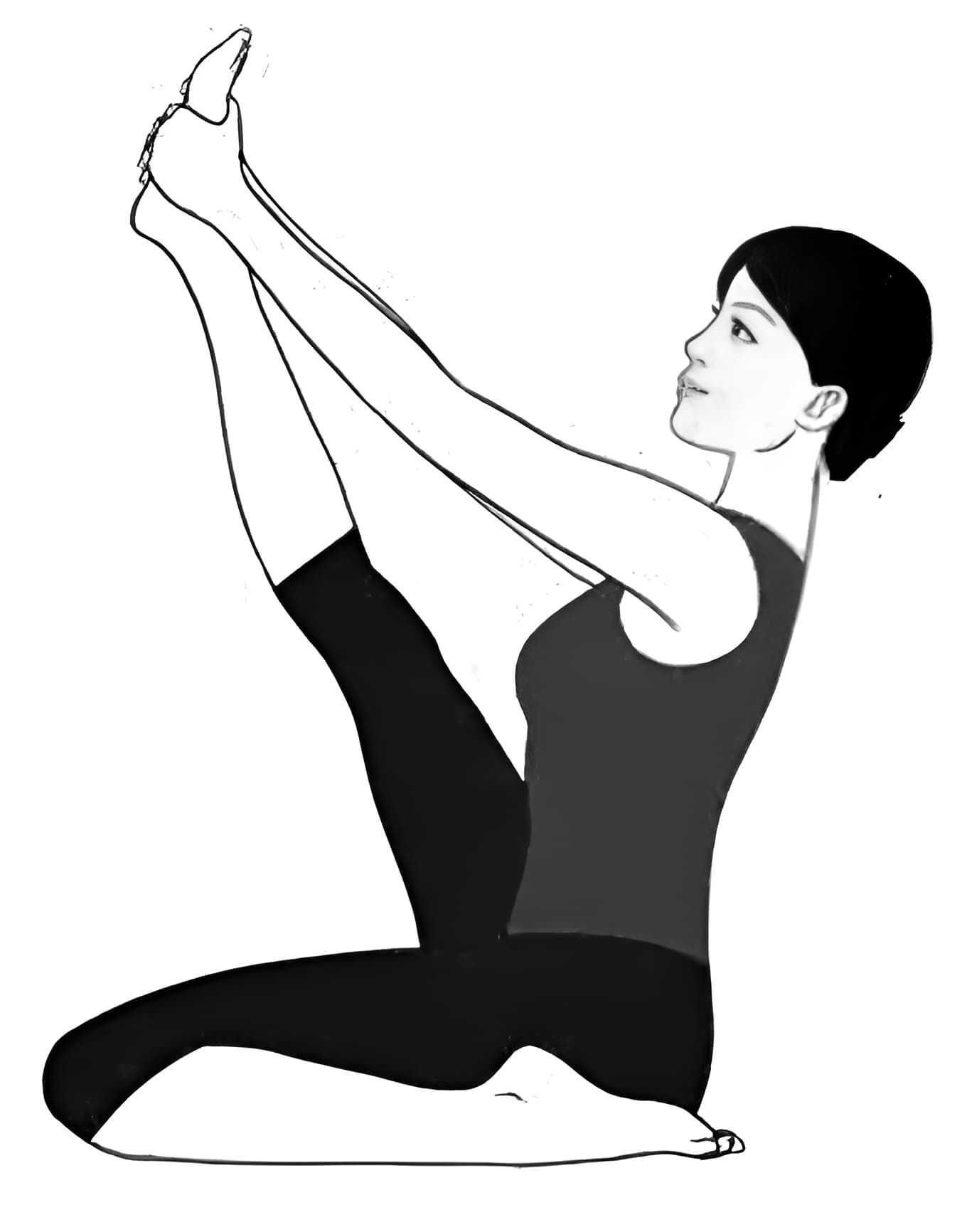
Krounchasana is classified as an advanced seated asana and is typically practiced after foundational flexibility in the hamstrings, hips, and lower back is achieved. The pose has multiple physical, physiological, and mental benefits, from improving posture to calming the nervous system. Its practice requires careful attention to biomechanics to prevent injury to the hamstrings, knees, hips, and lumbar spine.
This essay explores Krounchasana in depth, including its meaning, method of practice, alignment cues, benefits, contraindications, preparatory poses, modifications, muscles involved, kinematics, biomechanics, functional anatomy, physiology, and teaching adjustments.
2. Word Meaning and Definition
2.1 Word Meaning
- Krouncha Heron, a bird noted for its long legs and elegant stance.
- Asana : Pose or seat.
Thus, Krounchasana translates as “Heron Pose,” reflecting the elongated leg posture similar to the heron’s leg when standing.
2.2 Definition
Krounchasana is a seated asana in which one leg is folded while the other leg is extended vertically, held by the hands. The torso remains upright, the spine lengthened, and the gaze forward. The pose emphasizes:
- Hamstring flexibility in the extended leg.
- Hip mobility in the folded leg.
- Core stabilization to maintain upright posture.
- Upper limb engagement for holding the foot and maintaining alignment.
It is categorized as:
- A forward-flexion and stretching asana.
- An advanced seated pose in Hatha Yoga.
3. Method of Practice — Step by Step
Step 1: Starting Position
- Begin in Dandasana (Staff Pose), seated on the floor with legs extended forward, spine erect, shoulders relaxed, and hands resting beside the hips.
Step 2: Fold One Leg
- Bend the left leg, placing the left heel near the perineum, similar to Padmasana or Sukhasana positioning.
- Keep the sole of the foot against the inner thigh.
Step 3: Grasp the Extended Leg
- Lift the right leg and hold it by the right hand behind the knee and the left hand behind the ankle or sole of the foot.
- The leg should be extended vertically, with knee straightened as much as possible.
Step 4: Align the Torso
- Lengthen the spine upward.
- Lift the chest slightly, keeping shoulders down.
- Maintain a neutral pelvis; avoid tipping forward or backward.
Step 5: Adjust Grip
- Use hands to stabilize the leg without forcing it.
- Keep fingers interlaced if possible, or hold the foot with a strap if hamstring flexibility is limited.
Step 6: Hold the Pose
- Inhale deeply, maintaining spinal length.
- Exhale slowly and soften the shoulders.
- Hold for 15–30 seconds or longer, depending on comfort and flexibility.
Step 7: Exit the Pose
- Slowly release the leg and lower it to the floor.
- Return to Dandasana and switch sides to maintain balance.
4. Alignment Cues
- Torso: Maintain upright spine, elongate from sacrum to crown.
- Hips: Keep hips squared; avoid rotation toward extended leg.
- Extended Leg: Knee straightened, toes pointing upward; foot flexed to engage hamstrings.
- Folded Leg: Keep sole of foot close to pelvis; knee gently dropped toward the floor.
- Shoulders: Relax away from ears; engage scapular stabilizers.
- Hands: Firmly hold the extended leg or use a strap if needed.
5. Benefits of Krounchasana
5.1 Physical Benefits
- Deep hamstring stretch, increasing flexibility.
- Hip opening in folded leg, promoting mobility.
- Lengthens spine and improves posture.
- Strengthens quadriceps and core muscles.
- Improves ankle dorsiflexion in the extended leg.
- Enhances body awareness and balance.
5.2 Physiological Benefits
- Stimulates abdominal organs, aiding digestion.
- Improves circulation in lower extremities.
- Enhances neuromuscular control through balance and coordination.
- Calms the nervous system, reducing stress and tension.
5.3 Psychological Benefits
- Develops focus and concentration.
- Encourages patience and perseverance.
- Symbolizes grace and alertness, promoting mindfulness.
6. Contraindications
- Hamstring or knee injury.
- Hip pain or labral injury.
- Sciatica or nerve impingement.
- Lower back disc issues.
- Acute ankle or foot injuries.
- Severe tightness without adequate preparatory practice.
7. Counterposes
- Dandasana (Staff Pose) to neutralize the spine.
- Supta Padangusthasana to stretch hamstrings gently.
- Baddha Konasana for hip opening.
- Balasana (Child’s Pose) for spinal relaxation.
- Setu Bandhasana (Bridge Pose) to counter stretch hip flexors.
8. Preparatory Practices
8.1 Hamstring Stretching
- Paschimottanasana
- Ardha Hanumanasana
- Janu Sirsasana
8.2 Hip Flexor and Quadriceps Stretching
- Anjaneyasana
- Low Lunge variations
8.3 Core Strengthening
- Navasana (Boat Pose)
- Plank variations
8.4 Spinal Lengthening
- Dandasana
- Upavistha Konasana
9. Modifications
- Use a yoga strap to hold the extended foot if hamstring flexibility is limited.
- Sit on a folded blanket or block to elevate hips and reduce lower back strain.
- Keep the extended leg slightly bent if full straightening is uncomfortable.
- Place a bolster under the folded leg for knee support.
10. Muscles Involved
Prime Movers
- Hamstrings (biceps femoris, semitendinosus, semimembranosus) – extended leg.
- Hip flexors (iliopsoas) – if torso remains upright.
- Quadriceps (rectus femoris) – back stabilization.
Synergists and Stabilizers
- Erector spinae – spinal lengthening.
- Gluteus medius/minimus – hip stabilization.
- Transverse abdominis – core stability.
- Adductors – pelvis alignment.
11. Kinesiology
- Sagittal plane motion dominates: hip flexion in front leg, hip extension in folded leg.
- Pelvic stabilization is essential to maintain neutral alignment.
- Eccentric contraction in hamstrings, concentric activation in quadriceps.
- Dynamic stretching occurs if the leg is lifted slowly from Dandasana.
12. Kinematics
- Front leg: Hip flexion ~90–120°, knee extended.
- Folded leg: Hip flexion ~90°, knee flexed, foot near pelvis.
- Spine: Neutral or slight elongation, avoiding lumbar collapse.
- Shoulder and arm motion: Shoulder flexion and elbow extension to hold leg.
13. Biomechanism
- Tension on hamstrings produces a stretch reflex.
- Pelvic alignment ensures proper distribution of forces through hip joint.
- Grasping the foot creates a lever mechanism for spinal elongation.
- Gravity and props (blocks/straps) assist in safe stretching.
14. Functional Anatomy and Physiology
14.1 Hamstrings
- Eccentrically stretched to increase fascicle length.
- Improves neuromuscular control during forward flexion.
14.2 Hip Flexors
- Lengthening enhances anterior pelvic mobility and lumbar stability.
14.3 Spine
- Spinal extensors maintain neutral alignment.
- Promotes intervertebral disc health through gentle traction.
14.4 Core Muscles
- Engage to stabilize pelvis and prevent lumbar overextension.
14.5 Nervous System
- Activates Golgi tendon organs, encouraging muscle relaxation.
- Enhances proprioception and balance awareness.
15. How to Correct and Adjust While Teaching
15.1 Front Leg
- Cue knee to remain extended without locking.
- Suggest foot dorsiflexion to activate hamstrings.
- Use strap if flexibility is limited.
15.2 Folded Leg
- Ensure heel is near the pelvis.
- Support knee with blanket if discomfort arises.
15.3 Pelvis
- Encourage neutral tilt and square alignment.
- Place hands on iliac crests for proprioceptive guidance.
15.4 Torso
- Lift sternum to elongate spine.
- Avoid collapsing forward.
- Maintain calm, steady breathing.
15.5 Props and Supports
- Blocks under hands or under extended leg foot for accessibility.
- Bolsters beneath hips for lumbar support.
15.6 Safety Checklist
- No knee pain or hyperextension.
- No sharp hamstring or hip pain.
- Spine neutral; shoulders relaxed.
- Breathing smooth and rhythmic.
16. Conclusion
Krounchasana, the Heron Pose, is an advanced seated posture emphasizing hamstring flexibility, hip mobility, spinal lengthening, and core stabilization. Its practice combines anatomical precision, strength, flexibility, and mental focus. The pose embodies grace and balance, reflecting the qualities of the heron bird. Proper preparatory work, modifications, and mindful alignment are crucial to safely accessing the full benefits. By integrating anatomical awareness, kinesiology, and biomechanical principles, Krounchasana offers profound physical, physiological, and psychological benefits for the dedicated yoga practitioner.
QUESTION AND ANSWER
1. Krounchasana is commonly known as:
A. Heron Pose / Seated Leg Lift
B. Monkey Pose
C. Boat Pose
D. Staff Pose
Answer: A
2. The Sanskrit word “Krouncha” refers to:
A. Eagle
B. Heron
C. Monkey
D. Swan
Answer: B
3. The primary movement of the extended leg in Krounchasana is:
A. Hip flexion and knee extension
B. Hip extension and knee flexion
C. Hip abduction
D. Knee rotation
Answer: A
4. The folded leg in Krounchasana primarily involves:
A. Hip extension
B. Hip flexion and knee flexion
C. Knee hyperextension
D. Ankle dorsiflexion
Answer: B
5. Which muscle group is primarily stretched in the extended leg?
A. Quadriceps
B. Hamstrings
C. Gluteus medius
D. Gastrocnemius
Answer: B
6. Which muscles are engaged in the folded leg for stability?
A. Hip flexors and adductors
B. Hamstrings
C. Erector spinae
D. Tibialis anterior
Answer: A
7. Which stabilizing muscles support the spine in Krounchasana?
A. Erector spinae and transverse abdominis
B. Deltoids
C. Sternocleidomastoid
D. Triceps
Answer: A
8. A safe modification for limited flexibility is:
A. Using a strap around the extended foot
B. Forcing leg fully vertical
C. Leaning forward aggressively
D. Twisting torso toward extended leg
Answer: A
9. Preparatory poses for Krounchasana include:
A. Dandasana, Paschimottanasana, Ardha Hanumanasana
B. Sirsasana only
C. Chakrasana
D. Adho Mukha Svanasana exclusively
Answer: A
10. Which preparatory pose helps open the hips for the folded leg?
A. Baddha Konasana
B. Uttanasana
C. Marichyasana
D. Gomukhasana
Answer: A
11. Which joint is at risk if the extended leg is forced?
A. Hip
B. Knee
C. Shoulder
D. Elbow
Answer: B
12. Which plane of motion predominates in Krounchasana?
A. Sagittal
B. Frontal
C. Transverse
D. Horizontal
Answer: A
13. Krounchasana improves flexibility primarily in:
A. Hamstrings, hip flexors, and calves
B. Upper back only
C. Shoulders only
D. Forearms
Answer: A
14. Contraindications for Krounchasana include:
A. Hamstring injury, knee pain, hip labrum issues
B. Mild flexibility restrictions
C. Postural weaknesses only
D. Shoulder tightness
Answer: A
15. Which cue helps maintain pelvis alignment?
A. Square the hips and maintain neutral tilt
B. Rotate hips toward extended leg
C. Tilt posteriorly excessively
D. Lift the pelvis off the floor
Answer: A
16. Hands can be positioned:
A. Around foot or using strap
B. Behind the back only
C. On thighs only
D. Not required
Answer: A
17. Benefits of Krounchasana include:
A. Hamstring flexibility and spinal lengthening
B. Core engagement and balance
C. Hip opening
D. All of the above
Answer: D
18. How should the torso be aligned?
A. Upright, elongated spine
B. Collapsed forward
C. Twisted toward extended leg
D. Fully arched backward
Answer: A
19. Which breathing cue is appropriate?
A. Inhale to lengthen spine, exhale to relax shoulders
B. Hold breath
C. Rapid shallow breathing
D. Exhale to lift leg
Answer: A
20. Which muscle group stabilizes the torso and prevents collapse?
A. Transverse abdominis and erector spinae
B. Trapezius only
C. Biceps brachii
D. Soleus
Answer: A
21. If hamstrings are tight, which adjustment is safe?
A. Use a strap to hold foot
B. Force leg fully extended
C. Lean forward aggressively
D. Ignore discomfort
Answer: A
22. Which spinal region must be monitored to prevent strain?
A. Lumbar spine
B. Cervical only
C. Thoracic only
D. Sacral only
Answer: A
23. Which pose is a good counterpose?
A. Balasana
B. Navasana
C. Marichyasana
D. Ardha Matsyendrasana
Answer: A
24. Krounchasana symbolically represents:
A. Grace, alertness, and focus
B. Aggression and strength
C. Relaxation only
D. Speed and power
Answer: A
25. Which teaching principle is most important for safety?
A. Proper alignment of spine, pelvis, and knees
B. Pushing students aggressively into the pose
C. Ignoring breathing patterns
D. Allowing knees to collapse
Answer: A