
1. Introduction
Hanumanasana, commonly known as “Monkey Pose” or the front splits, is one of the most iconic deep-stretch postures in Hatha Yoga. The pose symbolizes the leap taken by Lord Hanuman from India to Sri Lanka in the epic Ramayana, representing courage, devotion, and the ability to transcend perceived limitations. Physically, Hanumanasana demands exceptional flexibility in the hip flexors, hamstrings, adductors, pelvic stabilizers, and spinal musculature. The posture integrates strength, control, mobility, and psychological surrender.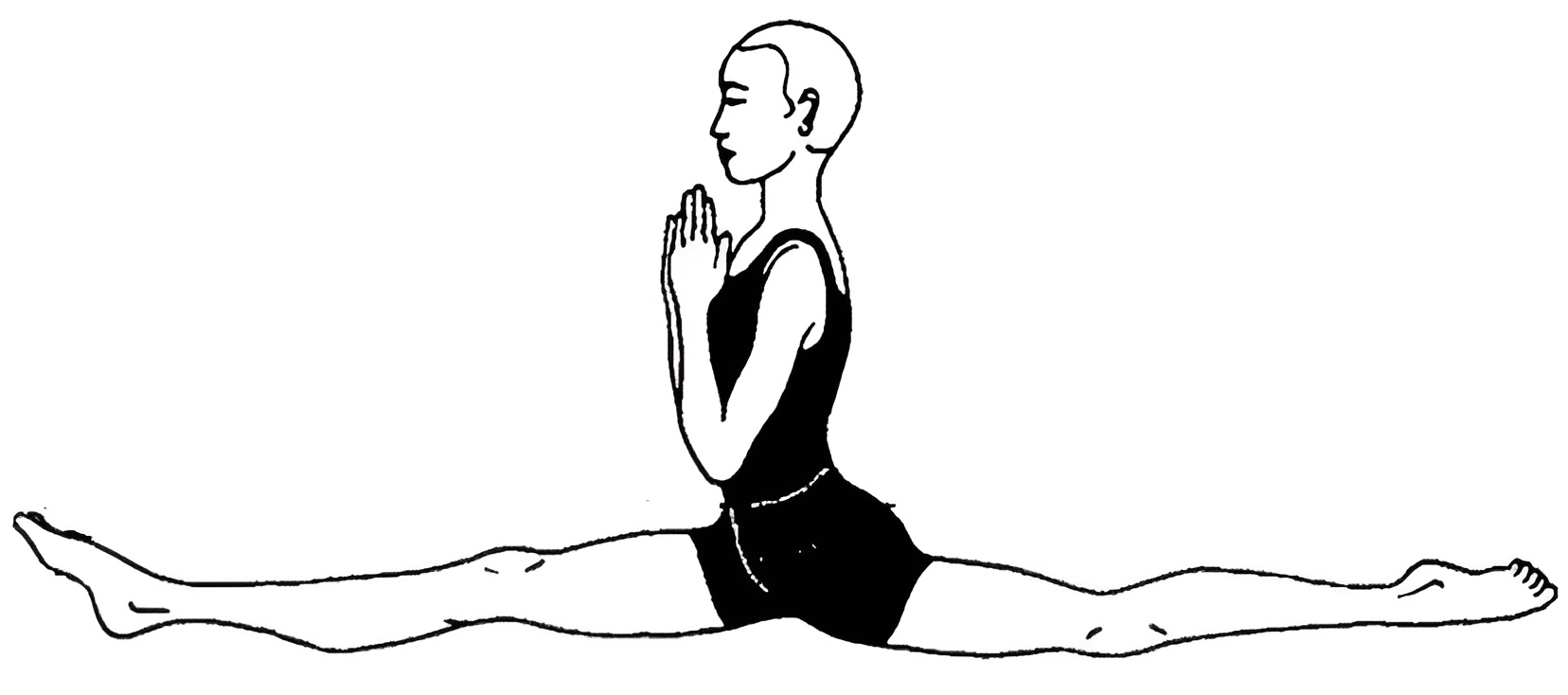
In contemporary yoga, the pose is used both as a deep stretch and as a tool for biomechanical understanding of the pelvis and spine. For teachers, it becomes a rich field for studying kinetic chains, muscular sequencing, and safe alignment principles. This essay provides a comprehensive technical examination suitable for yoga teachers, advanced practitioners, and anatomy students.
2. Word Meaning and Definition
2.1 Word Meaning
- Hanuman: Name of the monkey-god, symbol of devotion and strength.
- Asana: Seat, posture, or steady pose.
Thus, Hanumanasana literally means “the Pose of Hanuman.”
2.2 Definition
Hanumanasana is a front-splits posture in which one leg extends forward and the other extends back in a sagittal plane, while the pelvis aims to square and the torso remains upright or slightly lifted. It demands:
- Open hamstrings (front leg),
- Extended hip flexors and quadriceps (back leg),
- Neutral pelvis,
- Stable lumbar spine.
It is classified under:
- Forward bending/hip extension category
- Advanced asana
- Deep passive-static stretch
3. Method of Practice — Step-by-Step
Step 1: Starting Position
Begin in kneeling lunge (Anjaneyasana) with the right foot forward and left knee on the mat. Bring hands beside the hips.
Step 2: Prepare the Pelvis
- Draw the right heel slightly forward.
- Engage the pelvic floor and lower abdomen.
- Square the hips as much as possible without forcing.
Step 3: Straighten the Front Leg
- Extend the front knee gradually.
- Flex the front foot to activate the hamstrings.
- Shift hips backward slowly.
Step 4: Slide the Back Leg Backward
- Move the back knee and shin along the mat.
- Keep the toes pointing straight backward.
- Maintain alignment of knee-cap facing down.
Step 5: Descend the Hips
- Use blocks under the hands to maintain height.
- Let gravity gradually lower the pelvis toward the floor.
- Avoid collapsing lower back or tilting pelvic bowl excessively.
Step 6: Final Pose
When comfortable:
- Extend both legs fully.
- Keep hips squared.
- Lift chest and lengthen spine.
- Hands can stay on blocks, floor, or raised overhead.
Step 7: Exit
- Press into hands.
- Slide legs back into a lunge.
- Switch sides with awareness.
4. Alignment Cues
4.1 Front Leg (Hamstring Limb)
- Keep knee pointing up.
- Foot flexed or neutral.
- Avoid hyperextension—engage quadriceps.
- Thigh muscles should activate safely.
4.2 Back Leg (Hip Flexor Limb)
- Knee faces down.
- Toes point backward.
- Keep back thigh internally rotated.
- Do not allow pelvis to roll open.
4.3 Pelvis
- Imagine “headlights” on the front of pelvis facing forward.
- Maintain neutral tilt (not anteriorly dumping).
- Keep both sides of pelvis level.
4.4 Spine and Torso
- Lengthen the lumbar region.
- Lift sternum.
- Avoid overarching lower back.
- Shoulders stacked over hips.
4.5 Arms and Hands
- Press into blocks or ground for stability.
- Avoid collapsing into wrists.
- Optionally raise arms overhead.
5. Benefits of Hanumanasana
5.1 Physical Benefits
- Deep stretch to hamstrings, calves, and posterior chain.
- Opens hip flexors (psoas major, iliacus, rectus femoris).
- Improves pelvic mobility and sacral alignment.
- Enhances spinal extension ability.
- Strengthens hip stabilizers and core.
- Improves functional stride length and gait patterns.
- Enhances fascial line elasticity (Superficial Back Line & Deep Front Line).
- Supports injury prevention in runners and dancers.
- Improves balance and proprioception.
5.2 Physiological Benefits
- Enhances blood flow to pelvic organs.
- Stimulates parasympathetic system.
- Activates stretching reflex and promotes neuromuscular relaxation.
- Improves lymphatic circulation in lower limbs.
5.3 Psychological Benefits
- Develops courage, patience, and perseverance.
- Symbolizes devotion and surrender.
- Enhances body awareness.
6. Contraindications
- Hamstring tears, strains, or acute injury.
- Hip labrum issues.
- Sciatica or nerve entrapments.
- Knee ligament injuries (especially posterior knee hyperextension).
- Lower back disc issues.
- Groin injuries.
- Severe tightness in hip flexors.
7. Counterposes
- Supta Padangusthasana
- Baddha Konasana
- Balasana
- Ardha Hanumanasana
- Pavanamuktasana
- Gentle hip rotations
8. Preparatory Practices
8.1 Hamstring Preparation
- Uttanasana
- Janu Sirsasana
- Ardha Hanumanasana
- Supta Padangusthasana
8.2 Hip Flexor Preparation
- Low Lunge
- High Lunge
- Anjaneyasana variations
- Psoas release drills
8.3 Hip Mobility
- Baddha Konasana
- Upavistha Konasana
- Lizard Pose
- Pigeon Pose
8.4 Core Engagement
- Plank variations
- Boat Pose (Navasana)
9. Modifications
- Use blocks under hands.
- Place bolster under pelvis.
- Use folded blanket under front knee.
- Use straps around front foot to maintain spinal alignment.
- Work only in half splits (Ardha Hanumanasana) if needed.
10. Muscles Involved
Prime Movers
- Hamstrings: semitendinosus, semimembranosus, biceps femoris.
- Hip Flexors: psoas major, iliacus.
- Quadriceps: rectus femoris.
- Adductors: longus, magnus, brevis (stretched).
Stabilizers
- Gluteus medius and minimus.
- Pelvic floor muscles.
- Transverse abdominis.
- Erector spinae for spinal extension.
Synergists
- Gastrocnemius and soleus (front leg).
- Tibialis anterior (front foot flexion).
11. Kinesiology of Hanumanasana
Kinesiology analyzes movement patterns and muscular recruitment:
11.1 Sagittal Plane Movement
- Front leg: hip flexion + knee extension.
- Back leg: hip extension + knee extension.
11.2 Pelvic Dynamics
- Anterior-posterior tilt regulation needed.
- Pelvis must remain neutral without rotational imbalance.
11.3 Muscle Actions
- Eccentric lengthening of hamstrings and hip flexors.
- Concentric engagement of quadriceps for knee stability.
- Co-activation of pelvic stabilizers.
12. Kinematics
Kinematics describes how the joints move:
Front Leg Kinematics
- Hip flexes up to 120°+
- Knee extends to 180°
- Foot dorsiflexes up to 20°
Back Leg Kinematics
- Hip extends 20°–30°
- Knee extends fully
- Pelvis shifts posteriorly while maintaining square alignment
Spinal Kinematics
- Mild extension in thoracic region
- Neutral lumbar curvature
- Engagement of deep spinal stabilizers
13. Biomechanism of the Pose
Biomechanical principles involved:
13.1 Tensile Forces
- High tensile load on hamstrings.
- Strong stretch through fascial lines.
13.2 Compressive Forces
- Minimal compression except in lumbar spine if misaligned.
13.3 Lever Mechanics
- Front leg acts as a long lever increasing stretch intensity.
- Back hip lever increases psoas tension.
13.4 Distributed Load
- Must distribute load across pelvic musculature.
- Avoid isolating single muscle groups.
13.5 Ground Reaction Forces
- Hands and pelvis distribute body weight.
- Blocks reduce downward load.
14. Functional Anatomy and Physiology
14.1 Hamstrings
- Eccentric lengthening of hamstrings improves posterior chain elasticity.
- Enhanced blood flow improves tissue healing.
14.2 Hip Flexors
- Lengthening psoas improves lumbar stability and posture.
- Reduces anterior pelvic tilt tendencies.
14.3 Pelvic Floor
- Mild engagement keeps pelvic bowl stabilized.
- Improves spinal-pelvic alignment.
14.4 Spine
- Neutral alignment prevents disc pressure.
- Strengthens core muscles.
14.5 Nervous System Response
- Activates Golgi tendon organs → muscle relaxation.
- Improves proprioception.
15. How to Correct and Adjust While Teaching
15.1 For the Front Leg
- Guide student to keep knee cap facing upward.
- Place a block under thigh to prevent hyperextension.
- Cue quadriceps engagement.
15.2 For the Back Leg
- Use hands to gently roll back thigh inward.
- Ensure toes face straight backward.
- Support pelvis with bolsters.
15.3 For the Pelvis
- Encourage students to draw hip points forward.
- Use hands on iliac crests to square the pelvis gently.
15.4 For the Spine
- Lengthen student upward by lifting sternum slightly.
- Avoid allowing them to lean too far forward or back.
15.5 Hands-On Adjustments
Use only if appropriate:
- Support pelvis with hands or props.
- Never force student deeper.
- Keep spine neutral.
15.6 Safety Checklist
- No pain in hamstrings.
- No twinges in groin.
- Protect lumbar spine.
- Ensure student breathes smoothly.
16. Conclusion
Hanumanasana is more than a display of flexibility—it is a refined embodiment of physical precision, mental devotion, and biomechanical intelligence. It demands preparation, patience, and anatomical understanding. The posture develops deep mobility, strengthens stabilizers, enhances pelvic alignment, and fosters confidence. When taught with anatomical clarity and mindful sequencing, Hanumanasana becomes a transformative experience for advanced yoga practitioners.
QUESTION AND ANSWER
1. Hanumanasana is commonly referred to as:
A. Seated Forward Bend
B. Monkey Pose / Front Splits
C. Half Lotus
D. Bridge Pose
Answer: B
2. The Sanskrit word “Hanuman” refers to:
A. Flexibility
B. Devotion and strength of the monkey god
C. Peaceful mind
D. Spine alignment
Answer: B
3. The primary movement of the front leg in Hanumanasana is:
A. Hip extension and knee flexion
B. Hip flexion and knee extension
C. Hip abduction
D. Knee rotation
Answer: B
4. The primary movement of the back leg is:
A. Hip flexion and knee extension
B. Hip extension and knee extension
C. Hip abduction and knee flexion
D. Hip internal rotation only
Answer: B
5. Which of the following muscles is the main stretcher in the front leg?
A. Quadriceps
B. Hamstrings
C. Gluteus medius
D. Adductor longus
Answer: B
6. Which muscles are primarily stretched in the back leg?
A. Hamstrings
B. Hip flexors and rectus femoris
C. Calves
D. Erector spinae
Answer: B
7. Which stabilizing muscles are crucial for pelvis alignment?
A. Gluteus medius and minimus
B. Tibialis anterior
C. Sternocleidomastoid
D. Deltoids
Answer: A
8. A safe modification for beginners is:
A. Using blocks under hands or pelvis
B. Forcefully sliding into full split
C. Bending the torso forward
D. Arching the lower back excessively
Answer: A
9. Which preparatory pose helps open hip flexors?
A. Anjaneyasana (Low Lunge)
B. Baddha Konasana
C. Tadasana
D. Balasana
Answer: A
10. Which preparatory pose stretches hamstrings?
A. Supta Padangusthasana
B. Adho Mukha Svanasana
C. Setu Bandhasana
D. Marjaryasana
Answer: A
11. Which joint is at risk if the front leg is over-stretched?
A. Hip joint
B. Knee joint
C. Shoulder joint
D. Elbow joint
Answer: B
12. Which kinematic plane does Hanumanasana primarily work in?
A. Frontal
B. Transverse
C. Sagittal
D. Horizontal
Answer: C
13. Which fascial lines are lengthened in Hanumanasana?
A. Superficial Back Line and Deep Front Line
B. Lateral Line only
C. Spiral Line only
D. Arm lines
Answer: A
14. A contraindication for practicing Hanumanasana is:
A. Mild tight hamstrings
B. Knee ligament injury
C. Regular stretching practice
D. Healthy spine
Answer: B
15. Which pelvic movement is crucial for safe Hanumanasana?
A. Pelvic rotation
B. Neutral tilt / forward hip movement
C. Lateral tilt
D. Posterior pelvic tilt only
Answer: B
16. Hands can be placed on:
A. Ground or blocks
B. Knees
C. Behind the back
D. Feet only
Answer: A
17. Benefits of Hanumanasana include:
A. Hip flexor and hamstring flexibility
B. Core engagement and stability
C. Pelvic alignment improvement
D. All of the above
Answer: D
18. Which part of the spine requires attention to prevent injury?
A. Thoracic only
B. Lumbar region
C. Cervical only
D. Sacrum only
Answer: B
19. How should the torso ideally be aligned?
A. Collapsed forward
B. Lifted, lengthened spine
C. Twisted toward back leg
D. Fully arched backward
Answer: B
20. Which teaching cue ensures knee safety?
A. “Keep knee cap facing upward and engage quadriceps”
B. “Let knee collapse outward”
C. “Push deeply regardless of discomfort”
D. “Rotate front knee sideways”
Answer: A
21. What is a key breathing cue?
A. Hold breath throughout
B. Inhale to lengthen spine, exhale to descend
C. Force exhalation to fold
D. Breathe rapidly
Answer: B
22. Which muscles stabilize the back leg?
A. Gluteus medius and minimus
B. Tibialis anterior
C. Rectus abdominis only
D. Triceps
Answer: A
23. If the student experiences groin pain, the adjustment should be:
A. Stop and support with props
B. Push further
C. Ignore and continue
D. Arch the back
Answer: A
24. Half splits pose is called:
A. Ardha Hanumanasana
B. Supta Padangusthasana
C. Uttanasana
D. Anjaneyasana
Answer: A
25. Hanumanasana symbolically represents:
A. Patience and perseverance
B. Aggression and strength
C. Balance only
D. Flexibility only
Answer: A