
Three Gunas
Guna is a Sanskrit term and means quality, peculiarity, or tendency. A Guna is a tattva or element of reality that can affect our psychological, emotional, or energetic states. The three Gunas are Sattva, Rajas, and Tamas. i)Sattvic Guna is purity and Prakasam; it is a state of balance, harmony, joy, and intelligence. Sattva guna is a force favorable for the attainment of moksha. A sattvic mind is always steady and finds delight internally. The effect of sattva guna is Brahmavichara – inquiry into Brahman/ search for truth. Sattva is the guna that yogis achieve that reduces Tamas and Rajas and makes liberation possible. Sattvapatti is a state of mind wherein there is the purity of thought and purity of heart. ii)Rajasic Guna is a hostile force to pull you down into samsara. Rajas is a state of energy, action, change, and movement. A sattvic mind will make a man still and inactive, while a Rajsic mind will make him restless. The Rajasic mind remembers the defects of others, and good/bad deeds, which intensifies hatred and disturbance in the mind. The nature of Rajas is attraction, longing, and attachment. iii)Tamasic Guna is a state of darkness, ignorance, and delusion. If the natural rhythm of sleep and wakefulness is disturbed, Tamas is increased. Other tamasic qualities are laziness, disgust, attachment, depression, helplessness, doubt, guilt, shame, boredom, addiction, hurt, sadness, apathy, confusion, grief, dependency, and ignorance.
Stress yogic point of view, how to overcome.
The Yoga text – Yoga Vasista, explains the diseases originating from stress and diseases which are not due to stress. Human emotions such as likes, dislikes, love, and hatred, create imbalance at the level of manomaya kosha and bring about the speed in mind called stress, which leads to the response of anxiety, depression, and anger and affects the various systems. Acharya Patanjali describes five stress-producing factors called Kleshas. They are Avidya, Asmita, Raga, Dwesha, and Abhiniveshaha. Ignorance, ego, desire, dislike, and fear of change are the five stress-producing factors. The fivefold kleshas are responsible for the onset of dukkha (pain) which may be physical or mental. Diseases are considered as dukkha and can be overcome through chittavritti nirodha (regulation of mental modifications). We could overcome the fivefold klesha by practicing kriya yoga, swadhyaya, ishwarapranidhana (surrendering to the divine), and by ashtanga yoga (Eight limbs of Yoga). Keeping a positive attitude, practicing breathing techniques and meditation on various objects helps one to get rid of the Obstacles and therefore manage Stress and its impact on the body.
How to cultivate Sattvic Guna and sustain in it
Sattvic guna is a force favorable for the attainment of moksha. A sattvic mind is always steady and finds delight internally. Sattva guna is developed by japa, vichara, satsanga, meditation, light sattvic food, tapas, and svadhyaya. When it comes to actual practice, the mind even after raising fantastic, curious thoughts and pretending to do vichara, will do nothing. It needs actual practice for months steadily and a longing for self-realization. An increase of sattva guna and pure, strong, determined Will pave way for God-realization.
Chaturvargas(four stages of life)
Chaturvargas(four stages of life) i) Brahmacharya Ashram (1-25 years) student life, observing celibacy • Period of study and discipline • Period of probation • Students lived in Gurukulas in ancient India • Regard your mother, father, teacher and guest as god ii) Grahistha Ashram (25-50 years) Householder, married life • This stage is entered at marriage • Ready to take roles and responsibilities • Grihstha is the heart of Aryan life • Five yajnas should be performed: Deva yajna (offerings to Devas), Rishi yajna (study of Vedas), Pitri yajna (annual religious rites performed for departed souls), Bhuta yajna (distribution of food to cows, crows, and animals), Atithi yajna (honoring guests) iii) Vanaprastha Ashram (50-75 years) • Retirement phase • Handing over responsibilities to the next generation • Meditate in the forest or in solitude • Free from responsibilities iv) Sanyasa Ashrama (75-100 years) • Phase of giving up material desires and prejudices • Renouncing all possessions, attachments, and recognitions • Sanyasi is an ideal man, he is brahman, jivanmukta, a free man
yoga question and answers

1. Define Gaseous Exchange. [VP] – The transfer of gases between an organism and the external environment in either direction. It occurs by diffusion across a concentration gradient and includes the exchange of oxygen and carbon dioxide in respiration and photosynthesis. Successful gaseous exchange requires a large surface area, as is provided by the alveoli of the lungs and the leaves of plants. 2. Importance of pleura during respiration. [VP] – The pleura fluid itself has a slightly adhesive quality that helps draw the lungs outward during inhalation rather than slipping round in the chest cavity. In addition, pleural fluid creates surface tension that helps maintain the position of the lungs against the chest wall. 3. Define vital capacity [VP] – Vital capacity (VC) is the maximum amount of air a person can inhale after a maximum exhalation. It is equal to the sum of inspiratory reserve volume, tidal volume, and expiratory reserve volume. 4. Mention quadriceps muscles [VP] – The quadriceps are a group of muscles present on the front of the thigh. They consist of four distinct muscles: the rectus femoris, the vastus lateralis, the vastus intermedius, and the vastus medialis. They are responsible for extending the leg and helping with movements such as walking and jumping. 5. Mention hamstring muscles. [VP] – Hamstring muscles are in the back of the thigh, starting at the hip and inserting to the knee. The three hamstring muscles are: · Biceps femoris, closest to the outside of your body. The function of this hamstring is to flex your knee, extend the thigh at your hip and rotate your lower leg from side-to-side when your knee is bent. Semimembranosus, closest to the middle of your body. This hamstring flexes your knee joint, extends your thigh at your hip and offers medial rotation for your hip and lower leg. Semitendinosus, between the semimembranosus and the biceps femoris. The function of this hamstring matches that of the semimembranosus. 6. Explain about slow twitch muscle fiber (type -1), with respective hatha yoga style. [VP] – Slow-twitch, or Type I muscle fibers, are skeletal muscle fibers that slowly contract. Slow-twitch muscle fibers support everyday actions, like standing from a seated position and maintaining normal posture. Sun Salutation can be the respective hatha yoga style 7. Explain about Fast twitch muscle fiber (type -2), with hatha yoga practices. [VP] – The greater your aerobic capacity, the longer your muscles can function without fatiguing or burning out. Type IIa fibers have more potential for increased aerobic capacity, whereas Type IIb fibers produce the highest energy forces within the quickest window of fatigue. 8. Explain Aerobic hatha yoga [VP] – This takes place with oxygen where carbohydrate and oxygen are used as fuel for the first two minutes after which fat is burned. These are lower intensity activities. More fat for energy is used and leads to a better ability to burn fat. Blood vessels increase and become bigger to accommodate the oxygen being used. It changes the composition of muscle fibers which contract slower and at a lower intensity. Aerobic activity increases this type one muscles which increases endurance and performance. Aerobic activity increases mitochondria which improved the aerobic capacity of muscles. 9. Explain anaerobic hatha yoga. [VP] – This happens without oxygen, fuel comes from muscle storage and is short, highly intense and burns fat directly. Example is weightlifting. More fast twitch muscle fibres are produced for strength. It increases lactic acid tolerance for endurance. It increases glycolysis, ATP, CP and creatine. 10. Define Isometric Contraction and explain with respective asanas. [VP] – This is a contraction in which movement does not take place, because the tension generated by the contracting muscle exceeds the load on the muscle. This occurs when you use your muscles to successfully push or pull an object Isometric contractions are very common in yoga, particularly when poses are held for several breaths. Thus, when you hold any pose, the contractions are likely isometric. 11. Define Isotonic Contraction and explain with respective asanas. [VP] – Eccentric Downward movement of joint. Tension is produced when the muscle lengthens. Concentric Upward movement. Tension is produced when the muscle shortens. Causes joint movement. When you move in and out of a pose, you are likely using concentric and eccentric contractions
Hatha Yoga Sequence
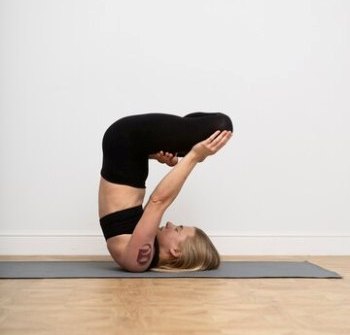
60 min hatha yoga sequence for both gender for the age group of 25 to 40, who does not have any physical or mental illness. Centering (2 mins) Om chanting (2 mins) (3 times) Pranayama (4 mins) Kapalbhati pranayama WaRm Up (10 mins) Neck rotations (3 sets) Neck side to side (3 sets) Neck up to down (3 sets) Shoulder rotations (5 sets) Arm rotations (5 sets) Side twists (5 sets) Lateral stretch both sides (5 counts) Forward stretch (5 counts) Jog in place (10 counts) Stand on toe to heel (5 sets) Ankle rotations (5 sets) Surya Namaskar: Sivananda Style (10 mins) (3 sets) 1st set: step by step 2nd set: in a flow 3rd set: hold each pose for 5 breaths Kneeling Asanas (6 mins) Supta Virasana Ushtrasana Sitting Asanas (6 mins) Upavishta Konasana Ardha Matsyendrasana Supine Asanas (10 mins) Salamba Sarvangasana Chakrasana Jathara Parivartanasana Relaxation (8 mins) Savasana Ending Prayer (2 mins) Maha Mrityunjaya Mantra
vital capacity
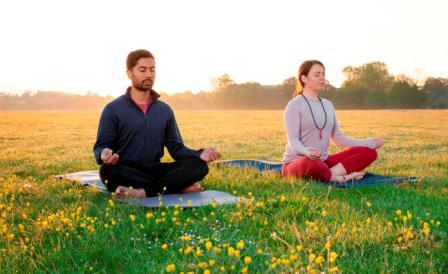
Vital capacity (VC) is the maximum amount of air a person can inhale after a maximum exhalation. It is equal to the sum of inspiratory reserve volume, tidal volume, and expiratory reserve volume.
Importance of pleura during respiration
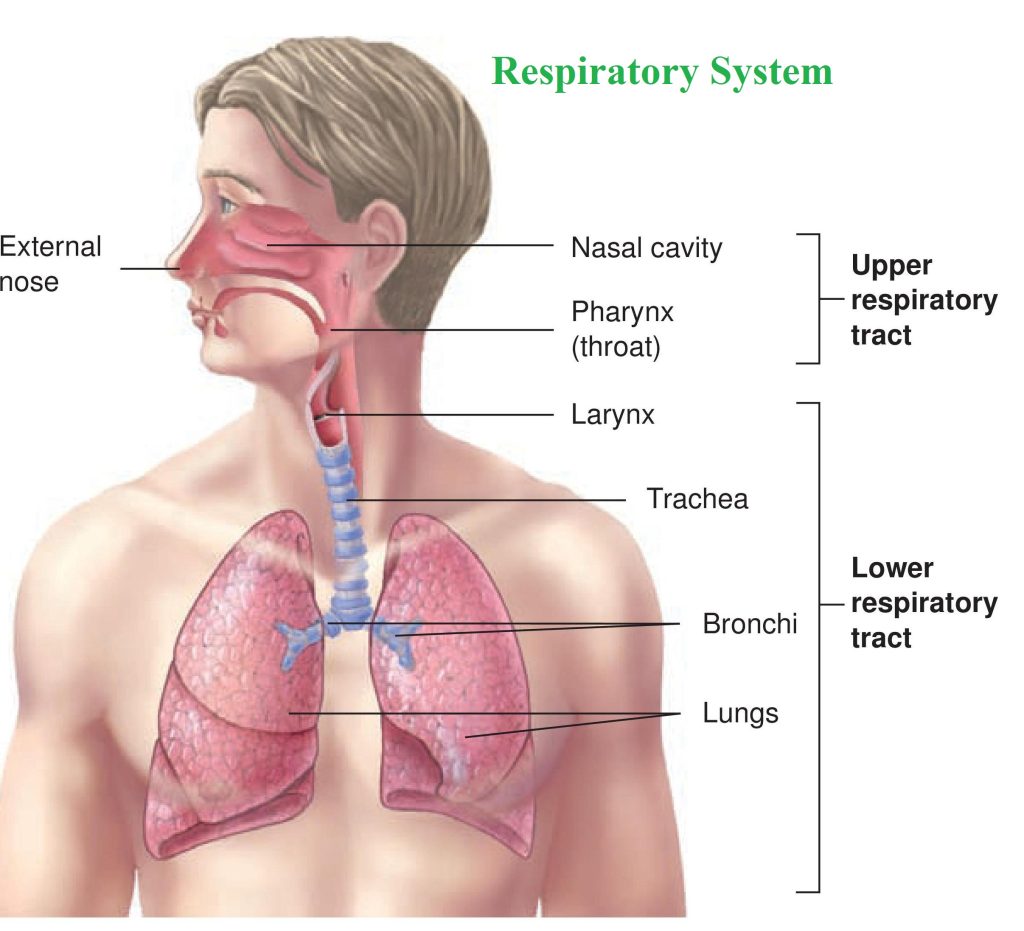
The pleura fluid itself has a slightly adhesive quality that helps draw the lungs outward during inhalation rather than slipping round in the chest cavity. In addition, pleural fluid creates surface tension that helps maintain the position of the lungs against the chest wall.
Retraction in asana movement
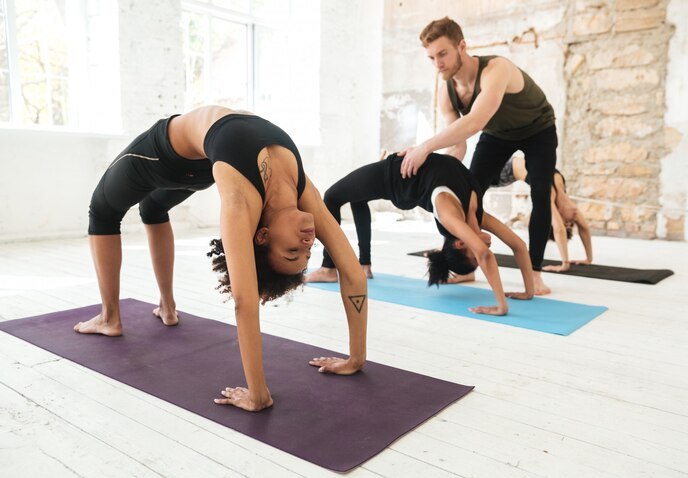
Moving the scapula toward the spine, also called scapular adduction or pulling the mandible backward. When you draw your shoulder blades together, it’s a retraction, and when they are apart, it’s protraction. With protraction, you can think about cat pose or plank, you want to pull the shoulder blades away from each other. For retraction think about cobra pose, lifting the chest as the shoulder blades draw in to touch.
Protraction in asana movement
Explain term Protraction, in compare with asana movement. Moving the scapula away from the spine, also called scapular abduction or jutting the mandible forward. When having understood this action, it can be easily applied in poses like Phalakasana (Plank Pose), Uttanasana (Standing Forward Fold Pose), Paschimottanasana (Seated Forward Fold Pose), and some similar poses where although the shoulders are away from the ears, the shoulder blades move away from each other.