Best Yoga Teacher Training in Bangalore, India | Yoga Alliance USA | Accredited

karuna yoga vidya peetham logo

Ashtanga Surya Namaskar – A (with alignment cues)

Ashtanga Surya Namaskar – A with alignment cues a.The steps of Ashtanga A Surya Namaskar are as follows: Begin in Samasthiti: Stand upright with feet together, arms by the side and toes spread out, evenly distributing the weight across the feet. Step 1: Inhale, stretch the arms up sideways. Keeping them shoulder width apart, look up. Step 2: Uttanasana: Exhale, bend forward from the hip and place the fingertips or palms on either side of the feet. Keeping the spine extended and the knees straight, try to bring the forehead to the shin and place the fingertips or palms on either side of the feet. Step 3: Ardha Uttanasana: Inhale, lift the head up, place the palms on the shin and straighten the spine for a flat back and gaze forward. Step 4: Chaturanga Dandasana: Exhale, bend the knees to the chest, heels off the floor and jump back or step back to Chaturanga Dandasana. The feet are hip width apart.   Step 5: Urdhva Mukha Svanasana: Inhale, slide the chest forward and raise the chest and head up. Keep the toes pressed on the floor, chest open, shoulders rolled down and elbows close to the body.   Step 6: Adho Mukha Svanasana: Exhale, tuck the toes in and lift the hips up. Adjust the feet, keeping the heels on the floor and elbows straight, extend the spine. Gaze at the navel. Stay here for 5 breaths.   Step 7: Ardha Uttanasana: Inhale, bend the knees, lift the hips up and jump back or step the feet back together in between the palms. Lift the head up, place the palms on the shin and straighten the spine for a flat back and gaze forward.   Step 8: Uttanasana: Exhale, bend forward from the hip. Keeping the spine extended and the knees straight, try to bring the forehead to the shin and place the fingertips or palms on either side of the feet.   Step 9: Inhale, lift the neck up and stretch the arms up sideways. Keeping them shoulder width apart, look up.   Step 10: Samasthiti: Exhale, bring the arms by the side and stand upright, evenly distributing the weight across the feet.

Surya Namaskar Sivananda style, name, breathing and alignment.

Step 1 – Pranamasana: Stand upright with feet together, weight distributed evenly across the feet. Place the palms together in front of the chest in namaskara mudra. Step 2 – Hasta Utthanasana: Inhale, sparate the hands, raise and stretch the hands above the head keeping them shoulder width apart and bend the upper trunk arm and head slightly backward.   Step 3 – Padahastasana: Exhale, bend forward from the hips and place the fingertips or palms of the hand on the floor on either side of the feet. Bring the forehead close to the shin keeping the back and knees straight.   Step 4 – Ashwa Sanchalanasana: Inhale, move the right leg away from the body and step it back, keeping the foot and knee on the floor. The palms and left foot are placed firmly on the ground.   Step 5 – Phalakasana: Inhale, hold the breath and move the left leg back, keeping both the feet together and knees of the floor, make sure the body is in a straight line from head to feet.   Step 6 – Astanga Namakara: Exhale, lower the knees, chest and chin to the floor, keeping the hips raised up.   Step 7 – Bhujangasana: Inhale, slide the chest forward and raise the chest and head up. Make sure the chest is open, shoulders are rolled down and elbows are bent and close to the body, keeping the toes together and pressed against the floor.   Step 8 – Parvatasana: Exhale, tuck the toes in and lift the hips off the floor. Extend the spine. Keep the arms and legs straight.  Ensure the heels are touching the floor and gaze at the navel.   Step 9 – Ashwa Sanchalanasana: Inhale, move the right leg and place the foot in between both the palms. The left foot and knee touches the floor. Look front.   Step 10 – Padahasthasana: Exhale, step the left foot forward in line with the right foot. Keeping the back and knees straight, bring the forehead close to the shin.   Step 11 – Hasta Utthanasana: Inhale, lift the neck up, arms parallel to the ears and raise up from the hips and bend backward.   Step 12 – Pranamasana: Exhale, bring the palms together in front of the chest in namaskara mudra, drop the hands to the side and relax.

Full Vinayasa and Half Vinayasa Yoga

There are three Vinyasa sequences divided into two groups. Between standing postures, you do a Standing Vinyasa. Between seated postures you do either a Full Vinyasa or a Half Vinyasa sequence. Full vinyasa is the original form of Ashtanga, after each asana you transition back to Standing as if doing a sun salutation. In postures where you switch legs, you practice half vinyasa between legs employing the more usual jump back and jump through, then after completing both sides you transition back to standing. Vinyasa is also employed as a noun to describe the sequence of poses that are performed between Adho Mukha Svanasanas or Downward Facing Dog as part of a Surya Namaskara or Sun Salutation sequence. Though this is more correctly termed half-vinyasa as full-vinyasa returns to complete standing asana or positions.

Traditional Hatha Yoga

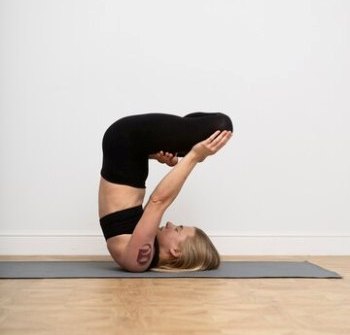
During 800 AD to 1700 AD, the followers of Patanjali Yoga gave greater importance to asanas, kriyas and pranayama for cleansing of the body and mind. This purification helped practitioners reach higher levels of practice like samadhi. This form of yoga is called Hatha Yoga. The Hatha Yoga Pradipika compiled by Yogi Swatmarama serves as a guide for every yoga aspirant. The word Hatha is a combination of two big mantras, Ha and Tha where Ha represents the mind or mental energy and Tha represents prana or the vital force. So Hatha Yoga means the union between the mental and the pranic force leading to the awakening of higher consciousness. It is the six limb yoga with the following principles: asana, pranayama, pratyahara, dharana, dhyana, samadhi. The main objective of Hatha Yoga is purification and harmonization of the body, prana and mind leading to the evolution of human consciousness. Therefore it is considered as the preliminary practice of Tantra, Raja Yoga, Kundalini Yoga and Kriya Yoga. Savasana, Padmasana, Dhanurasana are some of the asanas that serve as examples of ancient traditional Hatha Yoga. In traditional hatha yoga, kriya-asana combination is the first step supported by sattvic diet. Kriya can be Shat kriyas or any purification technique which removes the toxins from the body-mind. Kriya doesn’t necessarily mean only Shat Kriyas (six purification techniques). But every purification technique which removes the toxins from the body-mind. Therefore, you will have mantra chanting, Japa (repetition of a specific mantra), Jala neti, Trataka, Kirtans (inculcating humbleness), traditional meditation techniques for the initiation to Pratyahara, etc as part of the Hatha Yoga practice. This kind of yoga comprises a series of physical poses, called asanas, designed to cleanse the body and mind, as well as strengthen and build muscle, according to Yoga Journal. Performing Hatha yoga on a regular basis can enrich the mind, body, and soul by opening channels of energy in the body, including the spine. Sun salutations Sarvangasana Halasana Setu bandhasana Matsyasana Ardha matsyendrasana Anulom vilom pranayama Savasana

Hatha Yoga

Who is the first hatha yogi In the yogic culture, Shiva is not known as the Adiyogi or the first yogi – the originator of yoga. He was the one who first put this seed into the human mind. Define hatha yoga The letter “Ha” in the term “Hatha” signifies the flow of prana breaths in the solar nadi, and the letter “Tha” signifies the flow of prana breaths in the lunar nadi. When sun and moon become one during pranayam, breath simultaneously passes through both nostrils. The pranayama sadhana is termed as Hatha yoga sadhana. Though balancing Ida and Pingala is common practice in hatha yoga, scholars of Sanskrit agree that the correct meaning of hatha is force or forceful. Hatha yoga is practiced at a slower pace, with focus on the breath, controlled movements, and stretching. Aim of hatha yoga The purpose of Hatha Yoga is relief from physical, environmental, and spiritual pain, and through the practices giving in the Hatha Yoga Pradipika, we can prepare the body for the Raja Yoga.

Samatvam yoga uchayatae

According to the Bhagavad Gita, “Samatvam Yoga Uchyate”, is the last line of verse 48, chapter 2. It translates to equanimity is called yoga or evenness is yoga In the Bhagavad Gita, Lord Krishna defines yoga as Samatvam Yoga Uchyate, which means Samatvam is Yoga. Lord Krishna explains that samatvam is a balance of mind in success and failure, gain and loss, pleasure, and pain. A yogi should be able to remain equipoised in all circumstances. That is samatvam, the yoga of equanimity, calm, and composure.

Yoga according to Patanjali

Yoga philosophy is based on the work of Maharishi Patanjali, popularly known as the ‘Patanjal Yoga Sutra’. Maharishi Patanjali has defined yoga as “Yoga chittavritti nirodhah” which means yoga is calming the fluctuations of mind or consciousness. These fluctuations are like waves rising and falling in the sea, similarly our mind keeps on stirring up different types of thoughts and emotions in the form of pleasure or sorrow. A yoga practitioner must recognize and control them through yoga. What is chitta? In Patanjali’s definition of yoga “Yoga chitta vritti nirodhah”, Vritti implies to the thoughts, feelings and emotions arising in the mind and chitta means individual consciousness which comprises of conscious, subconscious, and unconscious. Chitta is a Sanskrit word which means „consciousness‟. It refers to the mind and represents one‟s mindset or state of mind.    

Chatur Vargas (describes the four stages of life)

Chatur Vargas: describes the four stages of life. Brahmacharya Ashrama:  From birth, till  25  years of age the individual dedicates themselves to studying and of serving celibacy. Grihastha Ashrama: From 25 to 50 years of life is the married life where the individual shares the responsibilities that come with  their role  in  the household.  During  this  phase the  individual  should perform  the  Pancha  Maha  Yajnas:  Deva offerings to deva reciting vedic mantras,  Rishi studying Vedas,  Pitri shraddha to the departed souls and ancestors,  Bhuta- distribution of food to who are in need, Atithi – honouring guests. Vanaprastha Ashrama: From 50-75 years of life is the renunciation of marital duties and involving oneself in Scripture Study and meditation to prepare oneself for the final stage of life. Some people go from the first stage to the third stage, shipping the Grihastha Ashrama. Sanyasa Ashrama: from 75 years until death is the monastic living. To live as a   sannyasi letting go of all attachments, relations, friends, and egoism. Leading life to divine Mukti.

Purusharthas(human being meaning of life)

Purusharthas(human being meaning of life) Purusharthas:  They  are  the four  attainments  of  life.  The  contain  the  worldly  values   and  the supreme value. The supreme value being Liberation or Moksha. The prior three values creating a path for liberation. Dharma or Virtue: it is the worldly value that can be deserted as doing the deed that benefits humanity. Artha or Wealth: It is the understanding that earning wealth is not wrong and should be done with alignment with one’ s dharma. Not facing demanding and greedy for more. Kama or Pleasure: It is the value of pleasure. It is the understanding that one can enjoy the sense of pleasure, appreciate art, music, expression, and dance. It is the pleasures that are pure  and not digressed into what is considered wrong. Moksha or  Emancipation:  It  is  the  ultimate  value,  a  human  need  for  freedom  from  attachment, surpassing internal fluctuations to attain eternal bliss.

How to apply pratyahara, in our daily life, explain with example.

How to apply pratyahara, in our daily life, explain with an example. Pratyahara is the practice of withdrawing one’s senses from environmental influences – food,  impressions  &  associations.   This includes nourishment of  one’s  body  with  (food),   the inferences and attitudes we form (impressions)  and interpersonal relations (associations). It  is the ultimate mastery over oneself.  It is a sense of controlled detachment  where one is not  attaching either  positive  or  negative emotions  to  the stimuli.  The sensation  stops  are   perception  without forming an association. The practice of Pratyahara is especially vital when dealing with loss of any kind. Loss of a jot, a possessed  material,  or a loved one. Yes, it important  to be  affectionate and grateful  of  the  people  and  the  things  hut  it  is  also  important  to  not   let  anything,  or  anyone overpower  our senses.  While dealing with loss  of a  job or a   possessed  material,  the  practice  of pratyahara protects the individual from becoming pessimistic. While dealing a loss of loved ones , Pratyahara enables  the individual to grieve and mourn in a healthy way, without letting the loss affect other parts of functioning and not letting it become delimitating.

[gravityform id="2" title=false]
Call Back Form