
Mastery over prakriti-Mastery over prakriti
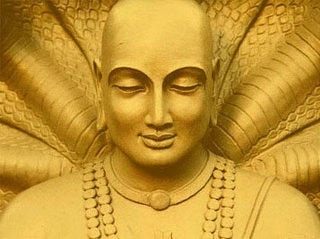
3.49. Tato manojavitvam vikaranabhavah pradhanajayascha| Tatah-therefrom Tatah-therefrom Manojavitvam-speed of mind Vikaranabhavah-freedom from sense organs Pradhanajayah-conquest of prakriti Cha-and Therefrom follows speed like that of mind, independent from any medium of instrumentality and mastery of the limitations of prakriti.
Gain power of intuitive perception By samyama -Patanjali Yoga Sutra
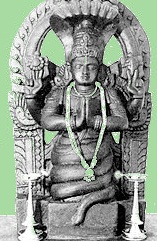
By samyama gain power of intuitive perception 3.37. Tatah pratibhasravanavedanadarsasvadavartta jayante, Tatah-therefrom Pratibha-the faculty of superior consciousness Sravana-the faculty of hearing Vedana-touch consciousness Darsa-visulization Asvada-faculty of taste Vartta-the olfactory faculty Jayante-are produced By applying samyama gain power of intuitive perception, therefrom are produced transcendental audition, sensation, perception, taste and olfactory knowledge.
Attainment of kaivalya-Patanjali Yoga Sutra – Vibhuti Pada
Attainment of kaivalya 3.56. Sattvapurusayoh suddhisamye kaivalyamiti| Sattva-chitta Purusayoh-of the purusha Suddhi-purification Samye-on becoming equal Kaivalyam-isolation Iti-end Kaivalyam-isolation Iti-end Kaivalya is attained by equalizing and cleansing the illumination of purusha and chitta.
Samadhi or superconsciousness?-Patanjali Yoga Sutra – Vibhuti Pada
What is Samadhi or superconsciousness? 3.3.Tadevarthamatranirbhasaà svarupasunyamiva samadhih| Tadeva-the same Artha-the object of dhayana Matra-only Nirbhasam-appearing Svarüpa-one own form Sunyam-empty Iva-as if Samadhih-trance Samadhi is called, when there is only the object appearing without the consciousness of ones own self.
Sirsasana
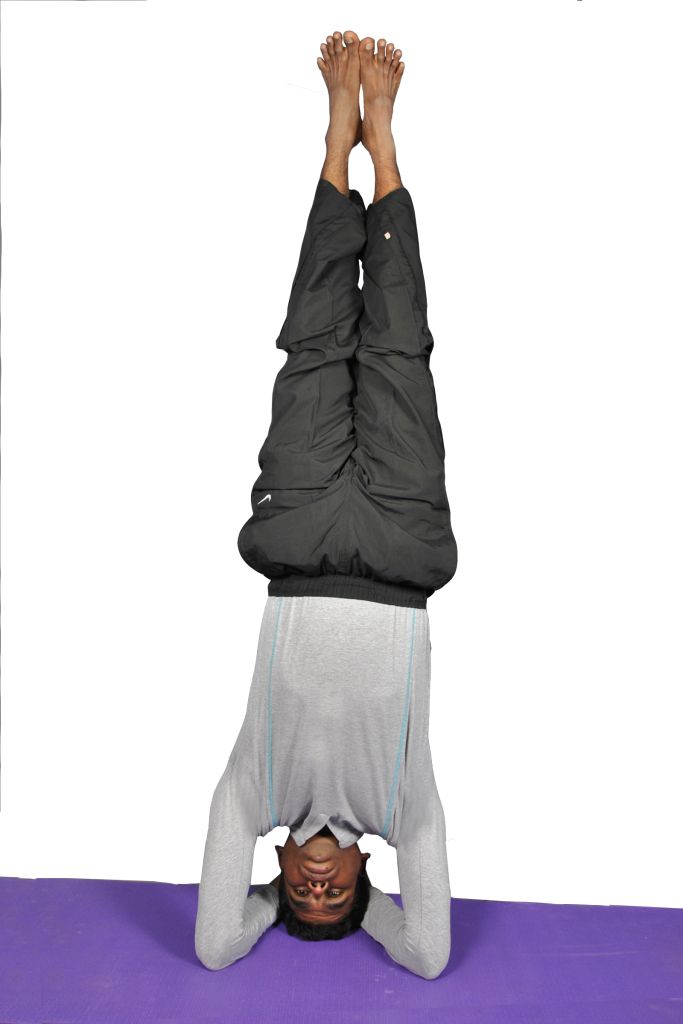
Sirsasana – Head Standing Posture (sirsa – head) Practice: Come to knelling posture called Vajrasana. Lean forward by knee apart for one fore arm distance. Interlock fingers; place it at one forearm distance, straight to knees. Place head pressing against the inside of the interlocked fingers. Now move spine straight perpendicular to floor, legs parallel to ground, by toes touching ground. Press toes down against floor; come up by shifting your lower part of body over elbows and head. Adjust posture by elbows, give minimum weight to head region. Keep whole body in a straight line, keep knees straight, suck abdomen in. Gaze at two feet front of floor at eye level. Stay for 10 to 20 seconds, breathing at nose normally. Exhale and return the back to the Vajrasana, relax at (Balasana) child posture. Benefits: This is called king of asana, by doing this asana alone get all benefits of other asanas. Improves balance, skill, memory and concentration. Optimize all organs, system and limbs of body. By regular practice hair grows blacker and controls falling hair.
Jalandhara Bandha
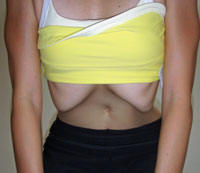
Jalandhara Bandha (throat lock) Atha jalandharabandhah Kanthamakunchya hrdaye sthapayechchibukam drdham/ Bandho jalandharakhyoayam jaramrtyuvinasakah// Contracting the throat by bringing the chin to the chest sternum bone is the bandha called Jalandhara Bandha. It eradicates old age and death. (Chapter -3, Verse 70). Badhnati hi sirajalamadhoghami nabhojalam/ Tato jalandharo bandhah kanthaduhkhaughanasanah// That is jalandhara bandha which holds the flow of nectar in the throat. It eliminates all throat ailments. (Chapter -3, Verse 71). Jalandhare krte bandhe kanthasamkochalakshane/ Na piyusham patatyaghnau na cha vayuh prakupyati// Having performed Jalandhara Bandha by contracting the throat, the nectar does not fall into the gastric fire and the prana is not disturbed. (Chapter -3, Verse 72). Kanthasamkochanenaiva dve nadyau stambhayed drdham/ Madhyachakramidam jneyam shodasadharabandhanam// By firmly contracting the throat, the two nadis, ida and pingala are paralyzed and the sixteen adharas of the manipura chakra are locked. (Chapter -3, Verse 73).
Bhadrasana
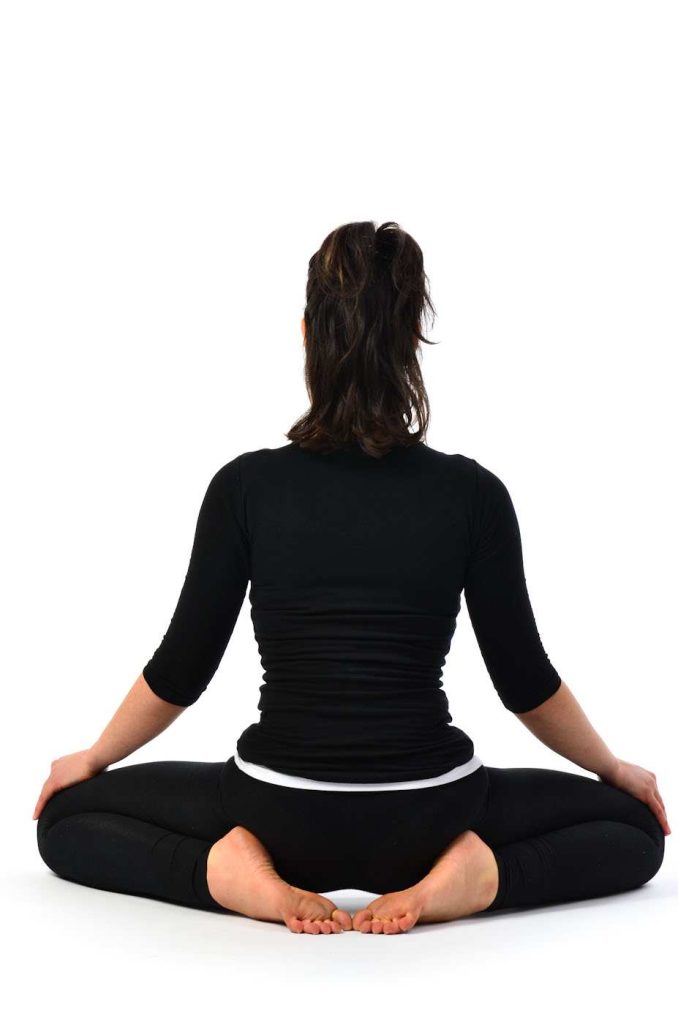
Bhadrasana (gracious pose) Ghulphau cha vrshanasyadhah Sivantyah parsvayoh kshipet / Savyaghulpham tatha savye Dakshaghulpham tu dakshine // Parsvapadau cha panibhyam Drdham baddhva sunischalam / Bhadrasanam bhavedetatsarvavyadhivinasanam //(Chapter -1, Verse- 53). Place the ankles below the genitals on the sides by the perineum, left ankle on the left (side) right ankle on the right (side).(Chapter -1, Verse- 53). Ghorakshasanamityahuridam vai siddhayoghinah/ Evamasanabandheshu yogindro vighatasramah // Abhyasennadikasuddhim mudradipavanakriyam/(Chapter -1, Verse-54). Then hold the feet, which are on their sides, firmly with the hands and remain motionless. This is bhadrasana which destroys all diseases. The yogis who are perfected (siddhas) call it gorakshasana. (Chapter -1, Verse-54).
Food Prohibited for Hatha Yogic Practitioners
Hatha Yoga Pradipika – Food Prohibited for Hatha Yogic Practices Katvamla-tikshna-lavanoshna-haritasaka / Sauvira-taila-tila-sarshapa-madya-matsyan // Ajadi-mamsa-dadhi-takra-kulattha-kola / Pinyaka-hingghu-lasunady-amapathyam-ahuh//(Chapter -1, Verse- 59). The foods which prohibited for the Hatha Yogic practitioners are: those which are bitter, sour, pungent, salty, heating, green vegetables, sour gruel, oil, sesame and mustard, alcohol, fish, flesh foods, curds, buttermilk, horse gram, fruit of jujube, oil cakes, asafetida and garlic. (Chapter -1, Verse- 59). Bhojanam ahitam vidyāt punarasyoshnīkrtam rūksham/ Atilavanamam layuktam kadaśanaśākotkam varjyam// (Chapter -1, Verse -60). Unnourishing food should not be consumed, that which is reheated after becoming cold, which is dry (devoid of natural oil), which is excessively salty or acidic, stale or has too many mixed vegetables. (Chapter -1, Verse -60).
Vajrasana
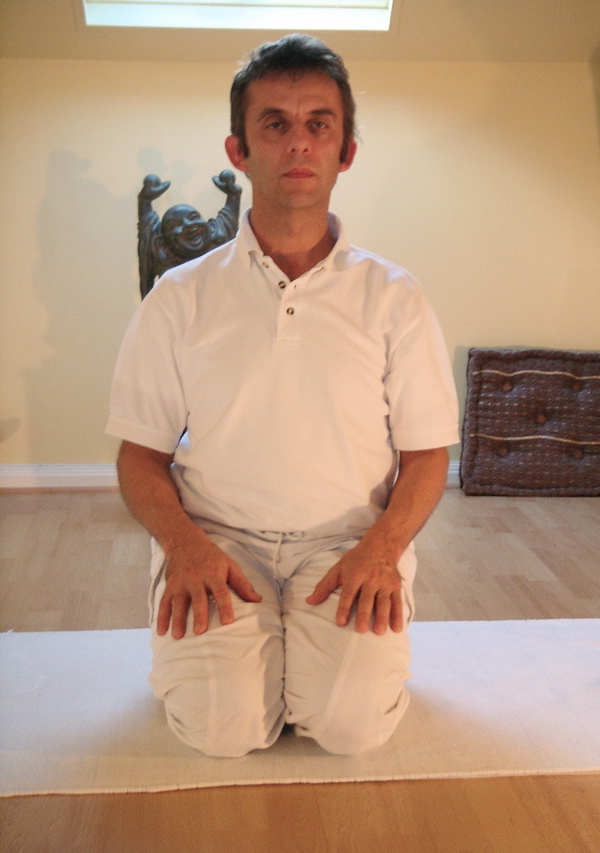
Vajrasana – Thunderbolt Posture (Vajra – thunder bolt or diamond) Practice: Come to (Dandasana) staff posture, by palms beside hip. Slide towards left, bend at right leg knee, and rest it under right hip. Same, bend left leg knee, place it under left hip. Keep spine, neck, head straight. Heel contacting with hip, toes pointing outward, inner calf muscles touching quadriceps muscle, knees together. At fingers adopt Jnana Mudra by touching tip of index, thumb finger slightly and rest it on respective thigh. Stay for 10 to 40 seconds, breathing completely by utilizing abdomen and chest area. Return back, sliding towards right side, with palm support unfold both legs and relax. Benefits: This is the only one asana, immediately after food we can perform to aid digestion by stimulating Vajra Nadi. Give suppleness to ankles, reduce thigh, hip extra fat. Make spine straight and strong naturally. It induces meditative state, so good for meditation.
Utkatasana
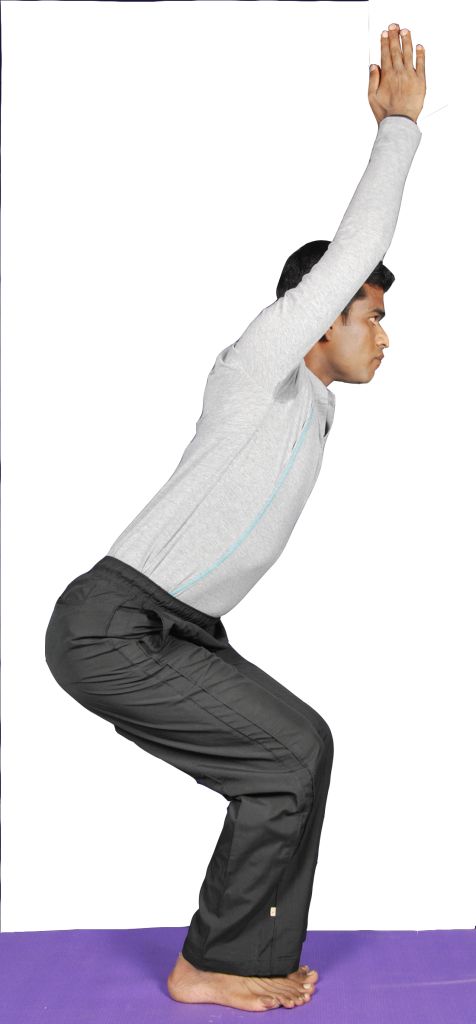
Utkatasana – Mighty Posture (utkata = mighty or powerful) Practice: Come to Tadasana, by keeping legs together and palms beside your thighs. As you inhale raise your arms till your biceps touch ears, palms together finger pointing towards sky, lock your elbow and keep straight, tuck your elbows, open your chest and expand , rib cage lifted up, abdomen in , keep your entire spine extended and lengthen up. Exhale and bend your knees , squatting down until your thighs are parallel to the floor, do not fall forward, move backward let your weight distribute over at lower back , hip joints and thigh muscles. Breathing normally at your nose, slow, even, and long breathing. Stay in this posture for 10 to 30 seconds or till you fill comfortable, do not exert or overstrain your body, always listen to your body. Along exhalation bring arms beside your thighs, and inhale straightens your knees. Again come back to Tadasana and relax. Benefits: Strengthens shoulders and open the chest. Strengthens and tones the ankles, thighs, calves, and spine Activate and optimize the efficiency of abdominal organs, diaphragm, and heart. Reduces flat feet.