
Mushtika Mudrā
Mushtika Mudrā Introduction Mushtika Mudrā is one of the classical hasta mudrās (hand gestures) found in yoga, Ayurveda, and Indian dance traditions. The word Mushtika literally means fist or clenched hand. This mudra embodies strength, stability, and the channeling of inner energy, and is often used to release physical and emotional tension stored in the hands and arms. It is particularly important in both therapeutic yoga (hand mudra therapy) and dance (Natya Shastra tradition), where it represents actions like holding, grasping, or striking. In yoga therapy, Mushtika Mudra stimulates circulation, improves neuromuscular coordination, and helps release stress. Meaning Mushtika = fist, closed hand, symbol of strength and unity. Mudra = seal, gesture, or psychic lock. Symbolically, Mushtika Mudrā represents power, self-control, and inner holding together. It also signifies hidden potential—just as the fist conceals strength within. How to Perform Practice Sit in a comfortable posture (Sukhasana, Vajrasana, or Padmasana). Extend both arms forward at shoulder height. Open the palms and spread the fingers wide. Slowly close the fingers into a tight fist with thumbs wrapping over the other fingers. Inhale deeply while opening the hands wide. Exhale while closing the fists tightly (synchronizing breath with movement). Continue for 10–15 rounds, then relax the hands on the knees. Optionally, keep fists closed in front of the chest in a static mudra during meditation. Benefits of Mushtika Mudrā Physical Benefits Strengthens fingers, wrists, and forearm muscles. Improves grip strength and coordination. Stimulates blood and lymphatic circulation in the arms. Helps reduce arthritis stiffness, carpal tunnel tension, and hand fatigue. Improves joint mobility of the hand and wrist. Mental Benefits Releases stored tension, frustration, and suppressed anger. Provides a sense of inner control and empowerment. Calms mental restlessness by channeling excess energy into the mudra. Enhances focus and concentration during meditation. Spiritual Benefits Represents holding the prana (life-force) within the self. Strengthens willpower and discipline. Activates the Muladhara (root chakra) for grounding and stability. Encourages self-confidence and courage. Contraindications Avoid over-clenching if suffering from severe arthritis, gout, or tendon injuries. Those with recent fractures or sprains in the wrist/hand should consult a therapist before practice. Should not be forced during episodes of extreme hypertension, as strong muscular contraction may elevate pressure. Anatomy & Physiology Engages the flexor digitorum profundus and superficialis, flexor pollicis longus, and intrinsic hand muscles. The act of making and releasing the fist enhances venous return and lymphatic drainage. Strengthens wrist stabilizers (flexors/extensors) useful in daily activities and sports. Improves oxygenation in the forearm muscles, reducing fatigue. Kinesiology Involves flexion of metacarpophalangeal and interphalangeal joints. Thumb action (over or under fingers) changes force distribution and grip pattern. Repetitive dynamic practice creates isotonic contractions, while static holding creates isometric contractions. Promotes hand-eye coordination and proprioceptive awareness. Neurology Activates mechanoreceptors and proprioceptors in the hand. Stimulates the median and ulnar nerves, influencing the motor-sensory cortex of the brain. Regular practice enhances fine motor control. Psychologically, the fist gesture may release stored emotional energy (anger, fear, anxiety) by giving it symbolic expression. Duration of Mudra Dynamic version (opening/closing fists): 5–10 minutes daily. Static version (holding fists in meditation): 2–15 minutes. Can be practiced 2–3 times a day. Counter Mudra To balance Mushtika Mudra’s intensity: Apana Vayu Mudra (Hridaya Mudra): for calming heart and emotions. Chin Mudra: to bring openness and relaxation. Anjali Mudra: to balance clenched energy with surrender. Conclusion Mushtika Mudrā is a simple yet powerful practice that combines physical strengthening, emotional release, and spiritual grounding. It supports hand and wrist health, enhances circulation, and provides a symbolic outlet for inner tension. By embodying the gesture of a fist, it teaches us to recognize, contain, and redirect our inner energy consciously. Practiced with awareness, it becomes both a therapeutic and meditative tool. FAQ Q1. Is Mushtika Mudra good for arthritis?Yes, when practiced gently, it can improve flexibility and blood flow in arthritic hands. Q2. Can it help with stress?Yes, clenching and releasing the fists is an effective way to discharge anger and stress. Q3. Does it improve grip strength?Yes, it directly strengthens fingers, hands, and forearms. Q4. Can I do it during meditation?Yes, the static version can be held during meditation for grounding. Q5. Which chakra does it influence?Primarily the Muladhara (Root Chakra), connected to stability and grounding. References Swami Satyananda Saraswati, Asana, Pranayama, Mudra, Bandha. Gertrud Hirschi, Mudras: Yoga in Your Hands. Joseph Le Page & Lilian Aboim, Mudras for Healing and Transformation. Natyashastra (classical dance mudras references). B. K. S. Iyengar, Light on Yoga.
Namaskar Mudra
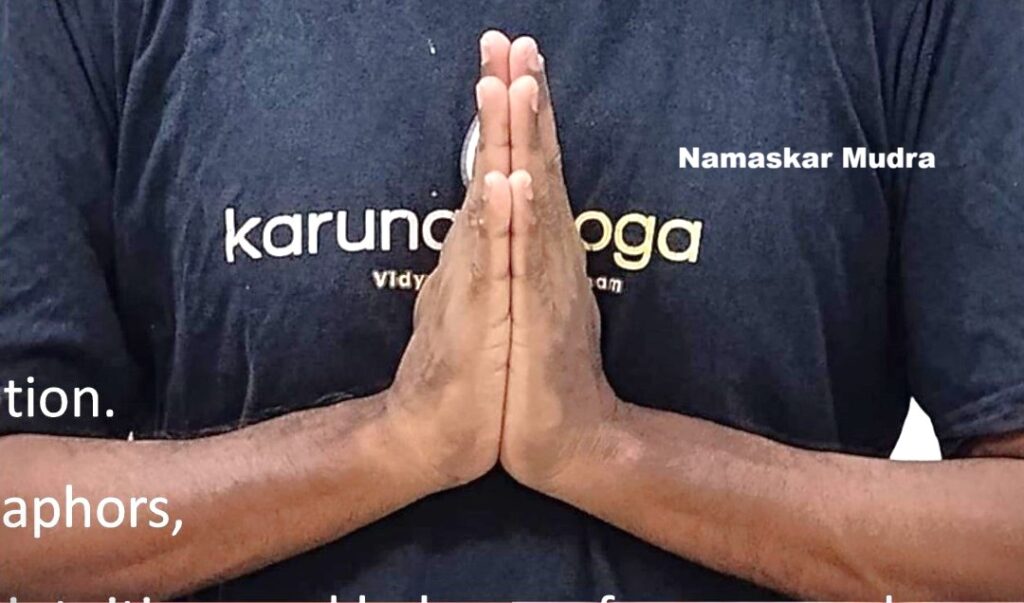
Namaskar Mudra Introduction Namaskar Mudra (also called Anjali Mudra or Pranam Mudra) is one of the most universal and widely practiced mudras in yoga, spirituality, and daily life. It is the gesture of bringing the palms together at the heart center in a prayer-like position. In yoga, it symbolizes union, humility, gratitude, and balance of energies. It is used in greetings (Namaste), meditation, and devotional practices, serving as a powerful tool for inner harmony and mindfulness. Meaning Namaskar = Salutation, reverence, greeting Mudra = Gesture or seal Thus, Namaskar Mudra means the gesture of salutation, representing the acknowledgment of the divine presence in oneself and others. Symbolically, the joining of palms represents the union of right and left energies (ida & pingala nadis, sun & moon, masculine & feminine, logic & intuition). How to Perform Practice Sit or stand comfortably with the spine erect (Sukhasana, Padmasana, Tadasana, or Vajrasana). Bring both palms together in front of the heart center (Anahata Chakra). Keep the fingers extended and pressed gently against each other. Thumbs touch the sternum (heart center) lightly. Close the eyes and breathe deeply, focusing on gratitude or devotion. Optionally, bow the head slightly to show humility. Stay in the mudra for 5–15 minutes, or use it as a gesture at the beginning and end of yoga/meditation practice. Benefits Physical Benefits Improves posture and chest alignment. Stimulates the heart and lungs, enhancing respiration. Balances the nervous and cardiovascular systems. Improves coordination between hands and brain hemispheres. Mental & Emotional Benefits Promotes inner calmness and emotional balance. Reduces stress, anxiety, and restlessness. Cultivates gratitude, humility, and mindfulness. Encourages positive emotions and empathy. Spiritual Benefits Activates the Anahata (Heart) Chakra, fostering compassion. Harmonizes ida and pingala nadis, balancing prana. Serves as a meditative gesture for devotion and prayer. Helps in centering the mind before meditation or chanting mantras. Contraindications Generally safe for all. People with severe wrist injury, arthritis, or carpal tunnel syndrome may find it difficult to press palms firmly. Should not be forced if there is shoulder or chest injury. Anatomy & Physiology Activates palmar muscles, flexors, and extensors of the hand. Stretches pectoralis major, deltoids, and intercostal muscles. Increases blood circulation in the chest region. Stimulates parasympathetic nervous system, inducing relaxation. Kinesiology Involves isometric contraction of hand muscles pressing against each other. Engages shoulder stabilizers and chest muscles. Encourages spinal elongation and upright posture. Enhances bilateral coordination by balancing both hands symmetrically. Neurology Calms the autonomic nervous system, reducing stress response. Activates prefrontal cortex, improving mindfulness and self-awareness. Stimulates vagus nerve through gentle chest and breath focus. Enhances right-left hemisphere integration via symmetrical hand position. Duration of Mudra General practice: 5–15 minutes daily. Before/after yoga practice or prayers: 1–2 minutes. Meditation: Up to 30 minutes with breath awareness. Counter Mudra Chin Mudra → for grounding and energy flow. Hridaya Mudra → for emotional healing. Jnana Mudra → for wisdom and concentration. Conclusion Namaskar Mudra is a universal gesture of respect, unity, and devotion. Beyond being a greeting, it is a yogic practice that harmonizes the body, mind, and spirit. It balances energies, calms the mind, and awakens compassion through heart-centered awareness. Practicing Namaskar Mudra daily can enhance mindfulness, emotional well-being, and spiritual connection. FAQ Q1: Is Namaskar Mudra the same as Anjali Mudra?Yes, they are the same; both refer to the prayer gesture. Q2: Can it be practiced during meditation?Yes, it enhances devotion, concentration, and mindfulness. Q3: Does it have healing properties?Yes, it reduces stress, balances energy, and calms emotions. Q4: Can children practice it?Yes, it is safe for all age groups. Q5: Which chakra does it activate?It primarily activates the Heart Chakra (Anahata). References Swami Satyananda Saraswati – Asana, Pranayama, Mudra, Bandha Gertrud Hirschi – Mudras: Yoga in Your Hands Indu Arora – Mudra: The Sacred Secret Bihar School of Yoga Publications – Hasta Mudras B.K.S. Iyengar – Light on Yoga
Naga Mudra
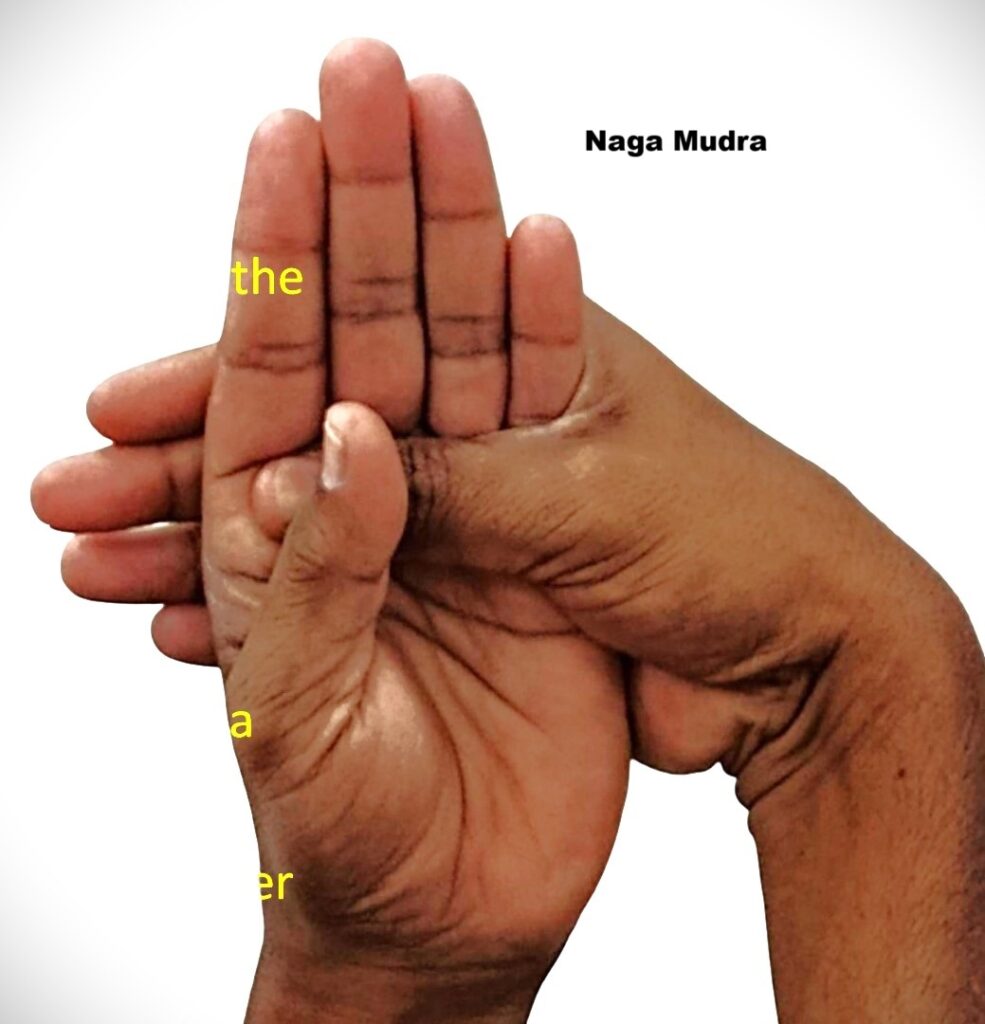
Naga Mudra Introduction Naga Mudra is an important hasta mudra (hand gesture) in yoga and meditation. The Sanskrit word Naga means “serpent” or “cobra,” symbolizing hidden wisdom, inner strength, and transformation. Just as a snake sheds its skin, this mudra represents the removal of ignorance and awakening of higher consciousness. It is often practiced for clarity in decision-making, intuition, and spiritual growth. It is commonly used during meditation when facing confusion, doubts, or indecisiveness, as it helps channel intuition and inner wisdom. Meaning Naga = Serpent / Cobra (symbol of wisdom, energy, and rebirth) Mudra = Gesture or seal Thus, Naga Mudra = Serpent Gesture, symbolizing the unlocking of hidden knowledge and intuitive power. How to Perform Practice Sit in a meditative posture (Padmasana, Sukhasana, or Vajrasana). Keep the spine straight. Cross the hand in front of chest and also cross the thumbs keeping the palms one upon the other and place this mudra on the lap. The thumb placed on the palm increases all elements like vayu, akasha, prithvi and jala The thumb placed upon the other thumb increases the agni, blazing fire is a powerful element. Close the eyes and breathe deeply. Focus on a specific question, confusion, or inner guidance. Meditate in this position for 5–15 minutes. Benefits Physical Benefits Helps reduce stress and anxiety by calming the nervous system. Balances breathing, improving lung capacity. Regulates heart rate and blood circulation. Enhances digestion by reducing psychosomatic tension. Mental & Emotional Benefits Brings clarity during confusion or indecision. Awakens inner wisdom and intuition. Helps release suppressed emotions. Encourages self-confidence and inner peace. Spiritual Benefits Symbolizes the serpent energy (kundalini shakti) rising upward. Opens the heart chakra (Anahata) and strengthens inner connection. Enhances meditation by deepening awareness. Used for guidance in spiritual practices, like asking life questions to the higher self. Contraindications Avoid when feeling overheated, restless, or excessively stimulated, as it can increase inner energy. People with severe hypertension should practice for short durations. Not advised if experiencing dizziness or migraine during practice. Should be avoided immediately after heavy meals. Anatomy & Physiology Engages the palmar muscles and interossei of the hand. Activates the respiratory system by aligning breath with focus. Stimulates the parasympathetic nervous system, reducing stress. Improves posture by bringing awareness to the chest and heart area. Kinesiology Involves isometric contraction of hand and finger muscles. Engages pectoral muscles as palms press together. Supports spinal alignment by encouraging upright sitting. Gentle pressure in the thumbs stabilizes hand coordination. Neurology Activates the prefrontal cortex, enhancing decision-making and clarity. Stimulates vagus nerve activity, calming the heart and digestion. Supports neuroplasticity by linking symbolic hand movements with mental states. Enhances right-left brain hemisphere balance through hand crossing. Duration of Mudra General practice: 5–15 minutes once or twice daily. For decision-making: Practice until a sense of clarity arises (usually 5–10 minutes). For meditation: Up to 30 minutes with intervals. Counter Mudra Jnana Mudra → for mental clarity and wisdom. Hakini Mudra → for concentration and memory. Anjali Mudra → for grounding and devotion. Conclusion Naga Mudra is a powerful serpent gesture that symbolizes wisdom, transformation, and clarity. It is especially beneficial for those who struggle with confusion, doubts, or emotional turmoil. On a physical level, it helps calm the nervous system and improve heart and lung functions. On a spiritual level, it enhances intuition and awakens the inner serpent energy (kundalini shakti). Practiced regularly, it becomes a tool for inner guidance, emotional balance, and spiritual awakening. FAQ Q1: Can Naga Mudra help me make decisions?Yes, it is specifically recommended for clarity during confusion or life decisions. Q2: When is the best time to practice Naga Mudra?Early morning or before meditation, especially when seeking inner guidance. Q3: Can beginners practice it?Yes, it is safe and simple for all levels of practitioners. Q4: Does it activate kundalini energy?Symbolically, yes—it represents the serpent energy rising, though it primarily works on clarity and intuition. Q5: Can it be practiced during stress?Yes, it is excellent for calming stress and restoring focus. References Swami Satyananda Saraswati – Asana, Pranayama, Mudra, Bandha Gertrud Hirschi – Mudras: Yoga in Your Hands Indu Arora – Mudra: The Sacred Secret Bihar School of Yoga – Publications on Hasta Mudras Dr. Dhirendra Brahmachari – Mudra Vigyan
Kundalini Mudrā
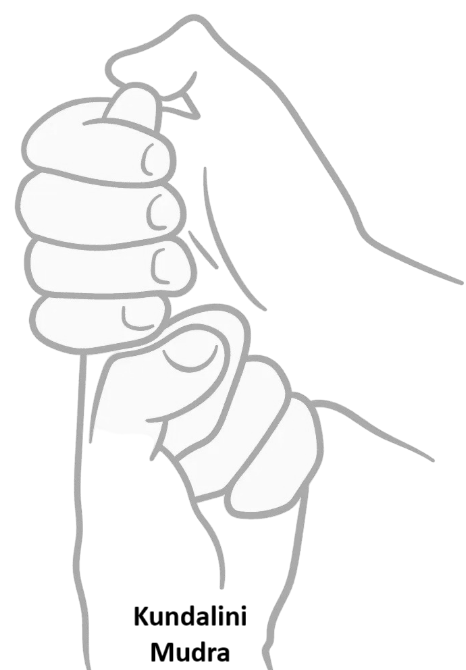
Kundalini Mudrā Introduction Kundalini Mudrā is a symbolic yogic hand gesture designed to awaken, balance, and harmonize the Kundalini Shakti—the dormant spiritual energy located at the base of the spine. In yogic tradition, Kundalini represents the coiled serpent power that, when awakened, rises through the chakras to bring enlightenment and liberation (moksha). This mudra is often practiced in meditation, Tantra, and Kundalini Yoga to channel sexual and creative energies into spiritual transformation. Meaning Sanskrit: Kundalini = “coiled” (referring to the serpent energy at the root chakra). Mudrā = gesture, seal, or symbolic action. Thus, Kundalini Mudrā means “the gesture to awaken and direct the coiled energy.” Symbolically, it represents the union of masculine (Shiva) and feminine (Shakti) principles, merging into spiritual wholeness. How to Perform (Method of Practice) Steps: Sit comfortably in Sukhasana, Padmasana, or Vajrasana with a straight spine. Hold both your hands in front of you in a loose fist. Then, stretch the index finger of the left hand and pass it with the right hand, which is still stuck. Pass the finger from the bottom, that is, from pinky to thumb. The grip on this position where the thumb-cushion of your right hand should rest on the tip of your left index finger. The other fingers of your right hand will cover the left index finger, like a loose glove. While doing this pose, pull your hands up to the lower abdomen. Close the eyes, breathe deeply, and focus awareness on the Muladhara (Root Chakra). Visualize energy rising upward through the spine with each breath. Hold for 10–15 minutes, or longer in deep meditation. Benefits Physical Benefits Stimulates sexual and reproductive health. Harmonizes hormonal balance by activating the endocrine system. Enhances vitality and stamina. Supports energy flow through pelvic and abdominal organs. Mental & Emotional Benefits Reduces sexual frustration by redirecting libido into creative energy. Balances emotional polarity (yin-yang, male-female, left-right brain). Improves self-confidence, passion, and motivation. Reduces stress and promotes inner calm. Spiritual Benefits Awakens Kundalini Shakti for spiritual progress. Supports chakra alignment, especially Root and Sacral chakras. Promotes union of Shiva (consciousness) and Shakti (energy). Helps practitioners reach higher states of meditation and awareness. Contraindications Avoid if experiencing severe mental illness, psychosis, or extreme anxiety, as Kundalini awakening can intensify symptoms. Not suitable for those with heart disease, high blood pressure, or epilepsy, unless guided by a teacher. Should not be forced—Kundalini energy should awaken gradually and safely. Pregnant women should avoid prolonged practice. Anatomy & Physiology Focuses on the pelvic floor, spine, and brain. Activates Root Chakra (Muladhara) → regulating survival, stability, and grounding. Stimulates Sacral Chakra (Svadhisthana) → governing sexuality, creativity, and emotions. Physiologically affects the autonomic nervous system, balancing sympathetic and parasympathetic responses. Kinesiology The firm clasp of the hands symbolizes containment of energy. The right index finger penetrating the left fist represents the union of opposites (male-female, solar-lunar, active-passive). Creates muscular engagement in forearm and hand muscles, reinforcing focus and grounding. Neurology Stimulates limbic system (emotion, memory, motivation). Activates hypothalamus-pituitary axis, enhancing hormonal regulation. Promotes parasympathetic dominance, inducing calm yet alert awareness. Encourages neuroplasticity, rewiring sexual energy toward creativity and spiritual growth. Duration of Practice Beginners: 5–10 minutes daily. Intermediate: 15–30 minutes during meditation. Advanced: Up to 1 hour with guidance in Kundalini practices. Best practiced early morning (Brahma Muhurta) or before meditation. Counter Mudra Moola Bandha (Root Lock) – stabilizes energy during Kundalini awakening. Yoni Mudra – balances and grounds excess energy. Gyan Mudra – calms the mind and integrates awakened energy. Conclusion Kundalini Mudrā is a profound yogic practice for awakening inner energy, balancing sexuality, and channeling creative force into spiritual transformation. It symbolizes the sacred union of opposites, leading to wholeness and liberation. Practiced with awareness, discipline, and guidance, it harmonizes body, mind, and spirit, making it a powerful tool for both personal growth and spiritual awakening. FAQ Q1: Can Kundalini Mudra awaken energy suddenly?Yes, it can, but awakening is usually gradual. Sudden awakening may cause imbalance if not guided. Q2: Is it safe to practice daily?Yes, but practice moderately and with grounding exercises like Pranayama or Gyan Mudra. Q3: Does it increase sexual desire?Initially it may heighten awareness, but the purpose is to transform sexual energy into higher consciousness. Q4: Do I need a teacher for this mudra?Beginners can practice safely for grounding, but advanced awakening should be guided by a trained teacher. Q5: Can it be combined with mantra meditation?Yes, mantras like Om Namah Shivaya or Sat Nam enhance Kundalini Mudra’s effects. References Swami Satyananda Saraswati – Kundalini Tantra. Swami Niranjanananda – Prana and Pranayama. Gertrud Hirschi – Mudras: Yoga in Your Hands. Mallinson, James & Singleton, Mark – Roots of Yoga. Lilian & Joseph Le Page – Mudras for Healing and Transformation.
Kubera Mudrā
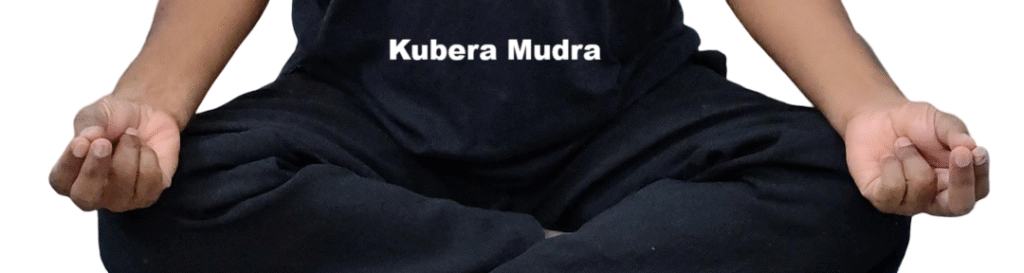
Kubera Mudrā Introduction Kubera Mudrā is a powerful yogic hand gesture associated with abundance, manifestation, and focused intention. Named after Lord Kubera, the Hindu deity of wealth and prosperity, this mudra is traditionally practiced to channel inner strength, clarity, and the power of attraction. It is also referred to as the “wish-fulfilling mudra” because it helps align thought, intention, and energy toward achieving desired goals. Beyond material prosperity, it symbolizes inner richness, confidence, and determination. Meaning Sanskrit: Kubera = Hindu god of wealth, guardian of treasures. Mudrā = seal, gesture, or symbolic hand posture. Kubera Mudrā thus means “the gesture of Kubera,” representing wealth, fulfillment, and focused intention. Spiritually, it signifies the union of clarity (Satya), willpower (Iccha Shakti), and determination (Dhruti). How to Perform (Method of Practice) Steps: Sit comfortably in Sukhasana, Padmasana, or on a chair with a straight spine. Bring both hands up. Place the index finger, middle finger, and thumb tips together. Curl the little finger and ring finger inward, touching the palm. Rest the hands gently on thighs or keep in front of chest. Close the eyes, breathe deeply, and silently affirm your intention or goal. Maintain the mudra for 5–15 minutes, focusing on clarity of thought and manifestation. Benefits Physical Benefits Enhances respiratory function by expanding lung capacity. Improves blood circulation and energy flow. Boosts immunity and vitality by stimulating Prana. Mental & Emotional Benefits Strengthens focus, concentration, and determination. Helps reduce fear, hesitation, and indecisiveness. Encourages positive thinking and goal orientation. Brings a sense of confidence, courage, and inner richness. Spiritual Benefits Awakens manifestation energy aligned with Lord Kubera’s symbolism. Clears subconscious doubts that block desires. Supports meditation for abundance, prosperity, and self-realization. Contraindications Should not be practiced with greedy or harmful intentions, as energy may be misdirected. Avoid excessive practice if feeling overstimulated or restless, as it increases mental energy. Not recommended immediately after meals for long duration. Anatomy & Physiology Index finger (Air element, Jupiter): Expands wisdom, vision, and growth. Middle finger (Ether element, Saturn): Represents stability, patience, discipline. Thumb (Fire element): Symbol of energy, willpower, and transformation. Their union activates a triangular energy seal, balancing will, wisdom, and discipline. Physically, it stimulates the lungs, diaphragm, heart, and brain by improving oxygenation and mental clarity. Kinesiology The flexion of ring and little fingers reduces distraction and stabilizes the gesture. Opposition of thumb, index, and middle fingers creates neuromuscular coordination and strengthens intrinsic hand muscles. The triangular finger arrangement directs energy flow upward, supporting clarity and manifestation. Neurology Stimulates frontal lobe activity, linked to planning, decision-making, and goal setting. Enhances reticular activating system function, boosting focus and alertness. Activates parasympathetic relaxation while energizing intention pathways in the brain. Strengthens neuroplasticity for positive affirmations, rewiring thought patterns for success. Duration of Practice 5–15 minutes, 2–3 times daily. Can be practiced before meditation, affirmations, or important tasks. Morning practice enhances goal clarity, while evening practice helps with mental focus and positive manifestation. Counter Mudra Hakini Mudra → Enhances memory and concentration alongside Kubera Mudra. Gyan Mudra → Provides calmness and grounding after manifestation work. Prana Mudra → Restores energy and vitality post practice. Conclusion Kubera Mudrā is not just about material wealth but a holistic gesture for prosperity, confidence, and focused living. By uniting wisdom, willpower, and stability, it aligns mind and body with inner abundance. Practiced regularly with a clear, positive intention, it empowers individuals to manifest goals while fostering inner strength and contentment. FAQ Q1: Can Kubera Mudra attract wealth?It aligns intention and energy with prosperity, but results depend on consistent effort and positive mindset. Q2: Can it be practiced by children?Yes, especially for enhancing concentration, but best for short durations (3–5 minutes). Q3: How soon does it show results?Mental clarity is often immediate; manifestation of goals depends on regular practice and lifestyle. Q4: Can it be combined with affirmations?Yes, it is most effective when paired with affirmations or visualization techniques. Q5: Is it safe during illness?Yes, it supports immunity and positivity, but should not replace medical care. References Swami Satyananda Saraswati – Asana, Pranayama, Mudra, Bandha. Gertrud Hirschi – Mudras: Yoga in Your Hands. Mallinson, James & Singleton, Mark – Roots of Yoga. Joseph & Lilian Le Page – Mudras for Healing and Transformation. Traditional yogic and Ayurvedic references on Kubera & mudra therapy.
Kidney Mudra
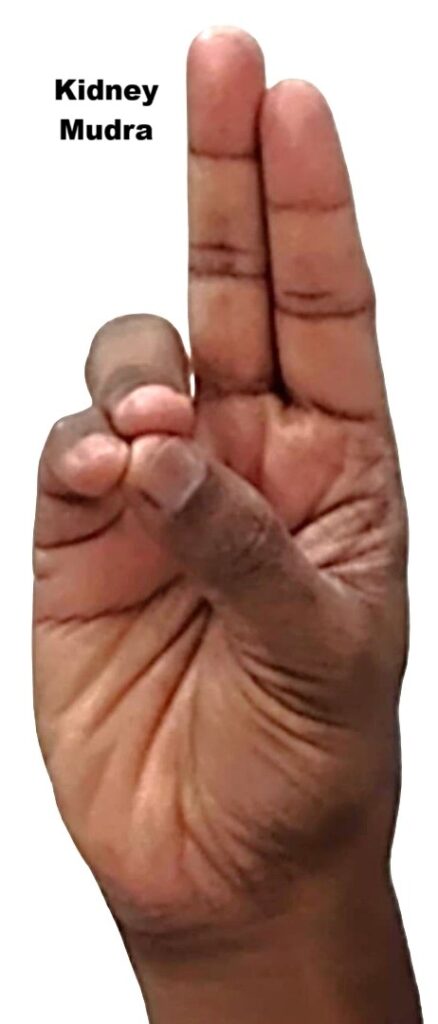
Kidney Mudra Introduction Kidney Mudra is a powerful yogic hand gesture used in mudra therapy to balance the water element and restore vitality to the kidneys. In yogic and Ayurvedic philosophy, the kidneys are not only filters of toxins but also regulators of pranic energy, water metabolism, and emotional stability (especially fear and anxiety). By pressing specific fingertips, this mudra activates pranic currents that stimulate kidney function, improve circulation, and regulate water–salt balance in the body. It is often recommended in naturopathy and yoga therapy for those suffering from kidney weakness, fatigue, dehydration, or fear-related emotional imbalances. Meaning Sanskrit: “Kidney” relates to vrikka in Ayurveda, which governs water regulation and vitality. Kidney Mudra symbolically means “gesture that awakens kidney energy and water balance.” It channels prana to the water element (apas tattva), strengthening the kidneys and urinary system. How to Perform (Method of Practice) Steps: Sit in a comfortable meditative posture (Sukhasana, Padmasana, or Vajrasana) or even on a chair. Relax shoulders and spine, keep eyes gently closed. Place ring finger (earth element) and little finger (water element) tips on the thumb tip (fire element). Keep the index and middle fingers extended, relaxed, and straight. Rest hands on thighs with palms facing upward. Breathe naturally, focusing on the kidney region (lower back) or the water element inside the body. Benefits Physical Benefits Stimulates kidney function and supports detoxification. Improves urination, water balance, and salt metabolism. Reduces fatigue, dehydration, and dizziness. May help in mild hypertension and water retention (edema). Enhances vitality by improving prana circulation in the lower back. Mental & Emotional Benefits Reduces fear, insecurity, and anxiety (linked to kidney meridian in Traditional Chinese Medicine). Promotes emotional stability and calmness. Supports confidence and resilience. Spiritual Benefits Strengthens connection to Apas Tattva (water element). Harmonizes Muladhara (root chakra) and Svadhisthana (sacral chakra). Improves grounding, fluidity, and adaptability in life. Contraindications Not a substitute for medical treatment of kidney disease. Avoid over-practice if suffering from severe renal failure, dialysis, or kidney stones – consult a doctor. Pregnant women should practice only under expert guidance. Should not replace hydration – water intake is still essential. Anatomy & Physiology Works through reflex zones of fingers, stimulating kidney-related nerve pathways. The thumb (fire) controls metabolic processes, ring finger (earth) and little finger (water) help regulate fluids and stability. Supports renal circulation, nephrons filtration, and hormonal regulation (renin, erythropoietin, vitamin D activation). Kinesiology The act of pressing ring and little fingers into the thumb creates isometric engagement of hand muscles. Activates meridians and nadis connected to kidney energy (similar to acupressure points). Enhances postural awareness when paired with straight spine and breath regulation. Neurology Finger pressure stimulates sensory and motor cortex representations of the hand, indirectly influencing kidney reflex zones. Parasympathetic activation → relaxation and better renal blood flow. May regulate hypothalamus–pituitary–adrenal axis (stress and fear regulation). Duration of Practice Therapeutic practice: 15–20 minutes, 2–3 times a day. Preventive practice: 10 minutes daily in the morning. Can be safely integrated with pranayama or meditation for deeper effects. Counter Mudra Apana Mudra: Helps detoxify and eliminate waste. Varun Mudra: Enhances hydration and water element. Prana Mudra: Restores overall vitality and supports kidney function. Conclusion Kidney Mudra is a simple yet profound yogic tool to activate kidney energy, restore water balance, and overcome fear-based emotions. It combines physical detoxification with emotional stability, making it highly relevant in today’s stressful lifestyle. While highly beneficial, it should be practiced alongside proper hydration, diet, medical care, and lifestyle balance. FAQ Q1: Can Kidney Mudra cure kidney disease?It supports kidney function but does not replace medical treatment. Q2: When is the best time to practice?Morning or early evening, preferably on an empty stomach. Q3: Can I practice it lying down?Yes, but meditative sitting posture enhances results. Q4: Does it help with fear and anxiety?Yes, by balancing kidney energy and calming the nervous system. Q5: How soon can results be felt?Mild effects (relaxation, calmness) can be felt immediately; therapeutic benefits may take weeks. References Swami Satyananda Saraswati – Asana, Pranayama, Mudra, Bandha. Gertrud Hirschi – Mudras: Yoga in Your Hands. Mark Singleton & James Mallinson – Roots of Yoga. Tiwari, O.P. – Pranayama: The Breath of Yoga. Ayurvedic texts – Charaka Samhita (kidney and water balance references). Traditional Chinese Medicine – Kidney Meridian studies.
Khechari Mudra
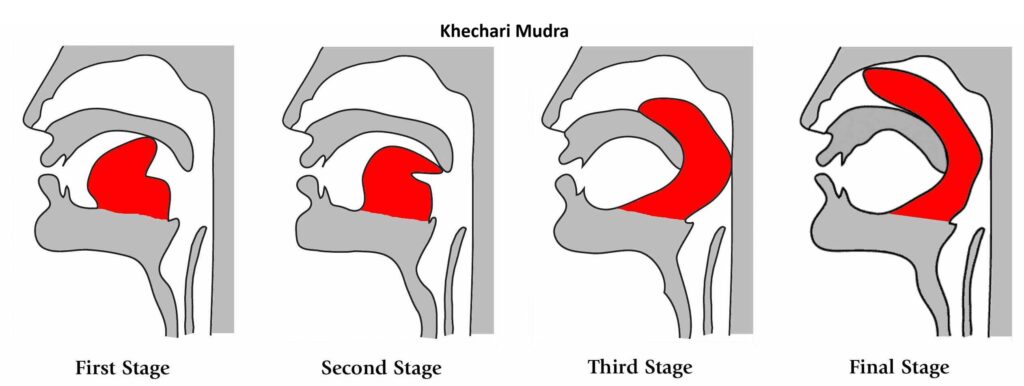
Khechari Mudra Introduction Khechari Mudra is one of the most advanced and revered mudras in Hatha Yoga. It is mentioned in ancient texts like the Hatha Yoga Pradipika, Gheranda Samhita, and Shiva Samhita. It is classified as a Maha Mudra (great seal) and is deeply associated with higher states of consciousness, spiritual awakening, and the control of prana (life energy). The practice involves rolling the tongue back and upward into the nasal cavity to stimulate higher brain centers and activate the pineal gland. It is believed to help transcend hunger, thirst, sleep, and achieve deep states of meditation (samadhi). Meaning Sanskrit: Khe = sky/space/ether Chari = moving or roaming Thus, Khechari Mudra means “the gesture of moving in the inner space (sky)” – symbolic of roaming the infinite consciousness. How to Perform (Method of Practice) Preparation: Traditionally, aspirants were trained gradually, sometimes with the practice of talabya kriya (tongue-stretching exercise). Beginners should not attempt the full mudra without guidance. Steps: Sit in a meditative posture such as Padmasana, Siddhasana, or Vajrasana with spine erect. Close the eyes and relax the body. Roll the tongue backward and upward to touch the soft palate. With advanced practice, extend the tongue further into the nasopharyngeal cavity, reaching toward the uvula and eventually into the nasal passages. Focus your gaze inward (Shambhavi mudra can be combined). Begin slow, deep breathing – or practice Kevala Kumbhaka (breath suspension) if trained. Meditate on the Ajna Chakra (third eye) or Sahasrara (crown). Benefits Physical Benefits Stimulates saliva production (amrita secretion) which is believed to be rejuvenating. Strengthens tongue and throat muscles. Reduces hunger and thirst sensations. Helps in control of the endocrine system (pituitary & pineal activation). Mental & Emotional Benefits Induces deep states of calmness, tranquility, and concentration. Reduces stress, anxiety, and restlessness. Enhances mental clarity and memory. Spiritual Benefits Facilitates Kundalini awakening by sealing prana within the body. Assists in achieving Samadhi (superconscious state). Said to allow the practitioner to drink the divine nectar (amrita) secreted from higher brain centers. Helps transcend body limitations like hunger, thirst, and sleep during meditation. Contraindications Should not be practiced by beginners without a teacher. Not recommended for those with tongue, throat, or nasal abnormalities/infections. Avoid if you suffer from epilepsy, psychiatric conditions, or uncontrolled hypertension. Do not attempt aggressive tongue-cutting practices mentioned in old texts (dangerous). Anatomy & Physiology Involves tongue flexion and elongation using genioglossus, styloglossus, and hyoglossus muscles. Pressure is applied to the soft palate, uvula, and nasopharynx stimulating cranial nerves (especially glossopharyngeal & vagus nerves). Stimulates the pituitary and pineal glands, influencing hormonal balance. Activates parasympathetic nervous system → deep relaxation. Kinesiology Requires strong lingual muscle control. The backward rolling of the tongue creates an isometric stretch. Helps in developing orofacial neuromuscular coordination. Encourages stability in the head-neck region during meditation. Neurology Stimulation of cranial nerves IX (glossopharyngeal) and X (vagus) → calming effect on autonomic functions. Activates the limbic system → emotional regulation. Stimulates pineal gland (melatonin regulation) and possibly DMT-related experiences in advanced yogis. Supports neuroplasticity by training unusual tongue movements. Duration of Practice Beginners (initial stage): 1–3 minutes (just touching soft palate). Intermediate: 5–15 minutes, progressing deeper into nasal cavity. Advanced yogis: Can sustain for hours in meditation, combined with pranayama. Counter Mudra Matsya Mudra (Fish Gesture): Cooling and restorative. Hridaya Mudra: Emotional balance after intense energy work. Chin Mudra or Jnana Mudra: Grounding and stabilizing after higher practices. Conclusion Khechari Mudra is considered the king of mudras in Hatha Yoga – a gateway to samadhi, kundalini awakening, and immortality of consciousness. While modern science explains its effects on the nervous and endocrine systems, its true depth lies in spiritual transformation. It requires discipline, patience, and guidance from a realized teacher. FAQ Q1: Can beginners practice Khechari Mudra?Beginners should only practice the first stage (touching the soft palate) under guidance. Q2: Is tongue-cutting necessary as some texts say?No. Modern yoga discourages this dangerous practice. Gradual stretching through talabya kriya is safe. Q3: What is the main spiritual effect?It is believed to allow the yogi to drink the nectar of immortality (amrita) and reach deep states of meditation. Q4: Does it stop hunger and thirst?Yes, advanced practitioners report reduced hunger, thirst, and need for sleep. Q5: Which chakras are influenced?Primarily Ajna (third eye) and Sahasrara (crown chakra). References Hatha Yoga Pradipika – Swatmarama. Gheranda Samhita. Shiva Samhita. Satyananda Saraswati – Asana, Pranayama, Mudra, Bandha. Georg Feuerstein – The Yoga Tradition. James Mallinson & Mark Singleton – Roots of Yoga.
Kṣepana Mudrā
Kṣepana Mudrā Introduction Kṣepana Mudrā is a powerful yogic hand gesture known as the “gesture of letting go” or “gesture of release.” It is widely practiced in yoga, meditation, and mudra therapy for detoxification and emotional cleansing. In yogic philosophy, this mudra symbolizes the release of toxins, negative thoughts, emotional burdens, and excess energy from the body and mind. It is often recommended for people who feel heavy, stagnant, stressed, or overwhelmed. Meaning Sanskrit: Kṣepana = “to throw away, release, or discard.” Mudrā = “seal or gesture.” Thus, Kṣepana Mudrā means “the gesture of expelling or throwing out what is not needed.” It represents cleansing, purification, and renewal. How to Perform (Method of Practice) Steps: Sit in a comfortable meditation posture (Padmāsana, Sukhasana, Vajrasana) or even on a chair with a straight spine. . Using both hands, interlock your fingers, then release your index fingers so they are joined and pointing upward. Hold this position in front of your heart, or with your arms raised straight over your head, as in the asana opposite. Relax shoulders and elbows, keep breathing slowly and deeply. Close the eyes and focus on exhaling stress and negativity. Practice with awareness for 5–15 minutes. Benefits Physical Benefits Promotes detoxification by stimulating downward-moving energy (Apana Vayu). Improves digestion and elimination (constipation relief). Helps in reducing toxins and acidity in the body. Boosts immunity by clearing stagnant energy. Mental & Emotional Benefits Releases stress, anxiety, and negative emotions. Enhances mental clarity and lightness. Encourages forgiveness and letting go of grudges. Restores a sense of calmness, openness, and peace. Spiritual Benefits Clears blocked energy in nadis and chakras. Helps practitioners surrender ego-based tendencies. Prepares the mind for deep meditation and spiritual awakening. Contraindications Should be avoided by people with severe hypotension (low blood pressure), as it promotes downward energy. Not recommended during pregnancy, especially in later stages. Should not be practiced when feeling excessively weak or depleted. Should not replace medical treatment for detox-related conditions. Anatomy & Physiology Activates Apana Vayu (downward energy flow) which governs elimination, urination, menstruation, and childbirth. Helps balance the excretory and digestive system. Stimulates the parasympathetic nervous system, promoting relaxation and cleansing. Supports functions of the large intestine, kidneys, bladder, and skin (detox organs). Kinesiology The interlocking of fingers provides isometric contraction, stabilizing hand muscles. Downward pointing index fingers direct kinaesthetic awareness towards the earth, symbolizing release. Enhances postural alignment by grounding energy. Neurology Stimulates somatosensory cortex regions linked to hand gestures. Engages the brain in a release-and-relax response, reducing sympathetic overdrive (stress). Helps regulate limbic system activity, calming fear, anger, and stress. Supports mind-body feedback loops that facilitate detox and emotional release. Duration of Practice Therapeutic practice: 10–20 minutes daily. Can be practiced whenever feeling overwhelmed or burdened. Best practiced in the morning (to release stagnant energy) or evening (to release stress of the day). Counter Mudra Prana Mudra → Restores energy after cleansing. Apana Mudra → Complements detoxification by aiding elimination. Gyan Mudra → Provides calmness and clarity after letting go. Conclusion Kṣepana Mudrā is a deeply therapeutic and spiritual hand gesture designed to eliminate toxins, negativity, and blockages at the physical, emotional, and energetic levels. It empowers practitioners to let go of burdens, creating space for healing, renewal, and higher awareness. While simple to perform, its effects are profound when practiced with conscious breathing and intention. FAQ Q1: Can Kṣepana Mudra cure digestive problems?It helps improve elimination and digestion, but should be combined with diet and medical advice. Q2: Can I do it lying down?Best practiced sitting upright, but can also be done lying in Savasana. Q3: How quickly does it work?Calming effects can be felt immediately; detox benefits appear with regular practice. Q4: Is it safe for children?Yes, for short durations (3–5 minutes) under guidance. Q5: Can it help with emotional trauma?Yes, it helps release stored negative emotions and aids in emotional healing. References Swami Satyananda Saraswati – Asana, Pranayama, Mudra, Bandha. Gertrud Hirschi – Mudras: Yoga in Your Hands. Tiwari, O.P. – Pranayama: The Breath of Yoga. Mallinson, James & Singleton, Mark – Roots of Yoga. Ayurvedic reference – Charaka Samhita (Apana Vayu and elimination). Traditional Yoga and Naturopathy texts on mudra therapy.
Kashyapa Mudrā
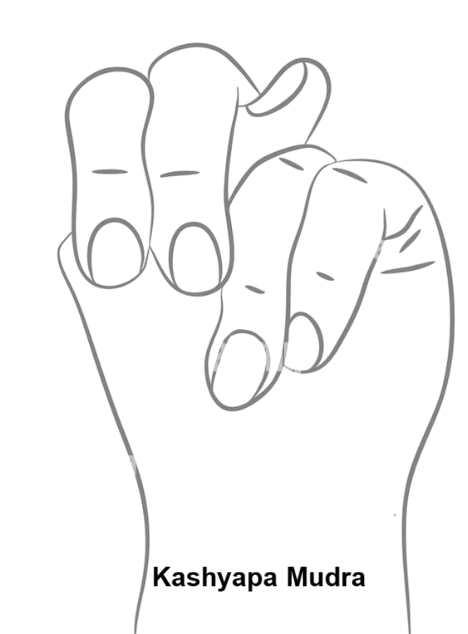
Kashyapa Mudrā Introduction Kashyapa Mudrā is a symbolic and therapeutic hand gesture found in yoga, Ayurveda, and mudra therapy. It is named after the ancient sage Kashyapa, considered a progenitor of humanity and a revered teacher in Indian tradition. In yogic practice, this mudra is associated with balancing internal energies, removing inner conflicts, and restoring harmony between mind and body. Unlike dance mudras, Kashyapa Mudra is more commonly practiced in mudra therapy and meditation, and it is sometimes called the “Tortoise Mudra” or “Harmony Mudra.” Meaning The name Kashyapa refers to the sage known for his wisdom, balance, and calm presence. Symbolically, this mudra means holding harmony within oneself, uniting opposites like light and dark, male and female, sun and moon. It is often interpreted as a mudra for inner balance, detoxification, and grounding. How to Perform Practice Sit in a comfortable meditative posture such as Padmasana, Vajrasana, or Sukhasana. Place the tip of the thumb in the web between the middle and ring fingers. Close the remaining fingers as if making a fist. Close your eyes, breathe deeply, and hold the mudra for several minutes. Focus on balance and inner harmony while practicing. Benefits of Kashyapa Mudrā Physical Benefits Improves digestion and assimilation of nutrients. Stimulates immune system function and strengthens resistance to infections. Helps in relieving allergic reactions and respiratory problems. Aids in detoxification of liver and spleen. Mental Benefits Promotes emotional balance and reduces inner conflicts. Relieves stress, anxiety, and mood swings. Enhances clarity and self-awareness. Brings a sense of peace and neutrality. Spiritual Benefits Encourages a state of equanimity (samatvam). Assists in balancing the Ida (moon/feminine) and Pingala (sun/masculine) nadis. Supports meditation by stabilizing energy flow. Symbolizes union of opposites, leading to wholeness. Contraindications Should not be practiced excessively (over 45 minutes daily). Avoid if experiencing acute joint inflammation in the fingers. People with low blood pressure should practice moderately, as it has a calming effect. Anatomy & Physiology Activates hand acupressure points linked to the liver, spleen, and lungs. Stimulates the parasympathetic nervous system (rest-and-digest). Improves circulation in thoracic and abdominal regions. Supports the lymphatic system in clearing toxins. Kinesiology Engages the flexor muscles of the fingers, primarily the flexor digitorum superficialis and profundus. The folding of the index finger over the thumb creates muscular stability and symbolic “containment.” Helps train fine motor control and neuromuscular balance in the hand. Neurology Crossing of index finger over thumb stimulates bilateral cortical activity. Activates somatosensory regions linked to touch and proprioception. Promotes calmness by engaging the vagus nerve pathway, reducing sympathetic overdrive. Improves mind-body connection through steady hand positioning. Duration of Mudra Therapeutic use: 15–30 minutes daily (can be split into 2–3 sessions). Meditation: 10–15 minutes for grounding and balance. Chronic conditions (like allergies): Regular practice for several weeks recommended. Counter Mudra To balance or release the effects of Kashyapa Mudra: Apana Mudra (for purification and grounding). Chin Mudra (for energy upliftment and awareness). Prana Mudra (for vitality and immune boost). Conclusion Kashyapa Mudrā is a powerful gesture symbolizing balance, harmony, and detoxification. Physically, it supports digestion, immunity, and respiratory health; mentally, it reduces stress and brings emotional clarity; spiritually, it unites dualities and supports meditation. Named after Sage Kashyapa, it reflects wisdom and equilibrium. When practiced regularly and mindfully, it becomes a tool for healing, grounding, and inner peace. FAQ Q1. What is Kashyapa Mudra good for?It is excellent for allergies, immunity boosting, detoxification, and balancing emotions. Q2. Can I practice it during meditation?Yes, it is often used to bring mental balance and stability during meditation. Q3. Which chakra does it influence?Primarily the Solar Plexus (Manipura Chakra) for balance and the Heart Chakra (Anahata) for harmony. Q4. Is it safe for beginners?Yes, it is easy and safe for all age groups if practiced gently. Q5. How long before benefits are noticed?Benefits may be felt within 2–3 weeks of regular practice. References Swami Satyananda Saraswati, Asana, Pranayama, Mudra, Bandha. Gertrud Hirschi, Mudras: Yoga in Your Hands. Joseph Le Page & Lilian Aboim, Mudras for Healing and Transformation. Rajeswari Raman, Mudras: For Body, Mind and Spirit. Ayurveda and Yoga texts referring to Sage Kashyapa and symbolic mudras.
Karkatika Mudra
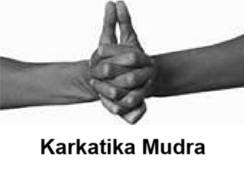
Karkatika Mudra Introduction Karkatika Mudra is a hasta mudra (hand gesture) practiced in yoga, meditation, and also used in classical Indian dance traditions. The term Karkatika means scissors in Sanskrit, symbolizing the cutting away of unnecessary attachments, illusions, and negativity. In yogic therapy, it is considered useful for releasing tension, improving focus, and harmonizing subtle energy channels (nadis). Meaning Sanskrit: Karkatika = “scissors.” Represents the gesture of cutting or severing negative influences, attachments, or energy blockages. Energetically, it signifies separation from the unnecessary and protection of one’s inner energy field. How to Perform (Method of Practice) Step-by-Step: Sit in a comfortable meditative posture such as Padmasana, Vajrasana, or Sukhasana. Interlace the fingers and clasp the hands. Extend the thumbs upward. Stretch your arms forward, keeping the mudra in front of your torso. Maintain gentle pressure and keep your shoulders relaxed. Focus on breathing calmly and visualize cutting away negativity, illusions, or unhealthy patterns. Benefits Physical Benefits Relieves tension in the hand and forearm muscles. Improves coordination and flexibility of fingers. Stimulates blood circulation in the upper limbs. Mental & Emotional Benefits Symbolically helps in “cutting away” stress, fear, or harmful habits. Encourages mental clarity, decisiveness, and courage. Supports the process of letting go of emotional burdens. Spiritual Benefits Acts as a protective gesture against negative energies. Helps to sever ties with karmic blockages. Enhances focus during meditation and chanting. Contraindications Avoid if there is severe arthritis, finger injury, or wrist pain. Should not be practiced with excessive force in interlacing the fingers. Those with neuropathy in hands should practice gently and for shorter periods. Anatomy & Physiology Involves interphalangeal joint flexion (interlacing fingers) and extension of index & middle fingers. Engages lumbricals, interossei, and flexor tendons. Encourages neuromuscular relaxation by focusing attention on precise finger placement. Breath coordination stimulates the parasympathetic nervous system. Kinesiology Finger interlacing provides an isometric exercise for intrinsic hand muscles. Crossing of fingers enhances bilateral coordination. Helps improve fine motor control and hand-eye connection in therapeutic use. Neurology Activates hand region of the motor and sensory cortex. Improves neuroplasticity through coordinated finger crossing. Provides sensory stimulation that helps in grounding and calming the nervous system. Supports regulation of limbic activity, aiding emotional release. Duration of Practice Beginners: 5 minutes, once or twice daily. Intermediate: 10–15 minutes daily in meditation or yoga. Advanced practitioners: Up to 30 minutes for deep symbolic and spiritual effect. Counter Mudra Chin Mudra – to restore calmness and grounding. Hridaya Mudra – to balance emotions after the cutting/detachment symbolism of Karkatika. Abhaya Mudra – for reassurance and fearlessness. Conclusion Karkatika Mudra, the gesture of scissors, symbolizes cutting away negativity, attachments, and obstacles. It is both a therapeutic and spiritual hand gesture, enhancing mental clarity, emotional freedom, and spiritual protection. By engaging the hand muscles, nerves, and subtle energy pathways, this mudra helps practitioners remain focused, balanced, and liberated in daily life. FAQ Q1: What is the main purpose of Karkatika Mudra?It symbolizes cutting away negativity and attachments, promoting clarity and freedom. Q2: Can beginners practice this mudra?Yes, it is simple to perform and suitable for beginners with gentle practice. Q3: Is this mudra found in Indian dance traditions?Yes, it is also a hasta mudra in Bharatanatyam used symbolically in storytelling. Q4: Which chakra does this mudra affect?It primarily influences the Ajna (Third Eye Chakra) for clarity and the Anahata (Heart Chakra) for emotional release. Q5: Can it be combined with mantra chanting?Yes, chanting mantras such as Om Namah Shivaya while holding this mudra enhances its effect of spiritual protection. References Swami Satyananda Saraswati – Asana, Pranayama, Mudra, Bandha. Gertrud Hirschi – Mudras: Yoga in Your Hands. Vasant Lad – The Science of Self-Healing. Mallinson & Singleton – Roots of Yoga. Hastalakshanadeepika – classical text on hand gestures in dance and ritual.