
1. Word Meaning
The Sanskrit term Ardha Padma Paschimottanasana is composed of:
- Ardha – Half
- Padma – Lotus
- Paschimottana – Stretching of the West (back of the body, posterior chain)
- Asana – Posture
Thus, Ardha Padma Paschimottanasana literally translates to “Half Lotus Intense Back Stretch Pose”, combining the grounding stability of half lotus with the flexibility and lengthening of a forward bend. It is a classical seated forward bending asana that simultaneously opens the hips, stretches the hamstrings, spine, and shoulders, and cultivates meditative focus.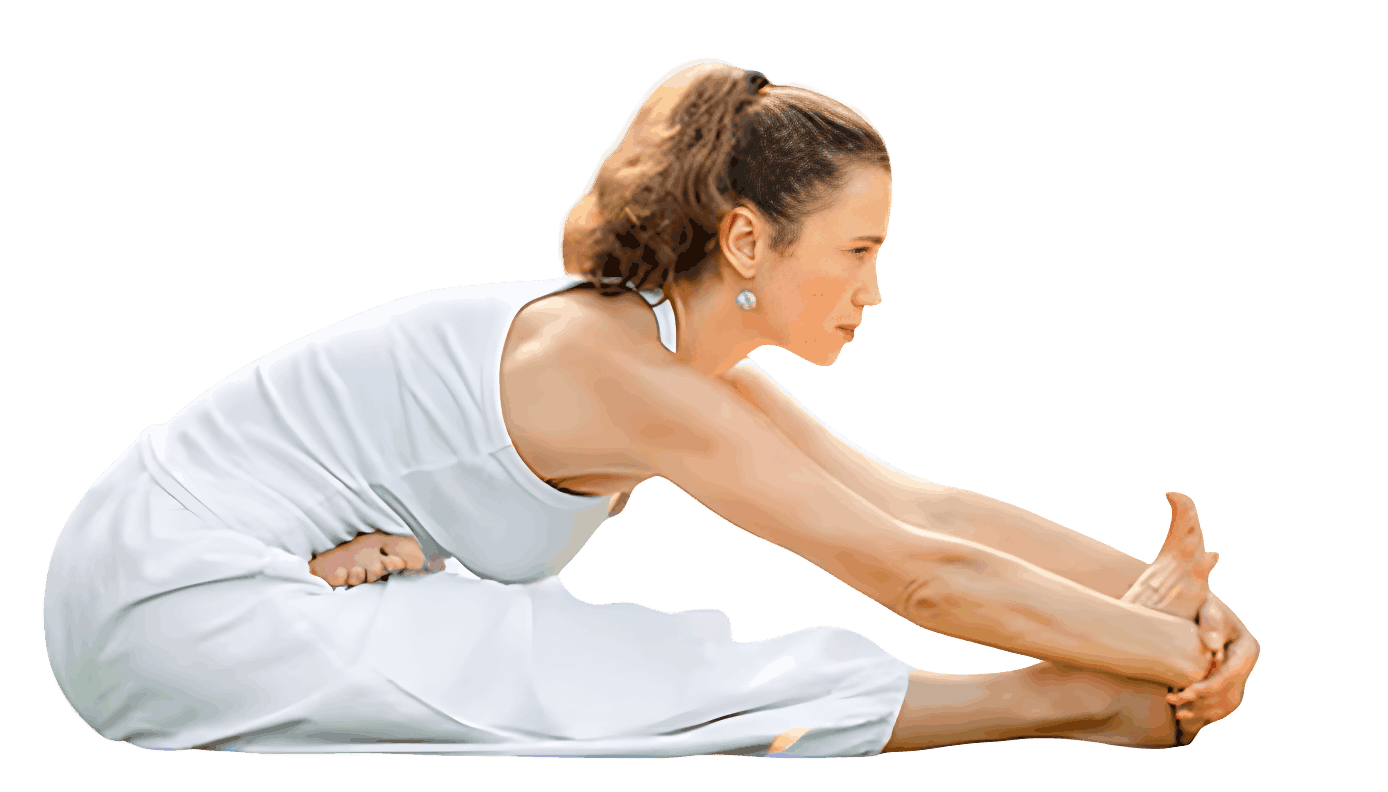
2. Definition
Ardha Padma Paschimottanasana is a seated asana in which:
- One leg is folded in half lotus (Ardha Padmasana) position
- The other leg is extended forward
- The torso bends forward over the extended leg
- Arms reach towards the foot of the extended leg
- Spine elongates with mindful engagement of the posterior chain
Functionally, this pose integrates hip flexibility, hamstring lengthening, spinal elongation, and mental focus, making it a preparatory posture for full Padma Paschimottanasana and advanced forward bends.
3. Method of Practice – Step by Step
Step 1: Sit Comfortably
- Begin seated on a yoga mat
- Extend both legs forward in Dandasana (Staff Pose)
- Ensure sit bones are grounded evenly
Step 2: Form Half Lotus
- Bend the right leg and place the foot on the left thigh, heel close to the abdomen
- Ensure knee comfort and avoid forcing the hip
Step 3: Extend the Other Leg
- Keep the left leg fully extended, foot flexed, toes pointing upward
- Engage the quadriceps to maintain straight leg alignment
Step 4: Inhale and Lengthen Spine
- Reach the crown of the head upwards
- Draw the shoulders away from the ears
- Engage core muscles lightly
Step 5: Forward Fold
- Exhale and hinge from the hip to fold over the extended leg
- Keep spine long rather than rounding the back
- Hands may reach the foot, shin, or floor depending on flexibility
Step 6: Maintain the Pose
- Breathe evenly and deeply
- Hold for 30–60 seconds initially
- Advanced practitioners can hold 2–5 minutes
Step 7: Release Carefully
- Inhale to lift the torso back to upright
- Release the half-lotus leg and straighten both legs
- Repeat on the opposite side
4. Alignment Cues
- Hips: Both sit bones grounded evenly
- Half-lotus leg: Foot resting comfortably on thigh, knee open and relaxed
- Extended leg: Quadriceps engaged, knee straight but not locked
- Spine: Elongated from sacrum to crown
- Shoulders: Relaxed and away from ears
- Head/Neck: In line with spine, gaze forward or downward
- Hands: Reach toward foot, ankle, or floor with ease
5. Benefits of Ardha Padma Paschimottanasana
A. Physical Benefits
- Opens hips and groin via half-lotus
- Stretches hamstrings, calves, and spine
- Improves shoulder and upper back flexibility
- Strengthens core muscles and spinal stabilizers
- Enhances postural awareness
B. Physiological Benefits
- Improves digestion by massaging abdominal organs
- Stimulates liver and kidneys
- Enhances circulation along posterior chain
C. Mental Benefits
- Calms the mind and nervous system
- Improves concentration and mindfulness
- Reduces stress and anxiety
D. Energetic Benefits
- Stimulates Muladhara (Root), Swadhisthana (Sacral), and Manipura (Solar Plexus) chakras
- Enhances pranic flow along sushumna nadi
- Cultivates groundedness and inner awareness
6. Contraindications
- Knee or hip injuries – avoid forcing half-lotus
- Lower back injuries – caution in forward fold
- Sciatica – only practice with modifications
- Pregnancy – avoid deep forward fold
- Herniated discs or severe spinal issues – consult doctor or yoga therapist
7. Counterposes
- Baddha Konasana (Bound Angle Pose): releases hips
- Janu Sirsasana: stretches spine and hamstrings gently
- Shavasana: for deep relaxation
- Supine twists: to balance spinal rotation
8. Preparatory Practice
- Dandasana (Staff Pose): for spinal lengthening
- Ardha Padmasana (Half Lotus): for hip flexibility
- Paschimottanasana (Seated Forward Bend): for posterior chain flexibility
- Supta Baddha Konasana: to open hips
- Gentle hamstring stretches and shoulder openers
9. Modifications
- Use folded blanket under hips for sit bone support
- Place a yoga strap around the foot if reaching toes is difficult
- Keep half-lotus leg on floor rather than elevated
- Slight bend in extended knee to reduce hamstring strain
- Support hands on floor or blocks if unable to reach foot
10. Muscles Involved
A. Stretched Muscles
- Hamstrings (biceps femoris, semitendinosus, semimembranosus)
- Gastrocnemius and soleus (calves)
- Erector spinae (spinal extensors)
- Latissimus dorsi and rhomboids
- Gluteus maximus and medius (hip)
B. Strengthened Muscles
- Quadriceps (especially extended leg)
- Core stabilizers (rectus abdominis, transverse abdominis, obliques)
- Spinal stabilizers (multifidus, erector spinae)
- Shoulder stabilizers (trapezius, serratus anterior)
C. Joints
- Hips: flexion, external rotation
- Knees: flexion of half-lotus leg, extension of extended leg
- Spine: flexion
- Shoulders: flexion and forward reach
11. Kinesiology
- Hip mechanics: external rotation of half-lotus leg, flexion of forward fold
- Spinal mechanics: lumbar and thoracic flexion with axial elongation
- Shoulder mechanics: flexion and stabilization for forward reach
- Core mechanics: isometric contraction to stabilize pelvis and spine
12. Kinematics
- Sagittal plane: forward bending, hip flexion
- Frontal plane: minimal lateral deviation if seated evenly
- Transverse plane: external rotation of half-lotus leg
- Dynamic action: inhale to lengthen spine, exhale to fold forward
13. Biomechanics
- Ground reaction forces: transmitted through sitting bones to floor
- Lever mechanics: extended leg acts as lever; spine elongation resists gravity
- Isometric contraction: core and spinal muscles stabilize trunk
- Stretch mechanics: posterior chain elongation and hip external rotation
14. Functional Anatomy & Physiology
A. Musculoskeletal System
- Opens hips and groin
- Lengthens hamstrings and calves
- Strengthens spinal stabilizers and core
B. Nervous System
- Enhances proprioception and body awareness
- Calms sympathetic activity, stimulating parasympathetic response
C. Respiratory System
- Encourages diaphragmatic breathing
- Expands thoracic cavity for efficient respiration
D. Circulatory System
- Enhances venous return from lower extremities
- Improves blood flow to spine and abdominal organs
E. Digestive System
- Abdominal compression gently stimulates digestion
F. Energetic System
- Stimulates sushumna and ida-pingala nadis
- Aligns pranic flow along posterior chain
15. How to Correct and Adjust While Teaching
Common Misalignments
- Rounded shoulders and collapsed chest
- Overarching lower back
- Knee or ankle discomfort in half-lotus
- Uneven sit bones
- Forward head posture
Verbal Cues
- “Sit evenly on both sit bones”
- “Lift the spine, elongate from sacrum to crown”
- “Reach forward gently from hips, not rounding the back”
- “Relax shoulders and neck, gaze soft”
Hands-On Adjustments
- Guide pelvis to neutral alignment
- Support knee or foot of half-lotus leg if tight
- Encourage spinal elongation through gentle tactile feedback
- Adjust shoulder alignment if forward reach causes rounding
16. Variations
- Using yoga strap around foot for extended reach
- Slight bend in knee of extended leg to reduce hamstring strain
- Half-lotus leg on floor for beginners
- Arms holding opposite foot for deeper spinal stretch
17. Philosophical and Energetic Aspect
- Cultivates humility, focus, and patience through hip and spine opening
- Encourages internal awareness and meditative focus
- Balances grounding energy (Muladhara) with pranic flow along spine
- Prepares practitioner for advanced seated forward bends and meditation
18. Conclusion
Ardha Padma Paschimottanasana is a foundational seated asana that blends hip opening, hamstring and spine stretching, core stability, and mental focus. Its benefits span physical, physiological, mental, and energetic domains, making it essential for:
- Developing flexibility in hips and posterior chain
- Strengthening core and spinal stabilizers
- Cultivating calmness, focus, and meditative awareness
- Preparing the body for advanced asanas like Padmasana and full Paschimottanasana
With gradual practice, proper alignment, mindful breathing, and teacher guidance, this asana enhances both body and mind, embodying the yogic principle of integrating strength, flexibility, and inner awareness.
QUESTIONS AND ANSWERS
1. What does “Ardha Padma” mean?
a) Full Lotus
b) Half Lotus
c) Mountain Pose
d) Seated Forward Bend
Answer: b
2. The main action in Paschimottanasana refers to:
a) Stretching the posterior chain
b) Opening the chest
c) Strengthening arms
d) Balancing on one leg
Answer: a
3. Primary focus of Ardha Padma Paschimottanasana is:
a) Hip flexibility, hamstring stretch, spinal elongation
b) Shoulder strengthening only
c) Cardio workout
d) Arm balance
Answer: a
4. Which muscles are stretched in this asana?
a) Hamstrings, gastrocnemius, erector spinae, latissimus dorsi, glutes
b) Only quadriceps
c) Only biceps
d) Only calves
Answer: a
5. Which muscles are strengthened?
a) Quadriceps, core stabilizers, erector spinae, shoulder stabilizers
b) Only hamstrings
c) Only deltoids
d) Only glutes
Answer: a
6. Correct alignment of the spine is:
a) Elongated from sacrum to crown
b) Rounded completely
c) Overarched
d) Slouched forward
Answer: a
7. Common contraindications include:
a) Knee, hip, or lower back injuries; pregnancy; sciatica
b) Healthy adults
c) Mild stretching discomfort
d) All of the above
Answer: a
8. Preparatory poses include:
a) Dandasana, Ardha Padmasana, Paschimottanasana, Supta Baddha Konasana
b) Tadasana only
c) Warrior II only
d) Cobra Pose only
Answer: a
9. Counterposes include:
a) Baddha Konasana, Janu Sirsasana, Shavasana, Supine twists
b) Downward Dog only
c) Tree Pose only
d) Tadasana only
Answer: a
10. How should the extended leg be positioned?
a) Fully extended, toes pointing upward, quadriceps engaged
b) Bent and crossed over the body
c) Flexed backward
d) Relaxed completely
Answer: a
11. Hips in half-lotus should be:
a) Open, knee relaxed, foot resting comfortably on thigh
b) Forced down
c) Tense and elevated
d) Twisted
Answer: a
12. Head and neck alignment should be:
a) Neutral, in line with spine, gaze forward or down
b) Tilted backward
c) Forward jutting
d) Rotated to side
Answer: a
13. Breath awareness cue:
a) Inhale to lengthen spine, exhale to fold forward
b) Hold breath
c) Rapid panting
d) Exhale only
Answer: a
14. Modifications for beginners include:
a) Folded blanket under hips, yoga strap around foot, slight bend in extended knee
b) Force half-lotus even if painful
c) Lock knees
d) Hands on head
Answer: a
15. Duration for beginners:
a) 30–60 seconds
b) 5–10 minutes
c) 10–15 minutes
d) 3–5 minutes
Answer: a
16. Mental benefits include:
a) Calmness, focus, mindfulness, stress reduction
b) Anxiety
c) Distraction
d) Fatigue
Answer: a
17. Energetic benefits involve stimulation of:
a) Muladhara, Swadhisthana, Manipura chakras
b) Only Anahata chakra
c) Only Sahasrara chakra
d) None
Answer: a
18. Common misalignment in forward fold:
a) Rounded shoulders and collapsed chest
b) Elongated spine
c) Neutral shoulders
d) Balanced sit bones
Answer: a
19. Hands placement can be:
a) On extended foot, shin, or floor
b) Only on head
c) Only behind back
d) Hanging loosely
Answer: a
20. Core engagement in this asana helps to:
a) Stabilize pelvis and spine, protect lower back
b) Relax spine
c) Compress chest
d) Rotate hips forcibly
Answer: a
21. Philosophical significance:
a) Cultivates patience, humility, and meditative focus
b) Promotes competitiveness
c) Encourages haste
d) None
Answer: a
22. Which joint is externally rotated?
a) Hip of half-lotus leg
b) Extended leg knee
c) Shoulder joint only
d) Ankle only
Answer: a
23. Which plane is involved in the forward bend?
a) Sagittal plane
b) Frontal plane only
c) Transverse plane only
d) None
Answer: a
24. Which muscles stabilize the extended leg?
a) Quadriceps and tibialis anterior
b) Hamstrings only
c) Glutes only
d) Deltoids
Answer: a
25. Teacher adjustment cues include:
a) Guide pelvis to neutral, support half-lotus knee/foot, ensure spinal elongation
b) Force student into deeper fold
c) Ignore alignment
d) Force arms overhead
Answer: a
26. Use of yoga strap helps in:
a) Extending reach without compromising spinal alignment
b) Forcing foot
c) Twisting torso
d) Pulling neck
Answer: a
27. Physiological benefits include:
a) Stimulates digestion, improves circulation, releases tension
b) Weakens digestion
c) Reduces circulation
d) Increases stress
Answer: a
28. Energetic pathway primarily affected:
a) Posterior chain (sushumna nadi)
b) Frontal chain only
c) Only ida nadi
d) Only pingala nadi
Answer: a
29. To avoid knee strain in half-lotus:
a) Do not force the foot, use props if needed
b) Force fully even if painful
c) Keep leg elevated without support
d) Twist knee forcibly
Answer: a
30. Seated evenly on both sit bones ensures:
a) Balanced spine, better forward fold, even hip stretch
b) Tilted pelvis
c) Imbalanced forward bend
d) Collapsed chest
Answer: a