
Posture: Stand upright with your feet close together. Bring the tips of your fingers together, and use both thumbs to gently close your nostrils.
Exercise: Keep your eyes closed and pout your lips into a beak-like shape. Inhale forcefully through your mouth, making a sibilant sound, and inflate your cheeks. Then, while still closing your eyes, tilt your chin to rest in the cavity at the base of your throat (the sternal notch) and hold your breath for as long as you can. Once ready, return your neck to its normal position, open your eyes, and exhale slowly and effortlessly through your nose. In the beginning, repeat this exercise five times. 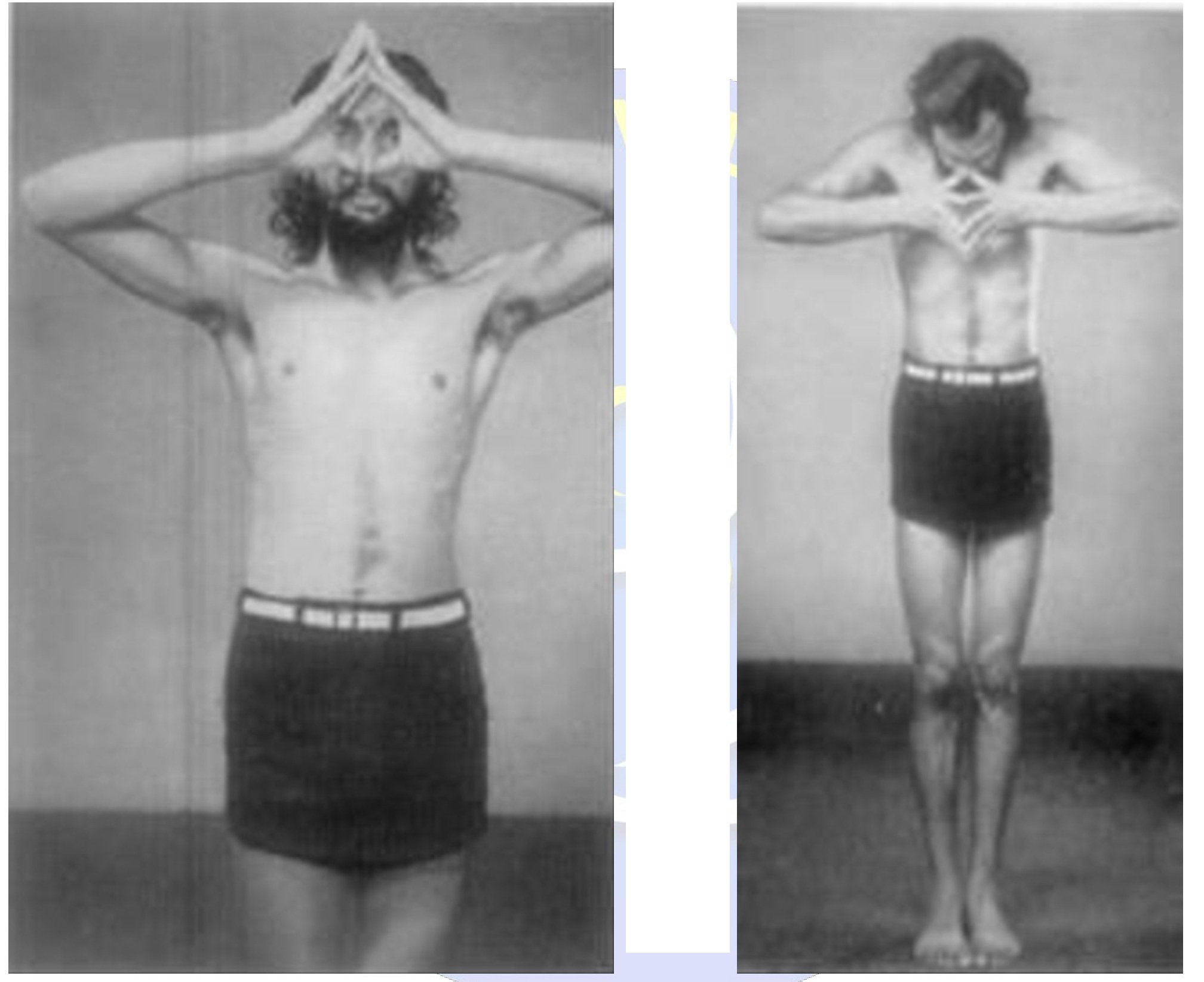
The Kaki Mudra relies on improving aeration and oxygenation in the oral cavity. During normal breathing, the mouth remains closed, preventing fresh air from circulating within it, which can allow germs to proliferate unchecked. However, directing frequent, forceful breaths of air over the teeth, gums, and other oral surfaces can help prevent and cure various oral infections.
Additionally, pouting and holding your mouth in this shape for some time, as well as puffing out your cheeks, engages facial muscles that are usually underutilized except during speaking or eating. This activity prevents the muscles from becoming flabby, giving your cheeks a fresher appearance. It strengthens the teeth and can help alleviate or prevent conditions like pyorrhea, tooth decay, and bad breath, leaving you with healthier oral hygiene.
Introduction
Yoga is a holistic system that nurtures the physical body, mental faculties, emotional stability, and spiritual awareness. Among the various preparatory practices in yoga, Sukshma Vyayama (subtle exercises) plays a crucial role in activating different parts of the body through gentle, controlled movements. These practices are particularly effective in stimulating specific regions, improving circulation, and enhancing neuromuscular coordination.
In modern lifestyles, increasing stress, long working hours, irregular routines, and excessive screen exposure affect not only the major organs but also the facial muscles. The facial region, especially the cheeks, plays an important role in expression, communication, breathing, and sensory functions. However, this area is often neglected in physical exercise routines.
Kapola-Shakti-Vardhaka is a specialized Sukshma Vyayama practice focused on strengthening and toning the cheek region (Kapola). It involves controlled breathing, air retention, cheek expansion, and facial muscle engagement. This practice not only enhances the strength and flexibility of facial muscles but also improves respiratory efficiency and facial circulation.
This simple yet effective technique is beneficial for individuals of all age groups and contributes to both physical and aesthetic well-being.