
1. Introduction
Setu Bandha Sarvangasana, commonly referred to as Bridge Pose, is a fundamental yoga posture in Hatha, Iyengar, and Vinyasa practices. It is a back-bending asana that engages the spine, hips, thighs, and core while also stimulating the cardiovascular and respiratory systems.
This posture is named for its resemblance to a bridge formed by the body, with the feet and shoulders supporting the weight, while the torso, hips, and spine create a lifted arch. It is widely recognized for its therapeutic applications, including spinal flexibility, improved posture, and relief of stress and fatigue.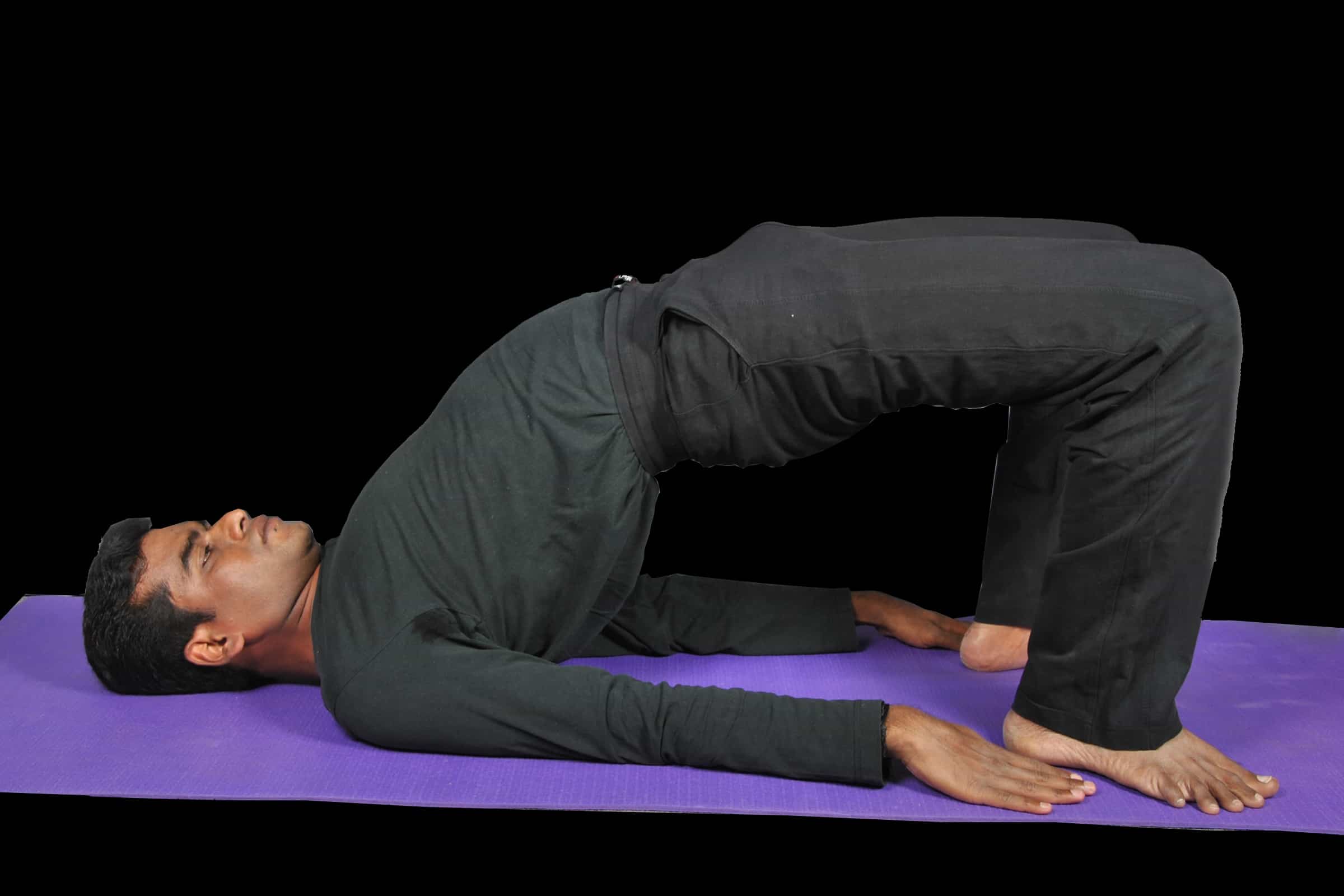
2. Word Meaning and Definition
2.1 Word Meaning
- Setu: Bridge
- Bandha: Bind or lock
- Sarvanga: Entire body
- Asana: Posture
Thus, Setu Bandha Sarvangasana translates to “Bridge Pose that binds the entire body”, reflecting both the physical formation of the body and the integrated muscular engagement required to lift and support it.
2.2 Definition
Setu Bandha Sarvangasana is a supine backbend in which the practitioner lifts the pelvis and torso off the floor, forming a bridge-like arch while keeping the shoulders and feet grounded, engaging the lower back, glutes, core, and legs, and opening the chest.
3. Method of Practice — Step by Step
Step 1: Preparation
- Lie supine on a yoga mat with legs bent at the knees, feet hip-width apart, heels close to the sitting bones.
- Arms should rest alongside the body, palms facing down.
- Take a few deep breaths to settle into the mat and connect with the body.
Step 2: Initial Lift
- Press the feet and arms firmly into the mat.
- On an inhalation, gently lift the pelvis and lower back toward the ceiling.
- Engage the glutes and hamstrings while keeping knees aligned with ankles.
Step 3: Full Bridge Lift
- Continue lifting torso and chest, bringing the sternum toward the chin without compressing the neck.
- Optionally, clasp hands under the back to interlace fingers, rolling shoulders under to support the chest lift.
Step 4: Alignment and Breath
- Keep thighs parallel and knees in line with hips.
- Feet should remain firmly grounded, pressing evenly through heels.
- Breathe slowly and evenly, maintaining engagement without tension.
Step 5: Duration
- Hold for 30 seconds to 1 minute for beginners, gradually increasing as strength and flexibility improve.
Step 6: Release
- Exhale to slowly lower the spine and pelvis vertebra by vertebra.
- Rest in Shavasana or Supta Baddha Konasana to integrate the effects.
4. Alignment Cues
- Feet: Hip-width apart, parallel, pressing evenly through heels.
- Knees: Aligned over ankles, avoid splaying outward or inward.
- Hips: Lifted evenly, engaging glutes and hamstrings.
- Chest: Lift toward chin, shoulders rolled under if arms clasped.
- Arms and Shoulders: Palms pressing into the mat, shoulders relaxed away from ears.
- Neck: Neutral, relaxed, no excessive compression at the cervical spine.
- Spine: Gentle arch with even lift from sacrum through thoracic spine.
- Breath: Deep and steady.
5. Benefits
5.1 Physical Benefits
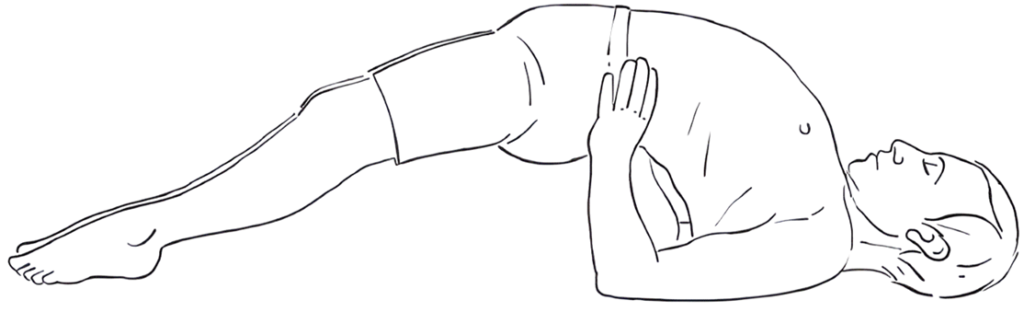
- Strengthens spinal extensors, glutes, hamstrings, and calves.
- Opens the chest, shoulders, and thoracic spine.
- Improves spinal flexibility and posture.
- Stimulates hip and knee mobility.
- Massages abdominal organs, improving digestion and circulation.
5.2 Physiological Benefits
- Enhances respiratory function by expanding the chest.
- Stimulates thyroid, parathyroid, and abdominal organs.
- Improves blood circulation and oxygenation.
- Activates parasympathetic nervous system, promoting relaxation and stress reduction.
5.3 Psychological Benefits
- Relieves stress, mild depression, and fatigue.
- Improves mental alertness and focus.
- Encourages mind-body connection and mindfulness.
6. Contraindications
- Severe cervical spine injury or neck pain.
- Acute lumbar or thoracic spine injury.
- Knee or ankle injuries that prevent weight-bearing.
- Pregnancy (practice only with modifications or under supervision).
- Recent abdominal surgery.
- High blood pressure or heart conditions (consult a doctor before practice).
7. Counterposes
- Apanasana (Knees-to-Chest Pose) — releases the spine.
- Supta Baddha Konasana (Reclining Bound Angle Pose) — relaxes hips and pelvis.
- Shavasana (Corpse Pose) — integrates effects and calms the nervous system.
- Child’s Pose (Balasana) — optional spinal release.
8. Preparatory Practices
- Setu Bandha Sarvangasana Preparation:
- Supta Padangusthasana — stretches hamstrings.
- Baddha Konasana — opens hips.
- Bhujangasana (Cobra Pose) — activates spinal extensors.
- Dandasana (Staff Pose) — strengthens core and spine.
9. Modifications
- Place a yoga block under sacrum for supported bridge, suitable for beginners or therapeutic use.
- Keep arms extended alongside body if clasping hands is difficult.
- Use a strap around thighs to prevent knees from splaying.
- Avoid excessive chest lift if neck feels strained.
10. Muscles Involved
- Primary Movers: Gluteus maximus, hamstrings (biceps femoris, semitendinosus, semimembranosus), erector spinae.
- Secondary Movers: Quadriceps, adductors, lower trapezius, rhomboids, deltoids (when hands clasped).
- Stabilizers: Core muscles (rectus abdominis, transverse abdominis), obliques, pelvic floor.
- Flexibility Engagement: Hip flexors, pectorals, thoracic spine extensors.
11. Kinesiology
- Hip Joint: Extension, abduction, and slight external rotation.
- Knee Joint: Flexion initially; extension as pelvis lifts.
- Spine: Thoracic and lumbar extension.
- Shoulder Joint: Extension and external rotation when arms clasped.
- Ankle Joint: Dorsiflexion maintained via heel pressing.
12. Kinematics
- Dynamic Weight Transfer: From sacrum and shoulders to feet.
- Spinal Segment Movement: Vertebral extension from lumbar to thoracic regions.
- Joint Angles: Hip and knee extension, shoulder abduction when hands clasped.
- Symmetry: Both sides of body should lift evenly, avoiding hip or shoulder tilts.
13. Biomechanism
- Load Distribution: Body weight supported on feet and shoulders; pelvis and thorax lifted.
- Pelvic-Lumbar Engagement: Glutes, hamstrings, and spinal extensors lift and stabilize.
- Spinal Stretch: Thoracic and cervical spine gently elongated.
- Chest Expansion: Opens lungs, stimulates diaphragm.
- Core Stabilization: Engages abdominals and obliques for balance.
14. Functional Anatomy & Physiology
- Musculoskeletal: Strengthens glutes, hamstrings, and spine extensors; stretches chest, shoulders, and hip flexors.
- Respiratory: Chest expansion improves lung capacity and oxygenation.
- Digestive: Mild abdominal compression stimulates intestinal activity.
- Endocrine: Thyroid stimulation via throat extension.
- Nervous System: Parasympathetic activation reduces stress, improves focus, and promotes relaxation.
- Circulatory: Venous return from lower limbs is enhanced; overall circulation improves.
- Mind-Body Integration: Encourages mindfulness, body awareness, and postural alignment.
15. How to Correct and Adjust While Teaching
15.1 Pelvis and Hips
- Cue students to engage glutes and hamstrings to lift evenly.
- Use yoga block under sacrum for beginners or those with weak lower back.
15.2 Knees and Legs
- Keep knees aligned with hips; prevent splaying outward.
- Optionally, use a strap around thighs for stability.
15.3 Spine and Chest
- Encourage chest lift without compressing neck.
- Shoulders should be rolled under, creating thoracic extension.
15.4 Neck and Head
- Head remains neutral on mat, avoiding turning to the side.
- No excessive weight on cervical spine.
15.5 Arms and Hands
- Beginners: arms extended along mat for support.
- Advanced: hands clasped under back for deeper chest lift.
15.6 Breathing
- Cue slow, deep diaphragmatic breathing.
- Encourage exhalation to relax tension in glutes and lower back.
16. Conclusion
Setu Bandha Sarvangasana (Bridge Pose) is a therapeutic, accessible, and powerful backbend suitable for strengthening the lower body, opening the chest, and promoting spinal flexibility.
With proper alignment, mindful breathing, and modifications, it benefits practitioners of all levels. Its holistic effects on musculoskeletal, respiratory, digestive, and nervous systems make it a cornerstone in both therapeutic yoga and advanced asana practice.
The pose fosters mind-body integration, stress relief, and postural awareness, embodying the essence of Hatha Yoga — uniting strength, flexibility, and mindfulness in a single bridge between body and mind.
QUESTION AND ANSWER
1. The Sanskrit word “Setu” means:
A. Spine
B. Bridge
C. Chest
D. Pose
Answer: B
2. The word “Bandha” in Setu Bandha Sarvangasana refers to:
A. Breath
B. Lock or bind
C. Relaxation
D. Strength
Answer: B
3. “Sarvanga” in the name Setu Bandha Sarvangasana signifies:
A. Chest only
B. Lower back
C. Entire body
D. Legs
Answer: C
4. Setu Bandha Sarvangasana is classified as a:
A. Forward Bend
B. Backbend
C. Twist
D. Balance Pose
Answer: B
5. Which part of the body primarily supports the weight in this pose?
A. Head and neck
B. Feet and shoulders
C. Hands only
D. Hips only
Answer: B
6. Which muscles are primarily engaged while lifting the pelvis?
A. Gluteus maximus and hamstrings
B. Quadriceps and tibialis anterior
C. Trapezius and deltoids
D. Biceps and triceps
Answer: A
7. Which muscles are stretched in Setu Bandha Sarvangasana?
A. Pectorals and hip flexors
B. Hamstrings only
C. Calves only
D. Neck muscles only
Answer: A
8. The pose improves flexibility of:
A. Thoracic and lumbar spine
B. Cervical spine only
C. Ankle joints only
D. Elbows only
Answer: A
9. Which system is stimulated by this pose to reduce stress?
A. Sympathetic nervous system
B. Parasympathetic nervous system
C. Central nervous system only
D. Skeletal system only
Answer: B
10. Contraindications include:
A. Severe neck or spine injury
B. Recent abdominal surgery
C. Knee or ankle injuries
D. All of the above
Answer: D
11. Which preparatory pose is recommended for Setu Bandha Sarvangasana?
A. Supta Padangusthasana
B. Bhujangasana
C. Baddha Konasana
D. All of the above
Answer: D
12. What is the correct alignment of knees?
A. Splayed outward
B. Collapsed inward
C. Aligned over hips
D. Any comfortable position
Answer: C
13. What is a recommended duration for beginners?
A. 5–10 seconds
B. 30–60 seconds
C. 5 minutes
D. 10 minutes
Answer: B
14. How should the neck be positioned in this pose?
A. Turned to one side
B. Neutral and relaxed
C. Hyperextended
D. Pressed into mat
Answer: B
15. Hands can be clasped under the body to:
A. Increase knee stability
B. Support chest lift
C. Stretch hamstrings
D. Strengthen neck muscles
Answer: B
16. Breathing during Setu Bandha Sarvangasana should be:
A. Rapid and shallow
B. Slow, deep, and diaphragmatic
C. Held throughout
D. Forced and loud
Answer: B
17. Which organs are stimulated by this pose?
A. Heart and lungs only
B. Abdominal organs such as intestines and thyroid
C. Eyes and ears
D. Skin only
Answer: B
18. Counterposes to Setu Bandha Sarvangasana include:
A. Apanasana (Knees-to-Chest Pose)
B. Shavasana (Corpse Pose)
C. Supta Baddha Konasana (Reclining Bound Angle Pose)
D. All of the above
Answer: D
19. A yoga block under the sacrum can be used for:
A. Support in restorative practice
B. Increasing the challenge
C. Stretching neck
D. None of the above
Answer: A
20. For beginners with tight shoulders, the arms should:
A. Be extended along the mat
B. Be clasped behind back immediately
C. Be lifted off the mat
D. Be crossed over chest
Answer: A
21. What is the main purpose of pressing feet into the mat?
A. Strengthen arms
B. Stabilize and lift pelvis
C. Stretch neck
D. Rotate shoulders
Answer: B
22. Which core muscles help stabilize the pelvis in this pose?
A. Rectus abdominis, transverse abdominis, obliques
B. Biceps and triceps
C. Deltoids and trapezius
D. Sternocleidomastoid
Answer: A
23. Common modifications for knee discomfort include:
A. Placing a folded blanket under knees
B. Using a strap around thighs
C. Both A and B
D. None of the above
Answer: C
24. Physiological benefits of Setu Bandha Sarvangasana include:
A. Improved digestion and thyroid stimulation
B. Increased cardiac output
C. Enhanced hearing
D. Eye strengthening
Answer: A
25. Key teaching cues include:
A. Keep feet and shoulders grounded
B. Engage glutes and hamstrings
C. Maintain neutral neck
D. All of the above
Answer: D