
1. Introduction
Yoga, an ancient holistic system, seeks the integration of mind, body, and spirit. Among the various advanced asanas, Dwi Pada Viparita Dandasana (DPVD) represents a pinnacle of spinal flexibility, shoulder strength, and chest expansion. Known as the “Two-Legged Inverted Staff Pose,” this posture is considered an advanced backbend and inversion, often included in advanced hatha yoga or asana sequencing for experienced practitioners.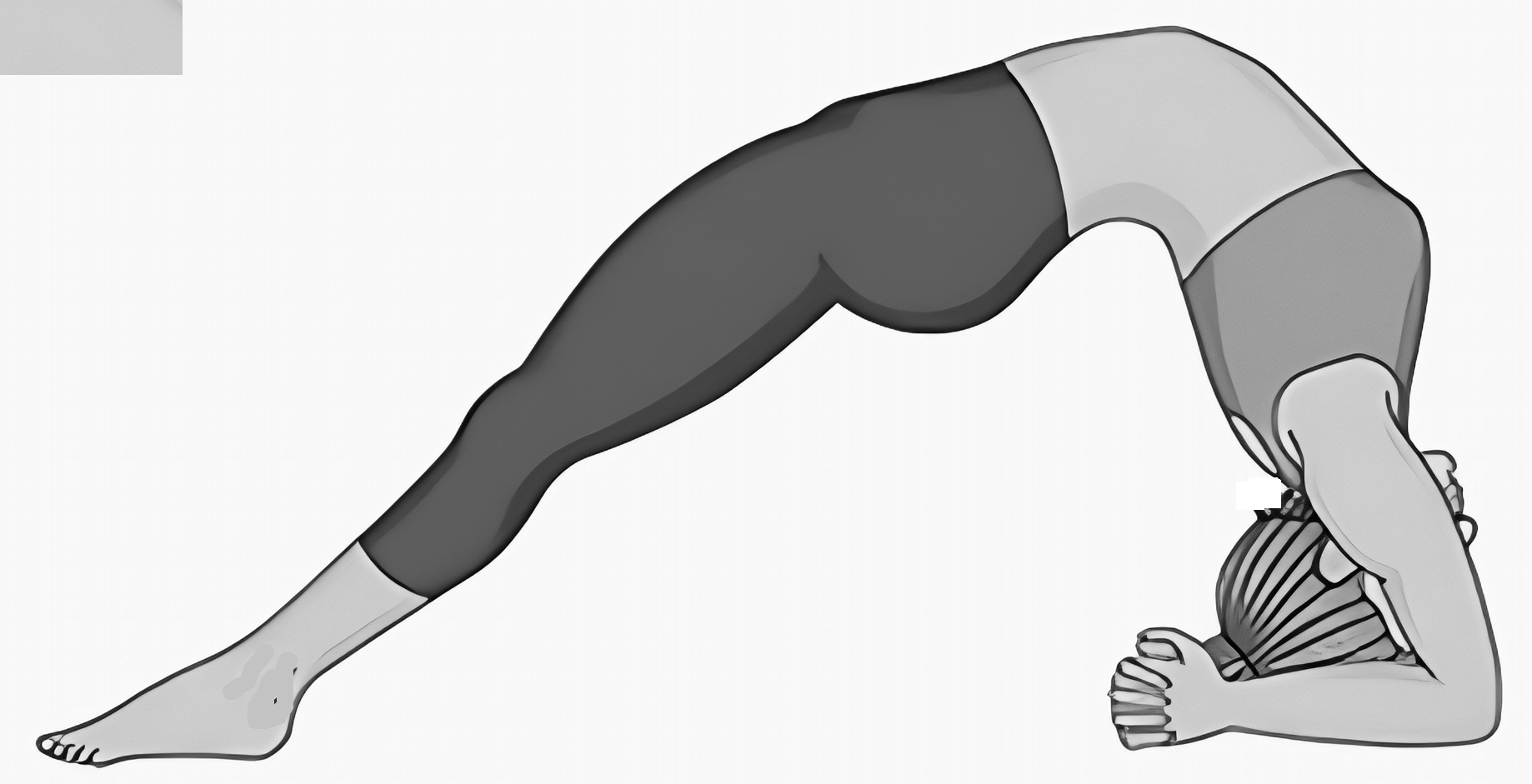
DPVD combines elements of a deep backbend with an inverted posture, stimulating the nervous system, opening the chest, strengthening the upper body, and enhancing spinal flexibility. Its inclusion in yoga practice not only challenges physical capacities but also encourages mental focus, courage, and mindful awareness.
2. Word Meaning and Definition
Word Meaning:
- Dwi – Two
- Pada – Feet / Legs
- Viparita – Inverted / Reversed
- Dandasana – Staff Pose / Straight Backbone
Definition:
Dwi Pada Viparita Dandasana is an advanced backbend posture where the practitioner lifts the body into an inverted arch, with both feet grounded on the floor, hands supporting the body behind the head, and the spine forming a pronounced backward curve. This pose integrates deep spinal extension, shoulder opening, and inversion, stimulating multiple physiological and musculoskeletal systems.
3. Method of Practice – Step by Step
Step 1: Preparatory Position
- Begin lying supine on a yoga mat with legs extended and arms resting alongside the body.
- Focus on deep breathing to relax the spine and prepare for a deep backbend.
Step 2: Entering Bridge or Wheel Pose
- Inhale deeply and bend the knees, placing the feet hip-width apart close to the hips.
- Place the palms beside the ears, fingers pointing toward the shoulders.
- Press firmly into the hands and feet to lift the hips into Urdhva Dhanurasana (Wheel Pose) as a preparatory step.
Step 3: Extending into Dwi Pada Viparita Dandasana
- From Wheel Pose, gradually move the crown of the head and upper spine toward the floor, lowering with control.
- Extend the arms fully behind the head, ensuring hands press firmly on the mat or hold the ankles for stability.
- Keep feet grounded and legs engaged.
Step 4: Final Alignment
- Lift the chest and rib cage, opening the thoracic spine.
- Press shoulders into external rotation while keeping arms firm.
- Maintain active engagement of legs, glutes, and core to protect the lumbar spine.
- Hold the pose for 15–60 seconds depending on experience.
Step 5: Exiting the Pose
- Slowly bend the knees, bring the hands beside the ears, and lower the body carefully to the mat.
- Rest in Savasana or Supta Baddha Konasana to neutralize spinal extension and relax the nervous system.
4. Alignment Cues
- Neck: Avoid compressing the cervical spine; maintain slight extension without forcing.
- Shoulders: Externally rotate and press firmly into the mat.
- Spine: Distribute the backbend evenly across cervical, thoracic, and lumbar regions.
- Hips: Keep engaged, lifting upward without overextension.
- Legs and Feet: Press firmly into the mat; maintain hip-width alignment.
- Breathing: Slow, deep, and even. Avoid holding the breath.
5. Benefits of Dwi Pada Viparita Dandasana
- Spinal Flexibility:
- Deep thoracic, lumbar, and cervical extension improves overall spinal mobility.
- Chest and Shoulder Opening:
- Expands the rib cage and pectoral muscles, enhancing lung capacity.
- Strengthening Muscles:
- Strengthens arms, wrists, shoulders, glutes, and posterior chain.
- Nervous System Stimulation:
- Inversion promotes blood flow to the brain, increasing alertness and clarity.
- Endocrine Activation:
- Gentle compression and extension of the neck can stimulate thyroid and parathyroid glands.
- Mental Benefits:
- Develops courage, focus, and resilience. Helps release emotional tension stored in the back.
- Digestive Stimulation:
- Abdominal engagement and backbend massage internal organs, improving metabolism and digestion.
6. Contraindications
- Cervical spine injuries or instability
- Severe back pain, herniated discs, or spinal surgery
- High blood pressure or cardiovascular conditions
- Glaucoma or eye-related conditions
- Pregnancy (especially advanced stages)
- Wrist, shoulder, or elbow injuries
7. Counterposes
- Matsyasana (Fish Pose): Gently neutralizes spinal extension.
- Balasana (Child’s Pose): Restorative for the back and shoulders.
- Supta Baddha Konasana: Opens the hips and neutralizes spinal tension.
8. Preparatory Practice
- Urdhva Dhanurasana (Wheel Pose): Prepares for full backbend and shoulder extension.
- Setu Bandhasana (Bridge Pose): Builds hip and lower back strength.
- Bhujangasana (Cobra Pose) & Salabhasana (Locust Pose): Strengthen posterior chain.
- Upward Facing Dog (Urdhva Mukha Svanasana): Opens chest and shoulders.
9. Modifications
- Props under shoulders: To support cervical spine and reduce neck compression.
- Use a yoga block: Place under hands if wrists or shoulders are weak.
- Partial backbend: Keep hips slightly lower or elbows bent initially.
- Assistance from a partner: To help lift into full extension safely.
10. Muscles Involved
Primary Muscles:
- Erector Spinae (spinal extensors)
- Gluteus Maximus (hip extension)
- Quadriceps (knee stabilization)
- Deltoids (shoulder support)
- Triceps (arm extension)
Secondary Muscles:
- Pectoralis Major and Minor (chest opening)
- Latissimus Dorsi (spinal support)
- Hamstrings (hip and knee control)
- Neck extensors (cervical spine support)
- Core muscles (rectus abdominis, obliques)
11. Kinesiology and Kinematics
- Joint Movements:
- Spine: Cervical, thoracic, and lumbar extension
- Shoulder: External rotation and abduction
- Elbow: Extension
- Hip: Extension
- Knee: Slight flexion and stabilization
- Movement Planes:
- Sagittal plane: Primary for spinal extension
- Frontal plane: Shoulder abduction
- Transverse plane: Minimal, slight rotation in spine if needed
- Type of Motion:
- Eccentric control during entry
- Isometric engagement during hold
- Concentric activation during exit
12. Biomechanics and Functional Anatomy
- Spinal Loading:
Even distribution of forces across the vertebrae; shoulders bear part of the load, protecting the lumbar spine. - Muscle Coordination:
Core, glutes, spinal extensors, and upper body muscles must act synchronously to maintain stability. - Joint Safety:
Ensure shoulder stability, avoid hyperextension of elbows or knees, maintain cervical alignment. - Physiological Effects:
- Inversion improves venous return
- Spinal extension enhances disc nutrition and flexibility
- Chest expansion aids respiration and lung capacity
13. Functional Anatomy & Physiology
- Spine: Enhances flexibility, mobility, and decompression.
- Muscular System: Strengthens posterior chain, arms, shoulders, and glutes.
- Nervous System: Improves cerebral blood flow, activates parasympathetic response.
- Endocrine System: Gentle stimulation of thyroid and parathyroid.
- Respiratory System: Expands lungs, improves oxygenation and diaphragmatic breathing.
- Circulatory System: Inversion aids venous return, improves circulation.
14. How to Correct and Adjust While Teaching
- Neck Safety:
Ensure cervical spine is not compressed. Offer props under shoulders if needed. - Shoulder Engagement:
Check for external rotation and grounded shoulder blades to prevent injury. - Hip and Core Activation:
Cue glutes and abdominal engagement to protect lumbar spine. - Leg Alignment:
Feet should be grounded hip-width; knees should remain stable. - Breathing:
Encourage slow, even breaths; avoid breath-holding. - Gradual Entry and Exit:
Guide students through Wheel Pose first; ensure controlled movements. - Use Props and Modifications:
Blocks, straps, or blankets can reduce strain and support the pose.
15. Tips for Teaching Dwi Pada Viparita Dandasana
- Emphasize warm-up and preparatory asanas.
- Demonstrate stepwise entry and exit for safety.
- Offer modifications for different levels.
- Integrate counterposes to balance deep backbend.
- Monitor shoulders, neck, and spinal alignment continuously.
- Encourage mindfulness and awareness, as this pose requires focus and concentration.
16. Conclusion
Dwi Pada Viparita Dandasana represents an advanced yoga posture that integrates deep backbends with inversion. When practiced with correct alignment, preparatory work, and mindful awareness, it offers profound physical, physiological, and psychological benefits. This pose strengthens the posterior chain, opens the chest and shoulders, improves spinal flexibility, and stimulates the nervous and endocrine systems.
With careful supervision, appropriate modifications, and proper counterposes, Dwi Pada Viparita Dandasana can be a transformative element in a yoga practice, promoting courage, resilience, and holistic well-being.
QUESTION AND ANSWER
- The literal meaning of Dwi Pada Viparita Dandasana is:
a) Two-Legged Inverted Staff Pose ✅
b) Wheel Pose
c) Fish Pose
d) Plow Pose - Which preparatory asana is recommended before Dwi Pada Viparita Dandasana?
a) Tadasana
b) Urdhva Dhanurasana (Wheel Pose) ✅
c) Adho Mukha Svanasana
d) Trikonasana - Primary muscles engaged include:
a) Erector Spinae, Gluteus Maximus, Deltoids ✅
b) Pectorals only
c) Hamstrings only
d) Quadriceps only - Contraindicated conditions include:
a) Neck injury ✅
b) Mild fatigue
c) Low back stiffness
d) Slight anxiety - Counterpose for Dwi Pada Viparita Dandasana is:
a) Balasana ✅
b) Halasana
c) Trikonasana
d) Virabhadrasana - Primary plane of motion:
a) Sagittal ✅
b) Frontal
c) Transverse
d) Oblique
1. Meaning and Definition
- The literal meaning of Dwi Pada Viparita Dandasana is:
a) Wheel Pose
b) Two-Legged Inverted Staff Pose ✅
c) Fish Pose
d) Plow Pose - Dwi Pada Viparita Dandasana is primarily:
a) A forward bend
b) An advanced backbend and inversion ✅
c) A standing balance
d) A seated twist - Which asana is a preparatory posture for Dwi Pada Viparita Dandasana?
a) Trikonasana
b) Urdhva Dhanurasana (Wheel Pose) ✅
c) Tadasana
d) Adho Mukha Svanasana
2. Method of Practice
- The first step to enter Dwi Pada Viparita Dandasana is:
a) Lie prone on the mat
b) Lie supine and bend the knees, placing feet close to the hips ✅
c) Stand straight with arms overhead
d) Sit cross-legged - During the pose, the hands should be:
a) Pressing firmly beside the head, fingers pointing toward the shoulders ✅
b) Relaxed on the knees
c) Folded in prayer
d) Pressed under the lower back - To safely exit Dwi Pada Viparita Dandasana, one should:
a) Jump immediately
b) Slowly bend the knees, place hands beside the ears, and lower the body ✅
c) Roll sideways abruptly
d) Sit up quickly
3. Alignment and Technique
- In Dwi Pada Viparita Dandasana, the shoulders should be:
a) Lifted off the mat
b) Externally rotated and pressed into the mat ✅
c) Relaxed and forward
d) Rotated inward - Proper neck alignment requires:
a) Compressing the cervical spine
b) Slight extension without forcing ✅
c) Turning head sideways
d) Fully tucking chin to chest - Breathing during the pose should be:
a) Rapid and shallow
b) Slow, deep, and even ✅
c) Completely held
d) Exhalation only
4. Muscles and Anatomy
- Primary muscles involved include:
a) Erector Spinae, Gluteus Maximus, Deltoids ✅
b) Pectoralis Major only
c) Quadriceps only
d) Hamstrings only - Secondary muscles engaged during the pose:
a) Latissimus Dorsi, Pectorals, Core muscles ✅
b) Soleus only
c) Triceps only
d) Neck flexors only - Primary joint movements during Dwi Pada Viparita Dandasana include:
a) Spine extension, shoulder external rotation, hip extension ✅
b) Spine flexion only
c) Shoulder abduction only
d) Hip flexion only
5. Physiology and Functional Benefits
- Which endocrine glands may be stimulated in this pose?
a) Thyroid and parathyroid ✅
b) Adrenal only
c) Pineal only
d) Pituitary only - Physiological benefits include:
a) Enhances spinal flexibility, opens chest, strengthens posterior chain ✅
b) Decreases circulation
c) Weakens back muscles
d) Causes hypertension - Nervous system effect of this pose is:
a) Activates parasympathetic response ✅
b) Increases sympathetic dominance
c) Has no effect
d) Reduces cerebral blood flow
6. Contraindications
- Which is a contraindication for Dwi Pada Viparita Dandasana?
a) Neck injury ✅
b) Mild fatigue
c) Low back stiffness
d) General anxiety - This pose should be avoided in:
a) Morning practice
b) Pregnancy ✅
c) Before meals
d) Restorative sequences - Which eye-related condition is a contraindication?
a) Myopia
b) Glaucoma ✅
c) Cataracts
d) Color blindness
7. Counterposes and Preparatory Asanas
- Recommended counterpose after Dwi Pada Viparita Dandasana:
a) Balasana (Child’s Pose) ✅
b) Halasana
c) Trikonasana
d) Virabhadrasana - Preparatory asanas for this pose include:
a) Urdhva Dhanurasana, Setu Bandhasana, Bhujangasana ✅
b) Tadasana only
c) Virabhadrasana only
d) Dhanurasana only
8. Teaching and Adjustment
- When adjusting a student, the teacher should first check:
a) Neck and shoulder alignment ✅
b) Foot size
c) Eye position
d) Hair length - For students who cannot lift fully into the backbend, the modification is:
a) Forcefully push into full extension
b) Use props like blocks or blankets for support ✅
c) Skip the pose entirely
d) Keep legs lifted only - Props are used in this pose to:
a) Increase spinal compression
b) Support shoulders and reduce neck strain ✅
c) Make it harder
d) Avoid arm engagement
9. Kinesiology and Biomechanics
- The primary plane of movement in this pose is:
a) Frontal
b) Sagittal ✅
c) Transverse
d) Oblique - Muscular action during entry into Dwi Pada Viparita Dandasana:
a) Concentric
b) Eccentric ✅
c) Isometric only
d) None - A biomechanical safety measure includes:
a) Hyperextend elbows
b) Keep shoulders grounded ✅
c) Compress cervical spine
d) Lock knees fully
Answer Key
- b
- b
- b
- b
- a
- b
- b
- b
- b
- a
- a
- a
- a
- a
- a
- a
- b
- b
- a
- a
- a
- b
- b
- b
- b
- b