
1. Introduction
Dhanurāsana—commonly known as Bow Pose—is one of the classical prone back bending postures described in Haṭha Yoga texts. It forms an essential part of modern yoga practice, appearing in multiple systems such as Hatha Yoga, Ashtanga Vinyasa, Classical Yogasana, Bihar School Yoga approaches, Sivananda sequences, and contemporary yoga therapy methodologies. Dhanurāsana integrates spinal extension, hip extension, shoulder horizontal abduction, chest expansion, and deep diaphragmatic-movement patterns, making it a multidimensional practice rather than a mere “backbend.”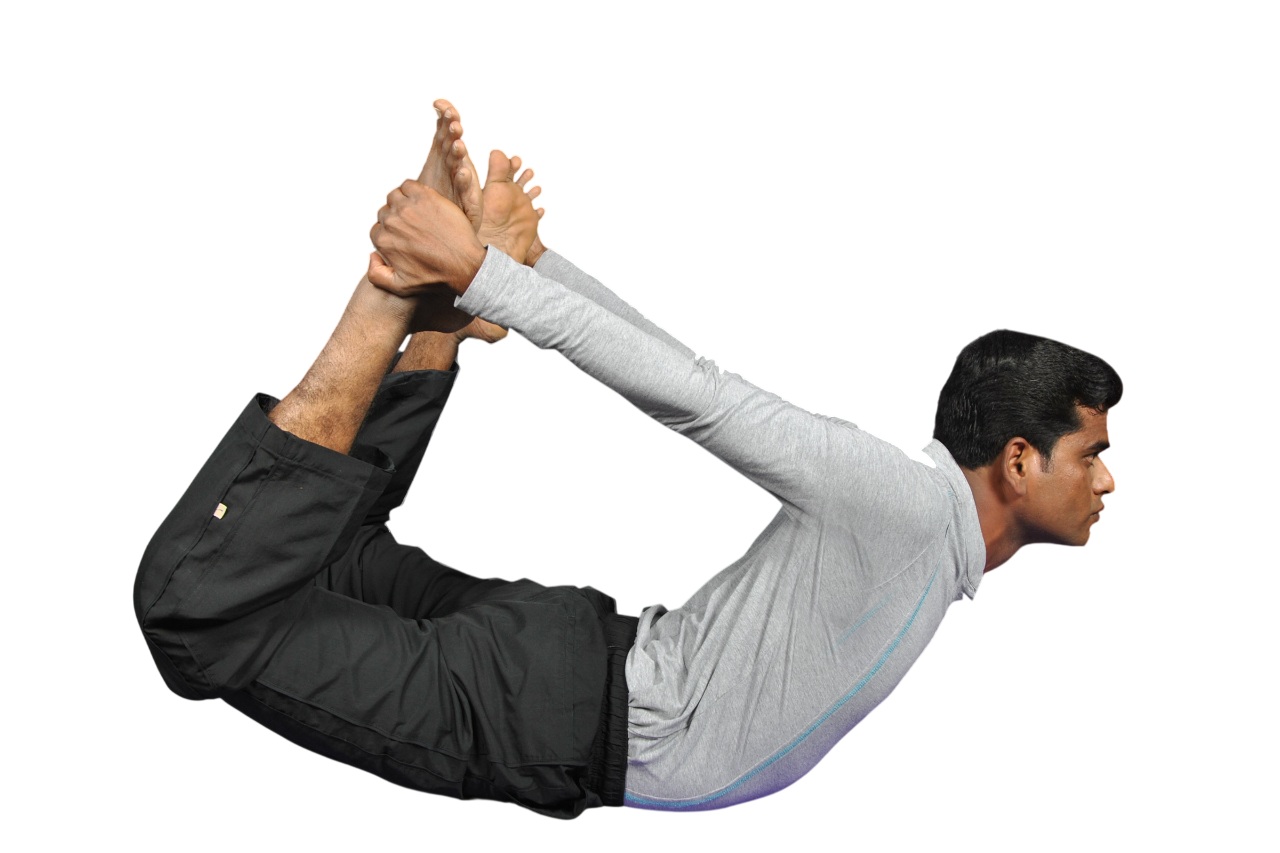
In yoga pedagogy, Dhanurāsana is considered a bridge between foundational prone backbends (such as Bhujangāsana and Śalabhāsana) and more advanced intermediate/advanced ones (like Uṣṭrāsana, Kapotāsana, and Bherundāsana). It strengthens the posterior kinetic chain, enhances spinal mobility, stimulates abdominal organs, and improves lung capacity. It also requires balanced activation—proprioception, coordination, and mindful breathing.
Dhanurāsana is a profound asana integrating strength, flexibility, anatomical precision, and energetic vitality. Far beyond a simple backbend, it requires an understanding of biomechanics, functional anatomy, and safe sequencing. For yoga teachers, it is essential to guide students with proper alignment, breath awareness, and modifications to avoid strain and injury. Bow Pose elevates physical vigour, stimulates internal organs, opens the heart center, and promotes resilience—creating harmony between body, breath, and mind.
This essay explores Dhanurāsana from all professional angles useful for yoga teaching, research, anatomical understanding, yoga therapy, and biomechanics.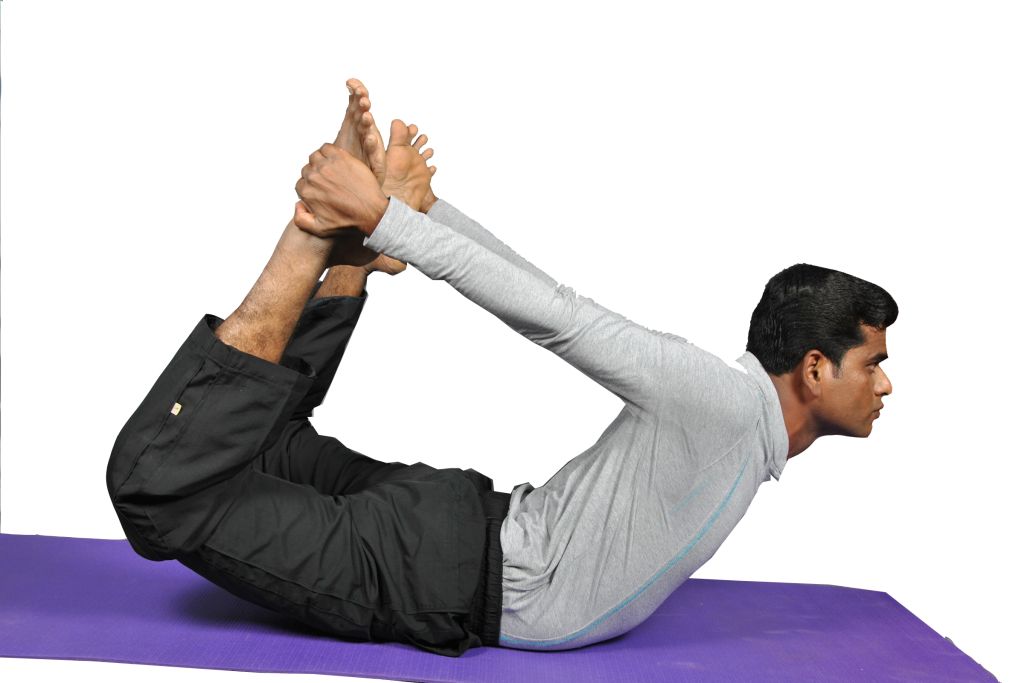
2. Word Meaning & Definition
2.1 Word Meaning
- Dhanurāsana
- Dhanus = Bow
- Āsana = Seat or posture
- Thus, Dhanurāsana = “The Posture of the Bow.”
The name reflects the shape of the body in the pose—the torso and thighs form the curved body of the bow, while the arms resemble the bowstring.
2.2 Classical Definition
From a yogic standpoint:
“Dhanurāsana is a prone backbend where the practitioner grasps the ankles, lifts the chest and thighs off the ground, and balances on the abdomen, forming the shape of a bow.”
Haṭha Yoga Pradīpikā (Chapter 1) references the asana as a posture that stimulates digestive fire and improves bodily vigor. Though details are brief historically, modern yoga schools have extensively anatomized the pose.
3. Method of Practice (Step-by-Step)
3.1 Step-by-Step Instructions
Step 1: Starting Position
- Lie prone (belly down) on the mat.
- Keep legs hip-width apart, arms alongside the body.
- Relax breath, grounding the pelvis.
Step 2: Prepare
- Bend both knees.
- Bring heels toward the buttocks.
- Reach arms backward.
Step 3: Grasp Ankles
- Hold ankles, not toes.
- Ensure grip from outside the legs for shoulder safety.
- Keep wrists straight and shoulders broad.
Step 4: Initiate the Lift
- Inhale deeply.
- Kick your feet into your palms.
- Let the backward kick lift the chest, ribs, and knees off the floor.
Step 5: Rise Into the Bow
- Lift thighs high.
- Press the pubic bone gently down for stability.
- Open chest forward and upward.
- Keep the gaze forward or slightly up.
Step 6: Balance
- Balance on the navel/abdominal region.
- Maintain steady breath—preferably diaphragmatic but not overly forceful.
Step 7: Sustain the Pose
- Hold for 20–40 seconds for beginners.
- Intermediate/advanced practitioners: up to 60–90 seconds.
Step 8: Release
- Exhale, gently lower thighs and chest.
- Release ankles.
- Return to prone position.
- Relax completely.
4. Alignment Cues (Professional Teaching Cues)
4.1 Lower Body Alignment
- Keep knees hip-width; do not allow them to flare.
- Press pubic bone lightly to prevent lumbar compression.
- Engage glutes moderately, not forcefully.
- Activate hamstrings to lift thighs.
4.2 Torso Alignment
- Lengthen the spine before lifting.
- Lift sternum forward, not upward only.
- Draw scapulae toward the spine and slightly downward.
4.3 Shoulder & Arm Alignment
- Shoulders roll back and down.
- Keep elbows soft, not locked.
- Pull shoulder heads away from ears.
4.4 Head & Neck Alignment
- Neck neutral; avoid crunching the back of the neck.
- Gaze forward or slightly upward.
4.5 Breath Alignment
- Use inhalation to lift.
- Maintain smooth, unrestricted breath.
5. Benefits of Dhanurāsana
5.1 Physical Benefits
- Strengthens posterior chain: erector spinae, glutes, hamstrings.
- Improves spinal extension and combats poor posture.
- Enhances lung capacity by expanding the chest cavity.
- Stretches entire front body: chest, abdomen, hip flexors, quadriceps.
- Improves digestion through abdominal compression–release.
- Stimulates endocrine glands: adrenal, thyroid (indirect stimulation).
- Corrects rounded shoulders by opening the pectoral muscles.
- Reduces menstrual discomfort (gentle versions only).
- Improves circulation to abdominal organs.
- Enhances mobility of the intervertebral joints, particularly thoracic spine.
5.2 Mental–Emotional Benefits
- Energizes mind and body.
- Reduces lethargy and fatigue.
- Enhances confidence and emotional openness.
- Stimulates sympathetic activation for vitality.
- Promotes resilience and inner strength.
5.3 Therapeutic Benefits
- Helpful in mild respiratory disorders (due to chest expansion).
- Beneficial for postural imbalances like kyphosis.
- Supports mild digestive sluggishness.
- Strengthens weak back muscles after sedentary lifestyle.
6. Contraindications
6.1 Absolute Contraindications
- Herniated or prolapsed disc (lumbar/cervical)
- Recent abdominal surgery
- Severe hypertension
- Advanced heart disease
- Severe spondylolisthesis or spinal instability
- Pregnancy (especially 2nd and 3rd trimester)
- Acute shoulder injury or rotator cuff tears
6.2 Relative Contraindications
- Chronic back pain
- Knee pain or arthritis
- Wrist/shoulder impingement
- Acid reflux (GERD)
- Migraine (pressure may worsen symptoms)
6.3 Cautions
- Avoid forcing the legs too high.
- Keep breathing smooth.
- Never strain lower back.
7. Counterposes
After Dhanurāsana, always neutralize the spine.
Recommended Counterposes
- Child’s Pose (Balāsana)
- Knees-to-Chest (Apanāsana)
- Crocodile Pose (Makarāsana)
- Supine spinal twist
These release lumbar tension and re-establish normal spinal curvature.
8. Preparatory Practices
8.1 Warm-Up Postures
- Cat–Cow (Marjaryāsana–Bitilāsana)
- Bhujangāsana (Cobra)
- Śalabhāsana (Locust)
- Setu Bandha Sarvāṅgāsana (Bridge)
- Anjaneyāsana (Low Lunge)
- Ustrāsana (Camel)
- Pavanamuktāsana variations
8.2 Flexibility Prep
- Quadriceps stretch (standing quad stretch)
- Hip flexor stretch
- Shoulder opening using straps
8.3 Strength Prep
- Glute activation practices
- Prone back-body strengthening
- Core stability drills
9. Modifications & Variations
9.1 Modifications for Beginners
- Use yoga strap around ankles if unable to reach.
- Keep one leg raised at a time—Half Bow Pose (Ardha Dhanurāsana).
- Avoid lifting thighs too high initially.
- Keep knees wider if hip flexors are tight.
9.2 Restorative Variation
- Place a bolster under ribs to reduce intensity.
9.3 Advanced Variations
- Rocking Bow Pose
- Bound Bow Pose (hands clasp ankles in cross-hold)
- Full Bow / Urdhva Dhanurāsana Blend
(deep extension with more chest expansion)
10. Muscles Involved (Agonist, Antagonist, Synergist)
10.1 Primary Agonists
- Erector Spinae (spinal extension)
- Gluteus Maximus (hip extension)
- Hamstrings (hip extension)
- Quadriceps (knee flexion at the grip)
- Trapezius & Rhomboids (scapular retraction)
- Posterior deltoids (shoulder extension/horizontal abduction)
10.2 Antagonists
- Rectus Abdominis (eccentric lengthening)
- Hip flexors (Psoas, Iliacus)
- Pectoralis major/minor
10.3 Synergists
- Latissimus dorsi
- Adductor magnus
- Gastrocnemius (knee flexion)
- Multifidus (spinal stabilization)
11. Kinesiology of Dhanurāsana
Kinesiology refers to human movement science, analyzing joint actions, muscle recruitment, and kinetic chain patterns.
11.1 Major Joint Actions
- Spine
- Extension of lumbar, thoracic spine.
- Slight cervical extension.
- Hips
- Hip extension (glutes, hamstrings firing).
- Knees
- Deep knee flexion (quadriceps actively shorten).
- Shoulders
- Shoulder extension & horizontal abduction.
- Scapular retraction and depression.
- Ankles
- Passive plantarflexion due to grip.
11.2 Movement Sequence Pattern
- Proximal-to-distal chain activation.
- Force production primarily from hip extension + scapular retraction.
- Backward leg kick generates chest lift.
12. Kinematics of Dhanurāsana
Kinematics analyzes movement without considering forces.
12.1 Angular Movements
- Spine moves through 15–35° of extension depending on flexibility.
- Hips extend up to 10–15° beyond neutral.
- Knees flex to 120–150°.
- Shoulders extend roughly 10–20°.
12.2 Range of Motion Considerations
- Thoracic spine provides most curvature.
- Lumbar spine limited to safe physiological extension.
- Excessive lumbar hinge indicates misalignment.
12.3 Motion Path
- Smooth arc formation.
- Lift originates from the legs upward.
13. Biomechanism (Biomechanics of the Pose)
Biomechanics studies forces, loads, and mechanical efficiency.
13.1 Force Generation
- Primary force comes from ankle-to-hand leverage:
- Legs kicking back → upward lift of chest.
- Ground interaction:
- Body weight shifts to lower ribs and abdomen.
13.2 Load Distribution
- Thoracic spine takes controlled load, beneficial.
- Lumbar spine must be protected with abdominal co-activation.
- Shoulder joints must not be overstretched.
13.3 Mechanical Advantages
- When knees stay hip-width:
- Force lines remain neutral.
- Less strain on sacroiliac joints.
13.4 Common Biomechanical Errors
- Over-compressing lumbar spine.
- Flaring knees too wide.
- Excessive cervical hyperextension.
- Pulling with arms instead of kicking legs.
13.5 Energetics
- Activates sympathetic nervous system (energizing).
- Stimulates digestive organ motility.
14. Functional Anatomy & Physiology
14.1 Spine Physiology
- Encourages healthy spinal curves.
- Enhances vertebral joint lubrication (synovial fluid).
14.2 Respiratory Physiology
- Expands rib cage → increases tidal volume.
- Strengthens respiratory accessory muscles.
- Stretching of diaphragm improves breathing efficiency.
14.3 Digestive Physiology
- Abdominal compression stimulates:
- Liver
- Pancreas
- Stomach
- Intestines
- Enhances peristalsis and digestive fire (agni).
14.4 Circulatory Responses
- Improves oxygenation for spinal muscles.
- Enhances venous return from abdominal region.
14.5 Neuromuscular Integration
- Activates proprioceptive feedback loops.
- Improves neuromuscular coordination between:
- Hip extensors
- Spinal extensors
- Shoulder stabilizers
15. How to Correct & Adjust While Teaching
Teaching Dhanurāsana requires precision and safety.
15.1 Verbal Cues
- “Kick your legs back into your hands.”
- “Lift your chest forward and upward.”
- “Keep knees hip-width apart.”
- “Lengthen lower back before lifting.”
- “Breathe steadily.”
15.2 Hands-On Adjustments
Adjustment for Chest Lift
- Teacher stands at student’s side.
- Place one hand gently under student’s sternum.
- Encourage lift as legs kick back.
Adjustment for Knee Alignment
- Stand behind student.
- Place hands on outer thighs.
- Guide thighs toward midline.
Adjustment for Shoulder Safety
- Stand near shoulders.
- Roll upper arms externally.
- Draw shoulder blades gently down.
Always ask consent before touching.
15.3 Common Mistakes & Corrections
Mistake 1: Knees too wide
Correction: “Bring knees closer—hip-width.”
Mistake 2: Crunching lower back
Correction: “Engage lower belly slightly and lengthen spine.”
Mistake 3: Pulling arms instead of kicking legs
Correction: “Kick feet into palms rather than pulling.”
Mistake 4: Shoulders near ears
Correction: “Relax shoulders; draw them down.”
Mistake 5: Heavy pressure on pubic bone
Correction: Place a soft folded blanket under pelvis.
16. Advanced Teaching Techniques
16.1 Using Props
- Strap around ankles for beginners.
- Bolster under chest for support.
- Block between knees to maintain alignment.
16.2 Sequencing Principles
Before Dhanurāsana
- Warm spine (cat–cow)
- Strengthen posterior chain
- Open chest and shoulders
After Dhanurāsana
- Apply gentle forward bends and twists.
16.3 Breathwork Integration
- Inhalation during lift.
- Slow, controlled breaths during hold.
17. Philosophical Context
Dhanurāsana symbolizes:
- Focus
- Energetic direction
- Strength and flexibility combined
The bow represents readiness and potential energy, aligning with yogic symbolism of inward focus and outward action.
Question Bank, On Dhanurāsana (Bow Pose)
Section 1: Basics, Name, Definition
1. The Sanskrit word Dhanurasana literally means:
A. Wheel pose
B. Bow pose
C. Camel pose
D. Boat pose
Answer: B
2. Dhanurasana belongs to which category of yoga poses?
A. Forward bends
B. Twists
C. Backbends
D. Balancing poses
Answer: C
3. What is the primary spinal movement in Dhanurasana?
A. Flexion
B. Rotation
C. Extension
D. Lateral flexion
Answer: C
4. Dhanurasana is traditionally included in which series of Hatha Yoga?
A. Shatkarmas
B. Pranayama
C. Asana
D. Mudra
Answer: C
5. Dhanurasana’s primary energetic action is to open which chakra?
A. Muladhara
B. Manipura
C. Vishuddhi
D. Ajna
Answer: B
Section 2: Technique & Steps
6. In the classical form, the hands hold the:
A. Wrists
B. Ankles
C. Toes
D. Shins
Answer: B
7. Which cue is correct for entering Dhanurasana?
A. Exhale and lift the chest
B. Inhale and kick the legs back
C. Exhale and kick the legs back
D. Hold the breath while lifting
Answer: B
8. While lifting in Dhanurasana, weight primarily shifts onto the:
A. Knees
B. Pelvis
C. Ribs
D. Elbows
Answer: B
9. The correct knee position during Dhanurasana is:
A. Very wide apart
B. Touching
C. Hip-width apart
D. Crossed
Answer: C
10. For beginners, lifting occurs primarily from:
A. Legs kicking back
B. Arms pulling
C. Shoulder shrugging
D. Neck hyperextension
Answer: A
Section 3: Alignment & Teaching Cues
11. The most important shoulder cue in Dhanurasana is:
A. Protraction
B. Depression and retraction
C. Elevation
D. Internal rotation
Answer: B
12. A common misalignment is:
A. Legs lifting too high
B. Knees drifting wide
C. Pelvis grounding
D. Chest opening too much
Answer: B
13. To protect the lower back, students should:
A. Contract the glutes excessively
B. Engage the core gently
C. Lock the knees
D. Hold the breath
Answer: B
14. Proper direction of gaze (drishti) in Dhanurasana is:
A. Nose tip
B. Crown
C. Upward
D. Forward or slightly upward
Answer: D
15. The chest should lift due to:
A. Arms pulling
B. Legs kicking and spine extending
C. Breath retention
D. Neck hyperextension
Answer: B
Section 4: Muscles Involved
16. Primary agonist muscle in Dhanurasana (spinal extension):
A. Rectus abdominis
B. Erector spinae
C. Biceps brachii
D. Hamstrings
Answer: B
17. Which muscle is most responsible for knee flexion during the pose?
A. Quadriceps
B. Hamstrings
C. Gastrocnemius
D. Tensor fascia lata
Answer: B
18. Hip extension in Dhanurasana involves:
A. Gluteus maximus
B. Psoas major
C. Tensor fascia lata
D. Sartorius
Answer: A
19. What muscles open the chest?
A. Pectoralis major
B. Serratus anterior
C. Rhomboids & middle trapezius
D. Internal obliques
Answer: C
20. Excessive glute contraction may:
A. Stabilize the sacrum
B. Increase lumbar compression
C. Improve chest lift
D. Strengthen the hamstrings
Answer: B
Section 5: Kinesiology, Kinematics, Biomechanics
21. The main joint action at the hip is:
A. Flexion
B. Extension
C. Abduction
D. Adduction
Answer: B
22. Dhanurasana increases spinal extension mostly in the:
A. Thoracic spine
B. Lumbar spine
C. Cervical spine
D. Sacrum
Answer: B
23. The body’s balance point while lifted is near the:
A. Knees
B. Pubic bone
C. Lower ribs
D. Sternum
Answer: B
24. Dhanurasana improves posture by strengthening:
A. Anterior chain
B. Posterior chain
C. Abdominal wall
D. Pelvic floor
Answer: B
25. Excessive knee widening changes biomechanics by:
A. Increasing glute activation
B. Decreasing spinal extension
C. Reducing hip extension efficiency
D. Enhancing thoracic lift
Answer: C
Section 6: Functional Anatomy & Physiology
26. Dhanurasana strongly stimulates:
A. Parasympathetic system
B. Sympathetic system
C. Limbic system
D. Olfactory nerves
Answer: B
27. Which endocrine gland is most affected by chest opening?
A. Pineal
B. Adrenal
C. Thyroid
D. Pancreas
Answer: C
28. Bow pose enhances digestive action by compressing:
A. Heart
B. Abdominal organs
C. Kidneys
D. Lungs
Answer: B
29. Breathing typically becomes:
A. Shallow
B. Deep and diaphragmatic
C. Forced
D. Suspended
Answer: A
30. Which region experiences the strongest stretch?
A. Hamstrings
B. Quadriceps and hip flexors
C. Gluteals
D. Adductors
Answer: B
Section 7: Benefits
31. A key therapeutic benefit includes:
A. Reducing spinal mobility
B. Improving kyphotic posture
C. Increasing forward bend capacity
D. Reducing lung capacity
Answer: B
32. Dhanurasana primarily improves:
A. Hip flexion
B. Hip extension strength
C. Wrist mobility
D. Ankle stability
Answer: B
33. Which body system benefits most?
A. Circulatory
B. Respiratory
C. Digestive
D. Skeletal
Answer: C
34. Emotional benefit often reported:
A. Feeling withdrawn
B. Confidence and vitality
C. Drowsiness
D. Anxiety increase
Answer: B
35. Dhanurasana is useful for:
A. Sluggish digestion
B. High fever
C. Acute migraine
D. Hernia
Answer: A
Section 8: Contraindications
36. Contraindicated in:
A. Mild back pain
B. Pregnancy
C. Slouched posture
D. Stiff shoulders
Answer: B
37. Not recommended for people with:
A. Mild digestion issues
B. Controlled blood pressure
C. Uncontrolled hypertension
D. Tight quads
Answer: C
38. Avoid during:
A. Fatigue
B. Menstruation with cramps
C. Morning practice
D. Empty stomach
Answer: B
39. Dhanurasana should be avoided after:
A. Eating
B. Sleeping
C. Pranayama
D. Meditation
Answer: A
40. Students with herniated disc should:
A. Practice deeply
B. Practice lightly
C. Avoid the pose
D. Only practice with straps
Answer: C
Section 9: Modifications, Props, Variations
41. Which prop helps beginners?
A. Bolster under feet
B. Strap around ankles
C. Blocks under knees
D. Sandbag on chest
Answer: B
42. A gentle variation of Dhanurasana is:
A. Ustrasana
B. Half Bow (Ardha Dhanurasana)
C. Shalabhasana
D. Bhujangasana
Answer: B
(Though options C and D are preparatory poses, not variations.)
43. For students with knee discomfort, the teacher should:
A. Force deeper bend
B. Suggest ankle padding
C. Ask to widen legs
D. Apply downward pressure
Answer: B
44. If the student cannot reach ankles:
A. Push their hands lower
B. Ask them to jump
C. Use a strap
D. Skip the pose
Answer: C
45. To reduce lower-back compression:
A. Engage hamstrings & abdominals
B. Lock knees
C. Hyperextend neck
D. Move feet wider
Answer: A
Section 10: Teaching, Adjustments, Safety
46. Best verbal cue:
A. Pull with your hands
B. Kick your feet back into the hands
C. Tighten your neck
D. Hold your breath
Answer: B
47. A safe hands-on adjustment is:
A. Pressing lower back down
B. Lifting shoulders gently upward
C. Forcing legs higher
D. Rotating knees outward
Answer: B
48. To release the pose safely:
A. Drop suddenly
B. Exhale, soften, and lower slowly
C. Lift higher then release
D. Hold breath while releasing
Answer: B
49. A recommended counterpose is:
A. Ustrasana
B. Salabhasana
C. Balasana
D. Setu Bandhasana
Answer: C
50. After backbends like Dhanurasana, it is essential to:
A. Do more backbends
B. Cool down the spine with forward folds
C. Take immediate rest
D. Perform inversions
Answer: B